On This Page
Description
"Audacious . . . [a] giddy thrill." — Los Angeles Times"Weird? Obviously. But oddly gripping and convincing. ... Skip that evening Scotch and read this one stone-cold sober—it's plenty trippy as is." — Washington Post
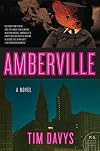
Amberville, Tim Davys's first novel about Mollisan Town and its stuffed animal inhabitants, is both a noir novel with an unusual cast and an utterly original meditation on good and evil. In the words of Brad Meltzer (bestselling author of The Book of Lies), "When you're show more tired of run-of-the-mill fiction, it's time to read Amberville... a mystery that's completely original."
. show less
Tags
Recommendations













Member Recommendations

Member Reviews
"By placing his gritty mystery into the framework of a breathing toy city, Davys is able to explore questions of mortality that a mere human sleuth could never hope to answer. Who are we? Who is our creator? Why do we die? A stuffed animal could hypothetically live forever, but the existence of a Death List calls into question tricky issues on morality and religion that could otherwise never be answered. And Amberville asks some questions that could make certain elements of society cringe with outrage. When Eric's brother Teddy muses, "Religion [was] a two-edged weapon. It was all a matter of daring to believe in the unbelieveable which in all other contexts was described as stupidity," it's hard not to wonder how some people might take show more such questions."
Read the full review here. show less
Read the full review here. show less
From the back cover of Amberville one might expect a cross between Sesame Street and The Sopranos. Eric Bear, years after leaving behind a life of drugs and a job as a runner for a mafia king, opens his apartment door to find his former boss, the mafia head Nicholas Dove visiting with a request—take Dove's name off the infamous Death List (literally a list of those slated to disappear from the world) or he will have his gorillas tear apart Eric's beloved wife, Emma Rabbit.
This kicks off the reforming of Eric's small gang, Tom-Tom Crow, Sam Gazelle and Snake Marek, who have all moved on from their criminal pasts in their own ways, and a desperate hunt for the society's biggest secret, the Death List and its writer.
But after finishing show more Amberville readers will find it to be a very peculiar book. Somewhere between a mafia mystery and a higher-brow literary work addressing the nature of good and evil in the world, Amberville balances a deep mystery and action with deep, soulful contemplations (by mad men, or mad bears as the case may be). In fact the literary, contemplative sections which can, at times come off as lagging bits in the pacing of the plot, genuinely serve to distract and set up the reader, a sign of some truly clever writing.
Yes, the characters really are stuffed animals, living in a world where many things are very clearly defined for them (such as the good areas of town literally being painted different colors from the bad ones). And that analogy doesn't go very far, in that the type of animal a character is doesn't necessarily define who they are. And there aren't really any musing on the nature of man versus beast. But each animal is a full, fleshy—or stuffed—whole with a parallel personality type in our world.
Amberville is the kind of book you wouldn't think about reading, or you'd expect to not like, only to discover it has a lot more to offer than can be explained on the book jacket. It absolutely keeps you guessing, up to the last sentence, and asks questions but never presumes to offer answers, making it a very good read indeed. show less
This kicks off the reforming of Eric's small gang, Tom-Tom Crow, Sam Gazelle and Snake Marek, who have all moved on from their criminal pasts in their own ways, and a desperate hunt for the society's biggest secret, the Death List and its writer.
But after finishing show more Amberville readers will find it to be a very peculiar book. Somewhere between a mafia mystery and a higher-brow literary work addressing the nature of good and evil in the world, Amberville balances a deep mystery and action with deep, soulful contemplations (by mad men, or mad bears as the case may be). In fact the literary, contemplative sections which can, at times come off as lagging bits in the pacing of the plot, genuinely serve to distract and set up the reader, a sign of some truly clever writing.
Yes, the characters really are stuffed animals, living in a world where many things are very clearly defined for them (such as the good areas of town literally being painted different colors from the bad ones). And that analogy doesn't go very far, in that the type of animal a character is doesn't necessarily define who they are. And there aren't really any musing on the nature of man versus beast. But each animal is a full, fleshy—or stuffed—whole with a parallel personality type in our world.
Amberville is the kind of book you wouldn't think about reading, or you'd expect to not like, only to discover it has a lot more to offer than can be explained on the book jacket. It absolutely keeps you guessing, up to the last sentence, and asks questions but never presumes to offer answers, making it a very good read indeed. show less
A quick and wildly enjoyable read. Let your imagination go nuts with the whole "they're stuffed animals" thing - it makes for an adult Aardman kind of adventure. It's a classic noir tale, complete with gangsters and lost youths, deceitful dames and shady authority figures. It's a whole lot of fun and absolutely fascinating. I can't wait to read the next books in the quartet. Go to this when you want something that hits you both on an elemental childhood level and that engages your higher thought processes - all with the wrapping of a great heist film. And then get sucked in and enjoy the stuffed ride.
More thoughts at RB: http://wp.me/pGVzJ-kZ
More thoughts at RB: http://wp.me/pGVzJ-kZ
Eric, now an adult and a successful advertising executive, has been successful in putting his reckless and somewhat criminal youthful indiscretions behind him. At least, that's what he thought. But then the local kingpin he once worked for shows up with a non-negotiable proposition. Find the hit list that his name is rumored to be on, and remove it from the list. Otherwise, he will kill Eric's girlfriend. Now, Eric must get the old gang back together and track down the "Death List" at any cost.
A compelling and straight-forward plot. The big twist? Eric, the crime boss, and all of the other characters in the book are stuffed animals. They live in a world completely populated by stuffed animals, in which the young and old are delivered show more and taken away by pick-up trucks. It is definitely an interesting plot twist. But is it necessary?
The idea isn't completely original (The Hollow Chocolate Bunnies of the Apocalypse, Who Framed Roger Rabbit?, The Big Over Easy: A Nursery Crime, Meet the Feebles), but that doesn't mean it isn't good. It just means that the author might want to approach the concept from an original angle.
Tim Davys does, but he unfortunately decides to play it straight. The idea of stuffed animals in a detective mystery novel begs for plenty of sarcastic tongue-in-cheek humor, but Amberville avoids silly humor and instead relies on the subtle absurdities (a small stuffed dove as a crime kingpin, for example) to deliver the humor on their own, which they never really manage to do. Even the author's approach to the way characters are named in Amberville (simply a first name followed by the type of stuffed animal they are), shows a lack of desire to truly have fun with the concept. In short, things that should be comical or farcical are just as boring as they would be in the real world.
The result is a story that could easily be translated into a realistic, non-fantasy setting and written as a straight hardboiled noir novel. Amberville doesn't necessarily fail at making the concept work, it just doesn't fully convince the reader that fantastical setting was crucial to the story.
Amberville is supposed to reveal truths about human nature, morality, religion, and the concepts of good and evil, by having stuffed animals act out the scenarios in which these philosophical debates occur. This is where the book does fail, much in the same way that White Man's Burden failed. Changing reality in some ironic or absurd way might seem deep and meaningful at first. But unless there are other connections on multiple levels, all that you are left with is an overused gimmick.
Amberville is a good book. It has a compelling story, interesting characters, and enough twists and turns to keep a mystery lover interested until the end. It just doesn't quite manage to be what it wanted to be, and that's what keeps it from being a great book. show less
A compelling and straight-forward plot. The big twist? Eric, the crime boss, and all of the other characters in the book are stuffed animals. They live in a world completely populated by stuffed animals, in which the young and old are delivered show more and taken away by pick-up trucks. It is definitely an interesting plot twist. But is it necessary?
The idea isn't completely original (The Hollow Chocolate Bunnies of the Apocalypse, Who Framed Roger Rabbit?, The Big Over Easy: A Nursery Crime, Meet the Feebles), but that doesn't mean it isn't good. It just means that the author might want to approach the concept from an original angle.
Tim Davys does, but he unfortunately decides to play it straight. The idea of stuffed animals in a detective mystery novel begs for plenty of sarcastic tongue-in-cheek humor, but Amberville avoids silly humor and instead relies on the subtle absurdities (a small stuffed dove as a crime kingpin, for example) to deliver the humor on their own, which they never really manage to do. Even the author's approach to the way characters are named in Amberville (simply a first name followed by the type of stuffed animal they are), shows a lack of desire to truly have fun with the concept. In short, things that should be comical or farcical are just as boring as they would be in the real world.
The result is a story that could easily be translated into a realistic, non-fantasy setting and written as a straight hardboiled noir novel. Amberville doesn't necessarily fail at making the concept work, it just doesn't fully convince the reader that fantastical setting was crucial to the story.
Amberville is supposed to reveal truths about human nature, morality, religion, and the concepts of good and evil, by having stuffed animals act out the scenarios in which these philosophical debates occur. This is where the book does fail, much in the same way that White Man's Burden failed. Changing reality in some ironic or absurd way might seem deep and meaningful at first. But unless there are other connections on multiple levels, all that you are left with is an overused gimmick.
Amberville is a good book. It has a compelling story, interesting characters, and enough twists and turns to keep a mystery lover interested until the end. It just doesn't quite manage to be what it wanted to be, and that's what keeps it from being a great book. show less
Summary: One day, Nicholas Dove, a local crime boss, breaks down the door of Eric Bear, a successful advertising executive with a checkered past, and demands the impossible. He's heard rumors that his name is on the infamous Death List, and he wants Eric to find out if it's true, and to remove his list before the Chauffers come in their mysterious red pickup truck and take him away. If Eric fails to do as Nicholas asks, his beloved wife, Emma Rabbit, will be torn to pieces. Eric must reacquaint himself with his buddies from his time in the underworld, and somehow find the Death List - a fact made much more difficult by the fact that no one is willing to admit such a thing even exists.
Oh, and did I mention? They're all stuffed animals. show more Yeah.
Review: While the plot summary reads as though this is a straight-up hardboiled noirish mystery, it's actually more of a treatise (the back cover uses the word "allegory", which I'll get back to later) on the nature of good and evil, life and death, and religion and society. However, none of the conclusions that Davys reaches are particularly profound - not that they're not cogent, and not that I didn't agree with him for the most part, but I'm not sure I got much insight out of this book that I didn't get during my existential undergraduate phase. While the philisophical musings and the story didn't always intermesh cleanly, both were interesting enough to keep me involved, and the writing itself was fine, adept at shifting narrative voice, and descriptive enough to give me a good feel for the world these animals were moving through.
Whenever I have this experience, part of me always wonders if the points that are being made are actually just *so deep* that I didn't get them, philistine that I am. Because in this case, I know that I certainly didn't get a large part of the story - the stuffed-animal aspect. If this is where the allegory comes in, I totally missed it. This story could just as easily have been told with humans, and because the fact that they were stuffed animals never really tied into the main point of the story, it wound up just feeling gimmicky. An effective gimmick - it sounded original and cool enough to get me to read it in the first place - but in the end it didn't quite have the substance to back up its initial claims. Ultimately, I think that sums up my experience with the book - it felt like it was trying to be original and edgy and deep, and while it wasn't an uninteresting read, it never quite hit the mark. 3 out of 5 stars.
Recommendation: True fans of hardboiled crime fiction might appreciate the twist on the genre more than I did. For everyone else: if you come across it, it's an interesting and relatively easy read, but I wouldn't go out of your way to seek it out. show less
Oh, and did I mention? They're all stuffed animals. show more Yeah.
Review: While the plot summary reads as though this is a straight-up hardboiled noirish mystery, it's actually more of a treatise (the back cover uses the word "allegory", which I'll get back to later) on the nature of good and evil, life and death, and religion and society. However, none of the conclusions that Davys reaches are particularly profound - not that they're not cogent, and not that I didn't agree with him for the most part, but I'm not sure I got much insight out of this book that I didn't get during my existential undergraduate phase. While the philisophical musings and the story didn't always intermesh cleanly, both were interesting enough to keep me involved, and the writing itself was fine, adept at shifting narrative voice, and descriptive enough to give me a good feel for the world these animals were moving through.
Whenever I have this experience, part of me always wonders if the points that are being made are actually just *so deep* that I didn't get them, philistine that I am. Because in this case, I know that I certainly didn't get a large part of the story - the stuffed-animal aspect. If this is where the allegory comes in, I totally missed it. This story could just as easily have been told with humans, and because the fact that they were stuffed animals never really tied into the main point of the story, it wound up just feeling gimmicky. An effective gimmick - it sounded original and cool enough to get me to read it in the first place - but in the end it didn't quite have the substance to back up its initial claims. Ultimately, I think that sums up my experience with the book - it felt like it was trying to be original and edgy and deep, and while it wasn't an uninteresting read, it never quite hit the mark. 3 out of 5 stars.
Recommendation: True fans of hardboiled crime fiction might appreciate the twist on the genre more than I did. For everyone else: if you come across it, it's an interesting and relatively easy read, but I wouldn't go out of your way to seek it out. show less
Amberville is one of the four districts of Mollisan Town, an isolated place of colorful buildings and streets that is populated by stuffed animals. Yes, you read that right -- stuffed animals. Everyone in the town is a walking, talking animal with cotton for guts. They have religion, organized crime, business and art. The main character is Eric Bear, an advertising executive (and a teddy bear) who has a somewhat seedy past. He is approached by mobster Nicholas Dove who has a proposition for him. If Eric is unsuccessful, Dove will have his wife, Emma Rabbit, killed. So he gathers together some other animals he used to work with--a crow, a snake and a gazelle--to help him in the task. They must journey through all of the districts of the show more town and even some of the fringes looking for something that may not even exist.
I've seen this series compared to Jasper Fforde's Nursery Crime series but, based on this first novel, I don't really see anything in common between the two besides a gritty representation of things that are normally children's topics. Fforde's books are based on existing literary characters and imagining their little quirks and foibles and, while dealing with crime, are on the lighter side. Davys' city and characters are completely new and much darker, participating in sado-masochistic relations, drink, drugs, torture and more. This is a crime novel in a fantasy setting. I wasn't sure I would enjoy it once I got a sense of the tone but, in fact, I got caught up in the story and had a good time with this book. The second in the series, Lanceheim, is out in translation already and the third, Tourquai, will be released next month. They are all set in Mollisan Town but feature entirely different characters.
http://webereading.com/2011/01/early-one-morning-at-end-of-april-there.html show less
I've seen this series compared to Jasper Fforde's Nursery Crime series but, based on this first novel, I don't really see anything in common between the two besides a gritty representation of things that are normally children's topics. Fforde's books are based on existing literary characters and imagining their little quirks and foibles and, while dealing with crime, are on the lighter side. Davys' city and characters are completely new and much darker, participating in sado-masochistic relations, drink, drugs, torture and more. This is a crime novel in a fantasy setting. I wasn't sure I would enjoy it once I got a sense of the tone but, in fact, I got caught up in the story and had a good time with this book. The second in the series, Lanceheim, is out in translation already and the third, Tourquai, will be released next month. They are all set in Mollisan Town but feature entirely different characters.
http://webereading.com/2011/01/early-one-morning-at-end-of-april-there.html show less
Nicholas Dove, who runs crime in the Amberville district of Mollisan Town is convinced the legendary Deathlist is real, and that his name is on it. So he seeks out his old underling Eric and lets him know that unless he gets Nicholas off the list within four days, Eric’s wife is in for a nasty surprise indeed. Eric, scared and out of the game, brings his old team of misfits and psychos together: Tom-Tom Crow, sadist drag queen Sam and Marek the Snake. Together they need to find a list that is perhaps purely metaphysical in just four days, or have the stuffing beaten out of them. Quite literally.
Because you see, all the characters populating this noir are stuffed animals.
The premise of this book sounds corny perhaps, but actually works show more fine. The world of Mollisan Town is hollow and small, but that just correlates with the concept of being brought into this world in a non-descript van from the Factory. I’m a sucker for world building, and the one presented here is strange and original.
I think it’s mostly the writing itself that brings this book down a notch for me. It’s sort of shapeless, even when aspiring to be stylish, and the twists aren’t really organically done. Really, for me it’s a book more fun to describe than to actually read, I think. If you’re a fan of noir and on the lookout for something different, this could well be worth checking out though. show less
Because you see, all the characters populating this noir are stuffed animals.
The premise of this book sounds corny perhaps, but actually works show more fine. The world of Mollisan Town is hollow and small, but that just correlates with the concept of being brought into this world in a non-descript van from the Factory. I’m a sucker for world building, and the one presented here is strange and original.
I think it’s mostly the writing itself that brings this book down a notch for me. It’s sort of shapeless, even when aspiring to be stylish, and the twists aren’t really organically done. Really, for me it’s a book more fun to describe than to actually read, I think. If you’re a fan of noir and on the lookout for something different, this could well be worth checking out though. show less
Members
- Recently Added By
Published Reviews
ThingScore 75
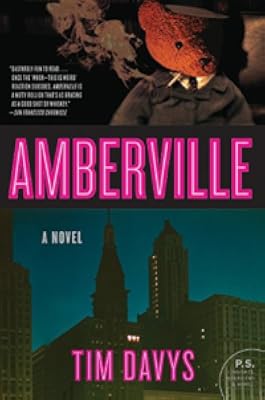
When Tim Davys’ Amberville first came into my hands, I thought someone had made a mistake. First, I hadn’t paid for it—it was in my shopping bag when I left the book store. Then I saw “Advance Reader’s Copy,” so I figured it was a giveaway from the indie book store. Secondly, it had a teddy bear on the cover. But it was clearly not a children’s book; this bear was seen from show more behind as he pondered a dark city street that blatantly screamed noir. show less
added by aethercowboy
Lists

Book Worlds We'd Like To Visit
322 works; 158 members
Author Information

5 Works 403 Members
Some Editions
Series

Belongs to Publisher Series
Columna (809)
Common Knowledge
- Original publication date
- 2007-10-02; 2009 (English translation) (English translation)
- People/Characters
- Eric Bear; Snake Marek; Tom-Tom Crow; Sam Gazelle; Nicholas Crow; Emma Rabbit (show all 10); Teddy Bear; Ruth Rat; Rhinocerous Edda; Archdeacon Odenrick
- First words
- Early one morning at the end of April there was a pounding on the door to Eric Bear and Emma Rabbit's apartment on brick-red Uxbridge Street.
- Last words
- (Click to show. Warning: May contain spoilers.)Then Teddy placed a consoling paw around his brother's shoulders, and they remained sitting that way.
Classifications
- Genres
- Fiction and Literature, Mystery, Fantasy
- DDC/MDS
- 839.738 — Literature & rhetoric German & related literatures Other Germanic literatures Swedish literature Swedish fiction 2000-
- LCC
- PT9877.14 .A88 .A8313 — Language and Literature German, Dutch and Scandinavian literatures Swedish literature Individual authors or works 2001-
- BISAC
Statistics
- Members
- 301
- Popularity
- 106,817
- Reviews
- 17
- Rating
- (3.20)
- Languages
- 13 — Catalan, Chinese, Czech, Danish, Dutch, English, Finnish, German, Hungarian, Italian, Norwegian, Spanish, Swedish
- Media
- Paper, Ebook
- ISBNs
- 24
- ASINs
- 4