5+ out of 5.
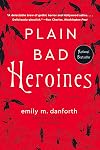
Absolutely fantastic -- this book has big NIGHT FILM energy but also weaves in a time-hopping story that never drags, never feels too long even at just-over-600 pages, and genuinely packs a spooky punch to boot. The book feels vivid and fresh and like it blurs the lines between reality and fiction in the best possible ways, leaving the book as an inhabitant in your mind long after you've put it down. There's a sense of my world now including Bo Dhillon's film and real people called Harper and Audrey and Merritt, in the same way that I want to see a Cordova film or I'm curious to see if Tuesday Mooney might pop across the street in front of me the next time I'm in Boston.
Fucking great stuff.
Absolutely fantastic -- this book has big NIGHT FILM energy but also weaves in a time-hopping story that never drags, never feels too long even at just-over-600 pages, and genuinely packs a spooky punch to boot. The book feels vivid and fresh and like it blurs the lines between reality and fiction in the best possible ways, leaving the book as an inhabitant in your mind long after you've put it down. There's a sense of my world now including Bo Dhillon's film and real people called Harper and Audrey and Merritt, in the same way that I want to see a Cordova film or I'm curious to see if Tuesday Mooney might pop across the street in front of me the next time I'm in Boston.
Fucking great stuff.
 This review was written for LibraryThing Early Reviewers.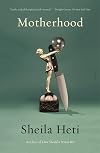
This one's tough. Those who know, know that I found "How Should a Person Be?" frustrating, irritating, annoying, and unsuccessful. Yet "Motherhood" manages to escape those failings while working the exact same vein. Perhaps it is the topic, handled deftly and adroitly despite the many opportunities for pitfalls. Perhaps it is the fact that Heti's particular blend of self-reflexive autofiction stays out of its own way for much of this book (although it does end up frustrating again, in the back half). Maybe I'm just a different reader.
But god I can't wait to talk about this one with my bookclub. And my fiancée.
But god I can't wait to talk about this one with my bookclub. And my fiancée.
This review was written for LibraryThing Early Reviewers.
Thrummingly strange dark stories. Some of them are straight-up horror in the classic molds; others barely have any supernatural twinges at all. But all of them, as translator-extraordinaire Megan McDowell's afterword notes, grapple with the darkness that shot through Argentina in the years after the end of the dictatorships. Some of these tales will remain seared into my mind for a long time, and I can't wait to read more Enríquez.
This review was written for LibraryThing Early Reviewers.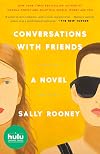
5+ out of 5.
Okay, yes, I'm 100% on the Sally Rooney bandwagon. Yes, she might well be the first great millennial author, and it's because of this thing that's been tossed around lately re: NORMAL PEOPLE: her novels are updated Victorian/Regency novels, in that they capture the lives of individuals of a certain class and location at a particular moment in time where the 'plot' is only ever as-important but often less important than the conversations, the interactions, the dynamics between the people. Frances and Nick, Frances and Bobbi, Frances and Melissa -- their interpersonal dynamics and the ways we see Frances trying to navigate the world are far more 'important' than the will-they-won't-they-how-will-they. Which is not to say that that isn't compelling, but really isn't plot just a thing that happens when two people start to interact?
Also, the last hundred pages or so are so astoundingly weighty with emotion and life, it stunned me. It's not to say that the earlier going didn't have some weight etc, but christ the honest complications in the depiction of Frances' life shook me right into my soul.
Okay, yes, I'm 100% on the Sally Rooney bandwagon. Yes, she might well be the first great millennial author, and it's because of this thing that's been tossed around lately re: NORMAL PEOPLE: her novels are updated Victorian/Regency novels, in that they capture the lives of individuals of a certain class and location at a particular moment in time where the 'plot' is only ever as-important but often less important than the conversations, the interactions, the dynamics between the people. Frances and Nick, Frances and Bobbi, Frances and Melissa -- their interpersonal dynamics and the ways we see Frances trying to navigate the world are far more 'important' than the will-they-won't-they-how-will-they. Which is not to say that that isn't compelling, but really isn't plot just a thing that happens when two people start to interact?
Also, the last hundred pages or so are so astoundingly weighty with emotion and life, it stunned me. It's not to say that the earlier going didn't have some weight etc, but christ the honest complications in the depiction of Frances' life shook me right into my soul.
This review was written for LibraryThing Early Reviewers.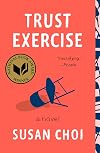
4.5, rounding up.
First off, ignore the blurb beyond “high school for the performing arts.”
Second, imagine if the structure of ASYMMETRY was as audacious as it seemed on first glance.
Third, were you a theater kid? Were you a kid who had a passionate yet completely mystifying love as a teenager - maybe more than one? Complete with misadventures and misunderstandings, both internally and relating to one another?
This book was complex, at times nearing but never edging into confusing, and goddamn it sliced me right open. The traumas we inflict on each other as teenagers never totally go away - not to mention the ones inflicted on us by those who are ‘grown up’ already. This devious little book is going to stick with me like the face of my high school best friend: unforgettable, even when all the details fade.
First off, ignore the blurb beyond “high school for the performing arts.”
Second, imagine if the structure of ASYMMETRY was as audacious as it seemed on first glance.
Third, were you a theater kid? Were you a kid who had a passionate yet completely mystifying love as a teenager - maybe more than one? Complete with misadventures and misunderstandings, both internally and relating to one another?
This book was complex, at times nearing but never edging into confusing, and goddamn it sliced me right open. The traumas we inflict on each other as teenagers never totally go away - not to mention the ones inflicted on us by those who are ‘grown up’ already. This devious little book is going to stick with me like the face of my high school best friend: unforgettable, even when all the details fade.
This review was written for LibraryThing Early Reviewers.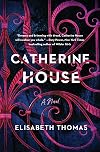
A real split-decision kind of book. On the one hand, the college-life stuff is absolutely fantastic. I loved the idea of Catherine House, and adored the ways Thomas depicts student life in these slightly strange conditions. I could read a whole book of Ines and Yaya and Theo and all these kids who remind me so much of my friends wandering around this Gothic campus for three years.
What ~didn't~ work for me was the central 'mystery' and all this plasm stuff. It all felt undercooked and thin, and I didn't really care. There was quite a bit of gesturing towards a thing (and many of these gestures were straight out of the Gothic Trope Playbook) as opposed to actually seeing it and giving it the same breadth of reality as the college-life stuff -- and as the book careens towards its shrug of a conclusion, it's hard not to feel like there were two books in this book and the lesser one won out.
Still, it's a fast read and I'd recommend at least taking a look, for the magnificent life depictions.
What ~didn't~ work for me was the central 'mystery' and all this plasm stuff. It all felt undercooked and thin, and I didn't really care. There was quite a bit of gesturing towards a thing (and many of these gestures were straight out of the Gothic Trope Playbook) as opposed to actually seeing it and giving it the same breadth of reality as the college-life stuff -- and as the book careens towards its shrug of a conclusion, it's hard not to feel like there were two books in this book and the lesser one won out.
Still, it's a fast read and I'd recommend at least taking a look, for the magnificent life depictions.
This review was written for LibraryThing Early Reviewers.
This is fitting, considering the content: this book is an alt-universe version of Version Control that's pegged as a summer blockbuster instead of an indie mindbender. Or maybe it's the other way around.
Crouch sets the pace early on and pulls off a couple of massive reversals-of-fortune for our hero, and he even delivers a humdinger of a final problem... but the book's early bravado wears after a while and the ending is more of "I guess this has to end somehow..." and less of anything earned or logical. And the science, while fascinating and exciting and initially well-presented, always turns into a plot device instead of the plot working to the science.
Still, it's a hell of a ride. I'd been looking for a good ol' page-turner and I ripped through this in a long afternoon in the park, not because I was reading fast but because the book just goes that way.
Crouch sets the pace early on and pulls off a couple of massive reversals-of-fortune for our hero, and he even delivers a humdinger of a final problem... but the book's early bravado wears after a while and the ending is more of "I guess this has to end somehow..." and less of anything earned or logical. And the science, while fascinating and exciting and initially well-presented, always turns into a plot device instead of the plot working to the science.
Still, it's a hell of a ride. I'd been looking for a good ol' page-turner and I ripped through this in a long afternoon in the park, not because I was reading fast but because the book just goes that way.
This review was written for LibraryThing Early Reviewers.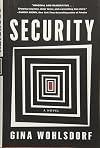
I think it might actually be 4.5 because the ending goes a liiiittle over the line of plausibility - but holy shit I enjoyed the hell out of this book. Structurally interesting, with a voice to die for, it's the story of one night in a massive fancy hotel just before it opens. Supposedly the most secure hotel ever, it is anything but - and so, from the point of view of the security cameras, we track the whole evening. It's a little bit DIE HARD, a little bit SCREAM, and I feel like Edgar Wright would make a hilarious and gripping movie version. What a delight and a thrill.
This review was written for LibraryThing Early Reviewers.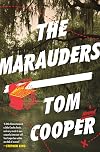
An interesting romp around the bayous of Louisiana - shrimpers, pot farmers, cops, pot-heads, drunks, treasure hunters, general ne'er-do-wells... it's everything you'd imagine a story set in and around New Orleans might be. But the promise of these characters is never quite fleshed out and the collision course they're all on is rather anti-climactic in the end. I was hoping for something a bit more, well, ROMP-like - and instead, things somewhat peter out. Still, there are some unexpected moments of emotional impact at the end and the characters/writing are delightful enough that it is by no means an unpleasant read.
This review was written for LibraryThing Early Reviewers.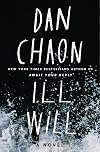
Strange and destabilizing, even down to the structure of the words on the page - sometimes split into multiple concurrent columns, often given odd and chaotic spacing. Things are bad from the beginning with every character, but you don't quite realize where it's all going until it is way too late. And at that point, you're already hooked - because Chaon masterfully blends between Charles Baxter & Gillian Flynn to create something well worth staying up late for.
This review was written for LibraryThing Early Reviewers.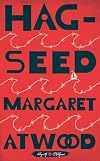
It's perfect, really - it's exactly what I was hoping for, as a lover of theater and Shakespeare and Margaret Atwood. In many ways, this is the most theatrical of the Hogarth Shakespeares so far and it succeeds in a way that novels about theater so often fail: it remembers that the play might be the thing... but that it is the people, the players, who make it so. Atwood brings a theater-lover (nay, an arts-lover)'s eye to this story and creates a tale that manages to refresh Shakespeare while also paying perfect homage to the play that is, in many ways, the most overtly theatrical of the canon. For what is Prospero's last speech other than a heartfelt thank you and goodbye by Shakespeare himself, a moment of humble gratitude for the gift of art that had been bestowed upon him? Atwood is conscious of that to the last - and the thrilling potency of that speech rings throughout the entire novel.
This review was written for LibraryThing Early Reviewers.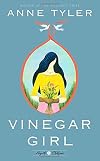
I'm pleased that Hogarth didn't go the route of putting Taming in the hands of somebody who'd bring out the acerbic nature of the story, for that feels both too easy and too dangerous. Anne Tyler delivers a cover that seems, at times, to be a light comedy - which, let us not forget, is how Shakespeare's play is categorized - but that also paints a complicated portrait of feminism and the patriarchy, pushing up against what we (here meaning like-minded liberals/feminists) believe to be okay (is it right that Kate accept this marriage in order to escape the house she grew up in, to use it to springboard into what she hopes will be her actual life?) while also making very clear that the concept of the subservient woman is beyond outdated and should be destroyed accordingly. I do wish it had gone a little farther, both with continuing some of the early comedic bits that are dropped along the way (the children! bless them) as well as digging further into the nitty-gritty of why Kate comes around. Still, the novel goes a long way towards redeeming a text that many people these days think to be completely reprehensible - and that alone is an accomplishment worth celebrating.
More in June at RB:
More in June at RB:
This review was written for LibraryThing Early Reviewers.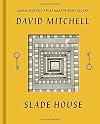
4.5 out of 5, but I'm rounding up.
I realize more of my own limitations these days and while I, as a reader, was delighted by the exposition dumps throughout the novel... as a critical reader and as a writer myself, I found them a little jarring. Still, this is a very small price to pay for such a terrific haunted house novel. Mitchell captures the October spirit while retaining the universe he's been building for so long and his skill with breath-taking, gasp-inducing moments of thrilling fright is just another to add to his impossible array of talents. Read this one in a sitting, preferably on a cold night under an October moon - and don't trust the dreams that follow. But definitely *do* enjoy them.
More at RB: http://ragingbiblioholism.com/2015/10/19/slade-house/
I realize more of my own limitations these days and while I, as a reader, was delighted by the exposition dumps throughout the novel... as a critical reader and as a writer myself, I found them a little jarring. Still, this is a very small price to pay for such a terrific haunted house novel. Mitchell captures the October spirit while retaining the universe he's been building for so long and his skill with breath-taking, gasp-inducing moments of thrilling fright is just another to add to his impossible array of talents. Read this one in a sitting, preferably on a cold night under an October moon - and don't trust the dreams that follow. But definitely *do* enjoy them.
More at RB: http://ragingbiblioholism.com/2015/10/19/slade-house/
This review was written for LibraryThing Early Reviewers.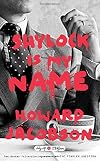
4.5 out of 5.
Even having finished it, the book continues to grow on me. There is a lot of discussion about the finer points of Judaism and the responsibilities/onuses/expectations of being a Jew in modern (or any) society and I've always been a little uncomfortable when anybody, from any religion, spends a whole lot of time talking stridently about their religious principles. But Jacobson keeps it universal, especially when the reader knows that Shylock is one of the discussion participants, and he manages to not only make the plot of Merchant seem plausible in a modern context but he earns every moment of discussion and debate as the book comes together towards its brilliant Act Five - an update of Shakespeare's denouement that tops the Bard by going a step further. Even though it took me a minute to realize what Jacobson was doing, it was that minute of sitting at a concert and thinking "wait, I think I know this" and then the broad, slow grin of comprehension as the band delivers an unexpected cover in the middle of their set. He's set a high bar for the Hogarth Shakespeares to come after.
Even having finished it, the book continues to grow on me. There is a lot of discussion about the finer points of Judaism and the responsibilities/onuses/expectations of being a Jew in modern (or any) society and I've always been a little uncomfortable when anybody, from any religion, spends a whole lot of time talking stridently about their religious principles. But Jacobson keeps it universal, especially when the reader knows that Shylock is one of the discussion participants, and he manages to not only make the plot of Merchant seem plausible in a modern context but he earns every moment of discussion and debate as the book comes together towards its brilliant Act Five - an update of Shakespeare's denouement that tops the Bard by going a step further. Even though it took me a minute to realize what Jacobson was doing, it was that minute of sitting at a concert and thinking "wait, I think I know this" and then the broad, slow grin of comprehension as the band delivers an unexpected cover in the middle of their set. He's set a high bar for the Hogarth Shakespeares to come after.
This review was written for LibraryThing Early Reviewers.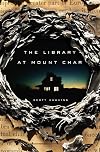
4.5 out of 5.
The ending wobbles a little bit but Hawkins has pulled together an absolutely delightful, fantastical romp that has (as one character puts it) "the control of reality" at stake - and you actually believe it. As with Edgar Cantero's great The Supernatural Enhancements, I was left wanting (somewhat desperately) to know more - what about Barry O'Shea and Q-33 North and the Duke?! Who are they?! What do they look like?! I want more of this fantastical world hidden underneath our own!! - but also so happy that I didn't get more. The book kept me hungry and happy throughout, joyously rushing towards the final page. I can't wait to see what Hawkins does next, because his first trick was a hell of a start.
More on Friday: http://ragingbiblioholism.com/2015/10/09/the-library-at-mount-char/
The ending wobbles a little bit but Hawkins has pulled together an absolutely delightful, fantastical romp that has (as one character puts it) "the control of reality" at stake - and you actually believe it. As with Edgar Cantero's great The Supernatural Enhancements, I was left wanting (somewhat desperately) to know more - what about Barry O'Shea and Q-33 North and the Duke?! Who are they?! What do they look like?! I want more of this fantastical world hidden underneath our own!! - but also so happy that I didn't get more. The book kept me hungry and happy throughout, joyously rushing towards the final page. I can't wait to see what Hawkins does next, because his first trick was a hell of a start.
More on Friday: http://ragingbiblioholism.com/2015/10/09/the-library-at-mount-char/
This review was written for LibraryThing Early Reviewers.
I respect the creation here and the ideas at play - Murakami boldly takes on literary traditions like Chekhov's gun and stops just short of overtly telling the reader that he's written his own "In Search of Lost Time", all rather deftly - and of course the prose is wonderful... but there were huge stretches here where I was bored. Not just disinterested, actively bored. Whether it was the effect of the unending repetition, the nearly-stagnant plot action, or something else entirely, I don't know. But I went from (at the outset) feeling like I'd entered into a strange parallel universe too - sliding perhaps just one step over from where we are now - to just wanting the book to be done already. Disappointing is really the only thing I can say.
More at RB: http://ragingbiblioholism.com/2014/06/01/1q84/
More at RB: http://ragingbiblioholism.com/2014/06/01/1q84/
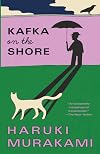
For the first time in a while, I've found myself having to hold back from running out to buy an author's other work. I enjoyed Norwegian Wood but this... this is something else entirely. Murakami's deftness with language (and the deftness of the translation, for sure) and the steady hand on the tiller made this one of the most pleasurable reading experiences I've had in a while. The book itself is terrific but it is the experience - the calm, I'd say - that settles over you while reading that is what recommends the book. The tumble of a denouement, mysterious and swift, doesn't lessen the power of the novel and, at the actual end, the book regains that placid but strong beauty. It was a magical experience and not just for the talking cats.
More at RB: http://ragingbiblioholism.com/2014/03/13/kafka-on-the-shore/
More at RB: http://ragingbiblioholism.com/2014/03/13/kafka-on-the-shore/
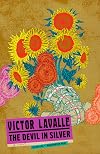
I think part of the issue is that I expected something very different from what I got. While LaValle's writing is as sharp and funny (there's a Sting joke that still has me cracking up) as ever, it's the plot that seems to be unclear about what it wants. Don't come looking for a horror novel and you may be better served - just do be prepared for a few creepy-as-hell moments, too. Fair warnings all around, I guess.
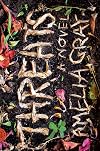
There is something about this book that feels empty - like the empty threats that come to David. But there's also something about it that is strangely moving. Or, if not moving, touching. I feel so bad for David, mainly. He's a deeply troubled, thoroughly heartbroken man - and watching his slide into insanity is nothing to take pleasure in. Such feelings being evoked, I find myself believing I enjoyed the book... but then I wonder why it had to be told this way. Why authors feel the need to be strange, elliptical, odd, etc as a thing. It's like how I sometimes don't understand why a particular poem is a poem and not just a couple of sentences. But then I see a poem like that that could only have been a poem and I understand. This book, for me, falls somewhere in the middle of that spectrum. If that makes sense.
More at RB: http://wp.me/pGVzJ-SY
More at RB: http://wp.me/pGVzJ-SY
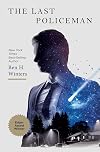
I was actually weighing giving this a higher grade but, upon reflection, the case itself actually wraps up a little too messy for me. The resolution, that is, was just a bit… unclear. I think that might be my failure as a reader (and/or sunstroke) but I was watching the whole thing wrap up and wondering “Wait, really? That’s it?” because it just seemed so… Well, I just didn’t follow Hank’s final jump in logic. But the conclusion itself made sense once we got there – and it was a stark reminder of just how the world might look if/when this all goes down. And that psychological impact far outweighs any issues I might’ve had with the story, because I will not sleep well tonight for having read this book… and that’s kind of great.
More at TNBBC: http://thenextbestbookblog.blogspot.com/2014/05/drew-reviews-last-policeman.html
and RB: http://ragingbiblioholism.com/2014/05/15/the-last-policeman/
More at TNBBC: http://thenextbestbookblog.blogspot.com/2014/05/drew-reviews-last-policeman.html
and RB: http://ragingbiblioholism.com/2014/05/15/the-last-policeman/
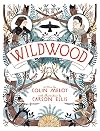
I didn’t not like the novel – but I realize that I don’t have too much to say about it. I’d hoped that this would be a trilogy that I would find myself really drawn to but instead I just sort of felt like it was the literary equivalent (for me) of a shrug in a warm jacket. Feels fine, but, also, eh. You know?
More at RB: http://ragingbiblioholism.com/2013/11/29/wildwood-the-wildwood-chronicles-book-1...
More at RB: http://ragingbiblioholism.com/2013/11/29/wildwood-the-wildwood-chronicles-book-1...
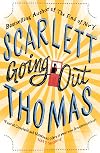
3.5 out of 5.
It's a fun, light story even though it deals with some serious issues (illness, listlessness, insecurity, depression, etc) at times. The scenes where the gang of the six of them are putting together Luke's "space suit" are a hoot and I was reminded of being young and doing stupid things with my friends in high school. The fact that the main characters in this book are all about my age just reminds me that we are allowed to be young and listless and goofy still - and that when the opportunity to take an adventure arises, whether it's buying a lifetime subscription to a magazine or taking a three week unexpected trip to Cambodia or anything in between or outside those bounds at all, you might as well. Who knows what you might discover?
More at RB: http://ragingbiblioholism.com/2014/12/26/going-out/
It's a fun, light story even though it deals with some serious issues (illness, listlessness, insecurity, depression, etc) at times. The scenes where the gang of the six of them are putting together Luke's "space suit" are a hoot and I was reminded of being young and doing stupid things with my friends in high school. The fact that the main characters in this book are all about my age just reminds me that we are allowed to be young and listless and goofy still - and that when the opportunity to take an adventure arises, whether it's buying a lifetime subscription to a magazine or taking a three week unexpected trip to Cambodia or anything in between or outside those bounds at all, you might as well. Who knows what you might discover?
More at RB: http://ragingbiblioholism.com/2014/12/26/going-out/
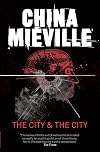
5+ out of 5. The high-functioning work happening here is just mind-boggling. You have to pay attention to this book in a way that people have to pay attention to science experiments - except that the book is also immensely readable and Miéville's voice carries you away. He blends highbrow and lowbrow so effortlessly that he creates something else, an Orcinian third. He's addressing really smart, important questions of nationalism and identity (on both the personal and national levels) while also wrapping it up in the most original, daring speculative concept I've encountered in a very long time. I wish I could go visit Besźel and Ul Qoma - in a way that I haven't thought about a fictional place since probably Jeff Vandermeer's Ambergris. If you pointed me to a map, I'd swear it was "just right there, right?"
Just really smart, really cool stuff.
More at RB soon:
Just really smart, really cool stuff.
More at RB soon:
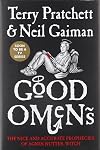
Although it isn't, for me, as "classic" as some of the Discworld books or American Gods, it's perfect in its own right. Neither author had come fully into their own just yet, although the signs were all there - and there is a roughness to the book that you just don't get anymore in most novels. People try too hard to sand all that roughness down. But for me, this wobbly table of a book is all the better for the wobble: it keeps you on your toes, trying to balance, and threatening to topple the whole thing because you've laughed too hard. It's a meditation on good and evil, on nature vs. nurture, on humanity vs. divinity, and on sixteen different ways you can laugh embarrassingly in public. What greater purpose could there be?
More at RB: http://ragingbiblioholism.com/2015/03/23/good-omens/
More at RB: http://ragingbiblioholism.com/2015/03/23/good-omens/
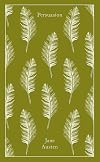
Just because the novel marks what might've been a turning point for our author does not necessarily mean it was a terribly enjoyable novel. I do not think I will look back and remember the Elliots terribly well - except for the grace with which Austen writes her older main characters. Perhaps a longer period of revision might've lent the book more even tone and pace and form, but perhaps not. It doesn't matter though - it was, as I say, certainly not a bad novel. Just, for me, rather okay.
More at RB: http://ragingbiblioholism.com/2013/12/17/persuasion/
More at RB: http://ragingbiblioholism.com/2013/12/17/persuasion/
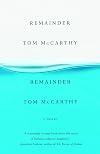
3.5 out of 5. It's just a little too constructed for me. I don't always mind that (obvious construction) but there's an artificiality here that, while I admire it immensely, keeps me at arm's length. Every time a rough edge or a weirdness appeared, McCarthy made pains to smooth it back out - just as the narrator does with the apartment block and the ensuing reenactments. Conceptually, this is interesting - but in practice, a book requires more than just superb craftsmanship. Even the biggest brain requires some heart to balance it out (ed. note - and vice versa, although that's a completely different argument). Otherwise, you're just appreciative of the technical beauty but left cold about the project as a whole. Like I was here.
More at RB: http://ragingbiblioholism.com/2015/06/15/remainder/
More at RB: http://ragingbiblioholism.com/2015/06/15/remainder/
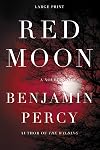
4.5 out of 5... I really wish, for the sake of the excellent allegory at play here, I could give this book 5 stars - but the final hundred pages, especially the ending itself, feel like a bit of a letdown from the rest of the novel. Not terribly! It's still very well-written, the action is exciting, the characters are still great - but it just feels too simple for a, to that point, very complex book. And it's the complexity of the rest of the book that really makes this worth reading - I mean, who'd've ever thought a werewolf novel would be the 9/11 allegory that finally works?
More at RB: http://wp.me/pGVzJ-PT
More at RB: http://wp.me/pGVzJ-PT
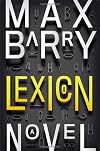
3.5 out of 5. I was sucked in from the very first moment - and, for the large portion of the middle of the book, the ideas and learning about this all-too-conceivable underworld were all I needed. But as the plot turned to tropes and formulaic clichés, I felt let down. As the pages dwindled, the concept seemed to defeat the story, where it should've enlivened it - and we were left with a streamlined, reduced version of something that could've (if it had really gone off the rails and gone crazy) been deeply satisfying and exciting. Still, a well-executed thriller is nothing to snub one's nose at - and on this front, Lexicon does, at least, deliver. It just could (and should) have delivered so much more.
More TK at RB:
More TK at RB:
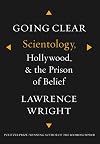
5+ out of 5. How are you supposed to rate this book, actually? On the one hand, it is exceptional journalism. Wright's measured and readable tone (of which I have been a fan for many years) in considered, intelligent, and knowledgable - you come away wishing that everyone was so well-spoken in their delivery of sensitive and inflammatory information. But that same information is truly disturbing, at least in my opinion. Even as I sit here working on this review, several hours and things and stories later... I feel my palms a little sweaty, a pall over my visage, and a furrow in my brow. I am disturbed in a way even few horror novels have ever been capable of achieving. I do not seek to feel this way, no matter how enjoyable horror novels usually are, and I will never be able to walk down the North side of 46th St without looking over my shoulder or a shudder as I pass the Scientology building. And yet, I cannot do anything but wholeheartedly recommend this book - it sheds light onto the darker parts of human nature in a way that we all should come to understand.
More at RB: http://ragingbiblioholism.com/2014/04/10/going-clear-scientology-hollywood-the-p...
More at RB: http://ragingbiblioholism.com/2014/04/10/going-clear-scientology-hollywood-the-p...
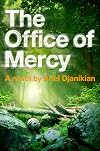
I don't think this book will change anyone's minds about mercy, about justice, about right and wrong - but we've gotten too easy on our sci-fi writers, especially those writing dystopias. Yes, we're all afraid of the modern world taking us into some totalitarian/faux-egalitarian/generally-messed-up future - but it isn't enough to just give us a bad scenario and put people acting 'good' inside of it. You need to think a bit harder and see how the people in those future scenarios would honestly behave. Because it isn't going to be like we behave today. That's the glorious thing about classic dystopic novels and it's what makes this one a worthy successor to those talents.
More to come at RB: http://ragingbiblioholism.com/2014/04/23/the-office-of-mercy/
More to come at RB: http://ragingbiblioholism.com/2014/04/23/the-office-of-mercy/