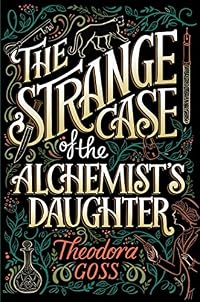
The Strange Case of the Alchemist's Daughter
by Theodora Goss 
The Extraordinary Adventures of the Athena Club (1)
On This Page
Description
Mary Jekyll, alone and penniless following her parents' death, is curious about the secrets of her father's mysterious past. One clue in particular hints that Edward Hyde, her father's former friend and a murderer, may be nearby, and there is a reward for information leading to his capturea reward that would solve all of her immediate financial woes. But her hunt leads her to Hyde's daughter, Diana, a feral child left to be raised by nuns. With the assistance of Sherlock Holmes and Dr. show more Watson, Mary continues her search for the elusive Hyde, and soon befriends more women, all of whom have been created through terrifying experimentation: Beatrice Rappaccini, Catherine Moreau, and Justine Frankenstein. When their investigations lead them to the discovery of a secret society of immoral and power-crazed scientists, the horrors of their past return. Now it is up to the monsters to finally triumph over the monstrous. show lessTags
Recommendations


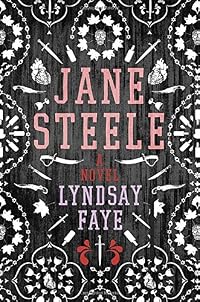
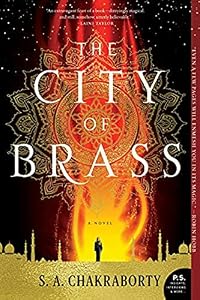
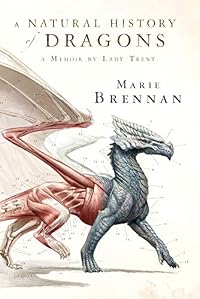

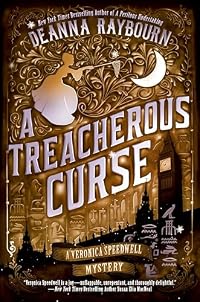



Member Recommendations

Member Reviews
The first thing you need to know about The Strange Case of the Alchemist’s Daughter is how much fun reading it is – especially if you grew up on books like Mary Shelley’s Frankenstein, Robert Louis Stevenson’s Strange Case of Dr. Jekyll and Mr. Hyde, or The Island of Doctor Moreau by H.G. Wells. Frankenstein was published in 1818, so Shelley may have been a little ahead of her time, but there is no doubt that Victorian society was fascinated by books like hers and the other two mentioned (published in 1886 and 1896, respectively).
Two hundred years after the first appearance of Frankenstein’s monster, Theodora Goss has written a mashup novel that includes these three mad scientists and others like them. The men have formed a show more secret society, and they continue to experiment on living creatures (and dead ones) to see just what new kind of being they can create. Now, it seems that no one can stop them but their own daughters, most of whom themselves have been drastically altered by their own fathers into something no human was ever intended to be – oh, and Sherlock Holmes and Dr. Watson. Let’s not forget those two.
Other than Holmes and Watson, the main characters of the novel are Mary Jekyll, her sister Diana Hyde, Beatrice Rappaccini, Catherin Moreau, and Justine Frankenstein. One of them has a breath so poisonous that it kills anything that comes too close, one is a cross between a panther and a human, one has been reanimated and physically enhanced after having been hanged to death, one is a rebellious teen, and the other matches wits with Mr. Holmes with relative ease. At first, it is sheer necessity that forces the women team up in order to fight those who want so badly to return them to their fathers’ laboratories. But soon enough, something funny begins to happen: the women become a family of sisters more than capable of taking care of themselves. So that’s what they do.
The audiobook version of The Strange Case of the Alchemist’s Daughter is read by Kate Reading (is that the perfect name for an audiobook narrator, or what?). Reading is a veteran of numerous audiobooks in the fantasy genre, such as Robert Jordan’s Wheel of Time series, so she is probably already familiar to many fantasy fans. Her skill of using multiple accents and voice-variations to individualize so many main characters is exceptional, and adds to the fun.
Bottom Line: Readers looking to escape the horrors of 2020 for a few hours will not go wrong by choosing Theodora Goss’s The Strange Case of the Alchemist’s Daughter as a temporary diversion. show less
Two hundred years after the first appearance of Frankenstein’s monster, Theodora Goss has written a mashup novel that includes these three mad scientists and others like them. The men have formed a show more secret society, and they continue to experiment on living creatures (and dead ones) to see just what new kind of being they can create. Now, it seems that no one can stop them but their own daughters, most of whom themselves have been drastically altered by their own fathers into something no human was ever intended to be – oh, and Sherlock Holmes and Dr. Watson. Let’s not forget those two.
Other than Holmes and Watson, the main characters of the novel are Mary Jekyll, her sister Diana Hyde, Beatrice Rappaccini, Catherin Moreau, and Justine Frankenstein. One of them has a breath so poisonous that it kills anything that comes too close, one is a cross between a panther and a human, one has been reanimated and physically enhanced after having been hanged to death, one is a rebellious teen, and the other matches wits with Mr. Holmes with relative ease. At first, it is sheer necessity that forces the women team up in order to fight those who want so badly to return them to their fathers’ laboratories. But soon enough, something funny begins to happen: the women become a family of sisters more than capable of taking care of themselves. So that’s what they do.
The audiobook version of The Strange Case of the Alchemist’s Daughter is read by Kate Reading (is that the perfect name for an audiobook narrator, or what?). Reading is a veteran of numerous audiobooks in the fantasy genre, such as Robert Jordan’s Wheel of Time series, so she is probably already familiar to many fantasy fans. Her skill of using multiple accents and voice-variations to individualize so many main characters is exceptional, and adds to the fun.
Bottom Line: Readers looking to escape the horrors of 2020 for a few hours will not go wrong by choosing Theodora Goss’s The Strange Case of the Alchemist’s Daughter as a temporary diversion. show less
This was a totally charming tale! I loved how Goss wove together so many of the old familiar monster tales - Dr. Jekyll and Mr. Hyde, The Island of Dr. Moreau, Frankenstein, and more - and wrapped it all up in a Sherlock Holmes story, but all the while centering the women of the story. I’m looking forward to the next installment!
A mystery set in the late 19th century, in which most of the characters are borrowed from, or are the offspring of characters from, 19th century Gothic and mystery fiction.
After her mother dies, Mary Jekyll decides to improve her financial situation by finding her father’s murderer, Mr Hyde, and claiming the reward. Instead she finds herself saddled with Hyde’s high spirited teenaged daughter, becomes involved in Sherlock Holmes’ investigation into murder of girls in Whitechapel, and invites several women who are the result of monstrous experimentation to join her household...
The relationships between the girls and women of Mary’s household are at the centre of this story. Together they set about unravelling the mystery about show more the Société de Alchimistes - and then they write their story. The story told predominantly from Mary’s point of view, but is being written by Catherine, with interruptions from the others. These women, who are denied a voice in their original narratives, here get to argue about how their story is told and offer commentary on the act of storytelling.
I read most of the stories The Strange Case draws upon when I was at university, and I was delighted to see them all woven together like this. It’s all very meta in a way I really appreciated. I also liked the way Holmes appears in, but does not dominate, the story.
No wonder men did not want women to wear bloomers. What could women accomplish if they did not have to continually mind their skirts, keep them from dragging in the mud or getting trampled on the steps of an omnibus? If they had pockets! With pockets, women could conquer the world! And yet she felt, too, as though in putting on men’s clothes, she had lost a part of herself. It was a confusing sensation. show less
After her mother dies, Mary Jekyll decides to improve her financial situation by finding her father’s murderer, Mr Hyde, and claiming the reward. Instead she finds herself saddled with Hyde’s high spirited teenaged daughter, becomes involved in Sherlock Holmes’ investigation into murder of girls in Whitechapel, and invites several women who are the result of monstrous experimentation to join her household...
The relationships between the girls and women of Mary’s household are at the centre of this story. Together they set about unravelling the mystery about show more the Société de Alchimistes - and then they write their story. The story told predominantly from Mary’s point of view, but is being written by Catherine, with interruptions from the others. These women, who are denied a voice in their original narratives, here get to argue about how their story is told and offer commentary on the act of storytelling.
I read most of the stories The Strange Case draws upon when I was at university, and I was delighted to see them all woven together like this. It’s all very meta in a way I really appreciated. I also liked the way Holmes appears in, but does not dominate, the story.
No wonder men did not want women to wear bloomers. What could women accomplish if they did not have to continually mind their skirts, keep them from dragging in the mud or getting trampled on the steps of an omnibus? If they had pockets! With pockets, women could conquer the world! And yet she felt, too, as though in putting on men’s clothes, she had lost a part of herself. It was a confusing sensation. show less
I should have hated this book as it's so far off my preferred genre list, but I didn't hate it. I loved it! Yes, it's fantasy and fantastical. It's off the wall and unbelievable, and it just shouldn't work as a novel. But it does. I couldn't put it down, and it kept my interest throughout. Set in the late 19 century and in London. All good so far. I love Victorian mysteries and novels It has Sherlock Holmes and Watson actually in believable roles even though the book is not written by Sir Arthur Conan Doyle. It has a strong female character by the name of Mary Jekyll. (Yes, that is in "Doctor Jekyll"), It has a salty down-to-earth housekeeper by the name of Mrs. Poole who is the glue that holds the book together. But it also has a show more starring list of fictional characters who are all female . We have Justine Frankenstein who is over 100 years old. We have Catherine Moreau who is a result of the infamous Doctor Moreau's experiments. We have Beatrice Rappaccini, the result of experiments conducted by Dr. Rappaccini who was a corespondent of Mary's father Doctor Jekyll. We also have a very outspoken and recalcitrant Diana Hyde who is the daughter of the infamous Dr. Hyde. Somehow this mismatched group of misfits find each other and find themselves on an investigation with the infamous Sherlock Holmes. Who is killing and butchering women in the Whitechapel area, and what is the Society of Alchemists and how does it fit in with the Whitechapel crimes? Clever and witty; outlandish and strange; bizarre and yet believable - this is how I would describe this totally unexpected book. show less
I'd read this book when it came out last year, but never reviewed it, so this time around was a reread for me and I must say it does hold up well. Some of the surprise is gone, especially when it comes to the novelty of the narrative style -- the book is peppered with character commentary that both adds to and unsettles the progression of the plot, and that is slightly less effective when you know what's coming -- but the characterizations and intrigue remain strong and the whole premise is still sheer delight.
In essence, this book is The League of Extraordinary Gentlewomen, wherein the "daughters" -- some by birth, some created in experiments, all slightly different than your average gentlewoman of the Victorian age -- of famous show more literary characters meet up with each other and begin to solve a series of mysteries.
The largest mystery of all is, of course, their own creation: Mary Jekyll and Diana Hyde, Catherine Moreau, Justine Frankenstein, and Beatrice Rappaccini must work together to discover why they were experimented upon in the first place. But that mystery is bigger than this one volume and so the sequel is next up.
Truly, I love this book. It is precisely in my wheelhouse: chock-full of literary references, character asides, a certain skewering fondness when it comes to Victorian sensibilities and society, and plenty of literally and figuratively strong women. Anyone with the least familiarity with classic Victorian/gothic literature will enjoy the book; anyone with a strong wish that such literature had had more agency for women will positively cheer. Highly recommended. show less
In essence, this book is The League of Extraordinary Gentlewomen, wherein the "daughters" -- some by birth, some created in experiments, all slightly different than your average gentlewoman of the Victorian age -- of famous show more literary characters meet up with each other and begin to solve a series of mysteries.
The largest mystery of all is, of course, their own creation: Mary Jekyll and Diana Hyde, Catherine Moreau, Justine Frankenstein, and Beatrice Rappaccini must work together to discover why they were experimented upon in the first place. But that mystery is bigger than this one volume and so the sequel is next up.
Truly, I love this book. It is precisely in my wheelhouse: chock-full of literary references, character asides, a certain skewering fondness when it comes to Victorian sensibilities and society, and plenty of literally and figuratively strong women. Anyone with the least familiarity with classic Victorian/gothic literature will enjoy the book; anyone with a strong wish that such literature had had more agency for women will positively cheer. Highly recommended. show less
This is an amusing romp through a late Victorian Holmesian mystery with a serious point to make. As with most well-crafted works, its structure reinforces its points.
In a plot sense the book is about a series of murders and a Holmes investigation and about the unfolding of Dr. Jekyll's daughter's life after her mother dies, drawing in women from other horror stories from the period. But in a more fundamental sense it is about those narratives, the (relative) absence of women in them as agents; this is a figure to which that absence is a ground.
It is not a pastiche of period style, though. The narrative has an inset frame, where one of the characters is writing it in novel form but based on her (to her) nonfictional experience. The other show more characters comment as the narrative progresses. For diverse reasons, the perspectives they bring anticipate 20th century rather than 19th century views regarding female rôles. (In particular, Diana Hyde, who is strong-willed, tomboyish, and unrespectable, acts as a kind of more modern stand-in.)
The framing device reminds us that that framing narrative is itself a 21st century narrative with an implicit frame in the author's own scholarly work. It also assists the novel in its explicit engagement with actual narratives of the 19th century (particularly Stevenson, Wells, Shelley and Doyle) and its implicit insertion of female agency into those narratives where they have blanks.
Partly because it does not try to recreate a period narrative form, this may disappoint those whose interest is more in the type of action-driven narratives with which it engagés. What it loses in forward momentum it gains in comic effect. show less
In a plot sense the book is about a series of murders and a Holmes investigation and about the unfolding of Dr. Jekyll's daughter's life after her mother dies, drawing in women from other horror stories from the period. But in a more fundamental sense it is about those narratives, the (relative) absence of women in them as agents; this is a figure to which that absence is a ground.
It is not a pastiche of period style, though. The narrative has an inset frame, where one of the characters is writing it in novel form but based on her (to her) nonfictional experience. The other show more characters comment as the narrative progresses. For diverse reasons, the perspectives they bring anticipate 20th century rather than 19th century views regarding female rôles. (In particular, Diana Hyde, who is strong-willed, tomboyish, and unrespectable, acts as a kind of more modern stand-in.)
The framing device reminds us that that framing narrative is itself a 21st century narrative with an implicit frame in the author's own scholarly work. It also assists the novel in its explicit engagement with actual narratives of the 19th century (particularly Stevenson, Wells, Shelley and Doyle) and its implicit insertion of female agency into those narratives where they have blanks.
Partly because it does not try to recreate a period narrative form, this may disappoint those whose interest is more in the type of action-driven narratives with which it engagés. What it loses in forward momentum it gains in comic effect. show less
I am often dubious when characters from a previous set of literature show up and spawn modern offspring, but in this case both the book and the characters are a delight. I'm also astonished at the pace of the book -- the adventure never lets up, and rolls from one mystery to the next seamlessly. Funny asides as the book progresses just add to the overall storytelling. Great fun!
Members
- Recently Added By
Lists

2018 Hugo Eligible Novels
170 works; 16 members

Books Read in 2018
4,360 works; 110 members

mom
729 works; 1 member

Books Read in 2019
4,052 works; 110 members

Books Read in 2020
4,379 works; 123 members

Biggest Disappointments
606 works; 163 members

Books Read in 2021
5,361 works; 113 members

Gaslamp Mysteries
78 works; 4 members

Books Read in 2024
4,623 works; 126 members
Author Information

51+ Works 4,354 Members
Theodora Goss is a LibraryThing Author, an author who lists their personal library on LibraryThing.
Some Editions
Awards and Honors
Awards
Series

Work Relationships
Common Knowledge
- Canonical title
- The Strange Case of the Alchemist's Daughter
- Original publication date
- 2017
- People/Characters
- Mary Jekyll; Diana Hyde; Catherine Moreau; Beatrice Rappaccini; Justine Frankenstein (Justine Moritz); Sherlock Holmes (show all 67); John H. Watson; Mrs. Poole; Edward Hyde; Edward Prendick; Adam Frankenstein (Frankenstein's Monster); Lucinda Van Helsing; Mary Wollstonecraft Shelley; Nurse Adams; Cook; Joseph; Alice; Enid; Ernestine Jekyll; Reverend Whittaker; Utterson; Guest; Edward Hyde; Henry Jekyll; Mrs. Hudson; Danvers Carew; Inspector G. Lestrade; Molly Keane; Poor Richard; Kate Bright-Eyes; Dr. Moreau; Giacomo Rappaccini; Mrs. Barstowe; Professor Petronius; Societe des Alchemistes; Renfield; Joe Abernathy; Gabriel Balfour; Abraham Van Helsing; John Seward; Arminius; Victor Frankenstein; Lisabetta; Giovanni Guasconti; Pietro Baglioni; Astarte the Cat Woman (Catherine Moreau); Baker Street Irregulars; Zulu Prince (Clarence); Beast Men (Island of Dr. Moreau); Chevalier de Lamarck; James Montgomery; Geoffrey Tibbett; Frankenstein's Monster (Adam Frankenstein); Tiger Man; George Mudge; Victor Frankenstein; William Pengelly; Rick Chambers; Mina Murray; Adolphe Waldman; Percy Shelley; Lord Byron; John William Polidori; Claire Clairmont; Ernest Frankenstein; William Frankenstein; Justine Moritz (as Justine Frankenstein)
- Important places
- London, England, UK; 221B Baker Street, London, England, UK; Whitechapel, London, England, UK; Purfleet, Essex, England, UK; Padua, Veneto, Italy; Orkney, Scotland, UK (show all 7); Geneva, Switzerland
- Epigraph
- Here be monsters.
- Dedication
- For Ophelia, who read it first
- First words
- Mary Jekyll stared down at her mother's coffin.
- Last words
- (Click to show. Warning: May contain spoilers.)And then I nod at the chair, as though she were really present, and get back to writing.
- Blurbers
- Valente, Catherynne M.; Howard, Kat; Wilde, Fran; Bourke, Liz
- Original language
- English
- Canonical DDC/MDS
- 813.6
- Canonical LCC
- PS3607.O8544
Classifications
Statistics
- Members
- 1,739
- Popularity
- 12,636
- Reviews
- 87
- Rating
- (3.84)
- Languages
- Czech, English, German, Hungarian
- Media
- Paper, Audiobook, Ebook
- ISBNs
- 15
- ASINs
- 9