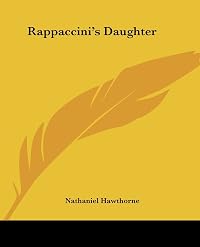
Rappaccini's Daughter [novelette]
by Nathaniel Hawthorne
On This Page
Description
"Rappaccini's Daughter" is a Gothic short story by Nathaniel Hawthorne first published in the December 1844. It is about Giacomo Rappaccini, a medical researcher in Padua, Italy, who grows a garden of poisonous plants. He brings up his daughter to tend the plants, and she becomes resistant to the poisons, but in the process she herself becomes poisonous to others.Tags
Recommendations




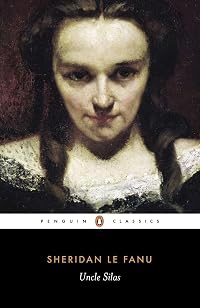
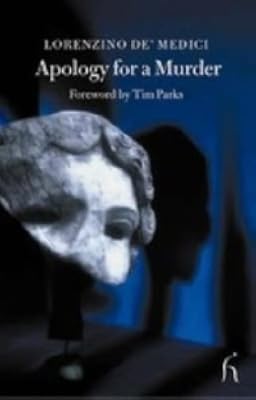
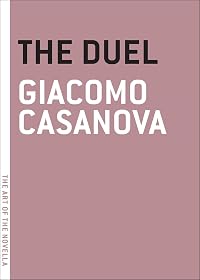
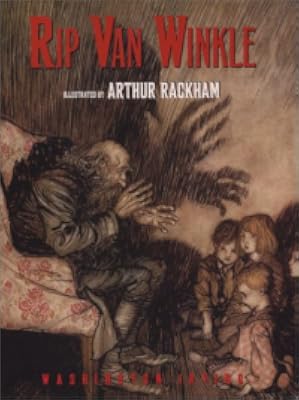







Member Recommendations

2wonderY Goss takes Beatrice and others into new adventures.
Member Reviews
I enjoyed this short story. So much so that I've been digging in the archives for more of Nathaniel Hawthorne's work. It never ceases to amaze me just how vast the world of literature is. Onwards with this review....
Scientific exploration and Ethics have had a contentious relationship throughout history and although the premise of Dr Rappacini's study is impossible - I like to think of this as a Shakespearian science fiction tragedy at best. Capulets with a bunsen burner.
Our characters: poisonous girl, normal boy, mad scientist father and nosy-potentially-dangerous adversarial scientist. Having just read a novel wherein the characters of this story are featured heavily and expanded upon, I thought I'd take a quick gander at the short show more story. What I find most interesting here is that the main character, Giovani was already a part of the experiment even before physically meeting with Rappacini's daughter. Seniora Lisbetta was much too accommodating.
Without going to deep into the details of this story, science has come a long way from the days when empirical data far outweighed any allegiance to ethical inquiry. show less
Scientific exploration and Ethics have had a contentious relationship throughout history and although the premise of Dr Rappacini's study is impossible - I like to think of this as a Shakespearian science fiction tragedy at best. Capulets with a bunsen burner.
Our characters: poisonous girl, normal boy, mad scientist father and nosy-potentially-dangerous adversarial scientist. Having just read a novel wherein the characters of this story are featured heavily and expanded upon, I thought I'd take a quick gander at the short show more story. What I find most interesting here is that the main character, Giovani was already a part of the experiment even before physically meeting with Rappacini's daughter. Seniora Lisbetta was much too accommodating.
Without going to deep into the details of this story, science has come a long way from the days when empirical data far outweighed any allegiance to ethical inquiry. show less
Giovanni Guasconti’s love for Rappaccini’s daughter, Beatrice, felt contrived but at the same time added story layers that left me loads to think about.
A young student comes to the University of Padua to study. Next door to his lodging he discovers a lush garden filled with exotic plants and flowers tended by a man and his beautiful daughter. Giovanni, the student learns from an old friend of his father, a physician who lives in Padua, that the man in the garden, whom he originally took to be the gardener, is really a famous and also somewhat infamous physician Rappaccini, known for his research in plant toxicology and knowledge of poisons. Giovanni is warned to stay away from that garden but smitten by the young woman he sees tending it, he ventures into it and makes her acquaintance. He is warmly received by her, and a romance begins to blossom. It will end with a tragic result.
I do enjoy this story. This particular version of it was hard to read at first; the notes mingle with summary mingle with story until it's hard to tell where the summary ends and the story begins. However, I enjoyed the re-read of the story even with the poor formatting choices.
Definitely a classic, and still easy enough to read (unlike some classics that haven't aged as well).
Definitely a classic, and still easy enough to read (unlike some classics that haven't aged as well).
This was okay. I hated The Scarlett Letter, but this story at least had an interesting plot. I’m just not a fan of Hawthorne’s writing style.
Review: This short read is about a boy who shifted to new city for studies and rented an apartment and fall in love with his neighbours daughter , whose father is mad scientist and obsessed with poisonous plants and ruin his only daughter life too by testing different poison potion on her and that make her a venomous human and now she is harmful to anyone who came near her as her breath is poisonous, because of that professor of boy on whose guarantee he came to this town inform him to stay away from that family because of there foul research and in the end daughter die a painful death and boy got saved by his Professor antidote to save him... Narration is excellent, plot is good and new , Characters are balanced and illustration work show more is superb.
Author did a fabulous work and make it a Goodread and one of my favourite American short stories. show less
Author did a fabulous work and make it a Goodread and one of my favourite American short stories. show less
Hmmm. Still mulling. I know I've read this before, but I'm surprised at how little I've remembered.
It's a bit slow starting, but it does pick up pace. I'm still not sure I entirely understand Baglioni's motives, or his statement at the end – may require another read.
It's a bit slow starting, but it does pick up pace. I'm still not sure I entirely understand Baglioni's motives, or his statement at the end – may require another read.
Members
- Recently Added By
Lists

Garden-fiction
67 works; 20 members
Author Information

881+ Works 79,394 Members
Nathaniel Hawthorne was born on July 4, 1804 in Salem, Massachusetts. When he was four years old, his father died. Years later, with financial help from his maternal relatives who recognized his literary talent, Hawthorne was able to enroll in Bowdoin College. Among his classmates were the important literary and political figures Horatio Bridge, show more Henry Wadsworth Longfellow, and Franklin Pierce. These friends supplied Hawthorne with employment during the early years after graduation while Hawthorne was still establishing himself as a legitimate author. Hawthorne's first novel, Fanshawe, which he self-published in 1828, wasn't quite the success that he had hoped it would be. Not willing to give up, he began writing stories for Twice-Told Tales. These stories established Hawthorne as a leading writer. In 1842, Hawthorne moved to Concord, Massachusetts, where he wrote a number of tales, including "Rappaccini's Daughter" and "Young Goodman Brown," that were later published as Mosses from an Old Manse. The overall theme of Hawthorne's novels was a deep concern with ethical problems of sin, punishment, and atonement. No one novel demonstrated that more vividly than The Scarlet Letter. This tale about the adulterous Puritan Hester Prynne is regarded as Hawthorne's best work and is a classic of American literature. Other famous novels written by Hawthorne include The House of Seven Gables and The Blithedale Romance. In 1852, Hawthorne wrote a campaign biography of his college friend Franklin Pierce. After Pierce was elected as President of the United States, he rewarded Hawthorne with the Consulship at Liverpool, England. Hawthorne died in his sleep on May 19, 1864, while on a trip with Franklin Pierce. (Bowker Author Biography) show less
Some Editions
Series
Belongs to Publisher Series
Work Relationships
Is contained in
Penny Dreadful Multipack Volume 7 – The Americans: The Legend of Sleepy Hollow, The Murders in the Rue Morgue, Mosses From An Old Manse, Owl Creek Bridge, The King In Yellow and 26 more (Illustrated) by CreateSpace Multipack (indirect)
The Scarlet Letter / The Blithedale Romance / Mosses from an Old Manse by Nathaniel Hawthorne (indirect)
Nathaniel Hawthorne: The Scarlet Letter(Centenary Text), Ethan Brand, The Birthmark, Young Gooman Brown, My Kinsman, Major Molineux, Rappaccini's Daughter & Others;1967 (Great Short Works) by Nathaniel Hawthorne
Short Stories by Nathaniel Hawthorne: P.'s Correspondence, Young Goodman Brown, Rappaccini's Daughter, the Minister's Black Veil, Ethan Brand by Books LLC
Flora Curiosa: Cryptobotany, Mysterious Fungi, Sentient Trees, and Deadly Plants in Classic Science Fiction and Fantasy by Chad Arment
The Collected Supernatural and Weird Fiction of Nathaniel Hawthorne, Volume 1 by Nathaniel Hawthorne
Has the adaptation
Has as a reference guide/companion
Common Knowledge
- Canonical title
- Rappaccini's Daughter [novelette]
- Original title
- Rappaccini's Daughter [novelette]
- Original publication date
- 1844-12
- People/Characters
- Giacomo Rappaccini; Beatrice Rappaccini; Giovanni Guasconti; Lisabetta
- Important places*
- Padua, Venetien, Italien
- First words*
- Vor langer Zeit kam ein junger Mann namens Giovanni Guasconti aus dem italienischen Süden nach Padua, um dort an der Universität seinen Studien zu obliegen.
- Last words*
- (Click to show. Warning: May contain spoilers.)Rappaccini! Rappaccini! Ist dies das Ende Eures Experiments?
- Original language*
- Englisch
- Disambiguation notice*
- This work is for the novelette only. Do not combine with identically titled works containing other short stories as well.
*Some information comes from Common Knowledge in other languages. Click "Edit" for more information.
Classifications
Statistics
- Members
- 279
- Popularity
- 115,578
- Reviews
- 12
- Rating
- (3.76)
- Languages
- 5 — English, German, Russian, Spanish, Swedish
- Media
- Paper, Audiobook, Ebook
- ISBNs
- 38
- UPCs
- 1
- ASINs
- 12