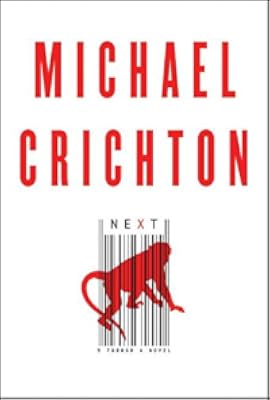
Next
by Michael Crichton
On This Page
Description
Is a loved one missing some body parts? Are blondes becoming extinct? Is everyone at your dinner table of the same species? Humans and chimpanzees differ in only 400 genes; is that why an adult human being resembles a chimp fetus? And should that worry us? There's a new genetic cure for drug addiction-is it worse than the disease? We live in a time of momentous scientific leaps; a time when it's possible to sell our eggs and sperm online for thousands of dollars or test our spouses for show more genetic maladies. We live in a time when one fifth of all our genes are owned by someone else, and an unsuspecting person and his family can be pursued cross-country because they happen to have certain valuable genes within their chromosomes . . . Devilishly clever, Next blends fact and fiction into a breathless tale of a new world where nothing is what it seems, and a set of new possibilities can open at every turn. Next challenges our sense of reality and notions of morality. Balancing the comic and bizarre with the genuinely frightening and disturbing, Next shatters our assumptions, and reveals shocking new choices where we least expect. The future is closer than you think. Get used to it. Performed by Dylan Baker. show lessTags
Recommendations

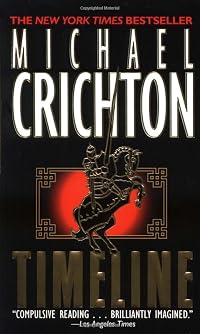
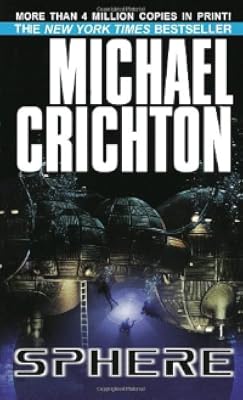
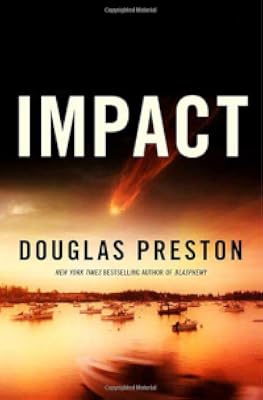
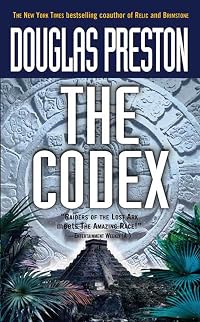
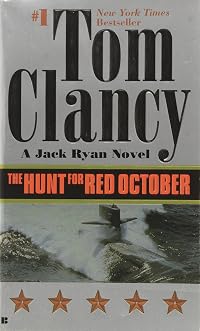
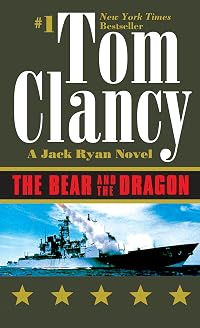
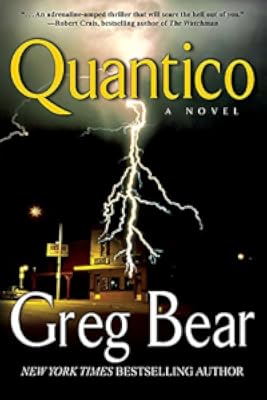
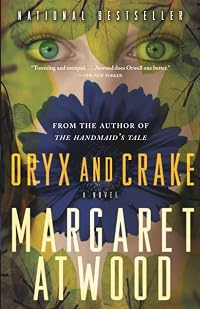
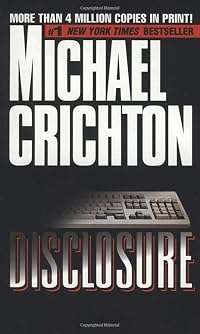
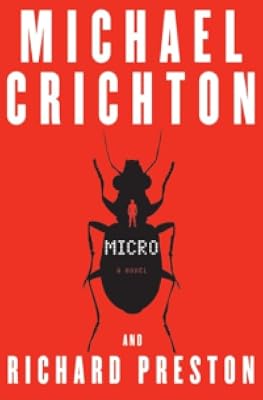
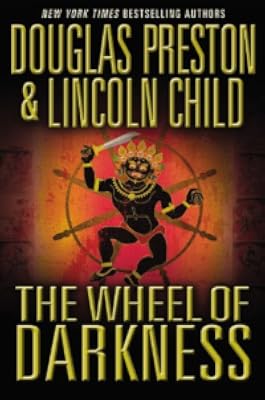


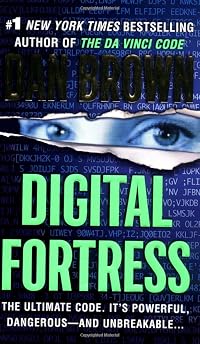
Member Recommendations

Desmorph In Next, Crichton takes genetic engineering to comical commercial heights; but with Rubicon Harvest, Kesting brings the future of stem cell science right into our world. Gritty and stunning in it's realism, Rubicon Harvest is a roller coaster ride of tech thrillers. Think Blade Runner meets CSI!!
PghDragonMan Maybe there is a reason some DNA experiments are off limits.
by stembrook
Member Reviews
I've been a long-time fan of Michael Crichton and respect his use of the thriller medium to frame for the masses his bold positions on controversial scientific, legal and ethical matters. I also hold a special interest in the debate surrounding the rapid advances in genetic engineering and gene therapy, having chosen that subject as the centerpiece for my first novel. So when I heard about the premise of "Next," it naturally secured a high spot on my holiday wish list.
I'm sorry to report, however, that "Next" fell short of my lofty expectations. The story reminded me of a four-hundred-page law school hypothetical, crammed to the hilt with unsavory, one-dimensional characters whose actions often served little purpose other than to show more generate issues for the reader to spot and analyze. There are the unethical biotech executives, patenting gene sequences willy-nilly and brazenly asserting ownership of human cells mined from unsuspecting citizens. And there are, of course, the shyster lawyers, all too eager to profit, in the most unscrupulous ways imaginable, from every new scenario presented by the biotech revolution. And finally there are the trans-genetic parrot and chimpanzee, living examples of the ethical minefield that lies before us.
That's not to say this the book wasn't entertaining or informative. Crichton certainly knows how to keep the pages turning with non-stop action, and he cannot be faulted for failing to cover the full spectrum of issues in the genetic engineering debate. I only wish he had spent as much time and energy on creating a believable plot and populating it with real characters as he did on researching and analyzing controversial genetic engineering issues. (Gerard the parrot, with his relentless quotation of movie lines, was the one memorable character in the lot.) And Crichton's attempt, in the closing chapters, to bring the myriad of plot strands together through numerous contrived happenings and coincidental intersections of the many characters, came off poorly. But for those who appreciate the haphazard plotting of movies like "Crash" and are more interested in the genetic engineering debate than in a coherent, well-told story, "Next" may prove satisfying, nonetheless.
-Kevin Joseph, author of "The Champion Maker show less
I'm sorry to report, however, that "Next" fell short of my lofty expectations. The story reminded me of a four-hundred-page law school hypothetical, crammed to the hilt with unsavory, one-dimensional characters whose actions often served little purpose other than to show more generate issues for the reader to spot and analyze. There are the unethical biotech executives, patenting gene sequences willy-nilly and brazenly asserting ownership of human cells mined from unsuspecting citizens. And there are, of course, the shyster lawyers, all too eager to profit, in the most unscrupulous ways imaginable, from every new scenario presented by the biotech revolution. And finally there are the trans-genetic parrot and chimpanzee, living examples of the ethical minefield that lies before us.
That's not to say this the book wasn't entertaining or informative. Crichton certainly knows how to keep the pages turning with non-stop action, and he cannot be faulted for failing to cover the full spectrum of issues in the genetic engineering debate. I only wish he had spent as much time and energy on creating a believable plot and populating it with real characters as he did on researching and analyzing controversial genetic engineering issues. (Gerard the parrot, with his relentless quotation of movie lines, was the one memorable character in the lot.) And Crichton's attempt, in the closing chapters, to bring the myriad of plot strands together through numerous contrived happenings and coincidental intersections of the many characters, came off poorly. But for those who appreciate the haphazard plotting of movies like "Crash" and are more interested in the genetic engineering debate than in a coherent, well-told story, "Next" may prove satisfying, nonetheless.
-Kevin Joseph, author of "The Champion Maker show less
So here we have another Crichton book that makes people flip out because he doesn’t deify scientists and constantly kiss their asses. He makes the assertion that science is a career these days and what do people do to get ahead in careers? They lie, cheat, steal and betray. Surprise.
One should not read Crichton for deep characterizations or esoteric dialogue. One reads Crichton for fast action, scientific inquiry and treachery. We get it in spades in Next. What we also get, unfortunately, are a lot of characters and sub-plots. At first, they are very hard to get involved with because each chapter devoted to them is very short, but soon enough we see parallels and they start to connect.
The most engaging and hilarious bit involves show more Gerald the transgenic parrot. His owner discovers that the human genetic element she installed is manifesting itself when she finds out he’s been helping her son with his math homework and it’s perfect (classwork is poor, homework is good – red flag for teacher). Soon Gerald talking up a storm and in addition to talking, he’s a biological tape recorder and starts playing back the scene of her husband’s latest affair. The husband flips out and gives the bird away. He ends up out west and is abandoned by the person transporting him to his new owner. Driven crazy by the bird’s incessant babbling, he just lets him go in the California desert. From there he ends up at an exclusive spa.
Gerald ties together many of the sub plots in the end. The Burnet family is being chased by the Biogen corporation so they can harvest some cells. Prior court rulings say that they own Mr. Burnet’s cells because he signed away his rights to them if used in any experiments, which of course they were. The Biogen Corporation is being taken apart from the inside because the major investor wants it all for himself. He is working with Mr. Burnet to make sure the cells are not recovered.
There’s an alleged ‘bioterrorist’ who decides to protest the industrialization of the world by genetically altering sea turtles. There’s a doctor at UCLA Medical who is selling organs and bones out of the bodies that come into the morgue. He performed some tests on some blood that his buddy brought to him to prove his own paternity of a transgenic chimpanzee. There’s a biologist and tour guide in Sumatra who is tracking a talking (and multi-lingual swearing) orangutan. There’s the head of the NIC who steals research papers and sets up younger doctors in positions he can exploit. In the end, Crichton weaves all of these seemingly disparate threads together.
But amid all the excitement and creeping dread, Crichton did make me think. And I didn’t like what I had to think about. All the hype and media exploitation of gene research and therapy. How gene research companies are patenting genes left and right even though they have no real evidence that the effects they are patenting are real. Companies are taking possession of human tissues and courts are ruling that people have no rights to their own body parts. Scary.
And that’s the point. Crichton wants to shock. To scare. To make us think. How much good it actually does is debatable. Peons like me have no say as to how the architecture of society gets built. I’m not stupid. I know this. And it worries me. Glad I don’t have kids. show less
One should not read Crichton for deep characterizations or esoteric dialogue. One reads Crichton for fast action, scientific inquiry and treachery. We get it in spades in Next. What we also get, unfortunately, are a lot of characters and sub-plots. At first, they are very hard to get involved with because each chapter devoted to them is very short, but soon enough we see parallels and they start to connect.
The most engaging and hilarious bit involves show more Gerald the transgenic parrot. His owner discovers that the human genetic element she installed is manifesting itself when she finds out he’s been helping her son with his math homework and it’s perfect (classwork is poor, homework is good – red flag for teacher). Soon Gerald talking up a storm and in addition to talking, he’s a biological tape recorder and starts playing back the scene of her husband’s latest affair. The husband flips out and gives the bird away. He ends up out west and is abandoned by the person transporting him to his new owner. Driven crazy by the bird’s incessant babbling, he just lets him go in the California desert. From there he ends up at an exclusive spa.
Gerald ties together many of the sub plots in the end. The Burnet family is being chased by the Biogen corporation so they can harvest some cells. Prior court rulings say that they own Mr. Burnet’s cells because he signed away his rights to them if used in any experiments, which of course they were. The Biogen Corporation is being taken apart from the inside because the major investor wants it all for himself. He is working with Mr. Burnet to make sure the cells are not recovered.
There’s an alleged ‘bioterrorist’ who decides to protest the industrialization of the world by genetically altering sea turtles. There’s a doctor at UCLA Medical who is selling organs and bones out of the bodies that come into the morgue. He performed some tests on some blood that his buddy brought to him to prove his own paternity of a transgenic chimpanzee. There’s a biologist and tour guide in Sumatra who is tracking a talking (and multi-lingual swearing) orangutan. There’s the head of the NIC who steals research papers and sets up younger doctors in positions he can exploit. In the end, Crichton weaves all of these seemingly disparate threads together.
But amid all the excitement and creeping dread, Crichton did make me think. And I didn’t like what I had to think about. All the hype and media exploitation of gene research and therapy. How gene research companies are patenting genes left and right even though they have no real evidence that the effects they are patenting are real. Companies are taking possession of human tissues and courts are ruling that people have no rights to their own body parts. Scary.
And that’s the point. Crichton wants to shock. To scare. To make us think. How much good it actually does is debatable. Peons like me have no say as to how the architecture of society gets built. I’m not stupid. I know this. And it worries me. Glad I don’t have kids. show less
This is, decidedly, not the book I was looking for. Next feels like an early draft of something that could have ended up being an interesting scientific thriller, but it’s a mess. And even saying that much is kind.
Where Next starts to dive a little into genetics, it struggles to find footing on an exact aspect of the science it wants to target. There’s corporate policy, ownership, patents, ending, morality in extraction, morality in experimentation… that’s the tip of the iceberg. While Crichton can be a bit preachy at some times, he’s often more balanced than he was in Next.
Every character in this book is the worst example of humanity. Male characters consistently belittle female character. All characters are incredibly show more greedy, going sideways outside the law in any way they can to get what they want. Every character is extreme and there’s so. many. POVs. I don’t think I saw a POV repeat until about page 100. There’s so many dramatic character interactions. This includes children trying to kill one another, animal testing, and a woman who was hired to frame a man for statutory rape (that whole scene… I have so many issues). While I don’t want to belittle these things, because they happen in real life and they are tragic and terrible, Crichton just went for all the most depraved aspects of humanity as though to say “genes will destroy humanity”. … Which is just… a little too conspiracy theory for me.
The storytelling itself almost entirely missing. There’s almost no consistent storyline, and the end of he book feels very much like a quick “oh shit” wrap up where most of the storylines come together. Of course, some characters and storylines were abandoned in the first half of the book and there’s no closure. Each chapter is one screenshot after another of some way gene therapy or genetic experimentation has ruined the lives of the character.
Overall I wouldn’t recommend Next to anyone. Not only is it an unimpressive story content-wise, it’s such a hot mess as a novel. It feels like a first draft more than a finished book and it’s a little surprising that it got all the way to publication in this state, because it’s such a mess? But bestselling authors do tend to get some leeway on these things. Crichton has a lot of a better books than this, and I suggest picking up one of those instead. show less
Where Next starts to dive a little into genetics, it struggles to find footing on an exact aspect of the science it wants to target. There’s corporate policy, ownership, patents, ending, morality in extraction, morality in experimentation… that’s the tip of the iceberg. While Crichton can be a bit preachy at some times, he’s often more balanced than he was in Next.
Every character in this book is the worst example of humanity. Male characters consistently belittle female character. All characters are incredibly show more greedy, going sideways outside the law in any way they can to get what they want. Every character is extreme and there’s so. many. POVs. I don’t think I saw a POV repeat until about page 100. There’s so many dramatic character interactions. This includes children trying to kill one another, animal testing, and a woman who was hired to frame a man for statutory rape (that whole scene… I have so many issues). While I don’t want to belittle these things, because they happen in real life and they are tragic and terrible, Crichton just went for all the most depraved aspects of humanity as though to say “genes will destroy humanity”. … Which is just… a little too conspiracy theory for me.
The storytelling itself almost entirely missing. There’s almost no consistent storyline, and the end of he book feels very much like a quick “oh shit” wrap up where most of the storylines come together. Of course, some characters and storylines were abandoned in the first half of the book and there’s no closure. Each chapter is one screenshot after another of some way gene therapy or genetic experimentation has ruined the lives of the character.
Overall I wouldn’t recommend Next to anyone. Not only is it an unimpressive story content-wise, it’s such a hot mess as a novel. It feels like a first draft more than a finished book and it’s a little surprising that it got all the way to publication in this state, because it’s such a mess? But bestselling authors do tend to get some leeway on these things. Crichton has a lot of a better books than this, and I suggest picking up one of those instead. show less
This is a smart science-based thriller about the ethical and legal issues surrounding genetic engineering. Crichton manages to cram so much material and thought into this book, that I'm almost shocked it's still a page-turner, but it is. The characters are absolutely believable, and the situations are frighteningly believable. Many of the questions addressed here are already drifting into our court-systems, and I'm sure some of the others are sure to follow. Yet, at heart, this is an intelligent novel that entertains even as it drives thought--I can't recommend it highly enough if you're interested in either the subject or the genre. There's also plenty of humor in the book, which is a welcome addition to the action and suspense. For show more animal lovers, especially, this will provide plenty of smiles. My only warning? This is a book that you need to read relatively quickly, whatever that is for you. There are so many different sub-plots and characters that you can't just drift through this one over the course of two or three weeks while reading other books on the side---though, really, the book will probably hook you quickly enough that you won't Want to put it down.
Yet, I do have some qualms that make it a less-than-five-star read, for two small reasons that don't really detract from the book in the end, Depending on you subjective take on what you want to gain from reading and your taste. First, there are So many sub-plots, that at times I was frustrated at how they'd all fit together. Yet, Crichton never let go of the ones that held the most interest, and balanced them admirably. Once I'd finished the book, considered the work as a whole, and given some thought to the title, I was satisfied with the structure and just decided to reread it at some later date if I have time--still, it was at times an inkling of an annoyance as to how it would all come together in the end.
Second, Crichton does have an agenda here. He did extensive research, and there's a "for further reading bibliography" at the end of the book that gives the proof, along with a short essay-like list of Crichton's post research conclusions on the questions he explores. For me personally, this is a welcome addition to the book, but then, I like books that make me think. If you're looking for a thriller that you can pick up and put down, reading it without letting it affect your thinking or drive you to consider larger contemporary issues facing our society, this may not be the best book for you. For me, again, I think it was well done, and makes this an intelligent book, but I realize others are looking to solely escape reality with their reading...and for them, this may not be quite sci-fi enough or live up to Jurassic Park, though I'd say it surpasses the earlier works that I've read.
In the end, if you're interested, I recommend it, but with the understanding that it's not for everyone, as described above. show less
Yet, I do have some qualms that make it a less-than-five-star read, for two small reasons that don't really detract from the book in the end, Depending on you subjective take on what you want to gain from reading and your taste. First, there are So many sub-plots, that at times I was frustrated at how they'd all fit together. Yet, Crichton never let go of the ones that held the most interest, and balanced them admirably. Once I'd finished the book, considered the work as a whole, and given some thought to the title, I was satisfied with the structure and just decided to reread it at some later date if I have time--still, it was at times an inkling of an annoyance as to how it would all come together in the end.
Second, Crichton does have an agenda here. He did extensive research, and there's a "for further reading bibliography" at the end of the book that gives the proof, along with a short essay-like list of Crichton's post research conclusions on the questions he explores. For me personally, this is a welcome addition to the book, but then, I like books that make me think. If you're looking for a thriller that you can pick up and put down, reading it without letting it affect your thinking or drive you to consider larger contemporary issues facing our society, this may not be the best book for you. For me, again, I think it was well done, and makes this an intelligent book, but I realize others are looking to solely escape reality with their reading...and for them, this may not be quite sci-fi enough or live up to Jurassic Park, though I'd say it surpasses the earlier works that I've read.
In the end, if you're interested, I recommend it, but with the understanding that it's not for everyone, as described above. show less
A reasonable page turning thriller that explores some interesting and controversial ideas, though my instinctive feeling is that the author is rather too one-sided in his presentation of these ideas. However, there are plain daft notions such as the fluently talking parrot Gerald and the “humanzee“ Dave that detract from the seriousness of the concepts the author seeks to explore. As a novel about ideas rather than people, the characters, of whom there are far too many, are thinly drawn and one feels little for most of them. Despite its 500 pages, the novel also doesn't really seem to come to a proper conclusion, but peters out rather suddenly, as though Crichton had reached the publishable page count and had to end it there. So all show more in all certainly one of Crichton's less impressive works. show less
it's been a while since i've read a biological thriller. this was really fun. the science and biological ethics that he brings up are super intriguing. as a thriller it's not great - there are so many strands of the story and many of them are thin, plus he goes too far with some of the speculative biology - but overall the ethical questions and biology were so interesting that i didn't really mind. the main issues are patenting (and therefore ownership) of genes and biological specimens and transgenic organisms/animals/creations. he brings up a lot of really interesting questions in the novel, and if you aren't sure his point, he has a nice author's note in the back that tells you what he thinks about all of it, with a reading list to show more back it up. i loved it for this ethical biology aspect and everything he does with it. the rest is honestly just meh, but it's totally worth reading for the good parts. it's also nice to read a thriller that has deeper implications. this was a fast, good read for me. show less
Crichton's back on form with this one. It's the subject area he knows best, well researched and with an interesting and almost belivable plot too. In a way the plot is secondary as Michael has several points (clearly laid out in the notes at the back) that he wishes to make. The plot doesn't get too contrived in order for him to make them.
The novel follows several characters lives though different chapters, this can be slightly confusing reading to begin with, but becomes clearer as the various interactions occur. They are all one way or another involved in the burgeoning genetics field. The conclusion is very rapid, Michael's made his points and suddenly all the plot lines are ended. Contrived - slightly, but worth reading anyway. show more
There are various newsstory articles scattered through the book, adding the flavour of the times. It is interesting to speculate which are real and which invented - details are given in the notes.
Are Michael's concern's real - well he's done the research with a well stocked binliography at the back I'm not going to argue. Some of his scenarios are distinctly magnified but the basic premise holds true. The Law is and Ass. The field of genetics is providing ample ground to show this is true. However I don't thkn the science is quite as doable as some of his characters manage to achieve (much like in Jurassic Park).
Enjoyable. Thoughtprovoking. show less
The novel follows several characters lives though different chapters, this can be slightly confusing reading to begin with, but becomes clearer as the various interactions occur. They are all one way or another involved in the burgeoning genetics field. The conclusion is very rapid, Michael's made his points and suddenly all the plot lines are ended. Contrived - slightly, but worth reading anyway. show more
There are various newsstory articles scattered through the book, adding the flavour of the times. It is interesting to speculate which are real and which invented - details are given in the notes.
Are Michael's concern's real - well he's done the research with a well stocked binliography at the back I'm not going to argue. Some of his scenarios are distinctly magnified but the basic premise holds true. The Law is and Ass. The field of genetics is providing ample ground to show this is true. However I don't thkn the science is quite as doable as some of his characters manage to achieve (much like in Jurassic Park).
Enjoyable. Thoughtprovoking. show less
Members
- Recently Added By
Published Reviews
ThingScore 38
All science fiction has some element of titillation — a strategy of taking known facts and stretching them to the limits of credulity, for the purposes of both entertaining and enlightening. But Crichton seems intent on confusing his readers, pummeling them with a barrage of truths, half-truths and untruths, until they have no choice but to surrender. As one of the author’s numerous show more stand-ins warns a naïve interlocutor, “Disinformation takes many forms.” Here, finally, Crichton has a point that should be heeded. show less
added by jlelliott
''Next'' would be a narrow, uninteresting book if its sole point were to condemn such tactics as transgressive. Instead Mr. Crichton moves far beyond questioning the morality of such experiments and acknowledges that they happen. His whole thriller-tutorial boils down to one troubling question, asked about each freakish breakthrough described here: Now what? Since ''Next'' is one of Mr. show more Crichton's more un-put-downable novels, the reader may experience some frustration. It's tempting to stop and look up each of the genetic, legal and ethical aberrations described here in order to see how wild a strain of science fiction is afoot. Save a step. Just believe this: Oddity after oddity in ''Next'' checks out, and many are replays of real events. ''This novel is fiction, except for the parts that aren't,'' Mr. Crichton writes, greatly understating the book's scary legitimacy. show less
added by jlelliott
Lists

Top Five Books of 2016
795 works; 229 members

Books Read in 2013
1,630 works; 51 members

So you want to get into medicine
29 works; 6 members

Allie's 2015 Reading List
33 works; 1 member

Books Read in 2015
3,299 works; 129 members

Books read in 2015
213 works; 5 members

Carole's List
445 works; 13 members

Best Science Fiction Novels
816 works; 430 members
Author Information

145+ Works 172,864 Members
John Michael Crichton, known as Michael Crichton, was born on October 28, 1942 in Chicago, Illinois. He wrote novels while attending Harvard University and Harvard Medical School to help pay the tuition. One of these, The Andromeda Strain, which was published in 1969, became a bestseller. After graduating summa cum laude, he was a postdoctoral show more fellow at the Salk Institute in California before becoming a full-time writer and film director. His carefully researched novels included Eaters of the Dead, The Terminal Man, The Great Train Robbery, Congo, Sphere, Jurassic Park, Rising Sun, Disclosure, The Lost World, Airframe, and Micro. He also wrote non-fiction works including Five Patients: The Hospital Explained, Jasper Johns, and Travels. In the late 1960s, he also wrote under the pen names Jeffrey Hudson and John Lange. He has received several awards including Writer of the Year in 1970 from the Association of American Medical Writers and two Edgar Awards in 1968 and in 1979. Many of his novels have been made into highly successful films, six of which he directed. He was also the creator and executive producer of the Emmy Award-winning television series ER. In addition to his writing and directorial success, his expertise in information science enabled him to run a software company and develop a computer game. He died of cancer on November 4, 2008 at the age of 66. (Bowker Author Biography) show less
Some Editions
Awards and Honors
Awards
Distinctions
Notable Lists
Series
Belongs to Publisher Series
Sündmuste horisont (24)
Work Relationships
Is contained in
Is abridged in
Common Knowledge
- Canonical title*
- Next
- Original title
- Next
- Original publication date
- 2006-11-28; 2006
- People/Characters
- Vasco Borden; Rick Diehl; Alex Burnet; Dr. Marty Roberts; Josh Winkler; Charlie Huggins (show all 9); Dr. Robert Bellarmino; Brad Gordon; Gerard
- Important places
- La Jolla, California, USA; Las Vegas, Nevada, USA
- Epigraph
- This novel is fiction,
except for the parts that aren't.
The more the universe seems incomprehensible, the more it also seems pointless.
—STEVEN WEINBERG
The word "cause" is an altar to an unknown god.
—WILLIAM JAMES
What is not possible is not to choose.
—JEAN-PAUL SARTRE - First words
- Vasco Borden, forty-nine, tugged at the lapels of his suit and straightened his tie as he walked down the plush carpeted hallway.
- Quotations
- Our bodies are our individual property. In a sense, bodily ownership is the most fundamental kind of ownership we know. It is the core experience or our being.
That is why when an individual donates tissue to a doctor ... (show all)of a research study, is is not the same as donating a book to a library. It never will be. If the doctor or his research institution wishes later to use tht tissue for some other purpose, they should be required to obtain permission for this new use. And so on, indefinitely.
Because the descendants of a dead person share his or her genes, their privacy is invaded if research is done, or if the genetic makeup of the dead person is published. The children of the dead person may lose their health insurance simply because contemporary laws do not reflect contemporary realities. - Last words
- (Click to show. Warning: May contain spoilers.)That gave Henry a chill.
- Original language
- English
*Some information comes from Common Knowledge in other languages. Click "Edit" for more information.
Classifications
Statistics
- Members
- 7,989
- Popularity
- 1,412
- Reviews
- 174
- Rating
- (3.24)
- Languages
- 19 — Chinese, Czech, Danish, Dutch, English, Estonian, Finnish, French, German, Greek, Hebrew, Hungarian, Indonesian, Italian, Japanese, Polish, Portuguese, Russian, Spanish
- Media
- Paper, Audiobook, Ebook
- ISBNs
- 77
- UPCs
- 1
- ASINs
- 31