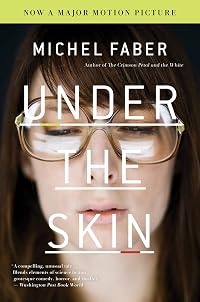
Under the Skin
by Michel Faber
On This Page
Description
Hailed as "original and unsettling, an Animal Farm for the new century" (Wall Street Journal), this debut novel lingers long after the last page has been turned. A "fascinating psychological thriller" (Baltimore Sun), this entrancing novel introduces Isserley, a female driver who scouts the Scottish Highlands for male hitchhikers with big muscles. She herself is tiny-like a kid peering up over the steering wheel. Scarred and awkward, yet strangely erotic and threatening, Isserley listens to show more her passengers as they open up to her, revealing clues about who might miss them should they disappear-and then she strikes. What happens to her victims next is only part of a terrifying reality. At once humane and horrifying, Under the Skin takes us on a heart-thumping ride through dangerous territory: our own moral instincts and the boundaries of compassion. A grotesque and comical allegory and a surreal representation of contemporary society run amok, Under the Skin was internationally received as the arrival of an exciting talent, rich and assured. show lessTags
Recommendations




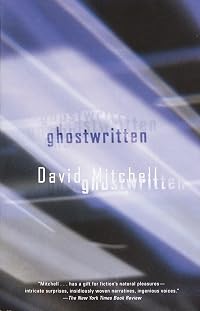

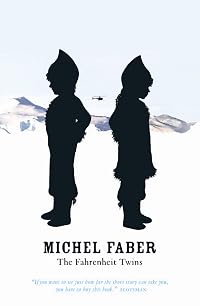
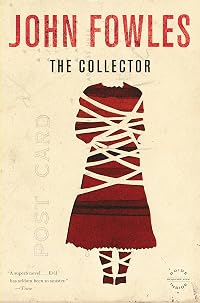
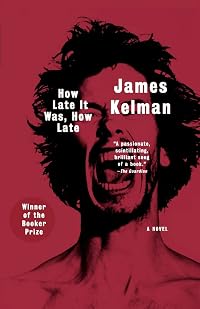




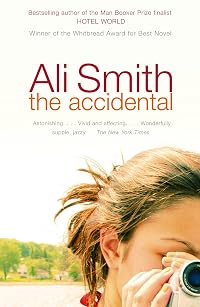
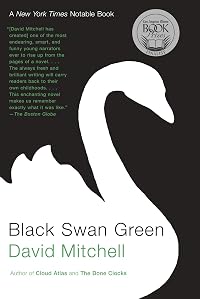
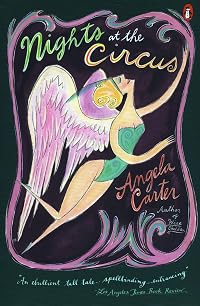

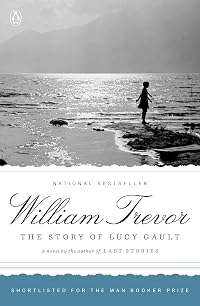




Member Recommendations
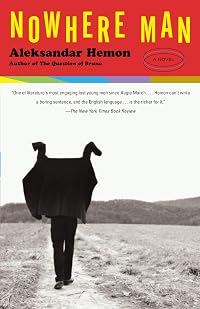
SqueakyChu Another novel in which average humans are not the "normals". Both novels view people from very interesting, albeit different, perspectives.
21
Member Reviews
Both the book and its film adaptation get the same rating from me. A female serial killer who sends the men she targets to a dreadful fate is a terrific inversion of the bog-standard female-as-victim trope that I am mortally sick of. It's telling that the only way this is allowed to happen is if the female in question is an alien. A human female serial killer? Unthinkable!
My eyes finally rolling back to the position where I can see to type, I'll say this for Faber's now -23-year-old novel and its ten-year-old film adaptation: the thoughts each provokes are deep and discomfiting ones about the nature of our unquestioned place as the apex of all things, as males and as humans.
My eyes finally rolling back to the position where I can see to type, I'll say this for Faber's now -23-year-old novel and its ten-year-old film adaptation: the thoughts each provokes are deep and discomfiting ones about the nature of our unquestioned place as the apex of all things, as males and as humans.
'Under The Skin' is a bleak, unremittingly grim book that's as hard to look away from as a car crash in progress. The writing grabbed hold of me and never let go. Geri Halligan's narration perfectly captured the mood of the piece and the pace of the plot. It was a memorable and disturbing read that I still find myself thinking about weeks later.
I'm not going to reveal the plot because I think that part of the power of the book comes from trying to work out who Isserley is and why she spends most of her time driving on the A9 in Scotland searching for well-built male hitchers to pick up.
'Under The Skin' has a lot of the attributes of Speculative Fiction Thriller. It's clear from the beginning that this is not a tale of everyday folk show more who cruise Scottish roads looking for men. There is something off about Isserley and that sense of not-what-she-seems-to-be grows as the reader spends more time with her. She is on some kind of mysterious covert mission that seems likely to involve violence and yet is something that Isserley regards as routine.
Yet, for me, 'Under The Skin' is not a genre read. It doesn't share the intent of a thriller to produce tension for tension's sake or of speculative fiction to present a What If? thought experiment. It sets out to do something darker, more serious and more disturbing. The genre trappings are there to disrupt the readers' everyday expectations and make them look at things with fresh eyes.
A lot of the book is about Isserley's rage. She has been betrayed, abused and forced into hard choices that have fundamentally and irrevocably changed her into someone she barely recognises. Isserley's rage isn't on the surface. She tries to suppress it, to make the most of her situation, to convince herself that she has found the best form of freedom available to her and to lose herself in small moments of peace. None of this abates her rage, and the stress on her increases when the routine that she uses to numb herself is disrupted by the arrival of a member of the elite who Isserley had once thought herself protected by. Isserley's pain, physical and emotional soak the pages of this book and stay in the reader's nostrils long after the last page.
What makes this darker is that Isserley is a predator as well as a victim. Being a predator is part of what lets her sleep at night. It's not that she takes pleasure in it but rather that it gives her a purpose and a sense of being in control. That Isserley's experiences of abuse and pain do not translate into any form of empathy for the people she preys on felt plausible to me. Isserley and those around her are able to do what they do because they compartmentalise their thinking. They make no links between their own experiences and needs and those of the people that the prey on. This felt very real to me.
With one exception, the story is told from Isserley's point of view using the close third-person. This was a very effective way of giving the reader intimate access to Isserley's thoughts and emotions while still keeping her at arm's length, inviting the reader to analyse and judge rather than immerse and empathise
The exception to the close third-person applies to the hitchers that Isserley picks up. The reader gets an unfiltered interior monologue from each hitcher as they assess Isserley once they get in the car. I thought these monologues were wonderful. Apart from being large, fit and male, the hitchers had very little in common. Hearing their thoughts, each with its distinctive idiolect, made them real to me in a very short time. It created more intimacy with them, whether they were likeable or not, than I was given with Isserley and helped me to see how little Isserley understood about the men she picked up.
Meat is central to this story. I've been a vegetrarian for three decades now but if I had been a carnivore thee are scenes in this book that would have made me reconsider my food choices.
The book took me to places and thoughts that I hadn't expected. The ending was a surprise but a satisfying that did nothing to relieve the oppressive bleakness of the story.
If you're in the mood for something dark and different that does more than entertain, then I recommend this book to you. show less
I'm not going to reveal the plot because I think that part of the power of the book comes from trying to work out who Isserley is and why she spends most of her time driving on the A9 in Scotland searching for well-built male hitchers to pick up.
'Under The Skin' has a lot of the attributes of Speculative Fiction Thriller. It's clear from the beginning that this is not a tale of everyday folk show more who cruise Scottish roads looking for men. There is something off about Isserley and that sense of not-what-she-seems-to-be grows as the reader spends more time with her. She is on some kind of mysterious covert mission that seems likely to involve violence and yet is something that Isserley regards as routine.
Yet, for me, 'Under The Skin' is not a genre read. It doesn't share the intent of a thriller to produce tension for tension's sake or of speculative fiction to present a What If? thought experiment. It sets out to do something darker, more serious and more disturbing. The genre trappings are there to disrupt the readers' everyday expectations and make them look at things with fresh eyes.
A lot of the book is about Isserley's rage. She has been betrayed, abused and forced into hard choices that have fundamentally and irrevocably changed her into someone she barely recognises. Isserley's rage isn't on the surface. She tries to suppress it, to make the most of her situation, to convince herself that she has found the best form of freedom available to her and to lose herself in small moments of peace. None of this abates her rage, and the stress on her increases when the routine that she uses to numb herself is disrupted by the arrival of a member of the elite who Isserley had once thought herself protected by. Isserley's pain, physical and emotional soak the pages of this book and stay in the reader's nostrils long after the last page.
What makes this darker is that Isserley is a predator as well as a victim. Being a predator is part of what lets her sleep at night. It's not that she takes pleasure in it but rather that it gives her a purpose and a sense of being in control. That Isserley's experiences of abuse and pain do not translate into any form of empathy for the people she preys on felt plausible to me. Isserley and those around her are able to do what they do because they compartmentalise their thinking. They make no links between their own experiences and needs and those of the people that the prey on. This felt very real to me.
With one exception, the story is told from Isserley's point of view using the close third-person. This was a very effective way of giving the reader intimate access to Isserley's thoughts and emotions while still keeping her at arm's length, inviting the reader to analyse and judge rather than immerse and empathise
The exception to the close third-person applies to the hitchers that Isserley picks up. The reader gets an unfiltered interior monologue from each hitcher as they assess Isserley once they get in the car. I thought these monologues were wonderful. Apart from being large, fit and male, the hitchers had very little in common. Hearing their thoughts, each with its distinctive idiolect, made them real to me in a very short time. It created more intimacy with them, whether they were likeable or not, than I was given with Isserley and helped me to see how little Isserley understood about the men she picked up.
Meat is central to this story. I've been a vegetrarian for three decades now but if I had been a carnivore thee are scenes in this book that would have made me reconsider my food choices.
The book took me to places and thoughts that I hadn't expected. The ending was a surprise but a satisfying that did nothing to relieve the oppressive bleakness of the story.
If you're in the mood for something dark and different that does more than entertain, then I recommend this book to you. show less
I'm glad I watched Jonathan Glazer's film version of Michel Faber's novel before I read the book. The slimmest of threads links the two and I love them both, but I think if I'd met Michel Faber's Isserley before I saw Scarlett Johansson's interpretation, I might have judged the film harshly.
The book goes more deeply into who Isserley is and why she does what she does. It considers class structures, animal rights and sexism through a lens of aliens who call themselves human living among humans that they call food.
It's strange, unsettling and heartbreaking.
The book goes more deeply into who Isserley is and why she does what she does. It considers class structures, animal rights and sexism through a lens of aliens who call themselves human living among humans that they call food.
It's strange, unsettling and heartbreaking.
I had never heard of this book, but caught the author talking about it on Radio 4. Although he managed to avoid giving away any spoilers, there was enough said to give me the idea that it might be delicious. And so it was. If you like a bit of sick horror with a really clever story running through it, then this is the book for you.
An odd looking woman drives a red Toyota around the Highlands picking up hitchhikers. Always men. Always strapping fellows. And they are never seen again… Peculiar, weird, compelling and highly enjoyable. Full of themes that really make you think, but without moralising or detracting from a really good yarn.
An odd looking woman drives a red Toyota around the Highlands picking up hitchhikers. Always men. Always strapping fellows. And they are never seen again… Peculiar, weird, compelling and highly enjoyable. Full of themes that really make you think, but without moralising or detracting from a really good yarn.
"Defies categorisation" declares the bumf on the back cover and I have to agree. I have never read anything quite like this before. In terms of its "otherness", I think "His Dark Materials" came closest, but in reality this is much, much more sinister.
A lone woman drives around the Scottish Highlands picking up male hitchhikers, but for what purpose? And there is something distinctly strange about her. Where does she come from? This book is all about the answers to those questions, as the big picture gradually becomes clear.
Aside from the impressive suspense element of the novel and its originality, what I liked very much was the writing style. All the hitchers get their bit of the narrative, each with their own distinct voice, so we show more get to know a bit about them as well as seeing the aforementioned driver Isserley through their eyes. I loved some of the descriptions (eg "...his eyes were bloodshot and full of stoically endured pain which only tsunamic revenge and the grovelling apologies of world leaders could hope to cure").
Potential spoilers in this paragraph ******* I did wonder, once we got to the business end of the book, about the feasibility of some of it. If it were fact not fiction, someone somewhere must have seen or suspected something, surely. And Isserley's understanding and use of English was perfect in some parts of the story, enabling her to improvise conversations with the hitchers, but when it suited the narrative, it was inadequate. Those were my only issues to be honest, for the most part I loved this book. And as a vegetarian it brought a wry smile to my face. show less
A lone woman drives around the Scottish Highlands picking up male hitchhikers, but for what purpose? And there is something distinctly strange about her. Where does she come from? This book is all about the answers to those questions, as the big picture gradually becomes clear.
Aside from the impressive suspense element of the novel and its originality, what I liked very much was the writing style. All the hitchers get their bit of the narrative, each with their own distinct voice, so we show more get to know a bit about them as well as seeing the aforementioned driver Isserley through their eyes. I loved some of the descriptions (eg "...his eyes were bloodshot and full of stoically endured pain which only tsunamic revenge and the grovelling apologies of world leaders could hope to cure").
Potential spoilers in this paragraph ******* I did wonder, once we got to the business end of the book, about the feasibility of some of it. If it were fact not fiction, someone somewhere must have seen or suspected something, surely. And Isserley's understanding and use of English was perfect in some parts of the story, enabling her to improvise conversations with the hitchers, but when it suited the narrative, it was inadequate. Those were my only issues to be honest, for the most part I loved this book. And as a vegetarian it brought a wry smile to my face. show less
Under the Skin by Michael Faber is a strange story that grows progressively weirder as it develops. Set in the Scottish Highlands the story slowly reveals that the main character, Isserley, spends her time driving around the roads of Northern Scotland and picks up hitchhikers. She doesn’t pickup women, and only stops for well developed, muscular men. After getting them into her car she guides the conversation to have her passenger reveal what ties they have and who would miss them if they don’t show up at their destination.
As the story moves along, the reader eventually discovers the purpose behind Isserley’s quest. The story grows ever darker and more terrifying. As more of Isserley’s character is revealed, the harder it is not show more to feel some empathy for her, although she certainly shows none for her victims. In truth, Isserley is an extraterrestrial who has been surgically altered to roughly take the human form. Her victims are drugged, mutilated, fattened and then shipped to her home planet for food.
With Under the Skin the author has delivered a beautifully written horror story with touches of macabre humor and, like many classic science fiction novels, this is a satirical novel with themes that revolve around the exploration of issues of humanity and other social concerns. I was totally spellbound by this brilliant, surreal exploration of morality but would caution that this story can be brutally graphic at times. This book deserves it's place on the 1,001 Books List and was a five star read for me. show less
As the story moves along, the reader eventually discovers the purpose behind Isserley’s quest. The story grows ever darker and more terrifying. As more of Isserley’s character is revealed, the harder it is not show more to feel some empathy for her, although she certainly shows none for her victims. In truth, Isserley is an extraterrestrial who has been surgically altered to roughly take the human form. Her victims are drugged, mutilated, fattened and then shipped to her home planet for food.
With Under the Skin the author has delivered a beautifully written horror story with touches of macabre humor and, like many classic science fiction novels, this is a satirical novel with themes that revolve around the exploration of issues of humanity and other social concerns. I was totally spellbound by this brilliant, surreal exploration of morality but would caution that this story can be brutally graphic at times. This book deserves it's place on the 1,001 Books List and was a five star read for me. show less
"Shared suffering, she found, was no guarantee of intimacy."
Isserley tours the A9 road in the Scottish Highlands looking for muscular male hitchhikers to pick up. Isserley wears a revealing top leading the reader to initially think that she is looking for sex, but as she sedates them with icpathua through needles built into the passenger seat it soon becomes clear something more sinister is happening.
As the story progresses Faber reveals that Isserley is a dog-like alien who has been surgically re-sculptured to resemble a 'vodsel' (human). Her job is to pick up healthy Earthlings to be fatted up and shipped back to her home planet as food. This then is a modern take on the Hansel and Gretel fairy-tale in which Isserley is the witch who show more lures her victims with the promise of sex rather than 'sugar and spice and all things nice.'
Faber obviously wants the reader to consider whether not it's right for humans to rear and slaughter thousands of animals every day for food but there are also parallels with the modern ‘empowered’ woman debate. Isserley undergoes painful surgery to avoid a life of drudgery on her home planet only to have to use what 'vodsel' men desire to succeed in their world. There is also the slow realisation that there were rooms full of females back home willing and ready to take her place.
You might imagine Isserley to gradually have some compassion for her victims but you would be mistaken. It was only the planet that she loved. She loves to breathe in the Earth’s smells, talks to sheep, and marvels at snow so it's somewhat ironic that she is finally stopped not by a hitchhiker or the police but a patch of ice.
This novel doesn't really seem to fit in either the sci-fi or the horror genres. I had no real idea quite where the story was going but couldn't resist turning over the next page to find out. Unfortunately the ending seemed to suggest that the author had no idea how to finish it either. I found this an odd but strangely compelling read. show less
Isserley tours the A9 road in the Scottish Highlands looking for muscular male hitchhikers to pick up. Isserley wears a revealing top leading the reader to initially think that she is looking for sex, but as she sedates them with icpathua through needles built into the passenger seat it soon becomes clear something more sinister is happening.
As the story progresses Faber reveals that Isserley is a dog-like alien who has been surgically re-sculptured to resemble a 'vodsel' (human). Her job is to pick up healthy Earthlings to be fatted up and shipped back to her home planet as food. This then is a modern take on the Hansel and Gretel fairy-tale in which Isserley is the witch who show more lures her victims with the promise of sex rather than 'sugar and spice and all things nice.'
Faber obviously wants the reader to consider whether not it's right for humans to rear and slaughter thousands of animals every day for food but there are also parallels with the modern ‘empowered’ woman debate. Isserley undergoes painful surgery to avoid a life of drudgery on her home planet only to have to use what 'vodsel' men desire to succeed in their world. There is also the slow realisation that there were rooms full of females back home willing and ready to take her place.
You might imagine Isserley to gradually have some compassion for her victims but you would be mistaken. It was only the planet that she loved. She loves to breathe in the Earth’s smells, talks to sheep, and marvels at snow so it's somewhat ironic that she is finally stopped not by a hitchhiker or the police but a patch of ice.
This novel doesn't really seem to fit in either the sci-fi or the horror genres. I had no real idea quite where the story was going but couldn't resist turning over the next page to find out. Unfortunately the ending seemed to suggest that the author had no idea how to finish it either. I found this an odd but strangely compelling read. show less
Members
- Recently Added By
Lists

The Guardian's 1000 Novels Everyone Must Read
1,005 works; 551 members

1001 Books You Must Read Before You Die
1,448 works; 1,135 members
Best Dystopias
280 works; 277 members

Recommend the 20 best books you've read in the last five years
2,168 works; 607 members

Top Five Books of 2022
736 works; 272 members

Science Fiction Pretending not to be Science Fiction
7 works; 1 member

Pleasant Surprises: Books That Exceeded Our Expectations
418 works; 143 members

Top Five Books of 2018
802 works; 265 members

Favorite Science Fiction
457 works; 220 members

00
23 works; 1 member

Take Four Books
130 works; 1 member

Overdue Podcast
808 works; 9 members

Books We Couldn't Put Down
443 works; 197 members

Reading Glasses Podcast
410 works; 3 members

Recommended - Get back into reading
17 works; 1 member

Books Read in 2022
5,226 works; 115 members

2022 To Read List
11 works; 2 members

Top Five Books of 2025
954 works; 303 members

My TBR
371 works; 3 members

1,001 BYMRBYD Concensus
723 works; 27 members

Most thought-provoking novels
30 works; 28 members

Exceptional thrillers that deserve a wider audience
49 works; 3 members

Watched the Movie, Probably Won't Read the Book
185 works; 34 members

Houghton Mifflin Harcourt
45 works; 1 member

Broderick and Di Filippo's Science Fiction: The 101 Best Novels 1985-2010
103 works; 7 members

75 Books Challenge 2015 Halloween Read long list
45 works; 4 members

Books Read in 2014
2,344 works; 89 members

BingoDOG - Genre Benders
74 works; 14 members

Read This Next
120 works; 3 members

A Novel Cure
742 works; 23 members

Most Disturbing Books
124 works; 27 members

BBC Radio 4 Bookclub
341 works; 13 members
Author Information

45+ Works 15,860 Members
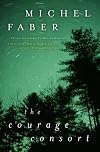
Michel Faber was born in The Hague, Netherlands on April 13, 1960. He was educated at the University of Melbourne. His books include The Crimson Petal and the White, The Fahrenheit Twins, Under the Skin, The Apple, and The Book of Strange New Things. He is also the author of two novellas, The Hundred and Ninety-Nine Steps and The Courage Consort. show more He won several short-story awards, including the Neil Gunn, Ian St James and Macallan. He made The New York Times Best Seller List with his title The Book of Strange New Things. This title also made the shortlist for the Arthur C Clarke Award for science-fiction in 2015. (Bowker Author Biography) show less
Some Editions
Awards and Honors
Awards
Notable Lists
Series
Belongs to Publisher Series
The Canons (4)
Work Relationships
Has the adaptation
Common Knowledge
- Canonical title
- Under the Skin
- Original title
- Under the skin
- Original publication date
- 2004
- People/Characters
- Isserley; Amlis Vess; Ensel; Esswis; Yns; Hilis
- Important places
- Scotland, UK
- Related movies
- Under the Skin (2014 | IMDb)
- Dedication
- Thanks to Jeff and Fuggo
and especially to my wife, Eva,
for bringing me back to earth - First words
- Isserley always drove straight past a hitch-hiker when she first saw him, to give herself time to size him up.
- Last words
- (Click to show. Warning: May contain spoilers.)'Here I come,' she said.
- Original language*
- Engels
*Some information comes from Common Knowledge in other languages. Click "Edit" for more information.
Classifications
Statistics
- Members
- 2,747
- Popularity
- 6,719
- Reviews
- 134
- Rating
- (3.74)
- Languages
- 17 — Chinese, Czech, Danish, Dutch, English, Estonian, Finnish, French, German, Hungarian, Italian, Latvian, Norwegian (Bokmål), Polish, Romanian, Spanish, Swedish
- Media
- Paper, Audiobook, Ebook
- ISBNs
- 57
- UPCs
- 1
- ASINs
- 12