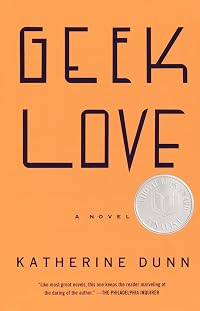
Geek Love
by Katherine Dunn
On This Page
Description
Nominated for the National Book Award, Geek Love is mesmerizing, daring, and unconventional. Award-winning novelist Katherine Dunn fascinates and amazes much the same way tornados, earthquakes, and volcanos do. No one wants to be a victim, but most find the event too hypnotic to ignore. In order to save their traveling carnival from bankruptcy, the Binewskis are creating their own brood of sideshow freaks. Under Al's careful direction, the pregnant Lil ingests radioisotopes, insecticides, show more and arsenic to make her babies "special." As the oldest daughter, albino dwarf Olympia, puts listeners in the ring side seat, her family's incredible drama erupts and spills over into the "normal" world. Not for the squeamish or faint of heart, this brilliantly daring novel is shocking and delightful. Christina Moore's vibrant narration conspires with Katherine Dunn's evocative, energetic prose to shock us at seeing something of ourselves in these exotic characters. show lessTags
Recommendations
Member Recommendations

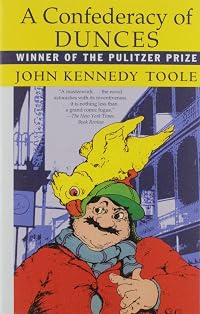
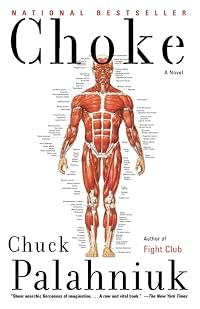
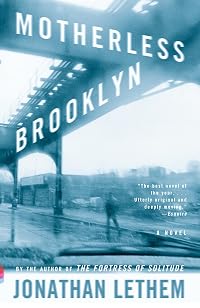
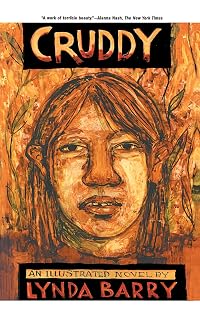
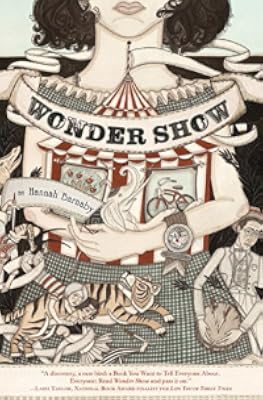
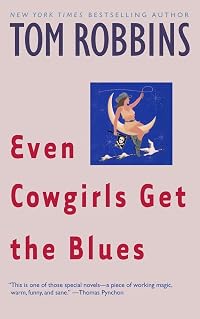
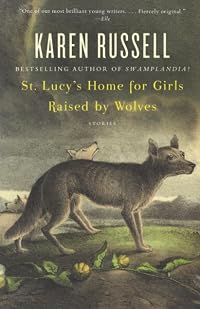
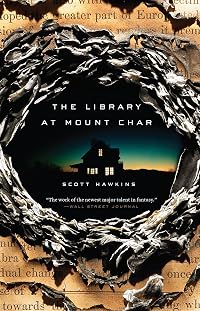
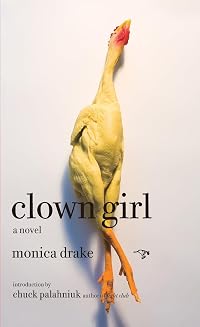
fyrefly98 Both are books featuring sideshow freaks, and both are about the need to define identity through uniqueness, and the costs of doing so.
10
Seveteje Dark humor, Disability, A Smidge of Magical Realism, Travel

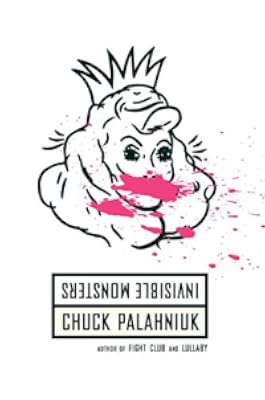
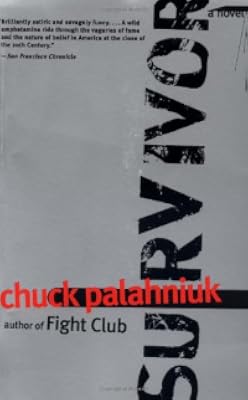
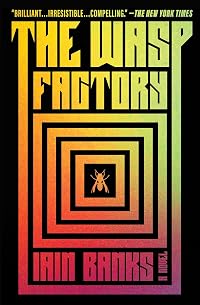
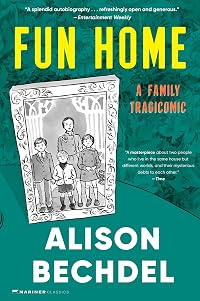
susanbooks another fascinatingly grotesque, intensely enmeshed family
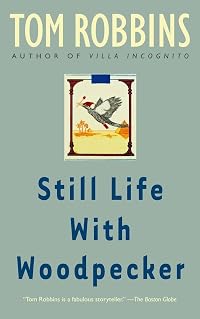
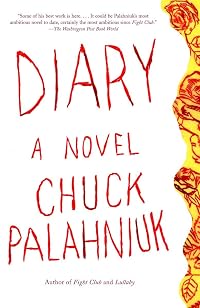
ligature A compelling but brutal story with horrible characters.


by Cecrow

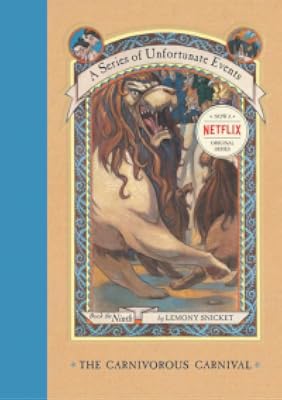
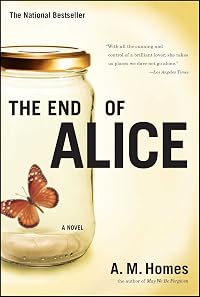
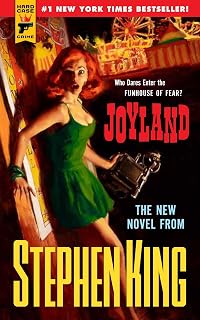
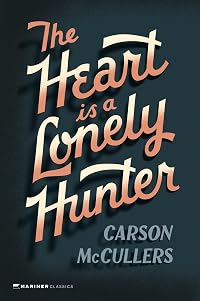
andbirds A similar story about a very odd, unique family.
Member Reviews
You ever read a book that feels less like a story and more like being dragged through a carnival after midnight—lights flickering, something rotting behind the cotton candy, everyone smiling just a little too wide?
That’s Geek Love by Katherine Dunn.
And I don’t mean that as a warning. I mean it as a dare.
This isn’t one of those polite novels you stack on your nightstand to signal you’re “well-read.” This thing breathes. It mutates. It stares back at you and asks questions you don’t want to answer—about family, about love, about what we’re willing to deform in ourselves just to belong to something.
The premise alone should be enough to send most people running: parents who intentionally engineer their children to be show more “freaks” for a traveling circus. But that’s just the surface-level grotesque—the hook. The real horror is quieter. It’s devotion twisted into something unrecognizable. It’s loyalty that crosses a line so gradually you don’t notice until you’re already on the other side, nodding along.
And that’s the uncomfortable truth of it: you do nod along.
I caught myself doing it—justifying things I shouldn’t, understanding people I didn’t want to understand. That’s Dunn’s trick. She doesn’t ask for your sympathy. She takes it.
There’s something in here about the lie we tell ourselves—that love is inherently good. That family is sacred. That belonging is worth whatever it costs.
This book doesn’t argue against those ideas. It just quietly shows you what they look like when taken to their logical extreme… and lets you sit there with it.
No moral. No clean ending. No relief.
Just the lingering sense that the line between “them” and “us” is thinner than we’d like to admit—and maybe always has been.
Read it if you want something safe, and you’ll hate it.
Read it if you want something true, and it’ll stay with you longer than you’d like. show less
That’s Geek Love by Katherine Dunn.
And I don’t mean that as a warning. I mean it as a dare.
This isn’t one of those polite novels you stack on your nightstand to signal you’re “well-read.” This thing breathes. It mutates. It stares back at you and asks questions you don’t want to answer—about family, about love, about what we’re willing to deform in ourselves just to belong to something.
The premise alone should be enough to send most people running: parents who intentionally engineer their children to be show more “freaks” for a traveling circus. But that’s just the surface-level grotesque—the hook. The real horror is quieter. It’s devotion twisted into something unrecognizable. It’s loyalty that crosses a line so gradually you don’t notice until you’re already on the other side, nodding along.
And that’s the uncomfortable truth of it: you do nod along.
I caught myself doing it—justifying things I shouldn’t, understanding people I didn’t want to understand. That’s Dunn’s trick. She doesn’t ask for your sympathy. She takes it.
There’s something in here about the lie we tell ourselves—that love is inherently good. That family is sacred. That belonging is worth whatever it costs.
This book doesn’t argue against those ideas. It just quietly shows you what they look like when taken to their logical extreme… and lets you sit there with it.
No moral. No clean ending. No relief.
Just the lingering sense that the line between “them” and “us” is thinner than we’d like to admit—and maybe always has been.
Read it if you want something safe, and you’ll hate it.
Read it if you want something true, and it’ll stay with you longer than you’d like. show less
This book is beautiful and horrible. Mostly, I think, due to Dunn's writing style, which is gorgeous and lush and always stays just on the good side of precious.
I'm not really sure what I want to say about this book, because I sort of fell into it like a black hole and couldn't really think about it until I got out of it. I didn't hate all the characters like some other reviewers. I'm pretty fond of almost all of them, actually. Even Al and Lil, who deliberately mutated their children for profit. Their travelling circus was an alternate world where diversity in body layout was celebrated and not shamed, and in that it was surprisingly nice. Of course, there was a lot of other emotional manipulation going on which was dark and terrible show more but some of the ways that Olympia described having to live in the world after leaving the circus really made it clear that she lived without prejudice because of how she looked. Lil's obvious love for all her children kind of broke my heart. The inside of her head must be so beautiful. She has an idyllic version of her life in which she and her husband didn't create their children in order to sell their bodies for profit, in which her son isn't a megalomaniac, in which the real world is as tolerant as the travelling circus community, in which her family is happy forever. I wish these things were true, for her.
So I obviously loved this book because I'm into grotesque imagery and mad science. Doc P and Miss Lick were some of the more interesting characters to me. Miss Lick has such an interestingly skewed worldview; while I disagree with what she's doing, I'm not sure I necessarily do within the book world. I'd love to read her notes and journals.
As great and terrible as I found this book though, I'm reading it as a person who doesn't have a disability. While I liked how their microcosm of the circus allowed Olympia to be so matter-of-fact about her appearance and the everyday life of living without limbs or joined to your sister or with a hump, there's definitely a sense of "freak show" voyeurism in reading this book. show less
I'm not really sure what I want to say about this book, because I sort of fell into it like a black hole and couldn't really think about it until I got out of it. I didn't hate all the characters like some other reviewers. I'm pretty fond of almost all of them, actually. Even Al and Lil, who deliberately mutated their children for profit. Their travelling circus was an alternate world where diversity in body layout was celebrated and not shamed, and in that it was surprisingly nice. Of course, there was a lot of other emotional manipulation going on which was dark and terrible show more but some of the ways that Olympia described having to live in the world after leaving the circus really made it clear that she lived without prejudice because of how she looked. Lil's obvious love for all her children kind of broke my heart. The inside of her head must be so beautiful. She has an idyllic version of her life in which she and her husband didn't create their children in order to sell their bodies for profit, in which her son isn't a megalomaniac, in which the real world is as tolerant as the travelling circus community, in which her family is happy forever. I wish these things were true, for her.
So I obviously loved this book because I'm into grotesque imagery and mad science. Doc P and Miss Lick were some of the more interesting characters to me. Miss Lick has such an interestingly skewed worldview; while I disagree with what she's doing, I'm not sure I necessarily do within the book world. I'd love to read her notes and journals.
As great and terrible as I found this book though, I'm reading it as a person who doesn't have a disability. While I liked how their microcosm of the circus allowed Olympia to be so matter-of-fact about her appearance and the everyday life of living without limbs or joined to your sister or with a hump, there's definitely a sense of "freak show" voyeurism in reading this book. show less
Original review: im heartbroken
Additional review: I'm writing this, I think weeks, if not a month after finishing this book. This is one I had to process. For a full week after finishing it, I felt completely lost in thought. I felt like my friends were gone, that a world so deep and meaningful was all a farce. It's sort of like waking up from a dream that felt like real life, and missing the people you formed deep bonds with.
I can't speak more highly of this book. The writing is INCREDIBLE, a bit challenging at times which I appreciated, very poetic and haunting. The characters you don't realize you're in love with until they are gone. There is so much I could say about this book, so many thoughts I had... the way Dunn writes about show more family dynamics and trauma is so real and painful and sweet. I can recall the most devastating scenes so clearly like they were a part of my own life, like I saw them with my eyes. Oh, Chick.......... show less
Additional review: I'm writing this, I think weeks, if not a month after finishing this book. This is one I had to process. For a full week after finishing it, I felt completely lost in thought. I felt like my friends were gone, that a world so deep and meaningful was all a farce. It's sort of like waking up from a dream that felt like real life, and missing the people you formed deep bonds with.
I can't speak more highly of this book. The writing is INCREDIBLE, a bit challenging at times which I appreciated, very poetic and haunting. The characters you don't realize you're in love with until they are gone. There is so much I could say about this book, so many thoughts I had... the way Dunn writes about show more family dynamics and trauma is so real and painful and sweet. I can recall the most devastating scenes so clearly like they were a part of my own life, like I saw them with my eyes. Oh, Chick.......... show less
I've participated in LibraryThing's SantaThing program since it's inception. One year I asked for something bizarre, weird, or strange, and also gave assurance that I wasn't easily offended. LibraryThing member fyrefly98 (who also has a marvelous book blog) selected Geek Love by Katherine Dunn for me. This rather odd story was a fantastic choice. Not having been previously aware of Geek Love, I thought the book was much newer than it actually is, partially because of the cover design (which apparently caused quite a stir initially, appropriately flaunting it's unconventional aesthetics). Written in 1983 (and fully published in 1989) it was a finalist for both the 1989 National Book Award and the 1990 Bram Stoker Award. It took me nearly show more a year to get around to reading it, but I am so glad that I finally did.
Aloysius and Crystal Lil own and manage the Binewski Fabulon, a traveling carnival. When it looked as thought the business was beginning to fail, they set out to change matters and genetics. By combining drug concoctions and other dubious methods, they plan to create their own freakshow with their own children. There is Arturo, the enigmatic AquaBoy, born with flippers rather than limbs; the beautiful and charming conjoined twins Iphigenia and Electra; poor Olympia is only an albino dwarf with a small hunchback; and Furtunato, better known as Chick, unfortunately looks like a norm--but his mental powers are astounding. Geek Love is a story about a family not afraid of being different and who are quite proud of their uniqueness. But it also the story of their struggles as they grow, so fixated and obsessed with being special that it can only end in tragedy.
Geek Love is primarily told in the first person by Oly, although the narrative occasionally slips into the third person. The text of personal notes, diaries, and newspaper clippings are also included. Overall, it seemed a bit disjointed, but it makes sense when at the end it is revealed that all of these material have been collected together--ultimately it's not so much a book as it is a box full of family memorabilia. The family dynamics portrayed are intense but really no different than what would be seen from a "normal" family. It isn't the characters' physical peculiarities that make them monsters, but their personalities and their actions towards one another and those outside the family. Sibling rivalry doesn't often directly result in physical violence, but the extreme mental and emotional manipulations are exceedingly harsh and damaging, especially those initiated by Arty. Despite the fantastical and often unbelievable nature of the story, at its heart it comes across as brutally authentic.
Geek Love is definitely not for everyone (I know of more than one person who was offended or utterly repulsed by the book) but I thought it was incredible. Generally, I was much more interested in the history of the Binewski family (which really is most of the book) rather than the "Notes for Now" sections which followed Oly and her daughter Miranda. The ending of the book did seem a little rushed to me, but the book as a whole was very well paced--I was completely engaged by the story and could hardly tear myself away from my morbid fascination. Appalling, disturbing, and bizarre, Geek Love is intense and not for the faint of heart or the weak of stomach. It's been a while since a book has affected me to such an extent, but I was completely blown away. Geek Love has made a lasting impression; I'll certainly be thinking about it for quite some time and I'll definitely be holding onto my copy. Thanks again, Fyrefly!
Experiments in Reading show less
Aloysius and Crystal Lil own and manage the Binewski Fabulon, a traveling carnival. When it looked as thought the business was beginning to fail, they set out to change matters and genetics. By combining drug concoctions and other dubious methods, they plan to create their own freakshow with their own children. There is Arturo, the enigmatic AquaBoy, born with flippers rather than limbs; the beautiful and charming conjoined twins Iphigenia and Electra; poor Olympia is only an albino dwarf with a small hunchback; and Furtunato, better known as Chick, unfortunately looks like a norm--but his mental powers are astounding. Geek Love is a story about a family not afraid of being different and who are quite proud of their uniqueness. But it also the story of their struggles as they grow, so fixated and obsessed with being special that it can only end in tragedy.
Geek Love is primarily told in the first person by Oly, although the narrative occasionally slips into the third person. The text of personal notes, diaries, and newspaper clippings are also included. Overall, it seemed a bit disjointed, but it makes sense when at the end it is revealed that all of these material have been collected together--ultimately it's not so much a book as it is a box full of family memorabilia. The family dynamics portrayed are intense but really no different than what would be seen from a "normal" family. It isn't the characters' physical peculiarities that make them monsters, but their personalities and their actions towards one another and those outside the family. Sibling rivalry doesn't often directly result in physical violence, but the extreme mental and emotional manipulations are exceedingly harsh and damaging, especially those initiated by Arty. Despite the fantastical and often unbelievable nature of the story, at its heart it comes across as brutally authentic.
Geek Love is definitely not for everyone (I know of more than one person who was offended or utterly repulsed by the book) but I thought it was incredible. Generally, I was much more interested in the history of the Binewski family (which really is most of the book) rather than the "Notes for Now" sections which followed Oly and her daughter Miranda. The ending of the book did seem a little rushed to me, but the book as a whole was very well paced--I was completely engaged by the story and could hardly tear myself away from my morbid fascination. Appalling, disturbing, and bizarre, Geek Love is intense and not for the faint of heart or the weak of stomach. It's been a while since a book has affected me to such an extent, but I was completely blown away. Geek Love has made a lasting impression; I'll certainly be thinking about it for quite some time and I'll definitely be holding onto my copy. Thanks again, Fyrefly!
Experiments in Reading show less
It's been nice to watch "Geek Love" -- a foundation stone of disability lit and a love letter to the American road and the Pacific Northwest -- acquire an audience over the past few years. There's a lot about the book that charms. We get to experience the weird, hermetic world of a carnival, to meet a gaggle of unforgettably odd, mostly sympathetic characters, and hear about the experiences and views of Olympia Binewski, humpbacked albino dwarf and all-around survivor. Even though the author successfully avoids most spooky-carnival cliches, "Geek Love" has its own sort of magic. It helps, of course, that Katherine Dunn could write like a champ. Her sentences are both knotty and wonderfully precise, allowing her to lend a sort of show more forthrightness to material that lesser writers would use for cheap atmosphere.
On rereading "Geek Love," though, I was struck by how dispassionate a lot the analysis that Katherine Dunn includes here actually is. Well, maybe "dispassionate" is the wrong word: many characters in this book do care for each other. But "Geek Love" is much more thematically coherent than you'd think a book about carnival geeks would be. Without being excessively cold-blooded or theoretical, the book really does mean to lay out the various ways in which capitalism makes use of normative and non-normative bodies. "Geek Love" spends a surprising amount of time considering the economic and cultural structures that underlie the freak show. Or maybe it's not so surprising: the Binewskis know that that, at the end of the day, the point of their enterprise is to sell tickets to the norms. The novel's characters helpfully delineate the difference between born freaks, made freaks, freaks forced into normativity, and normals who merely dabble in freakery. The author carefully catalogs not just extreme bodily difference but the responses it elicits: while carnival crowds gawk, monstrous Arturo the Aqua Boy exults in his freakishness. One of the book's characters disfigures young women to make sure that they obtain good jobs at good wages, while, at the same time, most of the carnival's young geeks are bound for Ivy League schools as soon as the summer ends. Freakishness, as a category, is pretty fluid here, but I think that Dunn also wants to demonstrate how tough and resistant to change even the most unusual bodies are. Olympia is, at the time of her narration, already growing old but must constantly strive to navigate everyday life being two feet shorter than most people, and taking two steps to their one. Not that she has she given up on the concept of family, exactly: the blood ties that was always at the center of her rootless carnival experience. Freakishness -- the kind that packs the stands, at least -- comes and goes in "Geek Love", but the body always seems to persevere. This book deserves its reputation as a left-field classic. show less
On rereading "Geek Love," though, I was struck by how dispassionate a lot the analysis that Katherine Dunn includes here actually is. Well, maybe "dispassionate" is the wrong word: many characters in this book do care for each other. But "Geek Love" is much more thematically coherent than you'd think a book about carnival geeks would be. Without being excessively cold-blooded or theoretical, the book really does mean to lay out the various ways in which capitalism makes use of normative and non-normative bodies. "Geek Love" spends a surprising amount of time considering the economic and cultural structures that underlie the freak show. Or maybe it's not so surprising: the Binewskis know that that, at the end of the day, the point of their enterprise is to sell tickets to the norms. The novel's characters helpfully delineate the difference between born freaks, made freaks, freaks forced into normativity, and normals who merely dabble in freakery. The author carefully catalogs not just extreme bodily difference but the responses it elicits: while carnival crowds gawk, monstrous Arturo the Aqua Boy exults in his freakishness. One of the book's characters disfigures young women to make sure that they obtain good jobs at good wages, while, at the same time, most of the carnival's young geeks are bound for Ivy League schools as soon as the summer ends. Freakishness, as a category, is pretty fluid here, but I think that Dunn also wants to demonstrate how tough and resistant to change even the most unusual bodies are. Olympia is, at the time of her narration, already growing old but must constantly strive to navigate everyday life being two feet shorter than most people, and taking two steps to their one. Not that she has she given up on the concept of family, exactly: the blood ties that was always at the center of her rootless carnival experience. Freakishness -- the kind that packs the stands, at least -- comes and goes in "Geek Love", but the body always seems to persevere. This book deserves its reputation as a left-field classic. show less
I was ready for a walk on the wild side. This was beyond wild side. It was a trip into a bizzarro dimension. A struggling couple that own a carnival influence her pregnancies with drugs, insecticides, arsenic, and radioisotopes to have 'special' children. Yep, they turn out very special indeed. And thus we're off on one of the weirdest family sagas ever. I know authors are supposed to have active imaginations but Dunn's imagination in this book is beyond an over-active imagination. It's nuclear!
Dunn lights a fuse early in the book. It's a long fuse. Still, you know the book is going to blow up in your hands. It's just a matter of when. At the core it is revelations about humanness. Is your body you? Does alterations of a body change show more one's essence? Geek Love does have some tenderness, some humor (well, it's unconventional, out-there humor), and lots of gets-under-your-skin itchiness. The conclusion wasn't all I hoped for but the journey to get there was more than I hoped for. show less
Dunn lights a fuse early in the book. It's a long fuse. Still, you know the book is going to blow up in your hands. It's just a matter of when. At the core it is revelations about humanness. Is your body you? Does alterations of a body change show more one's essence? Geek Love does have some tenderness, some humor (well, it's unconventional, out-there humor), and lots of gets-under-your-skin itchiness. The conclusion wasn't all I hoped for but the journey to get there was more than I hoped for. show less
One of the weirder books I have read. Note that the term "weird", for me, is synonymous with "very cool". I like to experience things that are completely different from the gray day complacency of everyday life. Anyway, it is about these parents who own a carnival and decide to intentionally give the wife tetragenic substances during her pregnancies for the sole purpose of causing freakish birth defects in all of their kids. It is one of the most evil and horrific scenarios I can think of, and yet, within their world, the deformities are not only expected and accepted, but are a source of pride in the family.
The best part of the story is it completely redefines our society's concepts of morals and perceived beauty, yet still allows you show more to be drawn to the characters and the story line. Making undesirable characters likeable is, in my humble opinion, one of the most difficult feats to pull off in any medium. It is a highly risky move because a cast of likeable characters is such an important element for assuring that an audience becomes immersed in a story.
So, if you can get beyond the initial disturbing elements of this book, you will experience a well-written and completely original story. show less
The best part of the story is it completely redefines our society's concepts of morals and perceived beauty, yet still allows you show more to be drawn to the characters and the story line. Making undesirable characters likeable is, in my humble opinion, one of the most difficult feats to pull off in any medium. It is a highly risky move because a cast of likeable characters is such an important element for assuring that an audience becomes immersed in a story.
So, if you can get beyond the initial disturbing elements of this book, you will experience a well-written and completely original story. show less
Members
- Recently Added By
Published Reviews
ThingScore 100
Als untalentiertestes von fünf Wunderkindern aufzuwachsen ist nicht leicht. Als kleinwüchsige, bucklige Albina das gewöhnlichste von fünf Kindern zu sein, ist wohl mehr als nur „nicht leicht“. Binewskis. Zerfall einer radioaktiven Familie ist nicht nur die Geschichte einer Familie, die sich spektakulär von innen heraus zersetzt, sondern ein Roman, der ganz unauffällig wichtige Fragen show more an die moderne Gesellschaft stellt. show less
added by tigerelfe
Lists

Recommend the 20 best books you've read in the last five years
2,168 works; 603 members

Under The Big Top - Favorite circus-related adult fiction
18 works; 15 members

Best Contemporary Literary Fiction (Around the Last 30 Years)
400 works; 124 members

Favorite Literary Love Stories
182 works; 100 members

50 Tough Books for Extreme Readers
71 works; 39 members

Female Author
1,234 works; 67 members

50 Books by Women Authors
50 works; 10 members
Female Protagonist
1,056 works; 57 members

Dark Books for Winter Reading
71 works; 11 members

Reader's Digest 50 Best Horror Books to Read
50 works; 3 members

Most Disturbing Books
124 works; 27 members
Books tagged favorites
390 works; 30 members

National Book Award Finalists - Fiction
377 works; 12 members

Novels featuring siblings
133 works; 8 members

Books Set in Oregon
14 works; 2 members
Best First Lines
133 works; 8 members

Paste's 50 Best Horror Novels of All time
50 works; 6 members

Books with Twins
175 works; 12 members

Books Read in 2016
4,666 works; 199 members

Literary Travelogue of the United States Challenge
133 works; 6 members

Read This Next
120 works; 3 members

2017 Goal
18 works; 2 members

Troublesome bodies
110 works; 7 members

Gen X Library
245 works; 4 members

el
1,139 works; 1 member
Books We Want To Read Again For The First Time
384 works; 160 members

Books We Couldn't Put Down
443 works; 197 members

Retrospective of 20th- and 21st-century literature
154 works; 1 member
Cult Classics
30 works; 1 member

20th-Century American Women Writers Reading List
15 works; 1 member

Favorite Science Fiction
456 works; 219 members

The Atlantic's The Great American Novel
136 works; 12 members

Books With the Most Memorable Titles
478 works; 158 members

Best 21st Century Books (So Far)
679 works; 86 members
Jones & Newman: Best Horror Books Further Recommended Reading
577 works; 4 members

Books Read in 2021
5,361 works; 114 members

Stories Set at Carnivals, Circuses, and Theme Parks
39 works; 6 members

Unread books
1,063 works; 87 members
Top-Rated Books on LibraryThing
272 works; 116 members
Author Information

16+ Works 7,446 Members
Katherine Dunn was born in Garden City, Kansas on October 24, 1945. She was educated at Portland State University and Reed College. Her first novel, Attic, was published in 1970. Her other novels included Truck and Geek Love, which was a finalist for the National Book Award in 1989. She also worked as a boxing reporter, a columnist, and a poet. show more Her non-fiction book, School of Hard Knocks: The Struggle for Survival in America's Toughest Boxing Gyms, received the Dorothea Lange-Paul Taylor Award in 2004. She died from complications of lung cancer on May 11, 2016 at the age of 70. (Bowker Author Biography) show less
Some Editions
Awards and Honors
Awards
Notable Lists
The Great American Novels (1989)
Pajiba's Best Books of the Generation (No 11 – 2007)
Work Relationships
Common Knowledge
- Canonical title
- Geek Love
- Original publication date
- 1989
- People/Characters
- Olympia Binewski; Lillian Hinchcliff Binewski; Aloysius Binewski; Arturo Binewski; Electra Binewski; Iphigenia Binewski (show all 14); Fortunato "Chick" Binewski; Miranda Barker; Norval Sanderson; Mary T. Lick; Horst the Cat Man; Zephir McGurk; Vern Bogner; Dr. Phyllis Gleaner
- Important places
- Portland, Oregon, USA
- Epigraph
- This thing of darkness I Acknowledge mine.
—Prospero, The Tempest 5.1.275–6 - Dedication
- For Eli Malachy Dunn Dapolonia
- First words
- "When your mama was the geek, my dreamlets," Papa would say, "she made the nipping off of noggins such a crystal mystery that the hens themselves yearned toward her, waltzing around her, hypnotized with longing."
- Quotations
- It’s interesting that when these individuals choose--and it is their choice always--to endure voluntary amputations for their own personal benefit, society professes itself shocked and disapproving. Yet this same society r... (show all)espects the concept that any individual should risk total annihilation in war, subject to the judgment of any superior officer at all and for the purposes ranging from a promotion for the lieutenant to higher profits for the bullet company. Hell, they don’t just respect that idea, they flat expect it. And they’ll shoot your ass if you don’t go along with it. (Arty)
- Last words
- (Click to show. Warning: May contain spoilers.)Bolt us to the hood of your traveling machine and take us on the road again.
With love,
Olympia Binewski
(Known as McGurk) - Publisher's editor
- Mehta, Sonny
- Blurbers
- Forster, Margaret
- Original language
- English US
- Canonical DDC/MDS
- 813.54
- Canonical LCC
- PS3554.U47
Classifications
Statistics
- Members
- 6,669
- Popularity
- 1,820
- Reviews
- 169
- Rating
- (3.99)
- Languages
- 9 — Dutch, English, Finnish, French, German, Italian, Portuguese, Spanish, Swedish
- Media
- Paper, Audiobook, Ebook
- ISBNs
- 35
- ASINs
- 16