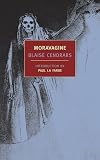
Moravagine
by Blaise Cendrars
On This Page
Description
"At once truly appalling and appallingly funny, Blaise Cendrars's Moravagine bears comparison with Naked Lunch except that it's a lot more entertaining to read. Heir to an immense aristocratic fortune, mental and physical mutant Moravagine is a monster, a man in pursuit of a theorem that will justify his every desire. Released from a hospital for the criminally insane by his starstruck psychiatrist (the narrator of the book), who foresees a companionship in crime that will also be an show more unprecedented scientific collaboration, Moravagine travels from Moscow to San Antonio to deepest Amazonia, engaged in schemes and scams as, among other things, terrorist, speculator, gold prospector, and pilot. He also enjoys a busy sideline in rape and murder. At last, the two friends return to Europe just in time for World War I, when "the whole world was doing a Moravagine"--Publisher's description. show lessTags
Recommendations




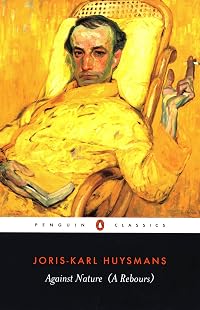






















Member Recommendations
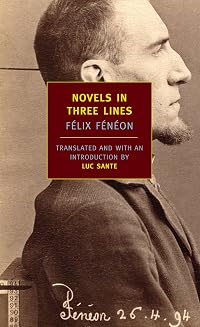
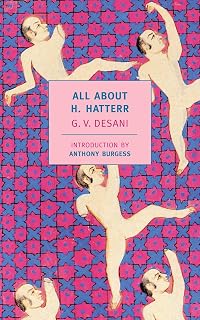
poetontheone Both novels detail the strange exodus of a cynical and contemptible protagonist.

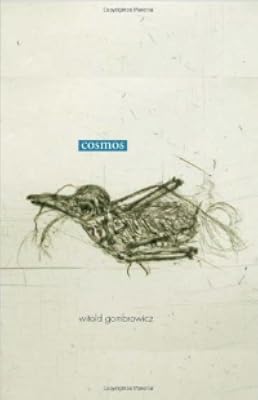
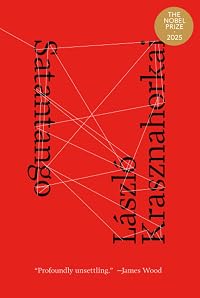
Seveteje Dark humor, Disability, A Smidge of Magical Realism, Travel, Violence
Member Reviews
The narrator of this novel, freshly-graduated genius doctor Raymond la Science, lands a position at a renowned Swiss sanatorium for wealthy but criminally insane patients. This is where he meets one of the inmates, Moravagine, the last and very decrepit heir to a line of Central European nobility. The rulers of the Austro-Hungarian empire have put him away to solidify their hold on the throne -- but also because he’s a psychopathic murderer with a near-inhuman psyche. Raymond and Moravagine discover they are kindred spirits, and decide to break out. Joined together like a pair of parasites they travel the unstable world of the early 1900s, hiding under a variety of spy-level disguises, aliases and false passports. Wherever they are -- show more masterminding the Revolution in Russia, rafting up the Orinoco, witnessing The Great War -- Raymond develops his anarchistic ideas in his journal, and Moravagine leaves behind a trail of butchered girls. They feed off each other, and as their picaresque voyages become increasingly deranged, they themselves become more and more unhinged.
The first chapter was great! It hit me withan unexpected twist that boosted my confidence in having found a wild reading experience. Wild it was, but I don’t think the momentum was adequately sustained: some parts dragged too much (the Russian Revolution sections in particular), and others felt more incoherently tacked on. As the novel wears on, unity and structure become looser and cease to apply; this is particularly clear in the WWI segments and everything after. And while this is absolutely intentional, I don’t think the various sequences lead all that well into each other.
Moravagine is a very angry book: it’s furious at the mechanised slaughter of WWI and the indifference of modern technology and the kind of societies they have created. It has no faith in any of the Great Narratives either, and even raving anarchy and a primeval pleasure at tearing down society’s values are ultimately unfulfilling and hollow.
I cannot help but think that this book would translate exceptionally well to the big screen -- its story and aesthetic would be much better served in a largely visual medium. I think it would make for an awesome movie in the hands of Ben Wheatley (A field in England) or Robert Eggers (The VVitch: A New England folktale and The lighthouse). show less
The first chapter was great! It hit me with
Moravagine is a very angry book: it’s furious at the mechanised slaughter of WWI and the indifference of modern technology and the kind of societies they have created. It has no faith in any of the Great Narratives either, and even raving anarchy and a primeval pleasure at tearing down society’s values are ultimately unfulfilling and hollow.
I cannot help but think that this book would translate exceptionally well to the big screen -- its story and aesthetic would be much better served in a largely visual medium. I think it would make for an awesome movie in the hands of Ben Wheatley (A field in England) or Robert Eggers (The VVitch: A New England folktale and The lighthouse). show less
a black-comic masterpiece
Histology, photography, electric bells, telescopes, birds, amperes, smoothing irons, etc.—this is only good for bouncing off the arse of humanity.
yeah it’s not really about a person named Moravagine. It’s fragmentary and self-reflexive in the high modernist style (but not a style): the writer’s acknowledgment that order and unity no longer pertain.
If one wants to live one is better to incline toward imbecility than intelligence, and live only in the absurd.
Where are we going? Insane asylums, the satirical American south, the Orinoco delta, an old fort. The attic of the Polytechnical Institute in Moscow, at the end of a sparkling fuse. I read Cendrars (née Frédéric-Louis Sauser) in the light of show more Walter Pater, whose aestheticism carried a hedonistic streak, and of Nabokov, who advised readers to pay attention to the artistry and creativity of the writer and not get drawn into banal generalizations about ‘character’ and ‘story.’ To read, wrote Pater, is to ‘follow intelligently, but with strict indifference, the mental process [of the writer], as one might witness a game of skill.’ Don’t watch Moravagine, watch Sauser. Moravagine is about Sauser’s response to the turn of the last European century, and about the presentation of that response. As he says in the fugitive pages appended to the end of the NYRB edition, ‘there is only one literary subject: Man. But which man? The man who writes.’ Sauser the prose poet has ‘Cendrars’ appear in the book as a one-armed airplane mechanic.
If one could believe him, he had seen everything, read everything, done everything. He had worked in every trade, tramped the whole world over, had friends everywhere. He had lived in all the great cities and been through several virgin countries, accompanying explorers or acting as guide to scientific expeditions. He knew houses by their numbers, mountains by their height, children by their birthdays, boats by their names, women by their lovers, men by their vices, animals by their virtues, plants by their healing qualities and the stars by their influence. He was superstitious as a savage, sly as a monkey, up-to-date as a man about town, and unscrupulous and cunning into the bargain.
How does an artist respond to the modern world, a scene of ruin? With a mad cackle. Not only is God dead, but his face was on the floor of a public pissoir, and we have stepped in it. The modern world embraced new faiths—in science, revolution, psychiatry—and those new faiths failed.
The latest discoveries of science are just sufficient enough to demonstrate the futility of any attempt to explain the universe rationally. And metaphysics belongs in a museum of folklore, says Cendrars.
Man, like music, is inscrutable. Wasting time is the only way to be free.
Our mounts died under us, and we rode on astride our own shadows. show less
Histology, photography, electric bells, telescopes, birds, amperes, smoothing irons, etc.—this is only good for bouncing off the arse of humanity.
yeah it’s not really about a person named Moravagine. It’s fragmentary and self-reflexive in the high modernist style (but not a style): the writer’s acknowledgment that order and unity no longer pertain.
If one wants to live one is better to incline toward imbecility than intelligence, and live only in the absurd.
Where are we going? Insane asylums, the satirical American south, the Orinoco delta, an old fort. The attic of the Polytechnical Institute in Moscow, at the end of a sparkling fuse. I read Cendrars (née Frédéric-Louis Sauser) in the light of show more Walter Pater, whose aestheticism carried a hedonistic streak, and of Nabokov, who advised readers to pay attention to the artistry and creativity of the writer and not get drawn into banal generalizations about ‘character’ and ‘story.’ To read, wrote Pater, is to ‘follow intelligently, but with strict indifference, the mental process [of the writer], as one might witness a game of skill.’ Don’t watch Moravagine, watch Sauser. Moravagine is about Sauser’s response to the turn of the last European century, and about the presentation of that response. As he says in the fugitive pages appended to the end of the NYRB edition, ‘there is only one literary subject: Man. But which man? The man who writes.’ Sauser the prose poet has ‘Cendrars’ appear in the book as a one-armed airplane mechanic.
If one could believe him, he had seen everything, read everything, done everything. He had worked in every trade, tramped the whole world over, had friends everywhere. He had lived in all the great cities and been through several virgin countries, accompanying explorers or acting as guide to scientific expeditions. He knew houses by their numbers, mountains by their height, children by their birthdays, boats by their names, women by their lovers, men by their vices, animals by their virtues, plants by their healing qualities and the stars by their influence. He was superstitious as a savage, sly as a monkey, up-to-date as a man about town, and unscrupulous and cunning into the bargain.
How does an artist respond to the modern world, a scene of ruin? With a mad cackle. Not only is God dead, but his face was on the floor of a public pissoir, and we have stepped in it. The modern world embraced new faiths—in science, revolution, psychiatry—and those new faiths failed.
The latest discoveries of science are just sufficient enough to demonstrate the futility of any attempt to explain the universe rationally. And metaphysics belongs in a museum of folklore, says Cendrars.
Man, like music, is inscrutable. Wasting time is the only way to be free.
Our mounts died under us, and we rode on astride our own shadows. show less
Book Circle Reads 17
Title: [MORAVAGINE]
Author: [[BLAISE CENDRARS]]
Rating: 3 sickened stars of five
The Book Description: At once truly appalling and appallingly funny, Blaise Cendrars's Moravagine bears comparison with Naked Lunch—except that it's a lot more entertaining to read. Heir to an immense aristocratic fortune, mental and physical mutant Moravagine is a monster, a man in pursuit of a theorem that will justify his every desire. Released from a hospital for the criminally insane by his starstruck psychiatrist (the narrator of the book), who foresees a companionship in crime that will also be an unprecedented scientific collaboration, Moravagine travels from Moscow to San Antonio to deepest Amazonia, engaged in schemes and scams show more as, among other things, terrorist, speculator, gold prospector, and pilot. He also enjoys a busy sideline in rape and murder. At last, the two friends return to Europe—just in time for World War I, when "the whole world was doing a Moravagine."
This new edition of Cendrars's underground classic is the first in English to include the author's afterword, "How I Wrote Moravagine."
My Review: Dr. Science, the eunuch-like shrink of mass-murdering rapist and all-around criminal Moravagine, relates this hideous tale of debauchery, rapine, pillage, murder, and all-around good times after springing the title character from the insane asylum where Science worked with him. Their world travels on the eve of the Great War involve blood, misery, and death for everyone but themselves.
Moravagine, literally “death by female genitalia,” is not someone you want to meet. Hannibal Lecter was positively cuddlesome by Moravagine's standards. Science, in his neutral and neutered language, presents the facts of their horrible, horrible crime spree in a way that left me nauseated but curiously unmoved: “Which mother would not prefer to kill and devour her children if she could be sure in doing so of binding to her and keeping her male, of being permeated by him, absorbing him from below, digesting him, letting him be macerated within her in a state reduced to that of foetus, and carrying him thus her life long in womb?”
This is a slasher movie waiting to happen. I've heard others describe it as funny. Not to me. Distastefully misogynistic. Appallingly bloody. I enjoyed one thing about reading the book: The author's evident fury and outrage at a world that tacitly accepts the dehumanizing and belittling effects of Modernity without so much as a bleat of resistance. Resistance, you see, is futile.
Revolting. Fascinating. Deeply unclean. show less
Title: [MORAVAGINE]
Author: [[BLAISE CENDRARS]]
Rating: 3 sickened stars of five
The Book Description: At once truly appalling and appallingly funny, Blaise Cendrars's Moravagine bears comparison with Naked Lunch—except that it's a lot more entertaining to read. Heir to an immense aristocratic fortune, mental and physical mutant Moravagine is a monster, a man in pursuit of a theorem that will justify his every desire. Released from a hospital for the criminally insane by his starstruck psychiatrist (the narrator of the book), who foresees a companionship in crime that will also be an unprecedented scientific collaboration, Moravagine travels from Moscow to San Antonio to deepest Amazonia, engaged in schemes and scams show more as, among other things, terrorist, speculator, gold prospector, and pilot. He also enjoys a busy sideline in rape and murder. At last, the two friends return to Europe—just in time for World War I, when "the whole world was doing a Moravagine."
This new edition of Cendrars's underground classic is the first in English to include the author's afterword, "How I Wrote Moravagine."
My Review: Dr. Science, the eunuch-like shrink of mass-murdering rapist and all-around criminal Moravagine, relates this hideous tale of debauchery, rapine, pillage, murder, and all-around good times after springing the title character from the insane asylum where Science worked with him. Their world travels on the eve of the Great War involve blood, misery, and death for everyone but themselves.
Moravagine, literally “death by female genitalia,” is not someone you want to meet. Hannibal Lecter was positively cuddlesome by Moravagine's standards. Science, in his neutral and neutered language, presents the facts of their horrible, horrible crime spree in a way that left me nauseated but curiously unmoved: “Which mother would not prefer to kill and devour her children if she could be sure in doing so of binding to her and keeping her male, of being permeated by him, absorbing him from below, digesting him, letting him be macerated within her in a state reduced to that of foetus, and carrying him thus her life long in womb?”
This is a slasher movie waiting to happen. I've heard others describe it as funny. Not to me. Distastefully misogynistic. Appallingly bloody. I enjoyed one thing about reading the book: The author's evident fury and outrage at a world that tacitly accepts the dehumanizing and belittling effects of Modernity without so much as a bleat of resistance. Resistance, you see, is futile.
Revolting. Fascinating. Deeply unclean. show less
Where do I begin? With the deranged doctor or the blue Indians? But how can I forget the orang-outang? We meet these characters in the second half of the book after reading about Moravagine escaping from a nightmarish boyhood and a strange castle in the earlier parts of the ersatz memoirs.
What we have with Moravagine (1926) by Blaise Cendrars is a novel that is difficult to summarize and, while written in the era of modern novels, seems almost post-modern in its organization. That is a structure I would compare with Nabokov's Pale Fire with its disparate sections of memoir, notes from the author, and other non-traditional bits of text, although the prose is nothing like Nabokov. Rather the prose is comparable to nightmarish narratives show more whether from Joris-Karl Huysmans or Franz Kafka.
The main narrative is in a picaresque style narrated by a young doctor who frees the mysterious Moravagine from an asylum where he’s been imprisoned for many years. “Moravagine” is an adopted name whose origin and meaning is never addressed, although a French reader would find a rather unavoidable pun on “death by vagina”. Moravagine himself is an otherwise unnamed member of the Hungarian royal family, a dwarfish intellectual psychopath with a bad leg who goes on the run with the doctor, first to pre-revolutionary Russia, then to the United States and South America.
The prose seems coherent only in the sense that your dreams (at least mine) seem rational until you realize that they are really absurd. The author may have been writing his narrative in reaction to his own experience of the senselessness of the Great War where he lost his right arm. He spent about a decade from 1917 to 1926 writing this novel and Cendrars himself appears as a character in the later chapters; he has his narrator lose a leg while Moravagine loses his reason altogether. At the end of the book he’s found imprisoned in another asylum where he believes he’s an inhabitant of the planet Mars, and where he spends his last months writing a huge, apocalyptic account of how the world will be in the year 2013.
This is a short novel that is in turns comedic and absurd, not necessarily all at the same time. If you enjoy experimentation in the books that you read you will like Cendrars memorable reflections on the meaninglessness of (fictional) existence. show less
What we have with Moravagine (1926) by Blaise Cendrars is a novel that is difficult to summarize and, while written in the era of modern novels, seems almost post-modern in its organization. That is a structure I would compare with Nabokov's Pale Fire with its disparate sections of memoir, notes from the author, and other non-traditional bits of text, although the prose is nothing like Nabokov. Rather the prose is comparable to nightmarish narratives show more whether from Joris-Karl Huysmans or Franz Kafka.
The main narrative is in a picaresque style narrated by a young doctor who frees the mysterious Moravagine from an asylum where he’s been imprisoned for many years. “Moravagine” is an adopted name whose origin and meaning is never addressed, although a French reader would find a rather unavoidable pun on “death by vagina”. Moravagine himself is an otherwise unnamed member of the Hungarian royal family, a dwarfish intellectual psychopath with a bad leg who goes on the run with the doctor, first to pre-revolutionary Russia, then to the United States and South America.
The prose seems coherent only in the sense that your dreams (at least mine) seem rational until you realize that they are really absurd. The author may have been writing his narrative in reaction to his own experience of the senselessness of the Great War where he lost his right arm. He spent about a decade from 1917 to 1926 writing this novel and Cendrars himself appears as a character in the later chapters; he has his narrator lose a leg while Moravagine loses his reason altogether. At the end of the book he’s found imprisoned in another asylum where he believes he’s an inhabitant of the planet Mars, and where he spends his last months writing a huge, apocalyptic account of how the world will be in the year 2013.
This is a short novel that is in turns comedic and absurd, not necessarily all at the same time. If you enjoy experimentation in the books that you read you will like Cendrars memorable reflections on the meaninglessness of (fictional) existence. show less
Doctor helps a homicidal lunatic, the title character, escape from an asylum, then becomes his companion on a worldwide tour of revolution, violence, homicide (of course), aviation, war, and a few other things. The narrator becomes more passive as the journey goes on, but Moravagine shows himself to be energetic, clever, thoroughly evil, and completely remorseless. The fun in this book comes from the imaginative circumstances and places the pair find themselves in. This is not quite the book I expected from the description on Amazon. Despite the subject matter, the book is far from disgusting or upsetting. At times, it almost reads like a real travelogue. It isn't easy to describe what a reader encounters here--but I recommend it to show more anyone looking for something completely different. In translation at least, it is a joy to read. show less
Is this a testament of exorcism of The Double? Perhaps. Or maybe just the outcome of an inescapable possession. Frederic Louis Sauser is possessed by Blaise Cendrars is possessed by Moravagine. All three are marked by war and filled with the ecstatic poisons of fantasy. This novel is nothing if not the blackest of comedies.
Take an enjoyable romp with the merry doctor and mad Moravagine, freed from the captivity of an asylum, as they ransack Russia and swindle the revolution, fall prey to the savagery of Indians, find fast fortune in the mega-industry of air travel, fall prey to the horrors of war, and record the 'kultur' of Mars. They rob, they maul, they screw, they laugh, they cry. You laugh. For all it's debauchery, violence, show more vagrancy, inebriation, and misogyny, you laugh. You sick dog.
Kay-ray-kuh-kuh-ko-kex. show less
Take an enjoyable romp with the merry doctor and mad Moravagine, freed from the captivity of an asylum, as they ransack Russia and swindle the revolution, fall prey to the savagery of Indians, find fast fortune in the mega-industry of air travel, fall prey to the horrors of war, and record the 'kultur' of Mars. They rob, they maul, they screw, they laugh, they cry. You laugh. For all it's debauchery, violence, show more vagrancy, inebriation, and misogyny, you laugh. You sick dog.
Kay-ray-kuh-kuh-ko-kex. show less
Reading Moravagine, I was immediately reminded of Voltaire's [Candide]. However Moravagine is much much darker and if you read it with all the apparent seriousness in which it is written, not funny at all.
Blaise Cendrars was a Swiss naturalised French citizen; a poet and novelist who was influential in the European modernist movement. Moravagine was originally published in 1926, but republished in 1956 with an explanation by the author on how and perhaps why he wrote the novel. It is a dark ride through the human (male) psyche. Warning misogyne is rife.
The narrator is Raymond la Science who as a young man of medical science sees an opportunity to release the madman and murderer Moravagine from an asylum in order to carry out further show more study. Moravagine is a very rich, last in line member of a noble family. He shows early signs of instability and is kept secured on a large estate. As a young boy he is betrothed to Rita, but is only allowed to see her once a year. When she arrives as a late adolescent woman, Moravagine murders her and he spends ten years locked away in a small cell, He keeps some sanity by focusing on his situation. Released by Raymond they move to London, but have to leave after Moravagine commits a number of brutal murders on women. Thy travel to Russia where Moravagine and Raymond become involved with the revolutionaries in 1907. Moravagine with his fortune and his ability to organise others, soon becomes a leader of the abortive 1907 coup in June. They are forced to flee and take ship to America, On the ship they befriend an Orang-u-tang (yes it starts to enter a world slightly touched by magic realism). Travels in America lead them to adventures on the frontier and needing to escape again they end up stranded on the Amazon river, where Morvagine becomes a god-like figure to a primitive tribe of Indians. They finally make it back to Paris where Moravagine becomes a pilot in the first world war.
It is a book on which I have hardly formed much of an opinion. As an exercise in modernist literature it can be admired, but there were only two parts that really grabbed my attention. The first was Moravagine's method of keeping his sanity while being locked up for years and the second was Raymond's experience with the Amazon tribe where he is a virtual prisoner in conditions where most Europeans would find it difficult to survive. The dream like states that both characters achieve pointed to a consideration as whether Moragavine was just the darker side of Raymond. It is a book that might benefit from a second reading, but I am not sure I can be bothered and so three stars. show less
Blaise Cendrars was a Swiss naturalised French citizen; a poet and novelist who was influential in the European modernist movement. Moravagine was originally published in 1926, but republished in 1956 with an explanation by the author on how and perhaps why he wrote the novel. It is a dark ride through the human (male) psyche. Warning misogyne is rife.
The narrator is Raymond la Science who as a young man of medical science sees an opportunity to release the madman and murderer Moravagine from an asylum in order to carry out further show more study. Moravagine is a very rich, last in line member of a noble family. He shows early signs of instability and is kept secured on a large estate. As a young boy he is betrothed to Rita, but is only allowed to see her once a year. When she arrives as a late adolescent woman, Moravagine murders her and he spends ten years locked away in a small cell, He keeps some sanity by focusing on his situation. Released by Raymond they move to London, but have to leave after Moravagine commits a number of brutal murders on women. Thy travel to Russia where Moravagine and Raymond become involved with the revolutionaries in 1907. Moravagine with his fortune and his ability to organise others, soon becomes a leader of the abortive 1907 coup in June. They are forced to flee and take ship to America, On the ship they befriend an Orang-u-tang (yes it starts to enter a world slightly touched by magic realism). Travels in America lead them to adventures on the frontier and needing to escape again they end up stranded on the Amazon river, where Morvagine becomes a god-like figure to a primitive tribe of Indians. They finally make it back to Paris where Moravagine becomes a pilot in the first world war.
It is a book on which I have hardly formed much of an opinion. As an exercise in modernist literature it can be admired, but there were only two parts that really grabbed my attention. The first was Moravagine's method of keeping his sanity while being locked up for years and the second was Raymond's experience with the Amazon tribe where he is a virtual prisoner in conditions where most Europeans would find it difficult to survive. The dream like states that both characters achieve pointed to a consideration as whether Moragavine was just the darker side of Raymond. It is a book that might benefit from a second reading, but I am not sure I can be bothered and so three stars. show less
Members
- Recently Added By
Published Reviews
ThingScore 100
If Cendrars felt anything steadily (beyond the urge to shift about and the compulsion to test his physical prowess) it was modern civilization pullulating all round him while he tried to wolf it down. Modernism flows into Moravagine's head like a sargasso from Hades; he cannot resist it, but, Canute-like, tries to, only to end up submitting completely to the destructive ecstasy it provokes in show more him. Moravagine is the man who ate Zeitgeist and died of it... Moravagine is a demented hymn to Creation, a seminal work in which a semi-gangster mentality anticipates many of the ironic-fantastic literary modes of our own day with a bumptious, carefully deployed bitingness no one has quite equalled. show less
added by SnootyBaronet
Moravagine stakes out human extremity as its subject matter. The language is pained, exacerbated. Long, telescopic sentences carry us through revolution, terror, a zone of sexual and moral nihilism. To call the book depraved is to soft-pedal the issue. Nothing on that order, excepting Lautreamont, had appeared before. Moravagine seeks damnation and extinction with a glee unequaled in literature.
added by SnootyBaronet
Lists

Le Monde - Les 100 livres du siècle
121 works; 25 members
1920s
141 works; 6 members

Les 50 meilleurs livres de langue française de 1900 à aujourd’hui
69 works; 2 members
Author Information

184+ Works 3,071 Members
Blaise Cendrars was born Frédéric-Louis Sauser in Chaux-de-Fonds, Switzerland on September 1, 1887. He left school in 1904 to work as an apprentice to a clockmaker in St. Petersburg. While fighting for the French in World War I, he lost his right arm, but taught himself to type left-handed. He wrote novels, poems, plays, and short stories. His show more first novel, L'Or, which focused on the California gold rush, was eventually made into the American movie Sutter's Gold. His other works include Christmas at the Four Corners of the Earth, Rhum, Lice, and the long poem Easter in New York. He chronicled his experiences in Hollywood in articles for Paris-Soir, which was published as a book, Hollywood: Mecca of the Movies, in 1995. He was considered a prime catalyst of the modernist movement and received the Prix Litteraire de la Ville de Paris. He died on January 21, 1961 at the age of 74. (Bowker Author Biography) show less
Awards and Honors
Series
Belongs to Publisher Series
Work Relationships
Is contained in
Common Knowledge
- Canonical title
- Moravagine
- Original publication date
- 1926
- Epigraph
- ...I shall demonstrate how this tiny sound within, this nothing, contains everything; and how, with the bacillary aid of a single sensation - always the same one, and deformed at that in its very origins - a brain isolated fr... (show all)om the world can create a world for itself... REMY DE GOURMONT, Sixtine
- First words
- In 1900 I completed my medical studies.
- Last words
- (Click to show. Warning: May contain spoilers.)The indelible injury is that each of these rescued pages bears the imprint of the hobnailed boots of the German police, who trampled over everything - everything! - even on the one and only photo of my mother that remained to me, which I discovered in the garden, buried in mud!...
- Blurbers
- Miller, Henry
Classifications
Statistics
- Members
- 847
- Popularity
- 32,526
- Reviews
- 14
- Rating
- (3.66)
- Languages
- 10 — Danish, Dutch, English, French, German, Italian, Japanese, Portuguese, Spanish, Turkish
- Media
- Paper, Ebook
- ISBNs
- 21
- ASINs
- 12