On This Page
Description
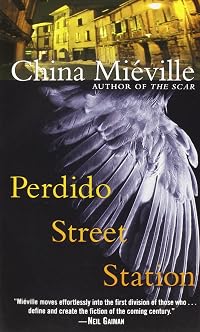
Beneath the towering bleached ribs of a dead, ancient beast lies New Crobuzon, a squalid city where humans, Re-mades, and arcane races live in perpetual fear of Parliament and its brutal militia. The air and rivers are thick with factory pollutants and the strange effluents of alchemy, and the ghettos contain a vast mix of workers, artists, spies, junkies, and whores. In New Crobuzon, the unsavory deal is stranger to none—not even to Isaac, a brilliant scientist with a penchant for Crisis show more Theory. Isaac has spent a lifetime quietly carrying out his unique research. But when a half-bird, half-human creature known as the Garuda comes to him from afar, Isaac is faced with challenges he has never before fathomed. Though the Garuda's request is scientifically daunting, Isaac is sparked by his own curiosity and an uncanny reverence for this curious stranger. While Isaac's experiments for the Garuda turn into an obsession, one of his lab specimens demands attention: a brilliantly colored caterpillar that feeds on nothing but a hallucinatory drug and grows larger—and more consuming—by the day. What finally emerges from the silken cocoon will permeate every fiber of New Crobuzon—and not even the Ambassador of Hell will challenge the malignant terror it invokes . . . A magnificent fantasy rife with scientific splendor, magical intrigue, and wonderfully realized characters, told in a storytelling style in which Charles Dickens meets Neal Stephenson, Perdido Street Station offers an eerie, voluptuously crafted world that will plumb the depths of every reader's imagination. From the Trade Paperback edition. show lessTags
Recommendations
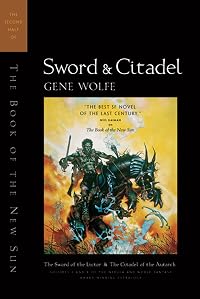
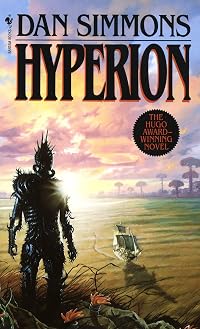
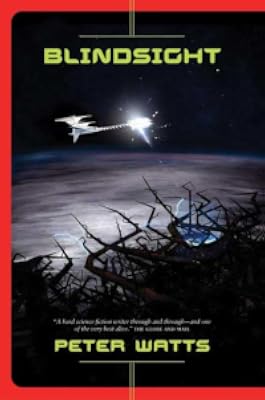
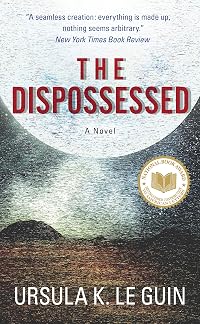
Member Recommendations
mclewe For Miéville's ability to create a complete world, incomprehensible, fascinating, intelligent.
90
souloftherose Although The Windup Girl is more science fiction than steampunk/fantasy, I felt there were similarities in the exoticness of the world-building and readers who enjoyed Perdido Street Station may also enjoy The Windup Girl.
96
RagnarOlafson Same universe, a lot of the same creatures. Brilliantly done as well
30
MyriadBooks For the world building, for the heft of the plot.
aaronius Another dystopian dream-city to get lost in with weird sex and fantastic writing.
33
electronicmemory Two excellent examples of twisted, dark and brutal stories with unexpected sci-fi/fantasy elements and engrossing worlds.
11
Jarandel Similar dark, steampunk-ish urban environments that sometime veer into the horrific and fantastical.
22
majkia no idea why exactly, but the two seem similar to me.

Viriconium: "The Pastel City", "A Storm of Wings", "In Viriconium", "Viriconium Nights" by M. John Harrison
g33kgrrl "Weird cities" staples.
Member Reviews
Like Charles Dickens on acid.
OK, this won't be for everyone, but I loved it. Yes, I toyed with the idea of quibbling, with weasel words about how I might have shaved off half a point, if the option had been available, because it can be a teeny-tiny bit over-inflated, at 700 pages. A tad self-indulgent, at times, as the plot vanished in a maelstrom of loving excursions into the crumbling neighbourhoods of New Crobuzon, and sidebars about its weird and wonderful citizens. A little gross, for the delicately-minded ...
But ... worth every page, and every difficult passage, and every time you have to flip back x-pages to remind yourself, who the heck is Jack Half-a-Prayer again? just for the privilege of spending time in the imagination of show more China Miéville.
Miéville's great talent is spinning narrative gold from the highest of high concept Big Ideas. Every single one of his novels has, at its heart, a Big Idea that make your eyes go crossed when you try to answer that question posed by loving friends and family, What's it about? Oh, please. How long do you have?
What I think I love best about Miéville is that he understands the power -- and the proper usage -- of metaphor. Once you hand yourself over to his epic imagination, trusting that you are in safe hands, his narrative wears those metaphors lightly -- it's easy to go for long pages forgetting that New Crobuzon is a twisty, turny fun-house mirror image of London (just look at the map at the beginning of the text, if you doubt me), and that the deeply disturbing and perverted politics of New Crobuzon is a pretty accurate metaphor for what's been going on for years in our millennial world. It's easy to go for long pages marvelling at the residents of New Crobuzon -- the frog-people, the eagle-people, the bug-headed people, the cactus-people -- without stumbling over the question of what they "represent." Until, like one of Miéville's slake-moths, the ideas and imagery worm their ways into your brain, and you are left turning the possibilities over ... and over ... and over ...
Miéville says it himself, putting the words in the mouth of his most interesting (and tragic) creation, Lin, the bug-headed Khepri:
I see clearly as you, clearer. For you it is undifferentiated. In one corner a slum collapsing, in another a new train with pistons shining, in another a gaudy painted lady below a drab and ancient airship ... You must process as one picture. What chaos! Tells you nothing, contradicts itself, changes its story. For me, each tiny part has integrity, each fractionally different from the next, until all variation is accounted for, incrementally, rationally. show less
OK, this won't be for everyone, but I loved it. Yes, I toyed with the idea of quibbling, with weasel words about how I might have shaved off half a point, if the option had been available, because it can be a teeny-tiny bit over-inflated, at 700 pages. A tad self-indulgent, at times, as the plot vanished in a maelstrom of loving excursions into the crumbling neighbourhoods of New Crobuzon, and sidebars about its weird and wonderful citizens. A little gross, for the delicately-minded ...
But ... worth every page, and every difficult passage, and every time you have to flip back x-pages to remind yourself, who the heck is Jack Half-a-Prayer again? just for the privilege of spending time in the imagination of show more China Miéville.
Miéville's great talent is spinning narrative gold from the highest of high concept Big Ideas. Every single one of his novels has, at its heart, a Big Idea that make your eyes go crossed when you try to answer that question posed by loving friends and family, What's it about? Oh, please. How long do you have?
What I think I love best about Miéville is that he understands the power -- and the proper usage -- of metaphor. Once you hand yourself over to his epic imagination, trusting that you are in safe hands, his narrative wears those metaphors lightly -- it's easy to go for long pages forgetting that New Crobuzon is a twisty, turny fun-house mirror image of London (just look at the map at the beginning of the text, if you doubt me), and that the deeply disturbing and perverted politics of New Crobuzon is a pretty accurate metaphor for what's been going on for years in our millennial world. It's easy to go for long pages marvelling at the residents of New Crobuzon -- the frog-people, the eagle-people, the bug-headed people, the cactus-people -- without stumbling over the question of what they "represent." Until, like one of Miéville's slake-moths, the ideas and imagery worm their ways into your brain, and you are left turning the possibilities over ... and over ... and over ...
Miéville says it himself, putting the words in the mouth of his most interesting (and tragic) creation, Lin, the bug-headed Khepri:
I see clearly as you, clearer. For you it is undifferentiated. In one corner a slum collapsing, in another a new train with pistons shining, in another a gaudy painted lady below a drab and ancient airship ... You must process as one picture. What chaos! Tells you nothing, contradicts itself, changes its story. For me, each tiny part has integrity, each fractionally different from the next, until all variation is accounted for, incrementally, rationally. show less
Perdido Street Station by China Mieville After a couple of chapters you can smell this book.
His evocation of the city is so overwhelming and powerful that you can feel that you know this place. It is seedy, run down and dangerous. It stinks, it is decrepit and corrupt and yet it is intriguing and also surprisingly inviting. The characters he draws fit so well in this place that everything that flows from there just seems natural even though they are different species.
The story going on here is one of fiction, parable and love. It is a formidable piece of work that either you will cope with or not, it will not be the fiction that fails. It may not be for everyone either. If he used different races instead of species it would have show more subtly changed the essence and made it maybe too recognisable, too near to home. One species killing another may be palatable but one race killing another not so. Empathy changes when we cross that barrier. And yet, at the same time, the main female character is so sexy and desirable even though she is not human.
At one point I wondered if this was science fiction or fantasy or dystopian, or maybe all of these but by then it didn't matter one iota. By that time I could already see the characters and knew them well. The advantage of stories constructed like this is that ideas can be introduced that would flounder in other forms of fiction and the total difference from our "normal" is a more effective mirror than realistic fiction.
I loved it and devoured it steadily.
At around 640 pages it is big enough to get your teeth into, go on treat yourself. show less
His evocation of the city is so overwhelming and powerful that you can feel that you know this place. It is seedy, run down and dangerous. It stinks, it is decrepit and corrupt and yet it is intriguing and also surprisingly inviting. The characters he draws fit so well in this place that everything that flows from there just seems natural even though they are different species.
The story going on here is one of fiction, parable and love. It is a formidable piece of work that either you will cope with or not, it will not be the fiction that fails. It may not be for everyone either. If he used different races instead of species it would have show more subtly changed the essence and made it maybe too recognisable, too near to home. One species killing another may be palatable but one race killing another not so. Empathy changes when we cross that barrier. And yet, at the same time, the main female character is so sexy and desirable even though she is not human.
At one point I wondered if this was science fiction or fantasy or dystopian, or maybe all of these but by then it didn't matter one iota. By that time I could already see the characters and knew them well. The advantage of stories constructed like this is that ideas can be introduced that would flounder in other forms of fiction and the total difference from our "normal" is a more effective mirror than realistic fiction.
I loved it and devoured it steadily.
At around 640 pages it is big enough to get your teeth into, go on treat yourself. show less
4.5 Stars. I will confess that this book dragged at times, and there were points (though few), where I felt the plot lost naturalism. But what an adventure! This is fiction of the mundane and the fantastical. Admirable zeal produces monstrous results, which are only remedied by the most unlikely and contrary of alliances. The characters demonstrate admirable conduct and cruel rapacity, often within pages of each other, while still remaining internally cohesive. In so many other books, everything falls back into place after the defeat of the "Big Bad". Not so here. There are no easy answers or quick fixes, no plaudits or adoring crowds when the story ends. The protagonists, if this is the right word for them, played at desperate stakes, show more and they finish the book scarred mentally, emotionally, and physically. It made the book better, and empowered the story with real consequence. I finished this book feeling rewarded for investing my time into it, and awed by the author's vision. show less
A magnum opus of grimdark fantasy, steampunk squalor—a hero’s journey through Hell. New Crobuzon is exquisitely, meticulously detailed in its every ghetto, slum, fetid sewer, decrepit building, midden, and rotting garbage heap; in its every drug addict, whore, thief, petty bureaucrat, torturer, and craven tyrant. Its main characters are complex, flawed, and believable, even as they work thaumaturgy or create sculptures with glands from the back of their insect-like heads. The heroes’ “quest,” if you will, is to rid the city of a (literally) nightmarish menace, but the plot is as complex and convoluted as the grimy back alleys of New Crobuzon. As dark and dismal, and long, as this story was, I couldn’t stop reading and was show more sorry to part ways with it. I’ll be reading more of Miéville, particularly the Bas-Lag novels. show less
Perdido Street Station feels like a deeply realistic novel with fully human characters set in a hallucinatory world inspired by a bad acid trip.
There are people. There are also bug people with heads of insects, cactus people with spines, little flying people, giant intelligent multidimensional spiders, monstrous moths, and the ReMade--people surgically altered in horrible ways as punishment for crime. There's politics (always my favourite part of China Mieville books)--corrupt ruling classes, unions and strikers, ineffective opposition parties, underground newspapers, centrists and radicals, capitalists and workers, and every kind of cynicisms in bold display. And there's a slacker scientist who is paid an obscene amount of money by a show more bird-man whose wings were sawn off in retribution for a terrible crime, in order to return him to flight, which opens multiple cans of many and varied types of worms, each more horrible than the last.
It's a really good book and a good story, depending on your tolerance for fabulous inventions, such as a city entirely contained within the ribcage of an enormous prehistoric beast. show less
There are people. There are also bug people with heads of insects, cactus people with spines, little flying people, giant intelligent multidimensional spiders, monstrous moths, and the ReMade--people surgically altered in horrible ways as punishment for crime. There's politics (always my favourite part of China Mieville books)--corrupt ruling classes, unions and strikers, ineffective opposition parties, underground newspapers, centrists and radicals, capitalists and workers, and every kind of cynicisms in bold display. And there's a slacker scientist who is paid an obscene amount of money by a show more bird-man whose wings were sawn off in retribution for a terrible crime, in order to return him to flight, which opens multiple cans of many and varied types of worms, each more horrible than the last.
It's a really good book and a good story, depending on your tolerance for fabulous inventions, such as a city entirely contained within the ribcage of an enormous prehistoric beast. show less
this was a brutal, brutal world! not gory violent, but very barbaric. its the type of sci-fi world that i tend to avoid, except the ideas brought up in this book were very interesting and tantalizing! it touched on speculative science, but also a lot of philosophy, sociology, and art...and....magic?? did i mention there was a drug that lets you dream other people's dreams??
the plot was also a bit chaotic, in a ridiculous way...i had the feeling that the author was throwing everything plus the kitchen sink into the mix...except that the writing did manage to keep it all together...i think. and then the final act tied the loose ends and sub-plots satisfyingly (?) enough that i decided to give it an extra half star.
this story will stay show more with me for a while. an in spite of my ambivalence, i see how this won awards (including the arthur c. clarke). i'll be reading the second book in the series...but not soon. show less
the plot was also a bit chaotic, in a ridiculous way...i had the feeling that the author was throwing everything plus the kitchen sink into the mix...except that the writing did manage to keep it all together...i think. and then the final act tied the loose ends and sub-plots satisfyingly (?) enough that i decided to give it an extra half star.
this story will stay show more with me for a while. an in spite of my ambivalence, i see how this won awards (including the arthur c. clarke). i'll be reading the second book in the series...but not soon. show less
To describe Perdido Street Station in its own parlance, this sci fi/gothic horror/steam punk novel is pulchritudinously packed, an oozing pungent mass of ideas with vertiginous details dripping from its core and complex thought forms bulging from its pages. To summarize the sprawling plot in a few lines, our hero is a rebellious scientist in the city of New Crobuzon, a squalid, dizzyingly weird urban center populated by numerous species of bizarre creatures. Isaac receives a commission from a half human/half bird “garuda” who is seeking to fly again after his wings were hacked off in punishment for a terrible crime. Isaac unwittingly unleashes terrifying soul-consuming monsters in his quest to help the garuda and must try to destroy show more them before they systematically consume the minds of all New Crobuzon’s inhabitants.
Mieville will likely send you scurrying to Google to unpack the origins of the sentient beings in his work (and to the dictionary to decipher his vocabulary words.) Which may or may not be fun depending on your tastes. The creatures I could identify are based on myths and religions from around the world. The Vodyanoy are aquatic creatures of Slavic/Norse tales. Garuda are bird-like demi-gods of Buddist and Hindi mythology. And the eeriest (to my mind), are the Khepri, who have human bodies but heads that are scarab beetles and hale from the beliefs of Ancient Egypt.
Mieville’s ability to conjure a startlingly inventive world is prodigious and the plot line of Perdido Street Street is gripping. But the pacing of the storytelling can be as gelatinous and dense as New Curbozon’s slimy backwaters. Towards the culmination of the novel (and this is no spoiler), an important plot points hangs on an effort to lay cable throughout the city. Mieville takes no fewer than fifteen pages to describe the process. Fifteen? It’s writing like this that drags out the story and tempts one to skim until things pick up again. I *could* put it down, in fact I had to stop reading many times to reenergize and prepare to hack again through the lengthy descriptive passages.
I found the end of the story deeply disappointing, but I’m sure others would strongly disagree. Even with these serious flaws, Perdido Street Station enthralls. I found myself thinking of it as I was falling asleep and mulling it over again in the morning as I woke. I’ll need a long break before I read another of Mieville’s novels, but there is no doubt in my mind I’ll be back to the world of Bas-Lag. show less
Mieville will likely send you scurrying to Google to unpack the origins of the sentient beings in his work (and to the dictionary to decipher his vocabulary words.) Which may or may not be fun depending on your tastes. The creatures I could identify are based on myths and religions from around the world. The Vodyanoy are aquatic creatures of Slavic/Norse tales. Garuda are bird-like demi-gods of Buddist and Hindi mythology. And the eeriest (to my mind), are the Khepri, who have human bodies but heads that are scarab beetles and hale from the beliefs of Ancient Egypt.
Mieville’s ability to conjure a startlingly inventive world is prodigious and the plot line of Perdido Street Street is gripping. But the pacing of the storytelling can be as gelatinous and dense as New Curbozon’s slimy backwaters. Towards the culmination of the novel (and this is no spoiler), an important plot points hangs on an effort to lay cable throughout the city. Mieville takes no fewer than fifteen pages to describe the process. Fifteen? It’s writing like this that drags out the story and tempts one to skim until things pick up again. I *could* put it down, in fact I had to stop reading many times to reenergize and prepare to hack again through the lengthy descriptive passages.
I found the end of the story deeply disappointing, but I’m sure others would strongly disagree. Even with these serious flaws, Perdido Street Station enthralls. I found myself thinking of it as I was falling asleep and mulling it over again in the morning as I woke. I’ll need a long break before I read another of Mieville’s novels, but there is no doubt in my mind I’ll be back to the world of Bas-Lag. show less
Members
- Recently Added By
Published Reviews
ThingScore 100
Perdido Street Station is a well written and absorbing story aimed at breaking the rules for a number of different fantasy concepts.
added by snurp
Lists

Best Fantasy Novels
821 works; 361 members

Best Science Fiction Novels
816 works; 426 members

Best Urban Fantasy
634 works; 79 members

Favorite Series
238 works; 94 members

Slipstream or Interstitial Fiction
160 works; 19 members

Stories About Other Worlds
145 works; 13 members

Recommend the 20 best books you've read in the last five years
2,168 works; 607 members

Best 21st Century Books (So Far)
679 works; 86 members

Weird and Weirder Fiction
270 works; 35 members

Favourite Science Fiction Books of the 21st Century
47 works; 8 members

NPRs your picks: top 100 Sci-Fi/Fantasy books
297 works; 80 members

Broderick and Di Filippo's Science Fiction: The 101 Best Novels 1985-2010
103 works; 7 members

Amazon's 100 Science Fiction & Fantasy Books to Read in a Lifetime
87 works; 23 members

Favourite Steampunk Books
80 works; 16 members

S.F. Masterworks (Complete)
229 works; 15 members

Favourite Books
1,820 works; 316 members

Nonhuman Protagonists
245 works; 35 members

Speculative Fiction: Slipstream Literature
166 works; 16 members
Dystopian and Apocalyptic Literature
350 works; 74 members

Introduction to Fantasy and Science Fiction (Proposed Reading List)
28 works; 6 members

One Book, Many Authors
441 works; 40 members

TED 2013 Summer Reading List
190 works; 13 members
Books tagged favorites
390 works; 30 members

Arthur C. Clarke Award Winners and Shortlisted Books
219 works; 14 members

Top Five Books of 2021
604 works; 181 members

Top Five Books of 2014
1,064 works; 398 members
LibraryThingers' 1001 Books You Must Read Before You Die
442 works; 30 members

Truly alien aliens (SF)
42 works; 3 members

Must read
30 works; 2 members

2000s (the decade, not the century)
184 works; 11 members

Favorite Books from the 2000s
35 works; 3 members

Strange Cities
30 works; 7 members

Readers Guide to Steampunk
65 works; 1 member
SantaThing 2014 Gifts
299 works; 17 members
Recommended Science-Fiction Books
40 works; 3 members

Books Read in 2024
4,727 works; 128 members
21st century literature, European
1 work; 1 member

What are your favourite books?
121 works; 11 members

Urban Fiction
74 works; 7 members

Jones & Newman: Best Horror Books Further Recommended Reading
577 works; 4 members

Books Read in 2025
4,128 works; 98 members

Franklit
95 works; 1 member

Top Five Books of 2025
954 works; 304 members

Top Five Books of 2023
767 works; 317 members

Most Frequently Tagged "Read in 2015"
70 works; 1 member

Five star books
1,767 works; 110 members

Books Read in 2019
4,052 works; 110 members

Books Read in 2017
4,249 works; 130 members

Books Read in 2002
201 works; 8 members

Alphabetical Books
211 works; 3 members

Books Read in 2016
4,666 works; 199 members

infjsarah's wishlist
408 works; 2 members
New Weird Fiction
69 works; 12 members
BingoDOG - Genre Benders
74 works; 14 members
Read These Too
458 works; 9 members

Genre Benders: Dark Fantasy
52 works; 4 members

Unread books
1,063 works; 87 members

Books to Recommend to My Niece/Nephew (The late teenage years)
29 works; 3 members
Favorite Science Fiction
457 works; 221 members

1001 Books You Must Read Before You Die
1,448 works; 1,137 members
Author Information

111+ Works 51,032 Members
China Miéville was born in Norwich, England on September 6, 1972. He received a B.A. in social anthropology from the University of Cambridge in 1994, and a Masters' degree with distinction and Ph.D in international relations from the London School of Economics, the latter in 2001. He has also held a Frank Knox fellowship at Harvard University. show more His first novel, King Rat, was nominated for both an International Horror Guild and a Bram Stoker award. His other works include Perdido Street Station, The Scar, Iron Council, Un Lun Dun, The City and the City, Embassytown, and Three Moments of an Explosion: Stories. He has won numerous awards for his works including three Arthur C. Clarke Awards, two British Fantasy Awards, the British Science Fiction Award, and the 2008 Locus Award for Best Young Adult Book. He also published a book on Marxism and international law called Between Equal Rights: A Marxist Theory of International Law. He teaches creative writing at Warwick University. (Bowker Author Biography) show less
Some Editions
Awards and Honors
Awards
Distinctions
Notable Lists
Series

Belongs to Publisher Series
Work Relationships
Is contained in
Contains
Inspired
Common Knowledge
- Canonical title*
- Station Perdido
- Original title
- Perdido Street Station
- Original publication date
- 2000-03
- People/Characters
- Isaac Dan der Grimnebulin; Lin; Yagharek; Derkhan Blueday; Lemuel Pigeon; Benjamin Flex (show all 23); Mr. Motley; Lucky Gazid; Montague Vermishank; David Serachin; Lublamai; Teafortwo; Bentham Rudgutter; Eliza Stem-Fulcher; MontJohn Rescue; The Construct Council; The Slake-moths; Shadrach; Pengefinchess; Tansell; The Weaver; Jack Half-a-Prayer; Kar'uchai
- Important places
- New Crobuzon; Bas-Lag; Perdido Street Station; Brock Marsh; Spatters; Kinken (show all 10); The Glasshouse; The Spike; Rudewood; Pelorious Fields
- Epigraph
- 'I even gave up, for a while, stopping by the window of the room to look out at the lights and deep, illuminated streets. That's a form of dying, that losing contact with the city like that.'
Philip K. Dick, We Can... (show all) Build You - Dedication
- to Emma
- First words
- Veldt to scrub to fields to farms to these first tumbling houses that rise from the earth.
- Last words
- (Click to show. Warning: May contain spoilers.)I turn and walk into my home, the city, a man.
- Blurbers
- Gaiman, Neil; Stableford, Brian; Hamilton, Peter; Carroll, Jonathon; Clute, John
- Original language
- English
- Canonical DDC/MDS
- 823.914
- Disambiguation notice
- Do not combine with either Die Falter or Der Weber. Perdido Street Station was split into two volumes for publication in Germany.
*Some information comes from Common Knowledge in other languages. Click "Edit" for more information.
Classifications
Statistics
- Members
- 10,306
- Popularity
- 951
- Reviews
- 339
- Rating
- (4.03)
- Languages
- 14 — Czech, Dutch, English, German, Hungarian, Italian, Japanese, Polish, Portuguese, Romanian, Russian, Spanish, Turkish, Ukrainian
- Media
- Paper, Audiobook, Ebook
- ISBNs
- 43
- ASINs
- 27