On This Page
Description
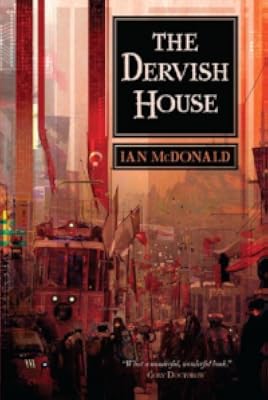
Seven days, six characters, three interconnected story strands, one central common core--the eponymous dervish house, a character in itself--that pins all these players together in a weave of intrigue, conflict, drama and a ticking clock of a thriller.Tags
Recommendations
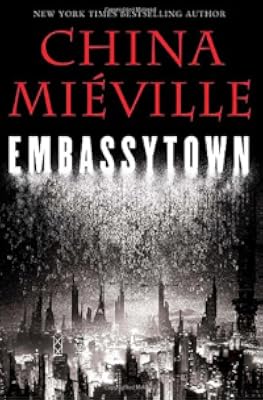
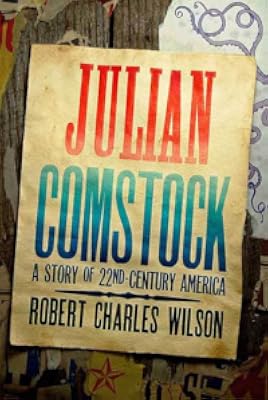
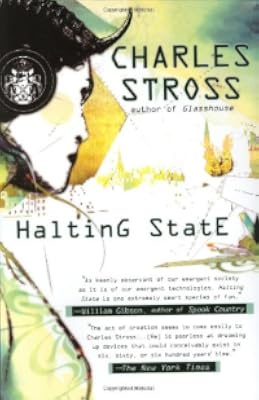
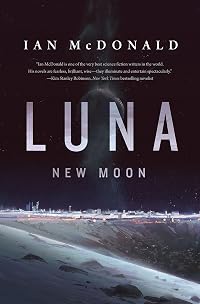





Member Recommendations
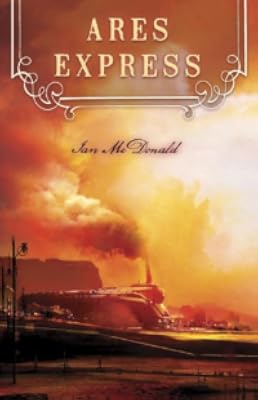
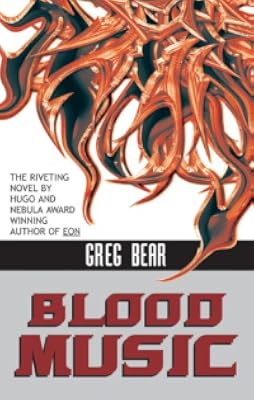
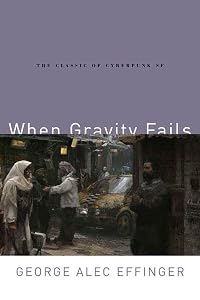
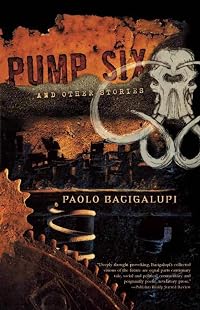
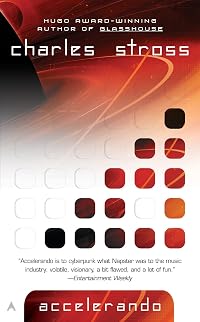
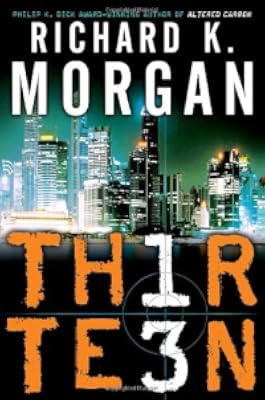
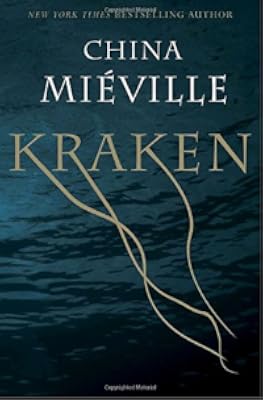
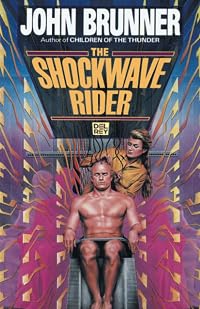
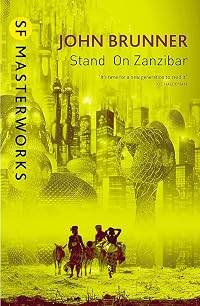
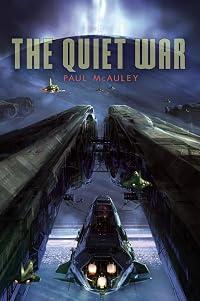
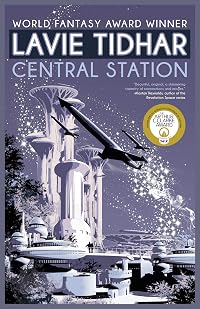
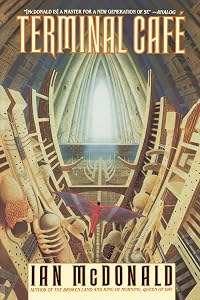
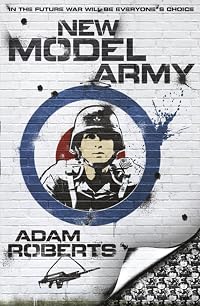
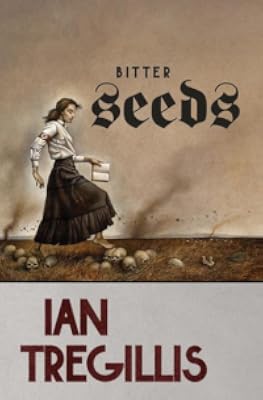
AlanPoulter These two powerful, well-plotted novels each give detailed, dark visions of two different cities in the nearish future.
30
pgmcc Near-future with believable levels of technological development. Good characterisation. Focus on the story and characters rather than the science.
pgmcc Near-future with realistic level of technological development.
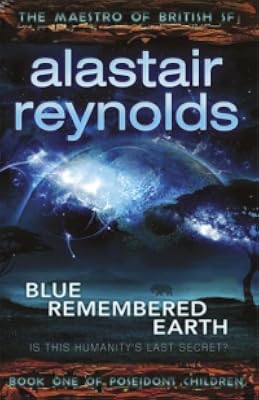
mamajoan A similar melding of very-near-future technology with ancient Middle Eastern mythology.
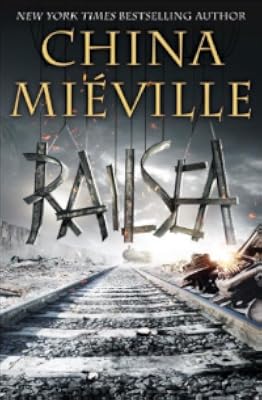
vwinsloe Another look at hallucinogenic warfare.
Member Reviews
"A dark and perversely delicious fear gnaws Ayşe, the intellectual intoxication she experiences from opening a new manuscript or unwrapping an unseen miniature and knowing that she stands on the edge of the incomprehensible, that she holds in her hands a world and a way of thinking alien to her in every way. The past is another universe: a long dead sect drew its truths across whole cities for generations it could not imagine."
Ian McDonald's books have been touring the non-Western world for some time now. He seems to be on a mission to explore how various cultures might deal with near-future SF scenarios. This time, he fetches up in Turkey. McDonald doesn't just use the common trope of this nation's poised-between-Europe-and-Asia show more tension; he adds a tension between technology and faith, and another between progress and history. For much of the book the plot simmers away slowly, waiting until we've really gotten to know our cast of characters and how these tensions play out in each of them.
It's the characters that make this book: Ayşe Erkoç, power-dressing dealer in antiquities; Can Durukan, isolated boy with heart trouble and some very cool robots; Leyla Gültaşli, desperate to prove herself in the big city; Georgios Ferentinou, retired and broken professor of economics; Adnan Sarioğlu, master of the deal and lover of money; and Necdet Hasgüler, wastrel and psychopath. And dozens of others, each given care and time to breathe. Through them we also get a multi-faceted view of Istanbul. We learn about some of what this unique city has been through, and about how its people might respond to nanotechnology.
The SF is almost incidental, really. This is a novel about Istanbul, written by a man with an impressive ability to inhabit a huge variety of voices.
Take your time, listen to the voices, and enjoy. show less
Ian McDonald's books have been touring the non-Western world for some time now. He seems to be on a mission to explore how various cultures might deal with near-future SF scenarios. This time, he fetches up in Turkey. McDonald doesn't just use the common trope of this nation's poised-between-Europe-and-Asia show more tension; he adds a tension between technology and faith, and another between progress and history. For much of the book the plot simmers away slowly, waiting until we've really gotten to know our cast of characters and how these tensions play out in each of them.
It's the characters that make this book: Ayşe Erkoç, power-dressing dealer in antiquities; Can Durukan, isolated boy with heart trouble and some very cool robots; Leyla Gültaşli, desperate to prove herself in the big city; Georgios Ferentinou, retired and broken professor of economics; Adnan Sarioğlu, master of the deal and lover of money; and Necdet Hasgüler, wastrel and psychopath. And dozens of others, each given care and time to breathe. Through them we also get a multi-faceted view of Istanbul. We learn about some of what this unique city has been through, and about how its people might respond to nanotechnology.
The SF is almost incidental, really. This is a novel about Istanbul, written by a man with an impressive ability to inhabit a huge variety of voices.
Take your time, listen to the voices, and enjoy. show less
Fascinating whirlwind of a future Istanbul, the oh so famed Constantinople thrown into a world of swarmbots, gray ooze of nanotechnology terror threats, and AI assisted economic hijinks.
The one thing I love most about Mr. Mcdonald's books are the levels of depth and exploration of the world he has created. I place the tech ideas and the wonderfully odd legends like the man of honey on a second tier of coolness, followed by wonderfully non-traditional heroes and anti-heroes that wouldn't normally spark much interest except on a humanist level.
I wouldn't call it so much as a complaint as a mild irritant, but all of these separate stories seemed to be converging in a way a bit beyond the titular building where they all lived, and there show more were a few minor crossovers, but honestly, I was hoping and expecting a slightly more grand blow up that included everyone a bit more directly. Sure, everyone was at least indirectly involved, but save for our boy detective, few had active rolls in the final serious conflict.
Don't get me wrong, I enjoyed each of their stories and rooted for them all in their turns, but it all came together to make the story mostly about showing us Istanbul in a tech future, not the grandiose changes that came about by the protagonists in it. Again, that's not very fair, either, because the heist portion of the novel was rather cool and the terrorist actions and the complications surrounding a forced religious breakthrough through nanotech was also kickass. Perhaps I just wanted more payoff for an ending. The buildup and characters and worldbuilding really rocked, tho. :)
I'll easily keep reading his works. They make me think, and I can't call this a fluff piece by any stretch. I'm going to say this piece is a serious work of sci-fi. Speculative fiction at it's best. Not easy reading, but so very well developed that it takes on a life of its own. show less
The one thing I love most about Mr. Mcdonald's books are the levels of depth and exploration of the world he has created. I place the tech ideas and the wonderfully odd legends like the man of honey on a second tier of coolness, followed by wonderfully non-traditional heroes and anti-heroes that wouldn't normally spark much interest except on a humanist level.
I wouldn't call it so much as a complaint as a mild irritant, but all of these separate stories seemed to be converging in a way a bit beyond the titular building where they all lived, and there show more were a few minor crossovers, but honestly, I was hoping and expecting a slightly more grand blow up that included everyone a bit more directly. Sure, everyone was at least indirectly involved, but save for our boy detective, few had active rolls in the final serious conflict.
Don't get me wrong, I enjoyed each of their stories and rooted for them all in their turns, but it all came together to make the story mostly about showing us Istanbul in a tech future, not the grandiose changes that came about by the protagonists in it. Again, that's not very fair, either, because the heist portion of the novel was rather cool and the terrorist actions and the complications surrounding a forced religious breakthrough through nanotech was also kickass. Perhaps I just wanted more payoff for an ending. The buildup and characters and worldbuilding really rocked, tho. :)
I'll easily keep reading his works. They make me think, and I can't call this a fluff piece by any stretch. I'm going to say this piece is a serious work of sci-fi. Speculative fiction at it's best. Not easy reading, but so very well developed that it takes on a life of its own. show less
How is it that [a:Ian McDonald|25376|Ian McDonald|http://photo.goodreads.com/authors/1214548966p2/25376.jpg] still has not won a Hugo award?!?
This is an awesomely well-crafted book. The characters are full and vibrant; the interweaving plots are all interesting; the future tech is just futuristic enough that it helps drive some of the plots, but not so over-the-horizon as to be unbelievable. But perhaps what makes this book so enrapturing is the way McDonald makes the city of Istanbul a character in its own right.
I recently read [b:Deep State|8203603|Deep State (Dagmar, #2)|Walter Jon Williams|http://photo.goodreads.com/books/1297054903s/8203603.jpg|13050632] by [a:Walter Jon Williams|48960|Walter Jon show more Williams|http://photo.goodreads.com/authors/1275489992p2/48960.jpg], much of which was also set in Istanbul. In my review of that book, I complimented Williams for doing "a nice job of sketching out the various locations in which the narrative occurs, providing enough detail to help the mind's eye without getting bogged down in florid detail." McDonald, on the other hand, paints deep, rich, vibrant pictures of Istanbul; I almost feel as if I have visited there myself. Yet he never lets this word-painting get in the way of allowing the plot to move forward. I am in awe at his masterful balance.
[Note: If/When I re-read this book (as I fully intend to do), I will give it five stars. It's just a personal rule of mine that I only give that rating to works that I return to.] show less
This is an awesomely well-crafted book. The characters are full and vibrant; the interweaving plots are all interesting; the future tech is just futuristic enough that it helps drive some of the plots, but not so over-the-horizon as to be unbelievable. But perhaps what makes this book so enrapturing is the way McDonald makes the city of Istanbul a character in its own right.
I recently read [b:Deep State|8203603|Deep State (Dagmar, #2)|Walter Jon Williams|http://photo.goodreads.com/books/1297054903s/8203603.jpg|13050632] by [a:Walter Jon Williams|48960|Walter Jon show more Williams|http://photo.goodreads.com/authors/1275489992p2/48960.jpg], much of which was also set in Istanbul. In my review of that book, I complimented Williams for doing "a nice job of sketching out the various locations in which the narrative occurs, providing enough detail to help the mind's eye without getting bogged down in florid detail." McDonald, on the other hand, paints deep, rich, vibrant pictures of Istanbul; I almost feel as if I have visited there myself. Yet he never lets this word-painting get in the way of allowing the plot to move forward. I am in awe at his masterful balance.
[Note: If/When I re-read this book (as I fully intend to do), I will give it five stars. It's just a personal rule of mine that I only give that rating to works that I return to.] show less
The really impressive thing about this book is the description of the setting. William Gibson once said that all science fiction is really about place, and with that in mind The Dervish House is incredibly well described. There is a flavor to the city that makes you want to explore it on your own...preferably armed. But what didn't hold my attention was most of the characters. I enjoyed the exploits of the young functionally deaf detective with his nano-bot toys, and the retired psychological economist trying to prove to the world that he is still useful, and the young woman searching for a mellified man, but there are other main characters in this book that I just found distracting and annoying. It all came together well in the end, show more and it was well written, but I found myself bored through a lot of it mainly because I just couldn't get myself to care about many of the major plot twists and characters. show less
While the core story of The Dervish House spans only a few days in the year 2027 the tale incorporates legend, myth, history, politics and religion spanning centuries, if not millennia. Its themes include unrequited love, betrayal, revolution, cultural sexism, terrorism, Islamic fundamentalism, prejudice, fraudulent commodity trading, clashing cultures, the isolation of the individual, and the day-to-day reality facing people on the streets of Istanbul.
Ian McDonald tells his intricate story through the lives of six individuals who are linked in various ways to an ancient wooden tekke (a building designed specifically for gatherings of a Sufi brotherhood) located in Istanbul, the Dervish house of the title. This building has survived show more centuries and in 2027 contains several dwellings and an antique dealership.
The action starts on the third page with a suicide bomber detonating her explosive device on a tram. We are then treated to how this terrorist act affects each of the six characters; the teenager on the tram who survives the explosion but is traumatised by his experience; a young marketing graduate whose journey to her important job interview is disrupted by the ensuing traffic chaos; the nine-year-old boy, confined to his apartment and a world of silence by a rare heart condition; the retired Greek economist whose past has brought him into conflict with the authorities; a dealer in ancient artefacts who receives an offer she cannot refuse; the yuppie commodity dealer with plans for a killing that will set him up for life.
The Istanbul of McDonald’s novel is in a Turkey that has become part of the European Union, and is experiencing an economic boom based on great advances in nanotechnology and its applications. Turkey’s strategic location at the meeting point of Europe and Asia plays a big part in the economic success of the area, and also in the potential targeting of its ancient capital city by terrorist groups wishing to make their mark.
Does Ian McDonald succeed in producing a good book with so many diverse strands and elements?
In my opinion, yes, he does.
His characters are full and rounded. Their actions are rational and coherent in the context of the story and the situations in which they find themselves. Family backgrounds and personal experiences are presented and prove consistent with how the individuals are portrayed.
The Science Fiction elements in the story, nanotechnology and robotics, are critical to this near-future tale, but they have not been allowed to push character development or plot into the shade. This novel is an excellent political techno-thriller with some heart-touching romance, and is populated with characters who have everyday lives and real concerns. It deals with a wide range of issues pertinent to today’s global reality, and deals with them in a historically accurate context.
I learned a lot about Turkey’s history from this book, and have been prompted to read more about this fascinating and turbulent part of the world.
This was a book that I enjoyed immensely. show less
Ian McDonald tells his intricate story through the lives of six individuals who are linked in various ways to an ancient wooden tekke (a building designed specifically for gatherings of a Sufi brotherhood) located in Istanbul, the Dervish house of the title. This building has survived show more centuries and in 2027 contains several dwellings and an antique dealership.
The action starts on the third page with a suicide bomber detonating her explosive device on a tram. We are then treated to how this terrorist act affects each of the six characters; the teenager on the tram who survives the explosion but is traumatised by his experience; a young marketing graduate whose journey to her important job interview is disrupted by the ensuing traffic chaos; the nine-year-old boy, confined to his apartment and a world of silence by a rare heart condition; the retired Greek economist whose past has brought him into conflict with the authorities; a dealer in ancient artefacts who receives an offer she cannot refuse; the yuppie commodity dealer with plans for a killing that will set him up for life.
The Istanbul of McDonald’s novel is in a Turkey that has become part of the European Union, and is experiencing an economic boom based on great advances in nanotechnology and its applications. Turkey’s strategic location at the meeting point of Europe and Asia plays a big part in the economic success of the area, and also in the potential targeting of its ancient capital city by terrorist groups wishing to make their mark.
Does Ian McDonald succeed in producing a good book with so many diverse strands and elements?
In my opinion, yes, he does.
His characters are full and rounded. Their actions are rational and coherent in the context of the story and the situations in which they find themselves. Family backgrounds and personal experiences are presented and prove consistent with how the individuals are portrayed.
The Science Fiction elements in the story, nanotechnology and robotics, are critical to this near-future tale, but they have not been allowed to push character development or plot into the shade. This novel is an excellent political techno-thriller with some heart-touching romance, and is populated with characters who have everyday lives and real concerns. It deals with a wide range of issues pertinent to today’s global reality, and deals with them in a historically accurate context.
I learned a lot about Turkey’s history from this book, and have been prompted to read more about this fascinating and turbulent part of the world.
This was a book that I enjoyed immensely. show less
The Dervish House is the latest, third world, futuristic work by Ian McDonald. Set in Istanbul, Turkey in 2027, the novel has much the same feel and style as his earlier effort, River of Gods. And while I enjoyed River of Gods, I found it somewhat difficult to follow. I had hoped that this would be an easier read, but was disappointed to find that it was quite the opposite.
Now, I guess if Ian McDonald is far more literate and intelligent than I am, that’s largely my problem. But I’m a fairly well educated (post graduate degree) and well read person. If he is writing over my head, then his target audience is somewhat limited. In addition, the plethora of Turkish terms and names merely added to the difficulty.
Most of my reading is show more done at night, prior to sleep. I try to get in 60-90 minutes every night. This is an extremely difficult novel to stay on top of at that rate. If you want to fully enjoy this work, I’d recommend taking it on a lazy vacation and spending lots of time at each sitting. Even though the page count seems easily doable in 2-3 days, unlike most works, which artificially expand their length through spacing, margins and chapter breaks, this book reads far longer than its 410 pages. Couple this with the dense writing style and you get the equivalent of a 750 page work.
I was able to finish the final 100 pages over the course of a weekend and, as a result, pulled together the various threads and was able to appreciate the magnificent writing style and story telling. Had I been able to read the entire book at this rate, I think I would have enjoyed it far more. show less
Now, I guess if Ian McDonald is far more literate and intelligent than I am, that’s largely my problem. But I’m a fairly well educated (post graduate degree) and well read person. If he is writing over my head, then his target audience is somewhat limited. In addition, the plethora of Turkish terms and names merely added to the difficulty.
Most of my reading is show more done at night, prior to sleep. I try to get in 60-90 minutes every night. This is an extremely difficult novel to stay on top of at that rate. If you want to fully enjoy this work, I’d recommend taking it on a lazy vacation and spending lots of time at each sitting. Even though the page count seems easily doable in 2-3 days, unlike most works, which artificially expand their length through spacing, margins and chapter breaks, this book reads far longer than its 410 pages. Couple this with the dense writing style and you get the equivalent of a 750 page work.
I was able to finish the final 100 pages over the course of a weekend and, as a result, pulled together the various threads and was able to appreciate the magnificent writing style and story telling. Had I been able to read the entire book at this rate, I think I would have enjoyed it far more. show less
http://nwhyte.livejournal.com/1576357.html
It's 2027 and Turkey has joined the European Union. In an old tekke in Istanbul, six people find their lives intertwined around a plot involving nanotechnology, the Nabucco gas pipeline, and the arcane secrets of the mellified man. There is a lovely echo between microcalligraphy and encoding information on junk DNA. It's Ian McDonald's best disciplined novel so far, I think, with all the lush description and present tense intensity that we are used to, but somehow coming together rather beautifully. As far as I can tell (based on my work in a Turkish speaking area outside Turkey over the last few years) Ian seems to have really got the measure of Turkish orthography and culture. A brilliant book.
It's 2027 and Turkey has joined the European Union. In an old tekke in Istanbul, six people find their lives intertwined around a plot involving nanotechnology, the Nabucco gas pipeline, and the arcane secrets of the mellified man. There is a lovely echo between microcalligraphy and encoding information on junk DNA. It's Ian McDonald's best disciplined novel so far, I think, with all the lush description and present tense intensity that we are used to, but somehow coming together rather beautifully. As far as I can tell (based on my work in a Turkish speaking area outside Turkey over the last few years) Ian seems to have really got the measure of Turkish orthography and culture. A brilliant book.
Members
- Recently Added By
Published Reviews
ThingScore 100
After Africa (Chaga - aka Evolution’s Shore -, Kirinya and Tendeleo’s Story), India (River Of Gods, Cyberabad Days) and Brazil (Brasyl), in The Dervish House McDonald now turns his attention to Turkey: specifically Istanbul.
The novel is set several years after Turkey has finally gained EU membership and joined the Euro (perhaps a somewhat more remote possibility now than when McDonald was show more writing) in an era when children can control real, mobile, self assembling/disassembling transformers and adults routinely use nanotech to heighten awareness/response in much the way they do chemical drugs at present. The fruit of what may have been a prodigious quantity of geographical and historical research is injected more or less stealthily into the text.
The main plot is concerned with a terrorists group’s plans to distribute nano behaviour changing agents designed to engender a consciousness of mysticism, if not of the reality of God/Allah. The resultant, what would otherwise be magic realist visions of djinni and karin, is thereby given an SF rationale.
In the interlinked narratives of those who live in and around an old Dervish House in Adam Dede Square, and covering events occurring over only four days, there are subplots about contraband Iranian natural gas, corrupt financial institutions and insider dealings, the circumscription of non-Turkish minorities, tales of youthful betrayal and frustrated love, not to mention the discovery of an ancient mummy embalmed in honey, which last gives the author the opportunity to deploy a nice pun on the phrase honey trap. The usual eclectic McDonald conjunction of disparate ingredients, then, and somehow amid all this he manages to finagle football into the mix as early as page two. Fair enough, though; Turkey’s fans are notoriously passionate about the game.
While not quite reaching the heights of Brasyl or River Of Gods, The Dervish House still has more than enough to keep anyone turning the pages. show less
added by jackdeighton
Lists

Best Science Fiction Novels
816 works; 430 members

Arthur C. Clarke Award Winners and Shortlisted Books
219 works; 14 members

Top Five Books of 2018
802 works; 265 members

Best books read in 2011
200 works; 51 members

Jean's Sci Fi/Fantasy Reading list
189 works; 12 members

ALA The Reading List
490 works; 28 members

Middle East Fiction
179 works; 16 members

io9 Book Club
70 works; 4 members

I Could Live There
185 works; 12 members

Books Read in 2019
4,052 works; 110 members

Which house?
423 works; 16 members

Top Five Books of 2025
954 works; 303 members
Author Information

98+ Works 11,076 Members
Some Editions
Awards and Honors
Series

Belongs to Publisher Series
Gallimard, Folio SF (515)
Work Relationships
Is contained in
Common Knowledge
- Canonical title
- The Dervish House
- Original title
- The Dervish House
- Original publication date
- 2010-06; 2010
- People/Characters
- Necdet Hasguler; Georgios Ferentinou; Can Durukan; Ayse Erkoc; Adnan Sarioglu; Leyla Gultasli (show all 11); Ismet; Yasar Ceylan; Aso Besarani; Selma Ozgun; Mustafa
- Important places
- Istanbul, Turkey; Turkey
- Dedication
- For Enid
- First words
- The white bird climbs above the city of Istanbul: a stork, riding the rising air in a spiral of black-tipped wings
- Last words
- (Click to show. Warning: May contain spoilers.)This is Istanbul, Queen of Cities, and she will endure as long as human hearts beat upon the earth.
- Blurbers
- Doctorow, Cory
Classifications
Statistics
- Members
- 1,116
- Popularity
- 22,705
- Reviews
- 54
- Rating
- (3.87)
- Languages
- English, French, Hungarian, Polish
- Media
- Paper, Audiobook, Ebook
- ISBNs
- 17
- ASINs
- 12