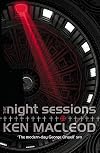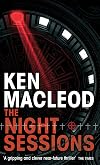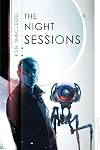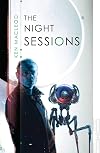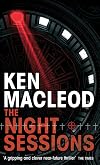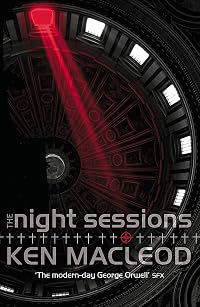
The Night Sessions
by Ken MacLeod
On This Page
Description
A bishop is dead. As Detective Inspector Adam Ferguson picks through the rubble of the tiny church, he discovers that it was deliberately bombed. That it's a terrorist act is soon beyond doubt. It's been a long time since anyone saw anything like this. Terrorism is history ...After the Middle East wars and the rising sea levels - after Armageddon and the Flood - came the Great Rejection. The first Enlightenment separated church from state. The Second Enlightenment has separated religion from show more politics. In this enlightened age there's no persecution, but the millions who still believe and worship are a marginal and mistrusted minority. Now someone is killing them. At first, suspicion falls on atheists more militant than the secular authorities. But when the target list expands to include the godless, it becomes evident that something very old has risen from the ashes. Old and very, very dangerous .... show less
Tags
Recommendations








Member Recommendations

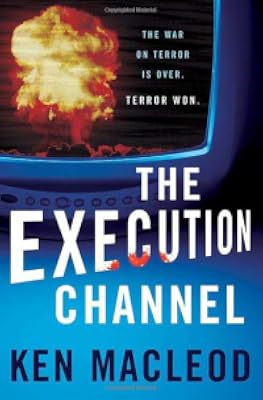
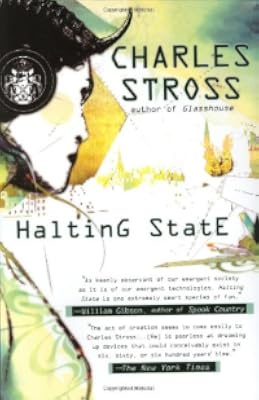
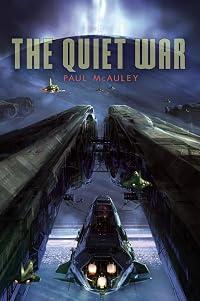
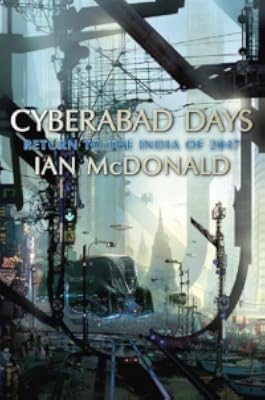
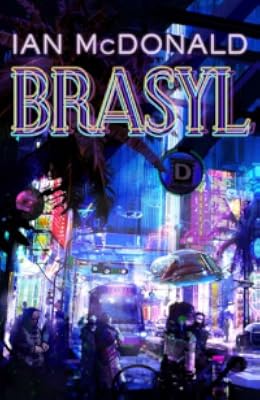
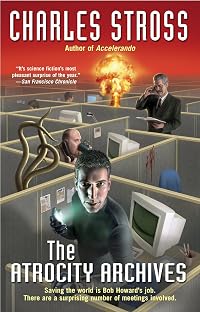
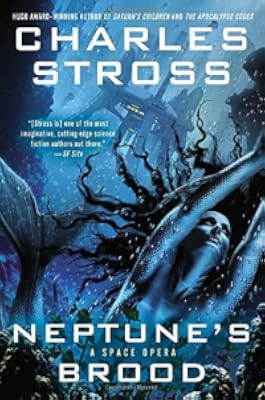
AlanPoulter Both are quirky novels that address the clash between religion and science, people and robots.
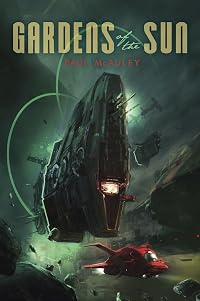
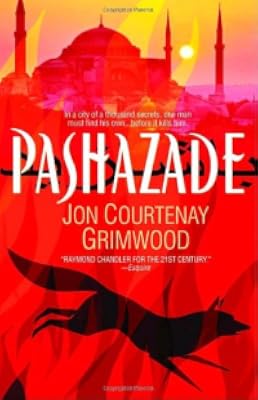
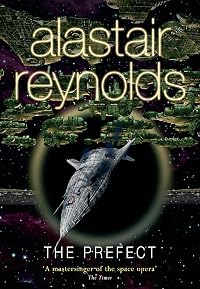
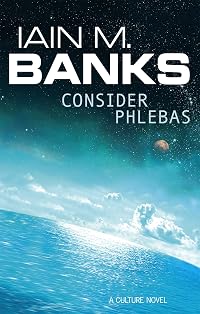
pgmcc Near-future with realistic level of technological development.
Member Reviews
The British Left was notorious for its factionalism; for Ken MacLeod, it provided a rich vein which he mined assiduously in nine out of his first ten novels. He barely had to repeat himself across the span of those books. But in 'The Night Sessions', his eleventh novel, he turns to another sub-culture almost as factionally-riven: Scottish Presbyterianism.
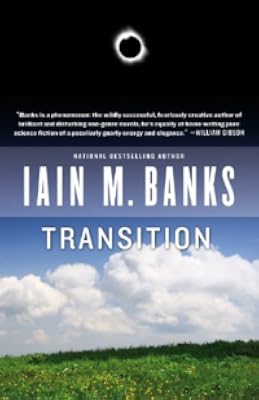
This is almost a book that might have been written as a collaboration between three friends - MacLeod, Iain (M.) Banks and Ian Rankin, because there are elements of the work of each in here. From MacLeod, the factionalism and the near-future setting. From Banks, the sardonic robots. And from Rankin, an independent Scotland and the Edinburgh-based police procedural. It's a tribute to the show more closeness of their friendship that the result is so seamless; and that MacLeod saw no need to mention this in the dedications.
The setting is also something that all three had in common; and Edinburgh is something of an underlying character in the story. I know Edinburgh slightly, and it came alive for me in a satisfying way. The plot itself is a reasonably straightforward procedural, but in a mid- to late-21st century where the War on Terror became a war against fundamentalist religion of all shades. In the complex back story, that war on religion resulted in a wholesale turning of the back on religion, which is now practiced in private. It isn't exactly banned, but faith plays no official part in public life in any way. Even the USA has passed the 31rd Amendment to the Constitution, completely removing religion from the establishment of the state.
Against this background, a priest is assassinated in a letter bomb incident. DI Adam Ferguson and his sidekick robot, an ex-military Law Enforcement Kinetic Intelligence (or 'leki') called Skulk, have to try to find out whether this is someone with old scores to settle, possibly from Ireland, or possibly from the priest's time in the military. Or is it something new?
Along the way, MacLeod asks questions about faith, intelligence, and whether AIs can have souls. A preacher from New Zealand who works in a creationist country park is somehow involved. And meanwhile, the days are punctuated by regular eclipses as the soletas, giant orbital sunshades intended to try to alleviate global warming that has brought hot summers to Scotland, slide across the sky.
The scope of this novel is great, and it asks big questions. The conclusion is well thought out, though that does mean that it doesn't end with a big set-piece action scene. No matter. There are some minor loose ends in the plot, but nothing that should seriously upset the reader. This is fully up to MacLeod's usual standard. show less
This is almost a book that might have been written as a collaboration between three friends - MacLeod, Iain (M.) Banks and Ian Rankin, because there are elements of the work of each in here. From MacLeod, the factionalism and the near-future setting. From Banks, the sardonic robots. And from Rankin, an independent Scotland and the Edinburgh-based police procedural. It's a tribute to the show more closeness of their friendship that the result is so seamless; and that MacLeod saw no need to mention this in the dedications.
The setting is also something that all three had in common; and Edinburgh is something of an underlying character in the story. I know Edinburgh slightly, and it came alive for me in a satisfying way. The plot itself is a reasonably straightforward procedural, but in a mid- to late-21st century where the War on Terror became a war against fundamentalist religion of all shades. In the complex back story, that war on religion resulted in a wholesale turning of the back on religion, which is now practiced in private. It isn't exactly banned, but faith plays no official part in public life in any way. Even the USA has passed the 31rd Amendment to the Constitution, completely removing religion from the establishment of the state.
Against this background, a priest is assassinated in a letter bomb incident. DI Adam Ferguson and his sidekick robot, an ex-military Law Enforcement Kinetic Intelligence (or 'leki') called Skulk, have to try to find out whether this is someone with old scores to settle, possibly from Ireland, or possibly from the priest's time in the military. Or is it something new?
Along the way, MacLeod asks questions about faith, intelligence, and whether AIs can have souls. A preacher from New Zealand who works in a creationist country park is somehow involved. And meanwhile, the days are punctuated by regular eclipses as the soletas, giant orbital sunshades intended to try to alleviate global warming that has brought hot summers to Scotland, slide across the sky.
The scope of this novel is great, and it asks big questions. The conclusion is well thought out, though that does mean that it doesn't end with a big set-piece action scene. No matter. There are some minor loose ends in the plot, but nothing that should seriously upset the reader. This is fully up to MacLeod's usual standard. show less
Somewhat lengthy prologue, which managed to not trigger my 'what was the point of that!' response (I typically don't think that prologues are valuable; my usual exception is when they recap previous volume(s) in the series). It does contain a significant amount of nastiness of thinking from the viewpoint character, who holds some extreme religious views and expresses them offensively to another character.
Fortunately, the rest of the story is mostly told from a different character's viewpoint. Sadly, this is a cop, who in passing mentions having (historically) been involved in significant police brutality. Thus, do not expect to find yourself particularly sympathising with the characters. The author has not made them sympathetic, but show more has made them interesting to read.
I like MacLeod's work - I find the writing captivating and the plots detailed and clever. That is definitely the case here, although --as with many thrillers--I did find aspects a bit over the top. Especially knowing that a particularly stressed section of the narrative was in fact not the peak, because thriller tropes would have one of the main characters at risk of life, limb, or liberty, and we weren't there yet. I was pleasantly surprised with how that particular trope was worked in to the story.
Overall, a rollicking good time was had, even though the topics were a bit grim. Themes relating to oppressive constant surveillance and data collecting were a bit overwhelming, although I felt that MacLeod's predictions were a bit more positive than your standard cyberpunk approach. show less
Fortunately, the rest of the story is mostly told from a different character's viewpoint. Sadly, this is a cop, who in passing mentions having (historically) been involved in significant police brutality. Thus, do not expect to find yourself particularly sympathising with the characters. The author has not made them sympathetic, but show more has made them interesting to read.
I like MacLeod's work - I find the writing captivating and the plots detailed and clever. That is definitely the case here, although --as with many thrillers--I did find aspects a bit over the top. Especially knowing that a particularly stressed section of the narrative was in fact not the peak, because thriller tropes would have one of the main characters at risk of life, limb, or liberty, and we weren't there yet. I was pleasantly surprised with how that particular trope was worked in to the story.
Overall, a rollicking good time was had, even though the topics were a bit grim. Themes relating to oppressive constant surveillance and data collecting were a bit overwhelming, although I felt that MacLeod's predictions were a bit more positive than your standard cyberpunk approach. show less
Politics, Scotland, AI, religion, police, a space elevator - the raw ingredients of this novel are familiar to anyone who has read Macleod before but in this novel he makes something new of them. It's set primarily in Edinburgh, with a protagonist who is a seasoned policeman. He's lived through the periods of religious persecution that followed what many in the novel called The Faith Wars, which have left a functioning but decidedly post-apocalyptic world behind them. One of its characteristics is that the pursuit of religion of any sort is now a decidedly minority pursuit, tolerated but not officially recognised by the state. But there are pockets of fundamentalist Christianity in places in the world and they come to play a key role in show more what unfolds.
The novel opens with one of these fundamentalists - a Creationist - making a journey from his home in New Zealand to Scotland, specifically to Edinburgh. The focus rapidly shifts to our main protagonist, DI Adam Ferguson, an Edinburgh policeman assisted by an AI known as a Leki. A Catholic priest is dead - possibly in an accident, possibly not. As the investigation proceeds we see more of the varied cultures of this future Edinburgh, its hidden religious communities and processes of a high-tech police force that uses swarms of intelligent midges but still rides around on bicycles.
The setting is marvellous, the story-telling never lets up its pace, and Macleod has transferred his skill of portraying left-wing politics to religion effortlessly. A great read for anyone who likes his work, and a good start for those who have not encountered him before. show less
The novel opens with one of these fundamentalists - a Creationist - making a journey from his home in New Zealand to Scotland, specifically to Edinburgh. The focus rapidly shifts to our main protagonist, DI Adam Ferguson, an Edinburgh policeman assisted by an AI known as a Leki. A Catholic priest is dead - possibly in an accident, possibly not. As the investigation proceeds we see more of the varied cultures of this future Edinburgh, its hidden religious communities and processes of a high-tech police force that uses swarms of intelligent midges but still rides around on bicycles.
The setting is marvellous, the story-telling never lets up its pace, and Macleod has transferred his skill of portraying left-wing politics to religion effortlessly. A great read for anyone who likes his work, and a good start for those who have not encountered him before. show less
[i]The Night Sessions[/i] by Ken MacLeod is his most recent novel, and it has already picked up the 2009 BSFA best novel award.
It is set in a near future Scotland (primarily) and New Zealand, some 30 or 40 years ahead of now (by my guess - it’s unclear from the book as I recall it). The Faith Wars (also known as the Oil Wars) are over and the West lost. Nuclear weapons were used on the plains of Meggido. Two space elevators have been built. Giant solar sails help protect the Earth from further warming. Artificial intelligences exist, some of which became self-aware in battlefield epiphanies where they were serving as the controllers of autonomous war robots. Humanoid robots are no longer readily produced.
In the aftermath of the Faith show more Wars, Western governments have spurned religion, and become fiercely secular. Christian fundamentalists have been driven from the US, and many have ended up in New Zealand, some even setting up a Creationist theme park. Some AIs/robots work in the park, and others use the park forests as a common retreat from human society.
In Scotland religion is no longer officially recognised but is now tolerated and no longer actively suppressed. DI Alex Ferguson is a veteran of the God Squad police units and remorseful about his old duties. His off-sider, Skulk, is an ex-military AI (called a LEKI) now housed in a body reminiscent of a tripod from the HG Wells’ War Of the Worlds, but much smaller.
In Edinburgh, a Catholic priest is killed by a homemade bomb. Ferguson is assigned to investigate.
MacLeod has here written what was, to me, two distinct novels. One is a futuristic police procedural, the other is an examination of the nature of religion and dogmatism – one that also asks the question: can an AI have a soul? If machine intelligences are possible, are they then susceptible to the attractions of organized religion? And if they are, how might that play out taken to its logical extreme?
The book works well for me on both levels. In some ways it’s difficult to see the Edinburgh setting and not think of Ian Rankine’s Rebus or Jardine’s Bob Skinner, but MacLeod does a good job of combining the (literary) familiar and the societal changes of its future setting. I also liked the way he updates the police procedural format with the newer technologies available (clearly extrapolated from modern IT in the main) but preserves its essential nature at the same time.
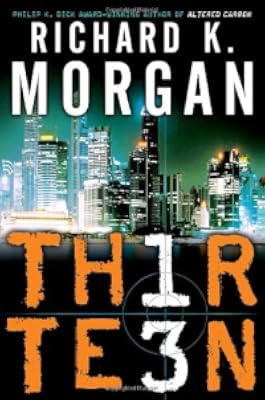
Morgan’s Black Man universe can be seen as an interesting counterpoint to this book in a way: in that book, America’s religious fundamentalists prevailed and Jesusland was created. In [i]The Night Sessions[/i], MacLeod considers an alternate result and I found myself wondering which of those two possible futures is more likely to occur from where we all stand right now.
MacLeod has written a thought provoking book that also entertains d*mn well.
Recommended. show less
It is set in a near future Scotland (primarily) and New Zealand, some 30 or 40 years ahead of now (by my guess - it’s unclear from the book as I recall it). The Faith Wars (also known as the Oil Wars) are over and the West lost. Nuclear weapons were used on the plains of Meggido. Two space elevators have been built. Giant solar sails help protect the Earth from further warming. Artificial intelligences exist, some of which became self-aware in battlefield epiphanies where they were serving as the controllers of autonomous war robots. Humanoid robots are no longer readily produced.
In the aftermath of the Faith show more Wars, Western governments have spurned religion, and become fiercely secular. Christian fundamentalists have been driven from the US, and many have ended up in New Zealand, some even setting up a Creationist theme park. Some AIs/robots work in the park, and others use the park forests as a common retreat from human society.
In Scotland religion is no longer officially recognised but is now tolerated and no longer actively suppressed. DI Alex Ferguson is a veteran of the God Squad police units and remorseful about his old duties. His off-sider, Skulk, is an ex-military AI (called a LEKI) now housed in a body reminiscent of a tripod from the HG Wells’ War Of the Worlds, but much smaller.
In Edinburgh, a Catholic priest is killed by a homemade bomb. Ferguson is assigned to investigate.
MacLeod has here written what was, to me, two distinct novels. One is a futuristic police procedural, the other is an examination of the nature of religion and dogmatism – one that also asks the question: can an AI have a soul? If machine intelligences are possible, are they then susceptible to the attractions of organized religion? And if they are, how might that play out taken to its logical extreme?
The book works well for me on both levels. In some ways it’s difficult to see the Edinburgh setting and not think of Ian Rankine’s Rebus or Jardine’s Bob Skinner, but MacLeod does a good job of combining the (literary) familiar and the societal changes of its future setting. I also liked the way he updates the police procedural format with the newer technologies available (clearly extrapolated from modern IT in the main) but preserves its essential nature at the same time.
Morgan’s Black Man universe can be seen as an interesting counterpoint to this book in a way: in that book, America’s religious fundamentalists prevailed and Jesusland was created. In [i]The Night Sessions[/i], MacLeod considers an alternate result and I found myself wondering which of those two possible futures is more likely to occur from where we all stand right now.
MacLeod has written a thought provoking book that also entertains d*mn well.
Recommended. show less
The Night Sessions is the newest book from Scottish SF author Ken MacLeod. In a saner world that would be enough of an introduction, yet despite winning the BSFA Award for Best Novel in 1999, being nominated for the Arthur C. Clarke Award an impressive five times and receiving significant amounts of critical praise (SFX, for instance, have described him as 'the modern day George Orwell') MacLeod remains relatively unknown among the wider SF reading public.
So: MacLeod has published about a dozen novels since 1995, ranging from the epic space opera of his Fall Revolution series to the near-future thriller of last year's The Execution Channel. His novels tend to focus on political ideas much more than those of his contemporaries (hence the show more comparison to Orwell noted above), yet they are far from didactic in nature, as MacLeod explores a large number of differing and conflicting ideologies - tellingly, while MacLeod himself is far to the left of the political spectrum, he has won the libertarian Prometheus Award on three occasions.
In The Night Sessions MacLeod imagines a world in which religion has been driven out of government. After the decades long Faith/Oil Wars that began on September 11th 2001 and ended when the British and American forces were defeated on the plains of Megiddo, the people of the defeated powers, blaming their own religious and political leaders for what was now seen as a wasteful and pointless conflict, embraced the Second Enlightenment - a comprehensive rejection of religion in all aspects of public life. Militantly secular governments now run the United States and the (successor states of the) United Kingdom, following a strict policy of non-cognizance when it comes to the small number of religious people who remain in these countries.
I suspect I'm not the only person to find this premise rather implausible, to say the least. However, MacLeod sensibly avoids dwelling on the details of this backstory and instead focuses on the consequences it implies.
Much of the novel has the form of a police procedural - indeed, it's difficult not to compare MacLeod's DI Adam Ferguson with Ian Rankin's Inspector Rebus, though I don't recall Rebus ever being accompanied by a wisecracking robot assistant who wouldn't be too out of place in Iain Bank's Culture novels. Ferguson - and Skulk, his robotic partner - are called on to investigate the death of a Catholic priest, and soon begin to uncover details of a plot that recalls the worst days of the Faith Wars. Later the novel expands in scope, as we visit a Creationist theme park in New Zealand populated by robotic prehumans and the twin space elevators that link Earth to both its burgeoning space population and the soletas that shield the planet from the Sun in a last-ditch defence against global warming.
Just writing this summary has reminded me how dense in SFnal ideas this book is - there's plenty more in the novel that I haven't even come close to describing. And for the most part, MacLeod avoids engaging in the sort of lazy antitheism the summary above may make you worry about - the book features a number of religious characters who are positively, yet not uncritically portrayed, and the Second Englightenment itself is not depicted as an unquestionably good or bloodless event.
The book isn't flawless, however. In a way, it's just too dense - there's a sense that MacLeod has had more ideas than will fit in a single volume, and as a result some characters and plot lines get crowded out. And while the ending is, in many ways, the finest MacLeod has ever written, it does have the unfortunate effect of rendering one of the book's subplots oddly pointless (this same subplot also features one of the few examples of militant atheist wish fulfillment MacLeod is guilty of here, and could arguably have been excised entirely without damaging the story at all). And while the book is perfectly readable, the prose could hardly be called beautiful, and is possibly a bit too full of references which most of the book's potential readers simply won't get.
Despite these concerns, I'd happily recommend this book to anybody interested in modern British science fiction, particularly fans of the work of MacLeod's fellow Scot Iain M. Banks. While lacking in some of the ambition - or at least the scope - of the author's earliest work, The Night Sessions can be ranked with the best of MacLeod's stand-alone novels. show less
So: MacLeod has published about a dozen novels since 1995, ranging from the epic space opera of his Fall Revolution series to the near-future thriller of last year's The Execution Channel. His novels tend to focus on political ideas much more than those of his contemporaries (hence the show more comparison to Orwell noted above), yet they are far from didactic in nature, as MacLeod explores a large number of differing and conflicting ideologies - tellingly, while MacLeod himself is far to the left of the political spectrum, he has won the libertarian Prometheus Award on three occasions.
In The Night Sessions MacLeod imagines a world in which religion has been driven out of government. After the decades long Faith/Oil Wars that began on September 11th 2001 and ended when the British and American forces were defeated on the plains of Megiddo, the people of the defeated powers, blaming their own religious and political leaders for what was now seen as a wasteful and pointless conflict, embraced the Second Enlightenment - a comprehensive rejection of religion in all aspects of public life. Militantly secular governments now run the United States and the (successor states of the) United Kingdom, following a strict policy of non-cognizance when it comes to the small number of religious people who remain in these countries.
I suspect I'm not the only person to find this premise rather implausible, to say the least. However, MacLeod sensibly avoids dwelling on the details of this backstory and instead focuses on the consequences it implies.
Much of the novel has the form of a police procedural - indeed, it's difficult not to compare MacLeod's DI Adam Ferguson with Ian Rankin's Inspector Rebus, though I don't recall Rebus ever being accompanied by a wisecracking robot assistant who wouldn't be too out of place in Iain Bank's Culture novels. Ferguson - and Skulk, his robotic partner - are called on to investigate the death of a Catholic priest, and soon begin to uncover details of a plot that recalls the worst days of the Faith Wars. Later the novel expands in scope, as we visit a Creationist theme park in New Zealand populated by robotic prehumans and the twin space elevators that link Earth to both its burgeoning space population and the soletas that shield the planet from the Sun in a last-ditch defence against global warming.
Just writing this summary has reminded me how dense in SFnal ideas this book is - there's plenty more in the novel that I haven't even come close to describing. And for the most part, MacLeod avoids engaging in the sort of lazy antitheism the summary above may make you worry about - the book features a number of religious characters who are positively, yet not uncritically portrayed, and the Second Englightenment itself is not depicted as an unquestionably good or bloodless event.
The book isn't flawless, however. In a way, it's just too dense - there's a sense that MacLeod has had more ideas than will fit in a single volume, and as a result some characters and plot lines get crowded out. And while the ending is, in many ways, the finest MacLeod has ever written, it does have the unfortunate effect of rendering one of the book's subplots oddly pointless (this same subplot also features one of the few examples of militant atheist wish fulfillment MacLeod is guilty of here, and could arguably have been excised entirely without damaging the story at all). And while the book is perfectly readable, the prose could hardly be called beautiful, and is possibly a bit too full of references which most of the book's potential readers simply won't get.
Despite these concerns, I'd happily recommend this book to anybody interested in modern British science fiction, particularly fans of the work of MacLeod's fellow Scot Iain M. Banks. While lacking in some of the ambition - or at least the scope - of the author's earliest work, The Night Sessions can be ranked with the best of MacLeod's stand-alone novels. show less
http://nwhyte.livejournal.com/1280532.html
An excellent merging of numerous MacLeod themes, shaken and stirred to produce a thought-provoking result. The book is set in a relatively near-future independent Scotland, after the victory of secularism against religion throughout the English-speaking world, but is nothing like as polemical as that summary might make it sound; it is told from the point of view of the policeman investigating the murder of a Catholic priest, a crime which leads him into the underground world of the surviving Christian churches and the existential and political problems of intelligent robots, built for a war which is now over. (In general, I hate cute anthromorphic robots, but these are not cute and only show more optionally anthroporphic, and I was entirely satisfied by their psychology.) I wished the ending had been unpacked a bit, but I also know that MacLeod sometimes expects a bit of brain-work from his readers.
Although this is a stand-alone book, and so is MacLeod's forthcoming The Restoration Game, astute readers will note that both feature U.S. intelligence, computer games, and New Zealand, though to differing extents. show less
An excellent merging of numerous MacLeod themes, shaken and stirred to produce a thought-provoking result. The book is set in a relatively near-future independent Scotland, after the victory of secularism against religion throughout the English-speaking world, but is nothing like as polemical as that summary might make it sound; it is told from the point of view of the policeman investigating the murder of a Catholic priest, a crime which leads him into the underground world of the surviving Christian churches and the existential and political problems of intelligent robots, built for a war which is now over. (In general, I hate cute anthromorphic robots, but these are not cute and only show more optionally anthroporphic, and I was entirely satisfied by their psychology.) I wished the ending had been unpacked a bit, but I also know that MacLeod sometimes expects a bit of brain-work from his readers.
Although this is a stand-alone book, and so is MacLeod's forthcoming The Restoration Game, astute readers will note that both feature U.S. intelligence, computer games, and New Zealand, though to differing extents. show less
Picture a world where Religion of all sorts has been sidelined, rejected, and the world is full of secular republics. A world where ex-military intelligent robots work side by side with the police. Where Palestine is a radioactive ruin after the battles of the Faith Wars between the Mulsim East and the Judeo/Christian West. Where there are two space elevators and vast soletas that stop the world from warming up under the greenhouse effect.
This is the world of The Night Sessions, where someone is killing priests and a fundamentalist Scottish Christian sect is plotting a terrorist atrocity on an unprecedented scale. Adam Ferguson is the cop tasked with investigating it all and unravelling the connections between that sect, a lay preacher show more in a creationist science park in New Zealand, and a rogue humanoid robot passing itself off as an injured war veteran.
MacLeod's neat near-future dystopian thriller is an arresting, thought provoking read. Whether the world would reject religion on such a scale is debatable but the story told here is rooted in a solid, well thought out scenario.
The novel is well paced, the characters well drawn and the reveal at the end is nicely handled. Great little book. show less
This is the world of The Night Sessions, where someone is killing priests and a fundamentalist Scottish Christian sect is plotting a terrorist atrocity on an unprecedented scale. Adam Ferguson is the cop tasked with investigating it all and unravelling the connections between that sect, a lay preacher show more in a creationist science park in New Zealand, and a rogue humanoid robot passing itself off as an injured war veteran.
MacLeod's neat near-future dystopian thriller is an arresting, thought provoking read. Whether the world would reject religion on such a scale is debatable but the story told here is rooted in a solid, well thought out scenario.
The novel is well paced, the characters well drawn and the reveal at the end is nicely handled. Great little book. show less
Members
- Recently Added By
Lists

The Guardian's 1000 Novels Everyone Must Read
1,005 works; 551 members

Books Read in 2023
5,638 works; 145 members
Author Information

61+ Works 12,411 Members
Some Editions
Awards and Honors
Awards
Distinctions
Common Knowledge
- Canonical title
- The Night Sessions
- Original title
- The Night Sessions
- Original publication date
- 2008-08
- Important places
- Edinburgh, Scotland, UK; Rotorua, New Zealand; St Andrews, Fife, Scotland, UK
- Epigraph
- 'The government of the United States of America is not in any sense founded on the Christian religion, nor on any other.'
Thirty-First Amendment to the Constitution of the United States - Dedication
- To Steve Cullen
- First words
- "Science fiction", said the robot, "has become science fact!"
- Last words
- (Click to show. Warning: May contain spoilers.)The sunlight was bright after the dimness within and, Campbell thought, a degree or two warmer than it should have been for the time of year.
- Original language
- English
Classifications
Statistics
- Members
- 458
- Popularity
- 66,395
- Reviews
- 21
- Rating
- (3.65)
- Languages
- English, Italian, Turkish
- Media
- Paper, Ebook
- ISBNs
- 7
- ASINs
- 4