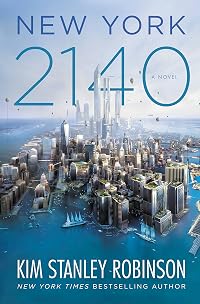
New York 2140
by Kim Stanley Robinson
On This Page
Description
New York Times bestselling author Kim Stanley Robinson returns with a bold and brilliant vision of New York City in the next century.As the sea levels rose, every street became a canal. Every skyscraper an island. For the residents of one apartment building in Madison Square, however, New York in the year 2140 is far from a drowned city.
There is the market trader, who finds opportunities where others find trouble. There is the detective, whose work will never disappear — along with the show more lawyers, of course.
There is the internet star, beloved by millions for her airship adventures, and the building's manager, quietly respected for his attention to detail. Then there are two boys who don't live there, but have no other home — and who are more important to its future than anyone might imagine.
Lastly there are the coders, temporary residents on the roof, whose disappearance triggers a sequence of events that threatens the existence of all — and even the long-hidden foundations on which the city rests. show less
Tags
Recommendations

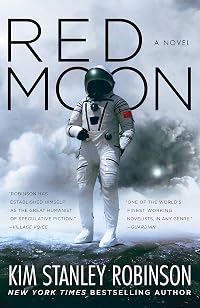
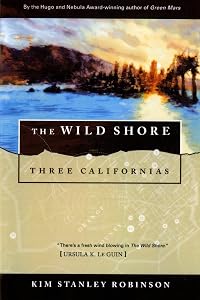

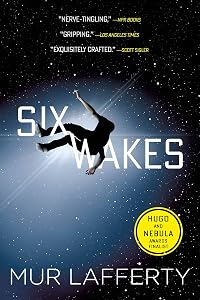
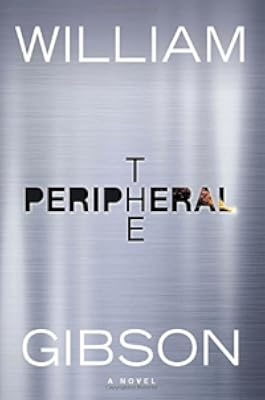



Member Recommendations
Member Reviews
The first pulse in the mid-21st century raised the ocean ten feet, the second one raised it another forty. So fifty total. And New York lives on . . . the buildings built on bedrock survive. There is an "intertidal zone" as well, where part of every day the water recedes almost completely. The streets are now canals. It stinks, but it's home. Things (financial and concrete, literally on that last) are coming to a tipping point- the rich have gotten just too darned rich and the concrete that is holding up large parts of the city is about to crumble. The story focusses on the residents of the MetLife building on Madison Square (don't confuse it with another one further uptown) that is firmly in the wet zone. The super, Vlade, Charlotte, a show more social worker (high up in the order), a police inspector, a hedge fund guy, some geeks, a "cloud" celebrity, not to mention two urchins who live clandestinely under the dock in their rubber raft and hunt for treasure from a ship sunk during the 1770's. Robinson is especially good at creating characters and situations that verge on hokey but hold your attention so you have to read on to make sure they get out of whatever scrapes they get in. Robinson writes what he wishes might come to pass, that humanity might (at least sometimes) do what is sensible. How I wish. ***1/2 show less
I haven't read a Kim Stanley Robinson novel since college, when I heroically worked my way through the "Color Mars" trilogy over a summer. New York 2140 is quite long, but also quite enjoyable. In some ways it made me think of reading a late Dickens novel, like Our Mutual Friend. There's no central character in New York 2140 and (mostly) no central plot line, just a cluster of eight characters from all different walks of life. Many, but not all, live in the Met Life Tower, and their lives sort of criss-cross one another at various points. The book is three things mainly: a piece of "cli-fi" (climate fiction, the sea level has had two dramatic rises in the next 120 years), an sf extrapolation of the global finance industry (Robinson's show more future has seen two more 2008-esque financial crashes, and a fourth is due), and a love letter to the city of New York (the book is filled with ruminations on the history and culture of the city). In all three areas, it's quite captivating. And I don't even like cities very much!
As I remember the Mars books being, it is long and slow, but I was never not enjoying it. This is one of those sf novels that's more about world and ideas than plot, and I was okay with that. Like, it's long... but I don't actually know what I would cut! I came to like this diverse cast of characters, and there was an awesomely audacious plot swerve about 400 pages in, even if it ultimately resolved a little too utopianly for my tastes. I'm glad I was forced to finally read more Robinson, and I ought to track more of his work down if it's anything like this. show less
As I remember the Mars books being, it is long and slow, but I was never not enjoying it. This is one of those sf novels that's more about world and ideas than plot, and I was okay with that. Like, it's long... but I don't actually know what I would cut! I came to like this diverse cast of characters, and there was an awesomely audacious plot swerve about 400 pages in, even if it ultimately resolved a little too utopianly for my tastes. I'm glad I was forced to finally read more Robinson, and I ought to track more of his work down if it's anything like this. show less
I have often complained about the lack of climate change novels. This is a novel about climate change and you know what? I absolutely loved it! ‘New York 2140’ was just what I wanted: a big novel about a city, its people, and its politics changing with the climate. As in [b:Red Mars|77507|Red Mars (Mars Trilogy, #1)|Kim Stanley Robinson|https://images.gr-assets.com/books/1440699787s/77507.jpg|40712], Kim Stanley Robinson deftly examines environmental influences on society, the emergence of resistance, and a convincing future political economy using appealing characters, vivid settings, and satisfying plotting. More sci-fi should make me feel this sense of hope and possibility; more sci-fi should read intermittently like non-fiction. show more I can’t think of another author who could get away with chapters ostensibly from the perspective of ‘the citizen’, in which the author directly addresses the reader. While it’s a device I’m skeptical of, they really worked here. Perhaps the most distinctive strength of ‘New York 2140’ (and [b:Red Mars|77507|Red Mars (Mars Trilogy, #1)|Kim Stanley Robinson|https://images.gr-assets.com/books/1440699787s/77507.jpg|40712] actually) is the evocation of community. In this case, the Met building that the main characters inhabit becomes a catalyst for seismic political change as the inhabitants meet, talk, have ideas, connect each other into other communities, and generally work together. At the present time of political mayhem and hopelessness, it is tremendously hopeful to be reminded of how much a diverse group of people can achieve through collaboration. Not that the individuals involved aren’t part of a wider socio-political landscape; the fourth-wall-breaking ‘citizen’ makes it clear that the characters are an emergent phenomenon rather than singular heroes. What this novel does is show with conviction that change for the better can happen. I wonder when exactly that became a rare and radical thing in fiction?
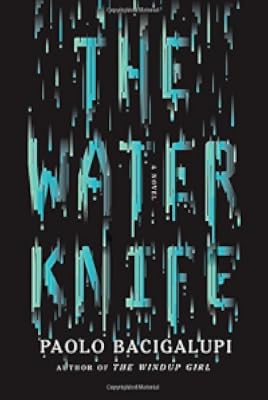
Thus I was expecting a depressing novel about climate change and found a utopian one. Unlike most other sci-fi novels, eg [b:The Water Knife|23209924|The Water Knife|Paolo Bacigalupi|https://images.gr-assets.com/books/1411059576s/23209924.jpg|25129883], ‘New York 2140’ doesn’t merely use the impacts of climate change as the setting for a thriller plot. Half-drowned New York is the main character. Sea level rise and extreme weather events shape the lives of all the main characters. The world-building is anchored firmly in a world re-stabilised after initial climate chaos. That’s what makes the book utopian - it suggests that, faced with environmental collapse, humanity can pull itself together rather than tearing itself apart. Each of the main characters is trying to make the world better, in their own particular way. Not all would put it that way, but every one of them finds meaning in doing something positive. Their moments of fatalism are fleeting, as they exist in a supportive community. This microcosm was so involving and appealing that, inevitably, I wanted to know what was happening elsewhere in the world in 2140. Of course the meta-narrator comments that the events depicted could just as well be happening in another coastal city on another continent. The individual city and its inhabitants are both crucial and not. Without individual action nothing can happen, but without collective action very little can change.
Also notable and sadly unusual in ‘New York 2140’ is how angry it is about global inequality. The world of 2140 still has Goldman Sachs et al, thanks to disaster capitalism profiting from successive environmental catastrophes. Much sci-fi since the 1980s simply accepts extreme inequality with fatalistic inevitability, cf [b:The End of History and the Last Man|57981|The End of History and the Last Man|Francis Fukuyama|https://images.gr-assets.com/books/1391572633s/57981.jpg|56476] and so on. Hell, a lot of cyberpunk glamorises it. It is a breath of fresh air to find a novel with characters who complain bitterly about inequality, who organise against it, who find workable solutions. There’s no unsatisfactory ‘take down one bad oligarch but leave the system intact’ plot here. On the other hand, this is not a naively optimistic political vision either. The meta-narrator is deliberately cynical and references nearly every nitpick that occurred to me while reading. Everything here has been carefully thought through. ‘New York 2140’ strikes me as a book that can provide receipts.
In short, it is absolutely my sort of entertainment and I’m very glad that I read it. I really liked the characters, I loved mentally comparing 2140 New York with the version in [b:Apple of My Eye|125038|Apple of My Eye|Helene Hanff|https://images.gr-assets.com/books/1348392772s/125038.jpg|1200185], the action scenes were very exciting, and I adored the thoughtful plotting. The back cover of the edition I read had a quote on the back cover, from the New Yorker appropriately enough: ‘In an era filled with complacent dystopias and escapist apocalypses, Robinson is one of our best, bravest, most moral and most hopeful storytellers’. I could not agree more. What use are dystopias if they say nothing intelligent about the problems of the present? ‘New York 2140’ depicts a hopeful future in which humanity learns to live with climate change, albeit only after devastating sea level rise. At the moment, that is a positively comforting prospect. This is exactly the kind of analytical sci-fi that I want to read and that I hope more authors write. show less
Thus I was expecting a depressing novel about climate change and found a utopian one. Unlike most other sci-fi novels, eg [b:The Water Knife|23209924|The Water Knife|Paolo Bacigalupi|https://images.gr-assets.com/books/1411059576s/23209924.jpg|25129883], ‘New York 2140’ doesn’t merely use the impacts of climate change as the setting for a thriller plot. Half-drowned New York is the main character. Sea level rise and extreme weather events shape the lives of all the main characters. The world-building is anchored firmly in a world re-stabilised after initial climate chaos. That’s what makes the book utopian - it suggests that, faced with environmental collapse, humanity can pull itself together rather than tearing itself apart. Each of the main characters is trying to make the world better, in their own particular way. Not all would put it that way, but every one of them finds meaning in doing something positive. Their moments of fatalism are fleeting, as they exist in a supportive community. This microcosm was so involving and appealing that, inevitably, I wanted to know what was happening elsewhere in the world in 2140. Of course the meta-narrator comments that the events depicted could just as well be happening in another coastal city on another continent. The individual city and its inhabitants are both crucial and not. Without individual action nothing can happen, but without collective action very little can change.
Also notable and sadly unusual in ‘New York 2140’ is how angry it is about global inequality. The world of 2140 still has Goldman Sachs et al, thanks to disaster capitalism profiting from successive environmental catastrophes. Much sci-fi since the 1980s simply accepts extreme inequality with fatalistic inevitability, cf [b:The End of History and the Last Man|57981|The End of History and the Last Man|Francis Fukuyama|https://images.gr-assets.com/books/1391572633s/57981.jpg|56476] and so on. Hell, a lot of cyberpunk glamorises it. It is a breath of fresh air to find a novel with characters who complain bitterly about inequality, who organise against it, who find workable solutions. There’s no unsatisfactory ‘take down one bad oligarch but leave the system intact’ plot here. On the other hand, this is not a naively optimistic political vision either. The meta-narrator is deliberately cynical and references nearly every nitpick that occurred to me while reading. Everything here has been carefully thought through. ‘New York 2140’ strikes me as a book that can provide receipts.
In short, it is absolutely my sort of entertainment and I’m very glad that I read it. I really liked the characters, I loved mentally comparing 2140 New York with the version in [b:Apple of My Eye|125038|Apple of My Eye|Helene Hanff|https://images.gr-assets.com/books/1348392772s/125038.jpg|1200185], the action scenes were very exciting, and I adored the thoughtful plotting. The back cover of the edition I read had a quote on the back cover, from the New Yorker appropriately enough: ‘In an era filled with complacent dystopias and escapist apocalypses, Robinson is one of our best, bravest, most moral and most hopeful storytellers’. I could not agree more. What use are dystopias if they say nothing intelligent about the problems of the present? ‘New York 2140’ depicts a hopeful future in which humanity learns to live with climate change, albeit only after devastating sea level rise. At the moment, that is a positively comforting prospect. This is exactly the kind of analytical sci-fi that I want to read and that I hope more authors write. show less
When Kim Stanley Robinson is on target, he is one of the best SF writers working today. New York 2140 is definitely on target. But unlike many of his novels, there is a very strong streak of observation and opinion being conveyed here. Robinson believes our current course, economically, politically, and technologically is unsustainable. And he has prescriptions to offer. You may not agree with some (or any) of them. But they're worth reading and considering, because they will make you think about what we are doing and what we should be doing. And Robins carries this off with interesting characters and detailed research that are the hallmarks of his writing.
[Audiobook note: The audiobook version uses multiple readers. All are good. But show more my absolute favorite is the one who calls himself "Citizen" and reflects on the varied and fascinating history of New York city in a strong New York accent. I imagine I will listen to just the chapters he narrates for the sheer enjoyment and learning of it.] show less
[Audiobook note: The audiobook version uses multiple readers. All are good. But show more my absolute favorite is the one who calls himself "Citizen" and reflects on the varied and fascinating history of New York city in a strong New York accent. I imagine I will listen to just the chapters he narrates for the sheer enjoyment and learning of it.] show less
I don't generally read science fiction, maybe because I read for utility, and have a tougher time judging the value of fiction than non-fiction. This recommendation came from a friend, so I thought I would give it a try.
The context for the story is that sea levels have risen 50 feet due to climate change, and much of New York City is still inhabited, but underwater. The story itself is about massive union strikes against debt repayment that throw the global economy into shock, at which points the banks are nationalized in exchange for being bailed out.
I found the book slow going, which you might expect from something this long. Although I'm quite excited about the storyline, I found it exceedingly frustrating that the story was set over show more a century in the future. Nothing about the storyline requires that it not just be a story sent in current day. And setting something so far off in the future makes it feel distant, inaccessible, irrelevant.
Additionally, I don't think there's any way a century will pass and we'll have anywhere near the continuity and stability that Robinson predicts. The US government still exists, basically unchanged, as do all the traditional financial institutions and investing approach. The same can be said for money itself, still behaving in basically the same way, in dollars. I don't see this as vaguely possible. There's likely somewhere around a 50:50 chance the human race will be extinct, or with population levels in the tens of thousands by 2040. And even if we're lucky and also actually address some of the pressing issues of our time and happen to pull through, I doubt the US government, dollars, or finance as we know it will still be around.
So it would be a great story, if it was set in present day. Having it so far in the future—an unrealistic future at that—pulls the air out of it for me.
Also, I hate New York! I dislike cities in general, but New York has a grungy and abandoned feeling to it that couldn't be a more fitting illustration of the Tragedy of the Markets. So telling a story set in such a horrible environment also severely detracted from the experience for me. show less
The context for the story is that sea levels have risen 50 feet due to climate change, and much of New York City is still inhabited, but underwater. The story itself is about massive union strikes against debt repayment that throw the global economy into shock, at which points the banks are nationalized in exchange for being bailed out.
I found the book slow going, which you might expect from something this long. Although I'm quite excited about the storyline, I found it exceedingly frustrating that the story was set over show more a century in the future. Nothing about the storyline requires that it not just be a story sent in current day. And setting something so far off in the future makes it feel distant, inaccessible, irrelevant.
Additionally, I don't think there's any way a century will pass and we'll have anywhere near the continuity and stability that Robinson predicts. The US government still exists, basically unchanged, as do all the traditional financial institutions and investing approach. The same can be said for money itself, still behaving in basically the same way, in dollars. I don't see this as vaguely possible. There's likely somewhere around a 50:50 chance the human race will be extinct, or with population levels in the tens of thousands by 2040. And even if we're lucky and also actually address some of the pressing issues of our time and happen to pull through, I doubt the US government, dollars, or finance as we know it will still be around.
So it would be a great story, if it was set in present day. Having it so far in the future—an unrealistic future at that—pulls the air out of it for me.
Also, I hate New York! I dislike cities in general, but New York has a grungy and abandoned feeling to it that couldn't be a more fitting illustration of the Tragedy of the Markets. So telling a story set in such a horrible environment also severely detracted from the experience for me. show less
"I'm sick. Sick of those bastards ripping us off. Tooling to Davos to tell each other how great they are, how much good they're doing. Fucking fuckwad hypocrites and bastards. And they get away with it!"
"Jeff, stop now. Stop. You're wasting your energy on this, you're preaching to the choir on this. I agree already, so there's no point in saying it all over again. The world is fucked up, agreed. The rich are stupid assholes, agreed. But you need to stop saying so."
"I can't."
"I know. But you have to. Just this time. Save it for later."
So this novel, it's about New York in 2140 (shocking, right?) after two dramatic rises in sea level that have wiped out coastal areas world-wide, leaving Denver as the financial and federal capital of the show more United States. Although New York has been transformed by the rising water, New Yorkers hang on to their drowned city, navigating by boats, waterproofing the buildings left standing, forming co-ops that grow their own food and serve communal meals. With climate change no longer deniable, people have been forced to find new forms of transportation and new ways of life. The world Mr. Robinson has created is fascinating.
But...the more things change, the more they stay the same. The rich just keep getting richer, while the poor are left with less and less. There's a whole lot here about capitalism and market economies and financial speculation that to a certain extent went over my head. But this much I did get: this book is really about here and now, staring down the barrel of climate change, while the government continues to benefit the rich and powerful as they ravage the planet for profit. Many references are made to the financial crash of 2008, how the government bailed out the banks & corporations, how everyone continued to support and believe in the system that only benefits the rich and powerful. In the words of my girl Ani DiFranco, "Are we really going to sleep through another century while the rich profit off our blood?"
Right. Stepping off my soapbox now. (See the dialogue above.)
Around this not-so-subtle theme and in this not-quite-dystopian setting, Mr. Robinson has crafted an entertaining novel. We skip between the points-of-view of various residents of a high-rise co-op in the old Met-Life building: a police detective from a rough background, a lawyer who fights for the rights of refugees, the building superintendent, a young financial trader, a daredevil "cloud star" -- think YouTube of the 22nd century, two IT geniuses who try to change the status quo (again, see dialogue above), and two "water rats" (homeless kids with a boat). Each has a distinct voice that contributes to the overall narrative, while playing on archetypes we all know. Just when I recognized a distinct [b:Rosencrantz and Guildenstern Are Dead|18545|Rosencrantz and Guildenstern Are Dead|Tom Stoppard|https://i.gr-assets.com/images/S/compressed.photo.goodreads.com/books/1338735611l/18545._SY75_.jpg|73811] vibe to "Mutt and Jeff," , the characters reference that play. And when Stefan and Roberto reminded me of Huck Finn & ...well, really more Huck Finn than Tom Sawyer , they ended up discovering those literary figures.
Which is all to say that I thoroughly enjoyed this novel, but found it to be slight too: a little too long, a little too preachy, a little too ambitious, with characters a little too conveniently connected. But definitely worth the read. show less
"Jeff, stop now. Stop. You're wasting your energy on this, you're preaching to the choir on this. I agree already, so there's no point in saying it all over again. The world is fucked up, agreed. The rich are stupid assholes, agreed. But you need to stop saying so."
"I can't."
"I know. But you have to. Just this time. Save it for later."
So this novel, it's about New York in 2140 (shocking, right?) after two dramatic rises in sea level that have wiped out coastal areas world-wide, leaving Denver as the financial and federal capital of the show more United States. Although New York has been transformed by the rising water, New Yorkers hang on to their drowned city, navigating by boats, waterproofing the buildings left standing, forming co-ops that grow their own food and serve communal meals. With climate change no longer deniable, people have been forced to find new forms of transportation and new ways of life. The world Mr. Robinson has created is fascinating.
But...the more things change, the more they stay the same. The rich just keep getting richer, while the poor are left with less and less. There's a whole lot here about capitalism and market economies and financial speculation that to a certain extent went over my head. But this much I did get: this book is really about here and now, staring down the barrel of climate change, while the government continues to benefit the rich and powerful as they ravage the planet for profit. Many references are made to the financial crash of 2008, how the government bailed out the banks & corporations, how everyone continued to support and believe in the system that only benefits the rich and powerful. In the words of my girl Ani DiFranco, "Are we really going to sleep through another century while the rich profit off our blood?"
Right. Stepping off my soapbox now. (See the dialogue above.)
Around this not-so-subtle theme and in this not-quite-dystopian setting, Mr. Robinson has crafted an entertaining novel. We skip between the points-of-view of various residents of a high-rise co-op in the old Met-Life building: a police detective from a rough background, a lawyer who fights for the rights of refugees, the building superintendent, a young financial trader, a daredevil "cloud star" -- think YouTube of the 22nd century, two IT geniuses who try to change the status quo (again, see dialogue above), and two "water rats" (homeless kids with a boat). Each has a distinct voice that contributes to the overall narrative, while playing on archetypes we all know. Just when I recognized a distinct
Which is all to say that I thoroughly enjoyed this novel, but found it to be slight too: a little too long, a little too preachy, a little too ambitious, with characters a little too conveniently connected. But definitely worth the read. show less
New York 2140 is a wild romp through Venice-cum-New York City in the aftermath of two massive ice melts that have significantly submerged large parts of Manhattan. People live in the skyscrapers of the city even as the lower floors are underwater. The rivers and canals are now traversed by all manner of watercraft, where before the subway and automobile reigned. KSR captures the indomitable energy of the city, which persists and thrives despite the drowning. The book is vivid, wild, untamed with colorful characters.
It is also chock full of ideas and chaos and survival. Readers familiar with Stan’s books will recognize impeccable research – in this case especially into New York City history, global financial shenanigans, and the show more science of sea level rise – and the courageous risk-taking that characterizes much of his work. Prominent in the cake mix are the author’s utopian leanings, with a healthy icing of critique of capitalism. I use that odd expression in part to try to imitate his fearless inventiveness at new verbal constructions, puns and neologisms, seemingly unconcerned about the inevitable failure of some portion of these. And most elicit at least a wry smile.
Under all this energy is a carefully constructed structure, with repeating sequences of orderly chapters each one following a particular character. The structure appears to mimic in abstraction something of the grid-like face of the city itself. The homage to Dos Passos’ cinematic, panoramic experimentalism is hard to miss. In the end, one may wonder about the payoff; after all, this is a long and imperfect novel requiring the time and persistence of the reader. But against that is balanced dynamic world-building, an entertaining romp without let-up, and a serious consideration of a future that seems ever more possible. Maybe the most fun one can have with global warming! show less
It is also chock full of ideas and chaos and survival. Readers familiar with Stan’s books will recognize impeccable research – in this case especially into New York City history, global financial shenanigans, and the show more science of sea level rise – and the courageous risk-taking that characterizes much of his work. Prominent in the cake mix are the author’s utopian leanings, with a healthy icing of critique of capitalism. I use that odd expression in part to try to imitate his fearless inventiveness at new verbal constructions, puns and neologisms, seemingly unconcerned about the inevitable failure of some portion of these. And most elicit at least a wry smile.
Under all this energy is a carefully constructed structure, with repeating sequences of orderly chapters each one following a particular character. The structure appears to mimic in abstraction something of the grid-like face of the city itself. The homage to Dos Passos’ cinematic, panoramic experimentalism is hard to miss. In the end, one may wonder about the payoff; after all, this is a long and imperfect novel requiring the time and persistence of the reader. But against that is balanced dynamic world-building, an entertaining romp without let-up, and a serious consideration of a future that seems ever more possible. Maybe the most fun one can have with global warming! show less
Members
- Recently Added By
Published Reviews
ThingScore 100
„New York 2140“ ist, bei aller Freude an brillanten futurologischen Extrapolationen, ein sehr engagierter Roman über das Hier und Heute.
added by private library
New York 2140 is a towering novel about a genuinely grave threat to civilisation.
added by dukedom_enough
Lists

Best Science Fiction Novels
816 works; 430 members

2017 Locus recommended reading list SciFi
28 works; 2 members

2018 Hugo Eligible Novels
170 works; 16 members

Beginner's Guide to Climate Fiction
24 works; 7 members

It's the end of the world as we know it!
90 works; 23 members

Exploration of alternative economical systems
40 works; 3 members

2017 Science Fiction and Fantasy I'm Looking Forward To
46 works; 6 members

Dystopian and Apocalyptic Literature
350 works; 74 members

Read Next
5 works; 1 member

Books With Numbers in the Title
308 works; 13 members

Books Read in 2020
4,379 works; 124 members

Books Read in 2023
5,547 works; 145 members

Favorite Long Books
330 works; 42 members

Books With Time Words in the Title
160 works; 4 members

Climate Change
39 works; 2 members

Books Read in 2018
4,360 works; 110 members

Books Set in New York City
127 works; 21 members

Books With Place Names in the Title
257 works; 11 members

Books Read in 2017
4,249 works; 130 members

Hurricane Books
10 works; 3 members
Author Information

139+ Works 49,452 Members
Kim Stanley Robinson was born in Orange County, California on March 23, 1952. He received a B. A. and Ph. D. from the University of California at San Diego and an M. A. from Boston University. His first trilogy of books, Orange County, collectively won a Nebula Award and two Hugo Awards. His other works include the Mars trilogy, 2312, and Aurora. show more He has won an Asimov Award, a World Fantasy Award, a Locus Reader's Poll Award, and a John W. Campbell Award. (Bowker Author Biography) show less
Some Editions
Awards and Honors
Awards
Distinctions
The Guardian Book of the Day (2017-03-03)
Common Knowledge
- Canonical title*
- New York 2140
- Original title
- New York 2140
- Original publication date
- 2017-03-14
- Important places
- New York, New York, USA
- First words
- "Whoever writes the code creates the value."
- Last words
- (Click to show. Warning: May contain spoilers.)"It's true. Fucking New York."
- Publisher's editor
- Holman, Tim
- Original language
- English
*Some information comes from Common Knowledge in other languages. Click "Edit" for more information.
Classifications
Statistics
- Members
- 1,671
- Popularity
- 13,378
- Reviews
- 79
- Rating
- (3.63)
- Languages
- 7 — English, French, German, Hungarian, Italian, Spanish, Portuguese (Portugal)
- Media
- Paper, Audiobook, Ebook
- ISBNs
- 25
- ASINs
- 10