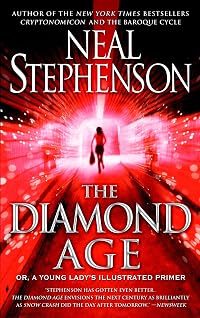
The Diamond Age
by Neal Stephenson
On This Page
Description
The story of an interactive book, A Young Lady's Illustrated Primer, written by John Hackworth, a nano engineer. It helps a girl become a princess and educates an army of girls who eventually save his life. The setting is a world where molecular machines create any object desired and where nations have been replaced by cultural enclaves, in this case the neo-Victorians of coastal China. Part-science fiction, part-political thriller.Tags
Recommendations
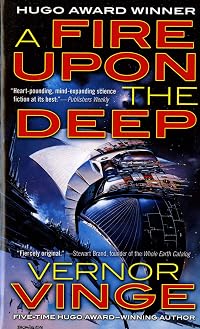
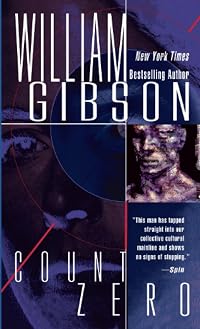
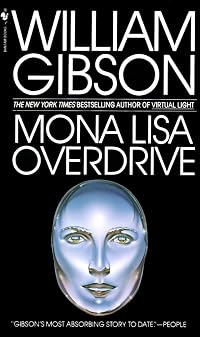
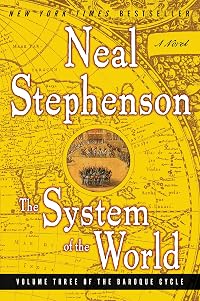
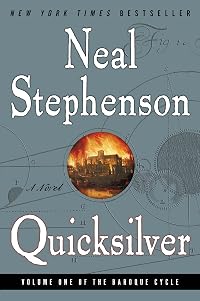
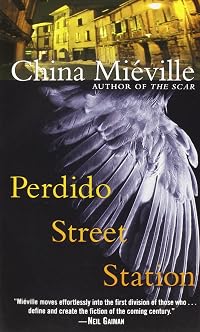
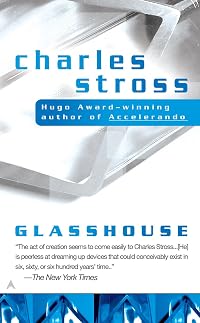
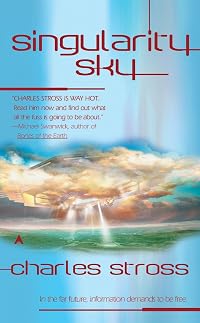
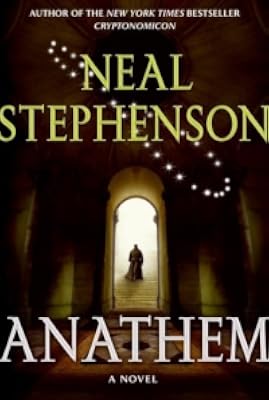
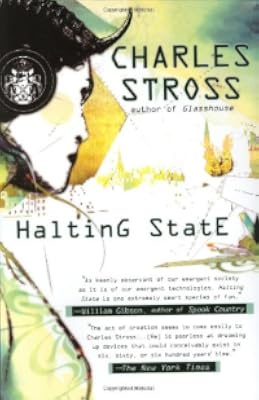
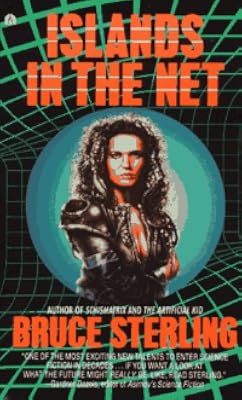
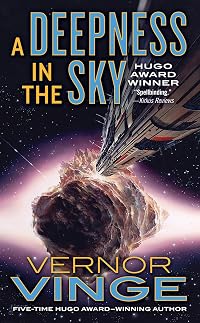

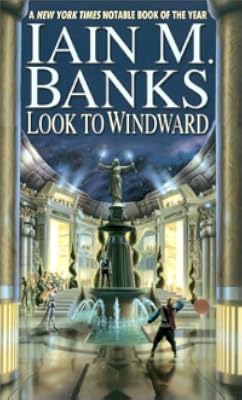
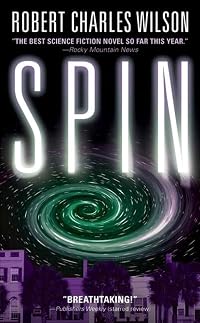
Member Recommendations


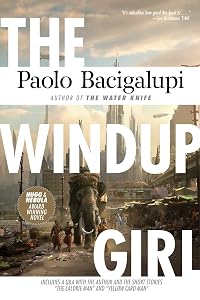
urza One is utopistic novel, other science fiction full of nanotechnology. Yet, both books left similar feelings in me. The story in both takes place in beautifuly described colorful world. Both deal with human society and both are kind of "brighter side of the life".
11
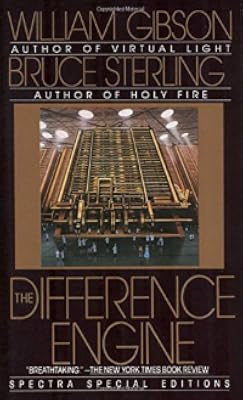
majkia Both books take place in the midst of social upheaval and both portray worlds far from perfect. The class divisions are highlighted and one sees how so many individuals' lives can easily be diminished in a Victorian sort of steampunk culture.
11
Member Reviews
You know what this book most reminded me of? That mildly drunk guy at a party who seems kind of interesting and charismatic, even though he can't keep his chain of thought straight, but who turns out to be a total asshole after he realizes he's not getting laid.
Initially, I wasn't tempted by "The Diamond Age," but the subtitle drew me in. A book advising young women? Interesting. However, given a choice between this book and the classic young women's story, [b:Little Women|1934|Little Women|Louisa May Alcott|https://i.gr-assets.com/images/S/compressed.photo.goodreads.com/books/1562690475l/1934._SY75_.jpg|3244642], I think I'll go with Little Women. At least (trigger warning) none of the girls are raped.
The Diamond Age, Or a Young show more Lady's Illustrated Primer was an interesting, convoluted, frustrating book packed with ideas, characters and too little plot. I suspect Stephenson of being in love with his ideas and would suggest a firmer hand on the editorial wheel. Far too many details on nanobots, too few details on characters. Hard to put down when I was reading, and equally hard to pick up later. It was eligible for a re-read--or at least a re-listen, as I'm told the narrated version is quite enjoyable--until the (trigger and spoiler) rape and the narrative mish-mash at the end.
The story revolves around Nell, a young girl living with an older brother, her mother and her mother's series of boyfriends, and John Percival Hackworth, creator of The Young Lady's Illustrated Primer. There's a story-within-a-story plot of Nell reading the interactive Primer and experiencing the fairy-tale like story within. An abundance of other characters are involved, including a minor thug who briefly dates Nell's mom; her brother Harv; Hackworth's patron, Lord Finkle-McGraw; Miranda, the actress who reads the Primer; Constable Moore, war veteran and her guardian of sorts; Dr. X, a mysterious character who wants the Primer for unknown reasons; Miranda's boss, Carl Hollywood; Hackworth's daughter and a few others. It's also worth noting that despite being A Young Lady's Primer, it almost completely fails the Bechdel test. Because, you know: it is not just about the Young Lady; it is also about the creator of the book and Stephenson's technology.
When it comes to characters, Stephenson quickly creates a feeling of depth in some. One of my favorites was Judge Fang, with his New York accent, his adherence to Confucius principles, and his willingness to follow the path of ethics over the path of law. It reminded me very strongly of Master Li in [b:Bridge of Birds|15177|Bridge of Birds (The Chronicles of Master Li and Number Ten Ox, #1)|Barry Hughart|https://i.gr-assets.com/images/S/compressed.photo.goodreads.com/books/1327940289l/15177._SY75_.jpg|958087]. Sadly, we lose track of the Judge. Likewise, while the Miranda story was engaging and we get a glimpse of her emotions at a particular time of life, she disappears for the last third of the book. While both characters tied in quite nicely with the story of the Primer and Nell, the story of other parts of the Primer took precedence.
Spoilers below, naturally, because how else can I talk about this mess?
Narrative. Sigh, what can I say? The story-within-story technique is interesting and often enjoyable for me. In this case, it gives insight into just how special this book is and how it interacts with the child and the environment to shape response. However, as Nell ages, it could have done a better job with parallels to her real life, particularly in the last half when it was teaching her about the '12 keys,' which I think meant learning coding techniques. I found myself raising an eyebrow once or twice. Would a Victorian primer really have encouraged a child to stab someone? Sure, it may have been a sign of the book not quite working--or it may have been a sign of Stephenson taking the story where he needed it to go. I'm betting the latter.
It was a relatively coherent story up until about page 250 when the plot loses any sense of caring about characterization and moves characters around to get to where Stephenson needs them to make his ultimate thematic point. Hackforth ends up in a Drummer society, where much like entering Fairyland, he has aged ten years when he emerges around page 293... and then things really turn bizarre and dreamlike. Miranda decides to look for Nell and disappears from the narrative after accepting an engagement with two shady characters. Hackforth's daughter appears for a bizarre live-action ractive performed on a ship. Nell suddenly decides to leave the Victorian society and set off for China, although we aren't sure why, and ends up in a sado-maochism brothel. It was a mess and only sheer stubbornness kept me reading. When Nell is captured and raped by the Fists of Righteous Harmony it catapulted me out of bored confusion into rage. What. The. Hell. Unacceptable, but thanks, Stephenson, for making sure the A Young Lady's Illustrated Primer reinforces women as rape targets, because we wouldn't want to think we've moved beyond it as a plot device. Oh--and then he provided a capstone with a potential rape, saved for the last two pages.
I have an entire ranty post on my blog about the use of rape in stories and believe the trope was completely unnecessary here. To then call this book "A Young Lady's Primer" is insulting and makes any empowerment themes hollow. You know what else I realized? Nell has very few interactions with women in this book. With the exception of Nell, women are pawns or dependents. Except for the Vicky classroom, there no scenes of females interacting with females. Because apparently the message of "A Young Lady's Primer" is it's a man's world and women get to live in it.
Three and a half stars for the first 250 pages, two stars for the rest and negative forty stars for the end. Stick with Little Women. show less
Initially, I wasn't tempted by "The Diamond Age," but the subtitle drew me in. A book advising young women? Interesting. However, given a choice between this book and the classic young women's story, [b:Little Women|1934|Little Women|Louisa May Alcott|https://i.gr-assets.com/images/S/compressed.photo.goodreads.com/books/1562690475l/1934._SY75_.jpg|3244642], I think I'll go with Little Women. At least (trigger warning)
The Diamond Age, Or a Young show more Lady's Illustrated Primer was an interesting, convoluted, frustrating book packed with ideas, characters and too little plot. I suspect Stephenson of being in love with his ideas and would suggest a firmer hand on the editorial wheel. Far too many details on nanobots, too few details on characters. Hard to put down when I was reading, and equally hard to pick up later. It was eligible for a re-read--or at least a re-listen, as I'm told the narrated version is quite enjoyable--until the (trigger and spoiler)
The story revolves around Nell, a young girl living with an older brother, her mother and her mother's series of boyfriends, and John Percival Hackworth, creator of The Young Lady's Illustrated Primer. There's a story-within-a-story plot of Nell reading the interactive Primer and experiencing the fairy-tale like story within. An abundance of other characters are involved, including a minor thug who briefly dates Nell's mom; her brother Harv; Hackworth's patron, Lord Finkle-McGraw; Miranda, the actress who reads the Primer; Constable Moore, war veteran and her guardian of sorts; Dr. X, a mysterious character who wants the Primer for unknown reasons; Miranda's boss, Carl Hollywood; Hackworth's daughter and a few others. It's also worth noting that despite being A Young Lady's Primer, it almost completely fails the Bechdel test. Because, you know: it is not just about the Young Lady; it is also about the creator of the book and Stephenson's technology.
When it comes to characters, Stephenson quickly creates a feeling of depth in some. One of my favorites was Judge Fang, with his New York accent, his adherence to Confucius principles, and his willingness to follow the path of ethics over the path of law. It reminded me very strongly of Master Li in [b:Bridge of Birds|15177|Bridge of Birds (The Chronicles of Master Li and Number Ten Ox, #1)|Barry Hughart|https://i.gr-assets.com/images/S/compressed.photo.goodreads.com/books/1327940289l/15177._SY75_.jpg|958087]. Sadly, we lose track of the Judge. Likewise, while the Miranda story was engaging and we get a glimpse of her emotions at a particular time of life, she disappears for the last third of the book. While both characters tied in quite nicely with the story of the Primer and Nell, the story of other parts of the Primer took precedence.
Spoilers below, naturally, because how else can I talk about this mess?
Narrative. Sigh, what can I say? The story-within-story technique is interesting and often enjoyable for me. In this case, it gives insight into just how special this book is and how it interacts with the child and the environment to shape response. However, as Nell ages, it could have done a better job with parallels to her real life, particularly in the last half when it was teaching her about the '12 keys,' which I think meant learning coding techniques. I found myself raising an eyebrow once or twice. Would a Victorian primer really have encouraged a child to stab someone? Sure, it may have been a sign of the book not quite working--or it may have been a sign of Stephenson taking the story where he needed it to go. I'm betting the latter.
It was a relatively coherent story up until about page 250 when the plot loses any sense of caring about characterization and moves characters around to get to where Stephenson needs them to make his ultimate thematic point. Hackforth ends up in a Drummer society, where much like entering Fairyland, he has aged ten years when he emerges around page 293... and then things really turn bizarre and dreamlike. Miranda decides to look for Nell and disappears from the narrative after accepting an engagement with two shady characters. Hackforth's daughter appears for a bizarre live-action ractive performed on a ship. Nell suddenly decides to leave the Victorian society and set off for China, although we aren't sure why, and ends up in a sado-maochism brothel. It was a mess and only sheer stubbornness kept me reading. When Nell is captured and raped by the Fists of Righteous Harmony it catapulted me out of bored confusion into rage. What. The. Hell. Unacceptable, but thanks, Stephenson, for making sure the A Young Lady's Illustrated Primer reinforces women as rape targets, because we wouldn't want to think we've moved beyond it as a plot device. Oh--and then he provided a capstone with a potential rape, saved for the last two pages.
I have an entire ranty post on my blog about the use of rape in stories and believe the trope was completely unnecessary here. To then call this book "A Young Lady's Primer" is insulting and makes any empowerment themes hollow. You know what else I realized? Nell has very few interactions with women in this book. With the exception of Nell, women are pawns or dependents. Except for the Vicky classroom, there no scenes of females interacting with females. Because apparently the message of "A Young Lady's Primer" is it's a man's world and women get to live in it.
Three and a half stars for the first 250 pages, two stars for the rest and negative forty stars for the end. Stick with Little Women. show less
I wonder if this book could serve as a primer (see what I did there) of sorts to the world of serious science fiction. On the one hand, it opens with some hardcore nerdy techno-gesticulating that would probably turn off people less excited about the genre (and sadly, it starts to wander off in this direction at the end as well). On the other hand, within a couple chapters the book had gotten its hooks into me in a way that goes beyond the average scifi narrative. It would be hard for anyone, no matter their commitment to scifi, to not start caring deeply about the characters and what happens to them.
My hypothesis is that the strength of the story may be enough to drag along people who otherwise wouldn't touch a book like this, and show more once they're in the middle of it, the reader may find that they actually enjoy a lot of the world-building elements. The setting is a future that is strange and wonderful and terrible, but familiar enough that one can imagine how we might get there from here. Stephenson has a fantastic imagination and excels at building sprawling sagas that he manages to hold together by weaving in several strong narrative threads.
It's got a lot to like even if futuristic cypherpunk isn't your usual cup of tea -- but you have to give it the benefit of the doubt to make it past the first couple pages. show less
My hypothesis is that the strength of the story may be enough to drag along people who otherwise wouldn't touch a book like this, and show more once they're in the middle of it, the reader may find that they actually enjoy a lot of the world-building elements. The setting is a future that is strange and wonderful and terrible, but familiar enough that one can imagine how we might get there from here. Stephenson has a fantastic imagination and excels at building sprawling sagas that he manages to hold together by weaving in several strong narrative threads.
It's got a lot to like even if futuristic cypherpunk isn't your usual cup of tea -- but you have to give it the benefit of the doubt to make it past the first couple pages. show less
Picking this up for the first time, long after I ought to have read it, I was surprised to see that it was written as long ago as 1995. I have had varied experiences with science fiction from the late 1980s/early 1990s, as we were then on the cusp of widespread technological change that has impacted everything and the entire way we live now. Some novels survive this; some succeed despite it; and some crash and burn.
I'm pleased to say that The Diamond Age is in the first category, a survivor.
In a world transformed by nanotechnology and smart materials, the story is a Bildungsroman concerning a young girl from the wrong side of the tracks who comes into possession of a highly advanced nanotechnologically-enhanced book that was designed show more for a very rich client to give his daughter the necessary life skills to survive in a Balkanised, rapidly-moving world. The story follows two protagonists: Nell, the girl; and the designer of the book, John Hackworth (a fine name for an engineer, echoing Timothy Hackworth, a contemporary of George Stephenson). This is appropriate on a range of levels; the political structure of the future world now reflects a level of self-organisation based on self-selected allegiances according to class, skill or philosophical/political/religious alignment and nation-states, though not dead, play a much reduced role in world affairs.
Hackworth has made an illegal copy of the book for his own daughter; but he loses this as a result of street crime and that copy passes to Nell. A further copy falls into the hands of Dr.X, a crime lord who has his own ideas about ways to wield power and influence in the real world, and how that can coincide with other ideas about displaced children. The plot beyond the story of Nell mainly concerns the interplay between these three copies of the book, the Young Lady's Illustrated Primer of the subtitle, and how they end up changing the world.
The world has also changed in other ways; China has in part turned back to Confucianism, allied with various forms of Chinese Communism, but always with an eye to a good business deal; whilst others have adopted neo-Victorian values, making this a book whose milieu is in a sort of Cyberpunk morphing into Steampunk.
It is a thick book, some 450 pages, but I found it fairly easy reading. My one observation is that the plot begins to race a bit in the last quarter, as the female protagonist reaches womanhood and her machine-led education comes to a climax just as the political situation undergoes a seismic change to a new reality. It was almost as if Stephenson was trying to tie the plot up - or at least bring it to a point where he could set it down and walk away from it without it looking too obviously abandoned - and I can quite see why his subsequent books are considerably longer. It's not the most blatant attempt to come in at a particular word-count, but I rather felt that that was what was happening. As it is, the main characters reach turning points in their lives and the life of the world, and there we leave them.
Still, this is one of the best science fiction novels I've read for a while. There are only a few signs of historical obsolescence; at one point, a company is referred to as a "zaibatsu" (a Japanese term for an interlocking business trust/oligarchy) which has rather fallen out of use in the 21st century (the word, that is, rather than the concept); and a particular manifestation of dust pollution is referred to early on as "toner", implying that it is as fine and invasive as laser printer toner; the increasing roll-back of paper use in business will make this term seem quaint in just a few years' time, if it isn't already. And one of the groups mentioned a few times in the text calls itself 'Sendero', probably in reference to the 1980s Peruvian Maoist revolutionary movement 'Sendero Luminoso' ('Shining Path'). There were also a couple of suggestions, quite well buried, that the ambient morality of the world of the novel had perhaps turned backwards a little, and the implications of that for personal relationships might look distinctly 20th-century to us now.
But all in all, this is an impressive book. I now see where Stephenson gets his reputation from, and I shall look forward to tackling some of his other novels in due course. show less
I'm pleased to say that The Diamond Age is in the first category, a survivor.
In a world transformed by nanotechnology and smart materials, the story is a Bildungsroman concerning a young girl from the wrong side of the tracks who comes into possession of a highly advanced nanotechnologically-enhanced book that was designed show more for a very rich client to give his daughter the necessary life skills to survive in a Balkanised, rapidly-moving world. The story follows two protagonists: Nell, the girl; and the designer of the book, John Hackworth (a fine name for an engineer, echoing Timothy Hackworth, a contemporary of George Stephenson). This is appropriate on a range of levels; the political structure of the future world now reflects a level of self-organisation based on self-selected allegiances according to class, skill or philosophical/political/religious alignment and nation-states, though not dead, play a much reduced role in world affairs.
Hackworth has made an illegal copy of the book for his own daughter; but he loses this as a result of street crime and that copy passes to Nell. A further copy falls into the hands of Dr.X, a crime lord who has his own ideas about ways to wield power and influence in the real world, and how that can coincide with other ideas about displaced children. The plot beyond the story of Nell mainly concerns the interplay between these three copies of the book, the Young Lady's Illustrated Primer of the subtitle, and how they end up changing the world.
The world has also changed in other ways; China has in part turned back to Confucianism, allied with various forms of Chinese Communism, but always with an eye to a good business deal; whilst others have adopted neo-Victorian values, making this a book whose milieu is in a sort of Cyberpunk morphing into Steampunk.
It is a thick book, some 450 pages, but I found it fairly easy reading. My one observation is that the plot begins to race a bit in the last quarter, as the female protagonist reaches womanhood and her machine-led education comes to a climax just as the political situation undergoes a seismic change to a new reality. It was almost as if Stephenson was trying to tie the plot up - or at least bring it to a point where he could set it down and walk away from it without it looking too obviously abandoned - and I can quite see why his subsequent books are considerably longer. It's not the most blatant attempt to come in at a particular word-count, but I rather felt that that was what was happening. As it is, the main characters reach turning points in their lives and the life of the world, and there we leave them.
Still, this is one of the best science fiction novels I've read for a while. There are only a few signs of historical obsolescence; at one point, a company is referred to as a "zaibatsu" (a Japanese term for an interlocking business trust/oligarchy) which has rather fallen out of use in the 21st century (the word, that is, rather than the concept); and a particular manifestation of dust pollution is referred to early on as "toner", implying that it is as fine and invasive as laser printer toner; the increasing roll-back of paper use in business will make this term seem quaint in just a few years' time, if it isn't already. And one of the groups mentioned a few times in the text calls itself 'Sendero', probably in reference to the 1980s Peruvian Maoist revolutionary movement 'Sendero Luminoso' ('Shining Path'). There were also a couple of suggestions, quite well buried, that the ambient morality of the world of the novel had perhaps turned backwards a little, and the implications of that for personal relationships might look distinctly 20th-century to us now.
But all in all, this is an impressive book. I now see where Stephenson gets his reputation from, and I shall look forward to tackling some of his other novels in due course. show less
With The Diamond Age, Neal Stephenson relentlessly imagines a world both strange and familiar, full of advanced technology and retrograde cultures, and gives fascinating responses to the twinned questions "What does it mean to raise a child?" and "What does it take to sustain a culture?"
In the near future, nanotechnology has become the infrastructure that sustains the world. Atoms and small molecules are individually arranged in every useful configuration, from processed food for the poor to subcellular 'mites which interface with the human nervous system and wages terrible wars in the open air. Nations, foremost the United States, shattered to pieces under the technological onslaught, leaving only the new artificial tribes or phyles, show more bound together by ideology and the bloody legalism of the Common Economic Protocol. The foremost phyle are the Neo-Victorians, who wield expert engineering, financial resources, and cultural discipline like knives from their artificial island enclaves.
The story centers around Nell, a poor and abused girl living in the shadow of Atlantis/Shanghai, who comes into contact with The Young Lady's Illustrated Primer, an intelligent children's book created by a subversive Neo-Victorian Noble who wants to make his granddaughter's life 'interesting'. While Nell and the Primer are the heart, the story loops through all kinds of fascinating characters: Hackworth, the designer of the Primer and potential catalyst for another technological revolution; Miranda, a young actress who winds up raising Nell; Judge Fang, a Confucian from New York who consults the Venerable Colonel Sanders before important rulings; Carl Hollywood, a rancher turned theater producer; and any number of stranger cultures, cults, and sects. Cryptographic anarchists, psychedelic human computer clusters, software khans bound together by death-defying rites, augmented reality theater impresarios....
Stephenson makes two absolutely critical observations. To paraphrase, the first is that when it is possible to do anything, the only important question is what is worth doing. The second is that there are only two industries, the making of things and the entertaining of people. The stories that we tell ourselves and each other are key to understanding The Diamond Age and Stephenson's vision of culture. This is a weighty and thoughtful book, and it's all too easy to make the superficial mistake the Stephenson agrees with the Neo-Victorians, rather than finding them interesting. While their discipline and skill at emotional repression lets them dominate the world, they also import their most creative and innovative citizens, and fail to teach the structure of their culture to their children as opposed to the form. Nell's story, and her successes, is an indictment of the Neo-Victorians in general.
That said, there are some parts of this book which are a little troubling. Lots of the book's authorial statement is a slam at the degeneracy of 20th century politically correct morally relativist culture, which is similar to a bit in Cryptonomicon that totally misreads English Department culture. Stephenson may be a storyteller, but his home phyle is very much engineering. Second, The Diamond Age, is orientalist as all hell, with a kind of fortune cookie Confucianism put up as the best alternative to the hyper-Western style of the Neo-Victorians. Asian characters don't get a lot of their own story, even as they're the main victims and perpetrator of the violence at the end. And third, there are some Issues With Women (capital letters needed). Nell suffers a lot of harm and rises above it, while Miranda submerges her career and life in favor of a new kind of motherhood. I can't describe it precisely, but again and again women are sacrificed as the object of someone else's needs or desires. Sometimes literally, as with the Drummer's biomediated computation that ends in spontaneous human combustion.
And of course this wouldn't be Stephenson without some stylistic quirks, like the lack of a proper ending or lengthy digression on computer science. For all those complaints, in sheer force of imagination, in extrapolation from a wholly new technological premise with nanotechnology, and in the richness of its characters and setting, The Diamond Age is a triumph, and one of the best books of the 90s. show less
In the near future, nanotechnology has become the infrastructure that sustains the world. Atoms and small molecules are individually arranged in every useful configuration, from processed food for the poor to subcellular 'mites which interface with the human nervous system and wages terrible wars in the open air. Nations, foremost the United States, shattered to pieces under the technological onslaught, leaving only the new artificial tribes or phyles, show more bound together by ideology and the bloody legalism of the Common Economic Protocol. The foremost phyle are the Neo-Victorians, who wield expert engineering, financial resources, and cultural discipline like knives from their artificial island enclaves.
The story centers around Nell, a poor and abused girl living in the shadow of Atlantis/Shanghai, who comes into contact with The Young Lady's Illustrated Primer, an intelligent children's book created by a subversive Neo-Victorian Noble who wants to make his granddaughter's life 'interesting'. While Nell and the Primer are the heart, the story loops through all kinds of fascinating characters: Hackworth, the designer of the Primer and potential catalyst for another technological revolution; Miranda, a young actress who winds up raising Nell; Judge Fang, a Confucian from New York who consults the Venerable Colonel Sanders before important rulings; Carl Hollywood, a rancher turned theater producer; and any number of stranger cultures, cults, and sects. Cryptographic anarchists, psychedelic human computer clusters, software khans bound together by death-defying rites, augmented reality theater impresarios....
Stephenson makes two absolutely critical observations. To paraphrase, the first is that when it is possible to do anything, the only important question is what is worth doing. The second is that there are only two industries, the making of things and the entertaining of people. The stories that we tell ourselves and each other are key to understanding The Diamond Age and Stephenson's vision of culture. This is a weighty and thoughtful book, and it's all too easy to make the superficial mistake the Stephenson agrees with the Neo-Victorians, rather than finding them interesting. While their discipline and skill at emotional repression lets them dominate the world, they also import their most creative and innovative citizens, and fail to teach the structure of their culture to their children as opposed to the form. Nell's story, and her successes, is an indictment of the Neo-Victorians in general.
That said, there are some parts of this book which are a little troubling. Lots of the book's authorial statement is a slam at the degeneracy of 20th century politically correct morally relativist culture, which is similar to a bit in Cryptonomicon that totally misreads English Department culture. Stephenson may be a storyteller, but his home phyle is very much engineering. Second, The Diamond Age, is orientalist as all hell, with a kind of fortune cookie Confucianism put up as the best alternative to the hyper-Western style of the Neo-Victorians. Asian characters don't get a lot of their own story, even as they're the main victims and perpetrator of the violence at the end. And third, there are some Issues With Women (capital letters needed). Nell suffers a lot of harm and rises above it, while Miranda submerges her career and life in favor of a new kind of motherhood. I can't describe it precisely, but again and again women are sacrificed as the object of someone else's needs or desires. Sometimes literally, as with the Drummer's biomediated computation that ends in spontaneous human combustion.
And of course this wouldn't be Stephenson without some stylistic quirks, like the lack of a proper ending or lengthy digression on computer science. For all those complaints, in sheer force of imagination, in extrapolation from a wholly new technological premise with nanotechnology, and in the richness of its characters and setting, The Diamond Age is a triumph, and one of the best books of the 90s. show less
This was my first Stephenson novel, and I doubt it will be my last. Really engaging post-cyberpunk, examining Eastern vs. Western philosophies and culture. I found myself really enjoying Stephenson's approach to how Neo-Victorians would reappropriate Victorian culture and norms to suite their modern desires while claiming to have rid it of all "flaws" of the past, conveniently ignoring the current and new flaws. It was a slow start and I was fearful I wasn't going to enjoy it, but it definitely got there in the end.
This was a confounding book. The second half felt very different from the first half and it went places I did not expect. It almost felt like we got the major plot points without any of the clever, insightful prose because the author was coming up against a deadline or something. Like most Neal Stephenson books there were some really interesting ideas and concepts here, but not much of a story, or hook. I hated what happened to Nell's character towards the end of the book and the ending itself was very abrupt.
I think, perhaps, that the passage of time has not been good to this book. When this was written in 1995 it was incredibly imaginative, well ahead of its time and full of quirky cyberpunk themes. 20 years later, I think some of the sheer amazement has worn off. As a story, it has some great elements and some not so great elements. Several major characters just leave the story abruptly and the ending is ridiculously abrupt. Its not really a cliff hanger, its more along the lines of 'and they all lived not so happily ever after the end' right in the middle of the action. It doesn't help that it is set in a future China that is somewhat broken up but then experiences a sort of 2nd Communist revolution, which makes it difficult to tell show more who's on what side. I would have enjoyed this more if the ending wasn't so frustrating. Don't read this if you like satisfying endings. show less
Members
- Recently Added By
Published Reviews
ThingScore 75
The Diamond Age is one of those science fiction novels for which "science fiction" is an insufficient description. Imagine a cutting-edge cyberpunk yarn as written by Charles Dickens, cross it with a fairy tale sprinkled with dashes of Asimovian logic and Chinese detective fiction, and add a touch of countercultural color, and only then do you begin to appreciate the dimensions of Neal show more Stephenson's convoluted chronicle. show less
added by Nevov
Lists

Best Science Fiction Novels
816 works; 426 members

NPRs your picks: top 100 Sci-Fi/Fantasy books
297 works; 80 members

Hugo Award Winning Novels
63 works; 23 members

Hugo Awards - Best Novel
69 works; 10 members

Speculative Fiction: Slipstream Literature
166 works; 16 members
Locus Award for Best Novel/SF Novel
53 works; 6 members
Broderick and Di Filippo's Science Fiction: The 101 Best Novels 1985-2010
103 works; 7 members
Dystopian and Apocalyptic Literature
350 works; 74 members

Sword & Planet / Futuristic Fantasy
16 works; 5 members

Easton Press Masterpieces of Science Fiction
30 works; 2 members

Nineties
43 works; 10 members

Exploration of alternative economical systems
40 works; 3 members

One Book, Many Authors
441 works; 40 members

Arthur C. Clarke Award Winners and Shortlisted Books
219 works; 14 members

Readers Guide to Steampunk
65 works; 1 member

KayStJ's to-read list
1,616 works; 11 members

Princess Tales
130 works; 4 members

Books We Want To Read Again For The First Time
384 works; 160 members

Geek Books
27 works; 7 members
Mind Expanding Books by hackerkid
581 works; 8 members

Read These Too
458 works; 9 members

Future Politics Political Science 300
18 works; 1 member

Unread books
1,063 works; 87 members

Books Read in 2017
4,249 works; 130 members

Global Reads: Books Set in East Asia
139 works; 12 members
Favourite Books
1,817 works; 308 members

Cryptology - non-fiction and fiction
57 works; 4 members

Blue Pyramid 1,276 Best Books of All Time
1,248 works; 32 members
Favorite Science Fiction
456 works; 218 members
Survey of Science Fiction and Fantasy
101 works; 13 members

Best Cyberpunk
41 works; 7 members
Author Information

80+ Works 118,872 Members
Neal Stephenson, the science fiction author, was born on October 31, 1959 in Maryland. He graduated from Boston University in 1981 with a B.A. in Geography with a minor in physics. His first novel, The Big U, was published in 1984. It received little attention and stayed out of print until Stephenson allowed it to be reprinted in 2001. His second show more novel was Zodiac: The Eco-Thriller was published in 1988, but it was his novel Snow Crash (1992) that brought him popularity. It fused memetics, computer viruses, and other high-tech themes with Sumerian mythology. Neal Stephenson has won several awards: Hugo for Best Novel for The Diamond Age (1996), the Arthur C. Clarke for Best Novel for Quicksilver (2004), and the Prometheus Award for Best Novel for The System of the World (2005). He recently completed the The Baroque Cycle Trilogy, a series of historical novels. It consists of eight books and was originally published in three volumes and Reamde. His latest novel is entitled The Rise and Fall of D. O. D. O. Stephenson also writes under the pseudonym Stephen Bury. (Bowker Author Biography) show less
Some Editions
Awards and Honors
Awards
Distinctions
Notable Lists
Series
Belongs to Publisher Series
Work Relationships
Has as a student's study guide
Common Knowledge
- Canonical title
- The Diamond Age
- Original title
- The Diamond Age: Or, a Young Lady's Illustrated Primer
- Alternate titles
- The Diamond Age
- Original publication date
- 1995-02
- People/Characters
- Nell; Bud; Tequila; John Percival Hackworth; Judge Fang; Miranda (show all 9); Dr. X; Carl Hollywood; Fiona Hackworth
- Important places
- Atlantis
- Epigraph
- By nature, men are nearly alike;
by practice, they get to be wide apart.
- Confucius - First words
- The bells of St. Mark's were ringing changes up on the mountain when Bud skated over to the mod parlor to upgrade his skull gun.
- Quotations
- The difference between ignorant and educated people is that the latter know more facts. But that has nothing to do with whether they are stupid or intelligent. The difference between stupid and intelligent people--and this is... (show all) true whether or not they are well-educated--is that intelligent people can handle subtlety. They are not baffled by ambiguous or even contradictory situations--in fact, they expect them and are apt to become suspicious when things seem overly straightforward.
It is upon moral qualities that a society is ultimately founded. All the prosperity and technological sophistication in the world is of no use without that foundation. - Last words
- (Click to show. Warning: May contain spoilers.)New Chusan rose above them, a short swim away, and up on the mountain they could hear the bells of the cathedral ringing.
- Blurbers
- Sterling, Bruce
- Original language
- English
- Canonical DDC/MDS
- 813.087628
Classifications
- Genres
- Science Fiction, Fiction and Literature
- DDC/MDS
- 813.087628 — Literature & rhetoric American literature in English American fiction in English By type Genre fiction Adventure fiction Speculative fiction Science fiction Cyberpunk
- LCC
- PS3569 .T3868 .D53 — Language and Literature American literature American literature Individual authors 1961-
- BISAC
Statistics
- Members
- 11,896
- Popularity
- 732
- Reviews
- 223
- Rating
- (4.08)
- Languages
- 12 — Czech, Dutch, English, French, German, Hungarian, Italian, Japanese, Korean, Polish, Spanish, Turkish
- Media
- Paper, Audiobook, Ebook
- ISBNs
- 44
- UPCs
- 3
- ASINs
- 28