
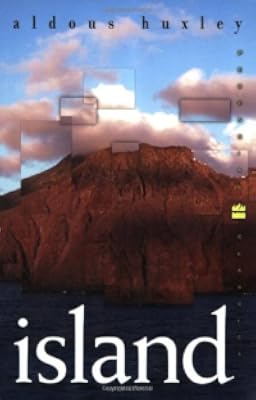
Island
by Aldous Huxley 
On This Page
Description
In his final novel, which he considered his most important, Aldous Huxley transports us to the remote Pacific island of Pala, where an ideal society has flourished for 120 years. Inevitably, this island of bliss attracts the envy and enmity of the surrounding world. A conspiracy is underway to take over Pala, and events are set in motion when an agent of the conspirators, a newspaperman named Faranby, is shipwrecked there. What Faranby doesn't expect is how his time with the people of Pala show more will revolutionize all his values and-to his amazement-give him hope. show lessTags
Recommendations




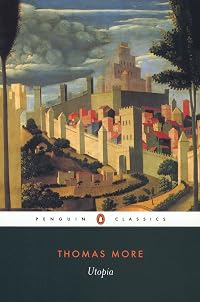



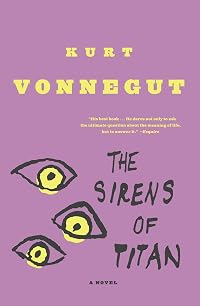

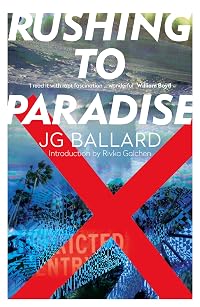
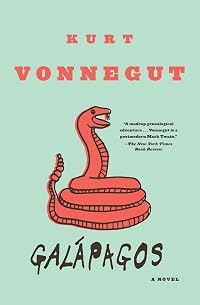
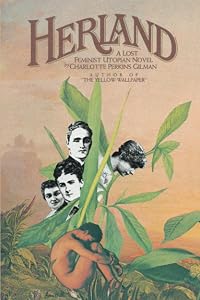
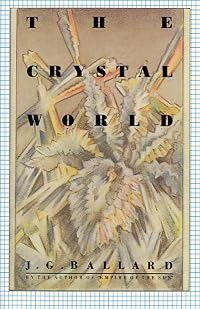
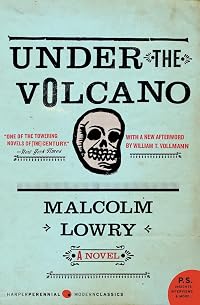
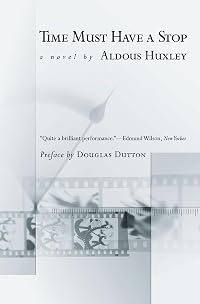
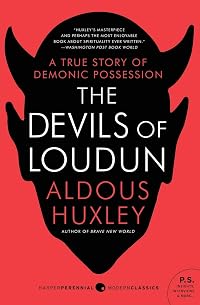
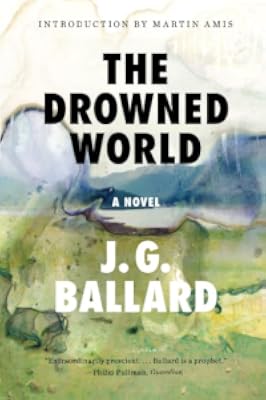





Member Recommendations
by kxlly

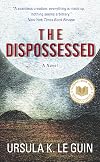
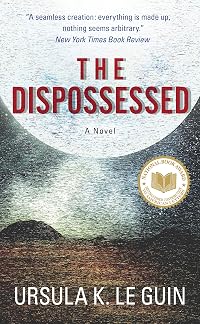
themulhern Two utopian books. The advantage of LeGuin's is that it doesn't have anything worth exploiting and it is a rocket flight away.
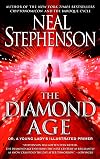
urza One is utopistic novel, other science fiction full of nanotechnology. Yet, both books left similar feelings in me. The story in both takes place in beautifuly described colorful world. Both deal with human society and both are kind of "brighter side of the life".
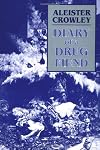
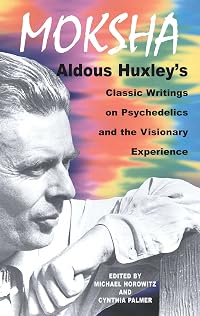
P_S_Patrick These two books both feature drug taking as elements of the plot, alongside mysterious "Enlightenment" religions, and various other minor similarities. Huxley, ironically the sane one of the two authors, is the one whose book advocates the drug taking, while Crowley, the madman, warns against the vice. Surely something must be wrong here. Well, together these books present the for and against of using hallucinogenics, while both preaching for not entirely disimilar causes; Eastern inspired cults/religion/philosophy. "Are both authors delusional?" is the question I asked myself after reading these books. I answered myself, yes. Are both these books interesting? undoubtedly. Huxley far outshines Crowley for writing ability, even though this is surely one of his worse novels, but in the end I think, strange as it may sound, that Crowley's novel is nowhere near as hair brained in its final message as Huxley's, who really ought to know better. Neither of these novels are particularly good, and I am only recommending each to the other due to the shared themes, and the fact that they support opposite sides to the idea of having drugs in society, and should be enjoyed by similar readers.
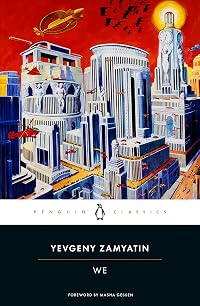
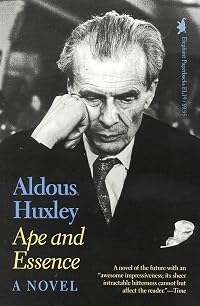
anonymous user Huxley's dystopian Brave New World and utopian Pala share a good deal of common ground. The differences between them are differences of degree rather than of kind. Fascinating to compare, keeping in mind of course that thirty years separate the books.
Member Reviews
A counterpart to Brave New World, and no less great. This book takes its time, composed mostly of conversations and a slow discovery of the nation of Pala. Drenched in eastern spirituality, and full of interesting ideas for the betterment of society, this book is really interested in the question of whether a world like Pala, a world of compassion united with intelligence, can even feasibly exist; Or whether such a place is more of an inner peace or a balance. If you liked Brave New World, you'll probably enjoy this a lot.
Huxley's preoccupation in engaging with ideas makes reading him a constant adventure. But one of the mind, not of the spirit--despite whatever he himself may have hoped to produce in his readers. Such is the case, here, with Island, Huxley's attempt to bring about a full picture of a utopia that was all encompassing, producing what he thought was a physically and spiritually balanced individual in harmony with his or her surroundings and community. But . . .
I must say that I find the world that Will Farnaby discovers on the fictional Southeast Asian island of Pala to be hellish. Farnaby's gullibility in accepting the perfectibility of humanity through a little biochemical engineering plus a good dose of bastardized Buddhism is a little show more frightening. It's the exploration of a gateway to a cult. Every single aspect of living and dying and everything in between is dissected, analyzed, fretted over, digested, incessantly talked about, and finally packaged for adult delivery. And it must be accepted--or else the offender will be beaten to death with the wings of a million butterflies. Or so it seems.
To give an example, several pages are given over to a philosophically acceptable way of chewing food. It's all about the quest to live and exploit the moment. Not a bad point. And there other good ones as well. Huxley does expose the dangers of consumerism, industrialization, and what Marx would have called the alienation of labor in the world outside Pala. But the population of Pala is also ready to categorize people quickly and earmark them for biochemical "change" if they present a threat. And the age at which "threat" is diagnosed is four or five years old. The most dangerous beings are those that meet the definition of being a "Peter Pan," someone who not only never grows up but who isolates themselves from the community and withdraws into an inner paranoia that eventually strikes back at the world in the form of Hitlerian rage. Their discovery is made possible by measuring their wrist size! (At some points, I wonder if Huxley measured the circumference of his own wrists.)
And, yes, Hitler figures greatly in Island. At times, it seems that everything non-Palanese is a precursor to Nazism or, worse, Peter Panism. Murugan, the hereditary ruler of Pala who is about to come of age and take the country's throne is one such Peter Pan. Why? Because Murugan admires people with discipline and a sense of self sacrifice. Murugan also wants a scooter. Discipline sacrifice scooter = Hitler. And sure enough Murugan's motorized legions eventually roll into Pala to destroy Paradise and create Lebensraum in the Andaman Sea.
Truly, however, Huxley is trying to come to terms with terrible twentieth century problems. He simply cannot, unfortunately, escape his preoccupation with preprogramming people in dystopias or utopias. With either world, the end result is the same, stasis, non-development, and navel-gazing, a world where everything is mellow except for those moments punctuated by psilocybin powered journeys to bliss. Is that really the future for humanity? show less
I must say that I find the world that Will Farnaby discovers on the fictional Southeast Asian island of Pala to be hellish. Farnaby's gullibility in accepting the perfectibility of humanity through a little biochemical engineering plus a good dose of bastardized Buddhism is a little show more frightening. It's the exploration of a gateway to a cult. Every single aspect of living and dying and everything in between is dissected, analyzed, fretted over, digested, incessantly talked about, and finally packaged for adult delivery. And it must be accepted--or else the offender will be beaten to death with the wings of a million butterflies. Or so it seems.
To give an example, several pages are given over to a philosophically acceptable way of chewing food. It's all about the quest to live and exploit the moment. Not a bad point. And there other good ones as well. Huxley does expose the dangers of consumerism, industrialization, and what Marx would have called the alienation of labor in the world outside Pala. But the population of Pala is also ready to categorize people quickly and earmark them for biochemical "change" if they present a threat. And the age at which "threat" is diagnosed is four or five years old. The most dangerous beings are those that meet the definition of being a "Peter Pan," someone who not only never grows up but who isolates themselves from the community and withdraws into an inner paranoia that eventually strikes back at the world in the form of Hitlerian rage. Their discovery is made possible by measuring their wrist size! (At some points, I wonder if Huxley measured the circumference of his own wrists.)
And, yes, Hitler figures greatly in Island. At times, it seems that everything non-Palanese is a precursor to Nazism or, worse, Peter Panism. Murugan, the hereditary ruler of Pala who is about to come of age and take the country's throne is one such Peter Pan. Why? Because Murugan admires people with discipline and a sense of self sacrifice. Murugan also wants a scooter. Discipline sacrifice scooter = Hitler. And sure enough Murugan's motorized legions eventually roll into Pala to destroy Paradise and create Lebensraum in the Andaman Sea.
Truly, however, Huxley is trying to come to terms with terrible twentieth century problems. He simply cannot, unfortunately, escape his preoccupation with preprogramming people in dystopias or utopias. With either world, the end result is the same, stasis, non-development, and navel-gazing, a world where everything is mellow except for those moments punctuated by psilocybin powered journeys to bliss. Is that really the future for humanity? show less
This is a book of strong contrasts. The ugliness, fear, ignorance, sorrow and cruelty of the 'west' is matched with the joy, beauty, peace, wisdom and love in Pala. On the surface, it looks as if there should be no contest. Pala's way of life seems irresistible. At another level, there is something menacing and sinister about the perfection in the Palanese paradise. I presume this is what Huxley intended. A wonderful read - the book raises as many questions as it answers.
Appropriate subtitle: “What Huxley thinks society should be in 300 pages or more.” Huxley frames his ideal society in the geography of a made up tropical island, and in the chronology of the island’s takeover by Western oil companies and militarism. His protagonist, Will, a man cynical enough “never to take yes for an answer,” is ideal for the structure Huxley chooses: instead of straight narrative, there are long stretches of almost Socratic questioning by Will of his various hosts and hostesses on their society and thoughts. The novel concludes with a description of Will taking the local hallucinogenic drug, which he finds profoundly religious, but I found several pages too long.
I enjoyed Huxley’s open analysis and show more criticism of Western culture, in all its aspects. As someone who ideologically finds herself identifying with anarcho-primitivism, I found his blend of primitivism and embracing scientific inventions fascinating. The line he ultimately drew between technology a society should and should not embrace was similar to Wendell Berry’s: whether it is useful, and whether its use will harm the community.
Huxley’s characters were compelling, and his chronological frame was appropriate for the Socratic-inspired form. I would have also enjoyed the entirely different story he could have told beginning at the end of this, as the island is being overtaken, or before this, the story of Will’s past referenced by numerous flashbacks.
His use of the moksha medicine drug to resolve the plot was interesting, but ultimately lasted a tad too long. It was satisfying, however, in terms of his relationship with Susila, and I am glad the intensity between them was not spoiled with a romantic relationship. show less
I enjoyed Huxley’s open analysis and show more criticism of Western culture, in all its aspects. As someone who ideologically finds herself identifying with anarcho-primitivism, I found his blend of primitivism and embracing scientific inventions fascinating. The line he ultimately drew between technology a society should and should not embrace was similar to Wendell Berry’s: whether it is useful, and whether its use will harm the community.
Huxley’s characters were compelling, and his chronological frame was appropriate for the Socratic-inspired form. I would have also enjoyed the entirely different story he could have told beginning at the end of this, as the island is being overtaken, or before this, the story of Will’s past referenced by numerous flashbacks.
His use of the moksha medicine drug to resolve the plot was interesting, but ultimately lasted a tad too long. It was satisfying, however, in terms of his relationship with Susila, and I am glad the intensity between them was not spoiled with a romantic relationship. show less
About a utopian SE Asian island society on the cusp of being corrupted by exploitation of oil. Reads more like a socio-political manifesto than a novel. The plot, such as it is, is just an excuse to contrive situations for characters to explain their life, philosophy, culture etc, rather than the driving force. This also means that none of the characters are very convincing because they are almost incidental caricatures (and many of them are too good to be true).
Island although dressed up as a novel is more like Huxley’s vision of a Utopia and as such shares many characteristics with earlier attempts by authors to paint their picture of a perfect world. The usual scenario is a voyage to a distant land or distant planet where a society exists beyond the knowledge of the other human beings, where they have developed a civilisation that has eradicated all of the perceived evils of the current world. In Huxley’s Island; published in 1962, Will Farnaby an oil company representative is shipwrecked and washed up on the Island of Pala: a place forbidden to journalists, but not of course unknown to the rest of the world. It is however, only too well known to Colonel Dipa on the mainland who is show more plotting to take over the Island.
Will Farnaby is allowed to stay on the Island while he receives medical attention and he soon discovers that the Island is governed in such a way that sets it at odds with the consumer societies with which he is familiar. The Island people shun consumerism and industrialisation; they are guided by reason and ecological concern. They have no time for religious dogmas, but strive for a higher awareness of earthly life and the life of the senses. They search for improvements in medical techniques and are constantly in search of knowledge that will help them lead better lives, they spend much of their resources on the education of their children, believing that this is the key to their future. There are no secrets on the Island; it is an open society and Will becomes entranced by the Islanders way of life and much of the book describes his growing awareness of the possibilities for a new way of living. However Will does get involved with representatives of Colonel Dipa and does not forget that he is employed by an oil company and Pala has plenty of oil. Will’s crisis of conscience is one of the few devices that Huxley uses in making his book appear as a novel but it takes a back seat to his real purpose which is to present to his readers his idea of Utopia.
Huxley’s enthusiasm for his Utopia is infectious and some very fine writing opens up the possibilities for a more fruitful and sensual life. I found reading this book an uplifting experience, which is curious because one of it’s major themes is death. Huxley wrote this book towards the end of his life when he was thinking very much about his own mortality. Will Farnaby we learn feels responsible for the death of his wife. Susila who becomes Will”s mentor is grieving for the recent death of her husband and in the process of providing care and support for her mother who is slowly and painfully dying of cancer. In the background, like an undercurrent there is the inevitable death of the Islands civilisation, but Huxley imbues all these deaths with an irresistible force for the joy of living.
Pala does sound wonderful; a real Utopia compared with the dystopia of Huxley’s [Brave New World] written some thirty years earlier. But wait a minute! Many of those ideas in the original dystopia appear again in Huxley’s Island Utopia. Eugenics much vaunted in the 1930’s appears in Island, where they are working on methods of selective breeding. Drugs were used to keep the working population acquiescent in Brave New World and are used in Island, but this time administered to children as well as adults. In Island; hypnotism is an accepted tool for pain relief and for other disorders and the indoctrination of children takes place at an early age. Suddenly Huxley’s Utopia does not seem quite so wonderful and the line between Utopia and dystopia gets a little blurred.
I could not recommend this book as a novel, but its depiction of an alternative way of life and its celebration of the joy of living makes this book for me an essential read. It made me think about my place in the world and my own mortality and for brief moments opened up the possibility of seeing the world differently. I don’t think you can ask too much more of a book and so four stars. show less
Will Farnaby is allowed to stay on the Island while he receives medical attention and he soon discovers that the Island is governed in such a way that sets it at odds with the consumer societies with which he is familiar. The Island people shun consumerism and industrialisation; they are guided by reason and ecological concern. They have no time for religious dogmas, but strive for a higher awareness of earthly life and the life of the senses. They search for improvements in medical techniques and are constantly in search of knowledge that will help them lead better lives, they spend much of their resources on the education of their children, believing that this is the key to their future. There are no secrets on the Island; it is an open society and Will becomes entranced by the Islanders way of life and much of the book describes his growing awareness of the possibilities for a new way of living. However Will does get involved with representatives of Colonel Dipa and does not forget that he is employed by an oil company and Pala has plenty of oil. Will’s crisis of conscience is one of the few devices that Huxley uses in making his book appear as a novel but it takes a back seat to his real purpose which is to present to his readers his idea of Utopia.
Huxley’s enthusiasm for his Utopia is infectious and some very fine writing opens up the possibilities for a more fruitful and sensual life. I found reading this book an uplifting experience, which is curious because one of it’s major themes is death. Huxley wrote this book towards the end of his life when he was thinking very much about his own mortality. Will Farnaby we learn feels responsible for the death of his wife. Susila who becomes Will”s mentor is grieving for the recent death of her husband and in the process of providing care and support for her mother who is slowly and painfully dying of cancer. In the background, like an undercurrent there is the inevitable death of the Islands civilisation, but Huxley imbues all these deaths with an irresistible force for the joy of living.
Pala does sound wonderful; a real Utopia compared with the dystopia of Huxley’s [Brave New World] written some thirty years earlier. But wait a minute! Many of those ideas in the original dystopia appear again in Huxley’s Island Utopia. Eugenics much vaunted in the 1930’s appears in Island, where they are working on methods of selective breeding. Drugs were used to keep the working population acquiescent in Brave New World and are used in Island, but this time administered to children as well as adults. In Island; hypnotism is an accepted tool for pain relief and for other disorders and the indoctrination of children takes place at an early age. Suddenly Huxley’s Utopia does not seem quite so wonderful and the line between Utopia and dystopia gets a little blurred.
I could not recommend this book as a novel, but its depiction of an alternative way of life and its celebration of the joy of living makes this book for me an essential read. It made me think about my place in the world and my own mortality and for brief moments opened up the possibility of seeing the world differently. I don’t think you can ask too much more of a book and so four stars. show less
“Reading the signs of pain in the dark eyes, about the corners of the full-lipped mouth, he knew that the wound had been very nearly mortal and, with a pang in his own heart, that it was still open, still bleeding. He pressed her hands. There was nothing, of course, that one could say, no words, no consolations of philosophy—only this shared mystery of touch, only this communication from skin to skin of a flowing infinity.”
“Needless to say” is used ad nauseum in this book. A pet peeve of mine, in speech and in writing, since the phrase itself contradicts its use. “Quote, unquote” is another device employed by Huxley that I found annoying, but I can forgive him this last one since it predated its more common, current usage. show more Both phrases, however, point to what I perceive as the overall flaw to this work. I love that Huxley tackled a utopia later in his career since he’d so famously penned a benchmark dystopia in the Thirties. What starts as a stunning opening act (no shit, that first chapter knocks the wind right out of you) turns into a pastiche of social experiments conducted on the island, convenient philosophical dialogue in the mouth of everyone—to the effect where there is almost no distinction between characters—Buddhist iconography and ideology, and near constant rebukes of anything Occidental. Some of the concepts were engaging: rechanneling violence and pent-up energy into physical tasks that benefitted all in the community, mutual adoption clubs as a counterpoint to the traditional family dynamic of one father and mother (it takes a village, indeed), the vacuity of consumerism and individualism with a greater focus on the group endeavor and responsibility. Sex, drugs and mynah birds. But it all seems a bit forced—much like this review. Or impression, rather. Needless to say . . .
There are beautiful passages, to be sure. And the ending, with the moksha medicine trip, is powerful stuff. But it all comes a bit too late, much like Farnaby’s presence on the island. I would’ve preferred more invention with the language, with the characters, and less sermonizing in tropical facsimiles of human sages. I mean, even a young girl speaks with more wisdom than the adult protagonist in a scene that literally made me wince. Well, I assume I’d winced—I wasn’t looking in a mirror at the time.
𝘌𝘺𝘦𝘭𝘦𝘴𝘴 𝘪𝘯 𝘎𝘢𝘻𝘢 set such a high-water mark for anything Huxleyan that I’m probably being way too hard on Aldous here. Honestly, though, that masterpiece had great characters who wrestled to match their internal landscape to the one they saw before them. In Island, it smacks more of Plato’s 𝘙𝘦𝘱𝘶𝘣𝘭𝘪𝘤 and less like 𝘉𝘳𝘢𝘷𝘦 𝘕𝘦𝘸 𝘞𝘰𝘳𝘭𝘥. I get that he was stretching his ideas and trying to convey them to a modern predicament. But, goddamn, I’d reread early Huxley almost any day before blowing the dust off Plato’s musings. Not that his work couldn’t be engaging. Having been raised as a Pentecostal Christian, I know when I’m being preached to. And without the fire and brimstone, it’s just boring.
William Golding took the phrase “darkness visible” from Milton and used it to extraordinary effect. Huxley’s employ is one of the more interesting allusions in this entire novel; and yet, somehow, it ricocheted without hitting anything vital to the roving beast. The Paradise of Pala Lost. show less
“Needless to say” is used ad nauseum in this book. A pet peeve of mine, in speech and in writing, since the phrase itself contradicts its use. “Quote, unquote” is another device employed by Huxley that I found annoying, but I can forgive him this last one since it predated its more common, current usage. show more Both phrases, however, point to what I perceive as the overall flaw to this work. I love that Huxley tackled a utopia later in his career since he’d so famously penned a benchmark dystopia in the Thirties. What starts as a stunning opening act (no shit, that first chapter knocks the wind right out of you) turns into a pastiche of social experiments conducted on the island, convenient philosophical dialogue in the mouth of everyone—to the effect where there is almost no distinction between characters—Buddhist iconography and ideology, and near constant rebukes of anything Occidental. Some of the concepts were engaging: rechanneling violence and pent-up energy into physical tasks that benefitted all in the community, mutual adoption clubs as a counterpoint to the traditional family dynamic of one father and mother (it takes a village, indeed), the vacuity of consumerism and individualism with a greater focus on the group endeavor and responsibility. Sex, drugs and mynah birds. But it all seems a bit forced—much like this review. Or impression, rather. Needless to say . . .
There are beautiful passages, to be sure. And the ending, with the moksha medicine trip, is powerful stuff. But it all comes a bit too late, much like Farnaby’s presence on the island. I would’ve preferred more invention with the language, with the characters, and less sermonizing in tropical facsimiles of human sages. I mean, even a young girl speaks with more wisdom than the adult protagonist in a scene that literally made me wince. Well, I assume I’d winced—I wasn’t looking in a mirror at the time.
𝘌𝘺𝘦𝘭𝘦𝘴𝘴 𝘪𝘯 𝘎𝘢𝘻𝘢 set such a high-water mark for anything Huxleyan that I’m probably being way too hard on Aldous here. Honestly, though, that masterpiece had great characters who wrestled to match their internal landscape to the one they saw before them. In Island, it smacks more of Plato’s 𝘙𝘦𝘱𝘶𝘣𝘭𝘪𝘤 and less like 𝘉𝘳𝘢𝘷𝘦 𝘕𝘦𝘸 𝘞𝘰𝘳𝘭𝘥. I get that he was stretching his ideas and trying to convey them to a modern predicament. But, goddamn, I’d reread early Huxley almost any day before blowing the dust off Plato’s musings. Not that his work couldn’t be engaging. Having been raised as a Pentecostal Christian, I know when I’m being preached to. And without the fire and brimstone, it’s just boring.
William Golding took the phrase “darkness visible” from Milton and used it to extraordinary effect. Huxley’s employ is one of the more interesting allusions in this entire novel; and yet, somehow, it ricocheted without hitting anything vital to the roving beast. The Paradise of Pala Lost. show less
Members
- Recently Added By
Lists

Survey of Classic Dystopias
29 works; 4 members

Books Set on Islands
190 works; 24 members

Anthony Burgess 99 Post War Novels
99 works; 7 members

Books I've Read
40 works; 2 members
Jordan B. Peterson's Recommended Books
104 works; 5 members

Phi Beta Kappa reading list
260 works; 8 members

Blue Pyramid 1,276 Best Books of All Time
1,248 works; 32 members

The Works of Aldous Huxley
49 works; 1 member
HarperCollins Publishers
144 works; 3 members

Books Read in 2018
4,360 works; 110 members

Books We Discovered On LibraryThing
530 works; 130 members

Unread books
1,063 works; 84 members
Author Information

286+ Works 104,785 Members
Aldous Huxley was born on July 26, 1894, in Surrey, England, into a distinguished scientific and literary family; his grandfather was the noted scientist and writer, T.H. Huxley. Following an eye illness at age 16 that resulted in near-blindness, Huxley abandoned hope of a career in medicine and turned instead to literature, attending Oxford show more University and graduating with honors. While at Oxford, he published two volumes of poetry. Crome Yellow, his first novel, was published in 1927 followed by Antic Hay, Those Barren Leaves, and Point Counter Point. His most famous novel, Brave New World, published in 1932, is a science fiction classic about a futuristic society controlled by technology. In all, Huxley produced 47 works during his long career, In 1947, Huxley moved with his family to southern California. During the 1950s, he experimented with mescaline and LSD. Doors of Perception and Heaven and Hell, both works of nonfiction, were based on his experiences while taking mescaline under supervision. In 1959, Aldous Huxley received the Award of Merit for the Novel from the American Academy of Arts and Letters. He died on November 22, 1963. (Bowker Author Biography) show less
Aldous Huxley has a Legacy Library. Legacy libraries are the personal libraries of famous readers, entered by LibraryThing members from the Legacy Libraries group.
Some Editions
Awards and Honors
Distinctions
Series
Belongs to Publisher Series
Common Knowledge
- Canonical title*
- Eiland
- Original title
- Island
- Original publication date
- 1962
- People/Characters
- Will Farnaby
- Important places
- Pala
- Epigraph
- In framing an ideal we may assume what we wish, but should avoid impossibilities. - Aristotle
- Dedication
- To Laura
- First words
- "Attention," a voice began to call, and it was as though an oboe had suddenly become articulate. "Attention," it repeated in the same high, nasal monotone. "Attention."
- Last words
- (Click to show. Warning: May contain spoilers.)The roaring of the engines diminished, the squeaking rhetoric lapsed into inarticulate murmur, and as the intruding noises died away, out came the frogs again, out came the uninterruptable insects, out came the mynah birds.
"Karuna. Karuna." And a semi-tone lower, "Attention." - Original language
- English
- Canonical DDC/MDS
- 823.912
- Canonical LCC
- PR6015.U9
*Some information comes from Common Knowledge in other languages. Click "Edit" for more information.
Classifications
Statistics
- Members
- 4,780
- Popularity
- 2,973
- Reviews
- 69
- Rating
- (3.75)
- Languages
- 20 — Catalan, Czech, Danish, Dutch, English, Estonian, Finnish, French, German, Hungarian, Italian, Japanese, Lithuanian, Polish, Romanian, Russian, Spanish, Swedish, Turkish, Portuguese (Brazil)
- Media
- Paper, Audiobook, Ebook
- ISBNs
- 83
- ASINs
- 59
