
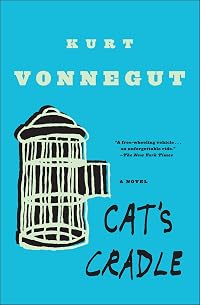
Cat's Cradle
by Kurt Vonnegut
On This Page
Description
Cat's Cradle is Vonnegut's satirical commentary on modern man and his madness. An apocalyptic tale of this planet's ultimate fate, it features a midget as the protagonist; a complete, original theology created by a calypso singer; and a vision of the future that is at once blackly fatalistic and hilariously funny.Tags
Recommendations
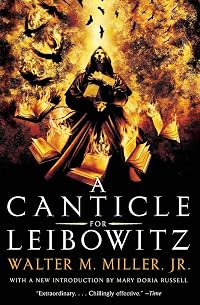
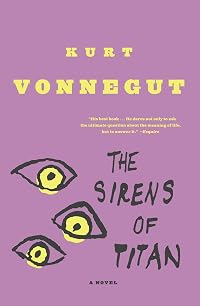
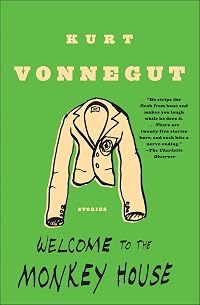
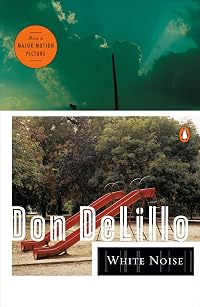
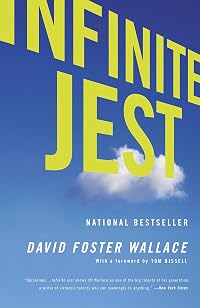
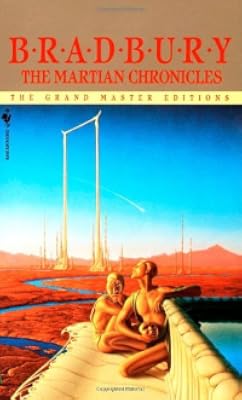
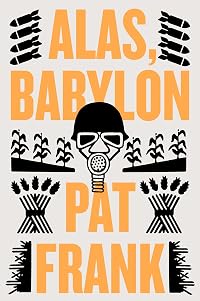



Member Recommendations

Member Reviews
I am just going to come out and say it: I am pretty sure that Kurt Vonnegut is my spirit animal. When I read his works, I feel like he is talking to a darkness that has lived inside of me that has been protected by comedic outbursts and nurtured by the sorrows of the world. Vonnegut’s books are strange, fantastical, and confronting. They make me question my values, my beliefs, and what way is really up. Cat’s Cradle is no exception. The opening lines read:
Nothing in this book is true.
‘Live by the foma* that make you brave and kind and healthy and happy.’
The Book of Bokonon. 1:5
*Harmless untruths
Bokononism is a religion found on an island republic in the Caribbean, San Lorenzo. Their catchphrase is: “Busy, busy, busy,” show more which is used whenever there are lots of things afoot. The Bokononist life is simple and blunt.They believe:
Everything is a lie.
Nothing can be true.
Love the people around you.
Give into your karass* and the kan-kan* that takes you there.
(*”We Bokononists believe that humanity is organized into teams, teams that do God’s Will without every discovering what they are doing. Such a team is called a Karass by Bokonon, and the instrument, the kan-kan…”)
There is a lot of beauty in this. It might seem rather bleak to think that everything is a lie. However, the concept is not uncommon in philosophy. It stems from the notion that there are no origins because everything is essentially made up of everything else. Theorists like Jaques Derrida, and Michel Foucault explore this concept. So if there are no true origins, where do we centre ourselves? This comes from the idea that our perception of reality, what we think to be true, is only a subjective interpretation. Reality can only exist in multiplicity: multiple subjective perspectives that we interpret and represent through speech, art, actions, and everyday life. Interpretation and representation as ways to understand the world, stem from extremely old concepts that come from Plato’s Republic and Aristotle’s Poetics from Ancient Greece.
Love the people around you (I guess you don’t always had to rub feet). This is simple. And while it is rooted in all religions it often interpreted, I believe, wrongly. There is usually a catch. Love the people around, as long as they… Love the people around you, provided they… Too many times I see this love turned into a moral high ground. I love you because you do not know what you do, really means, what I think you do is wrong, but I am going to sit here smugly and judge you through the lens of my own subjective perceptions of religion and life. Whether there is such a thing as pure love, and unbiased love, I don’t know. But it isn’t a bad thing to strive for?
Your karass and your kan-kan. While this might seem fatalistic-you have no control over your destiny so just give into it- I like to think of it as give into your own desires and follow where they take you (as long as your desires don’t involve mass murder). Too many times we have a voice inside ourselves that whispers, “What if…” and this voice is policed by our internalised cultural and social expectations: “Don’t do that… People will think your a fool/wrong/stupid/strange.” Life is short, and as the Bokononists say: those who rise from the mud will return to it.
I’m not sure Bokononism is for me, but it has taught me some great life lessons with sharp irony and blackest of humours around. Thank you Kurt. show less
Nothing in this book is true.
‘Live by the foma* that make you brave and kind and healthy and happy.’
The Book of Bokonon. 1:5
*Harmless untruths
Bokononism is a religion found on an island republic in the Caribbean, San Lorenzo. Their catchphrase is: “Busy, busy, busy,” show more which is used whenever there are lots of things afoot. The Bokononist life is simple and blunt.They believe:
Everything is a lie.
Nothing can be true.
Love the people around you.
Give into your karass* and the kan-kan* that takes you there.
(*”We Bokononists believe that humanity is organized into teams, teams that do God’s Will without every discovering what they are doing. Such a team is called a Karass by Bokonon, and the instrument, the kan-kan…”)
There is a lot of beauty in this. It might seem rather bleak to think that everything is a lie. However, the concept is not uncommon in philosophy. It stems from the notion that there are no origins because everything is essentially made up of everything else. Theorists like Jaques Derrida, and Michel Foucault explore this concept. So if there are no true origins, where do we centre ourselves? This comes from the idea that our perception of reality, what we think to be true, is only a subjective interpretation. Reality can only exist in multiplicity: multiple subjective perspectives that we interpret and represent through speech, art, actions, and everyday life. Interpretation and representation as ways to understand the world, stem from extremely old concepts that come from Plato’s Republic and Aristotle’s Poetics from Ancient Greece.
Love the people around you (I guess you don’t always had to rub feet). This is simple. And while it is rooted in all religions it often interpreted, I believe, wrongly. There is usually a catch. Love the people around, as long as they… Love the people around you, provided they… Too many times I see this love turned into a moral high ground. I love you because you do not know what you do, really means, what I think you do is wrong, but I am going to sit here smugly and judge you through the lens of my own subjective perceptions of religion and life. Whether there is such a thing as pure love, and unbiased love, I don’t know. But it isn’t a bad thing to strive for?
Your karass and your kan-kan. While this might seem fatalistic-you have no control over your destiny so just give into it- I like to think of it as give into your own desires and follow where they take you (as long as your desires don’t involve mass murder). Too many times we have a voice inside ourselves that whispers, “What if…” and this voice is policed by our internalised cultural and social expectations: “Don’t do that… People will think your a fool/wrong/stupid/strange.” Life is short, and as the Bokononists say: those who rise from the mud will return to it.
I’m not sure Bokononism is for me, but it has taught me some great life lessons with sharp irony and blackest of humours around. Thank you Kurt. show less
Every time I read Vonnegut, I expect something weird, and I always underestimate how weird it will be. His absurd satirical style can be kind of exhausting at times, but entertaining nonetheless. This was a really interesting read.
His satirical takes on science, politics, religion, and mutually assured destruction were entertaining, and pretty on the nose. The culture he creates in San Lorenzo, and the religion he creates in Bokononism were fascinating. I found myself engrossed in these things. I was kind of wishing the Books of Bokononism were real so I could read more about it.
The plot itself isn't really anything to write home about (pun intended). However the main driving narrative device for this is that it's a book, about a book, show more about a book, which is kind of hilarious. I wish there would have been a little more after the Ice-9 incident, however I realize that the point is that it happened, not what happens afterwards. show less
His satirical takes on science, politics, religion, and mutually assured destruction were entertaining, and pretty on the nose. The culture he creates in San Lorenzo, and the religion he creates in Bokononism were fascinating. I found myself engrossed in these things. I was kind of wishing the Books of Bokononism were real so I could read more about it.
The plot itself isn't really anything to write home about (pun intended). However the main driving narrative device for this is that it's a book, about a book, show more about a book, which is kind of hilarious. I wish there would have been a little more after the Ice-9 incident, however I realize that the point is that it happened, not what happens afterwards. show less
The title's string game is used as a symbol to express the meaninglessness of virtually everything in this absurdist drama. Religion? Bunk. Sex and romance? Nothing but comedy. Politics? Gawd help you. Science? Probably the death of you. There's no where to turn for any ground to stand on, random events will just keep rolling at you. Which of these events are the good news, and which are the bad? Impossible to tell.
Yes, there is a plot of sorts. Our hero is interested in writing the biography of a philanthropist on a tiny island in the Caribbean. In the course of research he gets mixed up with the island's religion, tumbles into a romance, wrestles with its politics, and eventually gets confronted by some pretty formidable science. None show more of it offers him a whole lot of comfort, but if he can overlook that and follow the model of others by just embracing the madness he might stand a chance. Or the madness might embrace him back.
Is this nothing but a pack of playing cards, or an allegory for the lessons of the Cuban Missile Crisis? I don't know, it's impossible to tell. show less
Yes, there is a plot of sorts. Our hero is interested in writing the biography of a philanthropist on a tiny island in the Caribbean. In the course of research he gets mixed up with the island's religion, tumbles into a romance, wrestles with its politics, and eventually gets confronted by some pretty formidable science. None show more of it offers him a whole lot of comfort, but if he can overlook that and follow the model of others by just embracing the madness he might stand a chance. Or the madness might embrace him back.
Is this nothing but a pack of playing cards, or an allegory for the lessons of the Cuban Missile Crisis? I don't know, it's impossible to tell. show less
4/5
No damn cat. No damn cradle. Cat's Cradle is a satire of some of the largest structures in society, showcasing the emptiness of their promises, and questioning our free will to change anything about our lives. Virtually plotless, like many of Vonneguts other works, Cat's Cradle is bleak, playful, absurdist, subtle, and strikingly unsubtle all at the same time. I won't even provide a 'plot' overview, because there would be simply too much to cover.
The closest a book has ever come to matching the energy, pacing, and tone of a Wes Anderson movie. I can see all the events of the book so clearly represented in the colors that Anderson uses, with the actors that frequently collaborate with him. I usually groan when someone draws show more comparisons between completely unrelated works of literature and film, but I just can't get this one off my mind.
Thematically very focused on the hollowness of many facets of modern society/life. Religion and science are specifically targeted as structures that lack the morality and empathy that they tout. Yet there is also a thread of Vonnegut discussing the necessary and welcome 'untruths' that we tell ourselves to better understand our world, to make ourselves happy and useful. Very interesting to see Vonnegut's perception of the scientists working on the Manhattan Project as indifferent to the ramification of their discoveries. There's also criticism of US government and politics, specifically as they relate to banana republics in central America.
Ice-9 is a hall of fame level SF concept, one that I use a benchmark of creativity in the genre, though it's hardly the focus on the novel. Vonnegut focuses the bulk of the novel on Bokononism, and it is here that he makes many of his thematic points. Some aspects of Cat's Cradle haven't aged so well though. Severally of the characters are drawn with a ham fist and stereotypical representations, and the prose itself isn't anything to write home about.
I struggled finding any cohesion to my thoughts on this work, even though I've now read it twice. I'm not frustrated by this though, more so puzzled in pleasing way. There's depth and nuance here that doesn't make itself plain on the surface. show less
No damn cat. No damn cradle. Cat's Cradle is a satire of some of the largest structures in society, showcasing the emptiness of their promises, and questioning our free will to change anything about our lives. Virtually plotless, like many of Vonneguts other works, Cat's Cradle is bleak, playful, absurdist, subtle, and strikingly unsubtle all at the same time. I won't even provide a 'plot' overview, because there would be simply too much to cover.
The closest a book has ever come to matching the energy, pacing, and tone of a Wes Anderson movie. I can see all the events of the book so clearly represented in the colors that Anderson uses, with the actors that frequently collaborate with him. I usually groan when someone draws show more comparisons between completely unrelated works of literature and film, but I just can't get this one off my mind.
Thematically very focused on the hollowness of many facets of modern society/life. Religion and science are specifically targeted as structures that lack the morality and empathy that they tout. Yet there is also a thread of Vonnegut discussing the necessary and welcome 'untruths' that we tell ourselves to better understand our world, to make ourselves happy and useful. Very interesting to see Vonnegut's perception of the scientists working on the Manhattan Project as indifferent to the ramification of their discoveries. There's also criticism of US government and politics, specifically as they relate to banana republics in central America.
Ice-9 is a hall of fame level SF concept, one that I use a benchmark of creativity in the genre, though it's hardly the focus on the novel. Vonnegut focuses the bulk of the novel on Bokononism, and it is here that he makes many of his thematic points. Some aspects of Cat's Cradle haven't aged so well though. Severally of the characters are drawn with a ham fist and stereotypical representations, and the prose itself isn't anything to write home about.
I struggled finding any cohesion to my thoughts on this work, even though I've now read it twice. I'm not frustrated by this though, more so puzzled in pleasing way. There's depth and nuance here that doesn't make itself plain on the surface. show less
Those books that you read, and after finishing them you're just astounded by their revelatory nature? As fleeting as it may be, the book makes you an insufferable fan of the author where you have to tell everyone how great it is and how it's changed your life? Yeah, that was Cat's Cradle for me. The book is unyielding in its sarcasm and almost nihilistic worldview, but complementing that is one of the more playful depictions of religion in print. If I were to read it now I'd feel differently about it, but for the 18 year old me, this was a spectacular book and one that has really informed my fiction reading for the last decade.
This is probably the strangest book I have read in my (short) life. A slightly incoherent, sketchy, cartoonish, satirical, humourous and, perhaps above all, bleak novel about human stupidity in its various forms and its various consequences. Let's just say I wasn't expecting something quite so strange- satirical, humourous and bleak, yes, but not strange. Cat's Cradle is seemingly aimless for most of its length, going very slowly through the course of events so Vonnegut can take his time to have a go at a number of things- the irresponsibility of science, religion (I can't figure out if he is mocking religion for trying to ascribe meaning to the meaningless, or saying it's not as bad as science because its untruths are harmless, which I show more strongly disagree with), American capitalism and patriotism, American views of the third world and the Cold War. For much of the time I was reading it, it frustrated me, because of this seeming aimlessness. But having read more about what Vonnegut was trying to do, I've come to respect it more. The ending in particular is quite appropriate for all that had occurred up that point. It's still ultimately a somewhat irritating novel, mostly because the characters are, for the most part, profoundly annoying, and the (appropriate, in the end) sense of mediocrity that languishes over all the events. I can't say I really enjoyed reading it all that much, but it was at least very easy to read. I may read more Vonnegut in the future. show less
"Science is magic that works."
Dr Felix Hoenikker, one of the founding ‘fathers’ of the atomic bomb, has left behind three eccentric children and deadly legacy to the world, ‘ice-nine’, a lethal chemical capable of freezing the entire planet known about by only a handful of people among them a crazed Caribbean dictator.
Cat’s Cradle was first published in 1963 there are elements that speak of its time. There is misogyny and racial slurs; I'm still unsure as to whether or not a black leader was pivotal to the destruction of mankind and that a white man came along as saviour but failed was meant to be ironic, thought provoking or simply racist. I guess it boils down to the individual reader. But the story covers some pretty big show more issues, nuclear war, environmental concerns and the role of governments as well.
In particular it preys on our deepest fears of not only witnessing Armageddon but worse still, surviving it. A theme that still feels relevant today.
Likewise, the pseudo-religion of Bokononism, although on the face of it ridiculous, resonates with how some societies are looking at religion not only for comfort but also for explanations to the big questions of life. The story seems to be warning that easy answers are not always the correct ones whilst warning that science can be a boon to humanity but left unchecked can also lead to its ultimate destruction.
"Beware of the man who works hard to learn something, learns it, and finds himself no wiser than before."
On the surface, this is a tale about a dysfunctional family yet it also looks at human's need for family, relationships and love and the strange things that some people do to achieve it.
This is my fifth book by the author but my least favourite. The tale is told in Vonnegut's distinctive deadpan irony and bitter satire that I usually like but ultimately this one is just too weird for me. Yet despite its apparent depressing tone I found it somewhat uplifting as I felt that hope rather than despair was the underlining message and as such this book deserves to continue to be read. show less
Dr Felix Hoenikker, one of the founding ‘fathers’ of the atomic bomb, has left behind three eccentric children and deadly legacy to the world, ‘ice-nine’, a lethal chemical capable of freezing the entire planet known about by only a handful of people among them a crazed Caribbean dictator.
Cat’s Cradle was first published in 1963 there are elements that speak of its time. There is misogyny and racial slurs; I'm still unsure as to whether or not a black leader was pivotal to the destruction of mankind and that a white man came along as saviour but failed was meant to be ironic, thought provoking or simply racist. I guess it boils down to the individual reader. But the story covers some pretty big show more issues, nuclear war, environmental concerns and the role of governments as well.
In particular it preys on our deepest fears of not only witnessing Armageddon but worse still, surviving it. A theme that still feels relevant today.
Likewise, the pseudo-religion of Bokononism, although on the face of it ridiculous, resonates with how some societies are looking at religion not only for comfort but also for explanations to the big questions of life. The story seems to be warning that easy answers are not always the correct ones whilst warning that science can be a boon to humanity but left unchecked can also lead to its ultimate destruction.
"Beware of the man who works hard to learn something, learns it, and finds himself no wiser than before."
On the surface, this is a tale about a dysfunctional family yet it also looks at human's need for family, relationships and love and the strange things that some people do to achieve it.
This is my fifth book by the author but my least favourite. The tale is told in Vonnegut's distinctive deadpan irony and bitter satire that I usually like but ultimately this one is just too weird for me. Yet despite its apparent depressing tone I found it somewhat uplifting as I felt that hope rather than despair was the underlining message and as such this book deserves to continue to be read. show less
Members
- Recently Added By
Published Reviews
ThingScore 100
"Cat's Cradle" is an irreverent and often highly entertaining fantasy concerning the playful irresponsibility of nuclear scientists. Like the best of contemporary satire, it is work of a far more engaging and meaningful order than the melodramatic tripe which most critics seem to consider "serious."
added by Shortride
Lists

1001 Books You Must Read Before You Die
1,448 works; 1,133 members

Best Science Fiction Novels
816 works; 430 members
Best Dystopias
280 works; 273 members

Radcliffe's 100 Best Novel of the 20th Century
100 works; 32 members
Survey of Classic Science Fiction
171 works; 48 members

Classics you know you should have read but probably haven't
421 works; 408 members
Novels from The Guardian's Great American Novelist Tournament
148 works; 24 members

NPRs your picks: top 100 Sci-Fi/Fantasy books
297 works; 80 members

Best Satire
188 works; 29 members
20th Century Literature
1,161 works; 55 members

Slipstream or Interstitial Fiction
160 works; 19 members

Favourite Books
1,817 works; 316 members
Banned Books Week 2014
268 works; 63 members

Dystopian and Apocalyptic Literature
350 works; 74 members
1960s, Best books published therein
254 works; 22 members

Bibliography for Among Others
159 works; 15 members

S.F. Masterworks (Complete)
229 works; 15 members
LibraryThingers' 1001 Books You Must Read Before You Die
442 works; 30 members

The One Book That Changed You
15 works; 16 members
Survey of Science Fiction and Fantasy
101 works; 13 members

Best Laugh Out Loud Books
143 works; 49 members

Significant works of postmodern fiction
86 works; 25 members
Harold Bloom - The Western Canon: D. The Chaotic Age
833 works; 24 members
One Book, Many Authors
441 works; 40 members

Speculative Fiction: Slipstream Literature
166 works; 16 members

Best high-school English books reread later in life
30 works; 21 members
David Pringle's Science Fiction: The 100 Best Novels
101 works; 9 members

1960s
281 works; 16 members
SF Masterworks
193 works; 8 members

Most thought-provoking novels
30 works; 28 members
Banned or Challenged Books
400 works; 41 members

Blue Pyramid 1,276 Best Books of All Time
1,248 works; 32 members
1,001 BYMRBYD Concensus
723 works; 27 members

Five star books
1,755 works; 108 members

It's the end of the world as we know it!
90 works; 23 members
New wave science fiction
23 works; 2 members
Best of American Literature
146 works; 9 members
Ten Books That Have Stayed With Me
160 works; 30 members

A Novel Cure
742 works; 23 members
NPRs audience picks: 100 best beach reads
105 works; 12 members
SF Masterworks
22 works; 3 members

Amanda's Guaranteed Books
110 works; 5 members

Books tagged favorites
390 works; 30 members
Animals in the Title
498 works; 11 members

Books Featured on Readers' Review of the Diane Rehm Show
161 works; 8 members

Religious Science Fiction
70 works; 20 members

Vote - Bookmarque's Teetering TBR Tower
33 works; 8 members

Books Read in 2007
326 works; 7 members

recalling favorites...
105 works; 2 members

Books Set on Islands
190 works; 24 members
Overdue Podcast
806 works; 9 members

Read This Next
120 works; 3 members

Favorite Books from the 1960s
34 works; 3 members

Speculative Fiction to Read
706 works; 32 members

Books Read in 2015
3,299 works; 129 members

My Favourite Books
86 works; 5 members
Best Books of the 20th Century
193 works; 5 members
Books Read in 2016
4,666 works; 199 members
American Lit for Eng 11 Research Project
368 works; 6 members
Genre Benders: Comic Science Fiction
37 works; 5 members
Les 100 principaux titres de la science-fiction (1981)
126 works; 3 members
Banned Books
40 works; 2 members

Recommended Reading : 600 Classics Reviewed, Editors of Salem Press, 2015
634 works; 6 members
On the pile
20 works; 1 member
Books We Want To Read Again For The First Time
384 works; 160 members

Cult Classics
30 works; 1 member
Our Favorite Comfort Reads
334 works; 200 members
Highly specific and niche books that changed my life-view
1 work; 1 member
Reading LIst
648 works; 1 member

The Five Books That Represent Us
391 works; 148 members
Favorite Science Fiction
456 works; 218 members
An evolving science fiction novel canon
50 works; 2 members
Books With the Most Memorable Titles
478 works; 158 members

Books Read in 2012
816 works; 34 members
Dystopia Must-Reads
18 works; 2 members

Books Read in 2018
4,360 works; 110 members
The Great Courses: Meteorology
21 works; 1 member

Books Read in 2019
4,052 works; 110 members
Speculative Fiction
40 works; 2 members

Books Read in 2013
1,630 works; 51 members

Books Read in 2002
197 works; 8 members
Alphabetical Books
211 works; 3 members

BingoDOG - Scientists in Fiction
111 works; 17 members

KayStJ's to-read list
1,616 works; 11 members

Read
293 works; 4 members
Authors' Favourites
18 works; 5 members

Weird and Weirder Fiction
270 works; 35 members

Unread books
1,063 works; 87 members
Author Information

291+ Works 201,124 Members
The appeal of Kurt Vonnegut, especially to bright younger readers of the past few decades, may be attributed partly to the fact that he is one of the few writers who have successfully straddled the imaginary line between science-fiction/fantasy and "real literature." He was born in Indianapolis and attended Cornell University, but his college show more education was interrupted by World War II. Captured during the Battle of the Bulge and imprisoned in Dresden, he received a Purple Heart for what he calls a "ludicrously negligible wound." After the war he returned to Cornell and then earned his M.A. at the University of Chicago.He worked as a police reporter and in public relations before placing several short stories in the popular magazines and beginning his career as a novelist. His first novel, Player Piano (1952), is a highly credible account of a future mechanistic society in which people count for little and machines for much. The Sirens of Titan (1959), is the story of a playboy whisked off to Mars and outer space in order to learn some humbling lessons about Earth's modest function in the total scheme of things. Mother Night (1962) satirizes the Nazi mentality in its narrative about an American writer who broadcasts propaganda in Germany during the war as an Allied agent. Cat's Cradle (1963) makes use of some of Vonnegut's experiences in General Electric laboratories in its story about the discovery of a special kind of ice that destroys the world. God Bless You, Mr. Rosewater (1965) satirizes a benevolent foundation set up to foster the salvation of the world through love, an endeavor with, of course, disastrous results. Slaughterhouse-Five; or The Children's Crusade (1969) is the book that marked a turning point in Vonnegut's career. Based on his experiences in Dresden, it is the story of another Vonnegut surrogate named Billy Pilgrim who travels back and forth in time and becomes a kind of modern-day Everyman. The novel was something of a cult book during the Vietnam era for its antiwar sentiments. Breakfast of Champions (1973), the story of a Pontiac dealer who goes crazy after reading a science fiction novel by "Kilgore Trout," received generally unfavorable reviews but was a commercial success. Slapstick (1976), dedicated to the memory of Laurel and Hardy, is the somewhat wacky memoir of a 100-year-old ex-president who thinks he can solve society's problems by giving everyone a new middle name. In addition to his fiction, Vonnegut has published nonfiction on social problems and other topics, some of which is collected in Wampeters, Foma and Granfalloons (1974). He died from head injuries sustained in a fall on April 11, 2007. (Bowker Author Biography) show less
Some Editions
Awards and Honors
Awards
Distinctions
Notable Lists
Series
Belongs to Publisher Series
Distorsions (1)
Work Relationships
Is contained in
The Sirens of Titan • Mother Night • Cat's Cradle • God Bless You, Mr. Rosewater • Slaughterhouse-Five by Kurt Vonnegut
Novels & Stories, 1963-1973: Cat's Cradle / God Bless You, Mr. Rosewater / Slaughterhouse-Five / Breakfast of Champions / Stories by Kurt Vonnegut
Slaughterhouse-Five • The Sirens of Titan • Player Piano • Cat's Cradle • Breakfast of Champions • Mother Night by Kurt Vonnegut
Cat's Cradle • The Sirens of Titan • God Bless You, Mr. Rosewater • Welcome to the Monkey House • Slaughterhouse Five by Kurt Vonnegut
Has as a commentary on the text
Common Knowledge
- Canonical title*
- Kissan kehto
- Original title
- Cat's Cradle
- Original publication date
- 1963
- People/Characters
- Felix Hoenikker; Newton "Newt" Hoenikker; John; Miguel "Papa" Monzano; Franklin "Frank" Hoenikker; Mona Aamons Monzano (show all 18); Lionel Boyd Johnson; Emily Hoenikker; Angela Hoenikker Conners; Edward McCabe (Corporal); Julian Castle; H. Lowe Crosby; Hazel Crosby; Philip Castle; Horlick Minton; Claire Minton; Asa Breed (Dr.); Dr. Schlichter von Koenigswald
- Important places
- San Lorenzo; Ilium, New York, USA; USA
- Important events
- Atomic Bombings of Hiroshima and Nagasaki (1945)
- Related movies
- Cat's Cradle (pre-production | IMDb)
- Epigraph
- Nothing in this book is true.
'Live by the foma* that make you brave
and kind and healthy and happy.'
The Books of Bokonon. 1:5
*Harmless untruths - Dedication
- For Kenneth Littauer, a man of
gallantry and taste. - First words
- Call me Jonah.
- Quotations
- "No wonder kids grow up crazy. A cat's cradle is nothing but a bunch of X's between somebody's hands, and little kids look and look and look at all those X's..."
"And?"
"No damn cat, and no damn cradle."
'Aamons, Mona', the index said, 'adopted by
Monzano in order to boost Monzano's
popularity, 194-199, 216n; childhood in com
pound of House of Hope and Mercy, 63-81;
childhood romance with P. Castle, 72f; death of ... (show all)father, 89ff; death of mother, 92f; embarrassed
by role as national erotic symbol, 80, 95, 166n.,
209, 247n., 400-406, 566n., 678; engaged to P.
Castle, 193; essential naivete, 67-71, 80, 95f,
116n., 209, 274n., 400-406, 566n., 678; lives with
Bokonon, 92-98, 196-197; poems about, 2n., 26,
114, 119, 311, 316, 477n., 501, 507, 555n., 689,
718ff, 799ff, 800n., 841, 846ff, 908n., 971, 974;
poems by, 89, 92, 193; returns to Monzano, 199?
returns to Bokonon, 197; runs away from
Bokonon, 199; runs away from Monzano, 197;
tries to make self ugly in order to stop being
erotic symbol to islanders, 80, 95f, 116n., 209,
247n., 400-406, 566n., 678; tutored by Bokonon,
63-80; writes letter to United Nations, 200;
xylophone virtuoso, 71'.
I showed this index entry to
She hated people who thought too much. At that moment she struck me as an appropriate representative for almost all mankind.
,"...I was very upset about how Americans couldn't imagine what it was like to be something else, to be something else and proud of it."
"The highest possible form of treason," said Minton, "is to say that Americans aren't loved wherever they go, whatever they do. Claire tried to make the point that American foreign policy should recognise hate rather than ima... (show all)gine love."
There was a quotation from The Books of Bokonon on the page before me. Those words leapt from the page and into my mind, and they were welcomed there.
The words were a paraphrase of the suggestion by Jesus: “Render there... (show all)fore unto Caesar the things which are Caesar’s.”
Bokonon's paraphrase was this:
"Pay no attention to Caesar. Caesar doesn't have the slightest idea what's really going on."
"She broke my heart. I didn't like that much. But that was the price. In this world, you get what you pay for."
Crosby...had the drunkard 's illusion that he could speak frankly, provided he spoke affectionately.
"I think, therefore I am, therefore I am photographable."
"Science is magic that works."
Think of what a paradise this world would be if men were kind and wise. - Last words
- (Click to show. Warning: May contain spoilers.)If I were a younger man, I would write a history of human stupidity; and I would climb to the top of Mount McCabe and lie down on my back with my history for a pillow; and I would take from the ground some of the blue-white poison that makes statues of men; and I would make a statue of myself, lying on my back, grinning horribly, and thumbing my nose at You Know Who.
- Blurbers
- Ballard, J.G.; Aiken, Conrad; Southern, Terry
- Original language
- English
*Some information comes from Common Knowledge in other languages. Click "Edit" for more information.
Classifications
Statistics
- Members
- 24,885
- Popularity
- 192
- Reviews
- 347
- Rating
- (4.09)
- Languages
- 28 — Catalan, Czech, Danish, Dutch, English, Estonian, Finnish, French, German, Greek, Hebrew, Hungarian, Italian, Japanese, Korean, Latvian, Lithuanian, Farsi/Persian, Polish, Romanian, Russian, Slovenian, Spanish, Swedish, Thai, Turkish, Ukrainian, Portuguese (Brazil)
- Media
- Paper, Audiobook, Ebook
- ISBNs
- 107
- ASINs
- 106