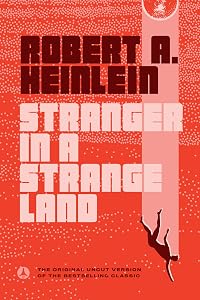
Stranger in a Strange Land (Uncut Edition)
by Robert A. Heinlein
On This Page
Description
The epic saga of an earthling, born and educated on Mars, who arrives on our planet with superhuman powers and a total ignorance of the mores of man.Tags
Recommendations

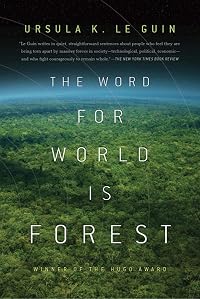
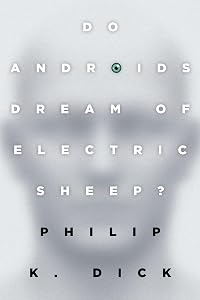
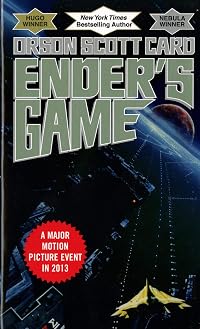
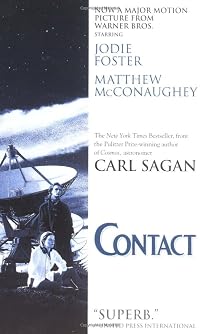
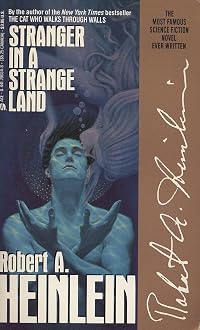
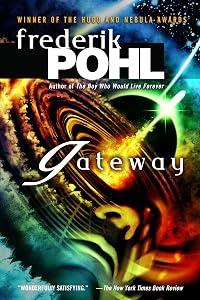
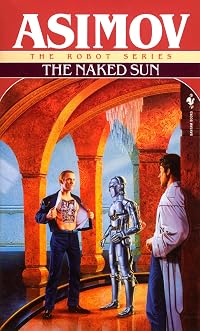
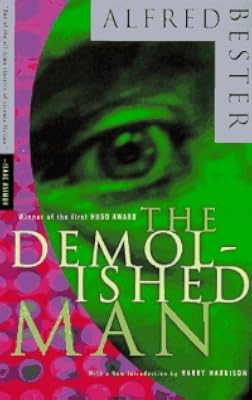
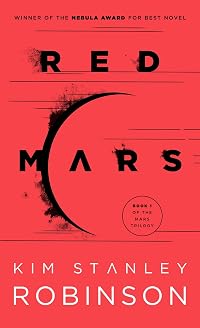
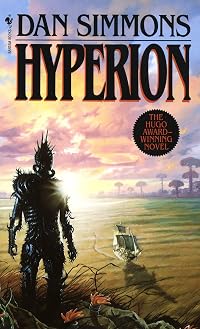
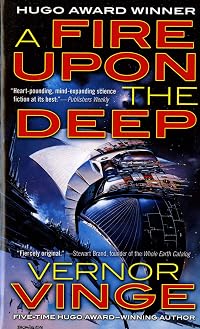
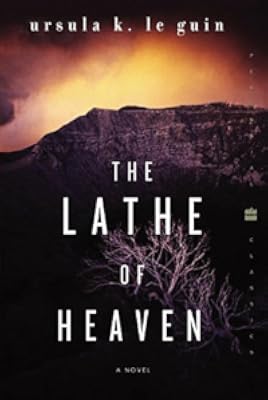
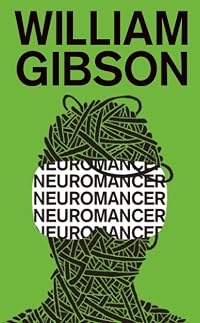
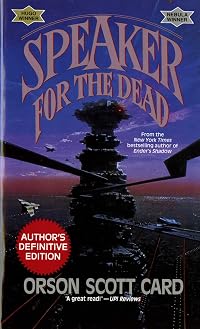
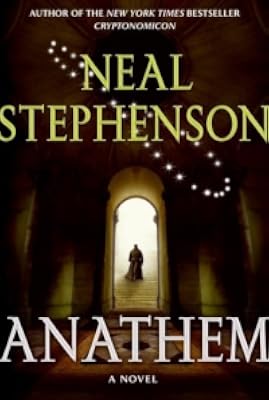
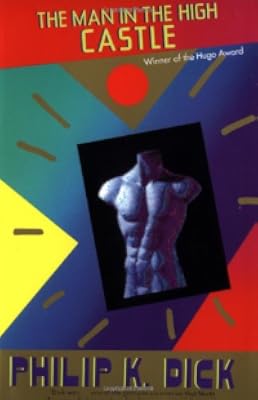
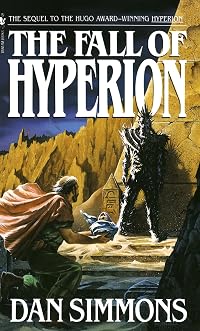
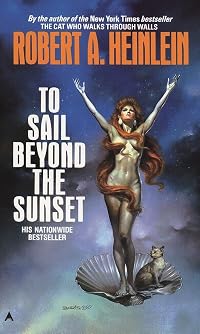

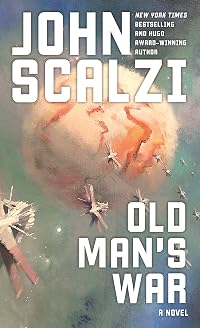
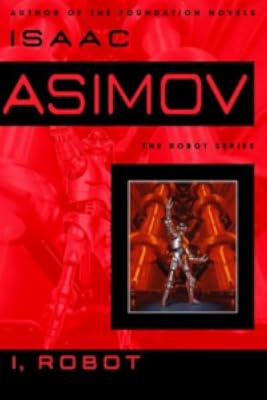

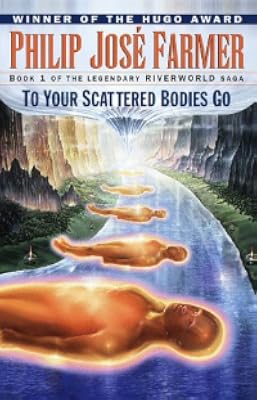


Member Recommendations
emf1123 If you're in your late teens, reading both of these books back to back (stranger in a strange land, zen and the art of motorcycle maintenance) is a good quality mindfuck. I doubt that either have the same influence as one ages, though.
12
Member Reviews
Oh, Stranger in a Strange Land. How do I loathe thee? Let me count the ways.
Three! There are three ways. Ah ha ha ha haaa.
Two of these are about sex. So let's talk about sex, bay-bee. Heinlein wrote Stranger over the course of about a decade back in the 1950s and early 1960s. He dawdled because he didn't believe that the world was ready for such an orgy-fest of a novel, but with the advent of the salacious sixties he decided the time was right and published. Sounds pretty forward thinking, right? Alas not. Certainly not the aspects that fall under the remit of science fiction. The story seems to be set around the beginning of the twenty-first century, but the technology on show is obviously born of a clunky 1950s imagination. We have show more the usual flying cars and a permanent base on Mars, but little else seems to have advanced. And, despite the book's “controversial” reputation for its sexuality, that aspect is terribly steeped in 1950s American notions too. The shockingly futuristic group that the second half of the story turns around embrace nudity, open marriages, and getting jiggy in front of one another. Hurrah for them. So what are my two gripes with this side of the story? Well for all their happiness with sharing everything, Heinlein still refers to homosexuality as a “wrongness”. It's fine for one man to telepathically enter another man's head while the latter chap is “growing closer” to a lady so both men can enjoy it, but it's a big no-no for one man to enter another man in any other part of his body. The other problem I had actually made me angry enough to throw down the book and lament to my flatmate: “God! This book is horrible.” That came with the infamous moment when Heinlein has his female protagonist casually suggest that nine times out of ten, rape is the woman's fault. There's also plenty of casual sexism strewn through the text, and the attempts to paint it as otherwise are fairly transparent. A typical exchange goes thus.
The third problem to cause me anguish deals with the other major theme: religion. The book has been labelled blasphemous by some over zealous types. The basic tack taken by the novel is the same as that in E.M. Forster's short story Mr Andrews, that being: what if all religions are basically correct, but that human contact and closeness on Earth is the true source of happiness. Indeed, the glimpses of Heaven that Heinlein gives us portray it as a petty bureaucracy making the Universe tick, where everyone seems to have been cowed out of their Earthly faults by time rather than goodness. There's a caveat though, and therein lies my dispute. Heinlein seems to suggest that most religions are essentially true and harmless, if wrong in many ways, and by “most religions” I mean the Western Abrahamic ones. Eastern religions, particularly Hinduism, are roundly disparaged throughout. Which is odd. The church that the main characters form talks of God and is set up in a kind of hierarchical circle system like a fictional Christian church elsewhere in the story, and given the protagonist's implied true identity and messianic qualities there's little avoiding the conclusion that the Judeo-Christian-Islamic camp is considered the “right” one. But what are the values espoused by this church? Pantheism and reincarnation? I'm fairly certain they're Eastern religious values. And on one page the Hindu sacred texts are reviled for their depravity, on the next two characters say “Let's role play Shiva and Kali and see how many pages of the kama sutra we can get through!” Egads, it's appalling stuff.
While the above issues tainted my enjoyment they were all either brief half-sentences or else notions too large and book-encompassing to really get to me for too long. Ignoring Heinlein's hopeless attempts at progressivism, the actual story is okay, if nothing special. The first half is a kind of dry legal story about a man born a literal world away who happens to have inherited both political and financial power, and lots of it. The attempts to teach this naïf about the world and people around him and to defuse the problems inherent in his inheritance take up a great deal of the book. Then they're dealt with awfully fast and the story marches on to the second half, wherein the man from Mars finally completes his education and understands humanity, before trying to teach the world how to be better.
For such a long book it's a bit short of substance. The vast majority of it is one character, Jubal Harshaw, delivering chapter-long soliloquies on the law or philosophy or religion. I was reminded of Ian Malcolm's morphine-monologues on evolution and extinction in [b:The Lost World|8650|The Lost World (Jurassic Park, #2)|Michael Crichton|https://d.gr-assets.com/books/1386864575s/8650.jpg|1212784]. Except Malcolm's ramblings had a reason—he was having painful surgery under various drugs and being made to talk to take his mind off it. Heinlein seems to have written Harshaw's long speeches and then fleshed out the chapter with incidental dialogue from other characters, prompting the speech here and there. Moreover Malcolm's lectures were interesting, Harshaw's less so; but then I'm more interested in evolutionary theory than legal theory, so that's probably to be expected.
The protagonist's growth as a human being is all a bit artificial too. He ambles around for a hundred or so pages, not understanding anything (or not “grokking” anything, as the novel pointlessly writes each time) and then—Bam!—he suddenly gets it, gains a level, and repeats. The first time this happens it's losing his virginity that triggers it, the second time it's seeing chimpanzees hitting each other in a zoo. It's awkward at best and, if this were just a story about a man from Mars learning to be a man on Earth, then it would fall flat on its face. For all these myriad faults, though, Stranger in a Strange Land somehow manages to claw its way into mediocrity. Quite why it's considered a classic of science fiction utterly baffles me, but maybe if I understood that I would understand humanity in its totality, and that would be a very dull day indeed. show less
Three! There are three ways. Ah ha ha ha haaa.
Two of these are about sex. So let's talk about sex, bay-bee. Heinlein wrote Stranger over the course of about a decade back in the 1950s and early 1960s. He dawdled because he didn't believe that the world was ready for such an orgy-fest of a novel, but with the advent of the salacious sixties he decided the time was right and published. Sounds pretty forward thinking, right? Alas not. Certainly not the aspects that fall under the remit of science fiction. The story seems to be set around the beginning of the twenty-first century, but the technology on show is obviously born of a clunky 1950s imagination. We have show more the usual flying cars and a permanent base on Mars, but little else seems to have advanced. And, despite the book's “controversial” reputation for its sexuality, that aspect is terribly steeped in 1950s American notions too. The shockingly futuristic group that the second half of the story turns around embrace nudity, open marriages, and getting jiggy in front of one another. Hurrah for them. So what are my two gripes with this side of the story? Well for all their happiness with sharing everything, Heinlein still refers to homosexuality as a “wrongness”. It's fine for one man to telepathically enter another man's head while the latter chap is “growing closer” to a lady so both men can enjoy it, but it's a big no-no for one man to enter another man in any other part of his body. The other problem I had actually made me angry enough to throw down the book and lament to my flatmate: “God! This book is horrible.” That came with the infamous moment when Heinlein has his female protagonist casually suggest that nine times out of ten, rape is the woman's fault. There's also plenty of casual sexism strewn through the text, and the attempts to paint it as otherwise are fairly transparent. A typical exchange goes thus.
“Run off to the kitchen now, sweetheart, the men are talking,” said the man with a cheeky smile.
“Oh you,” said the woman rolling her eyes. Then she ran off to the kitchen, because the men were talking.
The third problem to cause me anguish deals with the other major theme: religion. The book has been labelled blasphemous by some over zealous types. The basic tack taken by the novel is the same as that in E.M. Forster's short story Mr Andrews, that being: what if all religions are basically correct, but that human contact and closeness on Earth is the true source of happiness. Indeed, the glimpses of Heaven that Heinlein gives us portray it as a petty bureaucracy making the Universe tick, where everyone seems to have been cowed out of their Earthly faults by time rather than goodness. There's a caveat though, and therein lies my dispute. Heinlein seems to suggest that most religions are essentially true and harmless, if wrong in many ways, and by “most religions” I mean the Western Abrahamic ones. Eastern religions, particularly Hinduism, are roundly disparaged throughout. Which is odd. The church that the main characters form talks of God and is set up in a kind of hierarchical circle system like a fictional Christian church elsewhere in the story, and given the protagonist's implied true identity and messianic qualities there's little avoiding the conclusion that the Judeo-Christian-Islamic camp is considered the “right” one. But what are the values espoused by this church? Pantheism and reincarnation? I'm fairly certain they're Eastern religious values. And on one page the Hindu sacred texts are reviled for their depravity, on the next two characters say “Let's role play Shiva and Kali and see how many pages of the kama sutra we can get through!” Egads, it's appalling stuff.
While the above issues tainted my enjoyment they were all either brief half-sentences or else notions too large and book-encompassing to really get to me for too long. Ignoring Heinlein's hopeless attempts at progressivism, the actual story is okay, if nothing special. The first half is a kind of dry legal story about a man born a literal world away who happens to have inherited both political and financial power, and lots of it. The attempts to teach this naïf about the world and people around him and to defuse the problems inherent in his inheritance take up a great deal of the book. Then they're dealt with awfully fast and the story marches on to the second half, wherein the man from Mars finally completes his education and understands humanity, before trying to teach the world how to be better.
For such a long book it's a bit short of substance. The vast majority of it is one character, Jubal Harshaw, delivering chapter-long soliloquies on the law or philosophy or religion. I was reminded of Ian Malcolm's morphine-monologues on evolution and extinction in [b:The Lost World|8650|The Lost World (Jurassic Park, #2)|Michael Crichton|https://d.gr-assets.com/books/1386864575s/8650.jpg|1212784]. Except Malcolm's ramblings had a reason—he was having painful surgery under various drugs and being made to talk to take his mind off it. Heinlein seems to have written Harshaw's long speeches and then fleshed out the chapter with incidental dialogue from other characters, prompting the speech here and there. Moreover Malcolm's lectures were interesting, Harshaw's less so; but then I'm more interested in evolutionary theory than legal theory, so that's probably to be expected.
The protagonist's growth as a human being is all a bit artificial too. He ambles around for a hundred or so pages, not understanding anything (or not “grokking” anything, as the novel pointlessly writes each time) and then—Bam!—he suddenly gets it, gains a level, and repeats. The first time this happens it's losing his virginity that triggers it, the second time it's seeing chimpanzees hitting each other in a zoo. It's awkward at best and, if this were just a story about a man from Mars learning to be a man on Earth, then it would fall flat on its face. For all these myriad faults, though, Stranger in a Strange Land somehow manages to claw its way into mediocrity. Quite why it's considered a classic of science fiction utterly baffles me, but maybe if I understood that I would understand humanity in its totality, and that would be a very dull day indeed. show less
I was interested to read the "uncut" version of Stranger in a Strange Land. I first read the shorter version in the 1960s or early 70s and it was quite a lengthy book for the time, probably twice if not three times the length of the average science fiction novel. I did not expect the "uncut edition" to be so boring and so talky. In my opinion, the editors had good reason to ask for the cuts. The drastic cuts made for what I remember as a much more readable book. The sexism, too, is hard to swallow in the 21st century. Was it a book of its time? Yes, I suppose so. It probably reflects the idea (false then as now) that women don't read SF. I think it says a lot for how blatant the sexism in SiaSL is, that one of my strongest impressions show more of the book after fifty years is mild distaste at Jubal Henshaw's stable of nubile secretaries, one in each hair colour, all stacked and all ready to climb out of the pool undressed to take his dictation in turn. Somebody's wet dream. Even at a time when I was quite prepared to ignore sexism in SF and in real life, there was too much in SiaSL to ignore. Details such as the carny sideshows, 50s style media and advertising (coming to you live, but first a word from our sponsor), view-phone calls that were in black and white, didn't really raise attention in 1970 because they were in the recent past even for a teenager. (Not the video calls, but the black and white screen!) They certainly make the book seem odd today though.
I found it really difficult to get through this book and I don't fancy rereading the 1961 edition to see if it is a less boring read. I'm going to say that Virginia Heinlein did a masterful job of marketing the cuts as having taken out the juicy bits that the 1960s weren't ready to accept, but I now believe "the 60s" made a valid editorial decision on the grounds of readability! show less
I found it really difficult to get through this book and I don't fancy rereading the 1961 edition to see if it is a less boring read. I'm going to say that Virginia Heinlein did a masterful job of marketing the cuts as having taken out the juicy bits that the 1960s weren't ready to accept, but I now believe "the 60s" made a valid editorial decision on the grounds of readability! show less
I've thought long about how to describe my reactions to this novel. I've read it several times, in both the original and the more recent "full" version. I suppose the best way to go about this is to describe my history with it.
My junior high school had just been split of from being a junior/senior high with the construction of a new school. However, the old library remained behind and it included a large and tasty collection of science fiction paperbacks, contained in a particular rack in the center-front of the large library room. When I arrived at this school, age 12, I'd only discovered SF the year before and had cleared my elementary school library as well as making inroads at my county branch. This was the mid-70s, when SF was well show more away from the pulp-and-adventure stories but still, in the minds of most, concerned space ships and aliens with ray-guns. That I found this particular book (along with the other two Big Books from Heinlein), was a bit of misnomer. Heedless, I devoured this one. This was heady stuff for a 12 year old girl in 1977, full of all manner of edgy, dangerous stuff. I read it, then went on to I Will Fear No Evil and Time Enough for Love as well as much Heinlein juvenalia. I read a lot, without much discrimination, filling my adolescent brain with all this sex and philosophy, adventure and opinions. Heinlein was a literary father figure for me then. I read this particular book more than once through my teens and early 20s, even as I gradually lost my taste for Heinlein and found him problematic (in particular, for his views on women)and -- eventually -- rejecting and objectionable. However, those early feelings and thoughts cannot be denied. This was one of those trailblazer books, something that broke through the wilderness so other, better books could be written. Many a current author stands on Heinlein's shoulders, able to see further than he could only because he was there first. That can't be discounted, no matter what my current opinion of the books might be.
And this one certainly sets the frame work for much of what Heinlein wrote through the 70s and 80s, with its ideas about religion, relationships, truth, integrity, and the value of an audacious attitude. I can enter into the wonder and enthusiasm of the 12 year old girl I was when I first read it, but now, as a middle aged adult woman I can't work up the same interest. To anyone trying to decide to read this, I suggest approaching it not as some fantastical novel so much as a piece of science fiction literary artifact. Try to leave behind all the concepts and beliefs we hold some 40 years after its creation and consider it in the context of its own time. Come to it innocent and let it educate or corrupt you as it will. show less
My junior high school had just been split of from being a junior/senior high with the construction of a new school. However, the old library remained behind and it included a large and tasty collection of science fiction paperbacks, contained in a particular rack in the center-front of the large library room. When I arrived at this school, age 12, I'd only discovered SF the year before and had cleared my elementary school library as well as making inroads at my county branch. This was the mid-70s, when SF was well show more away from the pulp-and-adventure stories but still, in the minds of most, concerned space ships and aliens with ray-guns. That I found this particular book (along with the other two Big Books from Heinlein), was a bit of misnomer. Heedless, I devoured this one. This was heady stuff for a 12 year old girl in 1977, full of all manner of edgy, dangerous stuff. I read it, then went on to I Will Fear No Evil and Time Enough for Love as well as much Heinlein juvenalia. I read a lot, without much discrimination, filling my adolescent brain with all this sex and philosophy, adventure and opinions. Heinlein was a literary father figure for me then. I read this particular book more than once through my teens and early 20s, even as I gradually lost my taste for Heinlein and found him problematic (in particular, for his views on women)and -- eventually -- rejecting and objectionable. However, those early feelings and thoughts cannot be denied. This was one of those trailblazer books, something that broke through the wilderness so other, better books could be written. Many a current author stands on Heinlein's shoulders, able to see further than he could only because he was there first. That can't be discounted, no matter what my current opinion of the books might be.
And this one certainly sets the frame work for much of what Heinlein wrote through the 70s and 80s, with its ideas about religion, relationships, truth, integrity, and the value of an audacious attitude. I can enter into the wonder and enthusiasm of the 12 year old girl I was when I first read it, but now, as a middle aged adult woman I can't work up the same interest. To anyone trying to decide to read this, I suggest approaching it not as some fantastical novel so much as a piece of science fiction literary artifact. Try to leave behind all the concepts and beliefs we hold some 40 years after its creation and consider it in the context of its own time. Come to it innocent and let it educate or corrupt you as it will. show less
This review is of the extended second edition ("Original Uncut") of Heinlein's seminal cultural satire Stranger in a Strange Land. Avoid it. It is inferior to the first edition, having been subjected to reversion of all of the author's edits that had tightened up the original manuscript without losing any significant content. (In fact, a few items were added in that edit, and these are consequently missing from the longer edition.) The editorial apparatus of this posthumous reissue falsely suggests that integral content was removed from the manuscript for its first publication, in deference to public mores. The longer book is in fact a crass commercial ploy, intended to get readers of the author's most popular work to buy it a second show more time, after it had already stayed in print continuously for thirty years. show less
I read the unedited version of Stranger in a Strange Land, which returns over 60,000 words to the manuscript. While it might be interesting to see what was cut to make it commercially viable in 1961 (and there are editions that highlight the differences), the novel doesn't merit a second reading when so many other books remain on my reading list.
Valentine Michael Smith, the illegitimate child of two adulterous astronauts sent on a colonizing mission to Mars, returns to Earth after twenty years as an orphan under Martian care. His beliefs and customs derive from conditions on Mars—the sharing of water, for example, establishes a lifelong brotherhood between the sharers due to its scarcity on his home planet. He also possesses show more supernatural powers, a fact which—unconvincingly—remains hidden from the general population for the bulk of the book. Chief among his powers is the ability to "twist" objects (including humans), a process which erases their existence. Since life is eternal on Mars and communication with the "discorporated" (i.e. dead) is not only possible but common, Smith tends to be indiscrete with this ability and holds no moral qualms about its use.
Through his childlike protagonist's attempts to "grok" (understand) humanity, Heinlein as author questions many of the social customs and norms of his time. Smith investigates a megachurch that predates but is eerily reminiscent of the hypocrisy of Jim and Tammy Bakker's PTL Club; subsequently he founds his own Church of All Worlds. Members of the church become water brothers, address each other with the phrase "Thou art God" and practice a utopic, guilt-free version of polyamory. Indeed, the inner circle shares Smith's childlike qualities and the church closely resembles a cult. Fortuitously, Smith is wealthy (due to his agreement to relinquish his claims on his rights to Mars with Earth's government, the Federation of Free States) and he and his compatriots enjoy unrestricted freedom to spread their message.
Stranger in a Strange Land can be loosely read allegorically, if one views the Martians as gods. They deliberately send Smith to Earth to observe our culture; his reports will determine whether the planet and its inhabitants are allowed to continue to exist (the Martians have discorporated another planet they found unworthy). Discorporated Martians are essentially omniscient and border on omnipotent. Even without taking this perspective, the novel is an interesting read as a forerunner of the sixties counter-culture, absent the influence of drugs. show less
Valentine Michael Smith, the illegitimate child of two adulterous astronauts sent on a colonizing mission to Mars, returns to Earth after twenty years as an orphan under Martian care. His beliefs and customs derive from conditions on Mars—the sharing of water, for example, establishes a lifelong brotherhood between the sharers due to its scarcity on his home planet. He also possesses show more supernatural powers, a fact which—unconvincingly—remains hidden from the general population for the bulk of the book. Chief among his powers is the ability to "twist" objects (including humans), a process which erases their existence. Since life is eternal on Mars and communication with the "discorporated" (i.e. dead) is not only possible but common, Smith tends to be indiscrete with this ability and holds no moral qualms about its use.
Through his childlike protagonist's attempts to "grok" (understand) humanity, Heinlein as author questions many of the social customs and norms of his time. Smith investigates a megachurch that predates but is eerily reminiscent of the hypocrisy of Jim and Tammy Bakker's PTL Club; subsequently he founds his own Church of All Worlds. Members of the church become water brothers, address each other with the phrase "Thou art God" and practice a utopic, guilt-free version of polyamory. Indeed, the inner circle shares Smith's childlike qualities and the church closely resembles a cult. Fortuitously, Smith is wealthy (due to his agreement to relinquish his claims on his rights to Mars with Earth's government, the Federation of Free States) and he and his compatriots enjoy unrestricted freedom to spread their message.
Stranger in a Strange Land can be loosely read allegorically, if one views the Martians as gods. They deliberately send Smith to Earth to observe our culture; his reports will determine whether the planet and its inhabitants are allowed to continue to exist (the Martians have discorporated another planet they found unworthy). Discorporated Martians are essentially omniscient and border on omnipotent. Even without taking this perspective, the novel is an interesting read as a forerunner of the sixties counter-culture, absent the influence of drugs. show less
It's a worthwhile exercise to reread a book that you first read 40 years ago--if you can stand to. I'm still interested in Heinlein, whose massive (if disturbingly flawed) biography prompted me to revisit his most famous novel. I've long been curious about the "original uncut version" released in 1991; the bio explained that Heinlein spent months laboriously cutting the book to meet the publisher's arbitrary word limit. I'm happy to report that the uncut version is so much better than the original edition that I'm surprised the cut version is still in print. To meet the tight word count, Heinlein didn't just remove soliloquies and non-essentials; he eliminated scenes and shortened others that, as first written, had been more of a show more pleasure to read. The book made enough of an impression on me as a teenager that I was able to identify differences even after all these years.
Of course, the idiosyncrasies and anachronisms that mark all of Heinlein's writing have only become more noticeable over the years. Heinlein was famously good at anticipating future technologies (with the notable exception of microchips), but he was hopeless at predicting changes to society and mores--in fact, he didn't even try. His future society (undated, but judging from references to the timeframes of certain characters' childhoods, is meant to be somewhere in the 1990s) is much like that of the pre-beatnik '50s, complete with grotesquely cheesy advertising, traveling carnivals, and Puritan hypocrisies. Women who are married work at being wives. Unmarried women work as secretaries, nurses, or performers, and are the continual target of what comes off now as offensively sexualized condescension, although it was then considered benign, and none of the female characters are in the least offended by it. (There's a case to be made that Heinlein's view of the sexes had its origin not in the '50s, but in the '20s, when he came of age. I should add that if you're likely to be offended by what your great-grandfather might have said—about rape, for example—you'll be grossly offended here.) It's that 1950s world of the future, not the futuristic overlays of flying cars and world government that it's combined with, that now seems the most mind-bendingly unbelievable.
But if you can get past the fifties-with-jetpacks setting, it's a remarkably engrossing novel: the closest that Heinlein, a proud commercial artist, ever came to creating literature. The characters have more complexity than in most of his other books, and their personal and situational dilemmas are convincing. The central idea--the "what if?" that must lie at the heart of every successful science fiction story--can be put this way: What if all human beings are capable of seemingly superhuman, even supernatural powers, and need only the insight that comes from learning a foreign language--Martian--to unlock them? What if the learning of this language also means that one necessarily becomes free of neuroses, jealousy, and all urge to harm? A human baby, the newborn survivor of an Earth expedition, is raised by Martians and brought back to Earth at the age of 25. At first a helpless political pawn, he comes to maturity at the same time that he learns the customs of his biological people, and devotes his life to sharing what he alone, of all the humans on Earth, understands about human potential.
Before the plot comes to its only plausible conclusion, we've been drawn into what is possibly the most warmly pleasant Utopian community in fiction.
This is an adventure story and a philosophical provocation in one. Although in parts it's so retrograde as to challenge your suspension of disbelief, it's astoundingly beyond the bounds of the conventional thought of its pre-Mad Man era, whose tiny black-and-white televisions broadcasted shows presented by chain-smoking, narrow-tied pitchmen. And if ultimately, its implied prescription for the human condition doesn't match what we've since learned about the variety of human experience, the book will still entertain you and make you think twice about what you know. show less
Of course, the idiosyncrasies and anachronisms that mark all of Heinlein's writing have only become more noticeable over the years. Heinlein was famously good at anticipating future technologies (with the notable exception of microchips), but he was hopeless at predicting changes to society and mores--in fact, he didn't even try. His future society (undated, but judging from references to the timeframes of certain characters' childhoods, is meant to be somewhere in the 1990s) is much like that of the pre-beatnik '50s, complete with grotesquely cheesy advertising, traveling carnivals, and Puritan hypocrisies. Women who are married work at being wives. Unmarried women work as secretaries, nurses, or performers, and are the continual target of what comes off now as offensively sexualized condescension, although it was then considered benign, and none of the female characters are in the least offended by it. (There's a case to be made that Heinlein's view of the sexes had its origin not in the '50s, but in the '20s, when he came of age. I should add that if you're likely to be offended by what your great-grandfather might have said—about rape, for example—you'll be grossly offended here.) It's that 1950s world of the future, not the futuristic overlays of flying cars and world government that it's combined with, that now seems the most mind-bendingly unbelievable.
But if you can get past the fifties-with-jetpacks setting, it's a remarkably engrossing novel: the closest that Heinlein, a proud commercial artist, ever came to creating literature. The characters have more complexity than in most of his other books, and their personal and situational dilemmas are convincing. The central idea--the "what if?" that must lie at the heart of every successful science fiction story--can be put this way: What if all human beings are capable of seemingly superhuman, even supernatural powers, and need only the insight that comes from learning a foreign language--Martian--to unlock them? What if the learning of this language also means that one necessarily becomes free of neuroses, jealousy, and all urge to harm? A human baby, the newborn survivor of an Earth expedition, is raised by Martians and brought back to Earth at the age of 25. At first a helpless political pawn, he comes to maturity at the same time that he learns the customs of his biological people, and devotes his life to sharing what he alone, of all the humans on Earth, understands about human potential.
Before the plot comes to its only plausible conclusion, we've been drawn into what is possibly the most warmly pleasant Utopian community in fiction.
This is an adventure story and a philosophical provocation in one. Although in parts it's so retrograde as to challenge your suspension of disbelief, it's astoundingly beyond the bounds of the conventional thought of its pre-Mad Man era, whose tiny black-and-white televisions broadcasted shows presented by chain-smoking, narrow-tied pitchmen. And if ultimately, its implied prescription for the human condition doesn't match what we've since learned about the variety of human experience, the book will still entertain you and make you think twice about what you know. show less
Oh, Stranger in a Strange Land. How do I loathe thee? Let me count the ways.
Three! There are three ways. Ah ha ha ha haaa.
Two of these are about sex. So let's talk about sex, bay-bee. Heinlein wrote Stranger over the course of about a decade back in the 1950s and early 1960s. He dawdled because he didn't believe that the world was ready for such an orgy-fest of a novel, but with the advent of the salacious sixties he decided the time was right and published. Sounds pretty forward thinking, right? Alas not. Certainly not the aspects that fall under the remit of science fiction. The story seems to be set around the beginning of the twenty-first century, but the technology on show is obviously born of a clunky 1950s imagination. We have show more the usual flying cars and a permanent base on Mars, but little else seems to have advanced. And, despite the book's “controversial” reputation for its sexuality, that aspect is terribly steeped in 1950s American notions too. The shockingly futuristic group that the second half of the story turns around embrace nudity, open marriages, and getting jiggy in front of one another. Hurrah for them. So what are my two gripes with this side of the story? Well for all their happiness with sharing everything, Heinlein still refers to homosexuality as a “wrongness”. It's fine for one man to telepathically enter another man's head while the latter chap is “growing closer” to a lady so both men can enjoy it, but it's a big no-no for one man to enter another man in any other part of his body. The other problem I had actually made me angry enough to throw down the book and lament to my flatmate: “God! This book is horrible.” That came with the infamous moment when Heinlein has his female protagonist casually suggest that nine times out of ten, rape is the woman's fault. There's also plenty of casual sexism strewn through the text, and the attempts to paint it as otherwise are fairly transparent. A typical exchange goes thus.
The third problem to cause me anguish deals with the other major theme: religion. The book has been labelled blasphemous by some over zealous types. The basic tack taken by the novel is the same as that in E.M. Forster's short story Mr Andrews, that being: what if all religions are basically correct, but that human contact and closeness on Earth is the true source of happiness. Indeed, the glimpses of Heaven that Heinlein gives us portray it as a petty bureaucracy making the Universe tick, where everyone seems to have been cowed out of their Earthly faults by time rather than goodness. There's a caveat though, and therein lies my dispute. Heinlein seems to suggest that most religions are essentially true and harmless, if wrong in many ways, and by “most religions” I mean the Western Abrahamic ones. Eastern religions, particularly Hinduism, are roundly disparaged throughout. Which is odd. The church that the main characters form talks of God and is set up in a kind of hierarchical circle system like a fictional Christian church elsewhere in the story, and given the protagonist's implied true identity and messianic qualities there's little avoiding the conclusion that the Judeo-Christian-Islamic camp is considered the “right” one. But what are the values espoused by this church? Pantheism and reincarnation? I'm fairly certain they're Eastern religious values. And on one page the Hindu sacred texts are reviled for their depravity, on the next two characters say “Let's role play Shiva and Kali and see how many pages of the kama sutra we can get through!” Egads, it's appalling stuff.
While the above issues tainted my enjoyment they were all either brief half-sentences or else notions too large and book-encompassing to really get to me for too long. Ignoring Heinlein's hopeless attempts at progressivism, the actual story is okay, if nothing special. The first half is a kind of dry legal story about a man born a literal world away who happens to have inherited both political and financial power, and lots of it. The attempts to teach this naïf about the world and people around him and to defuse the problems inherent in his inheritance take up a great deal of the book. Then they're dealt with awfully fast and the story marches on to the second half, wherein the man from Mars finally completes his education and understands humanity, before trying to teach the world how to be better.
For such a long book it's a bit short of substance. The vast majority of it is one character, Jubal Harshaw, delivering chapter-long soliloquies on the law or philosophy or religion. I was reminded of Ian Malcolm's morphine-monologues on evolution and extinction in [b:The Lost World|8650|The Lost World (Jurassic Park, #2)|Michael Crichton|https://d.gr-assets.com/books/1386864575s/8650.jpg|1212784]. Except Malcolm's ramblings had a reason—he was having painful surgery under various drugs and being made to talk to take his mind off it. Heinlein seems to have written Harshaw's long speeches and then fleshed out the chapter with incidental dialogue from other characters, prompting the speech here and there. Moreover Malcolm's lectures were interesting, Harshaw's less so; but then I'm more interested in evolutionary theory than legal theory, so that's probably to be expected.
The protagonist's growth as a human being is all a bit artificial too. He ambles around for a hundred or so pages, not understanding anything (or not “grokking” anything, as the novel pointlessly writes each time) and then—Bam!—he suddenly gets it, gains a level, and repeats. The first time this happens it's losing his virginity that triggers it, the second time it's seeing chimpanzees hitting each other in a zoo. It's awkward at best and, if this were just a story about a man from Mars learning to be a man on Earth, then it would fall flat on its face. For all these myriad faults, though, Stranger in a Strange Land somehow manages to claw its way into mediocrity. Quite why it's considered a classic of science fiction utterly baffles me, but maybe if I understood that I would understand humanity in its totality, and that would be a very dull day indeed. show less
Three! There are three ways. Ah ha ha ha haaa.
Two of these are about sex. So let's talk about sex, bay-bee. Heinlein wrote Stranger over the course of about a decade back in the 1950s and early 1960s. He dawdled because he didn't believe that the world was ready for such an orgy-fest of a novel, but with the advent of the salacious sixties he decided the time was right and published. Sounds pretty forward thinking, right? Alas not. Certainly not the aspects that fall under the remit of science fiction. The story seems to be set around the beginning of the twenty-first century, but the technology on show is obviously born of a clunky 1950s imagination. We have show more the usual flying cars and a permanent base on Mars, but little else seems to have advanced. And, despite the book's “controversial” reputation for its sexuality, that aspect is terribly steeped in 1950s American notions too. The shockingly futuristic group that the second half of the story turns around embrace nudity, open marriages, and getting jiggy in front of one another. Hurrah for them. So what are my two gripes with this side of the story? Well for all their happiness with sharing everything, Heinlein still refers to homosexuality as a “wrongness”. It's fine for one man to telepathically enter another man's head while the latter chap is “growing closer” to a lady so both men can enjoy it, but it's a big no-no for one man to enter another man in any other part of his body. The other problem I had actually made me angry enough to throw down the book and lament to my flatmate: “God! This book is horrible.” That came with the infamous moment when Heinlein has his female protagonist casually suggest that nine times out of ten, rape is the woman's fault. There's also plenty of casual sexism strewn through the text, and the attempts to paint it as otherwise are fairly transparent. A typical exchange goes thus.
“Run off to the kitchen now, sweetheart, the men are talking,” said the man with a cheeky smile.
“Oh you,” said the woman rolling her eyes. Then she ran off to the kitchen, because the men were talking.
The third problem to cause me anguish deals with the other major theme: religion. The book has been labelled blasphemous by some over zealous types. The basic tack taken by the novel is the same as that in E.M. Forster's short story Mr Andrews, that being: what if all religions are basically correct, but that human contact and closeness on Earth is the true source of happiness. Indeed, the glimpses of Heaven that Heinlein gives us portray it as a petty bureaucracy making the Universe tick, where everyone seems to have been cowed out of their Earthly faults by time rather than goodness. There's a caveat though, and therein lies my dispute. Heinlein seems to suggest that most religions are essentially true and harmless, if wrong in many ways, and by “most religions” I mean the Western Abrahamic ones. Eastern religions, particularly Hinduism, are roundly disparaged throughout. Which is odd. The church that the main characters form talks of God and is set up in a kind of hierarchical circle system like a fictional Christian church elsewhere in the story, and given the protagonist's implied true identity and messianic qualities there's little avoiding the conclusion that the Judeo-Christian-Islamic camp is considered the “right” one. But what are the values espoused by this church? Pantheism and reincarnation? I'm fairly certain they're Eastern religious values. And on one page the Hindu sacred texts are reviled for their depravity, on the next two characters say “Let's role play Shiva and Kali and see how many pages of the kama sutra we can get through!” Egads, it's appalling stuff.
While the above issues tainted my enjoyment they were all either brief half-sentences or else notions too large and book-encompassing to really get to me for too long. Ignoring Heinlein's hopeless attempts at progressivism, the actual story is okay, if nothing special. The first half is a kind of dry legal story about a man born a literal world away who happens to have inherited both political and financial power, and lots of it. The attempts to teach this naïf about the world and people around him and to defuse the problems inherent in his inheritance take up a great deal of the book. Then they're dealt with awfully fast and the story marches on to the second half, wherein the man from Mars finally completes his education and understands humanity, before trying to teach the world how to be better.
For such a long book it's a bit short of substance. The vast majority of it is one character, Jubal Harshaw, delivering chapter-long soliloquies on the law or philosophy or religion. I was reminded of Ian Malcolm's morphine-monologues on evolution and extinction in [b:The Lost World|8650|The Lost World (Jurassic Park, #2)|Michael Crichton|https://d.gr-assets.com/books/1386864575s/8650.jpg|1212784]. Except Malcolm's ramblings had a reason—he was having painful surgery under various drugs and being made to talk to take his mind off it. Heinlein seems to have written Harshaw's long speeches and then fleshed out the chapter with incidental dialogue from other characters, prompting the speech here and there. Moreover Malcolm's lectures were interesting, Harshaw's less so; but then I'm more interested in evolutionary theory than legal theory, so that's probably to be expected.
The protagonist's growth as a human being is all a bit artificial too. He ambles around for a hundred or so pages, not understanding anything (or not “grokking” anything, as the novel pointlessly writes each time) and then—Bam!—he suddenly gets it, gains a level, and repeats. The first time this happens it's losing his virginity that triggers it, the second time it's seeing chimpanzees hitting each other in a zoo. It's awkward at best and, if this were just a story about a man from Mars learning to be a man on Earth, then it would fall flat on its face. For all these myriad faults, though, Stranger in a Strange Land somehow manages to claw its way into mediocrity. Quite why it's considered a classic of science fiction utterly baffles me, but maybe if I understood that I would understand humanity in its totality, and that would be a very dull day indeed. show less
Members
- Recently Added By
Lists

1001 Books You Must Read Before You Die
1,448 works; 1,136 members

Best Science Fiction Novels
816 works; 430 members

NPRs your picks: top 100 Sci-Fi/Fantasy books
297 works; 80 members

S.F. Masterworks (Complete)
229 works; 15 members

1960s, Best books published therein
254 works; 22 members

Recommend the 20 best books you've read in the last five years
2,168 works; 607 members

One Book, Many Authors
441 works; 39 members

Speculative Fiction: The Classics
36 works; 5 members

Biggest Disappointments
606 works; 168 members
501 Must-Read Books
529 works; 72 members

Genre Benders: Science Fiction + Horror
15 works; 4 members

Books Read in 2025
4,128 works; 98 members

Speculative Fiction to Read
706 works; 31 members
Author Information

458+ Works 174,594 Members
Robert Anson Heinlein was born on July 7, 1907 in Butler, Mo. The son of Rex Ivar and Bam Lyle Heinlein, Robert Heinlein had two older brothers, one younger brother, and three younger sisters. Moving to Kansas City, Mo., at a young age, Heinlein graduated from Central High School in 1924 and attended one year of college at Kansas City Community show more College. Following in his older brother's footsteps, Heinlein entered the Navel Academy in 1925. After contracting pulmonary tuberculosis, of which he was later cured, Heinlein retired from the Navy and married Leslyn MacDonald. Heinlein was said to have held jobs in real estate and photography, before he began working as a staff writer for Upton Sinclair's EPIC News in 1938. Still needing money desperately, Heinlein entered a writing contest sponsored by the science fiction magazine Thrilling Wonder Stories. Heinlein wrote and submitted the story "Life-Line," which went on to win the contest. This guaranteed Heinlein a future in writing. Using his real name and the pen names Caleb Saunders, Anson MacDonald, Lyle Monroe, John Riverside, and Simon York, Heinlein wrote numerous novels including For Us the Living, Methuselah's Children, and Starship Troopers, which was adapted into a big-budget film for Tri-Star Pictures in 1997. The Science Fiction Writers of America named Heinlein its first Grand Master in 1974, presented 1975. Officers and past presidents of the Association select a living writer for lifetime achievement. Also, the Science Fiction and Fantasy Hall of Fame inducted Heinlein in 1998. Heinlein died in 1988 from emphysema and other related health problems. Heinlein's remains were scattered from the stern of a Navy warship off the coast of California. (Bowker Author Biography) show less
Some Editions
Awards and Honors
Notable Lists
Series
Belongs to Publisher Series
Work Relationships
Is contained in
Is an expanded version of
Common Knowledge
- Canonical title
- Stranger in a Strange Land (Uncut Edition) (Uncut Edition)
- Original title
- Stranger in a Strange Land (uncut edition) (uncut edition)
- Original publication date
- 1991
- People/Characters
- Jubal Harshaw; Valentine Michael Smith; Gillian Boardman; Ben Caxton
- Important places
- Mars
- Important events
- First manned mission to Mars
- Dedication
- FOR
ROBERT CORNOG
FREDRIC BROWN
PHILLIP JOSE FARMER - First words
- Once upon a time when the world was young there was a Martian named Smith.
- Last words
- (Click to show. Warning: May contain spoilers.)He could see a lot of changes he wanted to make.
- Original language
- English
- Disambiguation notice
- Please distinguish this "original, uncut" version of Heinlein's Stranger in a Strange Land (1991) from its edited first publication (1961). This would be ISBN #s 0-399-13586-3, 0-450-54267-X and 0-441-78838-6 and Sc... (show all)ience Fiction Book Club editions of 1991 (#17697 and a leather bound edition). There is a 60,000 word difference between the two. Thank you.
Classifications
Statistics
- Members
- 9,242
- Popularity
- 1,158
- Reviews
- 159
- Rating
- (3.80)
- Languages
- 7 — English, Estonian, German, Hebrew, Italian, Japanese, Swedish
- Media
- Paper, Audiobook, Ebook
- ISBNs
- 27
- UPCs
- 1
- ASINs
- 18