
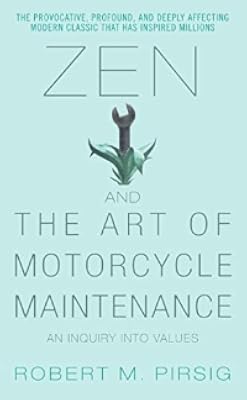
Zen and the Art of Motorcycle Maintenance: An Inquiry into Values
by Robert M. Pirsig
On This Page
Description
At its heart, the story is all too simple: a man and his son take a lengthy motorcycle trip through America. But this is not a simple trip at all, for around every corner, through mountain and desert, wind and rain, and searing heat and biting cold, their pilgrimage leads them to new vistas of self-discovery and renewal. This is an elemental work that has helped to shape and define the past twenty-five years of American culture. This special audio edition presents this adventure in a show more compelling way-for the millions who have already taken this journey and want to travel these roads again, and for the many more who will discover for the first time the wonders and challenges of a journey that will change the way they think and feel about their lives. show lessTags
Recommendations






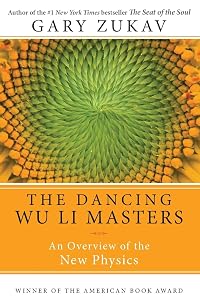
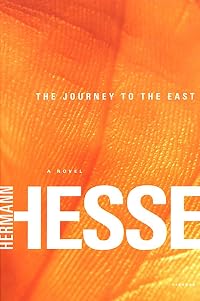
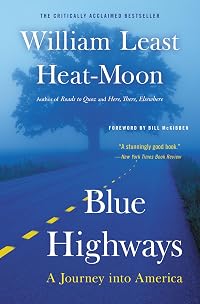
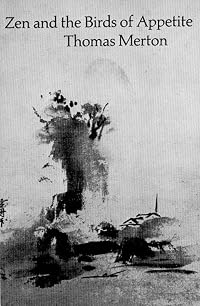
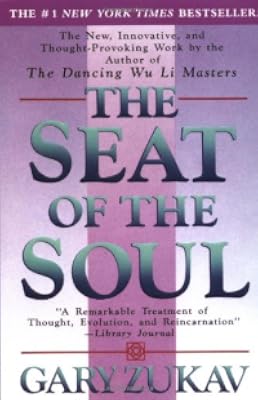
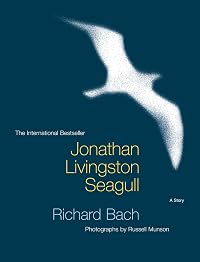
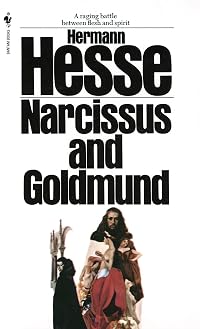

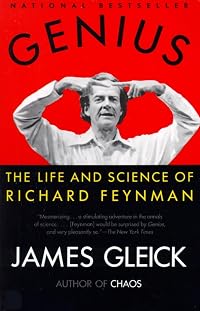




Member Recommendations
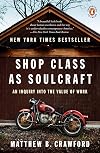
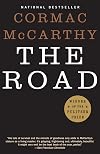
SCPeterson A man and his son travel very different paths toward self-discovery, confronting ultimate truth and the source of all meaning along the way
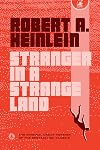
emf1123 If you're in your late teens, reading both of these books back to back (stranger in a strange land, zen and the art of motorcycle maintenance) is a good quality mindfuck. I doubt that either have the same influence as one ages, though.
02
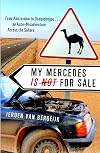
My Mercedes is Not for Sale: From Amsterdam to Ouagadougou...An Auto-Misadventure Across the Sahara by Jeroen van Bergeijk
gonzobrarian an inquiry into travel, adventure, and meaning
Member Reviews
This book...it has a hold on me.
You look at where you're going and where you are and it never makes sense, but then you look back at where you've been and a pattern seems to emerge.
This is very likely the fifth or sixth time I've read it, making it the most-read book in my life. What is it about this story that draws me back in every two to three years?
When one person suffers from a delusion, it is called insanity. When many people suffer from a delusion it is called a Religion.
I will state right up front that the last quarter of the book, where Phaedrus really comes to the fore, it does become quite dense with all its talk of Aristotle, Plato, and Socrates, of Sophists and dialectics, etc. And it tends to lose me a bit.
You are never show more dedicated to something you have complete confidence in. No one is fanatically shouting that the sun is going to rise tomorrow. They know it's going to rise tomorrow. When people are fanatically dedicated to political or religious faiths or any other kinds of dogmas or goals, it's always because these dogmas or goals are in doubt.
But the rest of it? The ruminations on the world at large and our place in it? The thoughts on what, precisely, quality is and how it works? The breaking down of complex ideas into motorcycle maintenance analogies? The travelogue? The interaction with the unnamed main character and those around him? And Chris, the narrator's son? All of it is so compelling to me.
The place to improve the world is first in one's own heart and head and hands, and then work outward from there.
There's a certain duplicitousness in Pirsig's narrative because, as he seeks to reconcile his past self with where and who he is now, while also struggling to piece together Phaedrus' discoveries and layering his own understanding on them, he's also mostly avoiding the most immediate problem right in front of him...Chris, his own son.
If someone's ungrateful and you tell him he's ungrateful, okay, you've called him a name. You haven't solved anything.
I think it's the feeling of displacement, the narrator's obvious separation from the world. It's like it's all behind a glass wall. He can see it all, appreciate its beauty ...its quality... and he can interact with others, but there's always something between him and whoever or whatever he's reacting to. There's a point where he describes the moment of quality as a moment of time between the subject and the object where the quality aspect is determined. It's like the narrator holds everyone out behind that wall to allow him more time to judge their quality.
And that's something I can truly identify with. That removal. That separation from the world.
The truth knocks on the door and you say, "Go away, I'm looking for the truth," and so it goes away. Puzzling.
And so, I find that I cannot be objective about this book. This book burrows beneath my skin in a way no other book has before or, I presume, ever will again. Each time I read it, I rediscover essential truths about the world, about myself. They are not pleasant discoveries, but they are essential ones.
We take a handful of sand from the endless landscape of awareness around us and call that handful of sand the world.
I can fully understand why others would not like this book, that it would be ponderously slow, or unnecessarily preachy, or simply not of good quality. But for me, this book makes me think in ways I would never have done so without reading it. And that, to me, is what the best writing should do. Make me pause and examine myself and my world.
We’re in such a hurry most of the time we never get much chance to talk. The result is a kind of endless day-to-day shallowness, a monotony that leaves a person wondering years later where all the time went and sorry that it’s all gone. show less
You look at where you're going and where you are and it never makes sense, but then you look back at where you've been and a pattern seems to emerge.
This is very likely the fifth or sixth time I've read it, making it the most-read book in my life. What is it about this story that draws me back in every two to three years?
When one person suffers from a delusion, it is called insanity. When many people suffer from a delusion it is called a Religion.
I will state right up front that the last quarter of the book, where Phaedrus really comes to the fore, it does become quite dense with all its talk of Aristotle, Plato, and Socrates, of Sophists and dialectics, etc. And it tends to lose me a bit.
You are never show more dedicated to something you have complete confidence in. No one is fanatically shouting that the sun is going to rise tomorrow. They know it's going to rise tomorrow. When people are fanatically dedicated to political or religious faiths or any other kinds of dogmas or goals, it's always because these dogmas or goals are in doubt.
But the rest of it? The ruminations on the world at large and our place in it? The thoughts on what, precisely, quality is and how it works? The breaking down of complex ideas into motorcycle maintenance analogies? The travelogue? The interaction with the unnamed main character and those around him? And Chris, the narrator's son? All of it is so compelling to me.
The place to improve the world is first in one's own heart and head and hands, and then work outward from there.
There's a certain duplicitousness in Pirsig's narrative because, as he seeks to reconcile his past self with where and who he is now, while also struggling to piece together Phaedrus' discoveries and layering his own understanding on them, he's also mostly avoiding the most immediate problem right in front of him...Chris, his own son.
If someone's ungrateful and you tell him he's ungrateful, okay, you've called him a name. You haven't solved anything.
I think it's the feeling of displacement, the narrator's obvious separation from the world. It's like it's all behind a glass wall. He can see it all, appreciate its beauty ...its quality... and he can interact with others, but there's always something between him and whoever or whatever he's reacting to. There's a point where he describes the moment of quality as a moment of time between the subject and the object where the quality aspect is determined. It's like the narrator holds everyone out behind that wall to allow him more time to judge their quality.
And that's something I can truly identify with. That removal. That separation from the world.
The truth knocks on the door and you say, "Go away, I'm looking for the truth," and so it goes away. Puzzling.
And so, I find that I cannot be objective about this book. This book burrows beneath my skin in a way no other book has before or, I presume, ever will again. Each time I read it, I rediscover essential truths about the world, about myself. They are not pleasant discoveries, but they are essential ones.
We take a handful of sand from the endless landscape of awareness around us and call that handful of sand the world.
I can fully understand why others would not like this book, that it would be ponderously slow, or unnecessarily preachy, or simply not of good quality. But for me, this book makes me think in ways I would never have done so without reading it. And that, to me, is what the best writing should do. Make me pause and examine myself and my world.
We’re in such a hurry most of the time we never get much chance to talk. The result is a kind of endless day-to-day shallowness, a monotony that leaves a person wondering years later where all the time went and sorry that it’s all gone. show less
"I want to talk about another kind of high country… the high country of the mind… Few people travel here. There's no real profit to be made from wandering through it, yet like this high country of the material world all around us, it has its own austere beauty that to some people make the hardships of traveling through it seem worthwhile." (pg. 127)
When first thinking about this review, I intended to describe this book as an autobiographical narrative about a motorcycle journey, interspersed with substantive (and intimidating) digressions into philosophy. But, in truth, the measure is the other way round: this is a philosophy book interspersed with moments of narrative. I'm reluctant to even use the word 'novel' at all, and it's no show more surprise to learn that Zen and the Art of Motorcycle Maintenance was first conceived by its author, Robert M. Pirsig, as an essay, not a story.
Regardless of how one chooses to categorise the book, it is a challenging experience. The torrent of philosophical discussion is very detailed; it's well-written but often very murky on what Pirsig is ultimately trying to do. If this had remained an essay, it might well have been a failure; the reader finishes the book rather perplexed, and it is only with a commitment to tackling it that you can begin to understand it. It's certainly one of the toughest wrangling experiences I've had in a lifetime of reading and, while it deserves its fame, it is a surprise that this book proved a commercial success.
There are advantages and disadvantages to Pirsig's idiosyncratic approach, and this tension gives a brittleness to, if not the book, then at least to your confidence in your assessment of the book after you finish it. You're never entirely sure if you've got it right, if you're working too hard to find something in it to justify the time you've put into it, or if Pirsig should not have done a bit more to facilitate the reader's engagement. Certainly, the latter is my opinion: what stops Zen from being a truly great work is that it's a sort of info-dump of Pirsig's ideas. It lacks the storytelling nous that makes, say, Dostoevsky – another writer with big ideas to communicate – so damn compelling and readable.
The narrative aspect of Zen and the Art of Motorcycle Maintenance is certainly its weakest part. The journey of the narrator and his son, Chris, across America lacks the necessary characterisation or plot to relieve us from the heavy, abstract philosophical stuff. However, while as a story it can be quite weak, the narrative seems to be there solely to serve Pirsig's arrangement of his ideas. And it is in these big ideas that Zen excels.
The narrator, unnamed, hints at a mental breakdown in his past, and his removal from his old personality, which he calls Phaedrus. Over the course of the novel, as the narrator revisits Phaedrus' intellectual journey, this alter-ego re-emerges. In a connection that can be identified only after the reader has committed to about two-thirds of the novel, this "mind divided against itself" (pg. 331) mirrors Pirsig's rejection of the conventional world of duality (i.e. our understanding of things as subjective/objective, classic/romantic, and so on) in favour of a sort of post-Christian trinity in which rationality has emerged out of (and is guaranteed by) the irrational human mind rather than being something set apart. Many of Pirsig's ideas were familiar to me due to the comparable modern-day work of Jordan Peterson, whose advocacy of ideas like the Logos, the importance of individuality, and a balance between rationality and metaphysics (as opposed to a zero-sum science vs. religion game) all find echoes here. It wasn't a surprise at all to learn that Pirsig's treatise is on Dr. Peterson's recommended books list.
Once the reader begins to grapple with these ideas (and the muscles do groan as you do so), you begin to make your peace with the nature of the beast. Pirsig's author-avatar narrator notes the "touch of hypocrisy" in his talk of eliminating duality when he himself is struggling with his alter-ego Phaedrus (pg. 401). He notes that Phaedrus was not a good student, because a good student "seeks knowledge fairly and impartially" whereas Phaedrus had "an axe to grind and all he sought were those things that helped him grind it" (pg. 363). This, I suspect, is why the narrative, however slight, is essential for Pirsig's treatise: neither Phaedrus or the narrator are right, but the alter-ego dynamic provides an opportunity for interplay and contrast, an opportunity for Pirsig to be reflective and find a way of settling Phaedrus' big ideas alongside the narrator's desire to retreat from the world and fix his motorcycle.
Once this is realised, the book becomes less of a daunting treatise and more of a piece of writing that is striving towards harmony. That Pirsig achieves this, to some extent, is a great feat. The ideas, however dry, are often profound and the narrative, however slight, brings them into alignment. Pirsig's genius, regrettably, is not the lucid genius that can make the likes of Dostoevsky so approachable in his writing, but it's still a good thing that a cluttered genius mind could produce this book. Zen and the Art of Motorcycle Maintenance is testament to the sort of intellectual contraption that a human brain can form if it so desires, and, more importantly, a testament to the fact that there are many readers willing to engage with such a challenging book, for all that market forces and publishing dons tell us there are not. It is, to my mind, much more uplifting for the soul to know that so many people recognise their spiritual and philosophical wanderlust, and seek out art and ideas that might address it, than any balm that might be provided by the content of the ideas themselves. show less
When first thinking about this review, I intended to describe this book as an autobiographical narrative about a motorcycle journey, interspersed with substantive (and intimidating) digressions into philosophy. But, in truth, the measure is the other way round: this is a philosophy book interspersed with moments of narrative. I'm reluctant to even use the word 'novel' at all, and it's no show more surprise to learn that Zen and the Art of Motorcycle Maintenance was first conceived by its author, Robert M. Pirsig, as an essay, not a story.
Regardless of how one chooses to categorise the book, it is a challenging experience. The torrent of philosophical discussion is very detailed; it's well-written but often very murky on what Pirsig is ultimately trying to do. If this had remained an essay, it might well have been a failure; the reader finishes the book rather perplexed, and it is only with a commitment to tackling it that you can begin to understand it. It's certainly one of the toughest wrangling experiences I've had in a lifetime of reading and, while it deserves its fame, it is a surprise that this book proved a commercial success.
There are advantages and disadvantages to Pirsig's idiosyncratic approach, and this tension gives a brittleness to, if not the book, then at least to your confidence in your assessment of the book after you finish it. You're never entirely sure if you've got it right, if you're working too hard to find something in it to justify the time you've put into it, or if Pirsig should not have done a bit more to facilitate the reader's engagement. Certainly, the latter is my opinion: what stops Zen from being a truly great work is that it's a sort of info-dump of Pirsig's ideas. It lacks the storytelling nous that makes, say, Dostoevsky – another writer with big ideas to communicate – so damn compelling and readable.
The narrative aspect of Zen and the Art of Motorcycle Maintenance is certainly its weakest part. The journey of the narrator and his son, Chris, across America lacks the necessary characterisation or plot to relieve us from the heavy, abstract philosophical stuff. However, while as a story it can be quite weak, the narrative seems to be there solely to serve Pirsig's arrangement of his ideas. And it is in these big ideas that Zen excels.
The narrator, unnamed, hints at a mental breakdown in his past, and his removal from his old personality, which he calls Phaedrus. Over the course of the novel, as the narrator revisits Phaedrus' intellectual journey, this alter-ego re-emerges. In a connection that can be identified only after the reader has committed to about two-thirds of the novel, this "mind divided against itself" (pg. 331) mirrors Pirsig's rejection of the conventional world of duality (i.e. our understanding of things as subjective/objective, classic/romantic, and so on) in favour of a sort of post-Christian trinity in which rationality has emerged out of (and is guaranteed by) the irrational human mind rather than being something set apart. Many of Pirsig's ideas were familiar to me due to the comparable modern-day work of Jordan Peterson, whose advocacy of ideas like the Logos, the importance of individuality, and a balance between rationality and metaphysics (as opposed to a zero-sum science vs. religion game) all find echoes here. It wasn't a surprise at all to learn that Pirsig's treatise is on Dr. Peterson's recommended books list.
Once the reader begins to grapple with these ideas (and the muscles do groan as you do so), you begin to make your peace with the nature of the beast. Pirsig's author-avatar narrator notes the "touch of hypocrisy" in his talk of eliminating duality when he himself is struggling with his alter-ego Phaedrus (pg. 401). He notes that Phaedrus was not a good student, because a good student "seeks knowledge fairly and impartially" whereas Phaedrus had "an axe to grind and all he sought were those things that helped him grind it" (pg. 363). This, I suspect, is why the narrative, however slight, is essential for Pirsig's treatise: neither Phaedrus or the narrator are right, but the alter-ego dynamic provides an opportunity for interplay and contrast, an opportunity for Pirsig to be reflective and find a way of settling Phaedrus' big ideas alongside the narrator's desire to retreat from the world and fix his motorcycle.
Once this is realised, the book becomes less of a daunting treatise and more of a piece of writing that is striving towards harmony. That Pirsig achieves this, to some extent, is a great feat. The ideas, however dry, are often profound and the narrative, however slight, brings them into alignment. Pirsig's genius, regrettably, is not the lucid genius that can make the likes of Dostoevsky so approachable in his writing, but it's still a good thing that a cluttered genius mind could produce this book. Zen and the Art of Motorcycle Maintenance is testament to the sort of intellectual contraption that a human brain can form if it so desires, and, more importantly, a testament to the fact that there are many readers willing to engage with such a challenging book, for all that market forces and publishing dons tell us there are not. It is, to my mind, much more uplifting for the soul to know that so many people recognise their spiritual and philosophical wanderlust, and seek out art and ideas that might address it, than any balm that might be provided by the content of the ideas themselves. show less
The most important part of this book, for me, was that it made me consider what sanity really is. Mr. Pirsig roughly defines sanity as living within the mythos of one's own culture, not necessarily the religious norm, but the philosophical norm. This can be quite an interesting point to ponder when one chooses to live outside the norm. Are they really insane, or just questing onto the "road less wandered"?
Like Phaedras, the Platonic character from which the author takes his alter-ego's name, the question of Quality is also examined in depth. He traces the meaning of this word back to the Ancient Greek idea of arete, or the duty to one's self to always perform in and honorable and exemplary way. This book considers the idea that we no show more longer value arete or Quality as part of our philosophical norm.
As a narrative, this book is about a father reconnecting with his son after having a breakdown. However, at its core, this book is about an inner journey. It is one of those books that can be read over and over again throughout a person's life and you will always find something new of value in it- something that you are receptive to in that moment. Not only do I recommend the book, but I recommend reading it more than once. show less
Like Phaedras, the Platonic character from which the author takes his alter-ego's name, the question of Quality is also examined in depth. He traces the meaning of this word back to the Ancient Greek idea of arete, or the duty to one's self to always perform in and honorable and exemplary way. This book considers the idea that we no show more longer value arete or Quality as part of our philosophical norm.
As a narrative, this book is about a father reconnecting with his son after having a breakdown. However, at its core, this book is about an inner journey. It is one of those books that can be read over and over again throughout a person's life and you will always find something new of value in it- something that you are receptive to in that moment. Not only do I recommend the book, but I recommend reading it more than once. show less
It's one of those ubiquitous books that's kept turning up on library shelves, charity shop shelves and bookshop shelves throughout my life and yet i've always walked away from it - until now.
I've always had quite a deep interest in Zen and it always seemed to me that putting it with motorcycle maintenance just wasn't something i wanted to know about. But now i have a motorbike that needs some maintenance and this book turned up in Kindle daily deals for 99p i thought the time was right.
But oh, how wrong i've been all these years. It's not a book about Zen or how to fix a motorbike while practising Zen, it's a wholly different thing altogether.
In fact, it's a road trip book where our narrator takes his son on a road trip on an old show more motorbike across the USA. But it's a road trip with a difference.
At it's heart, it's a book about insanity, the condition of society and its relationship to technology, and a fair bit of Greek philosophy as well - and it's all broken up with the story of the road trip. And it's simply awesome.
With hindsight i'm happy that i've never read it until now as i'm much older and it really blended nicely with my own life experiences - having dropped out of a Philosophy degree course for much the same reasons and now many years later i can look back and see things more clearly.
And the ending in the 'Afterword' is what truly completes this book. It really is a masterpiece of writing. show less
I've always had quite a deep interest in Zen and it always seemed to me that putting it with motorcycle maintenance just wasn't something i wanted to know about. But now i have a motorbike that needs some maintenance and this book turned up in Kindle daily deals for 99p i thought the time was right.
But oh, how wrong i've been all these years. It's not a book about Zen or how to fix a motorbike while practising Zen, it's a wholly different thing altogether.
In fact, it's a road trip book where our narrator takes his son on a road trip on an old show more motorbike across the USA. But it's a road trip with a difference.
At it's heart, it's a book about insanity, the condition of society and its relationship to technology, and a fair bit of Greek philosophy as well - and it's all broken up with the story of the road trip. And it's simply awesome.
With hindsight i'm happy that i've never read it until now as i'm much older and it really blended nicely with my own life experiences - having dropped out of a Philosophy degree course for much the same reasons and now many years later i can look back and see things more clearly.
And the ending in the 'Afterword' is what truly completes this book. It really is a masterpiece of writing. show less
As Robert Pirsig himself admits, this book doesn't contain much about Zen, though it appears that Pirsig (1928-2017) and his son Chris (1956-79, killed by a mugger) were Buddhist practitioners. Pirsig's discussion of motorcycle maintenance is a paean to technology and guide to solving technological problems systematically, by breaking them into categories (an Aristotelian technique--ironic, as later chapters reveal). But primarily the book is about philosophy: esthetics ("Quality" being Pirsig's ruling principle) and metaphysics. It's good intellectual exercise for anyone who remembers Plato and Aristotle but doesn't remember them fondly. Among the nuggets I appreciated (having studied Chinese and lived in China): Whereas the grammar of show more ancient Greece and Western languages generally "finds a strong subject-object differentiation . . . In cultures such as the Chinese, where subject-predicate relationships are not rigidly defined by grammar, one finds a corresponding absence of rigid subject-object philosophy" (Bantam New Age edition, pp.315 and 316).
The book is also an exposé of academic warfare at Montana State College (now University), where Pirsig taught beginning in 1959, and where his obsession with "Quality" was not appreciated. Shortly afterward, Pirsig enrolled at the University of Chicago as a graduate student and became locked in combat with the Platonist and Aristotelian faculty, particularly a tyrannical senior professor (unnamed but identifiable within minutes on Wikipedia). Pirsig became schizophrenic, unable to work or study, and his wife divorced him.
Pirsig breaks up the philosophic discussion with a narrative of his motorcycle journey with son Chris from Minneapolis across the American Northwest to San Francisco. (Enjoyable for me, as I've visited South Dakota, Yellowstone, Bozeman, western Idaho, Mendocino and the Bay Area.) Pirsig narrates the journey and his thoughts on motorcycle maintenance in the first person. But he refers to himself in his past as "Phaedrus" after Plato's Dialogue of that name--as if, before his insanity and involuntary electroshock treatment, he was a different person. Nevertheless, tensions between Pirsig and the uncomprehending Chris (age 12) echo the strife of those academic years. In the end, though, Chris gains appreciation of his father's mental travail and they reconcile. show less
The book is also an exposé of academic warfare at Montana State College (now University), where Pirsig taught beginning in 1959, and where his obsession with "Quality" was not appreciated. Shortly afterward, Pirsig enrolled at the University of Chicago as a graduate student and became locked in combat with the Platonist and Aristotelian faculty, particularly a tyrannical senior professor (unnamed but identifiable within minutes on Wikipedia). Pirsig became schizophrenic, unable to work or study, and his wife divorced him.
Pirsig breaks up the philosophic discussion with a narrative of his motorcycle journey with son Chris from Minneapolis across the American Northwest to San Francisco. (Enjoyable for me, as I've visited South Dakota, Yellowstone, Bozeman, western Idaho, Mendocino and the Bay Area.) Pirsig narrates the journey and his thoughts on motorcycle maintenance in the first person. But he refers to himself in his past as "Phaedrus" after Plato's Dialogue of that name--as if, before his insanity and involuntary electroshock treatment, he was a different person. Nevertheless, tensions between Pirsig and the uncomprehending Chris (age 12) echo the strife of those academic years. In the end, though, Chris gains appreciation of his father's mental travail and they reconcile. show less
I first read this book some 30 years ago, on the recommendation of a high school guidance counselor who was a bright light in my otherwise unremittingly bleak high school years.
In the time since then, I pursued advanced degrees in philosophy myself, taught it at the university level, went to law school and practiced law, fell in love a few times, stood up and asserted my identity, and so many other things.
I’ve changed a lot and lived a lot and this book certainly strikes me differently than it did all those years ago. But it’s still worth reading, as much for its descriptions of the road and of academic life and intrigues as for the philosophy of “quality,” about which i have doubts as I did then (albeit on a different level). show more There’s no doubt he is an egoist in some ways, that there is some culpable lack of rigor here, and he certainly was a product of his time in terms of misogyny, which bothers me. There are errors, at times serious, in his summation of western philosophers.
Still, I’ll probably come back to this in another 10 years or 20 or so. It’s evergreen like that. I’ll probably also read the sequel to this book, which I never did back then. show less
In the time since then, I pursued advanced degrees in philosophy myself, taught it at the university level, went to law school and practiced law, fell in love a few times, stood up and asserted my identity, and so many other things.
I’ve changed a lot and lived a lot and this book certainly strikes me differently than it did all those years ago. But it’s still worth reading, as much for its descriptions of the road and of academic life and intrigues as for the philosophy of “quality,” about which i have doubts as I did then (albeit on a different level). show more There’s no doubt he is an egoist in some ways, that there is some culpable lack of rigor here, and he certainly was a product of his time in terms of misogyny, which bothers me. There are errors, at times serious, in his summation of western philosophers.
Still, I’ll probably come back to this in another 10 years or 20 or so. It’s evergreen like that. I’ll probably also read the sequel to this book, which I never did back then. show less
I read Zen and the Art of Motorcycle Maintenance by Robert Pirsig when I was in college. At the time, it had a big impact of my thinking. I think that, even today, I'm able to see solutions to problems that others get hung up on because of attitudes I found in this book. In a key scene, a friend's handle bars are slipping and the author offers to shim them tight with a sliver of old beer can. The friend is appalled; he's driving an expensive motorcycle, and the author is proposing to "fix" it with a piece of discarded trash. The key lesson of the scene is not to get hung up on the labels attached to things, but to look beyond to see the underlying forms and functions. His friend saw a piece of trash, but the discarded beer can was show more actually a sheet of thin aluminum, oxidized to resist further corrosion, of exactly the right thickness, and soft enough to be cut to the right shape with a pocket knife. It was the perfect solution, once you could see the thing for what it was, not merely as what it was called.
I've had plenty of chances to put this way of looking at things to the test. Once, my radiator hose burst right where it joined with the radiator. I had no tools but a screwdriver, and this was in the days before cell phones, and I was fifty miles from the nearest person I knew.
Fortunately, there was a broken beer bottle on the side of the road. And, one inch down, the radiator hose was still intact. It was only where it clamped on that it had ruptured. So, I used the broken bottle to cut off the last inch of busted hose, used the screwdriver to clamp it back on, filled up the radiator with water I was lucky enough to have on hand and drove back home.
At work, I'm well known as a troubleshooter, willing to try new things, to see outside the "correct" channels of doing stuff in order to see the path that will actually get the job done. I don't know that the book gets full credit for this. I had a tinkering nature even from childhood. But, Zen and the Art did resonate with me, made me feel that my way of looking at the world was worth nurturing.
The last few weeks, I've been rereading the book. Alas, from my perspective as a 50 year old, the philosophy no longer looks quite as clever as it did when I was 20. In the book, the narrator argues that quality is the primary generator of reality, existing both outside the object and the observer. He states that quality can't be defined, but everyone knows what it is, at least if they have eyes to see it. He laments that too often we get fooled into thinking that style is quality. Cars are built with attractive curves and fancy features, but are mechanically lemons, for instance. He goes on to argue that quality can't be defined because it's all encompassing. It's almost like God. Any attempt to describe it must by definition fail, since the concept is just to big and omnipresent to ever be contained in mere words.
To quote Orwell, some ideas are so stupid only an intellectual can believe them.
Pirsig's failure to define quality is based mainly on his unwillingness to accept that quality is completely subjective. Also, while insisting quality can't be defined, he continually attempts to define it as one big concept that covers everything.
He completely overlooks the following possibilities.
First, there is no universal standard of quality that applies equally to writing, motorcycles, and architecture. The things that make a book good have pretty much nothing to do with what makes a good hamburger. Instead of a universal ideal, we have a zillion ideals based on the things being judged.
Second, Pirsig rejects the notion that quality is purely subjective. As evidence, he has his class judge writing samples. As a group, they tend to agree on which writing samples are best. He takes this as evidence that there's a universal standard they're keyed into, even if they can't define it.
He overlooks that he's in a class of people very close in age, ethnicity, and educational background. He's teaching a college class, after all. By the time this class has got to him, they've had years to be taught what's good writing and what's bad writing. The class is also connected by the culture of their era. Pirsig is a child of the 50s, and uses quite a bit of "beat" vocabulary, like calling some people "square." While he doesn't state it, he probably admires the writing of Alan Ginsberg and Jack Kerouac. Indeed, he's writing a novel about being On the Road, full of observations about the people and towns he sees. It's difficult for me not to think that he didn't regard Jack Kerouac's writing as being high in quality. But, if so, I think he's mistaking quality for fashion. Kerouac's writing had its moment, but if the same novel first appeared today, would it have any kind of cultural impact at all? The good writing of 1950 isn't quite like the good writing of 1850, and the writing of 2150 will be judged by factors we can't even guess at. Quality changes with cultural context.
Think of food. I ate lunch at a Thai restaurant today. The primary condiment of Thai cuisine is a fermented fish sauce. To most American tongues, the stuff is foul. Who the hell wants to eat the run off juice of fermented fish? Or think about kim chi in Korean cooking. It's spoiled cabbage spiced to the point that many people find it inedible. Yet, in their own cultures, in the right context, these foods are of the highest quality.
Does that mean that quality is completely subjective? Not necessarily. From an evolutionary perspective, we probably all have built in receptors to find certain things attractive. Most of us like fatty, sweet foods because they are high in calories. In today's world of abundance, this leads to obesity, but in our ancestors world of scarcity these taste receptors helped us survive. Similarly, while our distant ancestors weren't expressing themselves as much in writing as we do today, I'm guessing there was a sexual selection bias that made people who could express themselves clearly and confidently attractive to the opposite sex. A gift for eloquence was a clue that the mate had good intelligence and could pass on good genes. That's why us writers get all the action.
My point is that there can be underlying biological urges driving us toward finding certain objects, actions, and appearances pleasing. These get overlaid with culture; if your Dad liked country music, you have a better chance of liking country music. If he listened to opera, you have better odds of liking opera. What's considered quality varies from socio-economic class and geography. At the risk of stereotyping my own state, many men from my neck of the woods and from my economic strata probably find NASCAR racing to be an art form. Give them tickets to a Broadway musical, however, and they'd feel a deep, deep dread at the thought that they might actually have to go.
Back to Zen: Strip away this core concept of universal quality, and it would seem like the book should fall apart. It doesn't. It's still an excellent narrative about a long road trip, and a touching story about a father trying to save his son from mental illness.
That's one of the weird things about quality literature. It doesn't have to make a damn bit of sense to still be good. show less
I've had plenty of chances to put this way of looking at things to the test. Once, my radiator hose burst right where it joined with the radiator. I had no tools but a screwdriver, and this was in the days before cell phones, and I was fifty miles from the nearest person I knew.
Fortunately, there was a broken beer bottle on the side of the road. And, one inch down, the radiator hose was still intact. It was only where it clamped on that it had ruptured. So, I used the broken bottle to cut off the last inch of busted hose, used the screwdriver to clamp it back on, filled up the radiator with water I was lucky enough to have on hand and drove back home.
At work, I'm well known as a troubleshooter, willing to try new things, to see outside the "correct" channels of doing stuff in order to see the path that will actually get the job done. I don't know that the book gets full credit for this. I had a tinkering nature even from childhood. But, Zen and the Art did resonate with me, made me feel that my way of looking at the world was worth nurturing.
The last few weeks, I've been rereading the book. Alas, from my perspective as a 50 year old, the philosophy no longer looks quite as clever as it did when I was 20. In the book, the narrator argues that quality is the primary generator of reality, existing both outside the object and the observer. He states that quality can't be defined, but everyone knows what it is, at least if they have eyes to see it. He laments that too often we get fooled into thinking that style is quality. Cars are built with attractive curves and fancy features, but are mechanically lemons, for instance. He goes on to argue that quality can't be defined because it's all encompassing. It's almost like God. Any attempt to describe it must by definition fail, since the concept is just to big and omnipresent to ever be contained in mere words.
To quote Orwell, some ideas are so stupid only an intellectual can believe them.
Pirsig's failure to define quality is based mainly on his unwillingness to accept that quality is completely subjective. Also, while insisting quality can't be defined, he continually attempts to define it as one big concept that covers everything.
He completely overlooks the following possibilities.
First, there is no universal standard of quality that applies equally to writing, motorcycles, and architecture. The things that make a book good have pretty much nothing to do with what makes a good hamburger. Instead of a universal ideal, we have a zillion ideals based on the things being judged.
Second, Pirsig rejects the notion that quality is purely subjective. As evidence, he has his class judge writing samples. As a group, they tend to agree on which writing samples are best. He takes this as evidence that there's a universal standard they're keyed into, even if they can't define it.
He overlooks that he's in a class of people very close in age, ethnicity, and educational background. He's teaching a college class, after all. By the time this class has got to him, they've had years to be taught what's good writing and what's bad writing. The class is also connected by the culture of their era. Pirsig is a child of the 50s, and uses quite a bit of "beat" vocabulary, like calling some people "square." While he doesn't state it, he probably admires the writing of Alan Ginsberg and Jack Kerouac. Indeed, he's writing a novel about being On the Road, full of observations about the people and towns he sees. It's difficult for me not to think that he didn't regard Jack Kerouac's writing as being high in quality. But, if so, I think he's mistaking quality for fashion. Kerouac's writing had its moment, but if the same novel first appeared today, would it have any kind of cultural impact at all? The good writing of 1950 isn't quite like the good writing of 1850, and the writing of 2150 will be judged by factors we can't even guess at. Quality changes with cultural context.
Think of food. I ate lunch at a Thai restaurant today. The primary condiment of Thai cuisine is a fermented fish sauce. To most American tongues, the stuff is foul. Who the hell wants to eat the run off juice of fermented fish? Or think about kim chi in Korean cooking. It's spoiled cabbage spiced to the point that many people find it inedible. Yet, in their own cultures, in the right context, these foods are of the highest quality.
Does that mean that quality is completely subjective? Not necessarily. From an evolutionary perspective, we probably all have built in receptors to find certain things attractive. Most of us like fatty, sweet foods because they are high in calories. In today's world of abundance, this leads to obesity, but in our ancestors world of scarcity these taste receptors helped us survive. Similarly, while our distant ancestors weren't expressing themselves as much in writing as we do today, I'm guessing there was a sexual selection bias that made people who could express themselves clearly and confidently attractive to the opposite sex. A gift for eloquence was a clue that the mate had good intelligence and could pass on good genes. That's why us writers get all the action.
My point is that there can be underlying biological urges driving us toward finding certain objects, actions, and appearances pleasing. These get overlaid with culture; if your Dad liked country music, you have a better chance of liking country music. If he listened to opera, you have better odds of liking opera. What's considered quality varies from socio-economic class and geography. At the risk of stereotyping my own state, many men from my neck of the woods and from my economic strata probably find NASCAR racing to be an art form. Give them tickets to a Broadway musical, however, and they'd feel a deep, deep dread at the thought that they might actually have to go.
Back to Zen: Strip away this core concept of universal quality, and it would seem like the book should fall apart. It doesn't. It's still an excellent narrative about a long road trip, and a touching story about a father trying to save his son from mental illness.
That's one of the weird things about quality literature. It doesn't have to make a damn bit of sense to still be good. show less
Members
- Recently Added By
Published Reviews
ThingScore 100
One is tempted to call the book a psychomelodrama, for Pirsig's intentions are as extravagant as his themes. The attempt to triumph over madness, suicide, death in the self, of his son, for our world, by means of the patient exploration of ideas and emotions is certainly an extravagant ambition. That he succeeds in finding a plausible catharsis through such an enterprise seems to me sufficient show more reward for the author's perseverance, and ample testimony to his honesty and courage. show less
added by Shortride
Whatever it's true philosophical worth, it is intellectual entertainment of the highest order.
added by Shortride
Lists

Amusing Book Titles
146 works; 39 members

BitLife
212 works; 4 members

Mind Expanding Books by hackerkid
581 works; 8 members

The Art of Manliness' 100+ Books Every Man Should Read
108 works; 2 members

Eastern Spirituality & Philosophy
53 works; 2 members

Five star books
1,755 works; 108 members

Mustich's 1000 Books to Read Before You Die: A Life Changing List
1,001 works; 19 members

My List
302 works; 1 member

Favorite Book Titles
35 works; 1 member

Books With the Most Memorable Titles
478 works; 158 members

LibraryThingers' 1001 Books You Must Read Before You Die
442 works; 30 members
Best Audiobooks
240 works; 114 members

Books featured on I Don't Even Own a Television
167 works; 3 members

autobiographies, biographies & memoirs
56 works; 1 member

philosophy
28 works; 2 members

spirituality & consciousness
22 works; 1 member

Books We Love to Reread
688 works; 296 members

Gen X Library
245 works; 4 members
Cult Classics
30 works; 1 member

Non-Fiction
68 works; 1 member
El Castillo del Alma: Viajes de Crisis y Transformación (Alquimia)
6 works; 1 member

el
1,139 works; 1 member

100 books that changed the world
31 works; 2 members

KIB Non-Fiction Book Cloud
41 works; 1 member

Unread books
1,063 works; 84 members

A Novel Cure
742 works; 23 members

Books tagged favorites
390 works; 30 members

Unreliable Narrators
170 works; 43 members

Tagged by Tim or Meh!
91 works; 9 members

Classics you know you should have read but probably haven't
421 works; 408 members

Mind-Benders: Fiction that Hurts Your Head
34 works; 8 members

Philosophical Fiction
97 works; 27 members
The Telegraph's 110 Best Books: The Perfect Library
101 works; 18 members

The Guardian's 1000 Novels Everyone Must Read
1,005 works; 547 members

Books for HS summer reading
21 works; 2 members

Jordan B. Peterson's Recommended Books
104 works; 5 members

Biggest Disappointments
606 works; 165 members

I Can't Finish This Book
189 works; 22 members

1970s
657 works; 23 members

Blue Pyramid 1,276 Best Books of All Time
1,248 works; 32 members

Books Featured on Readers' Review of the Diane Rehm Show
161 works; 8 members
Overdue Podcast
806 works; 9 members
Reading List of Christopher McCandless
12 works; 1 member

Books Read in 2016
4,666 works; 197 members

Amanda's Guaranteed Books
110 works; 5 members

Mechanical Engineering
10 works; 1 member

You Couldn't Pay Me to Read That (Take 2)
203 works; 86 members
Author Information

Robert Maynard Pirsig was born in Minneapolis, Minnesota on September 6, 1928. While serving in the Army, he visited Japan on a leave and became interested in Zen Buddhism. After his service, he received bachelor's and master's degrees in journalism from the University of Minnesota. He later studied philosophy at the University of Chicago and at show more Banaras Hindu University in India. He taught writing at Montana State University in Bozeman and the University of Illinois at Chicago. He was also a freelance writer and editor for corporate publications and technical magazines. His first novel, Zen and the Art of Motorcycle Maintenance: An Inquiry Into Values, was published in 1974. His follow-up novel, Lila: An Inquiry Into Morals, was published in 1991. He died on April 24, 2017 at the age of 88. (Bowker Author Biography) show less
Some Editions
Awards and Honors
Distinctions
Notable Lists
Bulgarian Big Read (64)
Series
Belongs to Publisher Series
Fischer Taschenbuch (2020)
Work Relationships
Inspired
Has as a reference guide/companion
Has as a study
Common Knowledge
- Canonical title*
- Zen en de kunst van het motoronderhoud
- Original title
- Zen and the Art of Motorcycle Maintenance: An Inquiry into Values
- Alternate titles*
- Zen en de kunst van het motoronderhoud : een onderzoek naar waarden
- Original publication date
- 1974
- People/Characters
- Phaedrus; John Sutherland; Sylvia Sutherland; Robert Pirsig; Chris Pirsig; Buddha (show all 8); Mark Twain; Albert Einstein
- Important places
- The Dakotas; Miles City, Montana, USA; US highway 12
- Epigraph
- And what is good, Phaedrus,
And what is not good -
Need we ask anyone to tell us these things? - Dedication
- for my family
Aan mijn familie - First words
- I can see by my watch, without taking my hand from the left grip of the cycle, that it is eight-thirty in the morning.
- Quotations
- You want to know how to paint a perfect painting? It's easy. Make yourself perfect and then just paint naturally.
Live in the future, then build what's missing. - Last words
- (Click to show. Warning: May contain spoilers.)We've won it. It's going to get better now. You can sort of tell these things.
- Blurbers
- Lehmann-Haupt, Christopher; Toynbee, Philip
- Original language
- English
- Canonical DDC/MDS
- 917.3/04/920924 B
- Canonical LCC
- CT275.P648
*Some information comes from Common Knowledge in other languages. Click "Edit" for more information.
Classifications
Statistics
- Members
- 20,672
- Popularity
- 276
- Reviews
- 308
- Rating
- (3.79)
- Languages
- 30 — Bulgarian, Catalan, Czech, Danish, Dutch, English, Estonian, Finnish, French, German, Greek, Hebrew, Hungarian, Italian, Japanese, Korean, Lithuanian, Norwegian (Bokmål), Norwegian, Farsi/Persian, Polish, Russian, Serbian, Croatian, Slovenian, Spanish, Swedish, Turkish, Portuguese (Brazil), Chinese, simplified
- Media
- Paper, Audiobook, Ebook
- ISBNs
- 159
- UPCs
- 1
- ASINs
- 97