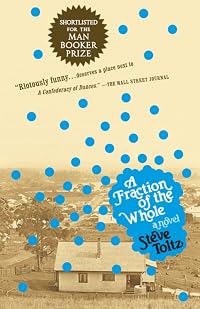
A Fraction of the Whole
by Steve Toltz
On This Page
Description
Meet the Deans. "The fact is, the whole of Australia despises my father more than any other man, just as they adore my uncle more than any other man. I might as well set the story straight about both of them ... " Heroes or criminals? Crackpots or visionaries? Families or enemies? " ... Anyway, you know how it is. Every family has a story like this one." Most of his life, Jasper Dean couldn't decide whether to pity, hate, love, or murder his certifiably paranoid father, Martin, a man who show more overanalyzed anything and everything and imparted his self-garnered wisdom to his only son. But now that Martin is dead, Jasper can fully reflect on the crackpot who raised him in intellectual captivity, and what he realizes is that, for all its lunacy, theirs was a grand adventure. As he recollects the events that led to his father's demise, Jasper recounts a boyhood of outrageous schemes and shocking discoveries--about his infamous outlaw uncle Terry, his mysteriously absent European mother, and Martin's constant losing battle to make a lasting mark on the world he so disdains. It's a story that takes them from the Australian bush to the cafes of bohemian Paris, from the Thai jungle to strip clubs, asylums, labyrinths, and criminal lairs, and from the highs of first love to the lows of failed ambition. The result is a rollicking rollercoaster ride from obscurity to infamy, and the moving, memorable story of a father and son whose spiritual symmetry transcends all their many shortcomings. show lessTags
Recommendations

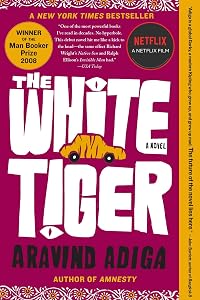
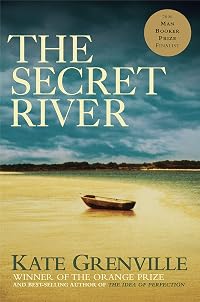
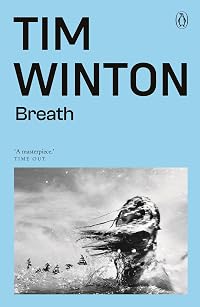
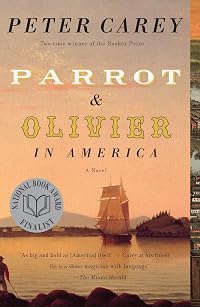








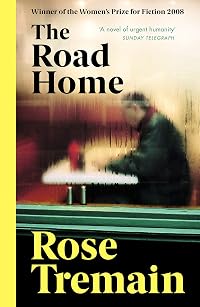
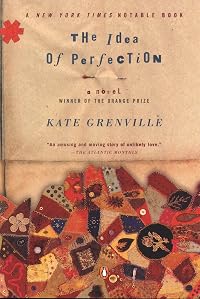
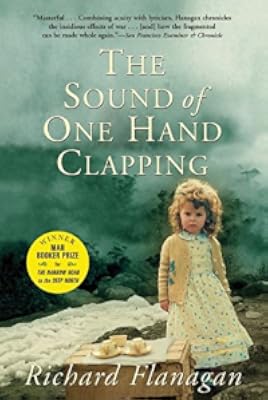

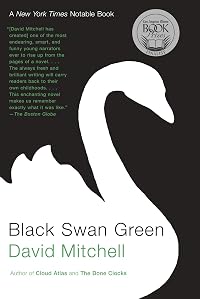


Member Recommendations

mcenroeucsb Semi-comic coming of age story
sushidog Very different books, but both big rambling humorous affairs.
Member Reviews
I remember my first encounter with this book - it was enormous, newly-published, and fresh on the shelf at my local library. I was enraptured by the book from the get go, and carrying this tome around with me for a week. It was unlike anything I had read, it felt serious and philosophical like a grown-up book while also just being so fun and stupid (in the most complimentary way!).
The twists and turns, and the jokes and ideas all felt like Toltz had been collecting them in a drawer for about a decade for his big debut. Sure, there is a very simple main plotline that's sidetracked through the whole book for the sake of all the bits but this would have been a lesser book if Toltz reined in the messiness. The word rollicking was invented show more to describe this book.
I resisted a reread for 17 years, fearing that my memory had exaggerated my enjoyment, that my taste has evolved into something more mature and would surely scoff at these silly and outlandish setups.
Surprise, my taste is still that of an immature teen!
Second time around, it was fun to see what I remembered (looking at you, Chekhov's bottle of tears) or cannot recognise (for a book set mostly in Sydney, it is extremely vague about all the landmarks). Here's to reading it for the third time in five-to-ten years.
Aside: since Arrested Development, do you think anyone has gone up to the author and went ✊ Steve Toltz ✊! show less
The twists and turns, and the jokes and ideas all felt like Toltz had been collecting them in a drawer for about a decade for his big debut. Sure, there is a very simple main plotline that's sidetracked through the whole book for the sake of all the bits but this would have been a lesser book if Toltz reined in the messiness. The word rollicking was invented show more to describe this book.
I resisted a reread for 17 years, fearing that my memory had exaggerated my enjoyment, that my taste has evolved into something more mature and would surely scoff at these silly and outlandish setups.
Surprise, my taste is still that of an immature teen!
Second time around, it was fun to see what I remembered (looking at you, Chekhov's bottle of tears) or cannot recognise (for a book set mostly in Sydney, it is extremely vague about all the landmarks). Here's to reading it for the third time in five-to-ten years.
Aside: since Arrested Development, do you think anyone has gone up to the author and went ✊ Steve Toltz ✊! show less
This started brilliant and for five hundred pages it just got better. Packed with hilarious one-liners and quirky observations it’s an exhilarating and often farcical romp through the lives of the Dean family, a tale involving criminality, mental illness and skip-loads of philosophy. It visits some dark places and could have been bleak and depressing but for some superb writing. I spent the first two thirds thinking to myself how brilliant must the book have been that beat this one to the Booker Prize.
The trouble was, the last two hundred pages or so left me cold. Martin’s speech at the announcement of the millionaires was a great piece of writing, and yet from that point onwards there was a change in the novel’s tone. It’s hard show more to explain. Perhaps it was that everything seemed to have been taking place in a world very like our own but one where it’s accepted between author and reader that mad things happen more often than average. That’s fine. But then towards the end it seemed that the novel wanted to explain it all, move it lock stock and barrel into the “real” real world, and it didn’t seem to fit. The one-liners dried up and suddenly it wasn’t philosophy and humour it was just philosophy and reading it became a chore.
Despite the above, I would still recommend this to anyone, the sheer quality of the first two thirds is breathtaking and who knows, you might see something in the last bit that I couldn’t. show less
The trouble was, the last two hundred pages or so left me cold. Martin’s speech at the announcement of the millionaires was a great piece of writing, and yet from that point onwards there was a change in the novel’s tone. It’s hard show more to explain. Perhaps it was that everything seemed to have been taking place in a world very like our own but one where it’s accepted between author and reader that mad things happen more often than average. That’s fine. But then towards the end it seemed that the novel wanted to explain it all, move it lock stock and barrel into the “real” real world, and it didn’t seem to fit. The one-liners dried up and suddenly it wasn’t philosophy and humour it was just philosophy and reading it became a chore.
Despite the above, I would still recommend this to anyone, the sheer quality of the first two thirds is breathtaking and who knows, you might see something in the last bit that I couldn’t. show less
When an Australian debut novel gets snapped up for a reported six-figure sum by a prestigious UK publisher; is simultaneously translated and released in half a dozen other countries, and wins major awards, it’s hard to approach it without some preconceived ideas. You expect it to be really, really good – and it is, in parts. However, I struggled to finish A Fraction of the Whole – and ended up unsatisfied.
This is how it begins: After spending much of his childhood in a mysterious coma, Martin becomes an isolated teenager, the cerebral opposite of his athletic younger brother. When a stabbing puts an end to Terry’s prodigious sporting talents, he drifts into crime. Martin takes him to the nearby gaol to scare him out of his show more future, but his plan backfires when they meet a loquacious master criminal who takes Terry on as his understudy. Terry Dean graduates from petty crime to make a name for himself as the bane of drug cheats, bookies and match fixers across Australia, becoming a Ned Kelly-like anti-hero. Meanwhile, Martin’s attempts to bring meaning to his life and change to his town end in disaster.
The first half o the book takes the form of Martin's confession of his failures and hopes to his son, Jasper. In the best philosophical tradition, Martin teaches the boy to avoid the rule of the crowd. But. in doing, so he sows the seeds of his rejection: he is at the same time Jasper’s greatest influence and his worst enemy. When your children are young, you feel that no matter how loud you shout, or how brilliantly you manipulate them, they're not really listening. Then they grow up and you realise that they've been listening only too closely. You've been a massive influence on them. If only you'd realised it at the time, you'd have behaved better. But you didn't and now it's too late. And it is way too late for Jasper.
The garrulous absurdity that makes it exhilarating wears thin when asked to care for the characters who don't always achieve the solidity required to sustain a 700-page novel. There is no perspective, no sense of how seriously we are supposed to take it all. A Fraction of the Whole contains some awful dud patches, and some sparkling comic writing. It bounces with sarcastic aphorisms and invincible gags – many of which reveal themselves, a moment or two after reading, to be arrant nonsense. And it is full of bizarre and unacceptable twists – like Anouk morphing into a sexpot multi-millionare publishing tycoon. To me, the second half fails dismally to reach its potential. I wanted to like it more, but there’s only so much self-analysis I can take.
I suspect that the hype and the awards will mean that Toltz's book is destined to sit on many a student shelf, pored over and passed around by the impressionable young. It gives off the unmistakable whiff of a book that might just contain the secret of life. But, being so big, you'll have to work all the harder to find it.
Toltz has the flair and most of the gifts required to write a really good comic novel: A Fraction of the Whole shows that to excess. Perhaps his next book will make up the remaining fraction. show less
This is how it begins: After spending much of his childhood in a mysterious coma, Martin becomes an isolated teenager, the cerebral opposite of his athletic younger brother. When a stabbing puts an end to Terry’s prodigious sporting talents, he drifts into crime. Martin takes him to the nearby gaol to scare him out of his show more future, but his plan backfires when they meet a loquacious master criminal who takes Terry on as his understudy. Terry Dean graduates from petty crime to make a name for himself as the bane of drug cheats, bookies and match fixers across Australia, becoming a Ned Kelly-like anti-hero. Meanwhile, Martin’s attempts to bring meaning to his life and change to his town end in disaster.
The first half o the book takes the form of Martin's confession of his failures and hopes to his son, Jasper. In the best philosophical tradition, Martin teaches the boy to avoid the rule of the crowd. But. in doing, so he sows the seeds of his rejection: he is at the same time Jasper’s greatest influence and his worst enemy. When your children are young, you feel that no matter how loud you shout, or how brilliantly you manipulate them, they're not really listening. Then they grow up and you realise that they've been listening only too closely. You've been a massive influence on them. If only you'd realised it at the time, you'd have behaved better. But you didn't and now it's too late. And it is way too late for Jasper.
The garrulous absurdity that makes it exhilarating wears thin when asked to care for the characters who don't always achieve the solidity required to sustain a 700-page novel. There is no perspective, no sense of how seriously we are supposed to take it all. A Fraction of the Whole contains some awful dud patches, and some sparkling comic writing. It bounces with sarcastic aphorisms and invincible gags – many of which reveal themselves, a moment or two after reading, to be arrant nonsense. And it is full of bizarre and unacceptable twists – like Anouk morphing into a sexpot multi-millionare publishing tycoon. To me, the second half fails dismally to reach its potential. I wanted to like it more, but there’s only so much self-analysis I can take.
I suspect that the hype and the awards will mean that Toltz's book is destined to sit on many a student shelf, pored over and passed around by the impressionable young. It gives off the unmistakable whiff of a book that might just contain the secret of life. But, being so big, you'll have to work all the harder to find it.
Toltz has the flair and most of the gifts required to write a really good comic novel: A Fraction of the Whole shows that to excess. Perhaps his next book will make up the remaining fraction. show less
Epic, rollicking fun, with a liberal dose of heartbreak and melancholy, too. This really reminded me of John Irving books like Garp, Owen Meany, and Hotel New Hampshire. It has a similar combination of adventurous, what's-around-the-next-corner plotting, and black humor that masks a deep well of humanistic tragedy. The tale of Australia's worst father and the son that loves/hates him nicely pulls off being outrageous, bigger than life hi-jinks, as well as a moving character story.
Very Good
At heart a father son story set in Australia
Where to begin my story? Negotiating with memories isn't easy: how to choose between those panting to be told, those still ripening, those already shrivelling, and those destined to be mauled by language and to come out pulverized
The framing device for this book is that Jasper Dean is telling a story from a prison cell for an undisclosed crime. The story is about Jasper, his father Martin and his uncle Terry mainly. It’s a multi-perspective book and we get to see Martin grow up and the birth of Jasper from Martin’s perspective, Jasper’s life from his perspective and a later chapter again from Martin’s perspective. This is a large book at 700+ pages and it failed to keep my show more full interest until the end as word fatigue set in. I think if 200 pages had been trimmed this would be a 5 star read, as it was the later chapter from Martin’s perspective was slightly jarring and I struggled slightly to get back in the flow for a while which is possibly why it felt too long. I wouldn’t hesitate to recommend this though as Tolz has a great way with words and there are plenty of funny moments although the tone does get serious later on in the book.
Overall – Entertaining but could have been trimmed show less
At heart a father son story set in Australia
Where to begin my story? Negotiating with memories isn't easy: how to choose between those panting to be told, those still ripening, those already shrivelling, and those destined to be mauled by language and to come out pulverized
The framing device for this book is that Jasper Dean is telling a story from a prison cell for an undisclosed crime. The story is about Jasper, his father Martin and his uncle Terry mainly. It’s a multi-perspective book and we get to see Martin grow up and the birth of Jasper from Martin’s perspective, Jasper’s life from his perspective and a later chapter again from Martin’s perspective. This is a large book at 700+ pages and it failed to keep my show more full interest until the end as word fatigue set in. I think if 200 pages had been trimmed this would be a 5 star read, as it was the later chapter from Martin’s perspective was slightly jarring and I struggled slightly to get back in the flow for a while which is possibly why it felt too long. I wouldn’t hesitate to recommend this though as Tolz has a great way with words and there are plenty of funny moments although the tone does get serious later on in the book.
Overall – Entertaining but could have been trimmed show less
This is a story that covers multiple generations of the Dean Family, focusing mostly on brothers Martin and Terry Dean, and Martin’s son Jasper. Jasper is the narrator of the tale, writing his story down from prison, and promising the reader right off that they will never find his father’s body. Although it took a long time to get through the story, oddly enough I rarely felt impatient. The characters are thoroughly developed and I enjoyed spending time with them. The tale has tragedy, humor, romance and violence. The only drawbacks were the long philosophical monologues by Martin, and the story itself was a bit overlong. After Jasper became a teenager I felt the author kept writing just to extend the story, and not necessarily show more because he had anything further to say. But the ending was lovely and unexpectedly poignant, and I find myself thinking about Jasper and wondering how his story continues. Four and a half stars. show less
Some of my favourite books are Big Books --- Anna Karenina and Bleak House, for example. And I read Stephen King’s The Stand at least four times. So when I say “I hate big books,” clearly I don’t mean ALL big books. Just most of them. I appreciate a tightly written 200 page novel, 300 if the author wants to ramble a bit. My main complaint with long books is that I usually just don’t want to be in the world the author created for that many hours, especially now since life has cut back on my reading time. I like to get into a book, enjoy it, and get out, and then bring on to the next one. The other problem with every long book is full of filler that shows the lack of a strong editor. The upside is that with A Fraction of the show more Whole, I discovered more about myself and my distaste for long books.
Before we go further, I’ll say that there was a lot to love about A Fraction of the Whole. There were sentences and paragraphs that were among the most beautiful and clever that I’ve ever read. There are sections that tell a great story ---one that is both heartfelt and entertaining. Whether you read critical reviews or reader reviews, you’ll see that people love this book, and deservedly so. But for me, it was just too much. I read and read and read and didn't feel like I was getting anywhere. I’ve been reading this book since March. That’s 7.5 months.
What It’s About: Jasper Dean, living sometime recently in Australia, tells his story growing up with his manic father Martin, who’s lived his life in the shadow of his criminal brother Terry. Terry Dean is the most popular criminal in Australia since Ned Kelly. Individually, these three characters continually try to improve the lives of those around them by gambling on some off-the-wall scheme, but it always turns in to bad (sometimes tragic) unintended consequences.
What I liked: as I already said, great writing and storytelling.
Why I Struggled:
1. The singular voice—definitely my biggest problem with A Fraction of the Whole. Some parts are told by Jasper, some by Martin, but they both have the exact same voice. And it’s always slightly frenzied. Although the voice could be very, very funny, overall, I found it tedious. Note to self: perhaps for long novels, look for 3rd person narration and a variety of characters.
2. My edition was only 561 pages long due to formatting, but normal editions are well over 700 pages. It’s rare that a book needs to be that long. This should have been divided into at least three novels, maybe four. Further pain ensued because the various breaks are random—this book has 7 numbered sections of length varying from 200 to 50 pages. Within these sections there are randomly spaced subsections. Long sections always make any book a slog, in my experience. Give the reader’s eyes and brain a bit of a breather, and often we can’t wait to jump back in. Don’t make us wade through wet concrete.
3. I was around 100 pages in before we heard from a female character. That just bores me. Also, at one point, Jasper and Martin have girlfriends, and I was several pages into a vignette about one of them and thought I was reading about the other ---I came up short when there was a comment about her being in her 30s, and I was all “hold on, she’s 17!” I had to go back and reread with the other character in mind, and I realized that they were basically the same person with a different hair colour. Was this part of the theme of the son reliving the father’s life in every way?, or was it the author’s complete inability to write real female characters? I’m going to say the later.
4. The characters were always desperate for money, but somehow they managed to eat and have a home to sleep at every night without really saying how. I don’t know, maybe Australia just has a robust welfare system. I don’t actually believe that.
Other Things to Say: A Fraction of the Whole was shortlisted for the Booker Prize, which is pretty damned impressive for a first novel, especially when the author isn’t British (no slag against British writers, but instead an observation that we colonies don’t make the list every year, so all the better. Good job, Steve Tolz!).
Rating: Mixed. 3.5 stars. I think that it took me most of the year to read, but that I still finished (I abandon books in a heartbeat), says something. Not sure what it says, but something.
Recommended for: Reviews tell me most people like this more than I did, I despite my protests, I’m not sorry I read it. I just would have been satisfied at any 200 page section.
Why I Read This Now: I had just finished the longish Books Are Beautiful The Little Stranger and thought I’d tackle another long book from that series. I had to take a lot of breaks and read other things in between. show less
Before we go further, I’ll say that there was a lot to love about A Fraction of the Whole. There were sentences and paragraphs that were among the most beautiful and clever that I’ve ever read. There are sections that tell a great story ---one that is both heartfelt and entertaining. Whether you read critical reviews or reader reviews, you’ll see that people love this book, and deservedly so. But for me, it was just too much. I read and read and read and didn't feel like I was getting anywhere. I’ve been reading this book since March. That’s 7.5 months.
What It’s About: Jasper Dean, living sometime recently in Australia, tells his story growing up with his manic father Martin, who’s lived his life in the shadow of his criminal brother Terry. Terry Dean is the most popular criminal in Australia since Ned Kelly. Individually, these three characters continually try to improve the lives of those around them by gambling on some off-the-wall scheme, but it always turns in to bad (sometimes tragic) unintended consequences.
What I liked: as I already said, great writing and storytelling.
Why I Struggled:
1. The singular voice—definitely my biggest problem with A Fraction of the Whole. Some parts are told by Jasper, some by Martin, but they both have the exact same voice. And it’s always slightly frenzied. Although the voice could be very, very funny, overall, I found it tedious. Note to self: perhaps for long novels, look for 3rd person narration and a variety of characters.
2. My edition was only 561 pages long due to formatting, but normal editions are well over 700 pages. It’s rare that a book needs to be that long. This should have been divided into at least three novels, maybe four. Further pain ensued because the various breaks are random—this book has 7 numbered sections of length varying from 200 to 50 pages. Within these sections there are randomly spaced subsections. Long sections always make any book a slog, in my experience. Give the reader’s eyes and brain a bit of a breather, and often we can’t wait to jump back in. Don’t make us wade through wet concrete.
3. I was around 100 pages in before we heard from a female character. That just bores me. Also, at one point, Jasper and Martin have girlfriends, and I was several pages into a vignette about one of them and thought I was reading about the other ---I came up short when there was a comment about her being in her 30s, and I was all “hold on, she’s 17!” I had to go back and reread with the other character in mind, and I realized that they were basically the same person with a different hair colour. Was this part of the theme of the son reliving the father’s life in every way?, or was it the author’s complete inability to write real female characters? I’m going to say the later.
4. The characters were always desperate for money, but somehow they managed to eat and have a home to sleep at every night without really saying how. I don’t know, maybe Australia just has a robust welfare system. I don’t actually believe that.
Other Things to Say: A Fraction of the Whole was shortlisted for the Booker Prize, which is pretty damned impressive for a first novel, especially when the author isn’t British (no slag against British writers, but instead an observation that we colonies don’t make the list every year, so all the better. Good job, Steve Tolz!).
Rating: Mixed. 3.5 stars. I think that it took me most of the year to read, but that I still finished (I abandon books in a heartbeat), says something. Not sure what it says, but something.
Recommended for: Reviews tell me most people like this more than I did, I despite my protests, I’m not sorry I read it. I just would have been satisfied at any 200 page section.
Why I Read This Now: I had just finished the longish Books Are Beautiful The Little Stranger and thought I’d tackle another long book from that series. I had to take a lot of breaks and read other things in between. show less
Members
- Recently Added By
Published Reviews
ThingScore 100
I'm sorry if I'm beginning to make it sound a bit rollicking. The stories, in fact, follow a pattern: they are almost all tales of good intentions with catastrophic results, such as the suggestion box which Martin installs on the town-hall steps and which at first instils a new sense of purpose and confidence in the community, but quickly brings out the worst in everyone and leads to his show more brother being sectioned. Taken individually, they're funny; taken together, the unbreakability of the pattern and the inevitability of disaster is heartbreaking. show less
added by Milesc
added by lucyknows
Lists

Top Five Books of 2013
1,562 works; 721 members

Booker Prize
491 works; 62 members

Booktopia's 50 Must Read Australian Novels
50 works; 5 members

Man Booker Prize Longlist 2008
13 works; 2 members

Books I read in 2014
13 works; 1 member

Booker Prize Shortlist: Titles Not Yet Read
161 works; 4 members

Puffin Books 70th anniversary handbook recommendations
537 works; 10 members

2022 To-Be-Read
11 works; 1 member

Best Australian Books of the 21st Century
88 works; 2 members
Author Information

4 Works 2,421 Members
Steve Toltz was born in 1972 in Sydney. His first novel, A Fraction of the Whole, was released in 2008. It is a comic novel which tells the history of a family of Australian outcasts. The narration of the novel alternates between Jasper Dean, a philosophical, idealistic boy, who grows up throughout the novel and his father, Martin Dean, a show more philosopher and shut-in described at the start of the novel as "the most hated man in all of Australia" The novel has repeatedly been compared favourably to John Kennedy Toole's Pulitzer Prize winning novel A Confederacy of Dunces. A Fraction of the Whole was shortlisted for the 2008 Man Booker Prize and the 2008 Guardian First Book Award. His second novel, Quicksand, is expected to be published in 2015. He will be at the Oz, New Zealand festival of literature and arts program in 2015 in London. He will also be at the Sydney Writers Festival 2015. (Bowker Author Biography) show less
Awards and Honors
Awards
Notable Lists
Common Knowledge
- Canonical title
- A Fraction of the Whole
- Original title
- A Fraction of the Whole
- Original publication date
- 2008
- People/Characters
- Martin Dean; Jasper Dean; Terry Dean; Caroline Potts
- Important places
- New South Wales, Australia; Paris, France; Sydney, New South Wales, Australia; Thailand
- Dedication
- To Marie
- First words
- You never hear about a sportsman losing his sense of smell in a tragic accident, and for good reason; in order for the universe to teach excruciating lessons that we are unable to apply in later life, the sportsman must lose ... (show all)his legs, the philosopher his mind, the painter his eyes, the musician his ears, the chef his tongue
- Last words
- (Click to show. Warning: May contain spoilers.)I tell you, you don't have to be a misanthrope to be chilled at the idea of that many people bumping into each other on the street, but it helps.
- Original language
- English UK
Classifications
Statistics
- Members
- 2,059
- Popularity
- 10,161
- Reviews
- 82
- Rating
- (3.89)
- Languages
- 14 — Czech, Danish, Dutch, English, French, German, Hebrew, Italian, Norwegian (Bokmål), Polish, Portuguese, Spanish, Swedish, Turkish
- Media
- Paper, Audiobook, Ebook
- ISBNs
- 50
- ASINs
- 9