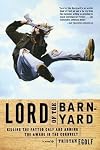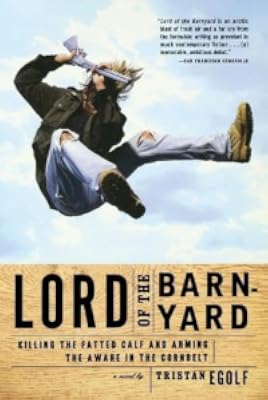
Lord of the Barnyard: Killing the Fatted Calf and Arming the Aware in the Cornbelt
by Tristan Egolf
On This Page
Description
This debut novel begins with the death of a woolly mammoth in the Ice Age & ends with a greased-pig-chase funeral in the modern-day Midwest, in between telling the story of an autodidact goat-roping farm boy by the name John Kaltenbrunner.Tags
Recommendations









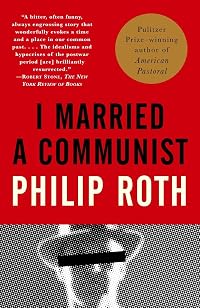
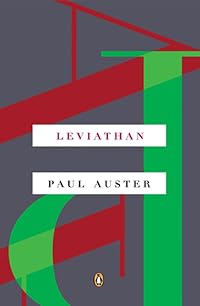
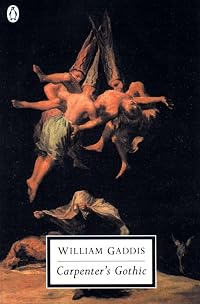
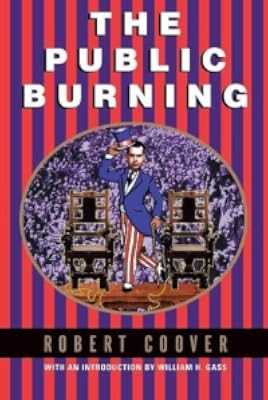




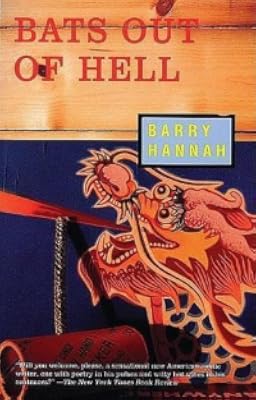
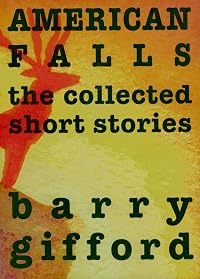

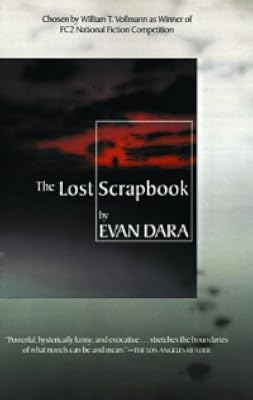
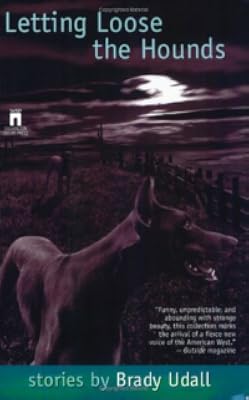


Member Recommendations
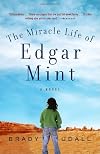
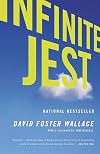
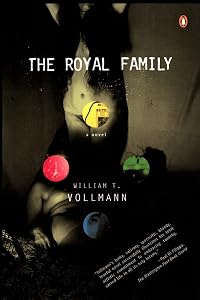
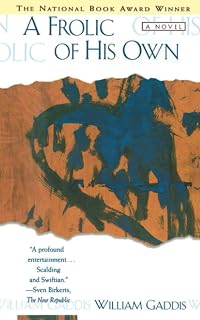
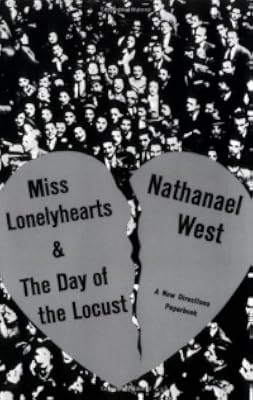
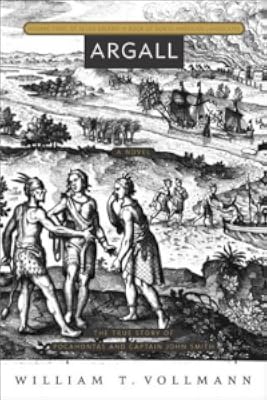
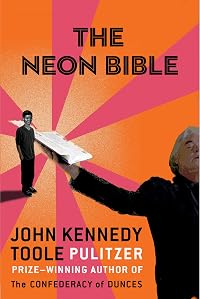
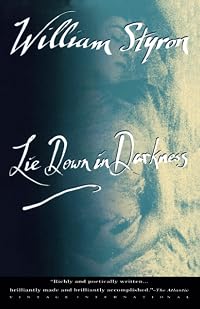
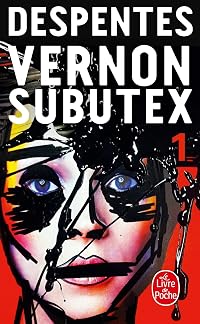
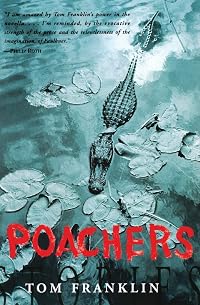
prophetandmistress Like LotB, Infinite Jest has demented humor and characters, a long twisted plot and is challenging but not in that Finnegan’s Wake kind of way.
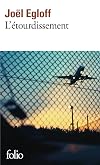
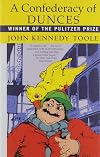
by anonymous user
Member Reviews
A number of reviews have praised this book as an epic of Middle American life. That’s an exaggeration, but not an inappropriate one. Barnyard is really a contemporary tall tale, akin to the nineteenth-century dialect yarns of George Washington Harris or Augustus Baldwin Longstreet. Their frontier is gone, but Egolf finds a similarly unsettled setting in the cheap apartments, dive bars, and low-tech factories of Baker, a town in an unspecified Midwestern state. Baker tolerates the members of its lowest social stratum as long as their poverty and tackiness are invisible, and it’s there that chicken farmer John Kaltenbrunner comes of age as many mythic heroes do, with the promise of high birth giving way to early orphaning and show more banishment. Cast out by the town’s establishment, he caroms between incarceration and several almost unimaginably demeaning jobs until returning to sacrifice himself in a garbage strike that shatters public order.
Egolf tars virtually all his characters as narrow-minded or worse, but aligns himself with the people rather than the power. He occasionally troubles to delineate personalities beyond the social roles and manages to evoke sympathy for his grotesques, although they are not allowed to speak for themselves. Institutionalized thinking rather than innate human depravity is the true target, as evidenced by civic reaction to the strike. Mounting piles of garbage summon hordes of vermin, and various attempts are made to control the pests. “Had anyone stopped to consider, it might have been pointed out that whole days were being invested in scavenger hysteria, while the root of the problem—the actual pile-up itself—was growing every hour.âÂ? The metaphoric equivalent of the pile-up is really our toxically pollutive economy; and although this issue is prevalent, it exists only as subtext. Barnyard isnâÂÂt a polemic or a call to arms, just an artfully belligerent novel. show less
Egolf tars virtually all his characters as narrow-minded or worse, but aligns himself with the people rather than the power. He occasionally troubles to delineate personalities beyond the social roles and manages to evoke sympathy for his grotesques, although they are not allowed to speak for themselves. Institutionalized thinking rather than innate human depravity is the true target, as evidenced by civic reaction to the strike. Mounting piles of garbage summon hordes of vermin, and various attempts are made to control the pests. “Had anyone stopped to consider, it might have been pointed out that whole days were being invested in scavenger hysteria, while the root of the problem—the actual pile-up itself—was growing every hour.âÂ? The metaphoric equivalent of the pile-up is really our toxically pollutive economy; and although this issue is prevalent, it exists only as subtext. Barnyard isnâÂÂt a polemic or a call to arms, just an artfully belligerent novel. show less
It is sad that Egolf didn't live long enough to write more. This guy had something special as a writer. I had so much fun with this book. Even though it's way too long for the story, I wanted even more.
"Everyone knew that to the Catholics, Jesus was Mary's boy, to the Baptists he was the savior, to the Jews he was nothing, but to the Methodists he was a tax deduction."
Thanks to my buddy, Woods, for the gift of this book.
"Everyone knew that to the Catholics, Jesus was Mary's boy, to the Baptists he was the savior, to the Jews he was nothing, but to the Methodists he was a tax deduction."
Thanks to my buddy, Woods, for the gift of this book.
There's a good deal of history here. Back when I wore plaid and carried Nietzsche books everywhere there was a scene here. It was in the Highlands in Louisville. There were hordes of pseuds, but there was a core. There was a group of serious people involved with art, music, literature and activism. Most moved away - the Northwest, NYC, abroad etc. A few died. Recently a number have passed, mostly from cancer. Mostly my age. There was a coffeehouse that hosted readings and concerts. There was going to be a lecture series on Foucault. My best friend Joel and I went. The guy delivering the spiel was our age. He had a firm handle on his Foucault. There were a number of points open to debate. This I did. I am not entirely proud of said show more behavior. I wasn't heckling. I wasn't drunk (Stephen Malkmus, please forgive me) but I did interupt, politely. A great deal was discussed.
A few years later Harold, who owned Twice-Told Books in Louisville, asked me if I had heard of Lord of the Barnyard. I hadn't. Harold explained that Egolf had lived in the area for a few years doing research on river towns in Southern Indiana. Harold noted that he also spoke about Derrida and Foucault locally. Oh shit. Well apparently Mr. Egolf was busking in Paris, his manuscript had been rejected by every publisher in the US and UK. He wound up involved with a publisher's daughter from one of the French heavies.
Mr Egalf distilled life in Southern Indiana and displayed such with aplomb in his first novel. I loved it. I remember reading it while walking to work, something reckless I have since outgrown. Because of Mr. Egolf's abrupt conclusion in life, I haven't found the nerve to read his other work, which I have collected. show less
A few years later Harold, who owned Twice-Told Books in Louisville, asked me if I had heard of Lord of the Barnyard. I hadn't. Harold explained that Egolf had lived in the area for a few years doing research on river towns in Southern Indiana. Harold noted that he also spoke about Derrida and Foucault locally. Oh shit. Well apparently Mr. Egolf was busking in Paris, his manuscript had been rejected by every publisher in the US and UK. He wound up involved with a publisher's daughter from one of the French heavies.
Mr Egalf distilled life in Southern Indiana and displayed such with aplomb in his first novel. I loved it. I remember reading it while walking to work, something reckless I have since outgrown. Because of Mr. Egolf's abrupt conclusion in life, I haven't found the nerve to read his other work, which I have collected. show less
It's difficult to convey how incredible this book is. If I gave you a plot synopsis it might sound, at best boring, and at worst, disgusting. And it is sometimes disgusting. But in the best, funniest possible way. This book is not comedy though. Consider it the anti-authoritarian bible. Think of it as the campfire story for anarchist summer camp. It's brilliant fun. Buy it, read it, and then wish you could read it for the first time again. Then read it again anyway.
This is a shattering book. Despair is increasing throughout the plot, without hope, without a ray of light — a story of Les Miserables, which presents American reality from its darkest angle. Writing is a burst of literary talent, with remarkable ability to illustrate even if the descriptions are sometimes tricky. I think this is a literary gem that is a pity to miss, also if there are parts that are too dated in the book.
Echoes of Twain and Dickens. I can't decide how much I like it, but I'm warming to it more and more, even after having finished it. I kind of want to read it again, except there are so many words in it!
Just OK. On limited occassions I found myself just reading to plow through it. Good writing, just not a fave topic. Found it to be graphic and sort of gross...sort of like a Tarantino movie that you wonder why you're watching.
Members
- Recently Added By
Published Reviews
ThingScore 50
Die hochtourig erzählte Geschichte hat auch einen Nachteil: sie nervt. Die vielen extremen Bilder, der immer farbig-volltönende Gestus ermüdet. Kaltenbrunner und seine Apostel, die "kollektiven Erzähler" dieser Unheilsgeschichte, erscheinen uns als Apokalyptische Reiter, die zu Notwehrexzessen neigen. Oder als Gladiatoren, die in aussichtslosen Schlachten zertreten werden und, mühsam show more zusammengeflickt, erneut und wie wahnsinnig weiterstürmen. Und doch behaupten sie im Prolog, sich "keinerlei Ausschmückungen" leisten zu wollen, sondern noch hinter den "wildesten und dreistesten Halluzinationen des Pöbels von Baker" zurückgeblieben zu sein. Mit Kaltenbrunners Tod erst kommen sie, kommt auch Baker wieder zur Besinnung, peinlich berührt über die Torheiten, die man sich über Monate hinweg geleistet hat. Dass damit etwas besser geworden sei, dass man für die Zukunft etwas gelernt habe, bleibt ein frommer Wunsch. Ein Müllwerkerstreik mit seinen ekelhaften Folgen kann eben nicht als reinigendes Gewitter gelten. Tristan Egolf ist ein ungestümer Erzähler, auf grelle Farben und Vergleiche aus, darin Tom Coraghessan Boyle nicht unähnlich. Was einzig ihm abgeht ist das rhythmische und notwendige Wechselspiel von Systole und Diastole, von Erregung und Ruhe, Spannung und Entspannung. Aber diese Forderung wird sein zweiter Roman vielleicht schon einlösen. show less
added by Indy133
Lists

Books We Want To Read Again For The First Time
384 works; 160 members
Author Information

8 Works 726 Members
Awards and Honors
Series
Belongs to Publisher Series
Gallimard, Folio (3422)
Common Knowledge
- Canonical title*
- Le Seigneur des porcheries
- Original title
- Lord of the Barnyard
- Original publication date
- 1998
*Some information comes from Common Knowledge in other languages. Click "Edit" for more information.
Classifications
Statistics
- Members
- 443
- Popularity
- 69,376
- Reviews
- 15
- Rating
- (4.13)
- Languages
- 8 — Danish, Dutch, English, French, German, Italian, Norwegian (Bokmål), Spanish
- Media
- Paper, Ebook
- ISBNs
- 19
- ASINs
- 3