On This Page
Description
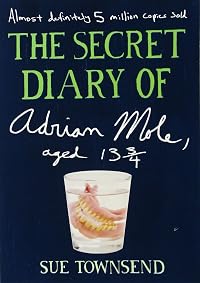
Meet Adrian Mole, a hapless teenager providing an unabashed, pimples-and-all glimpse into adolescent life. Writing candidly about his parents' marital troubles, the dog, his life as a tortured poet and 'misunderstood intellectual', Adrian's painfully honest diary is still hilarious and compelling reading thirty years after it first appeared.Tags
Recommendations




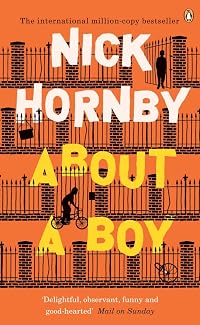
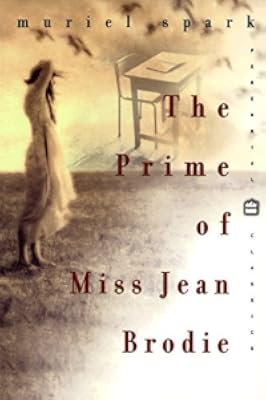
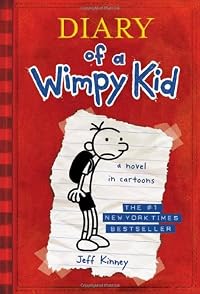
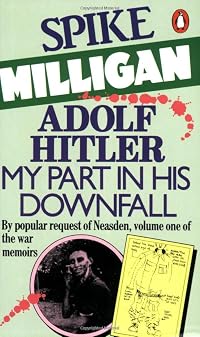









Member Recommendations
djryan Epistolary comedies set in the English midlands. Many humour, such funny.

by anonymous user
Member Reviews
Like many before him, pimply, priggish, pretentious 13-year-old Adrian Mole — well, 13 and three-fourths, to be precise — begins a diary on New Year’s Day. Well, he Leicester had me from the very start. Adrian’s the sort of boy who imagines a future in which his parents, his teachers, school bully Barry Kent, and just about everyone will be sorry that they weren’t nicer to him. My favorite quote? “Perhaps when I am famous and my diary is discovered, people will understand the torment of being a 13¾-year-old undiscovered intellectual.”
His entries over two years detail his frustrations with his parents, his infatuation with the popular Pandora, his pompous posing as an intellectual “artiste,” his snobbery and show more self-dramatization, his dreadful poems, and the awkward obsessions with acne and being cool endemic to all teens in every age. His obliviousness and the usual teen self-absorption, while amusing, brings back memories of my own 13th year, when I locked myself in my room after school every day, wrote book reviews, and cried about my hard, hard life as the pampered daughter who never lifted a finger about the house. Leicester, UK, in the 1980s clearly wasn’t that different from Miami in 1970s, another, more innocent age. Like Adrian with Pandora (“my treacle-haired love”), I was in love with red-headed Darryl McNair, my lab partner, who never gave me a second thought. And like the overly sensitive Adrian, I would have died if Darryl had ever known. At the same time, my heart went out to Adrian over Barry Kent’s bullying him, his parents’ squabbling, and his teen angst and utter cluelessness.
You’ll laugh out loud — right before you catch yourself thanking God that those days are behind you. Despite his priggishness and cluelessness, it’s impossible not to love Adrian Mole.
Merged review:
Like many before him, pimply, priggish, pretentious 13-year-old Adrian Mole — well, 13 and three-fourths, to be precise — begins a diary on New Year’s Day. Well, he Leicester had me from the very start. Adrian’s the sort of boy who imagines a future in which his parents, his teachers, school bully Barry Kent, and just about everyone will be sorry that they weren’t nicer to him. My favorite quote? “Perhaps when I am famous and my diary is discovered, people will understand the torment of being a 13¾-year-old undiscovered intellectual.”
His entries over two years detail his frustrations with his parents, his infatuation with the popular Pandora, his pompous posing as an intellectual “artiste,” his snobbery and self-dramatization, his dreadful poems, and the awkward obsessions with acne and being cool endemic to all teens in every age. His obliviousness and the usual teen self-absorption, while amusing, brings back memories of my own 13th year, when I locked myself in my room after school every day, wrote book reviews, and cried about my hard, hard life as the pampered daughter who never lifted a finger about the house. Leicester, UK, in the 1980s clearly wasn’t that different from Miami in 1970s, another, more innocent age. Like Adrian with Pandora (“my treacle-haired love”), I was in love with red-headed Darryl McNair, my lab partner, who never gave me a second thought. And like the overly sensitive Adrian, I would have died if Darryl had ever known. At the same time, my heart went out to Adrian over Barry Kent’s bullying him, his parents’ squabbling, and his teen angst and utter cluelessness.
You’ll laugh out loud — right before you catch yourself thanking God that those days are behind you. Despite his priggishness and cluelessness, it’s impossible not to love Adrian Mole. show less
His entries over two years detail his frustrations with his parents, his infatuation with the popular Pandora, his pompous posing as an intellectual “artiste,” his snobbery and show more self-dramatization, his dreadful poems, and the awkward obsessions with acne and being cool endemic to all teens in every age. His obliviousness and the usual teen self-absorption, while amusing, brings back memories of my own 13th year, when I locked myself in my room after school every day, wrote book reviews, and cried about my hard, hard life as the pampered daughter who never lifted a finger about the house. Leicester, UK, in the 1980s clearly wasn’t that different from Miami in 1970s, another, more innocent age. Like Adrian with Pandora (“my treacle-haired love”), I was in love with red-headed Darryl McNair, my lab partner, who never gave me a second thought. And like the overly sensitive Adrian, I would have died if Darryl had ever known. At the same time, my heart went out to Adrian over Barry Kent’s bullying him, his parents’ squabbling, and his teen angst and utter cluelessness.
You’ll laugh out loud — right before you catch yourself thanking God that those days are behind you. Despite his priggishness and cluelessness, it’s impossible not to love Adrian Mole.
Merged review:
Like many before him, pimply, priggish, pretentious 13-year-old Adrian Mole — well, 13 and three-fourths, to be precise — begins a diary on New Year’s Day. Well, he Leicester had me from the very start. Adrian’s the sort of boy who imagines a future in which his parents, his teachers, school bully Barry Kent, and just about everyone will be sorry that they weren’t nicer to him. My favorite quote? “Perhaps when I am famous and my diary is discovered, people will understand the torment of being a 13¾-year-old undiscovered intellectual.”
His entries over two years detail his frustrations with his parents, his infatuation with the popular Pandora, his pompous posing as an intellectual “artiste,” his snobbery and self-dramatization, his dreadful poems, and the awkward obsessions with acne and being cool endemic to all teens in every age. His obliviousness and the usual teen self-absorption, while amusing, brings back memories of my own 13th year, when I locked myself in my room after school every day, wrote book reviews, and cried about my hard, hard life as the pampered daughter who never lifted a finger about the house. Leicester, UK, in the 1980s clearly wasn’t that different from Miami in 1970s, another, more innocent age. Like Adrian with Pandora (“my treacle-haired love”), I was in love with red-headed Darryl McNair, my lab partner, who never gave me a second thought. And like the overly sensitive Adrian, I would have died if Darryl had ever known. At the same time, my heart went out to Adrian over Barry Kent’s bullying him, his parents’ squabbling, and his teen angst and utter cluelessness.
You’ll laugh out loud — right before you catch yourself thanking God that those days are behind you. Despite his priggishness and cluelessness, it’s impossible not to love Adrian Mole. show less
It's difficult to think of a more memorable pompous teenager than Adrian Mole, the English self-proclaimed "intellectual" hero of Sue Townshend's riotous Adrian Mole series.
Although Adrian's story is mostly humorous and details his attempts at publishing his atrocious poetry and wooing the girl of his dreams ("Oh, Pandora, I adore ya!"), Townshend includes Adrian's opinions on his parents' indiscretions and arguments.
Considering how many families can be described as "broken" families in today's world, the less-than-ideal situation that Adrian's household is in may comfort some students and remind them that they are not alone in their frustrations.
Note: the nature of the humor is somewhat sexually explicit from time to time, although show more perhaps that is its strength - a 13-year-old boy's perspective on the importance of sexual prowess is raw, funny, and insightful. show less
Although Adrian's story is mostly humorous and details his attempts at publishing his atrocious poetry and wooing the girl of his dreams ("Oh, Pandora, I adore ya!"), Townshend includes Adrian's opinions on his parents' indiscretions and arguments.
Considering how many families can be described as "broken" families in today's world, the less-than-ideal situation that Adrian's household is in may comfort some students and remind them that they are not alone in their frustrations.
Note: the nature of the humor is somewhat sexually explicit from time to time, although show more perhaps that is its strength - a 13-year-old boy's perspective on the importance of sexual prowess is raw, funny, and insightful. show less
I loved this book and at the same time I did not like it at all. That is a very strange feeling.
I admire the writer for being able to get into the brain of a 13-year old boy and describe his thoughts and feelings so accurately. (At least: I think it is accurate, because a lot of what Adrian says, does and thinks sounds VERY familiar having a 13-year old boy in the house...)
And that just brings me to the point why I did not like it: this Adrian character got me totally crazy by his complaining, whining, nagging, worrying, his 'being an intellectual', his very limited view on the world around him.
I guess that's how a teenages looks at the world, but as an adult it makes me want to poke him, get him on his two feet and put the world right show more under his nose so he can't NOT see.
That's why the book still got 4 stars: despite Adrian I kept on reading, wanting to find out what would happen next. show less
I admire the writer for being able to get into the brain of a 13-year old boy and describe his thoughts and feelings so accurately. (At least: I think it is accurate, because a lot of what Adrian says, does and thinks sounds VERY familiar having a 13-year old boy in the house...)
And that just brings me to the point why I did not like it: this Adrian character got me totally crazy by his complaining, whining, nagging, worrying, his 'being an intellectual', his very limited view on the world around him.
I guess that's how a teenages looks at the world, but as an adult it makes me want to poke him, get him on his two feet and put the world right show more under his nose so he can't NOT see.
That's why the book still got 4 stars: despite Adrian I kept on reading, wanting to find out what would happen next. show less
The Secret Diary of Adrian Mole, Aged 13 3/4 reminded me of the excellent Confederacy of Dunces by John Kennedy Toole in the best way possible -buffoon forces us to relate by way of academic and societal realization of place. Mole is a fairly bog-standard Midlands kid growing up in Thatcher's England. His life is upset by the adults around him, and the seeming disorder of this fellow adolescents. Mole considers himself an intellectual, an untapped mind that nobody but himself understands. The format of the diary is perfect for this story in that it really gives the reader an insight into the secret thoughts that we've all had, but most of us fear sharing or admitting to. The idea that we alone (in the sense of Mole and the little show more relationship formed by our role as the reader) 'get it' really stand out as the critical factor in this book. We don't really pity Adrian throughout, nor do we really see him as pathetic despite some of the rather silly situations that are handled appallingly. The reader is struck with the fact that this teenage boy is able, despite his own delusions to lay himself out with more honesty than many of us would be able to muster; even to ourselves. show less
Adrian Mole is probably my favorite literary character ever. His voice is perfect and so well developed. Somehow the minor characters such as Adrian's likable but selfish parents are also really well drawn for the reader indirectly via Adrian's perspective. Adrian's world - England's Midlands in the '80s - is almost as fascinating as the characters are. The first two books are by far my favorites of the series - Adrian's dorky egotistical voice, trivial obsessions and occasional maturity and compassion are charming when he's a teen but he becomes more of a pathetic figure in the later books.
Lately a lot of book blogs I nose around have been concerned with reading the classics. I see the sci-fi masterlist being posted everywhere, and more than a few of the non sci-fi blogs I read are tackling some less speculative classics (Pride and Prejudice and Zombies doesn't count). It made me feel like maybe I should stop being such a philistine and start exploring the great literature of days gone by. Should I start with Tolstoy (wasn't he a Bolshevik?), or maybe Dickens? (Would Dan Simmons' Drood count?) Then I started to feel a little lightheaded, so I decided to ease myself in with the Secret Dairy of Adrian Mole, which my coworker Kim told me she had to read in school, and everyone knows its only a classic if you had to read it show more in school. Plus I bought the book and it's sequels ages ago, so it was already conveniently on my bookshelf. This book falls squarely into the genre that possibly already exists or that possibly I just made up called ‘Thatcher-eqsue.” Thatcher-esque literature, so named for the period under Margeret Thatcher in which is was written, is characterised by the appearance of depressing working class surroundings and a feeling of overwhelming Britishness. And trust me, the Secret Diary of Adrian Mole has both of these things in spades. It's all angst and pence, which now I think about it sounds like a law firm...
I would have to say that The Secret Diary, etc is probably the best example of a book in the form of a diary that I've ever read. Hell, scratch the probably. The things reads like an actual diary. Oftentimes with this style of book the diary entries don't read true, the diary writer (diary-est? diary-er?) might recount solid passages of dialogue, for example, or they might foreshadow upcoming events (which is ok is the book is 'diary of a chick who can see the future,' but otherwise not so much). Townsend displays none of these faults. The only thing that some people might point to as being un-diary like is Adrian's habit of referring to people by their full names instead of using abbreviations. However I am fully onboard with it as 1) it's a writing technique that bugs me and, 2) as a self proclaimed intellectual I believe that young Adrian would write out full names every time.
Now I'm not saying that the book is without flaws, in fact the major complaints I have with it are because it is so true to its diary form. Namely there seems to be no overreaching plot. It's just a self centered kid writing a little bit almost every day about his life. There is not much in the way of traditional narrative road marks, such as a clearly defined beginning, middle and conclusion. Stuff happens, some more stuff happens, and then there are no more pages. There is no real ending, no satisfying conclusion, just no more words. As I said, it reads exactly like a real diary, and when we read the last entry it's prety easy to imagne that Adrian had kept on going in a new journal, (especially considering the three other Adrian Mole books on my shelf). There is character development though. The Adrian in the first entry is not the same Adrian in the last and after all (are you sick of hearing me say this yet?) a book's characters are the most important thing.
I found myself not minding the lack of traditional plot too much, or at all really, because Adrian has such a fantastic voice. He's a self centered little burk, filled with angst of ridiculous proportions. What really endears him to you though is the way he gets so hung up on silly stuff like pimples and vitamins, while the pretty epic family drama doesn't seem to phase him at all. (Of course would could argue that his 13 and a quarter year old mind can't deal with him mother's abandonment or his father's nervous breakdown so he obsesses over the size of his 'thing' instead...) It also helps that Adrian is really funny, although in an unintentionally oblivious kind of way. Indeed most of the books humour derives from us seeing what Adrian doesn't, a conceit which should get old but actually doesn't. There's also a lot of clever social commentary going on, which flies right over Adrian's head, but not ours.
Possibly I am making Adrian out to sound like a total idiot, and he's not. He's just a little emotionally stunted, and really self centered. It will be interesting to see how Adrian changes as he grows up in the latter books (I have a vague idea that he's middle aged by the last one), and I'm sure I'll find out next time the mood takes me to read a classic. show less
I would have to say that The Secret Diary, etc is probably the best example of a book in the form of a diary that I've ever read. Hell, scratch the probably. The things reads like an actual diary. Oftentimes with this style of book the diary entries don't read true, the diary writer (diary-est? diary-er?) might recount solid passages of dialogue, for example, or they might foreshadow upcoming events (which is ok is the book is 'diary of a chick who can see the future,' but otherwise not so much). Townsend displays none of these faults. The only thing that some people might point to as being un-diary like is Adrian's habit of referring to people by their full names instead of using abbreviations. However I am fully onboard with it as 1) it's a writing technique that bugs me and, 2) as a self proclaimed intellectual I believe that young Adrian would write out full names every time.
Now I'm not saying that the book is without flaws, in fact the major complaints I have with it are because it is so true to its diary form. Namely there seems to be no overreaching plot. It's just a self centered kid writing a little bit almost every day about his life. There is not much in the way of traditional narrative road marks, such as a clearly defined beginning, middle and conclusion. Stuff happens, some more stuff happens, and then there are no more pages. There is no real ending, no satisfying conclusion, just no more words. As I said, it reads exactly like a real diary, and when we read the last entry it's prety easy to imagne that Adrian had kept on going in a new journal, (especially considering the three other Adrian Mole books on my shelf). There is character development though. The Adrian in the first entry is not the same Adrian in the last and after all (are you sick of hearing me say this yet?) a book's characters are the most important thing.
I found myself not minding the lack of traditional plot too much, or at all really, because Adrian has such a fantastic voice. He's a self centered little burk, filled with angst of ridiculous proportions. What really endears him to you though is the way he gets so hung up on silly stuff like pimples and vitamins, while the pretty epic family drama doesn't seem to phase him at all. (Of course would could argue that his 13 and a quarter year old mind can't deal with him mother's abandonment or his father's nervous breakdown so he obsesses over the size of his 'thing' instead...) It also helps that Adrian is really funny, although in an unintentionally oblivious kind of way. Indeed most of the books humour derives from us seeing what Adrian doesn't, a conceit which should get old but actually doesn't. There's also a lot of clever social commentary going on, which flies right over Adrian's head, but not ours.
Possibly I am making Adrian out to sound like a total idiot, and he's not. He's just a little emotionally stunted, and really self centered. It will be interesting to see how Adrian changes as he grows up in the latter books (I have a vague idea that he's middle aged by the last one), and I'm sure I'll find out next time the mood takes me to read a classic. show less
Adrian Mole, precocious British teenager, self-professed intellectual, and diarist tells us of his trials and tribulations during the last part of his 13th and all of his 14th year. His musings are funny, sweet, and ultimately poignant. In this first edition of the series, we follow him through his decision to become an intellectual, his parents separation and reunification, and his tumultuous first love affair with one Pandora Braithwaite (herself precocious, radical and somewhat fickle.)
Upon my second reading of this book, I was pleased that I was not any less enchanted by Adrian as when I first became acquainted with him during my freshman year of college. Adrian is such a real and believable character that it's hard to believe he show more sprung from the mind of a middle-aged woman, who herself has never, presumably, been a 13 and 3/4 year old boy. Of course, neither have I. I am also not British, and not well-acquainted with early 1980's Britain and know nothing of British politics. I often find it difficult to read literature from countries I have not visited or studied extensively, but the colloquialisms herein are not as mystifying or unable to be understood from context in this work as others I have read.
I would recommend this book to any American Anglophile or any young adult who would in any way identify with the engaging character of Adrian Mole. show less
Upon my second reading of this book, I was pleased that I was not any less enchanted by Adrian as when I first became acquainted with him during my freshman year of college. Adrian is such a real and believable character that it's hard to believe he show more sprung from the mind of a middle-aged woman, who herself has never, presumably, been a 13 and 3/4 year old boy. Of course, neither have I. I am also not British, and not well-acquainted with early 1980's Britain and know nothing of British politics. I often find it difficult to read literature from countries I have not visited or studied extensively, but the colloquialisms herein are not as mystifying or unable to be understood from context in this work as others I have read.
I would recommend this book to any American Anglophile or any young adult who would in any way identify with the engaging character of Adrian Mole. show less
Members
- Recently Added By
Lists

The Guardian's 1000 Novels Everyone Must Read
1,005 works; 551 members

Favorite Childhood Books
1,651 works; 519 members
1001 Children's Books You Must Read Before You Grow Up
774 works; 101 members

BBC Big Read
191 works; 46 members

Read the book and saw the movie
1,170 works; 192 members

wilfully eccentric little england (cosy read novels, england)
45 works; 15 members

BBC's 100 Novels That Shaped Our World
100 works; 22 members

Puffin Books 70th anniversary handbook recommendations
537 works; 10 members

Biblioteca esencial de mujeres (100 libros 100)
53 works; 1 member

Books We Love to Reread
695 works; 298 members

Books Read in 2023
5,638 works; 147 members

Favorite Epistolary Fiction
143 works; 144 members

Books Read in 2021
5,361 works; 114 members

20 books to cheer you up now.
20 works; 2 members

Fiction with Men's Given Names in the Title
302 works; 11 members

Mooie titels
80 works; 1 member
Favourite Books
1,820 works; 316 members

Books With Numbers in the Title
308 works; 13 members

Books Set in London
49 works; 3 members

BBC Radio 4 Bookclub
341 works; 13 members

Classic British Humor
41 works; 8 members

Epistolary Books
105 works; 27 members

Books Read in 2013
1,630 works; 51 members

Books Read in 2026
2,116 works; 70 members

Books with a Character's Name as the Title
130 works; 10 members
Top-Rated Books on LibraryThing
272 works; 118 members
Author Information

49+ Works 16,522 Members
Sue Townsend was born in Leicester, England on April 2, 1946. She left school at fifteen and worked a series of jobs before becoming a full-time author. She was best known for her books about the neurotic diarist Adrian Mole including The Secret Diary of Adrian Mole Aged 13 ¾, The Growing Pains of Adrian Mole, Adrian Mole: The Wilderness Years, show more Adrian Mole and the Weapons of Mass Destruction, and Adrian Mole: The Prostrate Years. Her other works include The Queen and I, Number Ten, The Public Confessions of a Middle-Aged Woman Aged 55¾, and The Woman Who Went to Bed for a Year. She died after a stroke on April 10, 2014 at the age of 68. (Bowker Author Biography) show less
Some Editions
Awards and Honors
Awards
Distinctions
Notable Lists
Series

Work Relationships
Is contained in
The Adrian Mole Diaries: The Secret Diary of Adrian Mole, Aged 13¾ & The Growing Pains of Adrian Mole by Sue Townsend
Adrian Mole collection 8 Books set. (Sue Townsend Adrian Mole series collection set.) (The secret diary of Adrian Mole aged 13 ¾, the Growing pains of Adrian Mole, True confessions of Adrian Albert Mole, Adrian Mole: the wilderness year, Adrian Mole the cappuccino year, the lost diaries of Adrian Mole 1999-2001, Adrian Mole and the weapons of Mass Destruction and Adrian Mole the Prostrate year) by Sue Townsend
Has the adaptation
Is abridged in
Is parodied in
Has as a student's study guide
Common Knowledge
- Canonical title
- The Secret Diary of Adrian Mole Aged 13¾
- Original title
- The Secret Diary of Adrian Mole Aged 13 3/4
- Alternate titles
- Secret Diary of Adrian Mole Aged Thirteen and Three Quarters
- Original publication date
- 1982
- People/Characters
- Adrian Mole; Pandora Braithwaite; George Mole; Pauline Mole; Barry Kent; Nigel
- Important places
- Leicestershire, England, UK; London, England, UK; Oxford, Oxfordshire, England, UK
- Related movies
- The Secret Diary of Adrian Mole Aged 13 3/4 (1985 | IMDb)
- Epigraph
- 'Paul walked with something screwed up tight inside him ... yet he chatted away with his mother. He would never have confessed to her how he suffered over these things and she only partly guessed.'
D. H. Lawrence
Son... (show all)s and Lovers - Dedication
- For Colin and also for Sean, Dan, Vicki and Elizabeth with love and thanks
- First words
- These are my New Year's resolutions:
1. I will help the blind across the road. - Last words
- (Click to show. Warning: May contain spoilers.)Love is the only thing that keeps me sane...
- Blurbers
- Cooper, Jilly; Sharpe, Tom
- Original language
- English
Classifications
- Genres
- Fiction and Literature, Children's Books, Teen, Young Adult
- DDC/MDS
- 823.914 — Literature & rhetoric English & Old English literatures English fiction 1900- 1901-1999 1945-1999
- LCC
- PZ7 .T6645 .S — Language and Literature Fiction and juvenile belles lettres Fiction and juvenile belles lettres Juvenile belles lettres
- BISAC
Statistics
- Members
- 3,941
- Popularity
- 4,007
- Reviews
- 72
- Rating
- (3.83)
- Languages
- 21 — Chinese, Czech, Danish, Dutch, English, Estonian, Finnish, French, German, Galician, Hungarian, Italian, Norwegian (Bokmål), Polish, Portuguese, Russian, Croatian, Slovak, Slovenian, Spanish, Swedish
- Media
- Paper, Audiobook, Ebook
- ISBNs
- 125
- ASINs
- 32