
Mark Barrowcliffe
Author of Wolfsangel
About the Author
Series
Works by Mark Barrowcliffe
Капан за върколаци 1 copy
Associated Works
Tagged
Common Knowledge
- Legal name
- Barrowcliffe, Mark
- Other names
- Lachlan, M.D.
Lachlan, Mark - Birthdate
- 1964
- Gender
- male
- Occupations
- journalist
stand-up comedian
author - Nationality
- UK
- Places of residence
- Coventry, Warwickshire, England, UK
- Associated Place (for map)
- England, UK
Members
Reviews
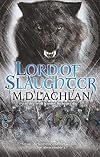
I bought the first book of this series, Wolfsangel (2010), at a convention after meeting the author, and got it signed. But I’ve been continuing with the series, despite my general apathy toward fantasy, and especially urban fantasy, because they’re actually bloody good. They’re more like historical novels, but based on Norse mythology and featuring werewolves. This one is set in Constantinople during the reign of, I think, Basileios II, 953 – 1025 BCE, certainly an emperor of that show more name appears in the book. A wolfman sneaks into the emperor’s tent just after a battle and asks the emperor to kill him. Instead, he takes him prisoner, and throws him into the Numera, Constantinople’s chief prison. Somewhere in the caves under the Numera is the well of knowledge, from which Odin drank, and for the privilege he paid with an eye. And that’s how the story plays out. Aspects of Odin, hidden in two of the characters, along with aspects of the three Norns, all descend on the well, while chaos rages in Constantinople. Because the Norns want Fenrir released so he will kill Odin, but Odin is not ready to die just yet and is happy for his aspects to be reborn throughout history, all with a vague desire to cause death and destruction. The story’s told from a variety of viewpoints, some of which are instrumental in the final showdown, some of which are just enablers. The setting is convincing, and if the characters have a tendency to blur into one another a little, it doesn’t detract from the story. This is superior fantasy, assuming you can define historical novels with werewolves and Norse gods as fantasy. And why not. There’s a fourth book available in the series, Valkyrie’s Song, which I plan to buy and read. Good stuff. show less

Dave Bartok is not having the best of years. His mother has just died, he is an addicted poker player, and (hugely in debt), his real estate business is sinking, and he doesn’t really like his longtime girlfriend. When he gets saddled with an abandoned dog, he doesn’t think things can get worse. And then Reg the dog starts talking --and only Dave can hear him. At first Dave thinks he’s gone crazy, but he soon realizes he’s found his soul mate. Dave and Reg start off on a madcap show more adventure that will find them tangled up with the mob, involved in an illegal real estate deal, cleaning up at the poker table, and stumbling toward true love. Full of dry British wit, this book was a lot of fun. A few fun twists but not a great deal of suprises. Reg the dog and Barrowcliffe’s ability to put all the endearing dog mannerism into words is well worth the price of admission. All gets wrapped up a little too nicely but the pros far outweigh the cons. show less
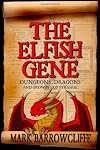
It takes a particular type of person to wallow in one's misspent youth, to trot it out, warts and all, for all the world to see. Having escaped the embarrassments of adolescence, most people to some degree disavow their younger selves. This is usually accomplished through mere omission. Life goes on, we meet new people, and we conveniently forget to tell them about those horrid moments that define our adolescence. We recreate ourselves, we leave our pasts behind. Not so with Mark show more Barrowcliffe, author of The Elfish Gene: Dungeons, Dragons and Growing Up Strange (Soho Press, 2008). Barrowcliffe's memoir goes into excruciating--and comic--detail regarding his fantasy life as a Coventry lad growing up in the '70s and '80s.
Barrowcliffe was 11 years old when he discovered Dungeons & Dragons (D&D) one afternoon at his school's wargaming club. (For those who don't know, wargaming involves the recreation of historical battles using miniatures and lots and lots of rules.) D&D immediately changed his life. By his own admission, Barrowcliffe spent the next five years gaming, reading about gaming, talking about gaming, reading fantasy novels, or listening to music at least tangentially inspired by fantasy. He pursued this not as a hobby, but as an obsession, an addiction that twisted his perception of himself and his place in the world. If that seems like a harsh assessment, know that it is his own. His enthusiasm only begins to wane when, at the age of 16, and dressed in a cloak, a gang of soccer hooligans toss him into a fountain, to the amusement of other people in the area. Just as finding D&D was a transformative moment for Barrowcliffe, so too was that moment of public humiliation, an embarrassment that taught him to more circumspect in his enthusiasms.
Some reviewers have criticized Barrowcliffe for looking down on players of roleplaying games, and it's true that he takes his shots at them. Some of this is sensitivity to Barrowcliffe's sense of humor, which is sardonic and tends to the cruel, although, it should be noted, that he is himself the target of many of his barbs. I believe the English would refer to this as "taking the piss" out of his subjects of mockery. In other words, his jokes are pointed; they reveal an essential reality about their victims, most often himself. There is personal psychology at work here, too. It's been said that people hate most in others that which they hate most in themselves. Given that Barrowcliffe fled D&D (quite literally after an attempt to play as an adult), it's not unsafe to assume that he is projecting onto others his feelings about himself.
And Barrowcliffe is certainly conflicted. He borrows the title of his book from Richard Dawkins's The Selfish Gene, which posits that altruism is an evolutionary adaptation by which individuals with similar DNA are more likely to help each other, thus preserving their DNA. In other words, selfishness is "good" for individuals. Perhaps Barrowcliffe intended his title to be merely a play on words, but it is better fitting than just that. Barrowcliffe's wholesale absorption in his fantasy world is indicative of a level of selfishness beyond that of the average teenager. He relates with remarkable clarity, it must be said, that he was, to use his language, a "twat," taking sides against his best friend in an argument merely in order to curry favor with another boy who despised him. He doesn't see his friend again for 25 years.
Despite all the scorn Barrowcliffe heaps on the game, and himself, and his fellow gamers, though, it's clear that he is nostalgic for his childhood. He considers playing the game as an adult, even tries, only to run back to "reality." And even though most of his childhood friends sound like horrible human beings, it must be said that they were teenage males--a particular breed with a specific sense of humor. There are individuals, too, who stand out in a good way, for instance, the painfully shy Dave, whose only character is "a man in a cloak." Oh, could he be a ranger? "No, just a man in a cloak." Special attention is given to Billy, Barrowcliffe's best friend for two years of his life. Barrowcliffe paints him as a figure larger than life, releasing a fountain of rakish wit when he wasn't smoking or eating (which was often).
Barrowcliffe has a fine sense of humor, and if a reader wonders, "why would anyone publish a book about someone's obsession with D&D," it's for the comedy. Barrowcliffe's is a sense of humor that demonstrates genuine insight, whether it's into England during the '70s, the plight of "nerds," or universal truths about teenage boys. There is a particularly funny chapter in which Billy and Barrowcliffe, bored, and at wit's end, decide to create incendiary devices from balloons and lighter fluid. Just when you think the story can't get any better--it does, with a joke about "wanking." That the story includes a two paragraph interlude in which Barrowcliffe muses on the differences between genders when it comes to risk only indicates his insight and timing. I admit that I laughed, not something I do often when reading.
In The Elfish Gene, Barrowcliffe lovingly recreates the England of his youth, giving attention both to the setting, Coventry and Birmingham, but also to the "characters" who populated his life. Barrowcliffe is a gifted storyteller with an intuitive sense of character, dialog, and pacing. Dyed-in-the wool gamers may complain about Barrowcliffe's superficial treatment of D&D, but, as a nongamer, I found it sufficient, and, it should be noted, the book is less about D&D than it is his need for an outlet for his adolescent fantasies. A well-told, amusing, and surprisingly affecting memoir hampered only by the author's occasionally condescending attitude. Recommended. show less
Barrowcliffe was 11 years old when he discovered Dungeons & Dragons (D&D) one afternoon at his school's wargaming club. (For those who don't know, wargaming involves the recreation of historical battles using miniatures and lots and lots of rules.) D&D immediately changed his life. By his own admission, Barrowcliffe spent the next five years gaming, reading about gaming, talking about gaming, reading fantasy novels, or listening to music at least tangentially inspired by fantasy. He pursued this not as a hobby, but as an obsession, an addiction that twisted his perception of himself and his place in the world. If that seems like a harsh assessment, know that it is his own. His enthusiasm only begins to wane when, at the age of 16, and dressed in a cloak, a gang of soccer hooligans toss him into a fountain, to the amusement of other people in the area. Just as finding D&D was a transformative moment for Barrowcliffe, so too was that moment of public humiliation, an embarrassment that taught him to more circumspect in his enthusiasms.
Some reviewers have criticized Barrowcliffe for looking down on players of roleplaying games, and it's true that he takes his shots at them. Some of this is sensitivity to Barrowcliffe's sense of humor, which is sardonic and tends to the cruel, although, it should be noted, that he is himself the target of many of his barbs. I believe the English would refer to this as "taking the piss" out of his subjects of mockery. In other words, his jokes are pointed; they reveal an essential reality about their victims, most often himself. There is personal psychology at work here, too. It's been said that people hate most in others that which they hate most in themselves. Given that Barrowcliffe fled D&D (quite literally after an attempt to play as an adult), it's not unsafe to assume that he is projecting onto others his feelings about himself.
And Barrowcliffe is certainly conflicted. He borrows the title of his book from Richard Dawkins's The Selfish Gene, which posits that altruism is an evolutionary adaptation by which individuals with similar DNA are more likely to help each other, thus preserving their DNA. In other words, selfishness is "good" for individuals. Perhaps Barrowcliffe intended his title to be merely a play on words, but it is better fitting than just that. Barrowcliffe's wholesale absorption in his fantasy world is indicative of a level of selfishness beyond that of the average teenager. He relates with remarkable clarity, it must be said, that he was, to use his language, a "twat," taking sides against his best friend in an argument merely in order to curry favor with another boy who despised him. He doesn't see his friend again for 25 years.
Despite all the scorn Barrowcliffe heaps on the game, and himself, and his fellow gamers, though, it's clear that he is nostalgic for his childhood. He considers playing the game as an adult, even tries, only to run back to "reality." And even though most of his childhood friends sound like horrible human beings, it must be said that they were teenage males--a particular breed with a specific sense of humor. There are individuals, too, who stand out in a good way, for instance, the painfully shy Dave, whose only character is "a man in a cloak." Oh, could he be a ranger? "No, just a man in a cloak." Special attention is given to Billy, Barrowcliffe's best friend for two years of his life. Barrowcliffe paints him as a figure larger than life, releasing a fountain of rakish wit when he wasn't smoking or eating (which was often).
Barrowcliffe has a fine sense of humor, and if a reader wonders, "why would anyone publish a book about someone's obsession with D&D," it's for the comedy. Barrowcliffe's is a sense of humor that demonstrates genuine insight, whether it's into England during the '70s, the plight of "nerds," or universal truths about teenage boys. There is a particularly funny chapter in which Billy and Barrowcliffe, bored, and at wit's end, decide to create incendiary devices from balloons and lighter fluid. Just when you think the story can't get any better--it does, with a joke about "wanking." That the story includes a two paragraph interlude in which Barrowcliffe muses on the differences between genders when it comes to risk only indicates his insight and timing. I admit that I laughed, not something I do often when reading.
In The Elfish Gene, Barrowcliffe lovingly recreates the England of his youth, giving attention both to the setting, Coventry and Birmingham, but also to the "characters" who populated his life. Barrowcliffe is a gifted storyteller with an intuitive sense of character, dialog, and pacing. Dyed-in-the wool gamers may complain about Barrowcliffe's superficial treatment of D&D, but, as a nongamer, I found it sufficient, and, it should be noted, the book is less about D&D than it is his need for an outlet for his adolescent fantasies. A well-told, amusing, and surprisingly affecting memoir hampered only by the author's occasionally condescending attitude. Recommended. show less
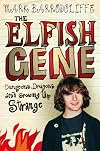
(Read this several years ago, so forgive any misremembering)
This was, in some ways, a very interesting book. Barrowcliffe convincingly portrays the time period (at least, it convinced me, I wasn't alive), a range of people with their own foibles, and a very teenaged mindset of his own. While I didn't do any of the exact things he tried, it was eminently believable in many ways. The depiction of the game, and some of its allure, and the experience of obsession with a thing that other people show more find strange, were all strong and carried me along.
Unfortunately, reading this book means getting inside the head of Mark Barrowcliffe, and that was a very unpleasant place to be. Not only because he was a miserable, bored and anchorless teenager with no idea how to handle socialising or understand other human beings (although that's pretty grim reading) but because the book gives a very strong impression that he has never fundamentally accepted the problem. In a superficial way, he heaps head-shaking contempt onto the teenager he was (and all his friends), but throughout the book he appears to believe that the root of all his problems was having got into D&D. His view seems to be that the game obsessed him utterly, absorbed all his social energies, heightened his worst features and taught him thoroughly poisonous habits and mindsets that caused all manner of problems; and it had clearly done the same to his friends.
Reading this as an outsider, this is exactly the wrong way round. He had some serious issues as a teenager, and turned to the game as an escape. He became obsessed with it because he was obsessive, not because of any inherent danger - serious hobbies are pretty common around that age, when control of your own time and money crops up, and sometimes become all-consuming. He was unfortunate enough to end up in a social group with toxic relationships and shared habits, who were unpleasant to each other, and encouraged arrogance and disdain for others. This is clearly a real problem, and one that drove him in the same direction, but it's also entirely unconnected from the hobby they happened to share - twisted relationships are common enough in life, and I saw plenty in my (entirely D&D-free) teenage years, while cliques are notorious for contemp of outsiders. Because he confined himself to this tiny social circle, mellowing influences were minimised. Scathing comments, arrogance and creative nastiness played substantial parts in my own adolescence, because it's very easy to think it makes you clever, witty or admirable (whereas it generally makes you a git).
While Barrowcliffe thinks he has now moved on from that period, it still seems to have a grip on him. He seems to cope with this part of his life by rejecting everything and taking the worst possible view of it all, with the shuddering loathing of the convert, and has not been able to accept that a large part of the problem was his own personal nature, and the rest was simply an unfortunate social circle.
In the circumstances, I find it impossible to take even the descriptions of his disastrous friendships at face value; what compensating factors might he be omitting? Were his friends really so much worse than mine? There is vanishingly little perspective, such as considering the experiences of other gamers, and much generalisation from himself. He describes the game as an addiction and himself as an addict, but does not make the jump to understanding that he, the addict, is the root of the problem. Barrowcliffe comes across as a very unreliable narrator to his own life.
Barrowcliffe does paint a very vivid portrait of his own experiences, which makes it somewhat worth reading. I have to feel, though, that I would much rather have read a version compiled between several of these players, which would offer more perspectives, or indeed the biography of a more typical player with a more normal social group. The book offers some insight into the experience of gaming, but only a very narrow and specific experience seen through yellow-tinted spectacles. If he had taken up cricket, theatre or motorbikes, I can't help feeling a very similar book would have emerged.
This is not really a book about growing up as a teenager immersed in Dungeons and Dragons in the 70s. This is, entirely and fundamentally, a book about growing up Mark Barrowcliffe, a troubled boy who happened to become obsessed with Dungeons and Dragons. There is a world of difference. show less
This was, in some ways, a very interesting book. Barrowcliffe convincingly portrays the time period (at least, it convinced me, I wasn't alive), a range of people with their own foibles, and a very teenaged mindset of his own. While I didn't do any of the exact things he tried, it was eminently believable in many ways. The depiction of the game, and some of its allure, and the experience of obsession with a thing that other people show more find strange, were all strong and carried me along.
Unfortunately, reading this book means getting inside the head of Mark Barrowcliffe, and that was a very unpleasant place to be. Not only because he was a miserable, bored and anchorless teenager with no idea how to handle socialising or understand other human beings (although that's pretty grim reading) but because the book gives a very strong impression that he has never fundamentally accepted the problem. In a superficial way, he heaps head-shaking contempt onto the teenager he was (and all his friends), but throughout the book he appears to believe that the root of all his problems was having got into D&D. His view seems to be that the game obsessed him utterly, absorbed all his social energies, heightened his worst features and taught him thoroughly poisonous habits and mindsets that caused all manner of problems; and it had clearly done the same to his friends.
Reading this as an outsider, this is exactly the wrong way round. He had some serious issues as a teenager, and turned to the game as an escape. He became obsessed with it because he was obsessive, not because of any inherent danger - serious hobbies are pretty common around that age, when control of your own time and money crops up, and sometimes become all-consuming. He was unfortunate enough to end up in a social group with toxic relationships and shared habits, who were unpleasant to each other, and encouraged arrogance and disdain for others. This is clearly a real problem, and one that drove him in the same direction, but it's also entirely unconnected from the hobby they happened to share - twisted relationships are common enough in life, and I saw plenty in my (entirely D&D-free) teenage years, while cliques are notorious for contemp of outsiders. Because he confined himself to this tiny social circle, mellowing influences were minimised. Scathing comments, arrogance and creative nastiness played substantial parts in my own adolescence, because it's very easy to think it makes you clever, witty or admirable (whereas it generally makes you a git).
While Barrowcliffe thinks he has now moved on from that period, it still seems to have a grip on him. He seems to cope with this part of his life by rejecting everything and taking the worst possible view of it all, with the shuddering loathing of the convert, and has not been able to accept that a large part of the problem was his own personal nature, and the rest was simply an unfortunate social circle.
In the circumstances, I find it impossible to take even the descriptions of his disastrous friendships at face value; what compensating factors might he be omitting? Were his friends really so much worse than mine? There is vanishingly little perspective, such as considering the experiences of other gamers, and much generalisation from himself. He describes the game as an addiction and himself as an addict, but does not make the jump to understanding that he, the addict, is the root of the problem. Barrowcliffe comes across as a very unreliable narrator to his own life.
Barrowcliffe does paint a very vivid portrait of his own experiences, which makes it somewhat worth reading. I have to feel, though, that I would much rather have read a version compiled between several of these players, which would offer more perspectives, or indeed the biography of a more typical player with a more normal social group. The book offers some insight into the experience of gaming, but only a very narrow and specific experience seen through yellow-tinted spectacles. If he had taken up cricket, theatre or motorbikes, I can't help feeling a very similar book would have emerged.
This is not really a book about growing up as a teenager immersed in Dungeons and Dragons in the 70s. This is, entirely and fundamentally, a book about growing up Mark Barrowcliffe, a troubled boy who happened to become obsessed with Dungeons and Dragons. There is a world of difference. show less
Lists
to get (2)
You May Also Like


Associated Authors
Statistics
- Works
- 16
- Also by
- 1
- Members
- 951
- Popularity
- #27,066
- Rating
- 3.2
- Reviews
- 28
- ISBNs
- 59
- Languages
- 6
- Favorited
- 1