

Mike Gayle
Author of My Legendary Girlfriend
About the Author
Mike Gayle is a freelance journalist and a former advice columnist who has written for Ms., The Sunday Times Style Magazine, Seventeen, The Express, and other U.K. publications. His first novel, My Legendary Girlfriend, sold 300,000 copies in the United Kingdom. He lives in London, England. (Bowker show more Author Biography) show less
Image credit: Photo by Liane Hentscher
Works by Mike Gayle
Associated Works
Tagged
Common Knowledge
- Canonical name
- Gayle, Mike
- Legal name
- Gayle, Mike
- Birthdate
- 1970
- Gender
- male
- Occupations
- journalist
agony uncle - Nationality
- UK
- Associated Place (for map)
- UK
Members
Reviews
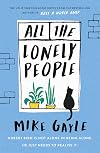
Hubert Bird, you complete and utter legend!
There are some characters that stay with me, most often those who have lived a full life within the pages of their story, and Hubert is one of those characters. As the book begins Hubert is 84 and living alone with his cat and only real companion, Puss. A knock at the door brings young Ashleigh and her daughter, Layla, into his life and from thereon things are going to change. Apart from the weekly calls from his daughter, Rose, in Australia, show more Hubert realises he has been very lonely.
There are two strands to the story. One of them is what is happening to Hubert now, him dealing with his loneliness and finding ways to alter that. The other strand starts in 1958 when Hubert left Jamaica to come to England for that much lauded 'better life'. This branch of the story then follows him through marriage, family life and brings him right up to date. The threads are woven together brilliantly.
This is the most beautiful book. Mike Gayle has hit the spot completely with not only his characters but also how he looks at racial issues, the way the Windrush generation were treated, and the fact that Hubert always felt like the odd one out in this country. My heart broke for him several times and tears were shed, and that is how I know this is probably one of my top reads of the year, because it made me feel something, it made me care about the characters. The author is not afraid to tackle some difficult issues such as mixed-race relationships, loss of loved ones, and family issues, but somehow, throughout it all, he also manages to write an absolutely charming and uplifting story.
This heart-warming tale about community, friendship and the power of people really is a stunner and I defy anyone not to want to become Hubert's friend. Hurrah for Hubert! show less
There are some characters that stay with me, most often those who have lived a full life within the pages of their story, and Hubert is one of those characters. As the book begins Hubert is 84 and living alone with his cat and only real companion, Puss. A knock at the door brings young Ashleigh and her daughter, Layla, into his life and from thereon things are going to change. Apart from the weekly calls from his daughter, Rose, in Australia, show more Hubert realises he has been very lonely.
There are two strands to the story. One of them is what is happening to Hubert now, him dealing with his loneliness and finding ways to alter that. The other strand starts in 1958 when Hubert left Jamaica to come to England for that much lauded 'better life'. This branch of the story then follows him through marriage, family life and brings him right up to date. The threads are woven together brilliantly.
This is the most beautiful book. Mike Gayle has hit the spot completely with not only his characters but also how he looks at racial issues, the way the Windrush generation were treated, and the fact that Hubert always felt like the odd one out in this country. My heart broke for him several times and tears were shed, and that is how I know this is probably one of my top reads of the year, because it made me feel something, it made me care about the characters. The author is not afraid to tackle some difficult issues such as mixed-race relationships, loss of loved ones, and family issues, but somehow, throughout it all, he also manages to write an absolutely charming and uplifting story.
This heart-warming tale about community, friendship and the power of people really is a stunner and I defy anyone not to want to become Hubert's friend. Hurrah for Hubert! show less
When Hubert Bird moved to London from Jamaica he put up with the cold, the damp and the racism because he fell in love. 60 years later Hubert lives on his own with a cat to keep him company and weekly phone calls from his daughter in Australia. He has told her that he has an active social life but that is far from the truth and he knows he must do more - the catalyst is Ashleigh, a single mum, who pushes Hubert out of his comfort zone and makes him confront his loneliness.
Mike Gayle is just show more a great writer who always seems to hit the right note. Here in this tale of old age and loneliness in the big city he doesn't dwell on Hubert's brushes with racism, he doesn't overplay the problems that Hubert's son has with drugs and homelessness and he doesn't make Joyce's dementia anything more than it needs to be. The one twist really does come as a twist and the story ends up being both terribly sad and also heart-warming. show less
Mike Gayle is just show more a great writer who always seems to hit the right note. Here in this tale of old age and loneliness in the big city he doesn't dwell on Hubert's brushes with racism, he doesn't overplay the problems that Hubert's son has with drugs and homelessness and he doesn't make Joyce's dementia anything more than it needs to be. The one twist really does come as a twist and the story ends up being both terribly sad and also heart-warming. show less
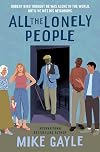
I cried multiple times through this book.
Hubert Bird is eighty-four years old, a retired Jamaican man who came to England as part of the Windrush generation and has lived there for nearly six decades. His beloved wife Joyce is gone. His friendships have quietly fallen apart. His days are all the same — barely seeing another soul, talking only to his cat and watching TV from his recliner. But every week, his daughter Rose calls from Australia, and Hubert tells her about his wonderful, full show more retirement — the friends he has, the places he goes, the community groups he's part of. All of it completely invented. He keeps a notebook to track his lies.
When Rose announces she's coming to visit and wants to meet all these people, Hubert faces a seemingly impossible task: make his fictional life real before she arrives. His young Welsh neighbor Ashleigh — a single mother who moved in next door and has tried to reach him before without success — becomes his unlikely ally. Together they launch a "Campaign to End Loneliness in Bromley" that somehow goes viral, drawing in an oddball cast of characters each carrying their own version of isolation. The novel alternates between the present and the past, tracing Hubert and Joyce's life together — their mixed-race marriage in a deeply racist era, her family's rejection of them, decades of love, and the losses that compounded over time. British, warm, and deeply sad underneath the humor.
[May contain spoilers]
The gut-punch the novel has been quietly building toward: Rose is not in Australia. Rose is dead. The weekly phone calls Hubert has been having — the conversations where he spins his elaborate fictional life — have all been one-sided. He has been talking to a deceased daughter for five years, the grief so enormous he couldn't face it directly. The reveal reframes everything and devastates the reader completely. Hubert's son struggles with drug addiction. Joyce developed early-onset dementia before her death. The ending moves toward genuine community and connection, hard-won and real.
What I think: This is warm, funny, and absolutely heartbreaking — the kind of book that sneaks up on you and then floors you. The Rose reveal is one of those twists that makes you want to go back and reread everything. Hubert is an enormously lovable character and the loneliness theme resonates universally. show less
Hubert Bird is eighty-four years old, a retired Jamaican man who came to England as part of the Windrush generation and has lived there for nearly six decades. His beloved wife Joyce is gone. His friendships have quietly fallen apart. His days are all the same — barely seeing another soul, talking only to his cat and watching TV from his recliner. But every week, his daughter Rose calls from Australia, and Hubert tells her about his wonderful, full show more retirement — the friends he has, the places he goes, the community groups he's part of. All of it completely invented. He keeps a notebook to track his lies.
When Rose announces she's coming to visit and wants to meet all these people, Hubert faces a seemingly impossible task: make his fictional life real before she arrives. His young Welsh neighbor Ashleigh — a single mother who moved in next door and has tried to reach him before without success — becomes his unlikely ally. Together they launch a "Campaign to End Loneliness in Bromley" that somehow goes viral, drawing in an oddball cast of characters each carrying their own version of isolation. The novel alternates between the present and the past, tracing Hubert and Joyce's life together — their mixed-race marriage in a deeply racist era, her family's rejection of them, decades of love, and the losses that compounded over time. British, warm, and deeply sad underneath the humor.
[May contain spoilers]
The gut-punch the novel has been quietly building toward: Rose is not in Australia. Rose is dead. The weekly phone calls Hubert has been having — the conversations where he spins his elaborate fictional life — have all been one-sided. He has been talking to a deceased daughter for five years, the grief so enormous he couldn't face it directly. The reveal reframes everything and devastates the reader completely. Hubert's son struggles with drug addiction. Joyce developed early-onset dementia before her death. The ending moves toward genuine community and connection, hard-won and real.
What I think: This is warm, funny, and absolutely heartbreaking — the kind of book that sneaks up on you and then floors you. The Rose reveal is one of those twists that makes you want to go back and reread everything. Hubert is an enormously lovable character and the loneliness theme resonates universally. show less
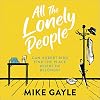
'All The Lonely People' is one of the best books that I've read in a long time. It is life-affirming and uplifting without being sentimental or overly optimistic. It's a book where nothing much happens except that I get to know Hubert Bird and share his experience of life. By the end of the book, I was very glad to have met him.
Hubert and the people around him seemed real to me. He's from my parent's generation but much of his life overlaps with mine. I recognise bits of myself in him. He show more has also had experiences that are beyond my own: racial abuse, becoming a widower, learning to live without the person who meant most to him. The people around Hubert Bird are drawn so well that I can hear their voices as clearly as those of people I've met often, so I feel as if I joined a whole community by proxy.
'All The Lonely People' is a simple story with a couple of big surprises along the way. It's the story of a life, told backwards and forwards at the same time, which means that I came to understand not only who Hubert Bird is now but who he used to be and how and why he's changed. Hubert is in his eighties. He came to England from Jamaica in 1957. That's a lot of change to cover. I'm in my mid-sixties now and when I look back forty years, I know the guy who had my name then but I also know I'm not him anymore, not exactly anyhow. It was nice to read a book that understood not just that people change but that they remain the same and on any given day, who we are now is shaped by who we remember being and who we hope to become.
We first meet Hubert Bird in the present day, when he's in a grumpy old man mood. As soon as I read the opening paragraphs, I knew that I’d enjoy spending time with Hubert because we get grouchy about the same things. It starts:
‘Moments before Hubert met Ashleigh for the first time, he had been settled in his favourite armchair, Puss curled up on his lap, waiting for Rose to call. When the doorbell rang he gave a tut of annoyance, wagering it was one of those damn courier people who were always trying to make him take in parcels for his neighbours.
‘Would you mind accepting this for number sixty-three?’ they would ask.
‘Yes, me mind a great deal!’ he would snap. ‘Now clear off!’ and then he would slam the door shut in their faces.
As he shifted Puss from his lap and stood up to answer the door, Hubert muttered angrily to himself.
‘Parcels, parcels, parcels! All day, every day, for people who are never in to receive the damn things. If people want them things so much why them no buy it from the shops like everybody else?’
I also like that 'Moments before Huber met Ashleigh for the first time' phrase. It's typical of the light, skilful foreshadowing that Mike Gayle uses. He gently flags that I should pay attention, then leads me off into something else for long enough for me almost to forget, so that, in this case, by the time we meet Ashleigh, I'm going. 'So this is Ashliegh' although I still know nothing about her.
In the present day, Hubert is an old man who has become disconnected from the world through grief. He is a man who lives more and more in his own head, spending hours in memory and imagination. Then he gets caught up in events .and we watch him slowly, almost reluctantly, re-engage with people.
In 1957, Hubert is a young man filled with energy and optimism. A member of the Windrush generation he leaves behind his mother and siblings in Jamaica to find work in England. He faces the open, violent racism of the 1950s and battles through to find true love.
Part of the appeal of 'All The Lonely People' is that it demonstrates the value of an ordinary life lived. At the heart of the story is Hubert's relationship with his wife, Joyce. It tells of their courtship and marriage, of the hatred their mixed-race marriage provoked, even in Joyce's own family, and of the children they raised together and about the changes that growing old brings. It also tells of the losses Hubert endures, the grief that overwhelms him and the isolation that engulfs his life.
Mike Gayle uses Hubert's life as a way of helping us understand how loneliness can slow overtake us, becoming a self-perpetuating habit that shrinks our lives and undermines our confidence and our self-worth. Along with this understanding, Mike Gayle brings us hope and reminds us that we can find ways to make each other's lives better.
The way into hope starts with who Hubert Bird is. He's a man with a soft heart and that soft heart is what makes him accept being adopted, first by a persistent cat that wouldn't go away and then by his new neighbour and her little girl. The neighbour is Ashleigh, a single mother, new in London, recently arrived from Wales, who talks constantly and who sounds more confident than she is. One of my favourite moments of the book is when the shell of Hubert's isolation is cracked open when Ashliegh's little girl, still a toddler, walks confidently across Hubert's threshold and expects to be accepted.
By a series of unexpected but plausible and ordinary steps, Hubert not only starts to connect with the people around him but, along the way finds himself becoming a minor celebrity for trying to 'End Loneliness In Bromley'. Mike Gayle captures the dynamics of local politics, the flavour or amateur interest group meetings and the feasting of the press of 'human interest' stories perfectly.
There is one big surprise in the book. I won't share it here. It's important that it comes as a surprise. Some readers may struggle with it as it changes our understanding of the narrative in important ways. I thought the book was much richer for it. It made me look again at Hubert's grief and his reaction to it. It made him even more real and made his ability simply to continue seem more of a victory than I'd realised.
By the end of the book, I wanted to thank Mike Gayle for writing so clearly and honestly about the destructive power of grief and offering us some hope that life can be made better by the healing qualities of helping others and of making friends.
I recommend the audiobook version of 'All The Lonely People'. The narration by Ben Onwukwe is excellent. Click on the SoundCloud link below to hear a sample.
https://soundcloud.com/hodderbooks/all-the-lonely-people-by-mike-gayle-read-by-b... show less
Hubert and the people around him seemed real to me. He's from my parent's generation but much of his life overlaps with mine. I recognise bits of myself in him. He show more has also had experiences that are beyond my own: racial abuse, becoming a widower, learning to live without the person who meant most to him. The people around Hubert Bird are drawn so well that I can hear their voices as clearly as those of people I've met often, so I feel as if I joined a whole community by proxy.
'All The Lonely People' is a simple story with a couple of big surprises along the way. It's the story of a life, told backwards and forwards at the same time, which means that I came to understand not only who Hubert Bird is now but who he used to be and how and why he's changed. Hubert is in his eighties. He came to England from Jamaica in 1957. That's a lot of change to cover. I'm in my mid-sixties now and when I look back forty years, I know the guy who had my name then but I also know I'm not him anymore, not exactly anyhow. It was nice to read a book that understood not just that people change but that they remain the same and on any given day, who we are now is shaped by who we remember being and who we hope to become.
We first meet Hubert Bird in the present day, when he's in a grumpy old man mood. As soon as I read the opening paragraphs, I knew that I’d enjoy spending time with Hubert because we get grouchy about the same things. It starts:
‘Moments before Hubert met Ashleigh for the first time, he had been settled in his favourite armchair, Puss curled up on his lap, waiting for Rose to call. When the doorbell rang he gave a tut of annoyance, wagering it was one of those damn courier people who were always trying to make him take in parcels for his neighbours.
‘Would you mind accepting this for number sixty-three?’ they would ask.
‘Yes, me mind a great deal!’ he would snap. ‘Now clear off!’ and then he would slam the door shut in their faces.
As he shifted Puss from his lap and stood up to answer the door, Hubert muttered angrily to himself.
‘Parcels, parcels, parcels! All day, every day, for people who are never in to receive the damn things. If people want them things so much why them no buy it from the shops like everybody else?’
I also like that 'Moments before Huber met Ashleigh for the first time' phrase. It's typical of the light, skilful foreshadowing that Mike Gayle uses. He gently flags that I should pay attention, then leads me off into something else for long enough for me almost to forget, so that, in this case, by the time we meet Ashleigh, I'm going. 'So this is Ashliegh' although I still know nothing about her.
In the present day, Hubert is an old man who has become disconnected from the world through grief. He is a man who lives more and more in his own head, spending hours in memory and imagination. Then he gets caught up in events .and we watch him slowly, almost reluctantly, re-engage with people.
In 1957, Hubert is a young man filled with energy and optimism. A member of the Windrush generation he leaves behind his mother and siblings in Jamaica to find work in England. He faces the open, violent racism of the 1950s and battles through to find true love.
Part of the appeal of 'All The Lonely People' is that it demonstrates the value of an ordinary life lived. At the heart of the story is Hubert's relationship with his wife, Joyce. It tells of their courtship and marriage, of the hatred their mixed-race marriage provoked, even in Joyce's own family, and of the children they raised together and about the changes that growing old brings. It also tells of the losses Hubert endures, the grief that overwhelms him and the isolation that engulfs his life.
Mike Gayle uses Hubert's life as a way of helping us understand how loneliness can slow overtake us, becoming a self-perpetuating habit that shrinks our lives and undermines our confidence and our self-worth. Along with this understanding, Mike Gayle brings us hope and reminds us that we can find ways to make each other's lives better.
The way into hope starts with who Hubert Bird is. He's a man with a soft heart and that soft heart is what makes him accept being adopted, first by a persistent cat that wouldn't go away and then by his new neighbour and her little girl. The neighbour is Ashleigh, a single mother, new in London, recently arrived from Wales, who talks constantly and who sounds more confident than she is. One of my favourite moments of the book is when the shell of Hubert's isolation is cracked open when Ashliegh's little girl, still a toddler, walks confidently across Hubert's threshold and expects to be accepted.
By a series of unexpected but plausible and ordinary steps, Hubert not only starts to connect with the people around him but, along the way finds himself becoming a minor celebrity for trying to 'End Loneliness In Bromley'. Mike Gayle captures the dynamics of local politics, the flavour or amateur interest group meetings and the feasting of the press of 'human interest' stories perfectly.
There is one big surprise in the book. I won't share it here. It's important that it comes as a surprise. Some readers may struggle with it as it changes our understanding of the narrative in important ways. I thought the book was much richer for it. It made me look again at Hubert's grief and his reaction to it. It made him even more real and made his ability simply to continue seem more of a victory than I'd realised.
By the end of the book, I wanted to thank Mike Gayle for writing so clearly and honestly about the destructive power of grief and offering us some hope that life can be made better by the healing qualities of helping others and of making friends.
I recommend the audiobook version of 'All The Lonely People'. The narration by Ben Onwukwe is excellent. Click on the SoundCloud link below to hear a sample.
https://soundcloud.com/hodderbooks/all-the-lonely-people-by-mike-gayle-read-by-b... show less
Lists
Awards


You May Also Like


Associated Authors
Statistics
- Works
- 24
- Also by
- 4
- Members
- 3,852
- Popularity
- #6,579
- Rating
- 3.3
- Reviews
- 121
- ISBNs
- 267
- Languages
- 14
- Favorited
- 8