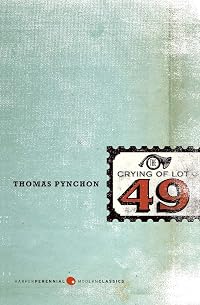
The Crying of Lot 49
by Thomas Pynchon
On This Page
Description
The original satire about Oedipa Maas, a woman who finds herself enmeshed in a worldwide conspiracy, meets some interesting characters and attains a not inconsiderable amount of self-knowledge.Tags
Recommendations

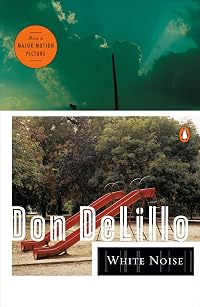
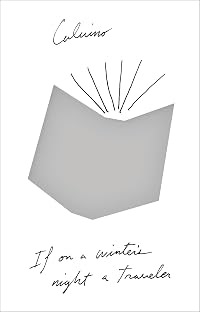
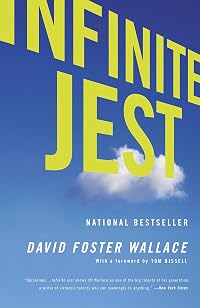
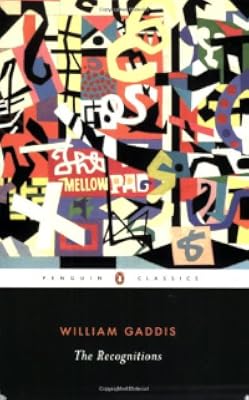

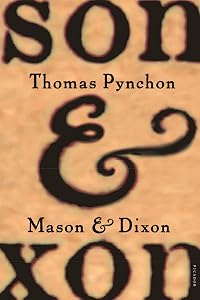
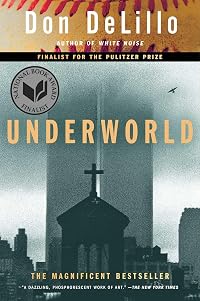
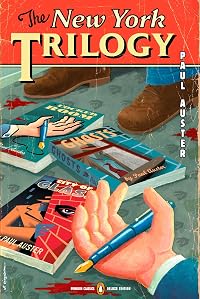
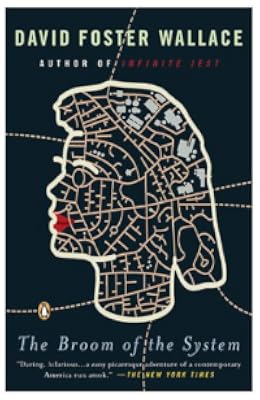
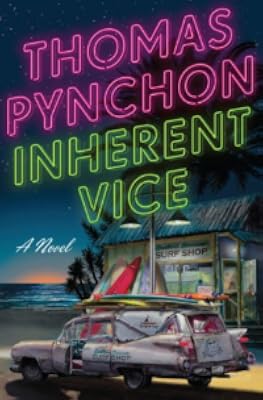
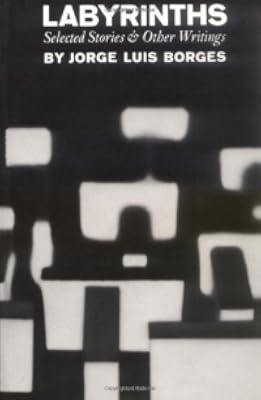
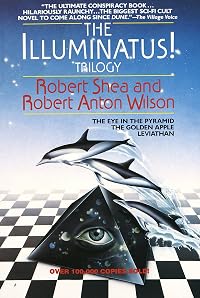
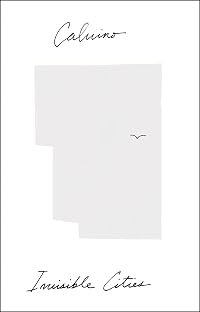
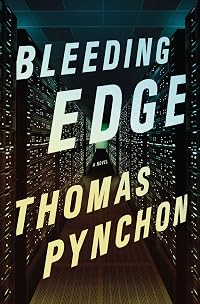
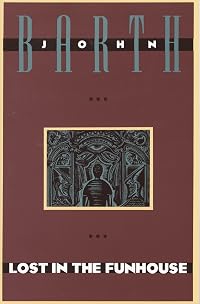
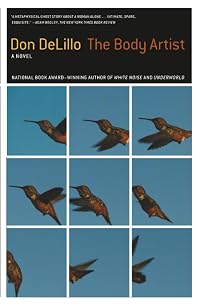
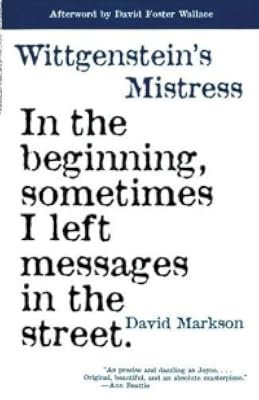

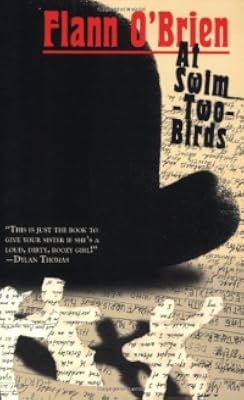
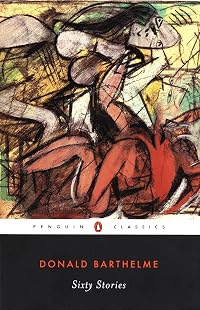
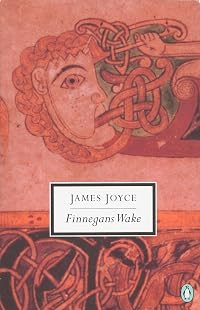
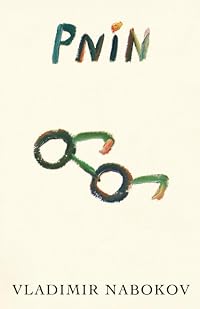
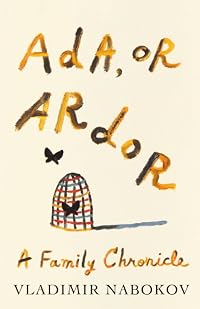
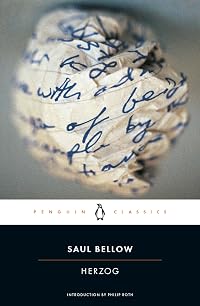
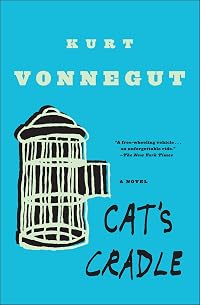
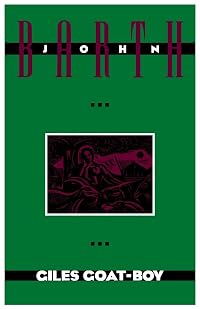
Member Recommendations

Member Reviews
I first read this book in my 20's, and loved it for the sheer hilarity. How can you not love a stamp dealer named Genghis Cohen? An actor/lawyer named Manny DiPresso also worked for me. Pynchon's manic erudition and love of the absurd are unmatched in this book, and in pretty much every book he writes, even the lighter fare. It is a little much for some (most?) people, but if I am in the right frame of mind I am more than happy to turn myself over to Pynchon mind, body and soul for the length of a novel. And I think you have to do that to enjoy Pynchon's work, you have to cede control and go with it because Pynchon's world is endlessly complex and the author himself is the only GPS that is going to get you out of that maze sane, sated, show more and flushed with pleasure. When I cede control I need to know the recipient of my trust deserves it. Pynchon? Yeah. Totally.
Let's start with Pynchon's technical skills. This is Pynchon's second book after the brilliant V, both published when he was in his 20's. How he had already developed this level of brilliance so early I do not know. Obviously he has raw talent and an imagination unlike any other, and also obviously the man worked hard to develop a unique, precise, yet surprising style. His books are symphonic in a way I see in very few writers -- Murakami comes to mind as another who does this, creates sonatas, and cantatas and fugues in novel form (though Murakami and Pynchon are very differnt writers.) But also, Pynchon books are filled with brilliant and challenging allusions to other writers' works, and I find it baffling that this 20-something understood the form and content of the works of so many writers well enough to simultaneously honor and subvert their work. The structure of his characters' journeys whether our hero here, Oedipa Maas. or Mason & Dixon (in the novel of that name) or any of the others before and after those books will bring to mind the classics. This is very much an Odyssey, sans gods but with aspects of American life no less mercurial than any god that play fast and loose with our hero. (Our sirens are a group of moptop Beatles wannabes named Leonard, Serge, Miles and Dean - presumably honoring Cohen, Gainsourg, Davis and Martin, which totally cracked me up.) In this book I also saw clear allusions to Moby Dick, The Sound and the Fury, and many others that blur the real and fantastical. It is all just dazzling. But with all that dazzle it never stops being fun.
This is pretty brilliant and i went back and forth between a 4 and 5 star. In the end I went with GR 4 (LT 4.5) for two reasons. It is not as brilliant as some other Pynchon books, including V, which immediately preceded this. More importantly, in the end, I felt like some viewpoint other than Oedipa's would have been helpful here.
One last thing I want to mention related to the Oedipa-centric story: This came out in 1966, and trust me there is plenty of objectifying of women going on, but also the only person whose perspective really matters is Oedipa, a smart and adventurous hot housewife from central California. The men around her are toxic assholes mostly but also this is not really their story -- the men are the side characters. I found this pretty surprising for a book written by a straight man at that time. I also found interesting that the reader sees the men are assholes and often wants better from them. But Oedipa expects nothing from any of the men. They behave the way they do and while she wishes one would ride alongside her, she doesn't expect it. She expects that she will have to be the one to take care of things. There are no knights in shining armor here, just men with power and a woman who has to get things done despite being powerless. show less
Let's start with Pynchon's technical skills. This is Pynchon's second book after the brilliant V, both published when he was in his 20's. How he had already developed this level of brilliance so early I do not know. Obviously he has raw talent and an imagination unlike any other, and also obviously the man worked hard to develop a unique, precise, yet surprising style. His books are symphonic in a way I see in very few writers -- Murakami comes to mind as another who does this, creates sonatas, and cantatas and fugues in novel form (though Murakami and Pynchon are very differnt writers.) But also, Pynchon books are filled with brilliant and challenging allusions to other writers' works, and I find it baffling that this 20-something understood the form and content of the works of so many writers well enough to simultaneously honor and subvert their work. The structure of his characters' journeys whether our hero here, Oedipa Maas. or Mason & Dixon (in the novel of that name) or any of the others before and after those books will bring to mind the classics. This is very much an Odyssey, sans gods but with aspects of American life no less mercurial than any god that play fast and loose with our hero. (Our sirens are a group of moptop Beatles wannabes named Leonard, Serge, Miles and Dean - presumably honoring Cohen, Gainsourg, Davis and Martin, which totally cracked me up.) In this book I also saw clear allusions to Moby Dick, The Sound and the Fury, and many others that blur the real and fantastical. It is all just dazzling. But with all that dazzle it never stops being fun.
This is pretty brilliant and i went back and forth between a 4 and 5 star. In the end I went with GR 4 (LT 4.5) for two reasons. It is not as brilliant as some other Pynchon books, including V, which immediately preceded this. More importantly, in the end, I felt like some viewpoint other than Oedipa's would have been helpful here.
One last thing I want to mention related to the Oedipa-centric story: This came out in 1966, and trust me there is plenty of objectifying of women going on, but also the only person whose perspective really matters is Oedipa, a smart and adventurous hot housewife from central California. The men around her are toxic assholes mostly but also this is not really their story -- the men are the side characters. I found this pretty surprising for a book written by a straight man at that time. I also found interesting that the reader sees the men are assholes and often wants better from them. But Oedipa expects nothing from any of the men. They behave the way they do and while she wishes one would ride alongside her, she doesn't expect it. She expects that she will have to be the one to take care of things. There are no knights in shining armor here, just men with power and a woman who has to get things done despite being powerless. show less
¡Una locura!¡Una tomadura de pelo! Estas, y otras, son las expresiones que se te pasan por la cabeza mientras lees esta delirante novela de Pynchon. Mientras vas leyéndola, no puedes dar crédito a lo que te está contando ni a los personajes que ta va presentando. Pero, como si de un sumidero se tratase, o de un maelström, no puedes evitar quedar atrapado en su brillante e inteligente historia.
De inicio los nombres son curiosos, Edipa, su marido Wendel "Mucho" Maas, el doctor Hilarius, la empresa Yoyodine, Gengis Cohen, el abogado Metzger... Pero vayamos al principio de todo, cuando Edipa Maas recibe una carta en la que se le notifica su nombramiento como albacea de la herencia del difunto Pierce Inverarity, un ricachón con el que show more estuvo liada hace un tiempo. Ni corta ni perezosa, Edipa se irá camino de San Narciso para encontrarse con el consejero Metzger, coadjutor junto a ella del testamento de Inverarity. Tras el encuentro en un bar con un tipo llamado Mike Falopio, miembro de la Sociedad Peter el Grasiento, Edipa descubrirá en los servicios un curioso mensaje junto a un no menos curioso dibujo. Y como si de una bola de nieve que baja por la ladera de una montaña se tratase que se va haciendo más y más grande, todo se le irá complicando a la buena de Edipa, que, por cierto, está bajo un tratamiento de pastillas recomendado por su psiquiatra, el doctor Hilarius. El viaje hilarante de Edipa no ha hecho más que comenzar, y en él se encontrará con todo tipo de historias, donde la casualidad no existe, porque éstas parecen venir a su encuentro por sí solas. Por esto mismo, Edipa entrará en una suerte de estado paranoico, donde parece que todos quieren jugársela.
La inteligencia y erudición de Pynchon es obvia. Es capaz de crear una película de aventuras y submarinos, una obra de teatro jacobita, un máquina capaz de modificar la física termodinámica jugando con la entropía, una conspiración secreta contra el correo convencional, etcétera, etcétera, y todo ello en menos de doscientas páginas. Algunas escenas son un delirio absoluto, pero hay que tener en cuenta que la novela se escribió en los años 60, cuando la psicodelia estaba de moda. No quiero pensar lo que es capaz (lo que ya ha hecho) en más de mil páginas.
'La subasta del lote 49' es mi primer acercamiento al mundo de Thomas Pynchon, y he quedado fascinado. show less
De inicio los nombres son curiosos, Edipa, su marido Wendel "Mucho" Maas, el doctor Hilarius, la empresa Yoyodine, Gengis Cohen, el abogado Metzger... Pero vayamos al principio de todo, cuando Edipa Maas recibe una carta en la que se le notifica su nombramiento como albacea de la herencia del difunto Pierce Inverarity, un ricachón con el que show more estuvo liada hace un tiempo. Ni corta ni perezosa, Edipa se irá camino de San Narciso para encontrarse con el consejero Metzger, coadjutor junto a ella del testamento de Inverarity. Tras el encuentro en un bar con un tipo llamado Mike Falopio, miembro de la Sociedad Peter el Grasiento, Edipa descubrirá en los servicios un curioso mensaje junto a un no menos curioso dibujo. Y como si de una bola de nieve que baja por la ladera de una montaña se tratase que se va haciendo más y más grande, todo se le irá complicando a la buena de Edipa, que, por cierto, está bajo un tratamiento de pastillas recomendado por su psiquiatra, el doctor Hilarius. El viaje hilarante de Edipa no ha hecho más que comenzar, y en él se encontrará con todo tipo de historias, donde la casualidad no existe, porque éstas parecen venir a su encuentro por sí solas. Por esto mismo, Edipa entrará en una suerte de estado paranoico, donde parece que todos quieren jugársela.
La inteligencia y erudición de Pynchon es obvia. Es capaz de crear una película de aventuras y submarinos, una obra de teatro jacobita, un máquina capaz de modificar la física termodinámica jugando con la entropía, una conspiración secreta contra el correo convencional, etcétera, etcétera, y todo ello en menos de doscientas páginas. Algunas escenas son un delirio absoluto, pero hay que tener en cuenta que la novela se escribió en los años 60, cuando la psicodelia estaba de moda. No quiero pensar lo que es capaz (lo que ya ha hecho) en más de mil páginas.
'La subasta del lote 49' es mi primer acercamiento al mundo de Thomas Pynchon, y he quedado fascinado. show less
Thoughts upon third read:
Was Pynchon always a cyberpunk author? In 1966, he compared the layout of Californian coast towns to circuit boards. There's a straight line (in as much as anything Pynchon can be a straight line) between the underground mail services of CoL49 and the darknet of Bleeding Edge, between the unfathomable rat's nest of inforrmation in Pierce Inverarity's papers and the post-Internet information overload of Against The Day.
For it was now like walking among matrices of a great digital computer, the zeroes and ones twinned above, hanging like balanced mobiles right and left, ahead, thick, maybe endless.
Damn, Pynchon writes like Monk plays; never the expected note, never the obvious shortcut, so many beats that would show more simply be wrong if he didn't know exactly what he was doing and how they related to each other.
Paranoia and entropy pop up everywhere. No system works without them, precisely because they break apart any system. N Katherine Hayles knew what she was doing when she used an English teacher assigning Pynchon as an example of entropy in How We Became Post-Human. The example, quoted from memory: If the teacher says "We'll be reading Crying of Lot 49", there can be no miscommunication, no entropy; no possible evolution of the message. If she says we'll be reading a Pynchon novel and lets the students guess which one, there are all sorts of possible outcomes - information theorists will tell you that if the sender and the receiver don't get the same message, communication has been ineffective; a biologist will tell you that's called "inbreeding". (The lead character is called "Oidipa".) A world without entroy would be dead. No growth without mutation.
change had to be confronted at last for what it was, where it could no longer disguise itself as something innocuous like an average rate; where velocity dwelled in the projectile though the projectile be frozen in midflight, where death dwelled in the cell though the cell be looked in on at its most quick.
Obviously, there's always the option of insanity. Of paranoia being, well, paranoia, of all the connections being confirmation bias and a wish to have it all make sense rather than accept blunt reality.
San Narciso at that moment lost (the loss pure, instant, spherical, the sound of stainless orchestral chime held among the stars and struck lightly), gave up its residue of uniqueness for her; became a name again, was assumed back into the American continuity of crust and mantle. Pierce Inverarity was really dead.
None of what we read prove anything but that it's been written down at some point before we read it. And the interpretations, boy, they're the biggest noise of all. Is every reader just the executor of a dead author's estate? Does "just" belong in that sentence? And they're using corpses to make ink anyway.
One of two great works of American 1966 art to mention the Black Angel.
The object of the conspiracy/faith/agenda is long lost, if it ever existed; what remains is what we've built around it, which keeps it alive.
What was left to inherit? That America coded in Inveracity’s testament, whose was that? She thought of other, immobilized freight cars, where the kids sat on the floor planking and sang back, happy as fat, whatever came over the mother's pocket radio; of other squatters who stretched canvas for lean-tos behind smiling billboards along all the highways, or slept in junkyards in the stripped shells of wrecked Plymouths, or even, daring, spent the night up some pole in a lineman's tent like caterpillars, swung among a web of telephone wires, living in the very copper rigging and secular miracle of communication, untroubled by the dumb voltages flickering their miles, the night long, in the thousands of unheard messages.
She remembered drifters she had listened to, Americans speaking their language carefully, scholarly, as if they were in exile from somewhere else invisible yet congruent with the cheered land she lived in; and walkers along the roads at night, zooming in and out of your headlights without looking up, too far from any town to have a real destination. And the voices before and after the dead man's that had phoned at random during the darkest, slowest hours, searching ceaseless among the dial's ten million possibilities for that magical Other who would reveal herself out of the roar of relays, monotone litanies of insult, filth, fantasy, love whose brute repetition must someday call into being the trigger for the unnameable act, the recognition, the Word.
The beauty of that. The lie of it. The LSD-induced insanity of trying to isolate any one voice in this chaotic harmony.
-----
A couple of thoughts upon re-reading The Crying Of Lot 49.
Being by far the shortest and condensed of Pynchon's novels, it's both easier and harder to make sense of than his longer works. On the one hand, the plot - a woman is asked to be executor of her ex's estate, and in the process uncovers a conspiracy involving a shadow post office going back hundreds of years (or does she?) is much easier to follow than the vast, intermingling storylines of his other works. On the other hand, the world in Crying is just as mad and chaotically ordered as in any of his other books; but since we only see one person's view of it, we can't even trust that fully. Which of course is part of the point. It's not for nothing that he drops several references to Lolita; Oedipa Maas' story may be told in the third person, but her experiences are just as unreliably told as Humbert's. There are bunches of references to things being deliberately fake; the Hollywood world, American rock bands posing as Brits (this being 1963), newly made Nazi uniforms for sale to collectors...
Either way, they'll call it paranoia. They.
All of Pynchon's novels play around with the idea of disestablishmentarianism, of underground (or overground, or inground, as in Against The Day) organisations refusing to follow the official line of how the world is. The world isn't simple, the ones in control are only in control of what we acknowledge them to be in control of. It's essentially a pre-Internet cyberthriller, all about the control (or lack thereof) of information. But if the ones in control are actually behind the anti-establishment - what then? Or what if all that gets sent through this alternative information system is meaningless "hi, hope you are well" messages - what's so subversive about that?
As conspiracy thrillers go, it's really more Foucault's Pendulum than The Da Vinci Code. Oedipa Maas is stuck in the midst of what might be a huge conspiracy, might be all in her head, or might actually even be exactly what it looks like: that we prefer the idea of there being a conspiracy to simply realising that we're being openly screwed.
For there either was some Tristero beyond the appearance of the legacy America, or there was just America and if there was just America then it seemed the only way she could continue, and manage to be at all relevant to it, was an alien, unfurrowed, assumed full circle into some paranoia.
Or not. The Crying Of Lot 49 came out in the early 60s, at the beginning of something of a paradigm shift; it's no less relevant in today's world. It doesn't offer any answers, Pynchon's novels never do, it just spins you around until you're not sure what side is up and if you're on either of them. It ridicules the ideas of conformity and efficiency - for instance, in the anecdote of the man who's replaced by a machine, eventually decides (after consulting the underground mail service) to commit suicide by self-immolation, and is surprised in the act by his wife and her lover, the very efficiency expert who had him replaced:
"Nearly three weeks it takes him," marvelled the efficiency expert, "to decide. You know how long it would've taken the IBM 7094? Twelve microseconds. No wonder you were replaced."
And it stops right before the supposed revelation, leaves you hanging, wanting both more and less of this glorious, bewildering, hilarious madness. show less
Was Pynchon always a cyberpunk author? In 1966, he compared the layout of Californian coast towns to circuit boards. There's a straight line (in as much as anything Pynchon can be a straight line) between the underground mail services of CoL49 and the darknet of Bleeding Edge, between the unfathomable rat's nest of inforrmation in Pierce Inverarity's papers and the post-Internet information overload of Against The Day.
For it was now like walking among matrices of a great digital computer, the zeroes and ones twinned above, hanging like balanced mobiles right and left, ahead, thick, maybe endless.
Damn, Pynchon writes like Monk plays; never the expected note, never the obvious shortcut, so many beats that would show more simply be wrong if he didn't know exactly what he was doing and how they related to each other.
Paranoia and entropy pop up everywhere. No system works without them, precisely because they break apart any system. N Katherine Hayles knew what she was doing when she used an English teacher assigning Pynchon as an example of entropy in How We Became Post-Human. The example, quoted from memory: If the teacher says "We'll be reading Crying of Lot 49", there can be no miscommunication, no entropy; no possible evolution of the message. If she says we'll be reading a Pynchon novel and lets the students guess which one, there are all sorts of possible outcomes - information theorists will tell you that if the sender and the receiver don't get the same message, communication has been ineffective; a biologist will tell you that's called "inbreeding". (The lead character is called "Oidipa".) A world without entroy would be dead. No growth without mutation.
change had to be confronted at last for what it was, where it could no longer disguise itself as something innocuous like an average rate; where velocity dwelled in the projectile though the projectile be frozen in midflight, where death dwelled in the cell though the cell be looked in on at its most quick.
Obviously, there's always the option of insanity. Of paranoia being, well, paranoia, of all the connections being confirmation bias and a wish to have it all make sense rather than accept blunt reality.
San Narciso at that moment lost (the loss pure, instant, spherical, the sound of stainless orchestral chime held among the stars and struck lightly), gave up its residue of uniqueness for her; became a name again, was assumed back into the American continuity of crust and mantle. Pierce Inverarity was really dead.
None of what we read prove anything but that it's been written down at some point before we read it. And the interpretations, boy, they're the biggest noise of all. Is every reader just the executor of a dead author's estate? Does "just" belong in that sentence? And they're using corpses to make ink anyway.
One of two great works of American 1966 art to mention the Black Angel.
The object of the conspiracy/faith/agenda is long lost, if it ever existed; what remains is what we've built around it, which keeps it alive.
What was left to inherit? That America coded in Inveracity’s testament, whose was that? She thought of other, immobilized freight cars, where the kids sat on the floor planking and sang back, happy as fat, whatever came over the mother's pocket radio; of other squatters who stretched canvas for lean-tos behind smiling billboards along all the highways, or slept in junkyards in the stripped shells of wrecked Plymouths, or even, daring, spent the night up some pole in a lineman's tent like caterpillars, swung among a web of telephone wires, living in the very copper rigging and secular miracle of communication, untroubled by the dumb voltages flickering their miles, the night long, in the thousands of unheard messages.
She remembered drifters she had listened to, Americans speaking their language carefully, scholarly, as if they were in exile from somewhere else invisible yet congruent with the cheered land she lived in; and walkers along the roads at night, zooming in and out of your headlights without looking up, too far from any town to have a real destination. And the voices before and after the dead man's that had phoned at random during the darkest, slowest hours, searching ceaseless among the dial's ten million possibilities for that magical Other who would reveal herself out of the roar of relays, monotone litanies of insult, filth, fantasy, love whose brute repetition must someday call into being the trigger for the unnameable act, the recognition, the Word.
The beauty of that. The lie of it. The LSD-induced insanity of trying to isolate any one voice in this chaotic harmony.
-----
A couple of thoughts upon re-reading The Crying Of Lot 49.
Being by far the shortest and condensed of Pynchon's novels, it's both easier and harder to make sense of than his longer works. On the one hand, the plot - a woman is asked to be executor of her ex's estate, and in the process uncovers a conspiracy involving a shadow post office going back hundreds of years (or does she?) is much easier to follow than the vast, intermingling storylines of his other works. On the other hand, the world in Crying is just as mad and chaotically ordered as in any of his other books; but since we only see one person's view of it, we can't even trust that fully. Which of course is part of the point. It's not for nothing that he drops several references to Lolita; Oedipa Maas' story may be told in the third person, but her experiences are just as unreliably told as Humbert's. There are bunches of references to things being deliberately fake; the Hollywood world, American rock bands posing as Brits (this being 1963), newly made Nazi uniforms for sale to collectors...
Either way, they'll call it paranoia. They.
All of Pynchon's novels play around with the idea of disestablishmentarianism, of underground (or overground, or inground, as in Against The Day) organisations refusing to follow the official line of how the world is. The world isn't simple, the ones in control are only in control of what we acknowledge them to be in control of. It's essentially a pre-Internet cyberthriller, all about the control (or lack thereof) of information. But if the ones in control are actually behind the anti-establishment - what then? Or what if all that gets sent through this alternative information system is meaningless "hi, hope you are well" messages - what's so subversive about that?
As conspiracy thrillers go, it's really more Foucault's Pendulum than The Da Vinci Code. Oedipa Maas is stuck in the midst of what might be a huge conspiracy, might be all in her head, or might actually even be exactly what it looks like: that we prefer the idea of there being a conspiracy to simply realising that we're being openly screwed.
For there either was some Tristero beyond the appearance of the legacy America, or there was just America and if there was just America then it seemed the only way she could continue, and manage to be at all relevant to it, was an alien, unfurrowed, assumed full circle into some paranoia.
Or not. The Crying Of Lot 49 came out in the early 60s, at the beginning of something of a paradigm shift; it's no less relevant in today's world. It doesn't offer any answers, Pynchon's novels never do, it just spins you around until you're not sure what side is up and if you're on either of them. It ridicules the ideas of conformity and efficiency - for instance, in the anecdote of the man who's replaced by a machine, eventually decides (after consulting the underground mail service) to commit suicide by self-immolation, and is surprised in the act by his wife and her lover, the very efficiency expert who had him replaced:
"Nearly three weeks it takes him," marvelled the efficiency expert, "to decide. You know how long it would've taken the IBM 7094? Twelve microseconds. No wonder you were replaced."
And it stops right before the supposed revelation, leaves you hanging, wanting both more and less of this glorious, bewildering, hilarious madness. show less
This is one of the funniest books I have ever read. From the opening page the names, the events, the plot, all serve to provide humor in many ways. The story is disjointed by an abundance of ideas that only loosely hang together.
What impressed me the most, the moments that had me laughing out loud instead of just smiling (which I did on almost every page), were some of the most outrageous names like that of the protagonist Oedipa Maas and her husband Mucho Mass (!); but also Dr. Hilarious, Mike Fallopian, Arnold Snarb, Genghis Cohen, and many others on almost every page - there were no John Smiths in this book.
There were also the connections, at least those that I noted, that seemed to occur without warning. One connection that I found show more most exciting was when I remembered a passing reference to Cornell University on the opening page of the novel when I noted, on the first page of the final chapter, a song written by one of the characters Oedipa had only recently met which included the name "Humbert Humbert" in the lyrics. (I hope the connection requires no explanation.)
But that leads to the best aspect of the narrative, for it is surreal, having an absurd quality like it was a perpetual dream sequence. The events do not seem to follow any pattern, although there is the arc of the story based on Oedipa's nomination to be executor of the will of one Pierce Inverarity, which event did not seem to be explained by anything she could think of -- a letter from his law firm "said Pierce had died back in the spring, and they'd only just now found the will. . . She tried to think back to whether anything unusual had happened around then" (when she had been designated in a codicil the previous year). That is the event that sets her on her wild journey. It's one that involves unexpected events that tumble after each other culminating in a denouement that connects with the opening in an unexpected, perhaps bizarre, way. I will not attempt to explain the plot which involves bone charcoal, an Elizabethan drama, named "The Courier's Tragedy" which at least seems appropriate given other aspects of the plot, a modern megacorporation (wonderfully named Yoyodyne), and a mystery about an ancient symbol that is somehow connected to a valuable postage stamp. That list should be enough to whet any reader's appetite while suggesting how outrageously surreal the narrative becomes.
Needless to say I could not put the book down, for it was an exciting read in addition to being hilarious on almost every page. I would highly recommend this to readers who enjoy the works of authors like Sterne, Joyce or, in a more contemporary vein, Haruki Murikami. show less
What impressed me the most, the moments that had me laughing out loud instead of just smiling (which I did on almost every page), were some of the most outrageous names like that of the protagonist Oedipa Maas and her husband Mucho Mass (!); but also Dr. Hilarious, Mike Fallopian, Arnold Snarb, Genghis Cohen, and many others on almost every page - there were no John Smiths in this book.
There were also the connections, at least those that I noted, that seemed to occur without warning. One connection that I found show more most exciting was when I remembered a passing reference to Cornell University on the opening page of the novel when I noted, on the first page of the final chapter, a song written by one of the characters Oedipa had only recently met which included the name "Humbert Humbert" in the lyrics. (I hope the connection requires no explanation.)
But that leads to the best aspect of the narrative, for it is surreal, having an absurd quality like it was a perpetual dream sequence. The events do not seem to follow any pattern, although there is the arc of the story based on Oedipa's nomination to be executor of the will of one Pierce Inverarity, which event did not seem to be explained by anything she could think of -- a letter from his law firm "said Pierce had died back in the spring, and they'd only just now found the will. . . She tried to think back to whether anything unusual had happened around then" (when she had been designated in a codicil the previous year). That is the event that sets her on her wild journey. It's one that involves unexpected events that tumble after each other culminating in a denouement that connects with the opening in an unexpected, perhaps bizarre, way. I will not attempt to explain the plot which involves bone charcoal, an Elizabethan drama, named "The Courier's Tragedy" which at least seems appropriate given other aspects of the plot, a modern megacorporation (wonderfully named Yoyodyne), and a mystery about an ancient symbol that is somehow connected to a valuable postage stamp. That list should be enough to whet any reader's appetite while suggesting how outrageously surreal the narrative becomes.
Needless to say I could not put the book down, for it was an exciting read in addition to being hilarious on almost every page. I would highly recommend this to readers who enjoy the works of authors like Sterne, Joyce or, in a more contemporary vein, Haruki Murikami. show less
I’m getting to like Pynchon the more of his novels I read. (Sometime I will attempt [b:Against the Day|409|Against the Day|Thomas Pynchon|https://images.gr-assets.com/books/1276429450s/409.jpg|3016553].) There is something about his dense, evocative style that is both incisive and meandering, revealing and arch. He’s also got a real gift for metaphors and punchlines. An example of the former:
And of the latter:
‘The Crying of Lot 49’ was first published in 1966. Although it displays this by referring to people of colour as ‘negroes’, it also depicts an America that feels spookily familiar today. Anti-government conspiracies are ubiquitous yet meaningless; Nazis are in plain sight but white people don’t want to look; men don’t listen to women; the rich can do whatever arbitrary bullshit they want. I greatly enjoy Pynchon’s humour and appreciate that it always has a bleak and unsettling edge. All of the female narrators I’ve come across in his novels are excellently drawn, too. Not to mention his [a:Mervyn Peake|22018|Mervyn Peake|https://images.gr-assets.com/authors/1341040504p2/22018.jpg]-esque character naming.
Although the plot of this novella is largely incidental and irrelevant, what it left me with was a profound sense of Oedipa’s complex unease. How many male American authors wrote like this in the sixties:
Very few, I bet. show less
What the road really was, she fancied, was a hypodermic needle, inserted somewhere ahead into the vein of a freeway, a vein nourishing the mainliner LA, keeping it happy, coherent, protected from pain, or whatever passes, with a city, for pain.
And of the latter:
They went to lunch. Roseman tried to play footsie with her under the table. She wasshow more
wearing boots, and couldn’t feel much of anything. So, insulated, she decided not to make any fuss.
“Run away with me,” Roseman said when the coffee came.
“Where?” she asked. That shut him up.
‘The Crying of Lot 49’ was first published in 1966. Although it displays this by referring to people of colour as ‘negroes’, it also depicts an America that feels spookily familiar today. Anti-government conspiracies are ubiquitous yet meaningless; Nazis are in plain sight but white people don’t want to look; men don’t listen to women; the rich can do whatever arbitrary bullshit they want. I greatly enjoy Pynchon’s humour and appreciate that it always has a bleak and unsettling edge. All of the female narrators I’ve come across in his novels are excellently drawn, too. Not to mention his [a:Mervyn Peake|22018|Mervyn Peake|https://images.gr-assets.com/authors/1341040504p2/22018.jpg]-esque character naming.
Although the plot of this novella is largely incidental and irrelevant, what it left me with was a profound sense of Oedipa’s complex unease. How many male American authors wrote like this in the sixties:
What did she so desire to escape from? Such a captive maiden, having plenty of time to think, soon realises that her tower, its height and architecture, are like her ego only incidental: and what really keeps her where she is is magic, anonymous and malignant, visited on her from outside and for no reason at all. Having no apparatus except gut fear and female cunning to examine this formless magic, to understand how it works, how to measure its field strength, count its lines of force, she may fall back on superstition, or take up a useful hobby like embroidery, or go mad, or marry a disc jockey. If the tower is everywhere and the knight of deliverance no proof against its magic, what else?
Very few, I bet. show less
Pop goes the weasel! Pynchon's 1960s California-paranoia story of odd names, fractured plot and multiple conspiracy theories is soaked in clever allusion and hieroglyphic metaphor, but never really leads to anything. Indeed, frustration is obviously the point, as this clown-car drama full of interconnected but ultimately unresolved inquiries never arrives at a meaningful pattern but simply cuts to black.
Pynchon artfully distances us from character, plot and emotion - one assumes as an act of dislocating our own deluded efforts to make sense of this complex and chaotic world, and allowing us to feel instead the disorientation and anxiety inherent in a 'post-modern' society, where communication of all kinds is unreliable, uncertain or show more unfinished despite our efforts to systematise it.
Pynchon packs a lot of sophisticated and tantalising signposting into a short novella, and you can see why armies of smart fans enjoy parsing the under-determined semiotics of Pynchon. But in the end, all the highways in his Golden State lead to the same unrequited longing for answers. show less
Pynchon artfully distances us from character, plot and emotion - one assumes as an act of dislocating our own deluded efforts to make sense of this complex and chaotic world, and allowing us to feel instead the disorientation and anxiety inherent in a 'post-modern' society, where communication of all kinds is unreliable, uncertain or show more unfinished despite our efforts to systematise it.
Pynchon packs a lot of sophisticated and tantalising signposting into a short novella, and you can see why armies of smart fans enjoy parsing the under-determined semiotics of Pynchon. But in the end, all the highways in his Golden State lead to the same unrequited longing for answers. show less
I am very aware of the fact that when you open a book, there are infinite possibilities for what's going to go down. However, there are still those moments that get to you as insane. This is that for me. If you would like to have that experience, stop reading here and go read this novel. It's something.
This book is a very distinct style, that I've only seen one other place, albeit much inferior to this. It's like if Kurt Vonnegut stopped being annoying as hell about his humanistic philosophy and actually wrote a belief free story. And it was a book version of national treasure. That is the skill and the scope this was written with. It made me think about so many small parts of American society, specifically mail of all things, in a new show more way. I'd never considered privatized versions of that, and definitely not to the organized extremes here.
My first Pynchon novel was not a disappointment like my first Virginia Woolf novel was earlier this year. I am much more interested in digging into the monster that is Gravity's Rainbow now than I was before. show less
This book is a very distinct style, that I've only seen one other place, albeit much inferior to this. It's like if Kurt Vonnegut stopped being annoying as hell about his humanistic philosophy and actually wrote a belief free story. And it was a book version of national treasure. That is the skill and the scope this was written with. It made me think about so many small parts of American society, specifically mail of all things, in a new show more way. I'd never considered privatized versions of that, and definitely not to the organized extremes here.
My first Pynchon novel was not a disappointment like my first Virginia Woolf novel was earlier this year. I am much more interested in digging into the monster that is Gravity's Rainbow now than I was before. show less
Members
- Recently Added By
Lists

1001 Books You Must Read Before You Die
1,448 works; 1,136 members

The Guardian's 1000 Novels Everyone Must Read
1,005 works; 552 members

Classics you know you should have read but probably haven't
421 works; 409 members

Magic Realism
371 works; 52 members

Novels from The Guardian's Great American Novelist Tournament
148 works; 24 members
20th Century Literature
1,161 works; 55 members

Recommend the 20 best books you've read in the last five years
2,168 works; 609 members

Significant works of postmodern fiction
86 works; 25 members

Time Magazine's "All-Time 100"
113 works; 15 members

Female Protagonist
1,076 works; 57 members
Lithub: 50 Great Classic Novels Under 200 pages
50 works; 10 members

Top Five Books of 2014
1,064 works; 398 members

Top Five Books of 2021
604 works; 181 members

1960s
281 works; 16 members
Harold Bloom - The Western Canon: D. The Chaotic Age
833 works; 24 members

Speculative Fiction: Slipstream Literature
166 works; 16 members
1960s, Best books published therein
254 works; 22 members

Experimental Literature
141 works; 19 members

Best First Lines
133 works; 8 members

Top Five Books of 2015
811 works; 240 members
Time's All-Time 100 Novels
100 works; 27 members
1,001 BYMRBYD Concensus
723 works; 27 members
Love Triangles in Literature
108 works; 15 members
The College Board: 101 Great Books Recommended for College-Bound Readers
111 works; 7 members
Best of American Literature
146 works; 9 members

A Novel Cure
742 works; 23 members

Pynchon ranked
10 works; 1 member

Books Read in 2023
5,638 works; 147 members

Greatest Books
40 works; 3 members

recalling favorites...
105 works; 2 members

Mad Men Reading List
25 works; 5 members

Llibres que he llegit el 2009
35 works; 1 member

Firewatch reading list
14 works; 1 member

I Can't Finish This Book
189 works; 22 members
School Made Us Read It
380 works; 197 members

Recommended Reading : 600 Classics Reviewed, Editors of Salem Press, 2015
634 works; 6 members

Finished in 2024
19 works; 1 member
My Mad Men Reading List
47 works; 1 member
The Atlantic's The Great American Novel
136 works; 12 members
GREAT 1960s BOOKS
37 works; 1 member

Books Read in 2024
4,727 works; 128 members

Hilos Invisibles: Sincronicidad y el Azar en la Literatura
12 works; 1 member

Thomas Pynchon books
10 works; 1 member

To Read (Prospector)
86 works; 1 member

Books With the Most Memorable Titles
478 works; 158 members

My Favourite Books
86 works; 5 members

Authors from the United States
245 works; 3 members

David Pringle's Modern Fantasy: The 100 Best Novels
100 works; 5 members

Read
293 works; 4 members

Tonikat reading completed on Librarything journals
329 works; 2 members

Slipstream or Interstitial Fiction
160 works; 19 members
Five star books
1,767 works; 110 members

Blue Pyramid 1,276 Best Books of All Time
1,248 works; 32 members

Unread books
1,063 works; 84 members
Talk Discussions
Past Discussions
The Crying of Lot 49 in Someone explain it to me... (March 2017)
Author Information

32+ Works 51,604 Members
Thomas Pynchon was born in Glen Cove, New York on May 8, 1937. In 1959 he graduated with a B.A. in English from Cornell, where he had taken Vladimir Nabokov's famous course in modern literature after studying engineering physics and serving in the U.S. Navy for two years. He worked as a technical writer at Boeing for two and a half years. Pynchon show more won the Faulkner First Novel Award for V. in 1963, and in The Crying of Lot 49 (1966), again his symbolism and commentary on the United States and human isolation have been praised as intricate and masterly, though some reviewers found it to be maddeningly dense. With this book Pynchon won the Rosenthal Foundation Award. Gravity's Rainbow, winner of the National Book Award for Fiction in 1974, is in part a fictional elegy and meditation on death and an encyclopedic work that jumps through time. Pynchon has also written numerous essays, reviews, and introductions, plus the fictional works Slow Learner, Vineland, Mason & Dixon, Against the Day, and Inherent Vice. His title Bleeding Edge made The New York Times Best Seller List for 2013. He is famous for his reclusive nature, although he has made several animated appearances on The Simpsons television series. (Bowker Author Biography) show less
Some Editions
Awards and Honors
Notable Lists
Series
Belongs to Publisher Series
Work Relationships
Is contained in
Contains
Has as a reference guide/companion
Has as a student's study guide
Common Knowledge
- Canonical title
- The Crying of Lot 49
- Original title
- The Crying of Lot 49
- Alternate titles*
- Выкрикивается лот сорок девять
- Original publication date
- 1966-06-01
- People/Characters
- Oedipa Maas; Pierce Inverarity; Wendell "Mucho" Maas; Igor Metzger; Dr. Hilarius; John Nefastis (show all 23); Stanley Koteks; Randolph Driblette; Mike Fallopian; Genghis Cohen; Professor Emory Bortz; Miles; Dean; Serge; Leonard; Roseman; Manni Di Presso; Mr. Thoth; Helga Blamm; Caesar Funch; Winthrop Tremaine; Grace Bortz; Jesús Arrabal
- Important places
- San Narciso, California, USA; California, USA; USA; Kinneret, USA; Berkely, California, USA; San Francisco, California, USA (show all 8); Oakland, California, USA; Los Angeles, California, USA
- Dedication
- None, of course
- First words
- One summer afternoon Mrs Oedipa Maas came home from a Tupperware party whose hostess had put perhaps too much kirsch in the fondue to find that she, Oedipa, had been named executor, or she supposed executrix, of the estate of... (show all) one Pierce Inverarity, a California real estate mogul who had once lost two million dollars in his spare time but still had assets numerous and tangled enough to make the job of sorting it all out more than honorary.
- Last words
- (Click to show. Warning: May contain spoilers.)Oedipa settled back, to await the crying of lot 49.
- Original language
- English
*Some information comes from Common Knowledge in other languages. Click "Edit" for more information.
Classifications
Statistics
- Members
- 12,244
- Popularity
- 703
- Reviews
- 215
- Rating
- (3.72)
- Languages
- 24 — Czech, Danish, Dutch, English, Finnish, French, German, Greek, Hebrew, Hungarian, Italian, Japanese, Korean, Norwegian (Bokmål), Norwegian, Polish, Russian, Serbian, Croatian, Slovenian, Spanish, Swedish, Turkish, Portuguese (Brazil)
- Media
- Paper, Audiobook, Ebook
- ISBNs
- 88
- ASINs
- 43