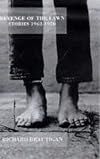
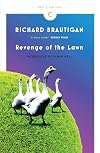
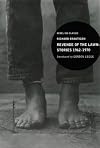
Revenge of the Lawn: Stories 1962-1970
by Richard Brautigan
On This Page
Description
Revenge of the Lawn is Richard Brautigan in miniature and contains no fewer than 62 ultra-short stories set mainly in Tacoma, Washington (where the author grew up) and in the flower-powered San Francisco of the late fifties and early sixties. In their compacted form, which ranges from the murderously short 'The Scarlatti Tilt' to one-page wonders like the sexually poignant poetry of 'An Unlimited Supply of 35 Millimetre Film', Brautigan's stories take us into a world where his fleeting show more glimpses of everyday strangeness leave stories and characters resonating in our heads long after they're gone. show lessTags
Recommendations

















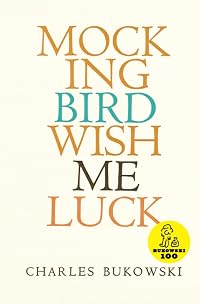
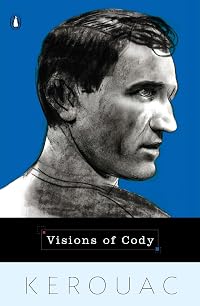

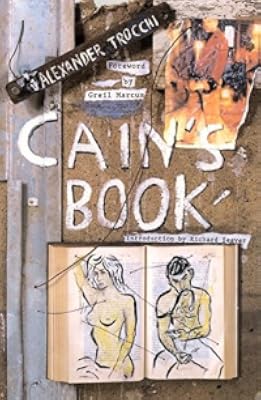


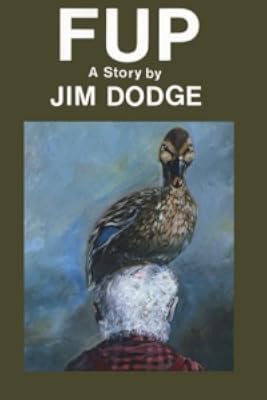




Member Recommendations
andomck While reading Gray’s surreal flash fiction, I kept thinking of this collection by Richard Brautigan
Member Reviews
Now we will fly new banners from the castle, and they will be of your own choosing.
Aww...this is an endearing collection. Made me happy and warm and enthusiastic, made me smile like listening to Nashville Skyline or the Fucking Champs or jumping into a covert soulja boy in my cloistered file room and want to snuggle up against the Pacific Northwest and gave me dreams of being proposed to by a beautiful musician with six fingers on each hand and healed my heart. I will likely reread this again sometime.
Aww...this is an endearing collection. Made me happy and warm and enthusiastic, made me smile like listening to Nashville Skyline or the Fucking Champs or jumping into a covert soulja boy in my cloistered file room and want to snuggle up against the Pacific Northwest and gave me dreams of being proposed to by a beautiful musician with six fingers on each hand and healed my heart. I will likely reread this again sometime.
I got a lot of joy out of reading Richard Brautigan’s stories in Revenge of the Lawn. He’s this odd ball outlying writer who on the surface seems destined to be considered a product of his time. His time was the 60s and 70s (was he thought oddball then, I wonder). Not sure how many people read him today, probably not many. He had a resurgence around the late 90s when Canongate published cult type writers under the Rebel Inc imprint. So he fits my interest in reviving writers who are likely forgotten. Which made me think: what makes Brautigan readable today?
This collection contains stories that range in length anywhere from one paragraph to six pages, with the majority being between one and two pages. There’s a lot of stories that show more start on one page and end at the top of the next page. Most of the narrators have this voice that suggests they are either naïve, came out of the woods, or live in the moment so that their view of the world is immediate, taking in all they can, even the minutiae.
They have a poetic dreaminess to them, too. And there’s a sentence in every story that captures the surreal and imaginative in everything around us. They can be about hitchhiking to fish for trout in the rain and getting caught in the dark, painful early experiences of love’s failures and expectations, the sad and the lonely people one encounters, living in dirt poor places in wooded saw mill towns. This last reflects Brautigan’s life. He was often poor, he didn’t eat for days. He had several siblings, each with a different father. He became alcoholic and committed suicide in his forties. He met with success when his Trout Fishing in America sold 4 million copies.
Mostly, I thought, in this disconnected world, that sense of immediacy, joy, taking it all as it comes attitude of the narrators (mostly first person) coupled with the free-wheeling experimentations of style and subject means that Brautigan stories feel like an antidote to the day-to-day garbage and teeth-gnashing of the day.
Those poetic moments burst out of nowhere yet maintain their consistency with the rest of the story. Eventually, you expect them. Sometimes they’re just an attitude or characteristic such as this preference for motels over hotels:
She hates hotel rooms. It’s the light in the morning that really bothers her. She doesn’t like to wake up in the morning by that kind of light.
Or this:
The auction was in a kind of old warehouse-barn-like building with used excitement everywhere on Saturday afternoon. It smelled like the complete history of America.
And sometimes laced with the politics of lived experience:
Shortly after that, like the next day, I brought a halt to my glorious military career and entered into the disenchanted paper shadows of America where failure is a bounced cheque or a bad report card or a letter ending a love affair and all the words that hurt people when you read them.
Like little doses of painful humanity shared.
And this charming little moment:
she cuddles the covers about her as if they were controllable clouds and puts her thumb in her mouth ad looks at me with listening blue eyes.
I’m off to find a copy of Trout Fishing, Confederate General and Watermelon Sugar to continue reading his works. I did own some of these books. But considered him forgettable a couple of decades back. Now I think I need him like some regenerative balm for the soul. show less
This collection contains stories that range in length anywhere from one paragraph to six pages, with the majority being between one and two pages. There’s a lot of stories that show more start on one page and end at the top of the next page. Most of the narrators have this voice that suggests they are either naïve, came out of the woods, or live in the moment so that their view of the world is immediate, taking in all they can, even the minutiae.
They have a poetic dreaminess to them, too. And there’s a sentence in every story that captures the surreal and imaginative in everything around us. They can be about hitchhiking to fish for trout in the rain and getting caught in the dark, painful early experiences of love’s failures and expectations, the sad and the lonely people one encounters, living in dirt poor places in wooded saw mill towns. This last reflects Brautigan’s life. He was often poor, he didn’t eat for days. He had several siblings, each with a different father. He became alcoholic and committed suicide in his forties. He met with success when his Trout Fishing in America sold 4 million copies.
Mostly, I thought, in this disconnected world, that sense of immediacy, joy, taking it all as it comes attitude of the narrators (mostly first person) coupled with the free-wheeling experimentations of style and subject means that Brautigan stories feel like an antidote to the day-to-day garbage and teeth-gnashing of the day.
Those poetic moments burst out of nowhere yet maintain their consistency with the rest of the story. Eventually, you expect them. Sometimes they’re just an attitude or characteristic such as this preference for motels over hotels:
She hates hotel rooms. It’s the light in the morning that really bothers her. She doesn’t like to wake up in the morning by that kind of light.
Or this:
The auction was in a kind of old warehouse-barn-like building with used excitement everywhere on Saturday afternoon. It smelled like the complete history of America.
And sometimes laced with the politics of lived experience:
Shortly after that, like the next day, I brought a halt to my glorious military career and entered into the disenchanted paper shadows of America where failure is a bounced cheque or a bad report card or a letter ending a love affair and all the words that hurt people when you read them.
Like little doses of painful humanity shared.
And this charming little moment:
she cuddles the covers about her as if they were controllable clouds and puts her thumb in her mouth ad looks at me with listening blue eyes.
I’m off to find a copy of Trout Fishing, Confederate General and Watermelon Sugar to continue reading his works. I did own some of these books. But considered him forgettable a couple of decades back. Now I think I need him like some regenerative balm for the soul. show less
This book is a collection of short “stories” spanning about 8 years of Brautigan’s writing career and another one I inherited from my late uncle. It was okay, it is a strong dose of Brautigan’s writing style. However, his dives into surreality and absurdism cause several of the stories in this book to simply disintegrate into nothing to no effect other than my disappointment. There is a lot of positive material here though. Such as this bit that connected with me:
[P]unctuation that is so beautiful that it brings tears to your eyes and paragraphs that look like Greek temples[.] [pgs.60-61]
As for what stories I liked in whole (or mostly whole as it were) there were a few such as Winter Rug (pg.56), I am a sucker for dog stories, A show more Need for Gardens (pg.69), I thought it was funny laughing at the last line, The Post Offices of Eastern Oregon (pg.90) – the first two pages anyway after that the story flies apart into nonsense, Pale Marble Movie (pg.97), I too have simple situations from the past repeating ad nauseam meaninglessly in my head, and Partners (pg.99). Most of these are the shorter(est) stories in this book—his absurdism strains in the longer work here.
A Model A truck lay on its side in front of the house. It was next to three empty fifty-gallon oil drums. They didn’t have a purpose anymore. There were some odd pieces of rusty cable. A yellow dog came out and stared at me.
I didn’t say a word in my passing. The kids were soaking wet now. They huddled together in silence on the porch. I had no reason to believe that there was anything more to life than this. [pg.107]
I enjoyed A Long Time Ago People Decided to Live in America [pg.108], I really liked this one especially the ending sentiment of:
We could make a nice scene together. I could say the words that would cause it to be, but I don’t say anything because I’ve lost the thread of making a pass at her and don’t know where it's gone, and she departs beautifully toward all the people that she will ever meet, at best I will turn out to be a phantom memory, and all the lives that she will live.
We’ve finished living this one together.
She’s gone. [pg.110]
Boy, could my teenage (and up into my mid-20s) self relate to that. However, Brautigan managed to make it a beautiful thing rather than an ugly personal failing and regrets of what could’ve been.
I also liked One Afternoon in 1939 (pg.116), Lint (pg.121), uncomfortably close to how I feel about my childhood, A Complete History of Germany and Japan (pg.122), this one is a powerful and very incisive piece and Memory of a Girl (pg.135). This last one progressed from the narrator contemplating a memory of a girl’s nice rack as compared to architecture to the forlornness of cypress trees whose graveyard has been moved. There was also The View from the Dog Tower (pg.149). SHEESH! Just hack away at my heart and then drive me straight into a solid brick wall of paranoia why don’t ya!
The last story in the book, The World War I Los Angeles Airplane (pg.170), started out great and dramatic then devolved into a list and added too much absurdism which dragged the pace down to nil however, the last item on the list and the last lines of the story does bring it home rewarding the patient reader.
Would I recommend this one? If you’ve read Richard Brautigan before, yes, otherwise this might, MIGHT work as an introduction as you can skip the more difficult and chaotic pieces to the better (often shorter) ones but don’t be averse to reading through each one as there can be gems scattered around in these works worth reaching for.
The note is an apology for a bad scene she made the other night. It is in the form of a riddle. I can’t figure it out. I never cared for riddles, anyway. Fuck her. [pg.115] show less
[P]unctuation that is so beautiful that it brings tears to your eyes and paragraphs that look like Greek temples[.] [pgs.60-61]
As for what stories I liked in whole (or mostly whole as it were) there were a few such as Winter Rug (pg.56), I am a sucker for dog stories, A show more Need for Gardens (pg.69), I thought it was funny laughing at the last line, The Post Offices of Eastern Oregon (pg.90) – the first two pages anyway after that the story flies apart into nonsense, Pale Marble Movie (pg.97), I too have simple situations from the past repeating ad nauseam meaninglessly in my head, and Partners (pg.99). Most of these are the shorter(est) stories in this book—his absurdism strains in the longer work here.
A Model A truck lay on its side in front of the house. It was next to three empty fifty-gallon oil drums. They didn’t have a purpose anymore. There were some odd pieces of rusty cable. A yellow dog came out and stared at me.
I didn’t say a word in my passing. The kids were soaking wet now. They huddled together in silence on the porch. I had no reason to believe that there was anything more to life than this. [pg.107]
I enjoyed A Long Time Ago People Decided to Live in America [pg.108], I really liked this one especially the ending sentiment of:
We could make a nice scene together. I could say the words that would cause it to be, but I don’t say anything because I’ve lost the thread of making a pass at her and don’t know where it's gone, and she departs beautifully toward all the people that she will ever meet, at best I will turn out to be a phantom memory, and all the lives that she will live.
We’ve finished living this one together.
She’s gone. [pg.110]
Boy, could my teenage (and up into my mid-20s) self relate to that. However, Brautigan managed to make it a beautiful thing rather than an ugly personal failing and regrets of what could’ve been.
I also liked One Afternoon in 1939 (pg.116), Lint (pg.121), uncomfortably close to how I feel about my childhood, A Complete History of Germany and Japan (pg.122), this one is a powerful and very incisive piece and Memory of a Girl (pg.135). This last one progressed from the narrator contemplating a memory of a girl’s nice rack as compared to architecture to the forlornness of cypress trees whose graveyard has been moved. There was also The View from the Dog Tower (pg.149). SHEESH! Just hack away at my heart and then drive me straight into a solid brick wall of paranoia why don’t ya!
The last story in the book, The World War I Los Angeles Airplane (pg.170), started out great and dramatic then devolved into a list and added too much absurdism which dragged the pace down to nil however, the last item on the list and the last lines of the story does bring it home rewarding the patient reader.
Would I recommend this one? If you’ve read Richard Brautigan before, yes, otherwise this might, MIGHT work as an introduction as you can skip the more difficult and chaotic pieces to the better (often shorter) ones but don’t be averse to reading through each one as there can be gems scattered around in these works worth reaching for.
The note is an apology for a bad scene she made the other night. It is in the form of a riddle. I can’t figure it out. I never cared for riddles, anyway. Fuck her. [pg.115] show less
Good writing and storytelling, shame about the objectification of women - left a sad taste in my mouth.
By page 50 i was ready to pack this in. It read to me as largely underdeveloped excerpts from a notebook – reminiscence, dream fragments, quirky observations – snapped up by a publisher confident it would sell on the coattails of Trout Fishing in America, which had been a phenomenal success about a decade earlier.
Things improved at about page 60. It was probably the piercing nostalgia for childhood games in 'The Ghost Children of Tacoma' that dispelled my irritated boredom. After that, I was drawn in mainly by pieces capturing (or perhaps re-imagining) moments from his childhood: 'Blackberry Motorist', in which he discovers an abandoned car under a high tangle of blackberries; 'The Post Offices of Eastern Oregon', a kind of Lake show more Wobegon horror story; 'One Afternoon in 1939', in which he tells a story his little daughter loves to hear, and ends beautifully, 'I think she uses this story as a Christopher Columbus door to the discovery of her father when he was a child and her contemporary'; 'A Complete History of German and Japan', which would be great without the nudging of the terrible title.
After another 50 pages or so, the whimsical observations of life in San Francisco bars, buses, streets, bedrooms and bookshops became the dominant mode, and I lost interest again.
A good number of these 62 stories first appeared in Rolling Stone and I'm sure they sat comfortably with the dope and psychedelia of its pages. Mostly they haven't travelled well. And I haven't even mentioned the casual sexism. show less
Things improved at about page 60. It was probably the piercing nostalgia for childhood games in 'The Ghost Children of Tacoma' that dispelled my irritated boredom. After that, I was drawn in mainly by pieces capturing (or perhaps re-imagining) moments from his childhood: 'Blackberry Motorist', in which he discovers an abandoned car under a high tangle of blackberries; 'The Post Offices of Eastern Oregon', a kind of Lake show more Wobegon horror story; 'One Afternoon in 1939', in which he tells a story his little daughter loves to hear, and ends beautifully, 'I think she uses this story as a Christopher Columbus door to the discovery of her father when he was a child and her contemporary'; 'A Complete History of German and Japan', which would be great without the nudging of the terrible title.
After another 50 pages or so, the whimsical observations of life in San Francisco bars, buses, streets, bedrooms and bookshops became the dominant mode, and I lost interest again.
A good number of these 62 stories first appeared in Rolling Stone and I'm sure they sat comfortably with the dope and psychedelia of its pages. Mostly they haven't travelled well. And I haven't even mentioned the casual sexism. show less
The lion as usual took it quite stoically. Having been buried at least fifty times during the last two years, the lion had gotten used to being buried in the back yard.
I remember the first time they buried him. He didn't know what was happening. He was a younger lion, then, and was frightened and confused, but now he knew what was happening because he was and older lion and had been buried so many times.
He looked vaguely bored as they folded his front paws across his chest and started throwing dirt in his face.
The only other book I have read by this Beat era author is "A Confederate General from Big Sur", but I put a few of his others on my wish list, and eventually bought this one because of the title.
This collection of 62 short show more stories written between 1962 and 1970, is only 146 pages long. Some of the stories are autobiographical, about playing at shooting down enemy planes as a child during the war, hunting and fishing in the Pacific Northwest as a teenager, and life in San Francisco where he lived as an adult. Others are more fantastical, like the wonderful "A Need for Gardens", an unlikely story about some men burying a lion in their back yard. The very short stories mean that there's a surprise on every page. show less
I remember the first time they buried him. He didn't know what was happening. He was a younger lion, then, and was frightened and confused, but now he knew what was happening because he was and older lion and had been buried so many times.
He looked vaguely bored as they folded his front paws across his chest and started throwing dirt in his face.
The only other book I have read by this Beat era author is "A Confederate General from Big Sur", but I put a few of his others on my wish list, and eventually bought this one because of the title.
This collection of 62 short show more stories written between 1962 and 1970, is only 146 pages long. Some of the stories are autobiographical, about playing at shooting down enemy planes as a child during the war, hunting and fishing in the Pacific Northwest as a teenager, and life in San Francisco where he lived as an adult. Others are more fantastical, like the wonderful "A Need for Gardens", an unlikely story about some men burying a lion in their back yard. The very short stories mean that there's a surprise on every page. show less
A patchy collection, but the high notes are exquisite, so much so that this sits amongst my favourite reads of all time. The short short story suits Brautigan's style, and when he waxes surreal it's a delirious delight. I don't have the book to hand right now but will add the names of my favourite "stories" (snippets? reflections? perhaps tales?) as soon as feasible.
Members
- Recently Added By
Lists

Significant works of postmodern fiction
86 works; 25 members
Author Information

50+ Works 14,827 Members
Awards and Honors
Awards
Series
Belongs to Publisher Series
Work Relationships
Common Knowledge
- Original publication date
- 1971
- Dedication
- This book is for Don Carpenter
- First words
- My grandmother, in her own way, shines like a beacon down the stormy American past.
- Last words
- (Click to show. Warning: May contain spoilers.)33. "Your father died this afternoon."
Classifications
Statistics
- Members
- 966
- Popularity
- 27,504
- Reviews
- 13
- Rating
- (3.93)
- Languages
- 6 — Czech, English, French, German, Japanese, Swedish
- Media
- Paper, Ebook
- ISBNs
- 33
- UPCs
- 1
- ASINs
- 5