
David Albahari (1948–2023)
Author of Götz and Meyer
About the Author
Works by David Albahari
Die Kuh ist ein einsames Tier: Kurze Geschichten und dauerhafte Wahrheiten über Liebe, Traurigkeit und den ganzen Rest (2010) 4 copies
Kar Adam 1 copy
Sudija Dimitrijević 1 copy
Piščev dnevnik 1 copy
Savremena svetska priča I 1 copy
Wenn der König stirbt 1 copy
Neobi^cne pri^ce 1 copy
21 priča o sreći 1 copy
Fras u šupi 1 copy
Knjiga o muzici 1 copy
Eklampsio en remisio 1 copy
Associated Works
The Crying of Lot 49 (1966) — Translator, some editions; Afterword, some editions — 12,183 copies, 213 reviews
Description of a Struggle: The Vintage Book of Contemporary Eastern European Writing (1994) — Contributor — 77 copies, 1 review
Nothing Makes You Free: Writings by Descendants of Jewish Holocaust Survivors (2002) — Contributor — 72 copies, 1 review
Here I Am: Contemporary Jewish Stories from Around the World (1998) — Contributor — 57 copies, 1 review
Tagged
Common Knowledge
- Birthdate
- 1948-03-15
- Date of death
- 2023-07-30
- Gender
- male
- Education
- University of Belgrade
- Occupations
- translator
fiction writer - Organizations
- Serbian Academy of Sciences and Arts (member)
Federation of Jewish Communes of Yugoslavia (chair) - Awards and honors
- Ivo Andric's award (x 2)
Vilenica International Literary Prize (2012) - Nationality
- Serbia
- Birthplace
- Peć, Jugoslawien
- Places of residence
- Peć, Serbia (birth)
Calgary, Alberta, Canada
Belgrade, Serbia - Place of death
- Belgrade, Serbia
- Associated Place (for map)
- Serbia
Members
Reviews
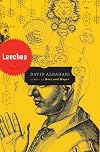
Wow! This book simply blew me away. It's not for the faint of heart nor for someone seeking an easy read. The story takes pace in late 1990s Serbia and focuses on the Beograd Jewish population against which there seems to be growing anti-Semitism. The narrator, who is never named, is an editorial writer for a Minut, a weekly paper. The story itself has no chapters, has no paragraphs, and has no dialogue separated out in quotation marks. That, in itself, presents a problem for the casual show more reader.
What carries this book is the writing which is mysterious and frightening. It's an experience. It starts off being completely confusing, although one can easily follow what is happening to the narrator. I would also suggest being somewhat (at least a very little bit) familiar with what the Kabbalah is because that is a theme in this story.
As the story progresses, what seems completely murky in the beginning becomes clearer as it marches through to its end. I had to stop multiple times to write down quotes which, although applied to late twentieth century Serbia, also apply to how I feel about living in the United States in the first quarter of the twenty-first century.
I probably would not have tackled this book, which was very dark indeed, had I not already read another book, Gotz and Meyer, by the same author. Both books absolutely horrified me. The content is too familiar and close to home for me as my mom's parents were Yugoslav Jews who lived near Beograd and perished during World War II. They clearly were not immune to anti-Semitism. I probably should not read such horrific books as Albahari writes, but I perceive much fact and emotion from carefully written fiction. I certainly did so in reading this book.
I would highly recommend this book to anyone who is not afraid to tackle a difficult subject in a way that is not particularly easy to read. show less
What carries this book is the writing which is mysterious and frightening. It's an experience. It starts off being completely confusing, although one can easily follow what is happening to the narrator. I would also suggest being somewhat (at least a very little bit) familiar with what the Kabbalah is because that is a theme in this story.
As the story progresses, what seems completely murky in the beginning becomes clearer as it marches through to its end. I had to stop multiple times to write down quotes which, although applied to late twentieth century Serbia, also apply to how I feel about living in the United States in the first quarter of the twenty-first century.
I probably would not have tackled this book, which was very dark indeed, had I not already read another book, Gotz and Meyer, by the same author. Both books absolutely horrified me. The content is too familiar and close to home for me as my mom's parents were Yugoslav Jews who lived near Beograd and perished during World War II. They clearly were not immune to anti-Semitism. I probably should not read such horrific books as Albahari writes, but I perceive much fact and emotion from carefully written fiction. I certainly did so in reading this book.
I would highly recommend this book to anyone who is not afraid to tackle a difficult subject in a way that is not particularly easy to read. show less

Winner of the ALTA National Translation Award in 2006, and brought to my attention by Stu at Winston's Dad, Götz and Meyer by Serbian author David Albahari (1948-2023) is a stunningly imaginative portrayal of intergenerational trauma.
All the narrator knows is the names of the truck drivers who drove his parents to their fate, but almost the entire book consists of his imagined interactions with these men. His preoccupation is whether and how much they knew about what they were doing and show more whether they felt remorse. At first, he pulls back into reality and reminds himself that he knows nothing about Götz and Meyer, any more than he knows anything about the people missing from his family tree:
But as time goes by, under the torment of this obsession to know the unknowable, the narrative becomes a darker force in his life.
We read about the daily habits of these truck drivers as if the narrator were present with them while they dressed and shaved and had their breakfasts.
And there is nothing easier than a reader finding these imagined observations entirely convincing... until we read that the narrator tells the woman at the Jewish Historical Museum that Götz and Meyer were only human after all and then it becomes difficult for us to imagine that anyone human could do the evil these men did.
To read the rest of my review please visit https://anzlitlovers.com/2024/08/01/gotz-and-meyer-2012-by-david-albahari-transl... show less
All the narrator knows is the names of the truck drivers who drove his parents to their fate, but almost the entire book consists of his imagined interactions with these men. His preoccupation is whether and how much they knew about what they were doing and show more whether they felt remorse. At first, he pulls back into reality and reminds himself that he knows nothing about Götz and Meyer, any more than he knows anything about the people missing from his family tree:
Meyer even confessed to me that he felt his heart beat faster and that later, when he recalled those days, he would shiver. Look at this: I am beginning to imagine myself talking with people whose faces I don’t even know. I knew precious little, indeed, about the faces of most of my kin, but in their case I can at least look at my own face in the mirror and seek their features there, whereas with Götz and Meyer I had no such help. Anyone could have been Götz. Anyone could have been Meyer, and yet Götz and Meyer were only Götz and Meyer, and no-one else could be who they were. It is hardly surprising, therefore, that I constantly had this feeling that I was slipping, even when I was walking on solid ground. (p. 45).
But as time goes by, under the torment of this obsession to know the unknowable, the narrative becomes a darker force in his life.
Nothing easier than to stray into the wasteland of someone else's consciousness. (p.45)
We read about the daily habits of these truck drivers as if the narrator were present with them while they dressed and shaved and had their breakfasts.
In the morning, while I dressed, I’d be Götz and Meyer. I did not allow myself to be distracted by details, for instance: wondering whether German soldiers wore short-sleeved undershirts, or dog tags with their personal details round their necks. I always wore singlets, cut high under the armpits, important because I sweat so much, and nothing was going to make me stop wearing them. This was about something else. I would look at myself, let’s say, in the mirror and say: Now Meyer is combing his hair, and then Götz would ask Meyer what he’d be having for breakfast. Once I got up in a foul mood, as Götz, and when asked that same question, told Meyer angrily: bananas. Lord, how Meyer laughed. His razor bounced around in his hand! Later, when he rinsed off the foam, he noticed a little nick on his left cheek, but that only reminded him of Götz’s reply, and then he burst into guffaws again. Götz didn’t say anything, because by then he was already in the kitchen, where he watched as I made coffee. Quite the bright one, that Götz, never to put the cart before the horse. As they drove towards Belgrade, he never carped to Meyer, possibly Götz, about speeding. It is important to tend to State property entrusted to your care, but even more important to tend to good relations with your work colleagues, since your success in completing any assignment depends far more on that than on anything else. (pp. 46-47)
And there is nothing easier than a reader finding these imagined observations entirely convincing... until we read that the narrator tells the woman at the Jewish Historical Museum that Götz and Meyer were only human after all and then it becomes difficult for us to imagine that anyone human could do the evil these men did.
To read the rest of my review please visit https://anzlitlovers.com/2024/08/01/gotz-and-meyer-2012-by-david-albahari-transl... show less
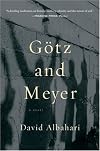
David Albahari’s book, Götz and Meyer, which at first glance seemed like a book I wouldn’t even want to tackle, turned out to be one of the most fascinating, poetic reads of the year. Without paragraph or chapter divisions, the story tells of an aging literature teacher in Serbia remembering the methodical elimination of Jews from the city of Belgrade, Yugoslavia, by the Nazis in 1942. Götz and Meyer (or were they Meyer and Götz?) were the Nazi officers charged with transporting Jews show more from that city via truck to an undisclosed, but promising, destination. Their many truckloads of human cargo never reached their destination alive due to a clever Nazi plan to quickly and quietly eliminate Jews en mass.
During the story, the unnamed narrator becomes more and more depressed by contemplating and researching the missing leaves of his family tree. He thinks about the two Nazi officers who had no particular characteristics to distinguish one from the other and wonders how they could have so casually carried out their evil work. As a teacher, he is also charged with helping his present-day students understand this dark period of Serbian history.
This is fiction. It reads very quickly and easily despite its unusual written form. As a background for this story, David Albahari based what he wrote on historical facts gleaned from “archival material, encyclopedia entries, newspaper articles, books, and studies”. This book, with its vivid details, came so alive for me that I paused while reading it to dig through my family archives to see how the deaths of my own maternal grandparents, living in Yugoslavia in 1942, fit into the picture the author was presenting in this novel.
For those who are not put off by the despair of reading Holocaust literature, this is a must read. It humanizes one very geographically small area of death and destruction by the Nazis during World War II. I read these books in small doses. I do, however, have the need to continually explore fiction such as this mesmerizing novel from time to time as it puts human faces on a situation that can only be described as inhuman. show less
During the story, the unnamed narrator becomes more and more depressed by contemplating and researching the missing leaves of his family tree. He thinks about the two Nazi officers who had no particular characteristics to distinguish one from the other and wonders how they could have so casually carried out their evil work. As a teacher, he is also charged with helping his present-day students understand this dark period of Serbian history.
This is fiction. It reads very quickly and easily despite its unusual written form. As a background for this story, David Albahari based what he wrote on historical facts gleaned from “archival material, encyclopedia entries, newspaper articles, books, and studies”. This book, with its vivid details, came so alive for me that I paused while reading it to dig through my family archives to see how the deaths of my own maternal grandparents, living in Yugoslavia in 1942, fit into the picture the author was presenting in this novel.
For those who are not put off by the despair of reading Holocaust literature, this is a must read. It humanizes one very geographically small area of death and destruction by the Nazis during World War II. I read these books in small doses. I do, however, have the need to continually explore fiction such as this mesmerizing novel from time to time as it puts human faces on a situation that can only be described as inhuman. show less
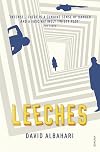
I haven't so utterly misinterpreted a cover and blurb for quite some time. I picked 'Leeches' from the unread shelf as I was finding [b:The Ministry for the Future|50998056|The Ministry for the Future|Kim Stanley Robinson|https://i.gr-assets.com/images/S/compressed.photo.goodreads.com/books/1586372180l/50998056._SY75_.jpg|75844661] too powerful a reminder that climate change is marching on towards catastrophe while my worries are focused on the pandemic. It was described on the cover as show more having 'a genuine sense of danger and genuinely twisty plot' and 'a thrilling maelstrom of conspiracies'. From this I inferred it was a crime thriller, having apparently overlooked the much more accurate cover quote, 'has the paranoid, hallucinatory feel of a mind slowly breaking down'. This novel is told in the first person as a stream of consciousness, without one single paragraph break. Although the plot is twisty, it's also paced slowly and the narrative constantly digresses into the protagonist's existential crises. Plot also isn't really the point, as the book mostly read to me as a fable about political repression in 1990s Serbia. The violent anti-semisitism and political upheaval are literal, yet the narrative depicts people responding to it with magical thinking and fixation upon obscure signs. While all this is intriguing, perceptive, and strikingly relevant to 2021, it isn't exactly relaxing or easy to read. Here is a typical example of the style, which also forms a sort of thesis statement for the whole book:
If I may reiterate, there are no paragraph breaks whatsoever. I lamented this, and the general tone of existential crisis, to a friend. She astutely commented that if I wanted that I could just listen to my own brain freaking out instead. Also, when I tried to read 'Leeches' one evening while sleep-deprived, I dozed off and became entirely discombobulated. I dreamed of going to a friend's house, starting to read a similar novel from their shelves, then falling asleep on their sofa. Then I woke from the dream, or possibly within the dream, and dreamed of trying to explain the first dream. Baffled, I tweeted 'Am I awake right now?' All this explains why it took me a week to read. Albahari makes insightful points about the psychological toll of repressive political regimes, but his protagonist's mind is an exhausting place. Reading this novel at a different time, I would have considered the immersive atmosphere a strength. At the moment, however, I prefer fiction that analogises these topics from some distance, like Ismail Kadare's [b:The Pyramid|17899|The Pyramid|Ismail Kadare|https://i.gr-assets.com/images/S/compressed.photo.goodreads.com/books/1348763532l/17899._SY75_.jpg|19391] and [b:The Palace of Dreams|797635|The Palace of Dreams|Ismail Kadare|https://i.gr-assets.com/images/S/compressed.photo.goodreads.com/books/1178472255l/797635._SY75_.jpg|783601]. show less
Now I realise that I was actually evading talk of reality and that everything that happened to me during those spring months six years ago - plunging into the shadowy world of mystical phenomena - was a form of self-deception, a form of solace or, more precisely, escapism from our reality at the time. The encounters with the unbridled nationalists were so surreal that I didn't feel them to be a part of reality. I was wrong, of course, because they, the violent young men, were just as real as the blows they dealt me, and just as real today, perhaps not quite so numerous, but certainly louder and more bold. Furthermore they are still where they were then, in a place they feel to be theirs alone, while I am somewhere else, it doesn't matter where, and words are all I have left, and this attempt at fashioning from them something that will have at least a semblance of permanence.
If I may reiterate, there are no paragraph breaks whatsoever. I lamented this, and the general tone of existential crisis, to a friend. She astutely commented that if I wanted that I could just listen to my own brain freaking out instead. Also, when I tried to read 'Leeches' one evening while sleep-deprived, I dozed off and became entirely discombobulated. I dreamed of going to a friend's house, starting to read a similar novel from their shelves, then falling asleep on their sofa. Then I woke from the dream, or possibly within the dream, and dreamed of trying to explain the first dream. Baffled, I tweeted 'Am I awake right now?' All this explains why it took me a week to read. Albahari makes insightful points about the psychological toll of repressive political regimes, but his protagonist's mind is an exhausting place. Reading this novel at a different time, I would have considered the immersive atmosphere a strength. At the moment, however, I prefer fiction that analogises these topics from some distance, like Ismail Kadare's [b:The Pyramid|17899|The Pyramid|Ismail Kadare|https://i.gr-assets.com/images/S/compressed.photo.goodreads.com/books/1348763532l/17899._SY75_.jpg|19391] and [b:The Palace of Dreams|797635|The Palace of Dreams|Ismail Kadare|https://i.gr-assets.com/images/S/compressed.photo.goodreads.com/books/1178472255l/797635._SY75_.jpg|783601]. show less
Lists
Awards


You May Also Like


Associated Authors
Statistics
- Works
- 44
- Also by
- 5
- Members
- 584
- Popularity
- #42,937
- Rating
- 3.7
- Reviews
- 17
- ISBNs
- 106
- Languages
- 12