
Milorad Pavić (1929–2009)
Author of Dictionary of the Khazars: A Lexicon Novel in 100,000 Words {Male Edition}
About the Author
Milorad Pavic was born in Belgrade on October 15, 1929. After receiving a doctorate from the University of Zagreb, he taught philosophy at the University of Novi Sad followed by the University of Belgrade. During his lifetime, he wrote several novels including Dictionary of the Khazars, Landscape show more Painted with Tea, The Inner Side of the Wind, and Last Love in Constantinople. He also wrote short stories, nonfiction and poetry. He died due to complications of a heart attack on November 30, 2009 at the age of 80. (Bowker Author Biography) show less
Series
Works by Milorad Pavić
Dictionary of the Khazars: A Lexicon Novel in 100,000 Words {Male Edition} (1984) — Author — 1,208 copies, 21 reviews
Dictionary of the Khazars: A Lexicon Novel in 100,000 Words {Female Edition} (1989) 1,079 copies, 17 reviews
Dictionary of the Khazars: A Lexicon Novel in 100,000 Words {Male and Female Editions} (1999) 13 copies
Prica Koja Je Ubila Emiliju Knor 2 copies
Atlas vetrova 2 copies
Hazarskij slovar 2 copies
Từ điển Khazar 1 copy
Erotske priče 1 copy
Rus Tazısı 1 copy
Два романа о любви: [романы] 1 copy
Sve priče 1 copy
Krevet za troje 1 copy
Blue Book (English Edition) 1 copy
נוף מצויר בתה 1 copy
Associated Works
Tagged
Common Knowledge
- Canonical name
- Pavić, Milorad
- Birthdate
- 1929-10-15
- Date of death
- 2009-11-30
- Gender
- male
- Education
- University of Zagreb
University of Belgrade - Occupations
- philosopher
novelist
poet
short story writer
literary historian - Organizations
- University of Novi Sad
University of Belgrade - Relationships
- Mihajlovic, Jasmina (wife)
- Cause of death
- heart attack
- Nationality
- Serbia
- Birthplace
- Belgrade, Yugoslavia
- Places of residence
- Belgrade, Serbia
- Place of death
- Belgrade, Serbia
- Burial location
- Novo Groblje, Belgrade, Serbia
- Associated Place (for map)
- Belgrade, Serbia
Members
Discussions
Group Read, March 2015: Dictionary of the Khazars in 1001 Books to read before you die (March 2015)
Reviews

I'm not sure I'm smart enough to read this. Then again I'm not sure anyone is, maybe not even the author. I'll say what others may not: this is language for the sake of language, language as paint, not as narrative. Everything is metaphor and everything is descriptive of something else. Or is it? We may never be sure.
Even after I read the story, or rather: both of them, I had to go back to the cover to find out what I had just read. Supposedly we read a story about to lovers who can get in show more each other's orbit but can never get close without destroying each other. You can read the story from her perspective or from his, depending on which end you start and which way you hold the book.
Maybe this book is an experiment in prose poetry and I would be ok with that. Having said that there are enough sharp logical observations to blow that argument out of the water. Then again, to me it reads best as if reading poetry.
If you like to read a text for its impressions and allusions, then this is the perfect book for you. If you want a narrative with a plot and clearly delineated characters and story, then it isn't. show less
Even after I read the story, or rather: both of them, I had to go back to the cover to find out what I had just read. Supposedly we read a story about to lovers who can get in show more each other's orbit but can never get close without destroying each other. You can read the story from her perspective or from his, depending on which end you start and which way you hold the book.
Maybe this book is an experiment in prose poetry and I would be ok with that. Having said that there are enough sharp logical observations to blow that argument out of the water. Then again, to me it reads best as if reading poetry.
If you like to read a text for its impressions and allusions, then this is the perfect book for you. If you want a narrative with a plot and clearly delineated characters and story, then it isn't. show less
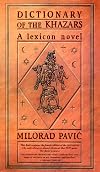
No man ever reads the same book twice?
Everything is made of a million pieces of the past. Everything will eventually fall apart to become part of a million other things. In this book, composition and decomposition occur so closely on one another's heels as to be indistinguishable from one another. Pay attention to what version of this text you're composing as you read--and what is gained and lost in the process.
Everything is made of a million pieces of the past. Everything will eventually fall apart to become part of a million other things. In this book, composition and decomposition occur so closely on one another's heels as to be indistinguishable from one another. Pay attention to what version of this text you're composing as you read--and what is gained and lost in the process.
A riddling book, which I finished with the sense that things were eventually knitting together and might even converge on some semblance of a solution, if I examined both 'male' and 'female' versions, and undertook careful cross-referencing between the partial and sometimes contradictory Christian, Islamic and Hebrew dictionary sections. It's arguably to the book's discredit that I have not felt inclined to do so; it's arguably to its redemptive credit that I nevertheless found it an show more intriguing read.
This 'dictionary' is more a set of alphabetically ordered vignettes, each of which can be enjoyed firstly in itself, and secondly in the mutual mirroring between it and the others. Sometimes the effect is confusing, occasionally it can feel repetitive, and some details may just seem peculiar; but what's always evident is that the author has ideas, and whereas normally it's critical assassination to observe that plot elements in a work don't hang smoothly together, in the confused pseudohistorical accounts of the Khazar Polemic we have a kind of justification even for that. Perhaps this symposium of unreliable narrators is in its own way a more really historical fiction than most attempts at a 'realistic' historical novel. show less
This 'dictionary' is more a set of alphabetically ordered vignettes, each of which can be enjoyed firstly in itself, and secondly in the mutual mirroring between it and the others. Sometimes the effect is confusing, occasionally it can feel repetitive, and some details may just seem peculiar; but what's always evident is that the author has ideas, and whereas normally it's critical assassination to observe that plot elements in a work don't hang smoothly together, in the confused pseudohistorical accounts of the Khazar Polemic we have a kind of justification even for that. Perhaps this symposium of unreliable narrators is in its own way a more really historical fiction than most attempts at a 'realistic' historical novel. show less
It's fiction that pretends to masquerade as fact, and I don't think I've ever enjoyed fiction more. The density of connections in "Dictionary of the Khazars" is astounding; it commonly references mythological themes and tropes, some of which originate in our "real" myths and some of which seem wholly confined to the book. These allusions are made indistinguishably, and that only helps to break down divisions between fact and fiction (what, after all, is a "real" myth?) and also to break down show more divisions between subjective and objective. show less
Lists
Awards


You May Also Like


Associated Authors
Statistics
- Works
- 71
- Also by
- 3
- Members
- 3,576
- Popularity
- #7,090
- Rating
- 3.8
- Reviews
- 58
- ISBNs
- 253
- Languages
- 28
- Favorited
- 20