

Borislav Pekić (1930–1992)
Author of The Houses of Belgrade
About the Author
Works by Borislav Pekić
Sentimentalna povest britanskog carstva (Nove knjige domacih pisaca) (Croatian Edition) (1992) 7 copies
Uspenje i sunovrat Ikara Gubelkijana ; Odbrana i poslednji dani: Novele (Izabrana dela Borislava Pekića) (Croatian Edition) (1991) 4 copies
Čovek koji je jeo smrt 1 copy
Atlantida I deo 1 copy
U traganju za zlatnim runom (Nove knjige domacih pisaca. Proza) (Serbo-Croatian Edition) (1997) 1 copy
Vreme Reči 1 copy
Zlatno runo V 1 copy
Hodočašće Arsenija Njegovana 1 copy
Tagged
Common Knowledge
- Canonical name
- Pekić, Borislav
- Birthdate
- 1930-02-04
- Date of death
- 1992-07-02
- Gender
- male
- Education
- University of Belgrade
- Occupations
- novelist
- Short biography
- Borislav Pekić is considered one of the most important literary figures of the 20th century, continually attracting the attention of literary scholars and the public at large. His thorough knowledge of the long tradition of European thought from Plato to Friedrich Nietzsche, Sigmund Freud and Martin Heidegger, together with the artistic affiliation with his literary peers—Thomas Mann, James Joyce, Aldous Huxley, Samuel Beckett, George Orwell, and Alexander Solzhenitsyn—has greatly helped reintegrate Serbian literature into major European trends.
- Nationality
- Serbia
- Birthplace
- Podgorica, Yugoslavia
- Place of death
- London, England, UK
- Burial location
- Belgrade, Serbia
Members
Reviews

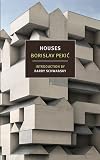
From his penthouse high above Belgrade, Arsénie Negovan observes the city through a selection of military-grade binoculars. He’s old but wealthy, a retired architect, and has spent the last two decades in self-imposed quasi-exile in his flat. The only people he interacts with are his wife (much younger than he), his maid, and his lawyer. His wealth derives from an architectural empire of houses and tenants and sub-letters he runs indirectly, corresponding through his lawyer, but mostly by show more offloading the work onto his wife. When he begins to suspect that his intermediaries may be hiding things from him, Negovan decides to take matters into his own hands. For the first time in decades he leaves his flat and he sets out to revisit the beautiful houses he designed, to see what decades of urban change have done to them.
While Negovan wanders around a Belgrade that is almost-unfamiliar to him he mulls over his usual obsessions and so Pekić has the opportunity to take the reader along on a travelogue through large portions of the 20th century and its national delusions and changes in the zeitgeist. And yes, Negovan does remember the Nazi occupation of Yugoslavia, Communist protest marches, and underhanded capitalist profiteering, but all he really cares about is how these things affected him and his Demiurg-style relationship with his houses: shortages of building materials, delays in getting to auctions, intransigent family members whose opinions of, say, the Fascists or the placement of a front portal differed from his. He also reminisces extensively about things he said once, as a hired speaker or one-time come-backs -- and while the occasions have long since been forgotten by the other people involved, or the organizations that he addressed may no longer exist, but in Negovan’s shrunken and exiled psyche they loom large.
Houses, or in other translations The houses of Belgrade, is a reliably solid instalment in that subgenre of litfic where an unreliable narrator with delusions about their grandeur looks back upon their life, which then segues into a literary commentary on much of twentieth-century history of a country and its pipe dreams. (See also: Kazuo Ishiguro.) I thought this book was a satisfactory read, but I’m not sure if I’ll remember much in a few years’ time. I do suspect, though, that this novel may have been more comedic than I picked up on: the pettiness of the aforementioned capitalist profiteering and the general siege-mentality when confronted with any kind of governmentally-promoted ideology would slot right into place in black comedies from the Balkans.
Other than its general/generic solidness, I must say that architecture is a very nice medium through which to portray an entire city for the better part of a century. And while writing may not be the preferred medium for architecture, the book’s laser-guided focus on Negovan’s attitudes towards Possessions and Egotism does a lot to offset that. show less
While Negovan wanders around a Belgrade that is almost-unfamiliar to him he mulls over his usual obsessions and so Pekić has the opportunity to take the reader along on a travelogue through large portions of the 20th century and its national delusions and changes in the zeitgeist. And yes, Negovan does remember the Nazi occupation of Yugoslavia, Communist protest marches, and underhanded capitalist profiteering, but all he really cares about is how these things affected him and his Demiurg-style relationship with his houses: shortages of building materials, delays in getting to auctions, intransigent family members whose opinions of, say, the Fascists or the placement of a front portal differed from his. He also reminisces extensively about things he said once, as a hired speaker or one-time come-backs -- and while the occasions have long since been forgotten by the other people involved, or the organizations that he addressed may no longer exist, but in Negovan’s shrunken and exiled psyche they loom large.
Houses, or in other translations The houses of Belgrade, is a reliably solid instalment in that subgenre of litfic where an unreliable narrator with delusions about their grandeur looks back upon their life, which then segues into a literary commentary on much of twentieth-century history of a country and its pipe dreams. (See also: Kazuo Ishiguro.) I thought this book was a satisfactory read, but I’m not sure if I’ll remember much in a few years’ time. I do suspect, though, that this novel may have been more comedic than I picked up on: the pettiness of the aforementioned capitalist profiteering and the general siege-mentality when confronted with any kind of governmentally-promoted ideology would slot right into place in black comedies from the Balkans.
Other than its general/generic solidness, I must say that architecture is a very nice medium through which to portray an entire city for the better part of a century. And while writing may not be the preferred medium for architecture, the book’s laser-guided focus on Negovan’s attitudes towards Possessions and Egotism does a lot to offset that. show less
Statue of Borislav Pekić in Flower Square, Belgrade, Serbia
Imagine an American movie buff going into a deep sleep Rip Van Winkle-style in 1941 and finally waking up in 1968. The first thing on the agenda, of course, is a trip to the local movie house expecting a variation on the 1941 musical comedy You'll Never Get Rich featuring Fred Astaire and Rita Hayworth. So happens there’s a double feather: Bullett starring Steve McQueen and 2001: A Space Odyssey. Whoa! We can imagine the level of show more instant future shock.
Something along similar lines transpires in Houses, Serbian author Borislav Pekić’s 1970 novel about a kingpin Belgrade building owner, who, after having been knocked down, beaten up and traumatized during a riot in the city back in 1941, has sealed himself off in a high-rise apartment for twenty-seven years where he has been zeroing in on his beloved buildings through binoculars.
Oh, and there’s also the absence of news reports – since property mogul Arsénie Negovan’s heart and health could take a nosedive if he suffers further trauma, his wife, nurse and lawyer make sure he does not receive bulletins or news releases (usually bad news) about his properties, his city of Belgrade, his country or the world. In other words, Arsénie Negovan is completely uninformed of events between the Nazis having been forced out of Belgrade at the end of World War ll and the prevailing modern Communist government in the year 1968.
Then crisis hits: Arsénie overhears his wife and lawyer talking in whispers about the impending destruction of one of his apartment houses. What, his dear Simonida is to be torn down! (Mr. Negovan gives women’s names to his properties - Sophia, Eugénie, Christina, Emilia, Serafina, Agatha, Barbara, Daphne, Anastasia, Juliana, Theodora, Irina, Xenia, Eudoxia, Angelina - and looks lovingly on each one of them as an urban goddesses). Arsénie will not let it happen; he resorts to drastic measures. Unbeknownst to his wife and everyone else, he dips into his closet and puts on his very formal suit complete with tuxedo tails, his 1940s top hat, grabs his cane with a handle in the form of a silver greyhound's muzzle and hits the Belgrade 1968 streets – a seventy-seven year old man on a mission.
Arsénie Negovan cuts quite the figure – what the formally attired old man sees and hears, the reactions to his demands about his building (actually the building has been taken over by the state many years ago) makes for one of the more humorous bits of the novel. At one point the wife of his former building caretaker takes him to task: ““Get out of here, and tell those who sent you that the Martinovići have nothing more for you to confiscate. You can still get this!” She brandished her clenched fist. “Just look at him, all dressed up with a hat and a tie! Don’t you think I can tell a secret policeman when I see one?”” For the one and only Arsénie Negovan, prime builder of this very city, to be spoken to in such a manner. Outrageous! More than outrageous since never in his life has he ever been remotely associated with lowly organizations such as the police.
The entire novel consists of Arsénie Negovan’s written account of his own life and events stretching back to 1919, the year this man of houses witnessed another ugly riot with a mob carrying scythes, hammers, placards and red banners, this time in the Ukraine. Up there in his apartment, in self-imposed exile, his extensive notes, including a last will and testament, are written on the back of rent receipts and accounting forms. Quite the irony here since author Borislav Pekić was reduced to writing his novels on toilet paper while serving a five year prison term for his involvement in the Union of Democratic Youth in Yugoslavia.
As perhaps to be expected, at the heart of Arsénie's account is his very personal relationship with his houses. Not only does he bestow a feminine name to each but his houses are his very sense of identity. Indeed, in his case “the Possessor becomes the Possessed without losing any of the traditional function of Possession, and the Possessed becomes the Possessor, without in any way losing its characteristics of the Possessed.”
The more we read it becomes clear this is a tale of obsession. And with a tragicomic dimension in that Arsénie is blind to the way ownership of property is inextricably bound to the forces of politics and economics. Arsénie proclaims: “A man who builds houses or owns them cannot be party to a war. For him all wars are alien.” Yet again another instance of irony, since, as Barry Schwabsky points out in his Introduction to this New York Review Books edition: “Pekić considered Communism to be one of those delusions, yet from a Marxist viewpoint, his novel can be considered a study of bourgeois self-deception.”
Houses is an absorbing first-person narrative with many highly dramatic episodes. There’s the time Arsénie refuses to leave his window to go to the cellar when bombs are exploding all over Belgrade - his houses are in danger and through a sheer act of will he offers them courage by remaining at his post. Months later he’s elated and turns into a giddy little boy watching German tanks leave Belgrade, leaving his Agatha, Jillana, Christina and other houses in peace. Then again caught in another riot, this time in 1968, along the very same streets of that detestable 1941 riot. Arsénie words of passion: “They always demanded the same thing. They wanted my houses. They wanted them in March 1941 and They wanted them now in June of 1968!”
Widening the lens, Houses is a deeply penetrating insight into the clash of ideologies in those tumultuous mid-twentieth century years of Yugoslavian history, a novel with a special appeal for anyone interested in the fate of Eastern Europe. Borislav Pekić maintained an unflinching skepticism respecting notions of “progress” or “advancement” of “improvement” attained through the march of history. His perspective comes through loud and clear in Houses. Highly recommend. Special thanks to translator Bernard Johnson for rendering the Serbo-Croatian into a fluid, readable English.
Serbian author Borislav Pekić, 1930-1992
Arsénie Negovan on Simonida, his much-loved apartment building: “My last-born, the lovely Greek Simonida with her fine dark countenance, her milky complexion beneath deep blue eyelids, and her full-blooded lips pierced by a bronze chain, African style. Simonida with her old-fashioned perfumes, penetrating, heavy, moist like musk, hung about with the ornaments given her by her spiritual father, the War Ministry engineer and architect Danilo Vladisavljević, and with those whitish streaks across her body characteristic of both convalescents from kidney disease and old houses." show less

At the age of eighteen, Borislav Pekic is put in jail for six years as a political prisoner. The only book he has to read is the Bible. His only hope for salvation is a miracle.
For the framework of his first novel, Pekic, chooses the biblical miracles. He twists and turns his material with dialectical poeticism and it lands upside down. His rendition is a modern song of songs, sensuous, cynical, wryly humerous, tough.
For the framework of his first novel, Pekic, chooses the biblical miracles. He twists and turns his material with dialectical poeticism and it lands upside down. His rendition is a modern song of songs, sensuous, cynical, wryly humerous, tough.

Ovo je nevjerojatno zastrašujući roman, iznimno dobro napisan. Zastrašujuće mi je to što je iako znanstvena fantastika sve ovo jako vjerojatno i moguće.
U početku mi je malo lošije išlo dok sam uhvatila glavnu nit i dok je pisac uveo sve likove. Prekretnica mi je bila pojava "Prekog preventivnog zakona protiv besnila". Meni osobno je taj dio vrhunac knjige. Bio mi je i smiješan i strašan istovremeno.
Izuzetno mi se dopada Pekićev humor sa dozom ironije.
U svakom slučaju knjiga show more vrijedna utrošenog vremena. show less
U početku mi je malo lošije išlo dok sam uhvatila glavnu nit i dok je pisac uveo sve likove. Prekretnica mi je bila pojava "Prekog preventivnog zakona protiv besnila". Meni osobno je taj dio vrhunac knjige. Bio mi je i smiješan i strašan istovremeno.
Izuzetno mi se dopada Pekićev humor sa dozom ironije.
U svakom slučaju knjiga show more vrijedna utrošenog vremena. show less
Lists
100 knjiga (1)
Awards


You May Also Like


Associated Authors
Statistics
- Works
- 64
- Members
- 495
- Popularity
- #49,935
- Rating
- 4.4
- Reviews
- 16
- ISBNs
- 89
- Languages
- 12
- Favorited
- 5


