

Dubravka Ugrešić (1949–2023)
Author of Baba Yaga Laid an Egg
About the Author
Dubravka Ugresic was born and raised in what used to be Yugoslavia. In 1993, she left Croatia for political reasons. She has taught in several American and European universities and been awarded many international prizes for her writing
Works by Dubravka Ugrešić
The Culture of Lies: Antipolitical Essays (Post-Communist Cultural Studies) (1995) 115 copies, 1 review
Associated Works
The Wall in My Head: Words and Images from the Fall of the Iron Curtain (2009) — Contributor — 57 copies, 4 reviews
The Second Gates of Paradise: The Anthology of Erotic Short Fiction (1997) — Contributor — 38 copies
Tagged
Common Knowledge
- Canonical name
- Ugrešić, Dubravka
- Birthdate
- 1949-03-27
- Date of death
- 2023-03-17
- Gender
- female
- Education
- University of Zagreb (Comparative Literature, Russian Language and Literature)
- Occupations
- freelance writer
teacher - Awards and honors
- Austrian State Prize for European Literature (1999)
"Mesa Selimović" by daily newspapers Vecernje novosti (1988)
"Ksaver Sandor Gjalski" (1988)
Annual reward for a novel by weekly magazine NIN (1988)
Reward of City of Zagreb (1989)
Prix Europeen de l’ Essai Charles Veillon (1996) (show all 16)
SWF-Bestenliste Literaturpreis (1998)
Versetsprijs, Stichting Kunstenaarsverzet ( [1942, 1945] ∙ [1997])
Heinrich Mann Preis, Akademie Der Kunste Berlin (2000)
Reward of PEN centre B&H (2002)
Katarina Frankopan ( [2002])
Premio Feronia – Citta di Fiano (2004)
Man Booker International Prize Finalist (2009)
Neustadt International Prize for Literature (2016)
Vilenica International Literary Prize (2016)
Crystal Vilenica (1989) - Agent
- The Susijn Agency Ltd.
- Nationality
- Yugoslavia
Croatia - Birthplace
- Kutina, Yugoslavia
- Places of residence
- Kutina, Croatia
Amsterdam, Netherlands - Place of death
- Amsterdam, Netherlands
- Map Location
- Croatia
Members
Reviews

A collection of essays written between 2014 and 2018 in which Ugrešić takes a fairly consistently pessimistic look at the state of culture and humanity in the early 21st century, in particular — but not exclusively — in post-communist Croatia. She plays elegantly with metaphors built around concepts like skin, slowness, spa-towns, ”ethnic” shops, the film La La Land, and much else to dig into the corruption, nationalism, misogyny and denial of history that she sees around her and show more at our superficiality and reluctance to engage deeply with serious topics. Rewarding and beautifully written, but not encouraging. show less
Rating: 4.5* of five
The Publisher Says: Winner of the Neustadt International Prize for Literature
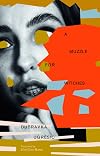
As with the rest of her literary career, Dubravka Ugresić's final work, A Muzzle for Witches, is uncategorizable. On its surface, the book is an conversation with the literary critic Merima Omeragić, covering topics such as "Women and the Male Perspective," "The Culture of (Self)Harm," and "The Melancholy of Vanishing."
But the book is more than a simple interview: It's a roadmap of the literary show more world, exploring the past century and all of its violence and turmoil—especially in Yugoslavia, Ugresić's birth country—and providing a direction for the future of feminist writing.
One of the greatest thinkers of the past hundred years, Ugresić was one-of-a-kind, whose novels and literary essays pushed the bounds of form and content, and A Muzzle for Witches offers the chance to see her at her most raw, and most playful.
I RECEIVED A DRC FROM THE PUBLISHER VIA EDELWEISS+. THANK YOU.
My Review: "Raw and playful" are not frequently paired in a publisher's synopsis. In this outraged, affronted growl, they're two of the best words for Ugresić's œuvre as a whole, and this distilled, refined-to-purity last work in particular. Her métier was the essay, I've even said before the screed, and this one-sitting book is a great way to get one's eye in to the tenor of her work.
It's quite an achievement to call out, I'd venture to say even to take down, the sexist, fascist Establishment that's controlled...notionally, in her case...the course of both life and career, while being amusing. Mordantly so, but amusing nonetheless. Author Dubravka does this trick regularly. I'm very impressed by this because it means her focus is not on her topic of outrage. The outrage is there, but unlike the literature of grievance that grows so stale so very quickly. Jeremiads are so deeply tedious as anything except a light seasoning on top of one's regular reading.
The title of these collected interviews with a literary critic from Croatia, Merima Omeragić, is a call-out to the (male-dominated) Croatian establishment's characterization of her as a "witch" when her anti-war attitudes got her hounded into exile in 1993. "Muzzle me, you dickheads?" one can hear her thinking in this title. I do not know if she chose it, but it certainly captures her acerbic, flensing-knife wit.
What we, as a literary society, lost on her 2023 death, was an acute observer...better to say "witness" of the Ship of Fools we're riding on. Dubravka Ugrešić saw it from her berth in Second Class, where she was assigned, but never, ever stayed. Her head was the Imperial Suite's sole occupant. She saw right through the oppressive systems designed to reduce her to a compliant drone, a life support system for a uterus.
We need this voice as a society. The women who vote in the 2024 US elections should read this, and other feminists of an earlier generation, because their privileges are not secure when their very rights to bodily autonomy are being rolled back at a great rate of speed. show less
The Publisher Says: Winner of the Neustadt International Prize for Literature
As with the rest of her literary career, Dubravka Ugresić's final work, A Muzzle for Witches, is uncategorizable. On its surface, the book is an conversation with the literary critic Merima Omeragić, covering topics such as "Women and the Male Perspective," "The Culture of (Self)Harm," and "The Melancholy of Vanishing."
But the book is more than a simple interview: It's a roadmap of the literary show more world, exploring the past century and all of its violence and turmoil—especially in Yugoslavia, Ugresić's birth country—and providing a direction for the future of feminist writing.
One of the greatest thinkers of the past hundred years, Ugresić was one-of-a-kind, whose novels and literary essays pushed the bounds of form and content, and A Muzzle for Witches offers the chance to see her at her most raw, and most playful.
I RECEIVED A DRC FROM THE PUBLISHER VIA EDELWEISS+. THANK YOU.
My Review: "Raw and playful" are not frequently paired in a publisher's synopsis. In this outraged, affronted growl, they're two of the best words for Ugresić's œuvre as a whole, and this distilled, refined-to-purity last work in particular. Her métier was the essay, I've even said before the screed, and this one-sitting book is a great way to get one's eye in to the tenor of her work.
It's quite an achievement to call out, I'd venture to say even to take down, the sexist, fascist Establishment that's controlled...notionally, in her case...the course of both life and career, while being amusing. Mordantly so, but amusing nonetheless. Author Dubravka does this trick regularly. I'm very impressed by this because it means her focus is not on her topic of outrage. The outrage is there, but unlike the literature of grievance that grows so stale so very quickly. Jeremiads are so deeply tedious as anything except a light seasoning on top of one's regular reading.
The title of these collected interviews with a literary critic from Croatia, Merima Omeragić, is a call-out to the (male-dominated) Croatian establishment's characterization of her as a "witch" when her anti-war attitudes got her hounded into exile in 1993. "Muzzle me, you dickheads?" one can hear her thinking in this title. I do not know if she chose it, but it certainly captures her acerbic, flensing-knife wit.
What we, as a literary society, lost on her 2023 death, was an acute observer...better to say "witness" of the Ship of Fools we're riding on. Dubravka Ugrešić saw it from her berth in Second Class, where she was assigned, but never, ever stayed. Her head was the Imperial Suite's sole occupant. She saw right through the oppressive systems designed to reduce her to a compliant drone, a life support system for a uterus.
We need this voice as a society. The women who vote in the 2024 US elections should read this, and other feminists of an earlier generation, because their privileges are not secure when their very rights to bodily autonomy are being rolled back at a great rate of speed. show less

This starts out looking like a simple collection of essays about narrative, where stories come from and what writers do with them, with particular reference to the writers of the Russian avant-garde. But then we gradually seem to slip back into the world of fiction (where we have really been all the time), when Ugrešić starts telling us about writers we are sure we wouldn't find if we tried to Google them, and about incidents we can be pretty sure she wouldn't be telling us about if they show more had really happened that way.
The central image of the fox as a symbol of the creative writer's status in the world is taken from Boris Pilnyak (who did exist, of course, and several of whose books Ugrešić translated): Ugrešić looks, amongst other things, at the writer as someone who steals other people's lives to turn them into stories, at the writer as someone to blame for holding the wrong opinions — she draws on the deaths of many Soviet writers under Stalin and on her own experience of being hounded by the nationalist government in Croatia — at the writer as a cheap resource to be summoned to entertain students or conference delegates, and at the difficulty of coming up with stories that satisfy her young niece. Imagine the trauma of having an aunt who knows too many fairy-tales and is happy to switch cultures and tales in mid-stream...
Good mind-bending fun. show less
The central image of the fox as a symbol of the creative writer's status in the world is taken from Boris Pilnyak (who did exist, of course, and several of whose books Ugrešić translated): Ugrešić looks, amongst other things, at the writer as someone who steals other people's lives to turn them into stories, at the writer as someone to blame for holding the wrong opinions — she draws on the deaths of many Soviet writers under Stalin and on her own experience of being hounded by the nationalist government in Croatia — at the writer as a cheap resource to be summoned to entertain students or conference delegates, and at the difficulty of coming up with stories that satisfy her young niece. Imagine the trauma of having an aunt who knows too many fairy-tales and is happy to switch cultures and tales in mid-stream...
Good mind-bending fun. show less

Ugrešić seems to have a gift for catching memorable names in transit and fixing them as titles for her novels, whilst they evaporate from the institutions she took them from almost before we know it. The S-M club "Ministry of Pain" in my home city seems to be long-gone (if it ever existed), whilst the museum in Berlin-Karlshorst that gave her the title for this novel was only actually called "Museum der bedingungslosen Kapitulation des faschistischen Deutschlands im Großen show more Vaterländischen Krieg" between 1986 and 1994, when the changing tide of history made it adopt the more prosaic title "Deutsch-Russiches Museum". (Between 1967 and 1986 it was simply the Museum of the Soviet armed forces in Germany.)
... And one more thing: the question as to whether this novel is autobiographical might at some hypothetical moment be of concern to the police, but not to the reader.
This book fixes on the idea of collage as an artistic medium for representing broken worlds, specifically in this case the experience of the break-up of Yugoslavia, the wars of the 1990s, and exile. Ugrešić gives us fragments of childhood memory, random objects, the quotations and anecdotes that form the detritus at the bottom of a literary scholar's mind, a diary kept by the narrator's mother, the haphazard accumulation of history in the city of Berlin, encounters with other exiles in Berlin and elsewhere, and all kinds of other bits and pieces, including, when we are least expecting it, a clear departure from the world of realistic representation. There is a lot of rubbish, lovingly picked through so that we can think about the history of why and how that item was discarded, and what might have happened to it before then, there is plenty of kitsch (snowglobes!), but there are also apparently serious reflections from major writers - in particular Isaac Babel, Joseph Brodsky and Miroslav Krleža - there is highly personal stuff mixed in with the most fleeting and impersonal encounters, there are fragments of narrative mixed in with passages that resist any attempt to make them into stories...
There are, as the author (or is it already the narrator?) has warned us in the preface, patterns and links that seem to impose some kind of structure, but we are urged not to worry too much about them: names and images and anecdotes come back in crazily different contexts in bafflingly similar forms. It does all seem to work, perhaps because Ugrešić is a narrator with the kind of authority we want to listen to, perhaps because the patterns in the material are so deep that they go straight to our subconscious - but it's a disturbing experience, as it's evidently meant to be. Even if you haven't lived through a collapse of the order and structure of your world on the scale that Yugoslavians experienced in the 90s, everyone who reads this will probably have had some kind of trauma (or near-miss) in their lives that this speaks to. show less
... And one more thing: the question as to whether this novel is autobiographical might at some hypothetical moment be of concern to the police, but not to the reader.
This book fixes on the idea of collage as an artistic medium for representing broken worlds, specifically in this case the experience of the break-up of Yugoslavia, the wars of the 1990s, and exile. Ugrešić gives us fragments of childhood memory, random objects, the quotations and anecdotes that form the detritus at the bottom of a literary scholar's mind, a diary kept by the narrator's mother, the haphazard accumulation of history in the city of Berlin, encounters with other exiles in Berlin and elsewhere, and all kinds of other bits and pieces, including, when we are least expecting it, a clear departure from the world of realistic representation. There is a lot of rubbish, lovingly picked through so that we can think about the history of why and how that item was discarded, and what might have happened to it before then, there is plenty of kitsch (snowglobes!), but there are also apparently serious reflections from major writers - in particular Isaac Babel, Joseph Brodsky and Miroslav Krleža - there is highly personal stuff mixed in with the most fleeting and impersonal encounters, there are fragments of narrative mixed in with passages that resist any attempt to make them into stories...
There are, as the author (or is it already the narrator?) has warned us in the preface, patterns and links that seem to impose some kind of structure, but we are urged not to worry too much about them: names and images and anecdotes come back in crazily different contexts in bafflingly similar forms. It does all seem to work, perhaps because Ugrešić is a narrator with the kind of authority we want to listen to, perhaps because the patterns in the material are so deep that they go straight to our subconscious - but it's a disturbing experience, as it's evidently meant to be. Even if you haven't lived through a collapse of the order and structure of your world on the scale that Yugoslavians experienced in the 90s, everyone who reads this will probably have had some kind of trauma (or near-miss) in their lives that this speaks to. show less
Lists
Awards


You May Also Like


Associated Authors
Statistics
- Works
- 29
- Also by
- 6
- Members
- 2,596
- Popularity
- #9,897
- Rating
- 3.8
- Reviews
- 70
- ISBNs
- 183
- Languages
- 23
- Favorited
- 7


