

Mercè Rodoreda (1908–1983)
Author of In Diamond Square
About the Author
Image credit: Borja Vilallonga (1997).
Series
Works by Mercè Rodoreda
The Salamander 3 copies
En el tren i altres contes 3 copies
Obres completes 2 (1960-1966) 2 copies
Avui, que ens són familiars la browning i els gàngsters: Periodisme, humor, sàtira (1932-1934) (2024) 2 copies
Sóc una dona honrada?: novel·la 2 copies
El carrer de les Camèlies. La meva Cristina i altres contes. Jardí vora el mar: Obres completes. 2, 1960-1966 (1984) 2 copies
OBRA COMPLETA (3 volúmenes) 1 copy
Journeys and Flowers 1 copy
Demantstorgið 1 copy
Un dia de la vida d'un home 1 copy
Obres completes I y II 1 copy
Crim 1 copy
Jardí vora el mar 1 copy
Crim 1 copy
Rue des Camélias 1 copy
Mercè Rodoreda, la mort de la innocència: exposició, Palau Robert, del 25 març al 15 de juny de 2008 1 copy
Two Tales 1 copy
Homenatge a Mercè Rodoreda 1 copy
Obres completes, Vol 3 1 copy
2016 1 copy
סצנות מברצלונה 1 copy
Associated Works
The Art of the Tale: An International Anthology of Short Stories (1986) — Contributor — 381 copies, 3 reviews
De mooiste verhalen van James Baldwin, John Berger, Jorge Luis Borges, Jane Bowles, Joseph Brodsky, Charles Bukowski, Wi (1990) — Contributor — 6 copies
Die Geschichtenerzähler: Neues und Unbekanntes von Allende bis Zafón (suhrkamp taschenbuch) (2008) — Contributor — 5 copies
Tagged
Common Knowledge
- Canonical name
- Rodoreda, Mercè
- Legal name
- Rodoreda i Gurguí, Mercè
- Other names
- Rodoreda, Mercè
- Birthdate
- 1908-10-10
- Date of death
- 1983-04-13
- Gender
- female
- Occupations
- novelist
- Awards and honors
- Premi d'Honor de les Lletres Catalanes (1980)
- Relationships
- Obiols, Armand (parella)
Sales, Joan (editor) - Nationality
- Spain
- Birthplace
- Barcelona, Catalonia, Spain
- Places of residence
- Barcelona, Barcelonès, Catalonia, Spain
Paris, France
Geneva, Switzerland
Romanyà de la Selva, Baix Empordà, Catalonia, Spain - Place of death
- Girona, Catalonia, Spain
- Burial location
- Romanyà de la Selva, Catalonia, Spain
- Map Location
- Espanya
- Associated Place (for map)
- Catalonia, Spain
Members
Reviews
“You can have everything you want, but accompanied by pain, until you learn not to want anything.”
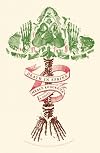
Spring is a sad season. We often say it is the era of rebirth, but seem to overlook the fact that a number of cultures have long associated spring with death. In Christianity, Jesus is risen but He has to be mocked, scourged and crucified first. In Rodoreda's masterpiece, there is no resurrection. Death is a kind fate. It is better to live in a world devoid of feelings than to have your show more heart nailed to the cross. If you can't live, it is better to be buried in a tree than trying to survive the mob’s wrath, a bunch of people who destroy any trace of love, and kindness, and dignity.
The wisteria isn't beautiful anymore; it signifies violence. The ivy becomes blood. The bees are demons. The water is a force of darkness. A figure of authority supervises the territory from a window, hidden, inaccessible. The pregnant women have to remain blindfolded because to look is to fall in love. Love is forbidden. If you have a child out of love, you are deformed. Women will spit on you, children will stone you. Sacrifice your face and your heart. In the end, you'll be begging to sacrifice your life. I can't talk about the imagery or the writing. Someone else has done this so much better than I ever will be able to. But the wind sounded different during the nights I was reading. The women laughing like demons, the men with their destroyed faces didn't stray far from my home…
Yes, her work echoes the years of Franco's tyranny. But I've never been the reader who would discuss politics. For me, Rodoreda writes about the cruelty of humans, their unparalleled lust for violence. The ghosts that cry through the pages testify to all the ways that doors are shut in your face, violence and betrayal thwart whatever kindness still exists in your heart. If anyone thinks that the darkness described in the novel is unlikely to cross their path, I truly envy them. They have never been betrayed…
“The man cupped his hand in front of his lips, speaking to me out of the side of his mouth, so no one would hear – he told me that he enjoyed watching people die.” show less
Spring is a sad season. We often say it is the era of rebirth, but seem to overlook the fact that a number of cultures have long associated spring with death. In Christianity, Jesus is risen but He has to be mocked, scourged and crucified first. In Rodoreda's masterpiece, there is no resurrection. Death is a kind fate. It is better to live in a world devoid of feelings than to have your show more heart nailed to the cross. If you can't live, it is better to be buried in a tree than trying to survive the mob’s wrath, a bunch of people who destroy any trace of love, and kindness, and dignity.
The wisteria isn't beautiful anymore; it signifies violence. The ivy becomes blood. The bees are demons. The water is a force of darkness. A figure of authority supervises the territory from a window, hidden, inaccessible. The pregnant women have to remain blindfolded because to look is to fall in love. Love is forbidden. If you have a child out of love, you are deformed. Women will spit on you, children will stone you. Sacrifice your face and your heart. In the end, you'll be begging to sacrifice your life. I can't talk about the imagery or the writing. Someone else has done this so much better than I ever will be able to. But the wind sounded different during the nights I was reading. The women laughing like demons, the men with their destroyed faces didn't stray far from my home…
Yes, her work echoes the years of Franco's tyranny. But I've never been the reader who would discuss politics. For me, Rodoreda writes about the cruelty of humans, their unparalleled lust for violence. The ghosts that cry through the pages testify to all the ways that doors are shut in your face, violence and betrayal thwart whatever kindness still exists in your heart. If anyone thinks that the darkness described in the novel is unlikely to cross their path, I truly envy them. They have never been betrayed…
“The man cupped his hand in front of his lips, speaking to me out of the side of his mouth, so no one would hear – he told me that he enjoyed watching people die.” show less
I'm glad I read this short Catalan classic written over 20 years in exile and published after the author's death. It's short, brutal and somewhat surrealistic (or maybe it's more slightly magical realism). It's also poetic and lyrical, as it describes, through the eyes of a young boy who becomes a man over the course of the book, life in an isolated small town with unusual and sometimes violent customs and practices. Each spring a young man must swim the river running under the town, which show more often results in the death or mutilation of the swimmer. Other strange customs include a forest of the dead, where the dead of the town are buried inside trees after first filling their mouths with cement to seal in their souls. Each spring the villagers must paint their houses pink, and pregnant women are blindfolded. A prisoner in a cage near the town neighs like a horse. Overall the book is dark and fable-like, and the writing is original and superb. I can't say I was emotionally moved by the book, but it is one I recommend.
3 1/2 stars show less
3 1/2 stars show less
Thanks to GR friend Dolors for recommending this author.
"Life is not meant to be easy, but it is our resilience that makes it worth living."
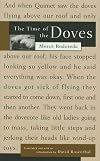
Catalan writer Merce Rodoreda's novel of the Spanish Civil War focuses on its effects on the people at the margins, the workers living from paycheck to paycheck. Natalia, whose mother died early in her childhood, worked as a bakery clerk in Barcelona. She met Quimet, a furniture maker who swept her into marriage, motherhood, and a life of waiting on him show more hand and foot. When his furniture-making shop began to fail, Natalia took a job cleaning for a wealthy family, leaving their young son and daughter alone in their apartment for long periods.
Then the Civil War began. Quimet and his friends joined the resistance, and Natalia lost her cleaning job. At first, Quimet returned with food for his family or sent food to them via his friends. However, he soon disappeared, and Natalia was left to try to find a way for her family to survive. Rodoreda's low-key stream-of-consciousness narrative effectively chronicles Natalia's battle against despair. The Time of the Doves is a powerful and moving novel that demonstrates the psychological trauma of war on civilians.
Highly recommend. show less
"Life is not meant to be easy, but it is our resilience that makes it worth living."
Catalan writer Merce Rodoreda's novel of the Spanish Civil War focuses on its effects on the people at the margins, the workers living from paycheck to paycheck. Natalia, whose mother died early in her childhood, worked as a bakery clerk in Barcelona. She met Quimet, a furniture maker who swept her into marriage, motherhood, and a life of waiting on him show more hand and foot. When his furniture-making shop began to fail, Natalia took a job cleaning for a wealthy family, leaving their young son and daughter alone in their apartment for long periods.
Then the Civil War began. Quimet and his friends joined the resistance, and Natalia lost her cleaning job. At first, Quimet returned with food for his family or sent food to them via his friends. However, he soon disappeared, and Natalia was left to try to find a way for her family to survive. Rodoreda's low-key stream-of-consciousness narrative effectively chronicles Natalia's battle against despair. The Time of the Doves is a powerful and moving novel that demonstrates the psychological trauma of war on civilians.
Highly recommend. show less
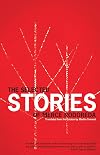
Rodoreda's plots are sinuous. She casts them out like a fishing line, inexorably reeling them in. Along the way characters become dislocated, events do not play out as anticipated; atmosphere and environment become deceptive; surreal-dreamlike transitions happen abruptly. I assume her work became much more magical, but ever-more intensified as she got deeper into her life. As I continued along reading, taking my time, savoring each story, I developed a deep respect for the deep beauty of her show more descriptive, evocative, narrative and overall literary power. I've no doubt at all her abilities had a close relationship to her distinctive, yet marginalized, Catalan origins. show less
Lists
Female Author (1)
Awards


You May Also Like


Associated Authors
Statistics
- Works
- 87
- Also by
- 12
- Members
- 4,247
- Popularity
- #5,921
- Rating
- 4.0
- Reviews
- 132
- ISBNs
- 353
- Languages
- 20
- Favorited
- 6
