
Caterina Albert i Paradís (1869–1966)
Author of Solitude
Caterina Albert i Paradís is Víctor Català (1). For other authors named Víctor Català, see the disambiguation page.
Caterina Albert i Paradís (1) has been aliased into .
About the Author
Image credit: Víctor Català per Renoir (Ilustració Catalana, 6 V 1917, t. XV, n. 726, p. 305)
Series
Works by Caterina Albert i Paradís
Works have been aliased into .
Contes 4 copies
La Enjuta 3 copies
La Mare-balena 3 copies
Retablo. 3 copies
Contrallum. 1 copy
El carcanyol 1 copy
El Calvari d'en Mitus 1 copy
Mosaic 1 copy
Associated Works
Tagged
Common Knowledge
- Canonical name
- Albert i Paradís, Caterina
- Legal name
- Albert i Paradís, Caterina
- Other names
- Català, Víctor
- Birthdate
- 1869-09-11
- Date of death
- 1966-01-27
- Gender
- female
- Nationality
- Spain
- Associated Place (for map)
- Spain
Members
Reviews
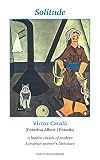
Solitude is one of those tales, seemingly so simple, that carry you along right from the beginning, almost as if you are listening to a skilled storyteller.
Recently wed Mila and Matias were travelling to their new home and his new job. Matias had been quite vague about both, but Mila was excited enough about her new life to accept at face value what little information he had given her. Initially they had travelled by cart, but now the Catalan mountains had become so steep that they would show more have to complete their journey on foot. Mila grew more and more apprehensive. Suddenly Mila halted and turned around, astounded: Holy Virgin! How far they'd travelled that day!
Beneath them she saw nothing but waves of mountain, huge, silent mountains that sloped into the quiet dusk, which enveloped them in shadow like a darkening cloud.
Mila searched that blue emptiness for a wisp of smoke, a hut, a human figure... But she saw nothing, not the slightest indication that they shared the landscape with other human beings.
"How lonely!" she mumbled, stunned and feeling her spirit grow as dark or darker than those shady depths
Finally they reached their destination, a hermitage and chapel dedicated to St Pontius, ironically the "patron of good health". They were to be the new custodians. The shepherd Gaietà and the boy Baldiret were there to greet them.
Mila and Matias now became "Hermit" and Hermitess"; Gaietà was "Shepherd". Mila hated this form of address, this loss of identity, the inability to see beyond the role. "Hermitess" served as a constant reminder to her of her isolation, especially as Matias spent more and more time away.
Solitude need not equate to loneliness. The shepherd worked hard to tell Mila the stories of the mountain, its rocks, trees, streams and spirits. He knew what loneliness and melancholy could do to her if she let them intrude. He wanted her to see her new world in the way he understood it; to become one with it. He wanted her free from the evil forces on the mountain, both natural and human.
Mila's struggle to adapt could be seen as any young woman's journey to adulthood. However, Paradís creates such a tension between the mountain's opposing forces that Mila becomes the embodiment of the struggle to attain psychological and sexual self awareness. There is very little explicit here. [Solitude] was first published in serial form in 1904-5, well before such themes built around female characters gained acceptance. Paradís had to publish under a male pseudonym, Victor Català, although her identity was known to her publisher.
Apart from her pseudonym, there is nothing overtly Catalan about this novel. The story would be as credible in settings like Greece or Albania. Later, however, it was affected by the Spanish Civil War. In the author's 1945 foreword to this, the fifth edition of [Solitude], she says two additional chapters, left out of the earlier editions, were intended to be reintegrated in a new 1937 edition. "However, the fratricidal war, which wrecked so many things with its obstacles and unforeseen upheavals, paralyzed publication temporarily, and when I returned home, it was to a disagreeable surprise." A search of her home under a flimsy pretext "... had turned the whole house upside-down", and the two chapters had disappeared.
This 1995 translation by David Rosenthal is the first translation into English of a book the publishers say is "... the most important Catalan novel to appear before the Spanish Civil War." show less
Recently wed Mila and Matias were travelling to their new home and his new job. Matias had been quite vague about both, but Mila was excited enough about her new life to accept at face value what little information he had given her. Initially they had travelled by cart, but now the Catalan mountains had become so steep that they would show more have to complete their journey on foot. Mila grew more and more apprehensive. Suddenly Mila halted and turned around, astounded: Holy Virgin! How far they'd travelled that day!
Beneath them she saw nothing but waves of mountain, huge, silent mountains that sloped into the quiet dusk, which enveloped them in shadow like a darkening cloud.
Mila searched that blue emptiness for a wisp of smoke, a hut, a human figure... But she saw nothing, not the slightest indication that they shared the landscape with other human beings.
"How lonely!" she mumbled, stunned and feeling her spirit grow as dark or darker than those shady depths
Finally they reached their destination, a hermitage and chapel dedicated to St Pontius, ironically the "patron of good health". They were to be the new custodians. The shepherd Gaietà and the boy Baldiret were there to greet them.
Mila and Matias now became "Hermit" and Hermitess"; Gaietà was "Shepherd". Mila hated this form of address, this loss of identity, the inability to see beyond the role. "Hermitess" served as a constant reminder to her of her isolation, especially as Matias spent more and more time away.
Solitude need not equate to loneliness. The shepherd worked hard to tell Mila the stories of the mountain, its rocks, trees, streams and spirits. He knew what loneliness and melancholy could do to her if she let them intrude. He wanted her to see her new world in the way he understood it; to become one with it. He wanted her free from the evil forces on the mountain, both natural and human.
Mila's struggle to adapt could be seen as any young woman's journey to adulthood. However, Paradís creates such a tension between the mountain's opposing forces that Mila becomes the embodiment of the struggle to attain psychological and sexual self awareness. There is very little explicit here. [Solitude] was first published in serial form in 1904-5, well before such themes built around female characters gained acceptance. Paradís had to publish under a male pseudonym, Victor Català, although her identity was known to her publisher.
Apart from her pseudonym, there is nothing overtly Catalan about this novel. The story would be as credible in settings like Greece or Albania. Later, however, it was affected by the Spanish Civil War. In the author's 1945 foreword to this, the fifth edition of [Solitude], she says two additional chapters, left out of the earlier editions, were intended to be reintegrated in a new 1937 edition. "However, the fratricidal war, which wrecked so many things with its obstacles and unforeseen upheavals, paralyzed publication temporarily, and when I returned home, it was to a disagreeable surprise." A search of her home under a flimsy pretext "... had turned the whole house upside-down", and the two chapters had disappeared.
This 1995 translation by David Rosenthal is the first translation into English of a book the publishers say is "... the most important Catalan novel to appear before the Spanish Civil War." show less
I really enjoyed Victor Catala's "Solitude" even though it is a fairly bleak story. The characters were drawn really well and I found the shepherd's stories about as interesting as the main character did.
In this novel, newly married Mila is dragged up to manage a hermitage by her drifter husband. She is naive and terrified, but moved by the stories told by a wandering shepherd. Things go badly as the veil is removed from Mila's eyes in an increasingly tragic series of ways.
Even though this show more is a rather quiet story, it really held my interest. show less
In this novel, newly married Mila is dragged up to manage a hermitage by her drifter husband. She is naive and terrified, but moved by the stories told by a wandering shepherd. Things go badly as the veil is removed from Mila's eyes in an increasingly tragic series of ways.
Even though this show more is a rather quiet story, it really held my interest. show less

La soledad en Miguel de Unamuno es un concepto filosófico y existencial clave, entendido no como aislamiento, sino como la máxima expresión de autenticidad y la "escuela" para el espíritu humano.

Aclaparadora. No només per la bellesa absoluta de paraules que hem caducat. És l'atmòsfera i el simbolisme que crea en cada capítol que la fa tan íntima i trasbalsadora.
Lists
Awards


You May Also Like


Associated Authors
Statistics
- Works
- 44
- Also by
- 1
- Members
- 736
- Popularity
- #34,514
- Rating
- 4.1
- Reviews
- 30
- ISBNs
- 68
- Languages
- 6
- Favorited
- 1

