

Miroslav Krleža (1893–1981)
Author of On the Edge of Reason
About the Author
Works by Miroslav Krleža
Evropa danas 6 copies
Harbors Rich with Ships: The Selected Revolutionary Writings of Miroslav Krleža, Radical Luminary of Modern World Literature (2017) 6 copies
Eseji 3 copies
Moj obračun s njima 3 copies
Legende 3 copies
Atlas svijeta 2 copies
U agoniji 2 copies
Enciklopedija Jugoslavije 2 copies
Davni dani (Dnevnik) 2 copies
Hiljadudevetstošezdesete 1 copy
Tri drame 1 copy
Zagreb 1942 1 copy
Pijana novembarska noć 1918 1 copy
Dva romana 1 copy
Zastave, sv. 1. – 5. 1 copy
Leda 1 copy
Az ész határán 1 copy
KNJIGA ESEJA 1 copy
Pomorska enciklopedija 2 1 copy
¿terkomsten 1 copy
Pomorska enciklopedija 7 1 copy
Vrnitev Filipa Latinowicza 1 copy
Návrat Filipa Latinovicze 1 copy
Pomorska enciklopedija 3 1 copy
Povratak Filipa Latinovića 1 copy
Izlet u Rusiju 1 copy
Pomorska enciklopedija 4 1 copy
Pomorska enciklopedija 5 1 copy
Pomorska enciklopedija 6 1 copy
Kraljevo, Vučjak, U logoru 1 copy
Pomorska enciklopedija 1 1 copy
Pomorska enciklopedija 8 1 copy
Bankiet w Blitwie. Ks. 3 1 copy
Banket u Blitvi I. i II. 1 copy
Bankiet w Blitwie. Ks. 1-2 1 copy
Powrót Filipa Latinovicza 1 copy
Banket u Blitvi III. 1 copy
A horvát hadisten 1 copy
Eseji : knjiga druga 1 copy
Eseji : knjiga prva 1 copy
Pjesme u tmini 1 copy
Krleža o Titu 1 copy
A fekete sas árnyékában 1 copy
99 varijacija 1 copy
Eseji, 1-4 vols. 1 copy
O religiji 1 copy
Članci i polemike 1 copy
Pisma 1 copy
U logoru 1 copy
Golgota 1 copy
Tito 1 copy
Tri simfonije 1 copy
Sa uredničkog stola 1 copy
Ratne teme 1 copy
Put u raj 1 copy
Pan 1 copy
Dijalektički antibarbarus 1 copy
O Erazmu roterdamskom 1 copy
Michelangelo Buonarotti 1 copy
Knjiga studija i putopisa 1 copy
Knjiga proze 1 copy
Iz naše književne krčme 1 copy
Galicija 1 copy
Francisco Goya y Lucientes 1 copy
Eppur si muove 1 copy
Tagged
Common Knowledge
- Canonical name
- Krleža, Miroslav
- Legal name
- Krleža, Miroslav
- Birthdate
- 1893-07-07
- Date of death
- 1981-12-29
- Gender
- male
- Education
- Ludoviceum Military Academy, Budapest
- Occupations
- book editor
novelist
playwright
writer
poet - Organizations
- Communist Party of Yugoslavia
Yugoslav Writers' Union - Awards and honors
- Encyclopedian Community of Croatia is named Miroslav Krleza
- Short biography
- Miroslav Krleža (1893-1981) wordt beschouwd als de grootste Kroatische schrijver van de twintigste eeuw, maar in Nederland is deze vroegere vriend van Tito vrijwel onbekend. Driekwart eeuw na publicatie verschijnt nu Krleža's De Glembays in Nederlandse vertaling, een verzameling verhalen over de sluwe opmars van een Kroatische familie op de maatschappelijke ladders van de Donaumonarchie.
Krleža (1893-1981) schreef een oeuvre van meer dan zestig werken bij elkaar, waaronder romans, toneelstukken, essays en poëzie. Slechts een klein gedeelte daarvan vond zijn weg naar het buitenland. In eigen land geldt de schrijver en politiek activist nog altijd als omstreden. Veel Kroaten nemen hem zijn band met de Joegoslavische dictator Tito kwalijk. Maar Krleža laat zich niet gemakkelijk categoriseren. De levensloop van de schrijver was al even wispelturig als de geschiedenis van zijn land. Als jonge officier in het Oostenrijk-Hongaarse leger liep de schrijver aan de vooravond van de Eerste Wereldoorlog over naar het Servische kamp. Zijn dienstverband bij de vijand was echter geen lang leven beschoren: de Serven vertrouwden de overloper niet en zetten hem het leger uit. De Oostenrijkers arresteerden Krleža, ontdeden hem van zijn rang en stuurden hem als kanonnenvoer naar de frontlinies toen Oostenrijk-Hongarije de Serven in 1914 de oorlog verklaarde.
Communist en humanist
Krleža kwam de oorlog uit als communist. Ondanks de beperkingen op zijn werk in het rechts-autoritaire Koninkrijk Joegoslavië (1918-1941) groeide Krleža in de jaren na de Eerste Wereldoorlog uit tot een gevestigd schrijver. Maar toen na de Duitse inval in 1941 de fascistische Ustaše aan de macht kwam, raakte de schrijver in een isolement. Krleža weigerde zich echter aan te sluiten bij de guerillastrijd van de Partizanen, uit angst om net als zijn vriend, de schrijver August Cesarec in handen van de fascisten te vallen en te worden geëxecuteerd. Die weigering maakte Krleža in de eerste jaren na de Tweede Wereldoorlg tot mikpunt van spot in het nieuwe, communistische Joegoslavië. Zijn oude kameraad Tito rehabiliteerde hem begin jaren vijftig, maar hoewel de vriendschap tussen de twee altijd hecht zou blijven, bleef de positie van Krleža als humanist en voorvechter van de inviduele vrijheid in een communistisch land tot aan zijn dood controversieel.
Zo omstreden als Krleža politiek was, zo onaantastbaar was zijn literaire positie. De schrijver torende huizenhoog uit boven zijn generatiegenoten en zijn romans sleepten vele Oost-Europese prijzen in de wacht. Krleža's literaire werk kenmerkt zich door een uitbundige, bijna barokke stijl, een scherp psychologisch inzicht en een schildersoog voor kleur en details. Zijn romans worden vaak vergeleken met romans van onder anderen Proust en Musil. - Nationality
- Croatia
- Birthplace
- Zagreb, Croatia
- Places of residence
- Zagreb, Croatia, Austrian Empire
Pécs, Hungary
Budapest, Hungary - Place of death
- Zagreb, Croatia
- Burial location
- Mirogoj Cemetery, Zagreb, Croatia
- Map Location
- Croatia
Members
Reviews

This jolly romp through early-1930s Mitteleuropa starts with a mother rejecting her son, and ends in multiple suicide and murder. In between we explore the hollowness of art, politics and religion; of bourgeois, industrial and agricultural society; of nation, homeland and family, and of pretty much everything else.
The bleak tone isn't surprising, given the place and time (it's perhaps more surprising when we remember that Miroslav Krleža went on to become a major establishment figure and show more live to a ripe old age). And this isn't one of those bleak books where you feel entitled to give up and put it aside for "something more cheerful". There's an enormous vibrancy and humanity in the text, a vast curiosity about the world, even when it's at its most negative. You go on reading it for much the same reason that you go on reading Joyce or Virginia Woolf. Strawmen who are put into the book to stand for generalised ideas like "decayed aristocrat" or "jaded ex-revolutionary" always seem to turn themselves, almost against the author's will, into complex individuals. Romantic it isn't, but you do get the feeling that Krleža doesn't entirely share the nihilistic world-view he's projecting.
I read the book in German translation (by Klaus-Detlef Olof) on the recommendation of another LT member: I'm sure it must have been a difficult book to translate. Olof seems to have done a very good job at making his translation readable and unintrusive. Of course, I can't judge how well he has reproduced the original. In a book which is partly about the relation of the former, German-speaking, imperial power to its provinces, there must certainly have been some levels of meaning that were smoothed out in such a translation, just as there would be if you were reading a book translated into English from Urdu. show less
The bleak tone isn't surprising, given the place and time (it's perhaps more surprising when we remember that Miroslav Krleža went on to become a major establishment figure and show more live to a ripe old age). And this isn't one of those bleak books where you feel entitled to give up and put it aside for "something more cheerful". There's an enormous vibrancy and humanity in the text, a vast curiosity about the world, even when it's at its most negative. You go on reading it for much the same reason that you go on reading Joyce or Virginia Woolf. Strawmen who are put into the book to stand for generalised ideas like "decayed aristocrat" or "jaded ex-revolutionary" always seem to turn themselves, almost against the author's will, into complex individuals. Romantic it isn't, but you do get the feeling that Krleža doesn't entirely share the nihilistic world-view he's projecting.
I read the book in German translation (by Klaus-Detlef Olof) on the recommendation of another LT member: I'm sure it must have been a difficult book to translate. Olof seems to have done a very good job at making his translation readable and unintrusive. Of course, I can't judge how well he has reproduced the original. In a book which is partly about the relation of the former, German-speaking, imperial power to its provinces, there must certainly have been some levels of meaning that were smoothed out in such a translation, just as there would be if you were reading a book translated into English from Urdu. show less
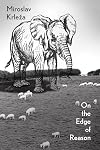
Written by Krleža in 1938 at a time when fascism had ascended in Europe and Stalin was conducting his purges in the Soviet Union, On the Edge of Reason expresses the absurdity of a condition where people are punished for expressing criticism of those in power, even if the majority hold similar views. In an offhand way at a party, a middle-aged man points out that an aged General’s actions towards vagrants at the end of WWI weren’t the heroism he portrays them to be, but murder. What show more follows is a Kafkaesque nightmare and systematic destruction of his life.
I confess that while the concept behind the book (especially in the context in which it was written) was very appealing, this was one I admired more than loved. On the positive side, Krleža writes from a position of perspective about the banality of human behavior, the wearing of masks in society, and how power is wielded, often against the intelligentsia, for selfish reasons. He sees the cycles of history and the inanity of war, knowing that it’s coming to his country soon. What made it less enjoyable was how didactic he got in expressing all this. Lengthy sections like the prosecution of the main character in the courtroom felt repetitive and tedious. It’s a book that finishes strong, however, so stick with it.
Quotes:
On art, and how it becomes a tourist attraction (referring to Michelangelo’s ceiling of the Sistine Chapel):
“The man from whose mind this chaotic vision emanated did not purchase his ‘outlook on life’ in a dime store, but came into this chapel like a meteor and left behind him the smell of cosmic sulphur…And century after century men come here bleating like goats, staring wide-eyed at these testimonies of human passion and intelligence…”
On meaninglessness:
“All human efforts vanish into space as does the dust on the roads along which man passes with the conviction that a human being’s path is specially chosen according to a higher meaning. Man is deceived in his most fundamental assumption that the purpose of life centers on him or his prejudices.”
On the modern age, boy, he hadn’t seen anything yet:
“Our times produce chamber pots and fountain pens, with one thing in mind only – to make as many of them as possible, as cheaply as possible, and as profitably as possible. Christ’s ideas are being preached by means of brass bands and Boy Scout uniforms, with drums and cymbals and banners, like some sort of military, Spartan, physical exercise. Our times systematically ridicule everything that is human in a human being.” show less
I confess that while the concept behind the book (especially in the context in which it was written) was very appealing, this was one I admired more than loved. On the positive side, Krleža writes from a position of perspective about the banality of human behavior, the wearing of masks in society, and how power is wielded, often against the intelligentsia, for selfish reasons. He sees the cycles of history and the inanity of war, knowing that it’s coming to his country soon. What made it less enjoyable was how didactic he got in expressing all this. Lengthy sections like the prosecution of the main character in the courtroom felt repetitive and tedious. It’s a book that finishes strong, however, so stick with it.
Quotes:
On art, and how it becomes a tourist attraction (referring to Michelangelo’s ceiling of the Sistine Chapel):
“The man from whose mind this chaotic vision emanated did not purchase his ‘outlook on life’ in a dime store, but came into this chapel like a meteor and left behind him the smell of cosmic sulphur…And century after century men come here bleating like goats, staring wide-eyed at these testimonies of human passion and intelligence…”
On meaninglessness:
“All human efforts vanish into space as does the dust on the roads along which man passes with the conviction that a human being’s path is specially chosen according to a higher meaning. Man is deceived in his most fundamental assumption that the purpose of life centers on him or his prejudices.”
On the modern age, boy, he hadn’t seen anything yet:
“Our times produce chamber pots and fountain pens, with one thing in mind only – to make as many of them as possible, as cheaply as possible, and as profitably as possible. Christ’s ideas are being preached by means of brass bands and Boy Scout uniforms, with drums and cymbals and banners, like some sort of military, Spartan, physical exercise. Our times systematically ridicule everything that is human in a human being.” show less
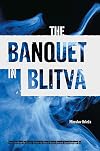
My wife saw me reading The Banquet in Blivta and sort of chuckled, your in for some heavy lifting. Only a few pages into the affair, I had to agree. The novel is a complex affair of people struggling and existing within a police state, one rife with corruption and mendacity. There are no straw figures to move the plot. Every action and contemplation is appropriately conflicted. The characters resonate and remain unsure even while commiting the irrevocable.
Okay, so a dramatist wrote a show more political satire of Yugoslavia in the 1930s, a tumult of ideology, how is the novel structured? Krleza is a Henry James of despair. Each character knows he’s doomed. The assassin who takes care of the wet work, knows glory and duty are moribund. The artists and journalists depicted liken themselves to whipped curs, tails between their legs and shouldering the way to the carrion. Krleza shifted the location of the narrative from the Balkans to the Baltics, inventing a pair of nations (Blitva and Blatvia) whose origins echo that of Serbia and Croatia. This was endeavored for sound reasons. Finding himself in bad favor for actually acknowledging and condemning the Stalinist purges, Krleza created some topical breathing room with his authorial license. Banquet in Blitva isn’t enjoyable but rather a powerful aesthetic and emotional experience. show less
Okay, so a dramatist wrote a show more political satire of Yugoslavia in the 1930s, a tumult of ideology, how is the novel structured? Krleza is a Henry James of despair. Each character knows he’s doomed. The assassin who takes care of the wet work, knows glory and duty are moribund. The artists and journalists depicted liken themselves to whipped curs, tails between their legs and shouldering the way to the carrion. Krleza shifted the location of the narrative from the Balkans to the Baltics, inventing a pair of nations (Blitva and Blatvia) whose origins echo that of Serbia and Croatia. This was endeavored for sound reasons. Finding himself in bad favor for actually acknowledging and condemning the Stalinist purges, Krleza created some topical breathing room with his authorial license. Banquet in Blitva isn’t enjoyable but rather a powerful aesthetic and emotional experience. show less

Appena finito "Il paese dalle prugne verdi" con la sua asciutta legnosità non poteva capitarmi di meglio che lasciarmi travolgere dal profluvio di parole di Krleza.
Probabilmente in qualsiasi altro momento il suo stile mi sarebbe sembrato ridondante e rintronante, invece le crepe nel terreno rimaste dopo la lettura della Mueller sono state irrorate dalla prosa ricca di humus immaginifico di Krleza. Facendomela gustare appieno.
Al netto delle felici circostanze che hanno favorito la lettura show more di quest'opera, pur senza essere io un gran critico o che, anche solo per una questione di logica terra terra, mi sento comunque di potere scrivere che, essendo Krleza imprescindibile nella letteratura degli slavi del sud, allora DI SICURO lo è anche per la letteratura europea. Ma chi lo conosceva fino a pochi mesi fa? (Io no di certo) E' generalmente noto anche solo la metà di quel che potrebbe/dovrebbe essere? (No)
Nascere a Zagabria non ti ha favorito, Miro! Meriteresti di più! Bravissimi quelli della Studio Tesi di Pordenone (la quale credo abbia chiuso i battenti da mo'! :-(( ) show less
Probabilmente in qualsiasi altro momento il suo stile mi sarebbe sembrato ridondante e rintronante, invece le crepe nel terreno rimaste dopo la lettura della Mueller sono state irrorate dalla prosa ricca di humus immaginifico di Krleza. Facendomela gustare appieno.
Al netto delle felici circostanze che hanno favorito la lettura show more di quest'opera, pur senza essere io un gran critico o che, anche solo per una questione di logica terra terra, mi sento comunque di potere scrivere che, essendo Krleza imprescindibile nella letteratura degli slavi del sud, allora DI SICURO lo è anche per la letteratura europea. Ma chi lo conosceva fino a pochi mesi fa? (Io no di certo) E' generalmente noto anche solo la metà di quel che potrebbe/dovrebbe essere? (No)
Nascere a Zagabria non ti ha favorito, Miro! Meriteresti di più! Bravissimi quelli della Studio Tesi di Pordenone (la quale credo abbia chiuso i battenti da mo'! :-(( ) show less
Lists
Awards


You May Also Like


Associated Authors
Statistics
- Works
- 145
- Members
- 954
- Popularity
- #26,999
- Rating
- 3.9
- Reviews
- 16
- ISBNs
- 106
- Languages
- 18
- Favorited
- 6

