
Miljenko Jergovic
Author of Sarajevo Marlboro
About the Author
Series
Works by Miljenko Jergovic
Associated Works
Tagged
Common Knowledge
- Canonical name
- Jergović, Miljenko
- Birthdate
- 1966-05-28
- Gender
- male
- Education
- University of Sarajevo (Philosophy and sociology)
- Occupations
- journalist
- Nationality
- Bosnia (birth)
Croatia (passport) - Birthplace
- Sarajevo, Bosnia and Herzegovina
- Places of residence
- Sarajevo, Bosnia and Herzegovina
Zagreb, Croatia - Associated Place (for map)
- Sarajevo, Bosnia and Herzegovina
Members
Reviews
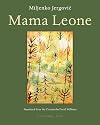
Having previously read only Sarajevo Marlboro, I was very curious where Jergović would take me this time. Mama Leone is a much bigger book (nearly twice as long): the first part is a series of vignettes told in the first person by a narrator ranging in age from a newborn to a pre-teen; the second part comprises a series of (very) short stories written by an omniscient narrator. Part one takes place in Sarajevo or in a Croatian village on the Adriatic. The stories in the second part are set show more all over the world as Bosnian refugees seek to start new lives. In 350 pages, Jergović has a broader canvas and I was a bit disappointed that he didn’t seem to really take advantage of it: some excellent stories (or vignettes) and some very much less so. The theme is identity: although there is a large cast of characters, most of the stories center on Miljenko, his (divorced) parents, and his grandparents. Indeed, I found some of the stories about his grandparents among the most affecting. The narrator—Miljenko, just like the author—is, for the vast majority of stories, a child and I often found his observations and efforts to make sense of the world around him generally a bit over-mature. His fascination, even obsession, with death is worth the time devoted to it but his efforts to understand people, their behavior, and the world around him eventually took a toll. I repeatedly found the stories less than convincing as Miljenko the narrator too often seemed Miljenko the author. Jergović does succeed in making the intimate and the local convincingly universal, no small achievement. But in the end I was left wanting more. Jergović is well worth reading; I’m just not yet convinced how great his breadth as a writer truly is. I need—and intend—to read more. Jergović is observant, nuanced, even haunting. I’m just troubled by the constant writing and re-writing of the same issues. It’s not that those issues aren’t worthy of reflection, it’s just that I’m not sure we’re getting anywhere. show less

This collection of stories or vignettes is divided into two sections. The first part appears semi-autobiographical and provides impressions from a precocious childhood. Raised primarily by his mother and maternal grandparents, he shuttled between the coast and Sarajevo. Themes include the tension between innocence and knowing, and the lingering impact and divisiveness of World War II. The second part is a series of stories that take place in the aftermath of the Bosnian War and destruction show more of Sarajevo. Most of the stories are about displacement and the loss of home. The two parts bookend the war, which is not addressed directly.
I found this a hard book to enjoy, particularly the first half. The child protagonist is an unbelievable intellectual from birth, and the vignettes are not always chronological, making it difficult to know what he knew when. The second part is a more traditional collection of short stories around a central theme. The author is also a poet, and that is obvious from his writing, which is a pastiche of impressions. show less
I found this a hard book to enjoy, particularly the first half. The child protagonist is an unbelievable intellectual from birth, and the vignettes are not always chronological, making it difficult to know what he knew when. The second part is a more traditional collection of short stories around a central theme. The author is also a poet, and that is obvious from his writing, which is a pastiche of impressions. show less
 This review was written for LibraryThing Early Reviewers.
Gently stroke your books, dear stranger, and remember they are dust.
My biomom sent me this book in 1999, probably. No doubt it was read in a heady flurry. I have flipped through it again in recent years, but my initial opinion on that first reading still stands: it establishes the horror of civil war in an antecedent-consequence format, rife with foreshadowing and leitmotifs. There was discussion just now - this night - about our myriad relatives cast about across all maps by the mad logic show more of binned history. show less
My biomom sent me this book in 1999, probably. No doubt it was read in a heady flurry. I have flipped through it again in recent years, but my initial opinion on that first reading still stands: it establishes the horror of civil war in an antecedent-consequence format, rife with foreshadowing and leitmotifs. There was discussion just now - this night - about our myriad relatives cast about across all maps by the mad logic show more of binned history. show less
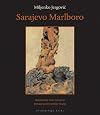
I like books about all different countries, but books about countries during wartime many times either are filled with all the gore and no character development and the rest are obviously written by either someone who is trying to protect the reader from any wartime reality, or he/she has no idea of the devastation of a war-zone.
Sarajevo Marlboro however is one of those that I believe has the perfect amount of character development, and the author allows the characters to analyze the wartime show more situation with truth and real feelings. To be honest I don't know a lot about the situation in Sarajevo in the mid 90's, and I don't know much about it now, but I felt that I got a glimpse of accurate social history through Sarajevo Marlboro.
Miljenko Jergovic creates 29 short stories during the time of war (Serbs, Croats and Muslims). The humans, real citizens, they were the focus, humanity was centre stage and war was exploding all around them as they lived on, or did not. I was captivated because I admired their strength, determination and perseverance. It is through them Jergovic depicts the scene and the gruesome tale of war. Weather you believe in war, or don't it is happening currently and has been going on all over for generations and generations. This for me was the human side, the side that often lies hidden under death tolls and arguments as to if there really should be a war or not. The portrayal of humanity, from so many different perspectives is demonstrated in Sarajevo Marlboro. Since the author chose to jump from this life to that, and this family to that you feel like you are allowed in, and become part of them for the time when Jergovic is telling their story, they engulf you, you care about them you fear for them, you grieve for them, and you hope for a better future for those who have now become your friends.
For me personally the way Jergovic chose to write these stories made the book, if he would have tried to encapsulate the entire picture of devastation in one shot, or the horror of war in just one image there would have been no way that a person who had not been there would be able to tolerate reading the gruesomeness of the truth. Because he chose to drop the reader in on 29 different families, 29 different situations, and 29 different glimpses of the war it felt broken up enough to allow the terror to enter in bit by bit. All the stories together form a whole, they are a complete and gruesome picture of war, but in the eyes of the people there is also so much hope, and life that it is somehow made more bearable. I saw their determination to live, and dreams of a different future.
Here is a little excerpt from the inside cover about the author Miljenko Jergovic:
"Croatian by birth, Jergovic spent his childhood in Sarajevo and chose to remain there throughout most of the war. A dazzling storyteller, he brings a profoundly human, razor-sharp understanding of the fate of the city's young Muslims, Croats, Serbs with a subterranean humor and profoundly personal vision. Their offbeat lives and daily dramas in the foreground, the killing zone in the background."
I loved this book, and can't wait to get another one of Miljenko Jergovic's titles in my hands. I am captivated by his writing style and the heart that is is obvious that he has for his people. show less
Sarajevo Marlboro however is one of those that I believe has the perfect amount of character development, and the author allows the characters to analyze the wartime show more situation with truth and real feelings. To be honest I don't know a lot about the situation in Sarajevo in the mid 90's, and I don't know much about it now, but I felt that I got a glimpse of accurate social history through Sarajevo Marlboro.
Miljenko Jergovic creates 29 short stories during the time of war (Serbs, Croats and Muslims). The humans, real citizens, they were the focus, humanity was centre stage and war was exploding all around them as they lived on, or did not. I was captivated because I admired their strength, determination and perseverance. It is through them Jergovic depicts the scene and the gruesome tale of war. Weather you believe in war, or don't it is happening currently and has been going on all over for generations and generations. This for me was the human side, the side that often lies hidden under death tolls and arguments as to if there really should be a war or not. The portrayal of humanity, from so many different perspectives is demonstrated in Sarajevo Marlboro. Since the author chose to jump from this life to that, and this family to that you feel like you are allowed in, and become part of them for the time when Jergovic is telling their story, they engulf you, you care about them you fear for them, you grieve for them, and you hope for a better future for those who have now become your friends.
For me personally the way Jergovic chose to write these stories made the book, if he would have tried to encapsulate the entire picture of devastation in one shot, or the horror of war in just one image there would have been no way that a person who had not been there would be able to tolerate reading the gruesomeness of the truth. Because he chose to drop the reader in on 29 different families, 29 different situations, and 29 different glimpses of the war it felt broken up enough to allow the terror to enter in bit by bit. All the stories together form a whole, they are a complete and gruesome picture of war, but in the eyes of the people there is also so much hope, and life that it is somehow made more bearable. I saw their determination to live, and dreams of a different future.
Here is a little excerpt from the inside cover about the author Miljenko Jergovic:
"Croatian by birth, Jergovic spent his childhood in Sarajevo and chose to remain there throughout most of the war. A dazzling storyteller, he brings a profoundly human, razor-sharp understanding of the fate of the city's young Muslims, Croats, Serbs with a subterranean humor and profoundly personal vision. Their offbeat lives and daily dramas in the foreground, the killing zone in the background."
I loved this book, and can't wait to get another one of Miljenko Jergovic's titles in my hands. I am captivated by his writing style and the heart that is is obvious that he has for his people. show less
Lists
Awards


You May Also Like


Associated Authors
Statistics
- Works
- 42
- Also by
- 4
- Members
- 808
- Popularity
- #31,570
- Rating
- 3.9
- Reviews
- 12
- ISBNs
- 154
- Languages
- 21
- Favorited
- 1
