

Daša Drndić (1946–2018)
Author of Trieste
About the Author
Image credit: By NDBOOKS.COM
Works by Daša Drndić
Tagged
Common Knowledge
- Birthdate
- 1946-08-10
- Date of death
- 2018-06-05
- Gender
- female
- Occupations
- novelist
playwright - Organizations
- P.E.N.
- Nationality
- Croatia
- Birthplace
- Zagreb, Croatia, Yugoslavia
- Place of death
- Rijeka, Croatia
- Associated Place (for map)
- Croatia
Members
Reviews

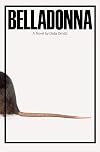
Drndić uses a reader-baffling technique a little like W G Sebald's in her fiction: she mixes fictional characters with family photos, descriptions of real events and people, tables of historical data, references to books and websites, and so on, constantly reminding us that it's our responsibility as readers to test the trustworthiness of sources. We know that her pessimistic and sometimes paranoid narrator, the clinical-psychologist-turned-writer Andreas Ban (also the narrator of show more Belladonna), is not Daša Drndić. Except that a lot of the time he obviously is expressing things that she feels very strongly about, and at least some of his friends and the people he admires seem to be people with connections to the author...
The book ranges widely over different topics — the Nazi genocide in the Balkans, Latvia and occupied France, the role of chess-players on both sides in the war, the aftermath of the Yugoslav wars of the 1990s and the intolerance and rabid nationalism of the new Croatia, the random and devastating ways mental and physical illnesses destroy the lives of ordinary people, and much else. Ban confronts us with a lot of hard and unpleasant historical realities, and castigates the world for its reluctance to acknowledge past evils and punish those responsible. And for our amnesia concerning the debts we owe to the past, especially the way the successor-states to Yugoslavia try to erase memories of the struggle for liberation from fascism.
A dark, difficult book, but a very rewarding one: I'm only sorry to discover Drndić so late. show less
The book ranges widely over different topics — the Nazi genocide in the Balkans, Latvia and occupied France, the role of chess-players on both sides in the war, the aftermath of the Yugoslav wars of the 1990s and the intolerance and rabid nationalism of the new Croatia, the random and devastating ways mental and physical illnesses destroy the lives of ordinary people, and much else. Ban confronts us with a lot of hard and unpleasant historical realities, and castigates the world for its reluctance to acknowledge past evils and punish those responsible. And for our amnesia concerning the debts we owe to the past, especially the way the successor-states to Yugoslavia try to erase memories of the struggle for liberation from fascism.
A dark, difficult book, but a very rewarding one: I'm only sorry to discover Drndić so late. show less

Daša Drndić‘s short fourth novel, from 1998, which only appeared in English after her death, follows Croatian broadcaster Tea Radan and her young daughter Sara as they are forced to move from Belgrade to Rijeka by the break-up of Yugoslavia, and then find that they are “not Croatian enough“ for their new neighbours and move on into Canadian exile. Ranging backwards through the 20th century history of the Balkans, Drndić explores how the violence of history messes up ordinary lives, show more in essentially trivial but still distressing and humiliating ways for Tea and Sara, and far more brutally for thousands of other victims of conflict, including her own family. There are the daily humiliations of being a refugee even in a progressive, tolerant country like Canada (and Drndić is careful to remind us that Canada’s record has not always been spotless), there are the bitter ironies in the ways the independent Croatia of the nineties sometimes behaves like the Ustasha Croatia of World War II, and there is the thoughtless nationalism of most of the Croatian emigrant community in Toronto.
As you would expect from Drndić, a dark, funny, serious and unpredictably genre-jumping book, even within the novella-length format, and one that has not lost its relevance in the last 25 years. show less
As you would expect from Drndić, a dark, funny, serious and unpredictably genre-jumping book, even within the novella-length format, and one that has not lost its relevance in the last 25 years. show less

This is Drndić's most famous novel, set, as the English title suggests, in the armpit of the Adriatic, where Italy meets Austria-Hungary and the Balkans, and it's essentially the story of a Jewish woman separated from her young child in wartime, against the background of the horrors of the Treblinka extermination camp and of Himmler's mass-kidnapping project, Operation Lebensborn. Again and again we are confronted with the question of how we deal in ordinary life with someone who might be a show more decent citizen, even a loving parent or spouse, now, but has committed unspeakably evil acts in wartime.
As well as the storyline, there are also very strong parallels with WG Sebald's Austerlitz in things like the documentary style, the 43-page list of names of Italian Jews deported or killed in the Holocaust, the insistence on quoting witnesses, and the muddy black-and-white photos in the text that destabilise our understanding of where the fictional story breaks off from the historical facts. Given the closeness in dates, this is probably not intentional, but rather a matter of two people with similar literary backgrounds coming independently to closely similar ways of solving the same problem. How do you write about the Holocaust in fiction without being disrespectful to the memory of those who experienced it when you are from a generation (just) too young to have experienced it at first hand? And Drndić, of course, obviously had the aftermath of the more recent wars in her own country in mind as well.
Either way, the overlaps are not big enough to spoil either book, and there's a wealth of cultural reference in Drndić that is specific to the complex history of the Trieste and Gorizia region — the many languages that meet there, the shifting place names, the presence of Joyce, Svevo, D'Annunzio and the rest, as well as intrusions into the text from Pound, Eliot, Thomas Bernhard and other offstage commentators. show less
As well as the storyline, there are also very strong parallels with WG Sebald's Austerlitz in things like the documentary style, the 43-page list of names of Italian Jews deported or killed in the Holocaust, the insistence on quoting witnesses, and the muddy black-and-white photos in the text that destabilise our understanding of where the fictional story breaks off from the historical facts. Given the closeness in dates, this is probably not intentional, but rather a matter of two people with similar literary backgrounds coming independently to closely similar ways of solving the same problem. How do you write about the Holocaust in fiction without being disrespectful to the memory of those who experienced it when you are from a generation (just) too young to have experienced it at first hand? And Drndić, of course, obviously had the aftermath of the more recent wars in her own country in mind as well.
Either way, the overlaps are not big enough to spoil either book, and there's a wealth of cultural reference in Drndić that is specific to the complex history of the Trieste and Gorizia region — the many languages that meet there, the shifting place names, the presence of Joyce, Svevo, D'Annunzio and the rest, as well as intrusions into the text from Pound, Eliot, Thomas Bernhard and other offstage commentators. show less
‘’And the wind brought people who had let their plows rust; solitary people tiling the sky, reaping the harvests of summer nights, the fat grain of early straws, leaving it all unwinnowed. Instead they sued swords; their plowing was of bodies, their furrow cut to the heart; they plucked out hearts like tree stumps, they burst gall bladders, with livers they fed the vultures on their shoulders. At the last they rolled away the skulls like stones for building, but for building there was show more never time.’’
I don’t think I am capable (or even worthy) to write a text -let alone a so-called ‘’review’’- about one of the most terrifying, powerful, moving books I’ve ever had the blessing to read. This is a novel for which the verb ‘’love’’ holds no meaning. It is superficial and insubstantial. This is a novel that comes only once, maybe twice, in the life of a reader and leaves us speechless, staring in awe in front of the power of Literature and the horror committed by human beings. This is one of the most significant books one will ever read. In fact, it should be taught in every school in Europe. Perhaps then there would be a small glimpse of hope for change in a world that still lets politics define lives and codes of behaviour. A world that still adopts the evils of Nazism and Sovietism, the two faces of the same coin.
‘’Where is my face? Where is my past? Where is my resting place? Where is my grave?’’
Andreas Ban, our guide on a journey through the darkest periods of our recent History, through the horror of Nazism, the nightmare of Sovietism, the bloodshed during the 1990s. A psychologist who has failed to decode the evil in all of us and who has chosen to reside in a coastal town in Croatia. What we witness is his personal journey through seemingly disjointed thoughts and memories of a dark past and a tumultuous life. A life sealed with the bloody mark of war, terror, and despair. With the results of the mob that feels the need to kill just because they obey men who would frighten the Devil himself.
‘’...darkness like dust covers the losers and the victors mixed together in heroic blood and cowardly excrement.’’
Andreas focuses on the Nazi crimes and the terrors committed by the Ustaša regime which led to the massacre of Serbs, Jews, and Roma. He barely touches in the 90s war and this was refreshing. We know all there is to know about the 1990s conflicts in the Balkan peninsula but virtually nothing about the atrocities committed by the Nazi puppet states during the Second World War and the years prior to it. Andreas’s thoughts ask us to consider questions that seem to have no easy answers. What happens when you are the child of a war criminal, forced to carry an impossible burden? What happens when you are a citizen of a country that was responsible for unspeakable crimes? What hope is there when the result of a war for independence is the arrival of a new dictatorship?
Andreas is someone who craves truth as we crave air and water. Through the absurd persecution of the Jewish people over the centuries, he contemplates the futility of our existence, the horror created by a human being and the monsters born out of these actions. The countries that collaborated with the Third Reich paid the price but there is no future in a world that remains fixed in the past as a pretext to serve vile ambitions. Who is on the side of righteousness and who condones the crimes of the Nazis and the Communists? Whose opinion can the rest of us trust? There is an array of utterly disgusting Nationalists, Nazi worshippers, Stalinists, murderers and rapists that answers to the question ‘’how can a war start?’’ The reason why people become beasts following these ideologies is to be found in low education, low self-esteem, and all-around hereditary evilness. This is my personal explanation and observation.
‘’I sold my painting. Now I wander through deserted landscapes getting lost.’’
Andreas’s heart is in Belgrade and the violent rules imposed by war-mongers demand that he become an enemy. How can you put your past aside when war has taken away your identity? Andreas remembers children being humiliated by their teachers in the service of a tyrannical state. His mind is haunted by images from Bergen- Belsen, Auschwitz, and Dachau. The seven dwarfs of the Ovitz family, Mengele’s terror experiment. One more monster that was never punished for his crimes. The Šabac concentration camp where 25,000 people were imprisoned and 7,000 of them were massacred by the Nazis and their allies.
‘’I have let things slip, a thirty-year-old cargo boat
Stubbornly hanging on to my name and address…’’
Sylvia Plath, ‘’Tulips’’
Andreas takes us to Belgrade and the Sephardic cemetery which is a true beauty to behold. I visited a few years ago and the sight is moving and poignant. It is located next to the Cemetery of the Liberators and its unique Holocaust memorial and the monument commemorating the Kladovo transport when winter became a Nazi alley, condemning hundreds of people to a horrifying death. You can see some of the most impressive monuments in the Sephardic cemetery, created by Bogdan Bogdanović, one of the most renowned Serbian architects. Our journey continues to Zagreb, Split, and Imotski, three of the most beautiful cities of Croatia. To Amsterdam, Vienna, Leipzig. To Paris, Moscow, the Hague, and the seven shiny chairs, a monument in honour of the children taken by the Nazi beasts. Above all, the river Drina stands as a symbol of unity and the peaceful coexistence of people and religions which is so fragile and easy to tear down. Art in all its forms is Andreas’s faithful companion. Akhmatova, James Joyce, Pessoa, Beckett, Dubravka Ugrešić (one of my favourite writers), Plath, Pasternak, Andersen, O.Henry. Eisenstein, Picasso, Plisetskaya. The story of the rescue of the broken dolls and the crazy Clementia. The flowers as a symbol of life blooming and life withering and dying.
This is a masterpiece that cannot be compared to other novels with similar themes. This is the child of Daša Drndić, a modern, female Dostoevsky, perfectly translated by Celia Hawkesworth. An elegy to a life torn by isolation, guilt and the agony and struggle of sustaining even the faintest resemblance of life in the midst of a never-ending terror born by Fascism of both sides (right and left have zero differences. Their aim is to oppress and destroy) How can you let the sunshine in and avoid the poison of the belladonna when monsters still roam the world?
‘’Follow the histories of once-living people and converse with the ghosts. But people do not have the time.’’
The following extract is the daily reality I face as an educator and an observer that witnesses the new generation being led by right and left populists, unwashed anarchists whose dirt can be smelled by miles and mobile-phone and Facebook fashionistas whose already non-existent brains have turned into an extremely failed omelette.
‘’One girl told me that the Second World War had begun in 1945 and ended in 1950, another that Camus had lived in the eighteenth century. There are those who believe that ‘’The Bridge Over the Drina’’ is a five-act play, that ‘’Hamlet’’ is a novel. For some the middle ages lasted until the nineteenth century which is, all right, a fact one might accept. Eighty percent of my students had never been to the theatre, 99 percent had never gone to a single art exhibition. What have I wasted my life on.’’
My reviews can also be found on https://theopinionatedreaderblog.wordpress.com show less
I don’t think I am capable (or even worthy) to write a text -let alone a so-called ‘’review’’- about one of the most terrifying, powerful, moving books I’ve ever had the blessing to read. This is a novel for which the verb ‘’love’’ holds no meaning. It is superficial and insubstantial. This is a novel that comes only once, maybe twice, in the life of a reader and leaves us speechless, staring in awe in front of the power of Literature and the horror committed by human beings. This is one of the most significant books one will ever read. In fact, it should be taught in every school in Europe. Perhaps then there would be a small glimpse of hope for change in a world that still lets politics define lives and codes of behaviour. A world that still adopts the evils of Nazism and Sovietism, the two faces of the same coin.
‘’Where is my face? Where is my past? Where is my resting place? Where is my grave?’’
Andreas Ban, our guide on a journey through the darkest periods of our recent History, through the horror of Nazism, the nightmare of Sovietism, the bloodshed during the 1990s. A psychologist who has failed to decode the evil in all of us and who has chosen to reside in a coastal town in Croatia. What we witness is his personal journey through seemingly disjointed thoughts and memories of a dark past and a tumultuous life. A life sealed with the bloody mark of war, terror, and despair. With the results of the mob that feels the need to kill just because they obey men who would frighten the Devil himself.
‘’...darkness like dust covers the losers and the victors mixed together in heroic blood and cowardly excrement.’’
Andreas focuses on the Nazi crimes and the terrors committed by the Ustaša regime which led to the massacre of Serbs, Jews, and Roma. He barely touches in the 90s war and this was refreshing. We know all there is to know about the 1990s conflicts in the Balkan peninsula but virtually nothing about the atrocities committed by the Nazi puppet states during the Second World War and the years prior to it. Andreas’s thoughts ask us to consider questions that seem to have no easy answers. What happens when you are the child of a war criminal, forced to carry an impossible burden? What happens when you are a citizen of a country that was responsible for unspeakable crimes? What hope is there when the result of a war for independence is the arrival of a new dictatorship?
Andreas is someone who craves truth as we crave air and water. Through the absurd persecution of the Jewish people over the centuries, he contemplates the futility of our existence, the horror created by a human being and the monsters born out of these actions. The countries that collaborated with the Third Reich paid the price but there is no future in a world that remains fixed in the past as a pretext to serve vile ambitions. Who is on the side of righteousness and who condones the crimes of the Nazis and the Communists? Whose opinion can the rest of us trust? There is an array of utterly disgusting Nationalists, Nazi worshippers, Stalinists, murderers and rapists that answers to the question ‘’how can a war start?’’ The reason why people become beasts following these ideologies is to be found in low education, low self-esteem, and all-around hereditary evilness. This is my personal explanation and observation.
‘’I sold my painting. Now I wander through deserted landscapes getting lost.’’
Andreas’s heart is in Belgrade and the violent rules imposed by war-mongers demand that he become an enemy. How can you put your past aside when war has taken away your identity? Andreas remembers children being humiliated by their teachers in the service of a tyrannical state. His mind is haunted by images from Bergen- Belsen, Auschwitz, and Dachau. The seven dwarfs of the Ovitz family, Mengele’s terror experiment. One more monster that was never punished for his crimes. The Šabac concentration camp where 25,000 people were imprisoned and 7,000 of them were massacred by the Nazis and their allies.
‘’I have let things slip, a thirty-year-old cargo boat
Stubbornly hanging on to my name and address…’’
Sylvia Plath, ‘’Tulips’’
Andreas takes us to Belgrade and the Sephardic cemetery which is a true beauty to behold. I visited a few years ago and the sight is moving and poignant. It is located next to the Cemetery of the Liberators and its unique Holocaust memorial and the monument commemorating the Kladovo transport when winter became a Nazi alley, condemning hundreds of people to a horrifying death. You can see some of the most impressive monuments in the Sephardic cemetery, created by Bogdan Bogdanović, one of the most renowned Serbian architects. Our journey continues to Zagreb, Split, and Imotski, three of the most beautiful cities of Croatia. To Amsterdam, Vienna, Leipzig. To Paris, Moscow, the Hague, and the seven shiny chairs, a monument in honour of the children taken by the Nazi beasts. Above all, the river Drina stands as a symbol of unity and the peaceful coexistence of people and religions which is so fragile and easy to tear down. Art in all its forms is Andreas’s faithful companion. Akhmatova, James Joyce, Pessoa, Beckett, Dubravka Ugrešić (one of my favourite writers), Plath, Pasternak, Andersen, O.Henry. Eisenstein, Picasso, Plisetskaya. The story of the rescue of the broken dolls and the crazy Clementia. The flowers as a symbol of life blooming and life withering and dying.
This is a masterpiece that cannot be compared to other novels with similar themes. This is the child of Daša Drndić, a modern, female Dostoevsky, perfectly translated by Celia Hawkesworth. An elegy to a life torn by isolation, guilt and the agony and struggle of sustaining even the faintest resemblance of life in the midst of a never-ending terror born by Fascism of both sides (right and left have zero differences. Their aim is to oppress and destroy) How can you let the sunshine in and avoid the poison of the belladonna when monsters still roam the world?
‘’Follow the histories of once-living people and converse with the ghosts. But people do not have the time.’’
The following extract is the daily reality I face as an educator and an observer that witnesses the new generation being led by right and left populists, unwashed anarchists whose dirt can be smelled by miles and mobile-phone and Facebook fashionistas whose already non-existent brains have turned into an extremely failed omelette.
‘’One girl told me that the Second World War had begun in 1945 and ended in 1950, another that Camus had lived in the eighteenth century. There are those who believe that ‘’The Bridge Over the Drina’’ is a five-act play, that ‘’Hamlet’’ is a novel. For some the middle ages lasted until the nineteenth century which is, all right, a fact one might accept. Eighty percent of my students had never been to the theatre, 99 percent had never gone to a single art exhibition. What have I wasted my life on.’’
My reviews can also be found on https://theopinionatedreaderblog.wordpress.com show less
Lists
Awards


You May Also Like


Associated Authors
Statistics
- Works
- 17
- Members
- 819
- Popularity
- #31,141
- Rating
- 4.1
- Reviews
- 20
- ISBNs
- 69
- Languages
- 15
- Favorited
- 4