
David Salle
Author of How to See: Looking, Talking, and Thinking about Art
About the Author
David Salle's paintings are in the permanent collections of the Museum of Modern Art, the Whitney Museum of American Art, the Guggenheim Museum, the Metropolitan Museum of Art, the National Gallery in Washington, DC, the Los Angeles County Art Museum, Tate Modern, the National Galerie Berlin, and show more many others. He lives in New York City. show less
Works by David Salle
Cecily Brown : Rehearsal : [The Drawing Center, Main Gallery, October 7-December 18, 2016] (2016) — Contributor — 13 copies
David Salle: Recent Paintings, 5 March to 2 April 1988, Mary Boone Michael Werner Gallery. (1988) 5 copies
David Salle: The Vortex Paintings: Presented By Mary Boone and Jeffrey Deitch (2005) — Illustrator — 4 copies
David Salle 1979-94 3 copies
David Salle: Early Product Paintings 3 copies
David Salle : sieben Bilder 2 copies
David Salle : Paris Opera paintings : Galerie Thaddaeus Ropac, Paris, Salzburg : 2nd March until 7th April 2004 (2004) 2 copies
New Paintings 1 copy
Interview with David Salle 1 copy
Vortex Paintings, The 1 copy
Roy Lichtenstein Reflections 1 copy
David Salle, Juan Uslé. 1 copy
Associated Works
Tagged
Common Knowledge
- Birthdate
- 1952
- Gender
- male
- Organizations
- American Academy of Arts and Letters (2016)
Members
Reviews
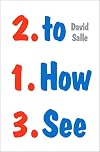
This is not a book about how to see. But its subtitle is a fairly accurate summation of what you’ll get. In some thirty-three essays published across many years in various fora (mostly art magazines), David Salle does a lot of looking at art, a modicum of thinking about art, and a significant amount of talking (i.e. writing) about art. Salle is a highly respected artist himself. He’s the real business. He knows his stuff from paint brush to French theory, from drawing room to board room. show more And along the way he’s got to know (and like, or at least respect) nearly everyone he eventually writes about (because there’s no point writing about the other guys). Which isn’t to say that he isn’t at times critical of what his friends (or he, himself) produce. But for the most part he is typically appreciating here (as opposed to chastising), noting something he’s overlooked before, drawing connections that help him make sense of what he is seeing. And in explicating these observations, he does, in a way, help the reader see things too. In fact, I’d go so far as to say, following his example, that if I too had spent a lifetime producing and exhibiting and writing about art subsequent to “halcyon days” at CalArt while obtaining my MFA, I too might see things in much the way Salle does. But I suspect I wouldn’t be able to write about it so charmingly.
And it is the writing here that really stands out. With easy erudition, personal anecdotes, and bon mots galore, Salle does the heavy lifting for the reader. Even of the many artists here whose work I do not know at all well, I felt that I learned something vital, or at least interesting. Although Salle abjures the language of theory, he is clearly familiar with it. And his anti-theory stance can only go so far before it begins to cultivate a theoretical language of its own. Nevertheless, most of the writing here is refreshingly accessible and engaging whether or not you end up agreeing with Salle’s opinions, a point on which he is not insistent.
Definitely worth reading. show less
And it is the writing here that really stands out. With easy erudition, personal anecdotes, and bon mots galore, Salle does the heavy lifting for the reader. Even of the many artists here whose work I do not know at all well, I felt that I learned something vital, or at least interesting. Although Salle abjures the language of theory, he is clearly familiar with it. And his anti-theory stance can only go so far before it begins to cultivate a theoretical language of its own. Nevertheless, most of the writing here is refreshingly accessible and engaging whether or not you end up agreeing with Salle’s opinions, a point on which he is not insistent.
Definitely worth reading. show less
Incestual. Artsy-fartsy vocabulary & referential recent history & neo-retro-anti-X everything. Not for the general public or even people like me who have been to several museums, taken a few courses, read a bunch of books.
Main theme seems to be that intentionality is overrated.
The only quote I feel worth recording is that an analogy is made to an "anchovy reduction." um...
(I note that the author was born in Oklahoma. [!] But his bio makes a point of saying Norman, which is one of the show more richest, most cultured satellite cities of OKC. I think he really wants to say something about how he overcame his provincial background and now he's all that.)
I stopped reading at p. 33 and skimmed the rest.
Most closely I skimmed "A Talk for the First Day of Class" as that looks pretty good for serious students.
Jan. 2024 show less
Main theme seems to be that intentionality is overrated.
The only quote I feel worth recording is that an analogy is made to an "anchovy reduction." um...
(I note that the author was born in Oklahoma. [!] But his bio makes a point of saying Norman, which is one of the show more richest, most cultured satellite cities of OKC. I think he really wants to say something about how he overcame his provincial background and now he's all that.)
I stopped reading at p. 33 and skimmed the rest.
Most closely I skimmed "A Talk for the First Day of Class" as that looks pretty good for serious students.
Jan. 2024 show less
You May Also Like


Associated Authors
Statistics
- Works
- 54
- Also by
- 4
- Members
- 322
- Popularity
- #73,504
- Rating
- 3.7
- Reviews
- 2
- ISBNs
- 27
- Languages
- 2