
Robert Hughes (1) (1938–2012)
Author of The Fatal Shore
For other authors named Robert Hughes, see the disambiguation page.
About the Author
Robert Hughes was born in Sydney, Australia on July 28, 1938. He studied art and architecture at the University of Sydney. He pursued art criticism mostly as a sideline while painting, writing poetry and serving as a cartoonist for the weekly intellectual journal The Observer. He left Australia and show more spent time in Italy before settling in London, where he became a well-known critical voice and wrote for several newspapers. He was chief art critic for Time magazine for over 30 years. He wrote several books including The Fatal Shore, American Visions: The Epic History of Art in America, Culture of Complaint: The Fraying of America, Things I Didn't Know, and Rome. He also hosted an eight-part documentary about the development of modernism from the Impressionists through Warhol entitled The Shock of the New. It was seen by more than 25 million viewers when it ran first on BBC and then on PBS. He also wrote a book by the same name about the series. He died after a long illness on August 6, 2012 at the age of 74. (Bowker Author Biography) show less
Image credit: Joyce Ravid
Series
Works by Robert Hughes
A Jerk on One End: Reflections of a Mediocre Fisherman (Library of Contemporary Thought) (1999) 92 copies, 1 review
The new shock of the new 4 copies
Film 3 copies
The Shock of the new 2 copies
The Shock of the New; Volume 1: The mechanical paradise, Volume 2: The powers that be (DVD) 2 copies
The Shock of the New; Volume 5: The threshold of liberty, Volume 6: The view from the edge (DVD) 2 copies
landscape of pleasure 1 copy
Rare THE FATAL SHORE Robert Hughes 1st US Edition/1st Printing 1987 Australia NF/NF [Hardcover] Robert Hughes (1987) 1 copy
Corberó a Cap Roig 1 copy
Associated Works
The Condé Nast Traveler Book of Unforgettable Journeys: Great Writers on Great Places (2007) — Contributor — 281 copies, 5 reviews
The Ern Malley Affair (1993) — Introduction, some editions; Afterword, some editions — 117 copies, 2 reviews
Art of the Real : Nine American Figurative Painters (1983) — Foreword, some editions; Foreword — 22 copies, 1 review
Tagged
Common Knowledge
- Canonical name
- Hughes, Robert
- Legal name
- Hughes, Robert Studley Forrest
- Birthdate
- 1938-07-28
- Date of death
- 2012-08-06
- Gender
- male
- Education
- University of Sydney
St Ignatius' College, Riverview, New South Wales, Australia - Occupations
- art critic
writer
television documentary maker
journalist
historian - Organizations
- Time
- Awards and honors
- Order of Australia (Officer ∙ 1991)
Australian Living Treasure (1997)
American Academy of Arts and Letters Academy Award (Literature ∙ 1996)
Frank Jewett Mather Award (1982 ∙ 1985)
American Academy of Arts & Sciences (1996)
Creu de Sant Jordi (2006) (show all 13)
Grierson Award (2009)
W. H. Smith Literary Award (1988)
New York Public Library Literary Lion (1987)
American Academy of Achievement's Golden Plate Award (1988)
London Sunday Times Writer of the Year (2000)
New South Wales Premier's Literary Award (2007)
International Emmy Award (2009) - Relationships
- Hughes, Thomas Eyre Forrest (brother)
Downes, Doris (wife) - Nationality
- Australia (birth)
- Birthplace
- Sydney, New South Wales, Australia
- Places of residence
- Sydney, New South Wales, Australia
Italy
London, England, UK
New York, New York, USA - Place of death
- Bronx, New York, USA
- Map Location
- Australia
Members
Reviews
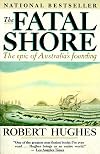
All I know for sure about Australia is that it has cool birds. Everything else I’ve had to learn from Hollywood. Here’s what I’ve ascertained so far:
1) Tina Turner makes people fight on trapeezes.
2) Bowie knife-wielding Outback types turn into delightful fish-out-of-water characters, when you bring them to the big city.
3) Alligator wrestling and Great White Shark hunting are enormously popular.
4)This is the temple where Australians sacrifice kangaroos to a vengeful goddess they call show more “Olivia Newton-John”:
Fatal Shore turned out to be a wonderful book to help fill whatever gaps might still remain in my knowledge about the Land Down Under. This is the way I like history written- not too much detail about this king or that governor- more about the social trends and economic activity that drove events. Robert Hughes masterfully relates Australia’s early history as a British penal colony from 1790-1840. Looking at stock images of Australia‘s beautiful scenery now, it seems tragic that it was once used as a prison, but that’s how it started.
How could such a thing happen?
The answer is really a convergence of several factors. One thing that surprised me was the extent to which American independence prompted Australia‘s colonization. In 1790, America had just recently won her independence. Prior to this, British convicts frequently worked sentences of indentured labor on American farms in Virginia, Pennsylvania and the Carolinas. With American independence, this was no longer an option. England turned to warehousing criminals in hulking prison barges on the Thames. This soon proved expensive, however, and was a breeding ground for disease.
While some worried themselves about the convict problem, senior leadership in government was more preoccupied with the state of the navy. The loss of the American colonies created a strategic vulnerability, in that America had been Britain’s main source of quality shipbuilding materials. For over 100 years, the Crown felled America’s ancient forests to construct its world-dominating fleet. Denied that, the best alternative woods lay in Russia… a decidedly less eager supplier. Likewise, the best flax for canvass and hemp for ropes also came from the American colonies. Another source was needed urgently. As if ordained by the stars, promising timber and flax were both discovered on Norfolk Island, off the Australian coast in 1784. Suddenly, establishing a British presence there became a national security priority- both to develop the resources, and to deter French claims on the land (the French possessing territories in “nearby” Tahiti). But how could Britons be convinced to leave their friends and family for a remote continent filled with unknown challenges? Scientist and explorer Joseph Banks hit on an elegant solution: why not use convicts? His proposal came to the attention of the Secretary of State, Viscount Sydney, who aggressively championed the scheme. Thus began the era of “transportation”, as it was called …and none too soon; Britain was in the throes of a crime wave. Loss of American markets precipitated a dramatic falloff of exports, as well as a concurrent rise in commodity prices (Americas being the supplier of many raw materials). Massive unemployment resulted, starting in manufacturing, but spreading to other areas. Hired labor in the agricultural sector was hit hard; unlanded farm workers literally began to starve in the countryside. Crimes of desperation (stealing food, killing for food, and prostitution for food) broke out everywhere. Although many of these offenses were previously punishable by hanging, British judges were encouraged to commute the sentences to “transporation”. Hughes’ research here is impressive- he uncovers a wealth of letters bidding loved ones farewell forever from convicts embarking on the 14,000 mile one-way journey. That’s a long trip even in today’s small world; in 1790 it must have sounded the equivalent of being sent to the moon!
…And then it got complicated
But not in a bad way. Having established all this background information about why Australia was colonized with convicts, Hughes launches into how the grand social experiment played out. It starts with the brutal 14k mile journey from London to Botany Bay. Prisoners were packed below decks in squalor- fighting, hustling one another, getting seasick, killing and raping each other, stealing food, singing songs, telling stories, getting it on, bemoaning their fate, planning and attempting mutinies (2 attempted in the history of Transporation, neither successful), and passing the time in a thousand other ways. The text is peppered with song lyrics, dirty limericks, and excerpts from the ships’ logs. It reads like a novel- I seriously forgot this was nonfiction.
Once on land, the whole raison d'être for the colonies fell apart. The timber and flax on Norfolk Island had entirely different properties than those grown in America, and proved unsuitable for shipbuilding. No matter- England’s convict disposal problem was being relieved; alternative work would need to be found for them. At first, this meant construction of government buildings and the governor’s home. Later on, labor was directed to agriculture- which met with variable degrees of success, as colonists experimented with which crops took to the local soil and which did not. Free and convicted alike almost starved to death those first few years. If you like tales of survival (I’m looking at you, Karen) there is plenty here to satisfy. Eventually, wool became the first bumper export. With few natural predators, and practically limitless grazing land, raising sheep was extremely profitable. It was also a relatively unskilled endevor, so was easy to teach convicts, regardless of their previous education (or lack thereof).
The deal with transportation is that once a prisoner served his sentence (no less than 7 years, and more commonly 14 to 21 years), he would have an additional period of probation, where he was treated as an essentially free man, except he was not permitted to return to England. As a practical matter, most convicts shipped off to Australia never made it back to Britain. Their experiences in Australia varied from pastoral to unspeakably brutal. It mostly depended on the attitude of the local overseers and wardens, who were given wide latitude on how they treated their charges. Some, like the fair-minded and humane Alexander Macononchie regarded the isolation of Australia to be punishment enough. He administered a labor camp with a mind toward rehabilitation, and allocated a fair portion of the camp’s budget to teaching inmates trade skills to use when they got out. He was naturally beloved, and even received fan mail from prisoners after he left his station! In stark contrast, John Giles Price was a mean-spirited sadist who used every slightest excuse to have prisoners tortured in a sickening variety of creative ways. He was naturally not beloved, and died in a prison uprising when inmates beat him with their work tools until he resembled a gritty blood-colored paste on the cobblestones in front of his residence.
One point of curiosity I was hoping would be covered in Fatal Shorewas the matter of English-Aboriginal interaction. Hughes does quite well on this count, and again condensed obviously extensive research into pleasurable reading. The aborigines have inhabited Australia for at least 40,000 years, and live in small groups as nomadic hunter-gatherers. Their population was sparse, and the state of their technology ill-equipped to stand up to the British. On many occasions, they were slaughtered, mistreated, and otherwise abused in all the ways indigenous peoples have been by empires through the ages. But to leave it at that would be a bit of an oversimplification. In the British settlements, males outnumbered females eight to one, so it is not shocking to read that on gaining their freedom, a lot of ex-cons took up with “native” women, if opportunity allowed. Then there are cases of escaped convicts who were only able to survive in the unfamiliar environment by “going native” and joining up with aborigines as members of their community, living with them side-by-side in their traditional lifestyle. This wasn’t a common occurrence, but it happened. For the most part, contact with the British was not a positive thing, and the fate of the aborigines has many parallels with that of Native Americans. One interesting twist, though: whereas Native American populations were decimated by Europeans killing off buffalo herds, a sort of reverse dynamic played out in Australia…while the aborigines stood little chance of successfully fighting settlers directly, they soon learned they could destroy a settler’s livelihood by relentlessly picking off his sheep when he wasn’t around. Some settlers were bankrupted by this, and forced to abandon their lands. Unfortunately, the response to this was frequently organized colonial posses hunting aborigines, and even official payouts for killing them. Convicts could even earn reduced time from their sentences, and free settlers could earn cash rewards by turning in the heads of aborigines to local government offices.
CANNIBALISM!!
If I know my GoodReaders (and I think I do) there’s two things they love to read about: incest and cannibalism. Well come and get it! This is the infamous true story of Alexander Pearce and his gang. They escaped the savagely punitive prison in Macquarie Harbor, Tasmania (then called “Van Diemen’s Land”), and planned to live off the land. Unfortunately, none of these city boys had the skills to do so. They stumbled around the wilderness for several days, until the supplies they brought with them ran out. There were seven of them at first… then one of them got the bright idea they should draw lots and consume the loser. What’s that? That isn’t how you were taught camping in the Boy Scouts? Well, don’t judge- by all accounts, the unlucky Thomas Cox was delicious. Unfortunately, he didn’t last that long. When the gang started to get hungry again, some members weren’t so sure they liked the diminishing odds of drawing straws again. I don’t want to ruin the story here; it’s a good one, and it’s all true. You really should read this book!
Oh damn.. there’s a bunch of other stuff I want to talk about, but as usual my review is running long… long enough to test the patience of even the most determined reader. To show you how much more great stuff is packed into this book, I’m just going to throw together a little list of fun and fascinating subjects contained on these pages:
1) The plight (mostly) and delight (sometimes) of being a woman (free or convict) in early Australia
2) Irish solidarity among the convict population
3) Governors lying to the Colonial Office back in London
4) Fooling the French
5) Sad songs
6) Official vs. unofficial policies regarding homosexuality among the convicts
7) The insane, truth-is-stranger-than fiction tale of James Porter’s escape from Tasmania and his miraculous journey to Chile, where he managed to pass himself off as a nobleman (for a while)
8) The evolution of the Australian dialect as a distinct entity
9) Pirates, stowaways, and one amazing escape to Java on a homemade raft!
10) Cool birds
11) Australia’s first train (powered by convicts!)
12) Out-of-touch British nobles trying to live opulent lifestyles in the middle of a prison camp
13) Snarky tattoos
14) Sex in the great outdoors
15) Meddlesome American whalers
16) How some places got their names
What more can I say to convince you to read this? Looking back on it, I can’t believe how much information Hughes packed into 600 pages… and I also can’t believe how much fun this was to read! I must admit I came to this book in a state of almost complete ignorance about Australia. I have no illusions of expertise now, but Fatal Shore has at least hinted at how much more there is to learn about the place… the book is, after all, only a history of Australia’s first fifty years!
-G’day Mates! show less
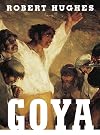
Hughes’ substantial life of Goya appears to have been a lifelong dream. From the opening chapter in which we learn of the near-fatal automobile accident that immobilized him for much of a year, but also revitalized his desire to complete this work, we hear the recognizable voice of Hughes, often irascible, fiercely intelligent, obliquely sentimental, but insistently objective when it comes to the actual artworks. Reading a Hughes description of one of Goya’s paintings and then turning show more the page to see its reprint on the following page is like hearing a precise echo before hearing the sound that triggered it. And for the most part Hughes’ descriptions avoid illicit interpretation. When he doesn’t have documentary evidence from Goya’s life, in writing and not just through hearsay, Hughes refuses to countenance innuendo. A painting of a maja is just a painting of a typical Spanish woman if there is no proof that it is of Godoy’s mistress (or Goya’s). And while that deflates some of the potential narrative arc to this life, it solidifies the firm foundation on which Hughes’ opinions, when he offers them, are to be believed.
The writing is always readable and compelling, with just enough cutting asides to remind you that Hughes was an art critic during the cutthroat days of the New York art world in the 80’s.
Recommended for those who want to know more about Goya’s work or for those who want to hear again Hughes’ very particular voice. show less
The writing is always readable and compelling, with just enough cutting asides to remind you that Hughes was an art critic during the cutthroat days of the New York art world in the 80’s.
Recommended for those who want to know more about Goya’s work or for those who want to hear again Hughes’ very particular voice. show less
The fatal shore : a history of the transportation of convicts to Australia, 1787 - 1868 by Robert Hughes

I've been meaning to read this for a long time: when I visited Australia back in 1989, it was pretty obvious that the two books you were supposed to have read were Songlines and The fatal shore, not (as I had fondly imagined) Voss and Oscar and Lucinda. All the same, the main cultural reference point for 99% of the people I met seemed to be Crocodile Dundee... Anyway, somehow I didn't get around to Hughes until I chanced to see a secondhand copy a couple of days after hearing of his show more death.
Twenty-six years on, it's not quite as shocking a read as it would have been in the late eighties, because so many other writers have drawn on what Hughes says about the brutality and corruption of the British Gulag — we expect chain gangs, flogging and arbitrary abuse, and we're not surprised to find them here. We have become rather desensitised to the lash after reading so many graphic descriptions of it. What's more interesting and unexpected about the book is not so much the "what" as the "why": the way it seeks to develop a balanced view of what transportation was meant to achieve, how it fits into the history of penology, what its real effects on Australian culture and economic development were. In the process (as usual with that sort of analysis), it becomes clear that it's rather misleading to think of "transportation" as a single, uniform process. Ideas and objectives changed over the eighty years during which convicts were sent to Australia, as did the nature of the places they were sent to; the situation in New South Wales was quite different from that in Van Diemen's Land; convicts assigned to work for farmers fared quite differently from those working for the government; only relatively small numbers of convicts experienced the notoriously harsh conditions of places like Norfolk Island and Port Arthur, and so on.
British thinking on transportation seems — at least when seen from Hughes's steadfastly antipodean viewpoint — to have been at best intermittent and confused. It was obviously a lunatic idea to send a fleet of ships on a nine-month voyage to build a prison in a place that had been visited by Europeans only once before, for a matter of a few days. Of course, that's always in the nature of political approaches to crime and punishment: then as now, politicians were never quite sure what they wanted to achieve with their penal policy. The main concern seems to have been to shift the problem of crime out of sight without too much conspicuous expenditure of taxpayers' money. Insofar as there was a theory behind transportation, it was that crime was caused by a "criminal class". Removing the members of that class from the gene pool would eventually eliminate the problem of crime. Sending convicts to Australia and supporting them there cost a fortune in the early years of the project, but it was 100% successful in getting rid of them. Unfortunately, it turned out that there were always more criminals on the doorstep, however many were shipped away. Georgian thinkers didn't seriously consider the possibility that a great deal of crime (especially theft, the crime most often punished by transportation) might simply be the result of poverty and lack of opportunity. If they had, they might have realised that transportation was one penal strategy that did offer many convicts the chance to get out of the life of crime by learning a trade and building a new life in a place with greater opportunities. Obviously, it wasn't every pickpocket or burglar that could become a Magwich, but at least the chance was there. Ironically, it was this unintended positive consequence that ultimately doomed transportation as a policy: As Australia developed, it became increasingly difficult to present transportation as a deterrent, and the Australian gold-rush effectively made it impossible to continue. The government had to start building modern prisons in the UK.
A fascinating, lively read, with a good mix of detail and deeper analysis. I think Hughes was right to keep his viewpoint in Australia and look at what was happening London only from that perspective, but that does mean that you have to know a bit about British politics in the Georgian and early Victorian period to keep track of who was who. Probably not a problem for Hughes's Australian contemporaries, brought up on an anglocentric view of history, but perhaps tricky for American readers to follow. show less
Twenty-six years on, it's not quite as shocking a read as it would have been in the late eighties, because so many other writers have drawn on what Hughes says about the brutality and corruption of the British Gulag — we expect chain gangs, flogging and arbitrary abuse, and we're not surprised to find them here. We have become rather desensitised to the lash after reading so many graphic descriptions of it. What's more interesting and unexpected about the book is not so much the "what" as the "why": the way it seeks to develop a balanced view of what transportation was meant to achieve, how it fits into the history of penology, what its real effects on Australian culture and economic development were. In the process (as usual with that sort of analysis), it becomes clear that it's rather misleading to think of "transportation" as a single, uniform process. Ideas and objectives changed over the eighty years during which convicts were sent to Australia, as did the nature of the places they were sent to; the situation in New South Wales was quite different from that in Van Diemen's Land; convicts assigned to work for farmers fared quite differently from those working for the government; only relatively small numbers of convicts experienced the notoriously harsh conditions of places like Norfolk Island and Port Arthur, and so on.
British thinking on transportation seems — at least when seen from Hughes's steadfastly antipodean viewpoint — to have been at best intermittent and confused. It was obviously a lunatic idea to send a fleet of ships on a nine-month voyage to build a prison in a place that had been visited by Europeans only once before, for a matter of a few days. Of course, that's always in the nature of political approaches to crime and punishment: then as now, politicians were never quite sure what they wanted to achieve with their penal policy. The main concern seems to have been to shift the problem of crime out of sight without too much conspicuous expenditure of taxpayers' money. Insofar as there was a theory behind transportation, it was that crime was caused by a "criminal class". Removing the members of that class from the gene pool would eventually eliminate the problem of crime. Sending convicts to Australia and supporting them there cost a fortune in the early years of the project, but it was 100% successful in getting rid of them. Unfortunately, it turned out that there were always more criminals on the doorstep, however many were shipped away. Georgian thinkers didn't seriously consider the possibility that a great deal of crime (especially theft, the crime most often punished by transportation) might simply be the result of poverty and lack of opportunity. If they had, they might have realised that transportation was one penal strategy that did offer many convicts the chance to get out of the life of crime by learning a trade and building a new life in a place with greater opportunities. Obviously, it wasn't every pickpocket or burglar that could become a Magwich, but at least the chance was there. Ironically, it was this unintended positive consequence that ultimately doomed transportation as a policy: As Australia developed, it became increasingly difficult to present transportation as a deterrent, and the Australian gold-rush effectively made it impossible to continue. The government had to start building modern prisons in the UK.
A fascinating, lively read, with a good mix of detail and deeper analysis. I think Hughes was right to keep his viewpoint in Australia and look at what was happening London only from that perspective, but that does mean that you have to know a bit about British politics in the Georgian and early Victorian period to keep track of who was who. Probably not a problem for Hughes's Australian contemporaries, brought up on an anglocentric view of history, but perhaps tricky for American readers to follow. show less
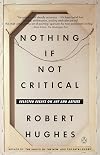
Outstanding collection of nearly one hundred essays written in the 1980s, mostly for Time Magazine, on art and artists from Holbein, Goya, Degas, Whistler, van Gogh right up to the big names of the 50s, 60s, 70s and 80s, by the leading art critic at the time in America, outspoken, rough-and-ready tough-guy Robert Hughes (1938-2012).
If you are familiar with his 1970s documentary The Shock of the New, you know he has a hyper-perceptive eye for art as well as a thorough command of art history show more and cultural currents. If not, then these essays will introduce you to one of the freshest and liveliest voices ever to enter the house of art.
To provide a good strong taste of Robert Hughes’ style, below are quotes from his spirited essay on Andy Warhol, one of the few artists included in this collection that he really didn’t like.
Robert Hughes on Andy Warhol’s using everyday objects like soup cans, Brillo boxes or photos of Marilyn Monroe: “The tension this set up depended on the assumption, still in force in the sixties, that there was a qualitative difference between the perceptions of high art and the million daily diversions and instructions issued by popular culture. Since then, Warhol has probably done more than any other living artist to wear that distinction down, but while doing so, he has worn away the edge of his work.”
On Andy’s quest for celebrity: “Inspired by the example of Truman Capote, he went after publicity with the voracious singlemindedness of a feeding bluefish. And he got it in abundance, because the sixties in New York reshuffled and stacked the social deck: press and television, in their pervasiveness, constructed a kind of parallel universe in which the hierarchical orders of American society – vestiges, it was thought, but strong ones, and based on inherited wealth –were replaced by the new tyranny of the “interesting.” Its rule had to do with the rapid shift of style and image, with the assumption that all civilized life was discontinuous and worth only a short attention span: better to be Baby Jane Holzer than the Duchesse de Guermantes.”
On Andy and television: “Above all, the working-class kid who had spent so many thousands of hours gazing into the blue, anesthetizing glare of the TV screen, like Narcissus into his pool, realized that the cultural moment of the mid-sixties favored a walking void. Television was producing an affectless culture.”
On Andy’s mass produced art: “Thus his paintings, tremendously stylish in their rough silk-screening, full of slips, mimicked the dissociation of gaze and empathy induced by the mass media: the banal punch of tabloid newsprint, the visual jabber and bright sleazy color of TV, the sense of glut and anesthesia caused by both. Three dozen Elvises are better than one.”
On Andy as THE artist of the Ronald Reagan years: “How can one doubt that Warhol was delivered by Fate to be the Rubens of this administration, to play Bernini to Reagan’s Urban VIII? On the one hand, the shrewd old movie actor, void of ideas but expert at manipulation, projected into high office by the insuperable power of mass imagery and secondhand perception. On the other, the shallow painter who understood more about the mechanisms of celebrity than any of his colleagues, whose entire sense of reality was shaped, like Reagan’s sense of power, by the television tube. Each, in his way, coming on like Huck Finn; both obsessed with serving the interests of privilege. Together, they signify a new moment: the age of supply-side aesthetics.”
I read this Robert Hughes essay on Andy Warhol back when it was first published in 1982. Loved every word and really was on Hughes’ vibe since I recoil from anything smacking of mass culture, things like television, celebrity, glamour or glitz.
But then one spring afternoon in 1990 I had a shocking experience - I walked into a downtown New York City gallery and saw for the very first time original Andy Warhol silkscreens, one of Hermann Hesse and the other of Mickey Mouse.
I could almost not believe my eyes: the art was so stunningly beautiful and brimming over with vitality, it almost put me on my knees. Incredible. I couldn’t take my eyes off these silkscreens; I was riveted to the spot for a good long while.
For me, this experience underscored how the visual arts are ultimately a personal experience of standing before the original and using and trusting our eyes. Sure, art critics, even the great art critics, can speak about cultural and historical context, about the artist’s biography and the artist’s influences and intent, even offering comments and insights on specific works, but we are best putting theories and criticism aside when we engage with the work one-on-one. Who knows what magic may take place? show less
Lists
Awards


You May Also Like


Associated Authors
Statistics
- Works
- 53
- Also by
- 10
- Members
- 11,369
- Popularity
- #2,067
- Rating
- 4.0
- Reviews
- 136
- ISBNs
- 246
- Languages
- 12
- Favorited
- 14
