
Herbert Read (1893–1968)
Author of A Concise History of Modern Painting
About the Author
Series
Works by Herbert Read
The Book of Art: A Pictorial Encyclopedia of Painting, Drawing and Sculpture [10-volume set] (1965) 54 copies, 1 review
Poems, 1914-1934 5 copies
The Book of Art (Volume III: Impressionists and Post-Impressionists, Modern Art, Chinese and Japanese Art) 4 copies, 1 review
Henry Moore, sculptor 4 copies
The End of a war 4 copies
Orígenes de la forma en el arte 3 copies
Jan Le Witt; a selection of poems and aphorisms from the artist's notebooks; [with essays] (1977) 3 copies
The practice of design 3 copies
Art and the Evolution of Man 2 copies
Five European Sculptors: Naum Gabo, Antoine Pevsner, Wilhelm Lehmbruck, Aristide Maillol, Henry Moore (1969) 2 copies
Marino Marini : complete works 2 copies
Styles of Modern Art, The 1 copy
Anarquía y Orde. 1 copy
Reason and romanticism 1 copy
Arte y alienación 1 copy
Introduccion a la geologia 1 copy
Arte Poesía Anarquismo 1 copy
Gabo 1 copy
Naked Warriors. [Poems.] 1 copy
Discovering Art No. 23 1 copy
Essential communism 1 copy
On style 1 copy
Discovering art : volume 1 1 copy
English stained glass 1 copy
LA PINTURA MODERNA 1 copy
A redenção do Robô 1 copy
Discovering art : volume 2 1 copy
Eclogues: a book of poems 1 copy
Eric Gill. An essay 1 copy
Pragmatic anarchism 1 copy
Mutations of the Phoenix 1 copy
There is no other way 1 copy
WRITERS ON THEMSELVES. 1 copy
Umjetnost danas 1 copy
Las Raíces Del Arte 1 copy
කලාවේ තේරුම කුමක් ද 1 copy
Formen des Unbekannten 1 copy
تربية الذوق الفني 1 copy
Aspects of Form 1 copy
Truth is More Sacred 1 copy
William Godwin 1 copy
The Paradox of Anarchism 1 copy
Associated Works
A Sentimental Journey Through France and Italy (1768) — Editor, some editions — 1,967 copies, 27 reviews
The Archetypes and The Collective Unconscious (1959) — Editor, some editions — 1,537 copies, 12 reviews
Paul Klee on Modern Art (Faber Paper Covered Editions) (1964) — Introduction, some editions — 233 copies, 4 reviews
Classic Art: An Introduction to the Italian Renaissance (1899) — Introduction, some editions — 200 copies, 2 reviews
Kropotkin : Selections from His Writings / Edited with an Introduction by Herbert Read (1942) — Editor — 4 copies
Then and Now. A Selection of Articles, Stories & Poems, Taken from the First Fifty Numbers of ‘Now & Then’, 1921–35. Together with Some Illustrations, etc. (1935) — Contributor — 2 copies
Sengai, 1750-1837 — Foreword — 1 copy
Yorkshire Poetry : Vol. 1. December 1922. No. 9 — Contributor — 1 copy
Yorkshire Poetry : No. 3 New Series June 1925 — Contributor — 1 copy
Leeds University verse, 1914-24 — Contributor — 1 copy
Direction Vol.1 No.3 (April-June 1935) — Contributor — 1 copy
Tagged
Common Knowledge
- Canonical name
- Read, Herbert
- Legal name
- Read, Herbert Edward
- Birthdate
- 1893-12-04
- Date of death
- 1968-06-12
- Gender
- male
- Education
- University of Leeds
- Occupations
- poet
literary critic
art historian
philosopher
curator
art critic (show all 7)
editor - Organizations
- Harvard University
Wesleyan University
Burlington Magazine
University of Edinburgh
Victoria and Albert Museum
Leeds Arts Club (show all 9)
University of Liverpool
University of London
British Army (WWI) - Awards and honors
- Military Cross (1917)
Distinguished Service Order (1918)
Foreign Honorary Member, American Academy of Arts and Letters (1966)
Knight Bachelor (1953) - Relationships
- Read, Piers Paul (son)
Eliot, T. S. (friend)
Read, Benedict (son)
Read, John (son)
Reed, Thomas Bonamy (son) - Nationality
- UK
- Birthplace
- Nunnington, Yorkshire, England, UK
- Places of residence
- Yorkshire, England, UK
London, Middlesex, England, UK - Place of death
- Stonegrave, Yorkshire, England, UK
- Map Location
- England, UK
Members
Reviews

Part mystical, part political, certainly philosophical with a sense of a search for a Utopia, Sir Herbert Reads only novel has a magical feel. I first came across Herbert Read through his poetry, a celebrated first world war poet whose better poems were heavily anthologised in the 1950’s and 60’s. You could hardly open a poetry anthology without coming across ‘The Naming of Parts.
To-day we have naming of parts. Yesterday,
We had daily cleaning. And to-morrow morning,
We shall have what show more to do after firing. But to-day,
To-day we have naming of parts. Japonica
Glistens like coral in all of the neighboring gardens,
And to-day we have naming of parts.
This first stanza depicts a soldier recruit attending a lecture on how to operate a gun, but the droning voice of the instructor cannot hold his attention, which wanders to the garden through the window outside. Another world from the lecture room and it's as though the recruit is caught between the two worlds. Olivero the hero of The Green Child is also a man caught between two worlds, the brutal present and a world of his imagination which becomes almost tangible as he first tries and fails to shape a better world, but must then settle for following the mystical Green Child into her own very different world.
This short novel published in 1935 has three distinct parts: we first meet Olivero on his way back to England in 1861 after having faked his own assassination as President of a South American Republic. He is drawn back to his home village in a search for the Green Child who had mysteriously appeared in the village of his youth and who was clearly not of this world. He finds her by following a stream that is flowing the wrong way back to its source, she has grown into a woman and is being held captive by the evil Kneeshaw who owns the village mill. Olivero realises that he must release the woman (Siloen) and she leads him to the source of the stream. This first part reads like a mystery/fantasy story and ends with Olivero and Siloen sinking down into the sandy bottom of the pool at the stream head.
The second part is a long flashback describing Olivero’s adventures from the time he left England restlessly searching for a different life. After being imprisoned in Spain as a suspected Jacobin (revolutionary) he is mistaken for an ideological leader who will assist a planned revolution in South America. He goes along with the deception and finds himself eventually President of a small South American Republic. Using Volney and Rousseau as models he puts forward a new constitution for the Government of Roncador based on egality, fraternity and liberty. He is so successful that the people of this agrarian country, now saved from exploitation, lose interest in government and revolution and Olivero becomes President for life and sets about creating a seemingly Utopian society. However once this Utopia has been created he discovers it is not enough and the human condition reasserts itself:
“This condition lasted for several years, until finally I could no longer evade the truth . My spiritual complaint was produced by the very stagnation around me, which I regarded as the triumph of my policy. In the absence of conflict, of contending interests of anguish and agitation, I had introduced into my environment a moral flaccidity, a fatness of living, an ease and a torpor which had now produced in me inevitable ferment…… Without eccentric elements, no progress is possible; not even that simple progress which consists in whipping a spinning top from one place to another.”
This long second part has been told in the first person but Read reverts back to the third person when he takes us back to the pool at the source of the upward flowing stream. Olivero and Siloen enter into another world, another Utopia of sorts and we are back into the fantasy world that this book had always threatened to take us. Is this world the solution to what Olivero describes as the agitation of the soul? He has no choice, now there is no way back for him and when at his death he finally merges into the living rock he is conscious that he has stilled that agitation in his soul.
I found this novel absolutely enchanting, from the mystery of the first part, to the excitement and adventure of the second and finally to the fantasy and introspection of the third. Herbert Read writes like an angel with just enough continuity of style to link the three parts together. There is certainly much to think about as Olivero’s quest raises essential questions about the meaning of life, but this is no dry philosophical tract, Read combines elements of mystery. adventure and fantasy in his story telling to keep most readers interested until its deeply satisfying conclusion. This is the book that C S Lewis (author of the Narnia chronicles) may have wished he could have written, had his Catholicism not got in the way. It really is a little gem of a book, a four star read. show less
To-day we have naming of parts. Yesterday,
We had daily cleaning. And to-morrow morning,
We shall have what show more to do after firing. But to-day,
To-day we have naming of parts. Japonica
Glistens like coral in all of the neighboring gardens,
And to-day we have naming of parts.
This first stanza depicts a soldier recruit attending a lecture on how to operate a gun, but the droning voice of the instructor cannot hold his attention, which wanders to the garden through the window outside. Another world from the lecture room and it's as though the recruit is caught between the two worlds. Olivero the hero of The Green Child is also a man caught between two worlds, the brutal present and a world of his imagination which becomes almost tangible as he first tries and fails to shape a better world, but must then settle for following the mystical Green Child into her own very different world.
This short novel published in 1935 has three distinct parts: we first meet Olivero on his way back to England in 1861 after having faked his own assassination as President of a South American Republic. He is drawn back to his home village in a search for the Green Child who had mysteriously appeared in the village of his youth and who was clearly not of this world. He finds her by following a stream that is flowing the wrong way back to its source, she has grown into a woman and is being held captive by the evil Kneeshaw who owns the village mill. Olivero realises that he must release the woman (Siloen) and she leads him to the source of the stream. This first part reads like a mystery/fantasy story and ends with Olivero and Siloen sinking down into the sandy bottom of the pool at the stream head.
The second part is a long flashback describing Olivero’s adventures from the time he left England restlessly searching for a different life. After being imprisoned in Spain as a suspected Jacobin (revolutionary) he is mistaken for an ideological leader who will assist a planned revolution in South America. He goes along with the deception and finds himself eventually President of a small South American Republic. Using Volney and Rousseau as models he puts forward a new constitution for the Government of Roncador based on egality, fraternity and liberty. He is so successful that the people of this agrarian country, now saved from exploitation, lose interest in government and revolution and Olivero becomes President for life and sets about creating a seemingly Utopian society. However once this Utopia has been created he discovers it is not enough and the human condition reasserts itself:
“This condition lasted for several years, until finally I could no longer evade the truth . My spiritual complaint was produced by the very stagnation around me, which I regarded as the triumph of my policy. In the absence of conflict, of contending interests of anguish and agitation, I had introduced into my environment a moral flaccidity, a fatness of living, an ease and a torpor which had now produced in me inevitable ferment…… Without eccentric elements, no progress is possible; not even that simple progress which consists in whipping a spinning top from one place to another.”
This long second part has been told in the first person but Read reverts back to the third person when he takes us back to the pool at the source of the upward flowing stream. Olivero and Siloen enter into another world, another Utopia of sorts and we are back into the fantasy world that this book had always threatened to take us. Is this world the solution to what Olivero describes as the agitation of the soul? He has no choice, now there is no way back for him and when at his death he finally merges into the living rock he is conscious that he has stilled that agitation in his soul.
I found this novel absolutely enchanting, from the mystery of the first part, to the excitement and adventure of the second and finally to the fantasy and introspection of the third. Herbert Read writes like an angel with just enough continuity of style to link the three parts together. There is certainly much to think about as Olivero’s quest raises essential questions about the meaning of life, but this is no dry philosophical tract, Read combines elements of mystery. adventure and fantasy in his story telling to keep most readers interested until its deeply satisfying conclusion. This is the book that C S Lewis (author of the Narnia chronicles) may have wished he could have written, had his Catholicism not got in the way. It really is a little gem of a book, a four star read. show less

Read's eye for art is almost identical to my own, so this book is a total joy to skim through. Not to mention a total validation of the quality of so-called "modern art" against critics who would call it amateurish. Read has a knack for choosing the most vibrant and striking works by each painter. I can't emphasize enough how much better this book is than the standard rote art history book. The real jaw-dropper is the closing section, "Pictorial Survey Of Modern Painting" (pg. 292-341). show more Though this section is all in black & white and the 332 reproductions are tiny, the paintings are so amazing and avant-garde that you'll be scrambling to go online and look up large color images of them. I've posted many paintings from this section on my Tumblr site, in fact.
The only drawback of the book is that it ends at 1967. (And you might dispute Read's definition of "modern," since it begins in 1892.) show less
The only drawback of the book is that it ends at 1967. (And you might dispute Read's definition of "modern," since it begins in 1892.) show less
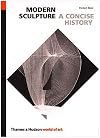
This is a curious book. The text is problematic. Herbert Read is an interesting figure in cultural history, but I find the historical account here sketchy and the criticism almost valueless. And I say that as someone who is not at all typically dismissive of views "out of the past." But Read makes many contentious aesthetic assertions that I find unhelpful even as spurs to thought. He has no patience for sculpture that is "about" space instead of "about" mass - but it is that tension that show more has defined modern sculpture, at least in large part. He comes perilously close to stating that almost all post-1950 sculpture except for the work of Henry Moore is depressing junk. (He finds tonier words to say that, of course, but still, the point of view is clear.)
Read has an annoying habit of privileging artists that he knew well personally (Moore, Barbara Hepworth, Eduardo Paolozzi) in his narrative. Moore is a great artist and it is not as if he needs any special pleading, but Read provides it anyway. It all comes across as unpleasantly clubby in the worst British sense. (From an avowed anarchist and the son of a farmer, no less!)
The illustrations are another matter. They are fascinating, but a vast number of the sculptors and pieces, especially in the second half of the volume, are referred to nowhere in the text, or at most in a list. Whoever put this edition together allowed the textual and visual sides of the book to lead separate lives. show less
Read has an annoying habit of privileging artists that he knew well personally (Moore, Barbara Hepworth, Eduardo Paolozzi) in his narrative. Moore is a great artist and it is not as if he needs any special pleading, but Read provides it anyway. It all comes across as unpleasantly clubby in the worst British sense. (From an avowed anarchist and the son of a farmer, no less!)
The illustrations are another matter. They are fascinating, but a vast number of the sculptors and pieces, especially in the second half of the volume, are referred to nowhere in the text, or at most in a list. Whoever put this edition together allowed the textual and visual sides of the book to lead separate lives. show less
[b:The Green Child|6339743|The Green Child|Herbert Read|https://i.gr-assets.com/images/S/compressed.photo.goodreads.com/books/1688573709l/6339743._SY75_.jpg|757675] is a peculiar little novel that my Mum found in a second-hand bookshop and lent to me. First published in 1935, it is a narrative in three very distinct parts that seem to be situated in different genres. The book opens with the protagonist Olivero returning to the village where he grew up for the first time in thirty years and show more encountering the titular Green Child. She is from a fairly obscure folk story, The Green Children of Woolpit that I was already familiar with because it's from Suffolk. However, the original story is set in the 12th century, whereas the green children in Read's novel emerge around 1830. After Olivero learns the Green Child's story from her husband and runs off with her, he tells her the lengthy tale of what he's been doing for the past few decades. This section is set in South America and has shades of both Borges and the French Revolution. By a series of misadventures and coincidences, Olivero becomes a revolutionary and then benign dictator of a small mountainous country named Roncador. After this extended flashback, the Green Child and Olivero travel to the mysterious world she came from. The reader gets to explore the social structures and culture of this world in the manner of [b:Erewhon|516570|Erewhon (Erewhon, #1)|Samuel Butler|https://i.gr-assets.com/images/S/compressed.photo.goodreads.com/books/1175460304l/516570._SY75_.jpg|924128] and similar 18th and 19th century utopian/dystopian literature.
Thus the first section is adventurous and largely conventional, the second (and longest) concerned with politics and economics, and the third mystical and philosophical. What unites them is a distinctively idiosyncratic perspective. Here is an illustrative example of each:
[b:The Green Child|6339743|The Green Child|Herbert Read|https://i.gr-assets.com/images/S/compressed.photo.goodreads.com/books/1688573709l/6339743._SY75_.jpg|757675] left me with the impression that Herbert Read had many interesting ideas and attempted to cram as many of them as possible into a short novel, the only one he wrote. I can't say it all fits together in a seamless and naturalistic manner, but I've never come across a melange quite like this before and enjoyed it. Read writes vividly and enthusiastically about topics from the English countryside to revolutionary conspiracies, from writing a democratic constitution to reconciling oneself to death. This strange little novel covers a lot of ground and is well worth reading. show less
Thus the first section is adventurous and largely conventional, the second (and longest) concerned with politics and economics, and the third mystical and philosophical. What unites them is a distinctively idiosyncratic perspective. Here is an illustrative example of each:
[1]
She looked up without betraying any surprise or emotion. Olivero advanced and took her hand; it was very cold. "Let us go out into the sun," he said. She relaxed in her attitude and prepared to follow him. He did not return through the kitchen, but unbarred the disused front foor, which led directly to the paddock. The sun was not far risen, but shone warmly above the low meadow mists, the grass heavily laden with dew, the delicate gossamer webs in the hedges. They went across the paddock in the direction of the river. The rabbits scampered away before them, and a few old crows rose croaking from their morning meal.
The green girl walked like a fairy. Her feet were bare and wet with dew; she always looked up to the sun.
[2]
The art of government is the art of delegating authority. It is essential that the authority delegated should be held like a ball on an elastic string: it does not matter how large the ball, or how far the string is stretched, provided authority returns to its source at the inflection of a finger. The ideal governor is one who has dispossessed himself of all authority, remaining merely as the mathematical centre in whom a thousand lines converge: the invisible, perhaps only the potential, manipulator of a host of efficient marionettes. In more complex states the system of delegation will be divided and subdivided, but such was the simplicity of the economy of Rocador that I myself was able to control directly every post of administration.
[3]
The highest type of workman, however, was engaged on the polishing of crystals. For this purpose various kinds of rock were used - opal, chalcedony, fluorspar, limonite - but rock crystal was prized most on account of its purity. The science which we call crystallography the study of the forms, properties, and structures of crystals - was the most esteemed of all sciences in this subterrestrial country; indeed, it might be regarded as science itself, for on it were based, not only all notions of the structure of the universe, but equally all notions of beauty, truth, and destiny. These questions occupied the sages on the uppermost ledge, and those who had retired like hermits to their solitary grottoes.
[b:The Green Child|6339743|The Green Child|Herbert Read|https://i.gr-assets.com/images/S/compressed.photo.goodreads.com/books/1688573709l/6339743._SY75_.jpg|757675] left me with the impression that Herbert Read had many interesting ideas and attempted to cram as many of them as possible into a short novel, the only one he wrote. I can't say it all fits together in a seamless and naturalistic manner, but I've never come across a melange quite like this before and enjoyed it. Read writes vividly and enthusiastically about topics from the English countryside to revolutionary conspiracies, from writing a democratic constitution to reconciling oneself to death. This strange little novel covers a lot of ground and is well worth reading. show less
Lists
Awards


You May Also Like


Associated Authors
Statistics
- Works
- 176
- Also by
- 49
- Members
- 4,158
- Popularity
- #6,051
- Rating
- 3.9
- Reviews
- 36
- ISBNs
- 246
- Languages
- 13
- Favorited
- 3

