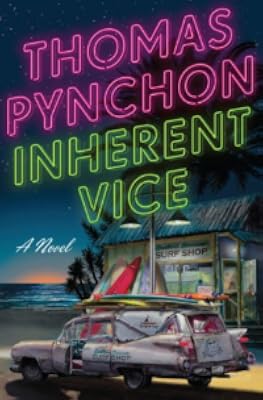
Inherent Vice
by Thomas Pynchon
On This Page
Description
Reluctantly investigating a kidnapping threat against his ex-girlfriend's billionaire beau, Doc Sportello tackles a bizarre tangle of nefarious characters before stumbling on a mysterious entity that may actually be a tax shelter for a dental group.Tags
Recommendations





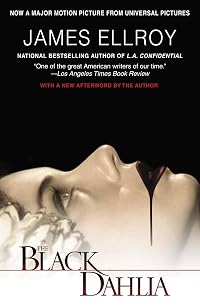

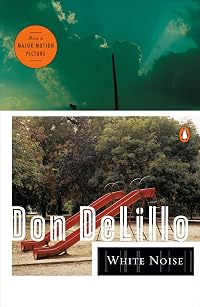
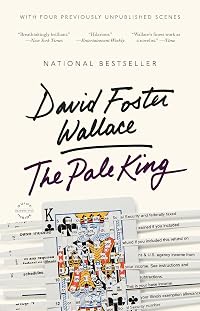
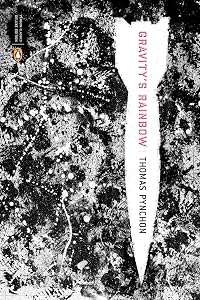
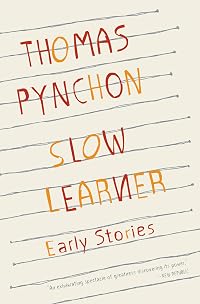
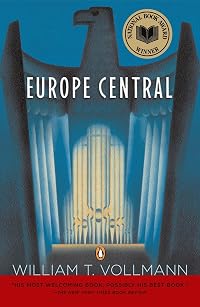
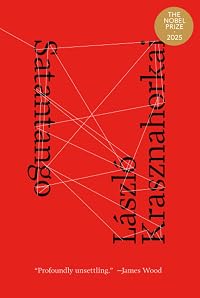
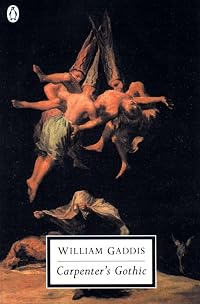


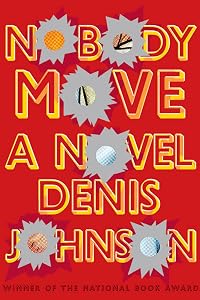

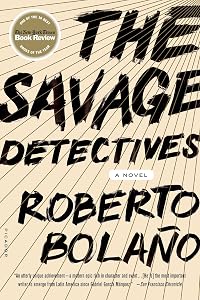
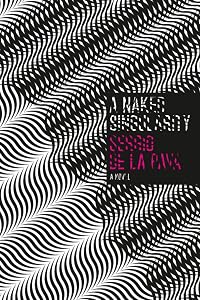
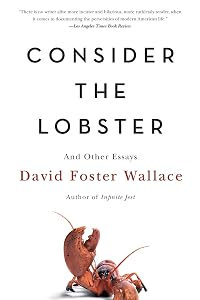
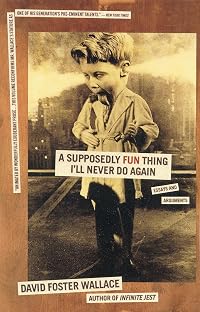
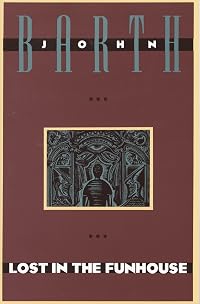



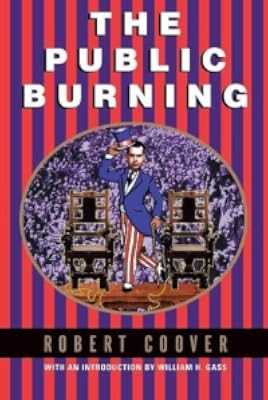
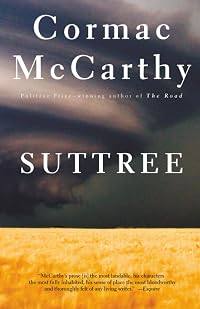


Member Recommendations
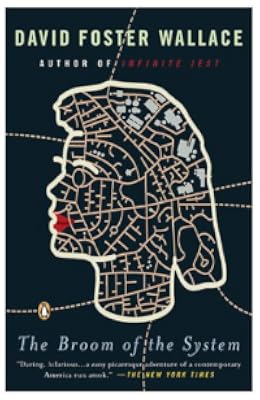
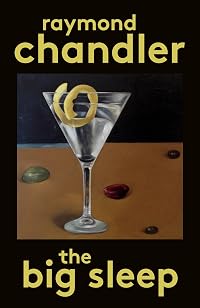
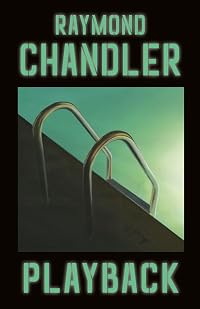
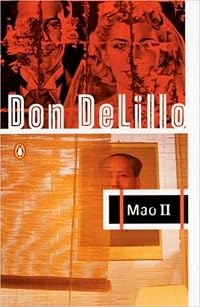
Bigrider7 A pair of whimsical books where reality is never quite what it appears, and is much more indiscrete and lacking in continuity than many of us can handle. Secrets about how life operates lurking just beyond the views of perceptions
20
smichaelwilson Both books take a dark yet whimsical journey through the 60s/70s counterculture, and the decay of America's cultural enlightenment.
12
Member Reviews
A smart and funny book that examines the cultural sea change transpiring in the early '70s through the lens of a hard-boiled detective story (albeit a Lebowski-esque pot-fueled PI). Probably worth a second read to better understand the way in which Pynchon is using motifs and themes of fog, drug trips, lost civilizations, and reincarnation/undeath among others to represent the waves and interplay of countercultural revolution and reactionary backlash. If you liked Vineland, this book mines similar territory but from the vantage point of LA and the year 1970.
Half the fun of the book is the vivid and oft-absurd way Pynchon portrays the strange and crazy world of surfers, potheads, musicians, LAPD, and ex-cons that populate his novel.
Half the fun of the book is the vivid and oft-absurd way Pynchon portrays the strange and crazy world of surfers, potheads, musicians, LAPD, and ex-cons that populate his novel.
If you took all the great lines in -The Big Lebowski- and changed them into beautiful philosophical prose about the minutiae of the 60s and early 70's, add in a couple characters too many to make it harder to follow you get -Inherent Vice-. It's hilarious. It's retro-cool. The main character is a stoner PI - he's totally "the Dude" except he has a license.
MY GOD this man can write - and he's funny for an old dude. The story might have made more sense if I had read it instead of listened to it on audio but then I would have missed out on the cool funny stoner voices.
Must read more Pynchon.
MY GOD this man can write - and he's funny for an old dude. The story might have made more sense if I had read it instead of listened to it on audio but then I would have missed out on the cool funny stoner voices.
Must read more Pynchon.
...and here was Doc, on the natch, caught in a low-level bummer he couldn't find a way out of, about how the Psychedelic Sixties, this little parenthesis of light, might close after all, and all be lost, taken back into darkness... how a certain hand might reach terribly out of darkness and reclaim the time, easy as taking a joint from a doper and stubbing it out for good.
Pynchon's funniest and I think most accessible book. But it's driven by the same themes as his others — the animus of the Elect toward the Preterite, the entrenchment and corrupting essence of power, and the everyday instances of grace and humor that constitute a disorganized resistance. Pynchon's lens in IV is the "long, sad history of L.A. land use... Mexican show more families bounced out of Chavez Ravine to build Dodger Stadium, American Indians swept out of Bunker Hill for the Music Center, Tariq's neighborhood bulldozed aside for Channel View Estates": colonizations and usurpations and repossession and redevelopment. Doc navigates these disputed spaces in a haze of marijuanasmoke, the ultimate stoner P.I., trusting to intuition and happenstance to make some kind of sense out of the chaos.
Maybe it's because I've seen the movie four or five times since I first read this, but it actually mostly made sense this time around. Having some idea at least what was going on, I was able to chill and absorb the warmth of the writing, the radiant affection the novel has for its setting, mingled with longing for what might be and might have been. Lemuria symbolizes this lost Pacific Eden, dormant under the water like the lagan, the contraband submerged for later retrieval by the schooner Golden Fang and other dubious vessels. Sortilège is Lemuria's chief channeler:
"I dream about it, Doc. I wake up so sure sometimes. Spike feels that way, too. Maybe it's all this rain, but we're starting to have the same dreams. We can't find a way to return to Lemuria, so it's returning to us. Rising up out of the ocean — 'hi Leej, hi Spike, long time ain't it..."
"It talked to you guys?"
"I don't know. It isn't just a place."
But, thinks Doc to himself later,
What good would Lemuria do them? Especially when it turned out to be a place they'd been exiled from too long ago to remember.
Sprinkled in, too, are ironically and characteristically Pynchonian foreshadowings, as Aunt Reet the realtor prophecies realtor.com in an early scene, and Fritz futzes with the nascent ARPAnet in aid of Doc's investigations ("...any excuse to feel like I'm surfin the wave of the future here..."). But Doc can see what's up: "so when they gonna make it illegal, Fritz? [...] Remember how they outlawed acid soon as they found out it was a channel to somethin they didn't want us to see? Why should information be any different?" Wolfmann's Channel View Estates are well named, honoring the "toobfreex" Doc meets in a Vegas motel and presaging, too, YouTube's ubiquity.
Like all great L.A. stories, IV is full of weather too, the Santa Anas messing with the dope-addled denizens of Gordita Beach like so:
Jets were taking off the wrong way from the airport, the engine sounds were not passing across the sky where they should have, so everybody's dreams got disarranged, when people could get to sleep at all. In the little apartment complexes the wind entered narrowing to whistle through the stairwells and ramps and catwalks, and the leaves of the palm trees outside rattled together with a liquid sound, so that from inside, in the darkened rooms, in louvered light, it sounded like a rainstorm, the wind raging in the concrete geometry, the palms beating together like the rush of a tropical downpour, enough to get you to open the door and look outside, and of course there'd only be the same hot cloudless depth of day, no rain in sight...
Palms beating together, louvered light, a downpour — ingredients sufficient on their own for me to love a book. show less
Inherent Vice is the sixth Pynchon novel I've read. (Well, I've also read to the exact midpoint of Against the Day, so maybe it counts as number 6.5?) It has been on my shelf for a long while, but I sort of felt like I was up against a deadline, because I certainly wanted to have read it already when the movie hits theaters a few months from now. I read it fast, finishing it in under a week. It lacks the lovely sprawl so characteristic of books like V, Gravity's Rainbow, and Mason & Dixon, but it is highly engaging.
Larry "Doc" Sportello is the pothead gumshoe who is the protagonist of this 1970 LA set-piece. As is typical for Pynchon, there are a cavalcade of quirky characters, a thickly-layered conspiratorial plot, and a narrative show more nose for injustice. Comments on the forthcoming movie have compared it to The Big Lebowski, which isn't terminally off-the-mark, and in fact cued me in to what is perhaps a certain kindred spirit between Pynchon and the Coen brothers. (The movie, however, is directed by Paul Thomas Anderson, whose fondness for big casts equips him to handle a Pynchon story.)
I was a few dozen pages in when I realized with a start that this, to me, breezy and often hilarious book presumed so heavily on the cultural knowledge of the reader that it might be entirely impenetrable to some younger or more quadrangular readers. Now, it's easy to make fun of stoners, but Doc's humane wisdom and sublime presence of mind--when he could maintain consciousness--kept me laughing with him, rather than at him.
None of which is to dismiss the book's darker aspects. There is real menace about the obscure villains of the book, and fitting paranoia about Doc's closest friends and allies. Another comparandum might be Fear and Loathing in Las Vegas, for the book's elegiac contemplation of the hippie counterculture and the ultimate futility of its aspirations -- and an actual trip to Las Vegas in the course of the beach-based adventure.
This book certainly didn't eclipse any of the other Pynchon novels, but it is a fine work regardless, enjoyable and reflective in its own off-beat way. show less
Larry "Doc" Sportello is the pothead gumshoe who is the protagonist of this 1970 LA set-piece. As is typical for Pynchon, there are a cavalcade of quirky characters, a thickly-layered conspiratorial plot, and a narrative show more nose for injustice. Comments on the forthcoming movie have compared it to The Big Lebowski, which isn't terminally off-the-mark, and in fact cued me in to what is perhaps a certain kindred spirit between Pynchon and the Coen brothers. (The movie, however, is directed by Paul Thomas Anderson, whose fondness for big casts equips him to handle a Pynchon story.)
I was a few dozen pages in when I realized with a start that this, to me, breezy and often hilarious book presumed so heavily on the cultural knowledge of the reader that it might be entirely impenetrable to some younger or more quadrangular readers. Now, it's easy to make fun of stoners, but Doc's humane wisdom and sublime presence of mind--when he could maintain consciousness--kept me laughing with him, rather than at him.
None of which is to dismiss the book's darker aspects. There is real menace about the obscure villains of the book, and fitting paranoia about Doc's closest friends and allies. Another comparandum might be Fear and Loathing in Las Vegas, for the book's elegiac contemplation of the hippie counterculture and the ultimate futility of its aspirations -- and an actual trip to Las Vegas in the course of the beach-based adventure.
This book certainly didn't eclipse any of the other Pynchon novels, but it is a fine work regardless, enjoyable and reflective in its own off-beat way. show less
I've got interested in Pynchon after watching P. T. Anderson's adaptation of this novel, so I shyly and carefully entered his world with his Bleeding Edge (2013) and The Crying of Lot 49 (1965, Croatian translation), thus got a bit familiar with his style and way of constructing plots.
In my opinion this crazy, psychedelic and hallucinogenic world he built is on par with those in his two other novels. This time revolving around a private head, Doc Sportello, trying to unwind the mystery of a missing construction magnate, Mickey Wolfmann, that his ex-girlfriend, Shasta Fay, asked him to find. In this investigation many other mysteries and characters emerge, gradually twisting the plot and disorienting the reader. Throughout the story Doc, show more and also the reader, gets more and more sure in the presence of the invisible and dark forces that pull the strings around our main and other characters, which is one of the recurring motives in Bleeding Edge and Lot 49.
On the surface this works as a great detective story with it's memorable characters set in the late 60's Los Angeles. The twingling story keeps the reader engaged, while also disorienting him, with every chapter bringing front another mystery that gets untangled as the book gets closer to the end. And it works on this level as good as it gets.
On the other hand, under the surface this is a great testimony and an analysis of a lost American culture, the creeping appearance of neoliberalism and the fascist and bullying reign of the USAs establishment leaders, in this case those of republicans R. Nixon and R. Reagan.
The only thing I didn't like in some instances is the treatment of some of the female characters, whereas they often seem to be victims of some really aggressive sexual assaults.
The book demands a lot of focus, and I can't wait to read it again, this time in English.
By the way, there's a good read on the subject of the movie and the book on this link: https://www.jacobinmag.com/2015/02/inherent-vice-review-counterculture
Enjoy. show less
In my opinion this crazy, psychedelic and hallucinogenic world he built is on par with those in his two other novels. This time revolving around a private head, Doc Sportello, trying to unwind the mystery of a missing construction magnate, Mickey Wolfmann, that his ex-girlfriend, Shasta Fay, asked him to find. In this investigation many other mysteries and characters emerge, gradually twisting the plot and disorienting the reader. Throughout the story Doc, show more and also the reader, gets more and more sure in the presence of the invisible and dark forces that pull the strings around our main and other characters, which is one of the recurring motives in Bleeding Edge and Lot 49.
On the surface this works as a great detective story with it's memorable characters set in the late 60's Los Angeles. The twingling story keeps the reader engaged, while also disorienting him, with every chapter bringing front another mystery that gets untangled as the book gets closer to the end. And it works on this level as good as it gets.
On the other hand, under the surface this is a great testimony and an analysis of a lost American culture, the creeping appearance of neoliberalism and the fascist and bullying reign of the USAs establishment leaders, in this case those of republicans R. Nixon and R. Reagan.
The only thing I didn't like in some instances is the treatment of some of the female characters, whereas they often seem to be victims of some really aggressive sexual assaults.
The book demands a lot of focus, and I can't wait to read it again, this time in English.
By the way, there's a good read on the subject of the movie and the book on this link: https://www.jacobinmag.com/2015/02/inherent-vice-review-counterculture
Enjoy. show less
Ok, I'd probably read Pynchon's to-do list & find it somehow interesting - based on how much I loved "Gravity's Rainbow", "Mason & Dixon", & "Against the Day". The jacket cover blurb says "In this lively yarn, Thomas Pynchon, working in an unaccustomed genre".. UH?! Ok, Pynchon didn't write that so let's blame the publicist. What I'm getting at here is that any new Pynchon bk is like water to my internal desert, BUT.. I was lucky to find a used 1st edition hardback of this in a local bkstore whose owners might not even know who Pynchon IS - this, in the yr it was published. Score! I met a teacher recently who didn't know Pynchon & THAT shocked me!
HOWEVER, this is about as far from "working in an unaccustomed genre" as Pynchon can get. show more Shit! It's the 1st time I've read a Pynchon where I was reminded of Philip K. Dick & Rudy Rucker (maybe even Richard Brautigan), where I was reminded of the movie "The Big Lebowski" & where I wondered whether Pynchon hadn't written it wondering why the fuck nobody's made a movie out of any of his bks yet (have they?). It was like his "Vineland" in the sense that there's the interplay between cops & snitches, it was like most Pynchon bks w/ its complex intrigue, it was like "The Crying of Lot 49" w/ its social milieu. Shit, it was like Pynchon turning his own works into a Pynchon genre.
NONETHELESS, I'm delighted he wrote it! EVEN THOUGH I PREFER THE EPICS THAT AREN'T SO EASILY CLASSIFIABLE. After all, this is classic pulp crime fiction updated from the '30s & '40s to the end of the '60s. The PI smokes pot & takes LSD instead of drinking himself to near death & getting slipped Mickeys in the form of pills. PCP? Maybe. Pills? Nah.. Pynchon is very deliberately updating the genre here (just as some movies have done before him) & that, alone, is enuf to make Pynchon-&-pulp enthusiasts delighted.
The ultimate relief here is that Pynchon isn't dead yet. When he stops writing bks there'll be a sadness - not just the sadness that he's dead, but also the sadness that we, his readers, won't have the thrill of reading a new one! show less
HOWEVER, this is about as far from "working in an unaccustomed genre" as Pynchon can get. show more Shit! It's the 1st time I've read a Pynchon where I was reminded of Philip K. Dick & Rudy Rucker (maybe even Richard Brautigan), where I was reminded of the movie "The Big Lebowski" & where I wondered whether Pynchon hadn't written it wondering why the fuck nobody's made a movie out of any of his bks yet (have they?). It was like his "Vineland" in the sense that there's the interplay between cops & snitches, it was like most Pynchon bks w/ its complex intrigue, it was like "The Crying of Lot 49" w/ its social milieu. Shit, it was like Pynchon turning his own works into a Pynchon genre.
NONETHELESS, I'm delighted he wrote it! EVEN THOUGH I PREFER THE EPICS THAT AREN'T SO EASILY CLASSIFIABLE. After all, this is classic pulp crime fiction updated from the '30s & '40s to the end of the '60s. The PI smokes pot & takes LSD instead of drinking himself to near death & getting slipped Mickeys in the form of pills. PCP? Maybe. Pills? Nah.. Pynchon is very deliberately updating the genre here (just as some movies have done before him) & that, alone, is enuf to make Pynchon-&-pulp enthusiasts delighted.
The ultimate relief here is that Pynchon isn't dead yet. When he stops writing bks there'll be a sadness - not just the sadness that he's dead, but also the sadness that we, his readers, won't have the thrill of reading a new one! show less
Normally I hate loopy comparisons, but the only way I can describe this book is that it's the hardboiled detective noir of The Maltese Falcon plus the absurd goofiness of The Big Lebowski plus the copious drug use of Fear and Loathing in Las Vegas. Pynchon is always stereotyped as a Difficult Author who writes Long and Complicated Literature, but one thing I've always loved about him is just how funny he is, even when he's writing about medieval postal conspiracies (The Crying of Lot 49), impossibly weird V2 rocket cartels (Gravity's Rainbow), or 18th century surveying controversies (Mason & Dixon). Inherent Vice is a sort of parody of detective fiction - I haven't read that much of the classic 30s-era detective stuff, but Pynchon show more hilariously spoofs the endless double-crosses and plot twists of the whodunit genre by wrapping the predictably unpredictable left turns in a very funny nostalgia trip for the late-60s/early-70s California surfer scene that's as much about the constantly high main character and his stoner buddies as it is about the murder mystery they're trying to solve, escape, or just ignore when the late-night cartoon marathons hit the airwaves. This might be the most normal (i.e., least insane) book he's ever written, but it was also one of the most immediately satisfying. show less
Members
- Recently Added By
Published Reviews
ThingScore 79
Both shorter and easier to read than any of Pynchon’s previous novels apart from The Crying of Lot 49, Inherent Vice gives the impression of having been easier to write, too. It’s less than three years since Against the Day was published, compared to the 17 that passed between Gravity’s Rainbow and Vineland. That may be one reason why, characteristically hilarious and thought-provoking show more though it is, Inherent Vice lacks much of the menace and the passion of its predecessors. show less
added by Shortride
Inherent Vice once again delivers the trademark rollicking with-it-ness of an author who doesn’t create fantasy worlds so much as show us our own world at its most fantastic. This time, however, it’s mostly for fun, a high-five for those who were there then, a glimpse into the groove of it all for those who otherwise can only daydream while sampling what Burbank hath bequeathed, whether show more Adam-12 re-runs, or those Warners/Reprise samplers on used vinyl. show less
added by Shortride
Inherent Vice is by far the least puzzling Pynchon book to enter our airspace: a goof on the Los Angeles noir, starring a chronically stoned PI with a psychedelic wardrobe and a hankering for pizza. At fewer than four hundred pages, it’s also the shortest Pynchon novel to appear since Vineland (1990); you could almost recommend it to your book club, or to your kids, if they still read books.
added by Shortride
Lists

Noirvember: The Best Noir
113 works; 56 members

Books Set in California
112 works; 15 members

One Book, Many Authors
441 works; 40 members

Pynchon ranked
10 works; 1 member

recalling favorites...
105 works; 2 members

Books Read in 2016
4,666 works; 199 members

Books Read in 2021
5,361 works; 114 members

Franklit
95 works; 1 member

Thomas Pynchon books
10 works; 1 member
Talk Discussions
Past Discussions
Inherent Vice in Pynchon Pandæmonium (August 2022)
Author Information

31+ Works 51,439 Members
Thomas Pynchon was born in Glen Cove, New York on May 8, 1937. In 1959 he graduated with a B.A. in English from Cornell, where he had taken Vladimir Nabokov's famous course in modern literature after studying engineering physics and serving in the U.S. Navy for two years. He worked as a technical writer at Boeing for two and a half years. Pynchon show more won the Faulkner First Novel Award for V. in 1963, and in The Crying of Lot 49 (1966), again his symbolism and commentary on the United States and human isolation have been praised as intricate and masterly, though some reviewers found it to be maddeningly dense. With this book Pynchon won the Rosenthal Foundation Award. Gravity's Rainbow, winner of the National Book Award for Fiction in 1974, is in part a fictional elegy and meditation on death and an encyclopedic work that jumps through time. Pynchon has also written numerous essays, reviews, and introductions, plus the fictional works Slow Learner, Vineland, Mason & Dixon, Against the Day, and Inherent Vice. His title Bleeding Edge made The New York Times Best Seller List for 2013. He is famous for his reclusive nature, although he has made several animated appearances on The Simpsons television series. (Bowker Author Biography) show less
Some Editions
Awards and Honors
Distinctions
Work Relationships
Has the adaptation
Common Knowledge
- Canonical title*
- Eigen gebrek
- Original title
- Inherent Vice
- Original publication date
- 2009-08-04
- People/Characters
- Larry "Doc" Sportello; Mickey Wolfmann; Sloane Wolfmann; Coy Harlingen; Puck Beaverton
- Important places
- Los Angeles, California, USA; Las Vegas, Nevada, USA; Ojai, California, USA; California, USA
- Important events
- COINTELPRO
- Related movies
- Inherent Vice (2014 | IMDb)
- Epigraph
- Under the paving-stones, the beach! Graffito, Paris, May 1968
- First words
- She came along the alley and up the back steps the way she always used to.
- Quotations
- The clock up on the wall, which reminded Doc of elementary school back in San Joaquin, read some hour that it could not possibly be. Doc waited for the hands to move, but they didn't, from which he deduced that the clock ws b... (show all)roken and maybe had been for years. Which was groovy however because long ago Sortilège had taught him the esoteric skill of telling time from a broken clock. The first thing you had to do was light a joint, which in the Hall of Justice might seem odd, but surely not way back here--who knew, maybe even outside the jurisdiction of local drug enforcement--though just to be on the safe side he also lit a De Nobili cigar and filled the room with a precautionary cloud of smoke from the classic Mafia favorite. After inhaling posmoke for a while, he glanced up at the clock, and sure enough, it showed a different time now, though this could also be from Doc having forgotten where the hands were to begin with. (p.282-283)
The bars hadn't closed yet, and Denis didn't seem to be home. Keeping an ear out for funseekers in the vicinity, Doc brought the carton with the heroin inside it down into the remains of Denis's living room and hid it behind ... (show all)a section of collapsed ciling, draping the giant plastic rag of what had been Chico's water bed over it. Only then did he happen to notice that the carton he'd pulled out of that dumpster in the dark had once helf a twenty-five-inch color TV set, a detail he had no cause to think about till next day when he dropped in on Denis about luchtime and found him sitting, to all appearances serious and attentive, in front of the professionally packaged heroin, now out of its box, and staring at it, as it turned out he'd been doing for some time.
"It said on the box it was a television set," Denis explained.
"And you couldn't resist. Didn't you check first to see if there was something you could plug in?"
"Well I couldn't find any power cord, man, but I figured it could be some new type of set you didn't need one?"
"Uh huh and what . . ." why was he pursuing this? "were you watching, when I came in?"
"See, my theory is, is it's one of those educational channels? A little slow maybe, but no worse than high school . . ."
"Yes Denis thanks, I will just have a hit off of that if you don't mind. . . ."
"And dig it, Doc, if you watch long enough . . . see how it begins to sort of . . . change?"
Alarmingly, Doc after a minute or two did find minute modulations of color and light intensity beginning to appear among the tightly taped layers of plastic. He sat down next to Denis, and they passed the roach back and forth, eyes glued to the package. Jade/Ashley showed up with a giant Thermos full of Orange Julius and paper cups and a bag of Cheetos.
"Lunch," she greeted them, "and color-coordinated, too, and-- Whoa, what the fuck is that, it looks like smack."
"Nah," said Denis, "I think it's like a . . . documentary?"
They all sat there in a row, sipping, crunching, and gazing. Finally Doc tore himself away. "I hate to be the bad guy, but I've got to do a repo on this?"
"Just till this part's over?"
"Till we see what happens," added Jade.
(p.339-340) - Last words
- (Click to show. Warning: May contain spoilers.)For the fog to burn away, and for something else this time, somehow, to be there instead.
- Blurbers*
- Adiga, Aravind
- Original language
- English
- Disambiguation notice*
- original title: Inherent Vice
*Some information comes from Common Knowledge in other languages. Click "Edit" for more information.
Classifications
Statistics
- Members
- 3,507
- Popularity
- 4,721
- Reviews
- 103
- Rating
- (3.63)
- Languages
- 16 — Catalan, Danish, Dutch, English, French, German, Greek, Italian, Japanese, Korean, Polish, Portuguese, Serbian, Croatian, Spanish, Swedish
- Media
- Paper, Audiobook, Ebook
- ISBNs
- 48
- ASINs
- 13