On This Page
Description
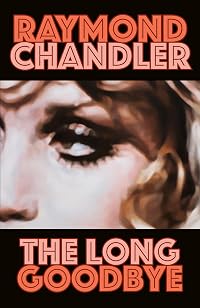
In The Long Goodbye, Raymond Chandler crafts one of his most celebrated and emotionally complex novels, featuring the iconic private detective Philip Marlowe. Set against the backdrop of post-World War II Los Angeles, the novel explores themes of friendship, betrayal, and moral decay in a world where trust is a rare commodity. Marlowe becomes entangled in the lives of two troubled men: Terry Lennox, a war-scarred alcoholic with a mysterious past, and Roger Wade, a self-destructive novelist. show more What begins as a simple act of loyalty-helping Lennox flee the country-draws Marlowe into a web of murder, blackmail, and corruption. As the detective digs deeper, he uncovers disturbing truths about his friends, as well as the wealthy and powerful figures who pull the strings in the shadows. With its intricate plot, razor-sharp dialogue, and dark, introspective tone, The Long Goodbye stands as one of Chandler's masterpieces. The novel is not only a gripping detective story but also a profound meditation on loneliness, loyalty, and the human condition. Rich in atmosphere and emotional depth, it is a defining work of the noir genre, cementing Chandler's legacy as a master of crime fiction. show lessTags
Recommendations
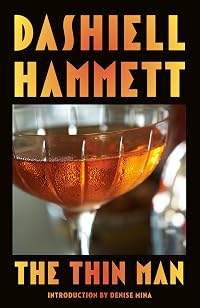
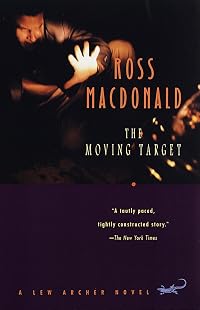
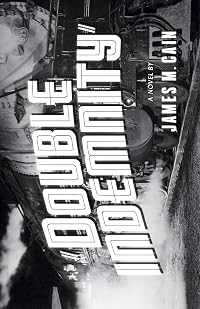
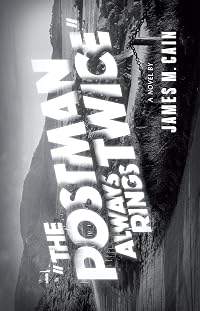




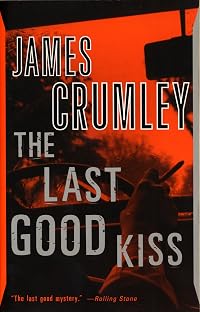
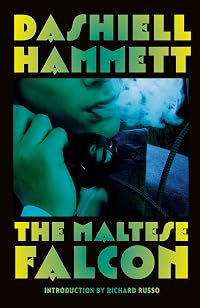


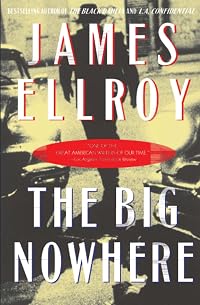


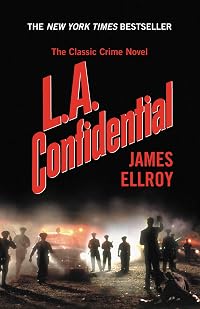




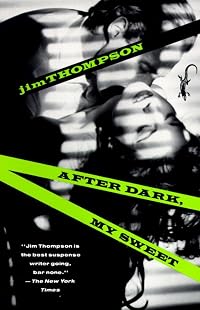

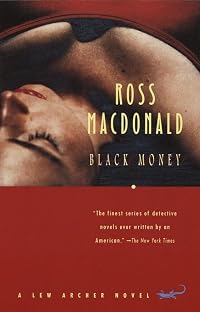
Member Recommendations

aulsmith In his first detective story, Hansen riffs on some of Chandler's themes.

by anonymous user
by anonymous user
by anonymous user
by anonymous user
by anonymous user
by anonymous user

Member Reviews
I’ve attempted this book in the past and failed to engage even though I love Chandler and the Marlowe series to pieces. This time it clicked and wow, I think it might be his most personal novel in the sense of how much he evokes through Marlowe. As usual the writing is snappy, the plot is convoluted and Marlowe gets ensnared by his own emotions and sense of morality.
Here are some noteworthy gems -
“I caught the rest of it in one of those snob columns in the society section of the paper. I don’t read them often, only when I run out of things to dislike.” p 11
“Very methodical guy, Marlowe. Nothing must interfere with his coffee technique. Not even a gun in the hand of a desperate stranger.” p 19
“I puffed the cigarette. It show more was one of those things with filters in them. It tasted like high fog strained through cotton wool.” p 39
“And the next time I saw a polite character drunk in a Rolls-Royce Silver Wraith, I would depart rapidly in several directions. There is no trap so deadly as the trap you set for yourself.” p 64
And of course, the second paragraph -
“There was a girl beside him. Her hair was a lovely shade of dark red and she had a distant smile on her lips and over her shoulders she had a blue mink that almost made the Rolls-Royce look like just another automobile. It didn’t quite. Nothing can.” p 1
It’s the longest of the Marlowe novels and the pace is less break-neck, but it still cranks along making the reader wonder how the Terry Lennox/Roger Wade situations will connect. You know they will. Readers of this type of fiction or other thrillers made after Chandler broke ground will connect the dots before he explains it, but watching Marlowe get there is half the fun. The reader doesn’t get everywhere ahead of Marlowe and his detective work, observational skills and sheer guts are spot on as usual. show less
Here are some noteworthy gems -
“I caught the rest of it in one of those snob columns in the society section of the paper. I don’t read them often, only when I run out of things to dislike.” p 11
“Very methodical guy, Marlowe. Nothing must interfere with his coffee technique. Not even a gun in the hand of a desperate stranger.” p 19
“I puffed the cigarette. It show more was one of those things with filters in them. It tasted like high fog strained through cotton wool.” p 39
“And the next time I saw a polite character drunk in a Rolls-Royce Silver Wraith, I would depart rapidly in several directions. There is no trap so deadly as the trap you set for yourself.” p 64
And of course, the second paragraph -
“There was a girl beside him. Her hair was a lovely shade of dark red and she had a distant smile on her lips and over her shoulders she had a blue mink that almost made the Rolls-Royce look like just another automobile. It didn’t quite. Nothing can.” p 1
It’s the longest of the Marlowe novels and the pace is less break-neck, but it still cranks along making the reader wonder how the Terry Lennox/Roger Wade situations will connect. You know they will. Readers of this type of fiction or other thrillers made after Chandler broke ground will connect the dots before he explains it, but watching Marlowe get there is half the fun. The reader doesn’t get everywhere ahead of Marlowe and his detective work, observational skills and sheer guts are spot on as usual. show less
I have never before read a book which so well enumerated, in such poetic yet clear language, precisely how systemic corruption works in all forms, and exactly how deep it roots itself into American society.
Every observation and comment in this book from 1953 is exactly as relevant and infuriatingly accurate in 2025.
Every observation and comment in this book from 1953 is exactly as relevant and infuriatingly accurate in 2025.
While the writing isn't as sharp as Raymond Chandler's earlier works, The Long Goodbye tells a more complicated story, one that takes longer to uncoil. An older Philip Marlowe has grown more cynical and has seen too much of Los Angeles, of police and high society, and of America, as evidenced by his numerous diatribes against big business and the government littering the novel. Marlowe especially sounds more like a conspiracy theorist than a private eye as he explains how the legal system is used to perpetuate organized crime.
Still smart, resourceful and above all patient, Marlowe winds up in jail under suspicion of aiding the accused uxoricidal murderer Terry Lennox—a man he barely knows—flee to Mexico. After Lennox's highly show more suspicious suicide, Marlowe is propositioned by the publisher of a famous writer, and then the writer's wife, to keep the writer sober long enough to finish his latest book while also being warned not to investigate the death of Lennox's wife. On the way to that final, surprising goodbye, several more people will die and Marlowe will prove himself the match of the powerful people he rails against.
Several things in the novel feel Gatsby-influenced: the cocktail party where the rich congregate, the beautiful women whose affections turn out badly for the men subjected to them. Unlike Fitzgerald, Chandler does not imbue these events and characters with romantic auras; instead, everyone involved is tainted or destroyed.
The Long Goodbye is a well-paced tale of violence and corruption populated by hard-drinking men and the beautiful women that supposedly love them. A highly enjoyable read. show less
Still smart, resourceful and above all patient, Marlowe winds up in jail under suspicion of aiding the accused uxoricidal murderer Terry Lennox—a man he barely knows—flee to Mexico. After Lennox's highly show more suspicious suicide, Marlowe is propositioned by the publisher of a famous writer, and then the writer's wife, to keep the writer sober long enough to finish his latest book while also being warned not to investigate the death of Lennox's wife. On the way to that final, surprising goodbye, several more people will die and Marlowe will prove himself the match of the powerful people he rails against.
Several things in the novel feel Gatsby-influenced: the cocktail party where the rich congregate, the beautiful women whose affections turn out badly for the men subjected to them. Unlike Fitzgerald, Chandler does not imbue these events and characters with romantic auras; instead, everyone involved is tainted or destroyed.
The Long Goodbye is a well-paced tale of violence and corruption populated by hard-drinking men and the beautiful women that supposedly love them. A highly enjoyable read. show less
It has been a while since I read Raymond Chandler; I forget what a delight the language is. I have been laughing a lot while reading this. His exposition on the different types of blondes is beyond hilarious and worth the price of admission, objectification taken to the absurd.
I read the first chapter as part of an exercise for my writing class, and I enjoyed it so much I decided to read the whole thing. Great choice. I warn that this is a product of its time, and the discourse about Mexicans is . . . problematic. They all have knives, they all have a price, and they are all very smart (or maybe crafty is the right word) and cover it up. I am not sure if they fare worse than women, but they certainly do not fare better. To be fair show more though, the White, blonde and rich of both genders come off as the ugliest folks. Nobody is noble other than Philip Marlowe. In the end he has his dignity and no bank account, but at least he gets laid. This really is a blast. I need to read more Raymond Chandler. The world sucks and this made me happier than a 14% drop in Tesla shares.
I listened to this narrated by Scott Brick, and I think it is the right way to go. Chandler's dialogue is a joy to listen to. show less
I read the first chapter as part of an exercise for my writing class, and I enjoyed it so much I decided to read the whole thing. Great choice. I warn that this is a product of its time, and the discourse about Mexicans is . . . problematic. They all have knives, they all have a price, and they are all very smart (or maybe crafty is the right word) and cover it up. I am not sure if they fare worse than women, but they certainly do not fare better. To be fair show more though, the White, blonde and rich of both genders come off as the ugliest folks. Nobody is noble other than Philip Marlowe. In the end he has his dignity and no bank account, but at least he gets laid. This really is a blast. I need to read more Raymond Chandler. The world sucks and this made me happier than a 14% drop in Tesla shares.
I listened to this narrated by Scott Brick, and I think it is the right way to go. Chandler's dialogue is a joy to listen to. show less
Promises what it says, really. A very long, unevenly written tale about a private eye who helps out a polite, gentle alcoholic after a chance encounter outside a club. A murder happens, then a suicide, but through a long and meandering chain of events, the detective stays involved instead of bowing out, because of course he does; this is a novel.
I haven't read Chandler before, nor watched adaptations, and I was most impressed by the writing style. Brisk, acidic prose that spares no one, including himself.
"They had watching and waiting eyes, patient and careful eyes, cool disdainful eyes, cops’ eyes. They get them at the passing-out parade at the police school."
“'Sold it, darling? How do you mean?' She slid away from him along the show more seat but her voice slid away a lot farther than that."
Surprisingly for me, I soon grew uninterested in the supposed mystery, which essentially dies down for a good third of the book, and only picks up in the last third. There's a rush of events in the first quarter, then a lot of alcoholic binges, with trips back and forth to estates outside of L.A. The last 15% or so slowly wraps up the plot, first with another murder, a surprise denouement worthy of Hercule Poirot, another suicide, and then another couple of twisty consequences and follow-ups. Curiously, the case is 'wrapped-up' by the police at least twice, both times in error, although the reader isn't sure of this. Marlowe comes out with some surprise information at the very end that was not particularly alluded to earlier, nor did the reader have an inclination that his suspicion was heading that direction, especially as he continues making principled stands. It takes on the aspect of a magic trick rather than an organic series of events made clear.
That said, the prose was amazing.
"There’s nothing around here but one great big suntanned hangover."
Chandler also has a lot of opinions to work out,
about the law:
"The law isn’t justice. It’s a very imperfect mechanism. If you press exactly the right buttons and are also lucky, justice may show up in the answer."
about decorators:
"The fellow who decorated that room was not a man to let colors scare him. He probably wore a pimento shirt, mulberry slacks, zebra shoes, and vermilion drawers with his initials on them in a nice Mandarin orange."
about writers:
"Maybe you always ought to ask a writer how the book is going. And then again maybe he gets damned tired of that question."
about rich people:
“There ain’t no clean way to make a hundred million bucks,” Ohls said. “Maybe the head man thinks his hands are clean but somewhere along the line guys got pushed to the wall, nice little businesses got the ground cut from under them and had to sell out for nickels, decent people lost their jobs, stocks got rigged on the market, proxies got bought up like a pennyweight of old gold, and the five per centers and the big law firms got paid hundred-grand fees for beating some law the people wanted but the rich guys didn't, on account of it cut into their profits."
and about gambling:
"You think those palaces in Reno and Vegas are just for harmless fun? Nuts, they’re there for the little guy, the something-for-nothing sucker, the lad that stops off with his pay envelope in his pocket and loses the week-end grocery money. The rich gambler loses forty grand and laughs it off and comes back for more."
and the press:
"Their constant yelping about a free press means, with a few honorable exceptions, freedom to peddle scandal, crime, sex, sensationalism, hate, innuendo, and the political and financial uses of propaganda. A newspaper is a business out to make money through advertising revenue. That is predicated on its circulation and you know what the circulation depends on.”
I mean, honestly, I found it kind of fascinating to read modern sentiments from someone writing 70 years ago. I'm sure that says something profound, but you'll have to explain it to me.
Wikipedia and the like talk about how this is Chandler's favorite and most autobiographical novel. He apparently wrote it while his wife had a prolonged fatal illness, and his own mental health struggles seemed to be mirrored by the character Roger Wade. It adds interesting insight, to be sure, and it could very well explain why I felt the middle third of the book wasn't about a mystery at all, but about Wade's problems.
Overall, I'm definitely worth reading and likely rereadable for the prose, although I've heard [b:The Big Sleep|2052|The Big Sleep (Philip Marlowe, #1)|Raymond Chandler|https://i.gr-assets.com/images/S/compressed.photo.goodreads.com/books/1371584712l/2052._SY75_.jpg|1222673] ranks up there as well. Note there is some weird racial descriptions about Mexicans, both in a town in Mexico and one in specific, but I think it largely passed a sniff test. Women fare about as well as you would expect from noir genre stereotypes. On the whole, re-readable, with caveats. show less
I haven't read Chandler before, nor watched adaptations, and I was most impressed by the writing style. Brisk, acidic prose that spares no one, including himself.
"They had watching and waiting eyes, patient and careful eyes, cool disdainful eyes, cops’ eyes. They get them at the passing-out parade at the police school."
“'Sold it, darling? How do you mean?' She slid away from him along the show more seat but her voice slid away a lot farther than that."
Surprisingly for me, I soon grew uninterested in the supposed mystery, which essentially dies down for a good third of the book, and only picks up in the last third. There's a rush of events in the first quarter, then a lot of alcoholic binges, with trips back and forth to estates outside of L.A. The last 15% or so slowly wraps up the plot, first with another murder, a surprise denouement worthy of Hercule Poirot, another suicide, and then another couple of twisty consequences and follow-ups. Curiously, the case is 'wrapped-up' by the police at least twice, both times in error, although the reader isn't sure of this. Marlowe comes out with some surprise information at the very end that was not particularly alluded to earlier, nor did the reader have an inclination that his suspicion was heading that direction, especially as he continues making principled stands. It takes on the aspect of a magic trick rather than an organic series of events made clear.
That said, the prose was amazing.
"There’s nothing around here but one great big suntanned hangover."
Chandler also has a lot of opinions to work out,
about the law:
"The law isn’t justice. It’s a very imperfect mechanism. If you press exactly the right buttons and are also lucky, justice may show up in the answer."
about decorators:
"The fellow who decorated that room was not a man to let colors scare him. He probably wore a pimento shirt, mulberry slacks, zebra shoes, and vermilion drawers with his initials on them in a nice Mandarin orange."
about writers:
"Maybe you always ought to ask a writer how the book is going. And then again maybe he gets damned tired of that question."
about rich people:
“There ain’t no clean way to make a hundred million bucks,” Ohls said. “Maybe the head man thinks his hands are clean but somewhere along the line guys got pushed to the wall, nice little businesses got the ground cut from under them and had to sell out for nickels, decent people lost their jobs, stocks got rigged on the market, proxies got bought up like a pennyweight of old gold, and the five per centers and the big law firms got paid hundred-grand fees for beating some law the people wanted but the rich guys didn't, on account of it cut into their profits."
and about gambling:
"You think those palaces in Reno and Vegas are just for harmless fun? Nuts, they’re there for the little guy, the something-for-nothing sucker, the lad that stops off with his pay envelope in his pocket and loses the week-end grocery money. The rich gambler loses forty grand and laughs it off and comes back for more."
and the press:
"Their constant yelping about a free press means, with a few honorable exceptions, freedom to peddle scandal, crime, sex, sensationalism, hate, innuendo, and the political and financial uses of propaganda. A newspaper is a business out to make money through advertising revenue. That is predicated on its circulation and you know what the circulation depends on.”
I mean, honestly, I found it kind of fascinating to read modern sentiments from someone writing 70 years ago. I'm sure that says something profound, but you'll have to explain it to me.
Wikipedia and the like talk about how this is Chandler's favorite and most autobiographical novel. He apparently wrote it while his wife had a prolonged fatal illness, and his own mental health struggles seemed to be mirrored by the character Roger Wade. It adds interesting insight, to be sure, and it could very well explain why I felt the middle third of the book wasn't about a mystery at all, but about Wade's problems.
Overall, I'm definitely worth reading and likely rereadable for the prose, although I've heard [b:The Big Sleep|2052|The Big Sleep (Philip Marlowe, #1)|Raymond Chandler|https://i.gr-assets.com/images/S/compressed.photo.goodreads.com/books/1371584712l/2052._SY75_.jpg|1222673] ranks up there as well. Note there is some weird racial descriptions about Mexicans, both in a town in Mexico and one in specific, but I think it largely passed a sniff test. Women fare about as well as you would expect from noir genre stereotypes. On the whole, re-readable, with caveats. show less
It caught me in its spell by the 3rd or 4th chapter.
Philip Marlowe is by all appearances your run of the mill hardboiled detective - except that he has a bleeding heart. And he's horribly lonely. Everyone else in the book has their problems, too. The cops are miserable, the rich are miserable, the poor are miserable. No one's quite living in the world they think they should be.
We learn about these people through what they do. And they do a lot. The plot is complex, woven together almost to a fault. By the end, events start to have an almost dreamlike quality.
Philip Marlowe is by all appearances your run of the mill hardboiled detective - except that he has a bleeding heart. And he's horribly lonely. Everyone else in the book has their problems, too. The cops are miserable, the rich are miserable, the poor are miserable. No one's quite living in the world they think they should be.
We learn about these people through what they do. And they do a lot. The plot is complex, woven together almost to a fault. By the end, events start to have an almost dreamlike quality.
One of the noir-est of the noir. Philip Marlowe, private detective. Lone wolf, paladin, man of honor. The usual philosophical drunks and women with "mink[s] that almost made the Rolls-Royce look like just another automobile". Crooked cops and crooks with a conscience.
Terry Lennox's very rich, very nymphomaniac wife is found dead, her head bashed in. Lennox takes it on the lam to Mexico, and then is found dead with a bullet in his brain and a confession in front of him. But did he really do it? A lot of people want Marlowe to think so, and not to look into the case. But then he gets dragged into trying to save an alcoholic, best-selling novelist, and, as with any good noir novel, there's a connection.
Also as in any good noir novel, show more nobody is what they seem or means what they say. Mysteries are "solved", but there are no tidy endings, no real heroes or villains. The atmosphere is all. And there is plenty of that here. show less
Terry Lennox's very rich, very nymphomaniac wife is found dead, her head bashed in. Lennox takes it on the lam to Mexico, and then is found dead with a bullet in his brain and a confession in front of him. But did he really do it? A lot of people want Marlowe to think so, and not to look into the case. But then he gets dragged into trying to save an alcoholic, best-selling novelist, and, as with any good noir novel, there's a connection.
Also as in any good noir novel, show more nobody is what they seem or means what they say. Mysteries are "solved", but there are no tidy endings, no real heroes or villains. The atmosphere is all. And there is plenty of that here. show less
Members
- Recently Added By
Lists

The Guardian's 1000 Novels Everyone Must Read
1,005 works; 551 members

1001 Books You Must Read Before You Die
1,448 works; 1,136 members

Noirvember: The Best Noir
113 works; 56 members

Best Noir Fiction
160 works; 14 members

100 Mysteries and Thrillers to Read in a Lifetime
99 works; 22 members

Best Crime Fiction
262 works; 39 members
The Top 100 Crime Novels of All Time
100 works; 15 members

Read the book and saw the movie
1,170 works; 192 members

Golden Age of Detection
35 works; 10 members

Crime and Mysteries to Read
746 works; 31 members

Top 100 Mystery Novels of All Time
98 works; 9 members
Books Set in California
112 works; 15 members

Survey of Mysteries and Crime Fiction
96 works; 17 members

Survey of Classic Crime
39 works; 7 members

Anthony Boucher's Best Crime Fiction of the Year
115 works; 5 members
Best Private Eye stories
28 works; 8 members

Novels from The Guardian's Great American Novelist Tournament
148 works; 24 members

Books About Murder
313 works; 7 members

H.R.F. Keating's 100 Best Crime & Mystery Books
100 works; 8 members

Best Crime Fiction
48 works; 3 members
Detective Stories
343 works; 5 members

Books mentioned in Julian Symons’ Bloody Murder
438 works; 6 members

Favorite Books from the 1950s
33 works; 2 members

Llibres que he llegit el 2011
15 works; 1 member

Edgar Award
418 works; 15 members

Books Read in 2016
4,666 works; 199 members

Five star books
1,767 works; 110 members
TML 200 Best Books 1950-1999
202 works; 10 members

Books Read in 2013
1,630 works; 51 members

The Art of Manliness' 100+ Books Every Man Should Read
108 works; 2 members

The Top Ten: Writers Pick Their Favorite Books
240 works; 32 members

Canon de la narrativa universal del siglo XX
254 works; 6 members
Best Books of the 20th Century
193 works; 5 members

The 100 Best Crime Novels and Thrillers since 1945
100 works; 6 members
SHOULD Read Books!
354 works; 9 members
Best Mysteries With a Historical Setting
292 works; 160 members
Tozai Mystery Best 100 | The Top 100 Mystery Novels
111 works; 3 members
Las 10 mejores novelas negras para comenzar a leer novela negra
10 works; 1 member
Art Bourgeau's Favorites [Mystery Lovers Companion, 1986]
124 works; 2 members
Our Favorite Comfort Reads
334 works; 200 members

.
194 works; 2 members
.
396 works; 1 member

Books Read in 2020
4,379 works; 124 members
1,001 BYMRBYD Concensus
723 works; 27 members

Watched the Movie, Probably Won't Read the Book
185 works; 34 members

100 books to read in a lifetime
102 works; 37 members
20th Century Literature
1,161 works; 55 members

to get
244 works; 2 members
Books Set in Los Angeles
40 works; 8 members

Thrillers to read
21 works; 2 members
Books Read in 2015
3,299 works; 126 members

1950s
340 works; 22 members
Blue Pyramid 1,276 Best Books of All Time
1,248 works; 32 members

Undiscovered Classics to Read
70 works; 15 members
Jordan B. Peterson's Recommended Books
104 works; 5 members

Anthony Burgess 99 Post War Novels
99 works; 7 members
American Lit for Eng 11 Research Project
368 works; 6 members

Books featuring alcoholics
103 works; 18 members
My TBR
371 works; 3 members
Nifty Fifties
129 works; 14 members

Catalog
41 works; 2 members

Books
85 works; 1 member

The Modern Library (The Two Hundred Best Novels....
202 works; 1 member
501 Must-Read Books
529 works; 72 members
Talk Discussions
Past Discussions
Hard boiled detective with $5000 in Name that Book (February 2012)
Author Information

278+ Works 47,969 Members
Raymond Chandler was born in Chicago, Illinois on July 23, 1888. Before becoming a professional writer in 1933, he worked as a reporter, an accountant, bookkeeper, and auditor. He wrote several novels featuring private detective Philip Marlowe including The Big Sleep, The High Window, The Lady in the Lake, The Little Sister, and The Long Goodbye. show more In addition to novels and short stories, he wrote screenplays. He won two academy awards, for Double Indemnity (1944) and The Blue Dahlia (1946). He died on March 26, 1959. (Bowker Author Biography) show less
Some Editions
Awards and Honors
Awards
Distinctions
Notable Lists
Series

Belongs to Publisher Series
I delfini [Bompiani] (140)
I libri del pavone [Mondadori] (326-327)
SaPo (17)
detebe (70/IV)
Tascabili [Bompiani] (258)
Ullstein Buch (715)
Colecção Vampiro (101)
Den svarte serie (145)
Gli Oscar [Mondadori] (302)
Work Relationships
Is contained in
The Lady in the Lake, The Little Sister, The Long Goodbye, Playback (Everyman's Library) by Raymond Chandler
The big sleep/Farewell my lovely/The high window/The lady in the lake/The long goodbye/Playback by Raymond Chandler
Has the adaptation
Is abridged in
Inspired
Common Knowledge
- Canonical title
- The Long Goodbye
- Original title
- The Long Goodbye
- Original publication date
- 1953
- People/Characters
- Philip Marlowe; Terry Lennox; Sylvia Lennox; Linda Loring; Dr. Loring; Eileen Wade (show all 13); Roger Wade; Paul Marston; Harlan Potter; Mendy Menendez; Candy; Dr. Verringer; Earl
- Important places
- Los Angeles, California, USA; California, USA; Tijuana, Baja California, Mexico
- Important events
- World War II
- Related movies
- The Long Goodbye (1973 | IMDb)
- First words
- The first time I laid eyes on Terry Lennox he was drunk in a Rolls-Royce Silver Wraith outside the terrace of The Dancers.
- Last words
- (Click to show. Warning: May contain spoilers.)I never saw any of them again -- except the cops. No way has yet been invented to say goodbye to them.
- Original language
- English
Classifications
Statistics
- Members
- 5,886
- Popularity
- 2,214
- Reviews
- 126
- Rating
- (4.15)
- Languages
- 22 — Basque, Bulgarian, Catalan, Chinese, Czech, Danish, Dutch, English, Estonian, Finnish, French, German, Greek, Hungarian, Italian, Japanese, Norwegian (Bokmål), Norwegian, Polish, Portuguese, Spanish, Swedish
- Media
- Paper, Audiobook, Ebook
- ISBNs
- 141
- ASINs
- 72