On This Page
Description
"Fadeout is the first of Joseph Hansen's twelve classic mysteries featuring rugged Dave Brandstetter, an insurance investigator who is contentedly gay. When entertainer Fox Olson's car plunges off a bridge in a storm, a death claim is filed, but where is Olson's body? As Brandstetter questions family, fans, and detractors, he grows certain Olson is still alive and that Dave must find him before the would-be killer does. Suspenseful and wry, shrewd and deeply felt, Fadeout remains as fresh show more today as when it startled readers more than thirty years ago. "--Goodreads show lessTags
Recommendations


























Member Recommendations
anonymous user In his first detective story, Hansen riffs on some of Chandler's themes.

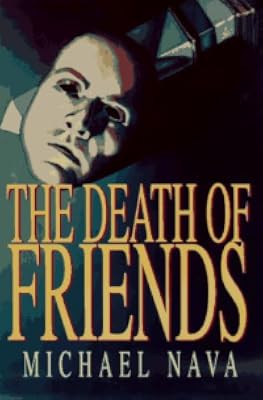
aulsmith I think the two most equivalent gay detective series are the Michael Nava's and the Joseph Hansen's where the mystery is center stage in each book, but the detective's life is a story throughout. Nava's Henry Rios is more introspective than Brandstetter.
Member Reviews
The Re-Publisher Says: Published fifty years ago, a time when being gay was illegal in 49 out of 50 states, Joseph Hansen’s first Dave Brandstetter novel shattered stereotypes and redefined the Private Eye novel as we know it.
Five decades after its original landmark publication, Joseph Hansen’s Fadeout is as fresh and important as ever. Preceded only by a handful of gay protagonists in crime fiction, Hansen’s Dave Brandstetter, a ruggedly handsome World War II vet with a quick wit, faultless moral compass, and endless confidence, shattered stereotypes and won over a large reading audience, a feat previously considered impossible for queer fiction.
Set in the mid-1960s, Fadeout centers on the disappearance of a southern California show more radio personality named Fox Olson. A failed writer, Olson finally found success as a beloved folksinger and wholesome country raconteur with a growing national audience. The community is therefore shocked when Olson’s car is found wrecked, having been driven off a bridge and swept away in a fast-moving arroyo on a rainy night. A life insurance claim is filed by Olson’s widow and the company holding the policy sends their best man to investigate. The problem is that Olson’s body was never found. Not in the car. Not further down the river. As Dave Brandstetter begins his investigation he quickly finds that none of it adds up.
I RECEIVED A DRC FROM THE PUBLISHER VIA EDELWEISS+. THANK YOU.
My Reviews: First, a 2013 rumination:
My present-day response to re-reading this glory of a noir story:
When all is said and done, when this mystery is...not solved, exactly...resolved, let's say, one feels that Justice has been served and the world's wicked, awful ways aren't triumphant when it really mattered. This time. show less
Five decades after its original landmark publication, Joseph Hansen’s Fadeout is as fresh and important as ever. Preceded only by a handful of gay protagonists in crime fiction, Hansen’s Dave Brandstetter, a ruggedly handsome World War II vet with a quick wit, faultless moral compass, and endless confidence, shattered stereotypes and won over a large reading audience, a feat previously considered impossible for queer fiction.
Set in the mid-1960s, Fadeout centers on the disappearance of a southern California show more radio personality named Fox Olson. A failed writer, Olson finally found success as a beloved folksinger and wholesome country raconteur with a growing national audience. The community is therefore shocked when Olson’s car is found wrecked, having been driven off a bridge and swept away in a fast-moving arroyo on a rainy night. A life insurance claim is filed by Olson’s widow and the company holding the policy sends their best man to investigate. The problem is that Olson’s body was never found. Not in the car. Not further down the river. As Dave Brandstetter begins his investigation he quickly finds that none of it adds up.
I RECEIVED A DRC FROM THE PUBLISHER VIA EDELWEISS+. THANK YOU.
My Reviews: First, a 2013 rumination:
I've recently completed a re-read of all twelve Brandstetter books. Why the heck not, it beats writing a new ending for my own book, right? Especially a book I thought of as done, but...oh heck, never mind.
My crazy mother bought this book when it came out because she liked mysteries. It was a little too hard-boiled for her, but she got the next three or so because she just loved the writing. When I was about 12, she handed this one to me when I expressed my joy at reading The Maltese Falcon with the offhand remark, "oh well then, this one'll slay ya."
Wow. A gay OLD man! People like me before there was a me!!
That really mattered to me, since there was such a lack of public and accepted gayness in the Austin of 1971. I remember knowing there were gay guys at the University because the sister who went there complained about it. I remember knowing the term "gay" from a friend of that same sister's who used it, and explained it when asked. The sister in question said, "oh geez he means queers, Rich, the faggots who mince around yelling about rights."
My mother is not the only judgmental and nasty woman I grew up with.
Well, that sort of interchange made Brandstetter all the more pleasurable for me to read! I loved him for being himself, despite his own father's disapproval, and for being a widower...a relationship ends before the series begins, and it was a revelation to me that such a relationship was *possible*. What a wonderful man Joseph Hansen must be, I thought, to create this unicorn of a character.
As the mystery unfolds, Dave Brandstetter does too. He learns so much about the victim, and so much of that resonates with him...Dave just can't stop the grieving he's going through for his dead love from connecting him to the people in his life, even as he makes the honorable choice not to take comfort that's offered to him by someone even more vulnerable than he is.
What I know now as someone older than the old man I thought Dave was in the book...Hansen knew what he was talking about when the subject is grief and grieving. Dave's pain made me weep as a kid. It does so much more to the grief-veteran old-man me...makes me sit, shocked, as I'm taken in to this most personal and intimate of places. Sex is less intimate than a person sharing this passage with you. As a re-reader, I had my initial youthful response in mind. Then the reality hit, and the impact was profound.
When there's writing like this, storytelling like this, out there in the world, why are so many people gobbling down so much crap?
My present-day response to re-reading this glory of a noir story:
Revisiting this read still more decades later, I am much more impressed with Author Hansen's feat of derring-do in writing the absolutely ordinary Dave as a queer gent of a certain age. These are excellent California Noir novels, as Michael Nava says in his Introduction, and it is homophobia and nothing else that keeps Hansen off the lists of the great practitioners of this art.
I thank you, Soho Syndicate, for republishing the series. Thanks, Edelweiss+, for the DRC. Most of all, and most heartfelt indeed, are the thanks I offer to my forerunner Joseph Hansen for holding the spiky branches back and showing my ever-searching eyes the safest path to being a good man was the honest one.
When all is said and done, when this mystery is...not solved, exactly...resolved, let's say, one feels that Justice has been served and the world's wicked, awful ways aren't triumphant when it really mattered. This time. show less
Rating: 4* of five
The Book Description: Fadeout is the first of Joseph Hansen's twelve classic mysteries featuring rugged Dave Brandstetter, an insurance investigator who is contentedly gay. When entertainer Fox Olson's car plunges off a bridge in a storm, a death claim is filed, but where is Olson's body? As Brandstetter questions family, fans, and detractors, he grows certain Olson is still alive and that Dave must find him before the would-be killer does. Suspenseful and wry, shrewd and deeply felt, Fadeout remains as fresh today as when it startled readers more than forty years ago.
My Review: I've recently completed a re-read of all twelve Brandstetter books. Why the heck not, it beats writing a new ending for my own book, right? show more Especially a book I thought of as done, but...oh heck, never mind.
My crazy mother bought this book when it came out because she liked mysteries. It was a little too hard-boiled for her, but she got the next three or so because she just loved the writing. When I was about 12, she handed this one to me when I expressed my joy at reading The Maltese Falcon with the offhand remark, "oh well then, this one'll slay ya."
Wow. A gay OLD man! People like me before there was a me!!
That really mattered to me, since there was such a lack of public and accepted gayness in the Austin of 1971. I remember knowing there were gay guys at the University because the sister who went there complained about it. I remember knowing the term "gay" from a friend of that same sister's who used it, and explained it when asked. The sister in question said, "oh geez he means queers, Rich, the faggots who mince around yelling about rights."
My mother is not the only judgmental and nasty woman I grew up with.
Well, that sort of interchange made Brandstetter all the more pleasurable for me to read! I loved him for being himself, despite his own father's disapproval, and for being a widower...a relationship ends before the series begins, and it was a revelation to me that such a relationship was *possible*. What a wonderful man Joseph Hansen must be, I thought, to create this unicorn of a character.
As the mystery unfolds, Dave Brandstetter does too. He learns so much about the victim, and so much of that resonates with him...Dave just can't stop the grieving he's going through for his dead love from connecting him to the people in his life, even as he makes the honorable choice not to take comfort that's offered to him by someone even more vulnerable than he is.
What I know now as someone older than the old man I thought Dave was in the book...Hansen knew what he was talking about when the subject is grief and grieving. Dave's pain made me weep as a kid. It does so much more to the grief-veteran old-man me...makes me sit, shocked, as I'm taken in to this most personal and intimate of places. Sex is less intimate than a person sharing this passage with you. As a re-reader, I had my initial youthful response in mind. Then the reality hit, and the impact was profound.
When there's writing like this, storytelling like this, out there in the world, why are so many people gobbling down so much crap? show less
The Book Description: Fadeout is the first of Joseph Hansen's twelve classic mysteries featuring rugged Dave Brandstetter, an insurance investigator who is contentedly gay. When entertainer Fox Olson's car plunges off a bridge in a storm, a death claim is filed, but where is Olson's body? As Brandstetter questions family, fans, and detractors, he grows certain Olson is still alive and that Dave must find him before the would-be killer does. Suspenseful and wry, shrewd and deeply felt, Fadeout remains as fresh today as when it startled readers more than forty years ago.
My Review: I've recently completed a re-read of all twelve Brandstetter books. Why the heck not, it beats writing a new ending for my own book, right? show more Especially a book I thought of as done, but...oh heck, never mind.
My crazy mother bought this book when it came out because she liked mysteries. It was a little too hard-boiled for her, but she got the next three or so because she just loved the writing. When I was about 12, she handed this one to me when I expressed my joy at reading The Maltese Falcon with the offhand remark, "oh well then, this one'll slay ya."
Wow. A gay OLD man! People like me before there was a me!!
That really mattered to me, since there was such a lack of public and accepted gayness in the Austin of 1971. I remember knowing there were gay guys at the University because the sister who went there complained about it. I remember knowing the term "gay" from a friend of that same sister's who used it, and explained it when asked. The sister in question said, "oh geez he means queers, Rich, the faggots who mince around yelling about rights."
My mother is not the only judgmental and nasty woman I grew up with.
Well, that sort of interchange made Brandstetter all the more pleasurable for me to read! I loved him for being himself, despite his own father's disapproval, and for being a widower...a relationship ends before the series begins, and it was a revelation to me that such a relationship was *possible*. What a wonderful man Joseph Hansen must be, I thought, to create this unicorn of a character.
As the mystery unfolds, Dave Brandstetter does too. He learns so much about the victim, and so much of that resonates with him...Dave just can't stop the grieving he's going through for his dead love from connecting him to the people in his life, even as he makes the honorable choice not to take comfort that's offered to him by someone even more vulnerable than he is.
What I know now as someone older than the old man I thought Dave was in the book...Hansen knew what he was talking about when the subject is grief and grieving. Dave's pain made me weep as a kid. It does so much more to the grief-veteran old-man me...makes me sit, shocked, as I'm taken in to this most personal and intimate of places. Sex is less intimate than a person sharing this passage with you. As a re-reader, I had my initial youthful response in mind. Then the reality hit, and the impact was profound.
When there's writing like this, storytelling like this, out there in the world, why are so many people gobbling down so much crap? show less
this was both really well written, and really well thought out, plus it was brave and strong in a way i wasn't expecting. i knew the main character was a gay man, and that in 1970 to write him this way was surprising, but i didn't think that homosexuality would end up being such a key part of the story. that it would feature so heavily and matter so much to the mystery. and for hansen to do that in the first of the series, right out of the gate, not save that until his series and character were established and already well-liked, is both surprising and really brave. and that he did it so well that, even though homosexuality was illegal in 49 states at the time, that this became a popular series, is nothing short of game changing. i hope show more people read this at the time and started to shift their views, and their understanding. i don't see how they could read this (and presumably the rest of the series) and not be changed.
as to the mystery itself, it's really well done. i was reading it most of the time, thinking, 'why don't more writers do this?' it's so smart, have an insurance claims man investigate and instead of find a murderer, find a person who isn't dead at all. it seemed brilliant to me, and the book clipped along really nicely as well. thenit did become a regular murder mystery, which i wasn't thinking would happen at that point, and that ended up working well, too. so many twists that i didn't expect. so many people i was sure had done it that didn't. all around i'm very impressed. the only thing i didn't like was that he ended up sleeping with the 17 year old at the end. that was self-indulgent, i think, and there was no need for it, especially as it was pointed out at different points in the book that it was illegal and also that it would be considered rape. so i really wish he hadn't done that. the author and the character, i mean.
for so many reasons this is such an excellent start to a series and to a character study. the universality of grief, the way he writes about community and belonging and the heartbreaking way his characters have either not lived their truth or have tried to be someone else, or have lived for someone else. this is a really sad, but also really beautiful story.
"His face kept the smile the way an old barn keeps a sign."
describing a house: "It tried to be yellow and managed a sick pale brown." show less
as to the mystery itself, it's really well done. i was reading it most of the time, thinking, 'why don't more writers do this?' it's so smart, have an insurance claims man investigate and instead of find a murderer, find a person who isn't dead at all. it seemed brilliant to me, and the book clipped along really nicely as well. then
for so many reasons this is such an excellent start to a series and to a character study. the universality of grief, the way he writes about community and belonging and the heartbreaking way his characters have either not lived their truth or have tried to be someone else, or have lived for someone else. this is a really sad, but also really beautiful story.
"His face kept the smile the way an old barn keeps a sign."
describing a house: "It tried to be yellow and managed a sick pale brown." show less
Each year, Soho Syndicate chooses a lesser-known writer of classic mystery novels and over that year publishes a dozen novels by that author. For 2022, that author is Joseph Hansen and the mysteries feature insurance investigator Dave Brandstetter. Fadeout is the first of these titles. Set in the 1960s, the mystery involves the disappearance—and probable death—of an unsuccessful writer turned radio personality, who has finally made it big, if not in the art he'd hoped to. Fox Olson's car went off a bridge in a storm. The car has been found, but no body.
This is where Brandstetter comes in. As an insurance investigator, he has to figure out whether Olson is dead or if he staged his own death so he could have a fresh start on life. show more Brandstetter is an interesting character, and I am avidly looking forward to spending more time with him in the coming year. Brandstetter is homosexual (that's Brandstetter's term, which sounds odd to those of us who now use the term gay). At the time Hansen was writing, homosexual sex was illegal in 49 out of 50 states, so being willing to identify as homosexual makes Brandstetter a rather remarkable man.
Brandstetter also comes with a backstory. He's recently lost his partner of twenty-one years to cancer, so death and death investigations carry a new weight for him. He's going through the motions, trusting the grief will grow less acute at some point, but not really believing that it will. Two early questions to arise in his current investigation are whether Olson may have been homosexual and, if so, whether this had anything to do with his death/disappearance. Suspects abound, including Olson's wife; her high school sweetheart, with whom she's been having an affair for years; Olson's father-in-law; his daughter; a local politician; and a recently rediscovered love from his youth.
Hansen's prose is wonderful, full of dark sentences echoing the mood of his tale. The mystery he's concocted is complex, with different suspects coming to the forefront at different times. This novel is one of those that's genuinely difficult to put down. With the twists of the plot, there's always a reason to tell one's self "just one more chapter."
I strongly recommend this title—and, anticipate feeling the same was about the rest of the series. Whether you're a reader of classic mysteries or a fan of early gay fiction, you won't want to miss this title.
I received a free electronic review copy of this title from the publisher via Edelweiss+; the opinions are my own. show less
This is where Brandstetter comes in. As an insurance investigator, he has to figure out whether Olson is dead or if he staged his own death so he could have a fresh start on life. show more Brandstetter is an interesting character, and I am avidly looking forward to spending more time with him in the coming year. Brandstetter is homosexual (that's Brandstetter's term, which sounds odd to those of us who now use the term gay). At the time Hansen was writing, homosexual sex was illegal in 49 out of 50 states, so being willing to identify as homosexual makes Brandstetter a rather remarkable man.
Brandstetter also comes with a backstory. He's recently lost his partner of twenty-one years to cancer, so death and death investigations carry a new weight for him. He's going through the motions, trusting the grief will grow less acute at some point, but not really believing that it will. Two early questions to arise in his current investigation are whether Olson may have been homosexual and, if so, whether this had anything to do with his death/disappearance. Suspects abound, including Olson's wife; her high school sweetheart, with whom she's been having an affair for years; Olson's father-in-law; his daughter; a local politician; and a recently rediscovered love from his youth.
Hansen's prose is wonderful, full of dark sentences echoing the mood of his tale. The mystery he's concocted is complex, with different suspects coming to the forefront at different times. This novel is one of those that's genuinely difficult to put down. With the twists of the plot, there's always a reason to tell one's self "just one more chapter."
I strongly recommend this title—and, anticipate feeling the same was about the rest of the series. Whether you're a reader of classic mysteries or a fan of early gay fiction, you won't want to miss this title.
I received a free electronic review copy of this title from the publisher via Edelweiss+; the opinions are my own. show less
4.5 stars, review contains spoilers
Hansen is an author I’d not been aware of, but then until recently I’ve really only read the big names in crime fiction, and only some of those - Conan Doyle, Hammett, Chandler, Elmore Leonard - and some of the current writers such as Val McDermid, Chris Brookmyre and Dennis Lehane. Thanks to couple of groups on GoodReads (especially the Pulp Fiction group) I’ve been discovering some very fine crime writers and, if Fadeout is anything to go by, Joseph Hansen is certainly one of them.
Published in 1970 it is the first of a series featuring Dave Brandstetter, an insurance investigator in California. Branstetter arrives at a small town to investigate the apparent death of a local celebrity before the show more insurance company will pay out $150, 000 on the life insurance. Much of what follows is what you would expect from a (superior) detective novel; Hansen writes in tight, expressive prose, exposing the buried secrets of the various members of the family and the local community, their relationships and jealousies and prejudices. The prejudice is especially apparent when it turns out that the missing man is gay and has left his wife of many years for an old lover. This is particularly poignant as Brandstetter is himself openly and contentedly gay, and has recently lost his own long-term partner. That’s right, check the beginning of this paragraph again. This must have been groundbreaking, indeed shocking, not only when it was first published but for many years afterward. What works particularly well is that the protagonist’s life with his partner - his memories of their being together and his description of the pain of his loss to cancer - are written in precisely the terms that a heterosexual relationship would be, and I can think of no reason it should be otherwise. There is no campness, no undue drama, and this is also true of a later encounter he has, which reads precisely like any other flirtation from another hard-boiled detective book. Even in our more enlightened age it would be rare to come across this being handled so well.
This also holds for Hansen’s description of Buddy, a young man with cerebral palsy, who we see through the detective’s compassionate eyes as determined and intelligent and funny, and absolutely not a caricature to be pitied or patronised. The characterisation throughout is superb, but it is especially with Buddy that Hansen shows his power as a writer. show less
Hansen is an author I’d not been aware of, but then until recently I’ve really only read the big names in crime fiction, and only some of those - Conan Doyle, Hammett, Chandler, Elmore Leonard - and some of the current writers such as Val McDermid, Chris Brookmyre and Dennis Lehane. Thanks to couple of groups on GoodReads (especially the Pulp Fiction group) I’ve been discovering some very fine crime writers and, if Fadeout is anything to go by, Joseph Hansen is certainly one of them.
Published in 1970 it is the first of a series featuring Dave Brandstetter, an insurance investigator in California. Branstetter arrives at a small town to investigate the apparent death of a local celebrity before the show more insurance company will pay out $150, 000 on the life insurance. Much of what follows is what you would expect from a (superior) detective novel; Hansen writes in tight, expressive prose, exposing the buried secrets of the various members of the family and the local community, their relationships and jealousies and prejudices. The prejudice is especially apparent when it turns out that the missing man is gay and has left his wife of many years for an old lover. This is particularly poignant as Brandstetter is himself openly and contentedly gay, and has recently lost his own long-term partner. That’s right, check the beginning of this paragraph again. This must have been groundbreaking, indeed shocking, not only when it was first published but for many years afterward. What works particularly well is that the protagonist’s life with his partner - his memories of their being together and his description of the pain of his loss to cancer - are written in precisely the terms that a heterosexual relationship would be, and I can think of no reason it should be otherwise. There is no campness, no undue drama, and this is also true of a later encounter he has, which reads precisely like any other flirtation from another hard-boiled detective book. Even in our more enlightened age it would be rare to come across this being handled so well.
This also holds for Hansen’s description of Buddy, a young man with cerebral palsy, who we see through the detective’s compassionate eyes as determined and intelligent and funny, and absolutely not a caricature to be pitied or patronised. The characterisation throughout is superb, but it is especially with Buddy that Hansen shows his power as a writer. show less
This is the first Brandstetter book. It's a series I dearly love, and Amazon had them all, so I started at the beginning, and discovered I probably hadn't read this one at all. Whee! And it was lovely. Dave Brandstetter is suffering the loss of his long-time lover, throwing himself back into work as an insurance investigator to find out if a death claim is justified, since no one found the body. The first section of the book happens in the rain, and I got off the train so convinced of the weather that I was shocked to find the pavement dry. Good stuff. Highly recommended for mystery lovers.
As a mystery novel, I'd consider this pretty average.... what makes it interesting is the frank portrayal of homosexuality. There are several gay characters, including the detective, and their lifestyle is described without judgment. The book portrays the difficulties and joys of being gay in a time when homosexuality was illegal in most places.
Members
- Recently Added By
Published Reviews
Lists

Best Noir Fiction
160 works; 14 members
Best Private Eye stories
28 works; 8 members

Survey of Mysteries and Crime Fiction
96 works; 17 members
Books Set in California
112 works; 15 members

Best LGBT Fiction
144 works; 24 members

Survey of Classic Crime
39 works; 7 members

Sad Queer Stories
18 works; 1 member

Pleasant Surprises: Books That Exceeded Our Expectations
418 works; 143 members

Good LGBT fiction for LGBT folk and friends
545 works; 50 members

Favorite Books from the 1970s
28 works; 3 members

Books Read in 2022
5,166 works; 112 members
Books Set in Los Angeles
40 works; 8 members

One Book, Many Authors
441 works; 40 members

Five star books
1,756 works; 108 members

Best Books of the 20th Century
193 works; 5 members

Swinging Seventies
255 works; 18 members

Hidden Classics
73 works; 15 members

Top Five Books of 2025
954 works; 303 members
Author Information

51+ Works 4,722 Members
Joseph Hansen was born in Aberdeen, South Dakota, on July 19, 1923. He attended Pasasdena City College. Hansen's fiction began to appear in the 60s. He published under the pseudonym James Colton because of the homosexual characters and themes of his work. He had published five novels and a collection of short stories when "Fadeout," the first of show more the Brandstetter mystery novels, was released. It is this series of 12 novels, which was published from 1970 to 1991 for which Hansen was most well known. Hansen wrote almost 40 books, which included novels and a series of semi-autobiographical works. He also taught fiction workshops, published poems in The New Yorker and produced a local radio show in the 60s called "Homosexuality Today." In 1965 he founded the pioneering homosexual journal Tangents. In 1974 Hansen was awarded a grant by the National Endowment for the Arts, and in 1992 he won the lifetime achievement award from the Private Eye Writers of America. Joseph Hansen died on November 24, 2004 at the age of 81 from heart failure. (Bowker Author Biography) show less
Some Editions
Awards and Honors
Notable Lists
Series

Work Relationships
Is contained in
Common Knowledge
- Canonical title
- Fadeout
- Original publication date
- 1970
- People/Characters
- Dave Brandstetter; Fox Olson; Thorne Olson; Hale McNeil; Lloyd Chalmers; Terry Lockridge (show all 15); Gretchen Olson; Phil Mundy; Douglas "Doug" Sawyer; Buddy Mundy; Mildred Mundy; Hap Loomis; Anselmo; Rod Fleming; Madge Dunstan
- Important places
- California, USA; Pima, California, USA; Bell Beach, California, USA
- First words
- Fog shrouded the canyon, a box canyon above a California ranch town called Pima.
- Quotations
- In twenty years you could say and do a lot you wish you hadn't. In twenty years you could store up a lot of regrets. And then, when it was too late, when there was no one left to say "I'm sorry" to, "I didn't mean it" to, you... (show all) could stop sleeping for regret, stop eating, talking, working, for regret. You could stop wanting to live. You could want to die for regret.
It was only remembering the good times that kept you from taking the knife from the kitchen drawer and, holding it so, tightly in your fist, on the bed, naked to no purpose except that that was how you came into the world and how your best moments in the world had been spent--holding it so, roll onto the blade, slowly so that it slid like love between your ribs and into that stupidly pumping muscle in your chest that kept you regretting. - Last words
- (Click to show. Warning: May contain spoilers.)"It will do for a start," Dave said.
Classifications
Statistics
- Members
- 532
- Popularity
- 56,049
- Reviews
- 22
- Rating
- (4.00)
- Languages
- 5 — Dutch, English, French, German, Italian
- Media
- Paper, Audiobook, Ebook
- ISBNs
- 30
- ASINs
- 9