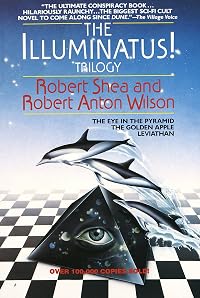
The Illuminatus! Trilogy
by Robert Shea, Robert Anton Wilson
The Illuminatus! Trilogy (Collections and Selections — Omnibus 1-3)
On This Page
Description
Filled with sex and violence--in and out of time and space--the three books of The Illuminatus are only partly works of the imagination. They tackle all the coverups of our time--from who really shot the Kennedys to why there's a pyramid on a one-dollar bill.Tags
Recommendations




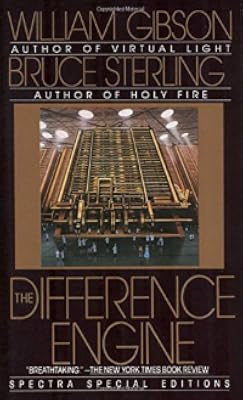
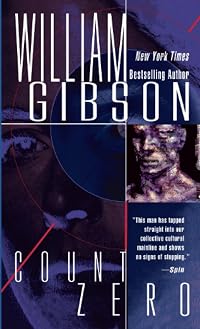
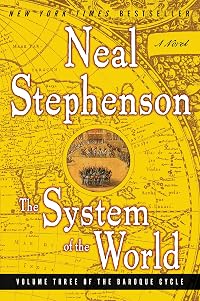
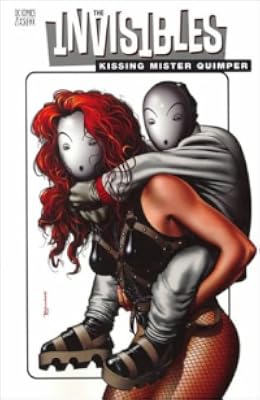




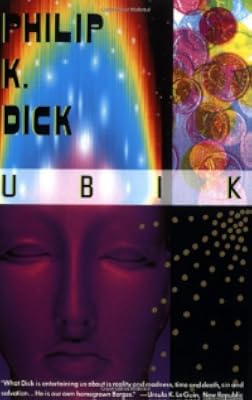
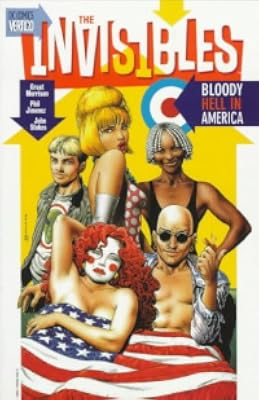
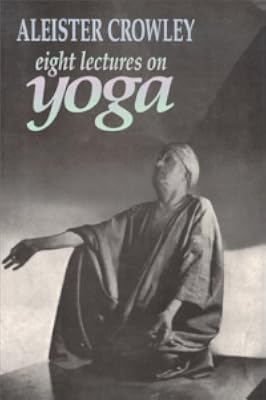
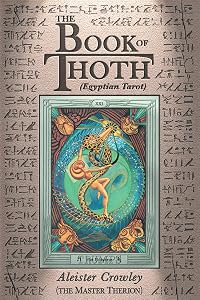
Member Recommendations
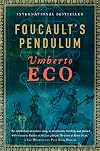
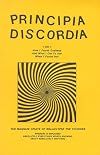
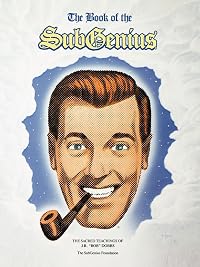
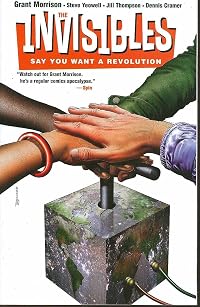
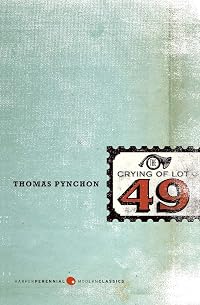
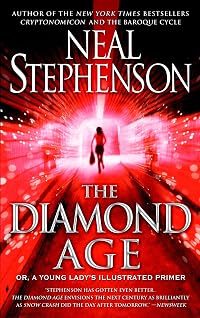
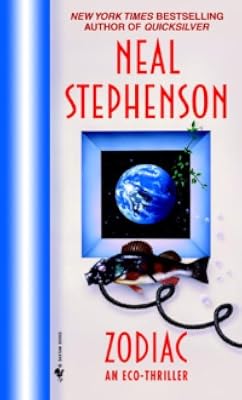
Bigrider7 A pair of whimsical books where reality is never quite what it appears, and is much more indiscrete and lacking in continuity than many of us can handle. Secrets about how life operates lurking just beyond the views of perceptions
30
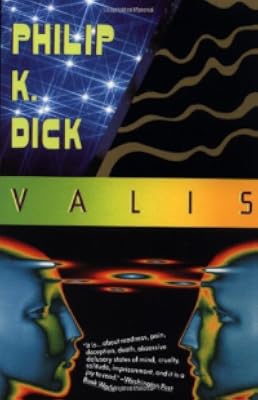
Cecrow The introduction of the Justified Ancients of MuMu into real life.

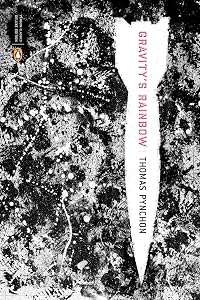
fulner They are like complimentary opposites in a way. Only is a story told in a way specifically meant to mess with your mind and not make sense the first time through with competing stories, the other seems to make perfect sense until you learn it's been several timelines all along
Member Reviews
[This review is dedicated to the anarchist and occasional friend Steve Ash who sadly died last year. This book meant a great deal to him.]
Wrongly sold as science fiction, this is an anarcho-libertarian bit of mischief mashing up some serious indirect philosophy and psychology with popular cultural memes, conspiracy theory, erotica, the occult and a lot of dated political satire.
It is so deliberately occult in places as to become occasionally (and ironically) a bit pompous, much like its 'hero' Hagbard Celine, the Captain Nemo of the story. The satire is somewhat jaded and the three novels taken together are too long and sometimes over-written.
But, having said this, the book is mostly a great deal of fun and, once you get used to the show more technique of having apparently disconnected tales flow into each other without any clear sign that the narrator has changed, easy enough to get through.
It is a classic text because it introduced into popular culture an entire alternative way of thinking about the world which, though sometimes as absurd as the 'morning of the magicians', is genuinely liberatory and, ultimately, 'true' or 'as true' as anything else.
We have to remember the time when it was written - the depressingly reactionary period in early 1970s America that emerged in response to the counter-cultural liberatory aspects of the 1960s.
Yes, the 1960s were an era of unorganised narcissism whose final result was Hillary Clinton but, in that specific context, Shea and Anton Wilson provide us with a cogent popular explanation of why anarchic narcissism may be the only appropriate response to authority.
The themes in these book - Lovecraftian, erotic, science fiction, conspiracy, new age - have, for better or worse, embedded themselves in the minds of those who will not accept that state authority is anything other than oppressive.
In this respect, the seeds laid by Shea and Anton Wilson in the 1970s act as counterpoint to those laid by Saul Alinsky, as alternative democratic sub-socialist and anarchic sub-libertarian responses to Leviathan, the State - or rather to Man's determination to submit.
The dominant model of political organisation in relation to the American State on the American Left is a sort of 'femininised' or beta male baring of the arse in order to be buggered in the hope that eventually the old beast will die and the buggered beast will inherit.
The anarcho-libertarian model seems to abandon all notions of Right or Left (which confuses the traditionalists of the Left) and laud the trickster, freethinker, pirate and even criminal against the very notion of order.
It is a view of human nature as good in the very end - or at least as less bad than when it is in under orders. The politics may be questionable but the psychological and philosophical insights are less so, even if presented in quasi-Zen parables and obfuscatory occultism.
The Trilogy (and the 'serious' Appendices, with no more 'truth' in them than any other part of the books) offers us versions of a number of theories questioning the reality that we create out of our sense perceptions and, in particular, social reality.
This questioning of social reality will last far longer than the political satire and the book's somewhat stock appropriation of cultural memes, such as Lovecraftian monsters and Nazis waiting to rise to make blood sacrifices to 'immanentize the eschaton'.
The book is justified by its bringing these thoughts about social reality subliminally to thousands of young people in every generation although, sadly, for every one who gets it, ten or a hundred will not and cease to be as functional in their own interest as they might.
Many observers have not noted that, as a book of constant paradox, the Trilogy, with its twists and turns has inherent fascistic aspects too - the elite eroticism, the leadership principle underpinning Hagbard, the cyclical views of history, the appropriation of traditionalism.
There is also implicit in the vision a disturbing sense of history as elites manipulating masses but without any real outrage being expressed - the Discordians seem simply to wish to play in the game on equal terms, disrupting the forces of order to restore 'balance'.
In this world view, there is still a hierarchical view of humanity. The masses could have their eyes open, and the Discordians devoutly wish that this would happen, yet a deep conservative pessimism in the game players leads them to accept that it will not.
The clever trick played in the book is that the naive reader who thinks he has 'got it' is really being manipulated into the false belief that, because he has 'got it', he is now part of the same elite that gave 'it' to him. He is not. The authors warn but not directly.
Look hard and there is a paragraph in the Appendices where an argument for human sacrifice of a most primitive type is made too plausible to be ironical, a nod perhaps to Evola, yet contrasted with horror at the mass immolations of war and that 1970s preoccupation, the Holocaust.
This is where the 1960s Generation can be seen to be bifurcating into an authoritarian and ideological optimism on the one side and a tendency to inverted rage and pessimism. The slave now adopts guerrilla tactics to undermine what cannot be destroyed frontally.
Magick and the occult in particular are the tools of the frustrated and the outsider and this book is heavily imbued with magical thinking.
Contemporary anarchism, Goth culture, popular horror, fantasy and the occult are now very much combined as a model for libertarian resistance to Leviathan - and the fantastic aspects do not stop police raids even today on those who withdraw from the system and wear black.
Culturally this is an important book, a tour de force in terms of its organisation of literary references and even plot. Its weaknesses are those of its time and we can only understand it by referring back to that time.
Beyond the politics, the book must be marked out as a text that introduced radically new ways of thinking to a mass audience - even if its subtleties have bypassed and will bypass those who read the New York Times and the Guardian and think they represent reality.
Related Review
https://www.goodreads.com/book/show/6146412-grimoires - the history of magical grimoires and their use as forms of resistance show less
Wrongly sold as science fiction, this is an anarcho-libertarian bit of mischief mashing up some serious indirect philosophy and psychology with popular cultural memes, conspiracy theory, erotica, the occult and a lot of dated political satire.
It is so deliberately occult in places as to become occasionally (and ironically) a bit pompous, much like its 'hero' Hagbard Celine, the Captain Nemo of the story. The satire is somewhat jaded and the three novels taken together are too long and sometimes over-written.
But, having said this, the book is mostly a great deal of fun and, once you get used to the show more technique of having apparently disconnected tales flow into each other without any clear sign that the narrator has changed, easy enough to get through.
It is a classic text because it introduced into popular culture an entire alternative way of thinking about the world which, though sometimes as absurd as the 'morning of the magicians', is genuinely liberatory and, ultimately, 'true' or 'as true' as anything else.
We have to remember the time when it was written - the depressingly reactionary period in early 1970s America that emerged in response to the counter-cultural liberatory aspects of the 1960s.
Yes, the 1960s were an era of unorganised narcissism whose final result was Hillary Clinton but, in that specific context, Shea and Anton Wilson provide us with a cogent popular explanation of why anarchic narcissism may be the only appropriate response to authority.
The themes in these book - Lovecraftian, erotic, science fiction, conspiracy, new age - have, for better or worse, embedded themselves in the minds of those who will not accept that state authority is anything other than oppressive.
In this respect, the seeds laid by Shea and Anton Wilson in the 1970s act as counterpoint to those laid by Saul Alinsky, as alternative democratic sub-socialist and anarchic sub-libertarian responses to Leviathan, the State - or rather to Man's determination to submit.
The dominant model of political organisation in relation to the American State on the American Left is a sort of 'femininised' or beta male baring of the arse in order to be buggered in the hope that eventually the old beast will die and the buggered beast will inherit.
The anarcho-libertarian model seems to abandon all notions of Right or Left (which confuses the traditionalists of the Left) and laud the trickster, freethinker, pirate and even criminal against the very notion of order.
It is a view of human nature as good in the very end - or at least as less bad than when it is in under orders. The politics may be questionable but the psychological and philosophical insights are less so, even if presented in quasi-Zen parables and obfuscatory occultism.
The Trilogy (and the 'serious' Appendices, with no more 'truth' in them than any other part of the books) offers us versions of a number of theories questioning the reality that we create out of our sense perceptions and, in particular, social reality.
This questioning of social reality will last far longer than the political satire and the book's somewhat stock appropriation of cultural memes, such as Lovecraftian monsters and Nazis waiting to rise to make blood sacrifices to 'immanentize the eschaton'.
The book is justified by its bringing these thoughts about social reality subliminally to thousands of young people in every generation although, sadly, for every one who gets it, ten or a hundred will not and cease to be as functional in their own interest as they might.
Many observers have not noted that, as a book of constant paradox, the Trilogy, with its twists and turns has inherent fascistic aspects too - the elite eroticism, the leadership principle underpinning Hagbard, the cyclical views of history, the appropriation of traditionalism.
There is also implicit in the vision a disturbing sense of history as elites manipulating masses but without any real outrage being expressed - the Discordians seem simply to wish to play in the game on equal terms, disrupting the forces of order to restore 'balance'.
In this world view, there is still a hierarchical view of humanity. The masses could have their eyes open, and the Discordians devoutly wish that this would happen, yet a deep conservative pessimism in the game players leads them to accept that it will not.
The clever trick played in the book is that the naive reader who thinks he has 'got it' is really being manipulated into the false belief that, because he has 'got it', he is now part of the same elite that gave 'it' to him. He is not. The authors warn but not directly.
Look hard and there is a paragraph in the Appendices where an argument for human sacrifice of a most primitive type is made too plausible to be ironical, a nod perhaps to Evola, yet contrasted with horror at the mass immolations of war and that 1970s preoccupation, the Holocaust.
This is where the 1960s Generation can be seen to be bifurcating into an authoritarian and ideological optimism on the one side and a tendency to inverted rage and pessimism. The slave now adopts guerrilla tactics to undermine what cannot be destroyed frontally.
Magick and the occult in particular are the tools of the frustrated and the outsider and this book is heavily imbued with magical thinking.
Contemporary anarchism, Goth culture, popular horror, fantasy and the occult are now very much combined as a model for libertarian resistance to Leviathan - and the fantastic aspects do not stop police raids even today on those who withdraw from the system and wear black.
Culturally this is an important book, a tour de force in terms of its organisation of literary references and even plot. Its weaknesses are those of its time and we can only understand it by referring back to that time.
Beyond the politics, the book must be marked out as a text that introduced radically new ways of thinking to a mass audience - even if its subtleties have bypassed and will bypass those who read the New York Times and the Guardian and think they represent reality.
Related Review
https://www.goodreads.com/book/show/6146412-grimoires - the history of magical grimoires and their use as forms of resistance show less
A classic bit of bogus balderdash wrapped up in sex, drugs and conspiracy theories. Writing style? Think James Joyce meets Ayn Rand and has a love child on acid. Fnord. What made it especially eerie this time around were the echos of today in yesterday. If you want to understand the zeitgeist of today's American politics, smoke this book from 50 years ago - it'll really get you out there.
The conspiracy theory to end all conspiracy theories. If Umberto Eco's Foucault's Pendulum describes how warped one's mind gets when one gets interested in conspiracy theories, this book causes your mind to get warped. Really warped. The world will never look the same after reading this book. It is particularly hair-raising to read this book during Bush's presidency, to see how much of it is even more true now than it was when it was written. This is one of the most difficult books ever written: I don't think I know anyone who managed to get through it on the first try. But it's well worth the effort.
We all live in a yellow submarine. Get it?Kick out the JAMS! Get it?Kraftwerk are really the Illuminati! Get it?I didn't enjoy this book as much as I did when I read it in college. It's the first book I'll be taking off my all time favorite reading list after a reread, but I would still recommend it to anyone looking for a funny thought provoking urban fantasy / alternative history novel. I was concerned it didn't meet the criteria of the Experimental Literature Book Club but rereading I thought its mix of camp, satire, religion, philosophy, deliberate befuddlement of the reader, and sheer length definitely qualify it as an experimental text. It seemed at the beginning Wilson and Shea (both possibly under the influence of drugs) were show more mailing each other their contributions without collaborating, then after the fact they brought it all together. I'm convinced that the Mavis / Maris ambiguity was the result of a typo and they just decided to work it in as a plot point. If you didn't make it that far, by the last hundred pages it does all come together and all the layers of the glass onion are revealed. The moral the story in contemporary parlance: sometimes its best to just let Jesus take the wheel and not try to control everything. Though parody is part of the program, the corny cover probably scares readers away. The master of wrapping complex philosophical ideas in pulp fiction clunker prose was (either by necessity or design) Philip K. Dick. It's notable that all Dick's works are a fraction of the length of Illuminatus!, even his trilogies. Some of the “offensive” passages are necessary as one of the core ideas of the novel are that important ideas (or at least esoteric knowledge) is sometimes hidden in low culture for everyone to see.I remembered the book being apolitical, but reading it again it seemed very political in the sense it was explicitly pro-anarchist. We'll each have to determine for ourselves the legitimacy of the anarchist viewpoint, but its important to remember there was time in our country that saying you were an anarchist was the equivalent of saying you are a terrorist now. Ferdinando Sacco and Bartolomeo Vanzetti were executed largely due to their anarchist affiliations. Joe Hill was executed because of the his association with the Industrial Workers of the World, an organization which could be construed as an anarcho-syndicalist organization. Now that anarchism has been discredited in popular culture, authors can give a (quasi) hero an anarchist viewpoint albeit within a satirical faux epic. I see the same ideological neutralization occurring with communism. I see the images of Marx and Lenin slowly becoming pop icons divorced from their original meaning.The plot alludes that all religions are intrinsically false, or at least misunderstood, by most adherents. Yet most of the characters utilize the practices of yoga and meditation. The idea that yoga will somehow gift you with any number of psychic powers is one the find all too frequently in popular culture. That's just my pet peeve. It seems to me an intrinsic Western bias against other cultures. We're lazy thinkers so we just appropriate what we want without having to fully comprehend what that something is or what it entails. Yeah, I know its a deliberately over the top SF wünderfest and I should just let it go.All hail discordia. show less
This gem was published long before Dan Brown made conspiracy theories into mediocre bestsellers. "The Illuminatus! Trilogy" is a crazy, globe-spanning rollercoaster, incorporating and parodying elements from the sixties counterculture movement, age-old secret societies and mythology. I don't think this novel could have been written in any other era than the seventies.
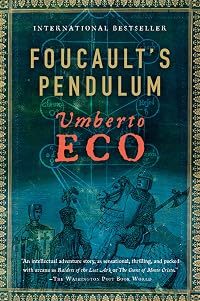
Perhaps this is the only workable approach to writing a proper conspiracy thriller that is not Foucault's Pendulum: write it from a discordian POV. If everything true is false and vice versa and you cannot believe anything that is written, hail Eris etc, then the whole mishmash of ancient societies, 60s psychedelia, 70s politics, literary allusions and general weirdness not only makes sense, but makes total nonsense, which of course may be the point.
And for the first few hundred pages, I'm loving this. Shea and Wilson dive in and start connecting the dots between everything and anything so gleefully that you can hear them giggling. They throw everything in there, from ancient myths (real or made up on the spot) to modernist and show more postmodernist authors (Melville! Lovecraft! Joyce! Pynchon! Vonnegut!), to then-current affairs, mixing fact and fiction in an absolutely dizzying way, pulling together threads to show ideas and concepts shining through, and yanking the rug out from under you anytime you feel like you have a clue what's going on. They even make the weird structure - the POV shifts, the time skips, etc - seem perfectly natural.
But eventually, that's also what makes the book more of a chore to read than a pleasure. At some point, you realise that you're reading page upon page upon page upon page of exposition by characters who are, in-story, either mad, lying, or just plain wrong, and will be proven so in the next 20 pages of exposition by another character (or the same character), who in turn will turn out to be... The joke just goes on too long with no punchline in sight. It's all a bit like... well...
Mike: Rick, you've been looking out of that window for three hours now.
Rick: Yes, well it's hardly surprising, is it? Vyvyan put super glue all over the pane!
Vyvyan: Did I? That was a good joke!
Rick: I'll probably be disfigured for life, Vyvyan, and you'll have to pay! Ha! And then who will be laughing, ha! Not you, matey. That's for sure!
Mike: Yeah, well just don't break the glass when you tear your face off, that's all.
Rick: I won't. I won't because... [quickly moves away from window] it's not true! It was a joke I made up, and you fell for it like the fascists you are!
I'm reading this in 2016 as Complete Idiotism has suddenly become a valid political platform, and it feels oddly prescient, but not necessarily in a good way. I'm wondering where Trump, Gove, Putin, Erdogan, Åkesson et al would fall in the context of this novel. I thought I wanted to laugh at it all, but when bare-faced authoritarianism and ditto irrationalism turn out to get along fine, I don't want enlightenment, I just want to pull a blanket over my head and read something that actually makes sense instead, and doesn't end with the most worn-out cop-out cliché ending in literary history. show less
And for the first few hundred pages, I'm loving this. Shea and Wilson dive in and start connecting the dots between everything and anything so gleefully that you can hear them giggling. They throw everything in there, from ancient myths (real or made up on the spot) to modernist and show more postmodernist authors (Melville! Lovecraft! Joyce! Pynchon! Vonnegut!), to then-current affairs, mixing fact and fiction in an absolutely dizzying way, pulling together threads to show ideas and concepts shining through, and yanking the rug out from under you anytime you feel like you have a clue what's going on. They even make the weird structure - the POV shifts, the time skips, etc - seem perfectly natural.
But eventually, that's also what makes the book more of a chore to read than a pleasure. At some point, you realise that you're reading page upon page upon page upon page of exposition by characters who are, in-story, either mad, lying, or just plain wrong, and will be proven so in the next 20 pages of exposition by another character (or the same character), who in turn will turn out to be... The joke just goes on too long with no punchline in sight. It's all a bit like... well...
Mike: Rick, you've been looking out of that window for three hours now.
Rick: Yes, well it's hardly surprising, is it? Vyvyan put super glue all over the pane!
Vyvyan: Did I? That was a good joke!
Rick: I'll probably be disfigured for life, Vyvyan, and you'll have to pay! Ha! And then who will be laughing, ha! Not you, matey. That's for sure!
Mike: Yeah, well just don't break the glass when you tear your face off, that's all.
Rick: I won't. I won't because... [quickly moves away from window] it's not true! It was a joke I made up, and you fell for it like the fascists you are!
I'm reading this in 2016 as Complete Idiotism has suddenly become a valid political platform, and it feels oddly prescient, but not necessarily in a good way. I'm wondering where Trump, Gove, Putin, Erdogan, Åkesson et al would fall in the context of this novel. I thought I wanted to laugh at it all, but when bare-faced authoritarianism and ditto irrationalism turn out to get along fine, I don't want enlightenment, I just want to pull a blanket over my head and read something that actually makes sense instead, and doesn't end with the most worn-out cop-out cliché ending in literary history. show less
I found this book to be absolutely hysterical but upon reflection I'm not exactly sure why. The first 100 pages I approached it as I would any other book. Consume, analyze, and pick apart a plot. It was frustrating to say the least because I was expecting the plot to follow the same rigid generic structure that almost every other book I've read follows.
Unlike most novels that can be found on bookshelves today, the protagonist is dragged submissively from one point to another along the story. It's pretty rare to see a plot where the character is not in full control of at least a small part of the story. In this novel everything is so mindbendingly unstructured that I'd compare it to looking into the psyche of somebody deep into a drug show more trip. Aware and conscious but without any bearing or control over the present.
For those readers who are anally retentively focused on structure and detail within a story plot, save yourself the time and run away now. The only structure that this book presents is a complete lack thereof. I tagged it anti-structuralism because it is written in such a nonsensical manner that it forces the reader to draw their own conclusions. It bends our foundations of perceived structure so far that they eventually break. I honestly felt myself giggling uncontrollably at some parts because it felt almost naughty to travel so far beyond the perceptions that our society unconsciously accept as dogma.
Likewise, if you're a prude or your sex life has never explored beyond the use of the missionary position, turn and run. The first female character presented is libertarian porn (ideological not sexual porn) taken to the extremes. I imagine her as how Ayn Rand would really like to present her main characters if she had the brass to do so. The second female character is a little more strange. I won't bother classifying the characters any more because it takes the fun out of the story.
If this book is trying to prove a point I think it would be that, by presented seeming nonsense in a chained structure manner it forces the reader to attempt to connect the dots by bending his/her logic to make the pieces fit until that perception is shattered. At the least, it will make the reader aware that that system of structure and common perception actually exists in the first place. At the most, it will trigger a cascade of epiphanies.
Although I have never experimented with LSD, I can imagine that the experience would be something along similar lines. By becoming aware of common perception it becomes possible to distance yourself. By letting go of control, it becomes possible to change it. Not everything that we see/feel is set in stone as much as we believe.
At the very least it takes some patience and a sense of humor to make it through these books. The ladder of which isn't a trait that I'd expect to be in short supply among a community of book worms.
I would pay money to see a literature teacher attempt to systematically deconstruct (and ruin) the plot of this novel into neat little packaged literary stereotypes as they so often do. I think it would be like asking a computer to divide by 0. It's hilarious enough to see other reviewers blow their lid about incorrect historical facts and plot holes. show less
Unlike most novels that can be found on bookshelves today, the protagonist is dragged submissively from one point to another along the story. It's pretty rare to see a plot where the character is not in full control of at least a small part of the story. In this novel everything is so mindbendingly unstructured that I'd compare it to looking into the psyche of somebody deep into a drug show more trip. Aware and conscious but without any bearing or control over the present.
For those readers who are anally retentively focused on structure and detail within a story plot, save yourself the time and run away now. The only structure that this book presents is a complete lack thereof. I tagged it anti-structuralism because it is written in such a nonsensical manner that it forces the reader to draw their own conclusions. It bends our foundations of perceived structure so far that they eventually break. I honestly felt myself giggling uncontrollably at some parts because it felt almost naughty to travel so far beyond the perceptions that our society unconsciously accept as dogma.
Likewise, if you're a prude or your sex life has never explored beyond the use of the missionary position, turn and run. The first female character presented is libertarian porn (ideological not sexual porn) taken to the extremes. I imagine her as how Ayn Rand would really like to present her main characters if she had the brass to do so. The second female character is a little more strange. I won't bother classifying the characters any more because it takes the fun out of the story.
If this book is trying to prove a point I think it would be that, by presented seeming nonsense in a chained structure manner it forces the reader to attempt to connect the dots by bending his/her logic to make the pieces fit until that perception is shattered. At the least, it will make the reader aware that that system of structure and common perception actually exists in the first place. At the most, it will trigger a cascade of epiphanies.
Although I have never experimented with LSD, I can imagine that the experience would be something along similar lines. By becoming aware of common perception it becomes possible to distance yourself. By letting go of control, it becomes possible to change it. Not everything that we see/feel is set in stone as much as we believe.
At the very least it takes some patience and a sense of humor to make it through these books. The ladder of which isn't a trait that I'd expect to be in short supply among a community of book worms.
I would pay money to see a literature teacher attempt to systematically deconstruct (and ruin) the plot of this novel into neat little packaged literary stereotypes as they so often do. I think it would be like asking a computer to divide by 0. It's hilarious enough to see other reviewers blow their lid about incorrect historical facts and plot holes. show less
Members
- Recently Added By
Lists

Fiction Featuring Real People
81 works; 17 members

It Just Wasn't Worth the Effort
21 works; 8 members

Blue Pyramid 1,276 Best Books of All Time
1,248 works; 32 members

Books
85 works; 1 member

Books Read in 2006
424 works; 8 members

Favorite Science Fiction
457 works; 223 members
Author Information

28 Works 7,801 Members

83+ Works 21,363 Members
Novelist, Teacher and Former Playboy Editor Robert Anton Wilson
Some Editions
Awards and Honors
Awards
Notable Lists
Series

Work Relationships
Common Knowledge
- Canonical title
- The Illuminatus! Trilogy
- Original title
- The Illuminatus! Trilogy
- Original publication date
- 1975
- People/Characters
- Robert Putney Drake; H. P. Lovecraft; Saul Goodman; Barney Muldoon; Joe Malik; John F. Kennedy (show all 30); Robert F. Kennedy; Martin Luther King, Jr.; George Dorn; Hagbard Celine; John Dillinger; Eric Voegelin; Adolf Hitler; Eris; Wilhelm; Yog-Sothoth; Wolfgang; Winifred; Werner; Leviathan; Atlanta Hope; Robert Harrison Blake; Henry Armitage; Klarkash-Ton; Tsathoggua; Annie Gamwell; Hart Crane; Aleister Crowley; Simon Moon; The Midget
- Important places
- Vril-ya Country; New York, New York, USA; Mad Dog, Texas, USA; Las Vegas, Nevada, USA; Atlantis; Chicago, Illinois, USA (show all 13); Fernando Poo; Bioko (Fernando Poo); Ingolstadt, Bavaria, Germany; Lake Totenkopf, Germany; Miskatonic University, Arkham, Massachusetts, USA; Aquilonia; Arkham, Massachusetts, USA
- Important events
- Cold War; Woodstock Music and Art Fair; Assassination of John F. Kennedy
- Epigraph
- The Eye in the Pyramid
The history of the world is the history of the warfare between secret societies.
--Ishmael Reed, Mumbo-Jumbo
The Golden Apple
There is no god but man.
Man has the right to live by his own law -- to live in the way that he wills to do: to work as he will: to play as he will: to rest as he will: to die when and how he... (show all) will.
Man has the right to eat what he will: to drink what he will: to dwell where he will: to move as he will on the face of the earth.
Man has the right to think what he will: to speak what he will: to write what he will: to draw, paint, carve, etch, mold, build as he will: to dress as he will.
Man has the right to love as he will.
Man has the right to kill those who thwart these rights.
--The Equinox: A Journal of Scientific Illuminism, 1922 (edited by Aleister Crowley)
Leviathan
The mutation from terrestrial to interstellar life must be made, because the womb planet itself is going to blow up within a few billion years ... Planet Earth is a stepping stone on our time-trip through ... (show all)the galaxy. Life has to get its seed-self off the planet to survive ...
There are also some among us who are bored with the amniotic level of mentation on this planet and look up in hopes of finding someone interesting to talk to.
--Timothy Leary, Ph.D., and L. Wayne Brenner, Terra II - Dedication
- The Eye in the Pyramid
To Gregory Hill and Kerry Thornley
The Golden Apple
To Arlen and Yvonne - First words
- The Eye in the Pyramid
It was the year when they finally immanentized the Eschaton.
The Golden Apple
April 25 began, for John Dillinger, with a quick skimming of the New York Times; he noticed more fnords than usual.
Leviathan
For over a week the musicians had been boarding planes and heading for Ingolstadt. - Quotations
- Wise men have regarded the earth as a tragedy, a farce, even an illusionist's trick; but all, if they are truly wise and not merely intellectual rapists, recognize that it is certainly some kind of stage in which we all play ... (show all)roles, most of us being very poorly coached and totally unrehearsed before the curtain rises. Is it too much if I ask, tentatively, that we agree to look upon it as a circus, a touring carnival wandering about the sun for a record season of four billion years and producing new monsters and miracles, hoaxes and bloody mishaps, wonders and blunders, but never quite entertaining the customers well enough to prevent them from leaving, one by one, and returning to their homes for a long and bored winter's sleep under the dust?
The belief in coincidence is the prevalent superstition of the Age of Science. - Last words
- (Click to show. Warning: May contain spoilers.)The Eye in the Pyramid
Every emotion is a motion.
(Click to show. Warning: May contain spoilers.)The Golden Apple
JESUS MOTHERFUCKING CHRIST IT'S ALIVE ...
(Click to show. Warning: May contain spoilers.)Leviathan
The earth below him cracked. - Original language
- English
Classifications
Statistics
- Members
- 4,878
- Popularity
- 2,910
- Reviews
- 59
- Rating
- (3.90)
- Languages
- 5 — English, French, German, Japanese, Spanish
- Media
- Paper, Ebook
- ISBNs
- 9
- ASINs
- 13