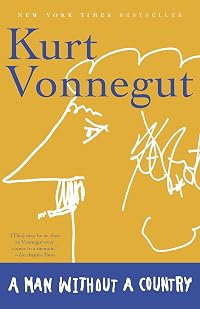
A Man Without a Country
by Kurt Vonnegut
On This Page
Description
In a collection of brief autobiographical essays, the renowned novelist offers his views on art, politics, and everyday life in America. A Man Without a Country is Kurt Vonnegut's hilariously funny and razor-sharp look at life "If I die-God forbid-I would like to go to heaven to ask somebody in charge up there, Hey, what was the good news and what was the bad news?"), art ("To practice any art, no matter how well or badly, is a way to make your soul grow. So do it."), politics ("I asked show more former Yankees pitcher Jim Bouton what he thought of our great victory over Iraq and he said, Mohammed Ali versus Mr. Rogers."), and the condition of the soul of America today ("What has happened to us?"). Gleaned from short essays and speeches composed over the last five years and plentifully illustrated with artwork by the author in full color throughout, A Man Without a Country gives us Vonnegut both speaking out with indignation and writing tenderly to his fellow Americans, sometimes joking, at other times hopeless, always searching. show lessTags
Recommendations









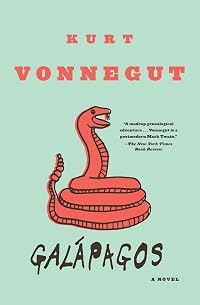
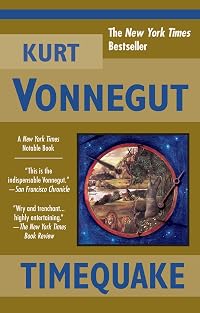
Member Recommendations
CGlanovsky The ranting of a disgruntled American humorist.
CGlanovsky The authors' parting shots on their lives and times, especially their somewhat pessimistic opinions regarding the prevailing political situations.
Member Reviews
I believe everyone should read Kurt Vonnegut. I also believe that if you read him at only one time in your life, it should be when you are young. Most of the Vonnegut I have read was before or well before I was 30. His various novels, especially my favorite SLAUGHTERHOUSE FIVE, detail the worst of what the world might offer but also the best of how we can handle it. However fantastic the goings on, the strength of our humanity will be what gets us through. This is largely why he was so popular among college kids in the sixties who were tossing off the time worn structures of religion and politics and embracing humanism. I took his books as a tuning fork setting the tone for how I perceived the world: hard but not without hope. What show more fascinated me about this collection of Vonnegut materials (mostly worth reading) is that it seemingly unconsciously reveals what happens to old humanists. When you consider humanity responsible for all that is wicked and wonderful in the world, you have no safety net other than your own contentment with what you have done. And part of getting older and older and old is evaluating the paths you have chosen that determine that contentment. This book indicates this isn't always a restful process. Vonnegut's humor and humanity still twinkle but also at times a gloom is cast that can be quite unsettling--as if hope had escaped Vonnegut. In my 50's now, I pride myself on still hearing that tone I picked up from Vonnegut years ago. Sometimes I have to strain to hear it or seek a quiet place from which to listen--but it is still there. That is not always evident for Vonnegut himself in this book. Maybe this explains the title better than anything else. In the end we are our own countries, our own world, our own responsibility. As we live, we learn but knowledge should not be the enemy of hope--but it certainly has a habit of wounding it.
While pondering this review I kept thinking of the Coen Brothers and in particular their movie THE BIG LEBOWSKI. I would like to think that among the last thoughts of Kurt Vonnegut was something as reassuring as "The Dude Abides". If you don't know what that means watch the movie. If then you still don't know what it means, watch it again. So it goes. show less
While pondering this review I kept thinking of the Coen Brothers and in particular their movie THE BIG LEBOWSKI. I would like to think that among the last thoughts of Kurt Vonnegut was something as reassuring as "The Dude Abides". If you don't know what that means watch the movie. If then you still don't know what it means, watch it again. So it goes. show less
It would be nice to be able to say that with A Man Without A Country, Vonnegut went out on a high note.
It wouldn't be true, though.
I'm not even exactly sure what to call this; it's certainly not a novel, it's not really non-fiction... "pamphlet" just about covers it, I guess. Either that or "rant." Because that's what he does; he rants. At 82 years old, Vonnegut was pissed off and it's heartbreaking to hear a man who's always described himself as a humanist and tried to find some good in people even in the most sinister, dark moments, declare openly that he has irrevocably lost faith in mankind. It's not surprising that he is unhappy with the way things are, but his trademark humour and wit tends to take a backseat to crushing show more pessimism. Is he right to be this pessimistic about us? Quite possibly, and it's not like he hasn't earned the right when you read this in the light of everything else he's written (and that's how the book should be read; I shudder to think what people will make of Vonnegut if this is their first exposure to him). But still.
A Man Without A Country veers back and forth between subjects, which he gets away with since he has things to say on most of them (on how to tell a story, on his outlook on life, on politics etc) even though it gives a slightly scattershot impression. Sometimes he's incredibly poignant, sometimes he's as funny as ever, sometimes he's just brash. (Though I confess that I can't help but crack up when he writes that he's going to sue the tobacco manufacturers for not giving him cancer like they promised, since he never wanted to live long enough to see the world run by "Bush, Dick and Colon".)
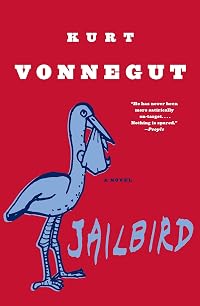
I suppose the worst and best part about it is the consistency. Having re-read a few Vonnegut novels since his death, there's really not much new stuff to find here (in fact, large portions of it seem cribbed from the foreword to Jailbird). There's a new president, Kurt is older and crankier, there's some fancy new thing called the Internet which he really doesn't like much (he proudly proclaims himself a luddite), but otherwise he's still pushing the same buttons that he has been for decades only with more bitterness. "Here's what we could have been," he seems to say (namechecking both Marx, Lincoln and Jesus), "and we wasted it all." A Man Without A Country doesn't add anything new, and as much irreverent fun as it is at times, it seems more like petering out than going out with a bang. show less
It wouldn't be true, though.
I'm not even exactly sure what to call this; it's certainly not a novel, it's not really non-fiction... "pamphlet" just about covers it, I guess. Either that or "rant." Because that's what he does; he rants. At 82 years old, Vonnegut was pissed off and it's heartbreaking to hear a man who's always described himself as a humanist and tried to find some good in people even in the most sinister, dark moments, declare openly that he has irrevocably lost faith in mankind. It's not surprising that he is unhappy with the way things are, but his trademark humour and wit tends to take a backseat to crushing show more pessimism. Is he right to be this pessimistic about us? Quite possibly, and it's not like he hasn't earned the right when you read this in the light of everything else he's written (and that's how the book should be read; I shudder to think what people will make of Vonnegut if this is their first exposure to him). But still.
A Man Without A Country veers back and forth between subjects, which he gets away with since he has things to say on most of them (on how to tell a story, on his outlook on life, on politics etc) even though it gives a slightly scattershot impression. Sometimes he's incredibly poignant, sometimes he's as funny as ever, sometimes he's just brash. (Though I confess that I can't help but crack up when he writes that he's going to sue the tobacco manufacturers for not giving him cancer like they promised, since he never wanted to live long enough to see the world run by "Bush, Dick and Colon".)
I suppose the worst and best part about it is the consistency. Having re-read a few Vonnegut novels since his death, there's really not much new stuff to find here (in fact, large portions of it seem cribbed from the foreword to Jailbird). There's a new president, Kurt is older and crankier, there's some fancy new thing called the Internet which he really doesn't like much (he proudly proclaims himself a luddite), but otherwise he's still pushing the same buttons that he has been for decades only with more bitterness. "Here's what we could have been," he seems to say (namechecking both Marx, Lincoln and Jesus), "and we wasted it all." A Man Without A Country doesn't add anything new, and as much irreverent fun as it is at times, it seems more like petering out than going out with a bang. show less
A Man Without a Country, a collection of essays, was Vonnegut’s last book. In keeping with my practice of acquiring books chiefly from garage sales and used-book stores, I discovered it ten years after it had become a bestseller. As a longtime Vonnegut fan, I expected to love it, and I did, I do.
I now realize how naive I have been in being disappointed how he conducted his marriages and how he left child-rearing to his wives. His insight into life and his way of expressing its joys and disappointments issue from the flawed man that he was, and my misguided judgments about his life issue from the flawed woman that I am. I take him as he is with gratitude at his ability to say things so simply and perfectly, to ask and answer all the show more questions human beings have. And in this collection, he even showed me that he had spent some time ruminating about his lost marriage and also about something that I’ve spent a lot of time considering: why inter-gender relationships are so damned challenging. A case in point:
"Freud said he didn’t know what women wanted. I know what women want: a whole lot of people to talk to. What do they want to talk about? They want to talk about everything.
What do men want? They want a lot of pals, and they wish people wouldn’t get so mad at them .
Why are so many people getting divorced today? It’s because most of us don’t have extended families anymore. It used to be that when a man and a woman got married, the bride got a lot more people to talk to about everything. The groom got a lot more pals to tell dumb jokes to."
He also talks about the admirable qualities of socialism and what it was like to be a prisoner of war in Dresden, as British incendiary bombs destroyed the city.
And so it goes. show less
I now realize how naive I have been in being disappointed how he conducted his marriages and how he left child-rearing to his wives. His insight into life and his way of expressing its joys and disappointments issue from the flawed man that he was, and my misguided judgments about his life issue from the flawed woman that I am. I take him as he is with gratitude at his ability to say things so simply and perfectly, to ask and answer all the show more questions human beings have. And in this collection, he even showed me that he had spent some time ruminating about his lost marriage and also about something that I’ve spent a lot of time considering: why inter-gender relationships are so damned challenging. A case in point:
"Freud said he didn’t know what women wanted. I know what women want: a whole lot of people to talk to. What do they want to talk about? They want to talk about everything.
What do men want? They want a lot of pals, and they wish people wouldn’t get so mad at them .
Why are so many people getting divorced today? It’s because most of us don’t have extended families anymore. It used to be that when a man and a woman got married, the bride got a lot more people to talk to about everything. The groom got a lot more pals to tell dumb jokes to."
He also talks about the admirable qualities of socialism and what it was like to be a prisoner of war in Dresden, as British incendiary bombs destroyed the city.
And so it goes. show less
Vonnegut’s last book is a series of memoirs and musings loosely thematically related. He is angry, though still witty and funny, at the state of the US Government, the environment, and people’s shitty attitudes in general. He definitely doesn’t care what anyone thinks or who gets offended which is so refreshing! I might be good he didn’t live to see the current state of affairs if he thought Bush was bad. I thoroughly enjoyed this very quick read.
"Trusting to escape scrutiny, by fixing the public gaze upon the exceeding brightness of military glory - that attractive rainbow, that rises in showers of blood - that serpent's eye, that charms to destroy - he plunged into war."
You will assume that Vonnegut was talking about our current president here, but in truth he was quoting Representative Abraham Lincoln regarding the then President James Knox Polk. Surprising how things seem to come around again isn't it?
This book was very good, though it was over much too quickly. I started it a few hours ago, and yet here I sit writing my thoughts on it already! It was, I believe, Vonnegut's last work before he died and at 82 (which he repeatedly tells the reader throughout) he still mixed show more his brand of devastatingly serious truths with laugh out loud humor.
"I wrote back:
The shoe thing at the airports and Code Orange and so on are world-class practical jokes, all right. But my all-time favorite is one the holy, anti-war clown, Abbie Hoffman (1936-1989) pulled off during the Vietnam War. He announced that the new high was banana peels taken rectally. So then the FBI scientists stuffed banana peels up their asses to find out if this was true or not. Or so we hoped"
Hilarious, no?
He does get a little "ranty" now and then, but he has quite valid points, and at 82 why not just "let her rip"? I recommend this book to anyone, especially those who already appreciate Vonnegut. show less
You will assume that Vonnegut was talking about our current president here, but in truth he was quoting Representative Abraham Lincoln regarding the then President James Knox Polk. Surprising how things seem to come around again isn't it?
This book was very good, though it was over much too quickly. I started it a few hours ago, and yet here I sit writing my thoughts on it already! It was, I believe, Vonnegut's last work before he died and at 82 (which he repeatedly tells the reader throughout) he still mixed show more his brand of devastatingly serious truths with laugh out loud humor.
"I wrote back:
The shoe thing at the airports and Code Orange and so on are world-class practical jokes, all right. But my all-time favorite is one the holy, anti-war clown, Abbie Hoffman (1936-1989) pulled off during the Vietnam War. He announced that the new high was banana peels taken rectally. So then the FBI scientists stuffed banana peels up their asses to find out if this was true or not. Or so we hoped"
Hilarious, no?
He does get a little "ranty" now and then, but he has quite valid points, and at 82 why not just "let her rip"? I recommend this book to anyone, especially those who already appreciate Vonnegut. show less
This was the first book of Vonnegut's I read, (I've since read the majority of his work). It's also the very last book he published while alive. From the first pages of this book I was completely enamored with his candid style and black sense of humor.
The book itself is a gem, but it's no better than his other collections of essays. I enjoy his fiction, but have found that his nonfiction, opinion-based ramblings are more my style. He had a way of weaving serious issues, like war, with threads of absurdity that's so unique. This book gives you a great taste of his work because it's a short collection that deals with current issues. His very distinct way of writing that often polarizes readers when it comes to his work. I'll be the first show more to admit that Vonnegut is not for everyone, but he is, for me, a joy to read. show less
The book itself is a gem, but it's no better than his other collections of essays. I enjoy his fiction, but have found that his nonfiction, opinion-based ramblings are more my style. He had a way of weaving serious issues, like war, with threads of absurdity that's so unique. This book gives you a great taste of his work because it's a short collection that deals with current issues. His very distinct way of writing that often polarizes readers when it comes to his work. I'll be the first show more to admit that Vonnegut is not for everyone, but he is, for me, a joy to read. show less
I actually just rescued this off a weeding cart to read at lunch, but it reads almost like a cynic's version of "Oh the Places You'll Go!" Vonnegut talks a lot about life and politics and in fewer than 150 broad-margined pages manages to amuse and offend pretty much anyone reading the book. But in addition to the lighthearted jokes and the bombing of Dresden (and even a joke or two ABOUT the bombing of Dresden), there are a lot of beautiful things and good advice built into the pages.
It's not necessary to have read any of Vonnegut's fiction to appreciate the book, but it does add a little more depth to the book, and it gives roots to some of his more esoteric ramblings.
The book would make a good graduation gift for a high-school student show more or a cynic in training. But then again, pretty much anyone can appreciate the page that says "We are here on earth to fart around. Don't let anybody tell you any different." show less
It's not necessary to have read any of Vonnegut's fiction to appreciate the book, but it does add a little more depth to the book, and it gives roots to some of his more esoteric ramblings.
The book would make a good graduation gift for a high-school student show more or a cynic in training. But then again, pretty much anyone can appreciate the page that says "We are here on earth to fart around. Don't let anybody tell you any different." show less
Members
- Recently Added By
Published Reviews
added by KayCliff
Lists

LT picks: Blue Books
197 works; 44 members

Best Autobiographies and Memoirs
370 works; 67 members

A Book For Our Times
7 works; 1 member

Books Read in 2015
3,299 works; 126 members

Books Read in 2017
4,249 works; 129 members

Books tagged favorites
390 works; 30 members

Books recommended by Calgary Public Library staff
1,588 works; 4 members

Non-Fiction
68 works; 1 member

Books Read in 2009
464 works; 10 members
Author Information

291+ Works 201,187 Members
The appeal of Kurt Vonnegut, especially to bright younger readers of the past few decades, may be attributed partly to the fact that he is one of the few writers who have successfully straddled the imaginary line between science-fiction/fantasy and "real literature." He was born in Indianapolis and attended Cornell University, but his college show more education was interrupted by World War II. Captured during the Battle of the Bulge and imprisoned in Dresden, he received a Purple Heart for what he calls a "ludicrously negligible wound." After the war he returned to Cornell and then earned his M.A. at the University of Chicago.He worked as a police reporter and in public relations before placing several short stories in the popular magazines and beginning his career as a novelist. His first novel, Player Piano (1952), is a highly credible account of a future mechanistic society in which people count for little and machines for much. The Sirens of Titan (1959), is the story of a playboy whisked off to Mars and outer space in order to learn some humbling lessons about Earth's modest function in the total scheme of things. Mother Night (1962) satirizes the Nazi mentality in its narrative about an American writer who broadcasts propaganda in Germany during the war as an Allied agent. Cat's Cradle (1963) makes use of some of Vonnegut's experiences in General Electric laboratories in its story about the discovery of a special kind of ice that destroys the world. God Bless You, Mr. Rosewater (1965) satirizes a benevolent foundation set up to foster the salvation of the world through love, an endeavor with, of course, disastrous results. Slaughterhouse-Five; or The Children's Crusade (1969) is the book that marked a turning point in Vonnegut's career. Based on his experiences in Dresden, it is the story of another Vonnegut surrogate named Billy Pilgrim who travels back and forth in time and becomes a kind of modern-day Everyman. The novel was something of a cult book during the Vietnam era for its antiwar sentiments. Breakfast of Champions (1973), the story of a Pontiac dealer who goes crazy after reading a science fiction novel by "Kilgore Trout," received generally unfavorable reviews but was a commercial success. Slapstick (1976), dedicated to the memory of Laurel and Hardy, is the somewhat wacky memoir of a 100-year-old ex-president who thinks he can solve society's problems by giving everyone a new middle name. In addition to his fiction, Vonnegut has published nonfiction on social problems and other topics, some of which is collected in Wampeters, Foma and Granfalloons (1974). He died from head injuries sustained in a fall on April 11, 2007. (Bowker Author Biography) show less
All Editions
Awards and Honors
Distinctions
Work Relationships
Common Knowledge
- Canonical title
- A Man Without a Country
- Original title
- A Man Without a Country
- Original publication date
- 2005
- People/Characters
- Kurt Vonnegut
- Related movies
- A Man Without a Country (2009 | IMDb)
- Epigraph
- There is no reason good can't triumph over evil, if only angels will get organized like the mafia.
- First words
- As a kid I was the youngest member of my family, and the youngest child in any family is always a jokemaker, because a joke is the only way he can enter into an adult conversation.
- Quotations
- If you live long enough, a lot of people close to you are going to die.
Here is a lesson in creative writing. First rule: Do not use semicolons. They are transvestite hermaphrodites representing absolutely nothing. All they do is show you've been to college.
Humor is an almost physiological response to fear.
And on the subject of burning books: I want to congratulate librarians, not famous for their physical strength or their powerful political connections or their great wealth, who, all over this country, have staunchly resisted... (show all) anti-democratic bullies who have tried to remove certain books from their shelves, and have refused to reveal to thought police the names of persons who have checked out those titles.
So the America I loved still exists, if not in the White House or the Supreme Court or the Senate or the House of Representatives or the media. The America I love still exists at the front desks of our public libraries. - Last words
- (Click to show. Warning: May contain spoilers.)People did not like it here.
- Original language
- English
Classifications
Statistics
- Members
- 5,323
- Popularity
- 2,544
- Reviews
- 93
- Rating
- (3.90)
- Languages
- 20 — Catalan, Chinese, Czech, Danish, Dutch, English, Estonian, Finnish, French, German, Hungarian, Italian, Japanese, Latvian, Lithuanian, Portuguese, Croatian, Spanish, Swedish, Turkish
- Media
- Paper, Audiobook, Ebook
- ISBNs
- 52
- UPCs
- 1
- ASINs
- 10