On This Page
Description
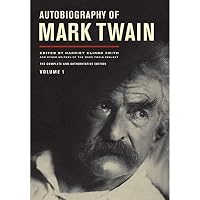
"I've struck it!" Mark Twain wrote in a 1904 letter to a friend. "And I will give it away—to you. You will never know how much enjoyment you have lost until you get to dictating your autobiography."Thus, after dozens of false starts and hundreds of pages, Twain embarked on his "Final (and Right) Plan" for telling the story of his life. His innovative notion—to "talk only about the thing which interests you for the moment"—meant that his thoughts could range freely. The strict show more instruction that many of these texts remain unpublished for one hundred years meant that when they came out, he would be "dead, and unaware, and indifferent," and that he was therefore free to speak his "whole frank mind."
The year 2010 marked the one hundredth anniversary of Twain's death. In celebration of this important milestone, here, for the first time, is Mark Twain's uncensored autobiography, in its entirety, exactly as he left it. This major literary event offers the first of three volumes and presents Mark Twain's authentic and unsuppressed voice, brimming with humor, ideas, and opinions, and speaking clearly from the grave, as he intended.
. show less
Tags
Recommendations


















Member Recommendations
CGlanovsky The ranting of a disgruntled American humorist.
Member Reviews
Twain never authored and ordered a complete and organized autobiography. He allowed himself to be distracted from the project periodically and when he did engage, he was often purposefully discursive and tangential. The scholarship and detective work that went into volume one of this monumental presentation is a welcome part of the work - discursions upon discursions. Along the way I become gladly become re-acquainted w/Twain's wit, humor, and cynicism and understand better the world he lived in and where was at in life during this writing.
While Twain didn't find gold when trying his hand at prospecting, readers can easily find gold in this autobiography Twain dictated toward the end of his life, secure in the knowledge that he could state his true opinions of the people he had come across (as he, and they, would be dead by the time any of this was published). As others have noted, this isn't so much a linear autobiography as it is a collection of random reminiscences and memories. But as this is only volume one of three, I assume Twain will, by the end, have covered much of his life. I first tried reading this as if it was a true autobiography but found that it quickly wore me out. But it's delightful when read in snippets, one or two entries at a time, as there are show more marvelous insights to be found, as well as humor, pathos, and virtually every other human emotion other, perhaps, than anger and cruelty. Highly recommended, especially if you like Twain's other writings. show less
Not so much an autobiography as a collection of miscellaneous essays, reflections, and stale grudges dredged up for their comedic effect - this book is all over the place. I was nearly half way through before there was even one essay about Twain's childhood or family. Most of the content was character sketches of other people, be they politicians, old landlords, or editors. These writings are all amusing or interesting, but don't provide much insight into the man himself. Clearly this was the intention, as the author often mentions his disinterest in creating a comprehensive overview of his life. Instead, he uses the specter of an autobiography to sound off about whatever interests him or comes to mind.
For myself, I don't really care show more what Twain intended. He never finished his autobiography, so anything posthumously published is essentially a construct. I felt misled by this book's title and a bit annoyed even as I was entertained by the great man's random memories. This should really be called "collected writings" or something similar. show less
For myself, I don't really care show more what Twain intended. He never finished his autobiography, so anything posthumously published is essentially a construct. I felt misled by this book's title and a bit annoyed even as I was entertained by the great man's random memories. This should really be called "collected writings" or something similar. show less
Mark Twain had a mouth on him, no doubt about it – and that is why it is still so much fun to read the man’s writing today. But even Twain knew that the world was not quite ready for the unexpurgated version of his thoughts that comprises the first two volumes (a third volume is yet to follow) of his autobiography, so he stipulated that the complete biography was not to be published until 100 years after his death – which occurred on April 21, 1910. For those of us lucky enough to be around for the unveiling of the uncensored version of the manuscripts, it was well worth the wait.
Close to half of the material contained in the autobiography has never been published before, and readers have the Mark Twain Project (of the University show more of California, Berkeley) to thank for making it available now. The previously published material has been published several times in the past, but always in an abridged form guaranteed not to offend. But even the unrestricted version of Twain’s manuscripts is not what readers have come to expect from an autobiography.
Rather than tell the story of his life in chronological order, Twain decided early on that he would dictate his thoughts to a stenographer as they occurred to him – regardless of where they might fit into the story of his life. And, because he wanted them published in the order that he dictated them, reading the two books is more like having a conversation with Twain than anything else. It is as if the man were sitting across the room and telling random stories from his life as they cross his mind.
And what stories they are! They range all the way from his thoughts on rather trivial newspaper stories that may have caught his eye over breakfast to wonderful remembrances of things that happened in the first decade or two of his life. We learn of the villains in Twain’s world, some of whom personally crippled him with huge financial losses and scams, and others who were simply the villains of their times, men like Jay Gould and Belgium’s King Leopold II. We learn much about his brother, a man full of dreams but without the ability to make any of them come true. And most touchingly, Twain shares his deep love for Susy, the daughter who was snatched from the family so suddenly, by quoting liberally from the biography she wrote about her father. (My own favorite sections of the book deal with Twain’s relationship with the U.S. Grant family and publication of the former president’s memoirs.)
Twain, though, never passes up the opportunity for a little personal vengeance. As he often reminds his readers, he is speaking from the grave now, so what does he care about offending anyone? He just wants to set the record straight – at least as he sees that record. So rather unfortunately, the reader will have to wade through what seems like countless pages about the copyright laws of the day and biting commentary about an Italian landlady who drove Twain nuts for several months.
Intimidating as the two books may first appear, the author’s charm and rascality make reading them a pleasure that Twain fans will not want to miss. show less
Close to half of the material contained in the autobiography has never been published before, and readers have the Mark Twain Project (of the University show more of California, Berkeley) to thank for making it available now. The previously published material has been published several times in the past, but always in an abridged form guaranteed not to offend. But even the unrestricted version of Twain’s manuscripts is not what readers have come to expect from an autobiography.
Rather than tell the story of his life in chronological order, Twain decided early on that he would dictate his thoughts to a stenographer as they occurred to him – regardless of where they might fit into the story of his life. And, because he wanted them published in the order that he dictated them, reading the two books is more like having a conversation with Twain than anything else. It is as if the man were sitting across the room and telling random stories from his life as they cross his mind.
And what stories they are! They range all the way from his thoughts on rather trivial newspaper stories that may have caught his eye over breakfast to wonderful remembrances of things that happened in the first decade or two of his life. We learn of the villains in Twain’s world, some of whom personally crippled him with huge financial losses and scams, and others who were simply the villains of their times, men like Jay Gould and Belgium’s King Leopold II. We learn much about his brother, a man full of dreams but without the ability to make any of them come true. And most touchingly, Twain shares his deep love for Susy, the daughter who was snatched from the family so suddenly, by quoting liberally from the biography she wrote about her father. (My own favorite sections of the book deal with Twain’s relationship with the U.S. Grant family and publication of the former president’s memoirs.)
Twain, though, never passes up the opportunity for a little personal vengeance. As he often reminds his readers, he is speaking from the grave now, so what does he care about offending anyone? He just wants to set the record straight – at least as he sees that record. So rather unfortunately, the reader will have to wade through what seems like countless pages about the copyright laws of the day and biting commentary about an Italian landlady who drove Twain nuts for several months.
Intimidating as the two books may first appear, the author’s charm and rascality make reading them a pleasure that Twain fans will not want to miss. show less
"Whenever a man preferred being fed by any other man to starving in independence he ought to be shot."
Mark Twain dictated his autobiography with the stated intention that it wouldn't be published for 100 years after his death. Accordingly, the first volume (of three) of the first complete edition just came out about a year ago.
Not a chronological autobiography, but more a free association of (mostly humorous) stories, it still somehow manages to add up to an integrated picture of the man. Early on he relates the death of his middle daughter Suzie at the age of 25, and from that point on quotes from a biography of him she had written about ten years earlier. This provides some structure, as he quotes passages and then elaborates on them show more or tells a story they remind him of, but it also provides a sort of emotional line, regularly reminding us of Twain's family life besides his professional life.
It does jump around a lot, ranging from recollections of his boyhood, to his early attempts at making a living, to becoming a successful writer, to his middle age as a family man, to his old age. The effect is a picture of a whole life, even if it is only in snapshots.
And of course, Twain is often very funny, sometimes poignant, and uses language beautifully. Definitely worth reading. And Grover Gardner's narration of this audio edition is quite good (though his reading of Sinclair Lewis's Dodsworth is even better)---straightforward to let the material speak for itself, rather than over-the-top comedic as most readers tend to interpret Twain. Four and a half stars. show less
Mark Twain dictated his autobiography with the stated intention that it wouldn't be published for 100 years after his death. Accordingly, the first volume (of three) of the first complete edition just came out about a year ago.
Not a chronological autobiography, but more a free association of (mostly humorous) stories, it still somehow manages to add up to an integrated picture of the man. Early on he relates the death of his middle daughter Suzie at the age of 25, and from that point on quotes from a biography of him she had written about ten years earlier. This provides some structure, as he quotes passages and then elaborates on them show more or tells a story they remind him of, but it also provides a sort of emotional line, regularly reminding us of Twain's family life besides his professional life.
It does jump around a lot, ranging from recollections of his boyhood, to his early attempts at making a living, to becoming a successful writer, to his middle age as a family man, to his old age. The effect is a picture of a whole life, even if it is only in snapshots.
And of course, Twain is often very funny, sometimes poignant, and uses language beautifully. Definitely worth reading. And Grover Gardner's narration of this audio edition is quite good (though his reading of Sinclair Lewis's Dodsworth is even better)---straightforward to let the material speak for itself, rather than over-the-top comedic as most readers tend to interpret Twain. Four and a half stars. show less
So, Mark Twain's autobiography, volume 1. Yes, the book is 736 pages, but Twain's story itself is only 405. The rest is made up of a very thorough introduction, explanatory notes, appendices, references, and the index.
I found the introduction quite interesting, as the editor set out the history of Twain's attempts at writing his autobiography over the years and the method he finally settled on. They also delved into what had been done with the manuscript after his death. His previous biographers, for example, didn't stand by the order to keep it all unpublished for 100 years. They used quite a bit of it in their own writings on Twain and didn't necessarily follow Twain's wishes in how they edited what they used. Harriet Elinor Smith and show more her colleagues have set that right, I believe.
That's who I want to thank, to begin with. The editors took on a massive undertaking by trying to bring this tome together, organizing the manuscript, doing the detective work to discover in what order things were originally written, and what changes might have been made by those shifty biographers of the past. Kudos to them.
Kudos, too, of course, to Mr. Clemens for his talented storytelling and the method he finally settled on. After years of struggling to write his story, and often refusing to, he discovered that dictating his thoughts to a competent and enthusiastic audience—in this case, the stenographer Josephine S. Hobby—was what fit the bill. Also, and this is the really cool part in my mind, he chose to change up the structure. Instead of writing a strictly linear piece, Clemens' story jumps around in time, paying more attention to how events connected in the author's brain, instead of how they connected chronologically. I think it's brilliant.
As are the stories themselves. Clemens was a master storyteller, raconteur, and, as his mother described him, and embroiderer. The tales of his life bear that mark. I found myself smiling a lot, and laughing, while reading this. Tearing up, occasionally, too. He talks about his own life and that of his family, but he also talks about the goings on of the day, sharing his thoughts about U.S. Grant (a big fan), Teddy Roosevelt ("one of the most impulsive man in history"), and Helen Keller ("She is fellow to Caesar, Alexander, Napoleon, Homer, Shakespeare, and the rest of the immortals."), among others.
One of my favor parts of the Twain saga was the insertion of pieces of the biography his daughter Susy had written about him when she was 13. He insisted that the excerpts be inserted as they were, with no corrections made to the spelling or grammar, although he would comment sometimes on a unique spelling or turn of phrase. His love for and pride in his daughter is so apparent, it's all the more tragic to read of her death from meningitis at the age of 24.
And, of course, Clemens talks about himself, such as his attendance at an author's reading at Vassar College. He was one of nine authors and the only one that kept his piece to 10 minutes. He ended up sneaking out the back when "by 5:30 a third of the house was asleep; another third were dying; and the rest were dead."
Clemens sarcastic wit, control of language, and warm heart shined throughout this volume, and I was sad when it ended, even if it did wound me. I can't wait for the next one. show less
I found the introduction quite interesting, as the editor set out the history of Twain's attempts at writing his autobiography over the years and the method he finally settled on. They also delved into what had been done with the manuscript after his death. His previous biographers, for example, didn't stand by the order to keep it all unpublished for 100 years. They used quite a bit of it in their own writings on Twain and didn't necessarily follow Twain's wishes in how they edited what they used. Harriet Elinor Smith and show more her colleagues have set that right, I believe.
That's who I want to thank, to begin with. The editors took on a massive undertaking by trying to bring this tome together, organizing the manuscript, doing the detective work to discover in what order things were originally written, and what changes might have been made by those shifty biographers of the past. Kudos to them.
Kudos, too, of course, to Mr. Clemens for his talented storytelling and the method he finally settled on. After years of struggling to write his story, and often refusing to, he discovered that dictating his thoughts to a competent and enthusiastic audience—in this case, the stenographer Josephine S. Hobby—was what fit the bill. Also, and this is the really cool part in my mind, he chose to change up the structure. Instead of writing a strictly linear piece, Clemens' story jumps around in time, paying more attention to how events connected in the author's brain, instead of how they connected chronologically. I think it's brilliant.
As are the stories themselves. Clemens was a master storyteller, raconteur, and, as his mother described him, and embroiderer. The tales of his life bear that mark. I found myself smiling a lot, and laughing, while reading this. Tearing up, occasionally, too. He talks about his own life and that of his family, but he also talks about the goings on of the day, sharing his thoughts about U.S. Grant (a big fan), Teddy Roosevelt ("one of the most impulsive man in history"), and Helen Keller ("She is fellow to Caesar, Alexander, Napoleon, Homer, Shakespeare, and the rest of the immortals."), among others.
One of my favor parts of the Twain saga was the insertion of pieces of the biography his daughter Susy had written about him when she was 13. He insisted that the excerpts be inserted as they were, with no corrections made to the spelling or grammar, although he would comment sometimes on a unique spelling or turn of phrase. His love for and pride in his daughter is so apparent, it's all the more tragic to read of her death from meningitis at the age of 24.
And, of course, Clemens talks about himself, such as his attendance at an author's reading at Vassar College. He was one of nine authors and the only one that kept his piece to 10 minutes. He ended up sneaking out the back when "by 5:30 a third of the house was asleep; another third were dying; and the rest were dead."
Clemens sarcastic wit, control of language, and warm heart shined throughout this volume, and I was sad when it ended, even if it did wound me. I can't wait for the next one. show less
(Reprinted from the Chicago Center for Literature and Photography [cclapcenter.com]. I am the original author of this essay, as well as the owner of CCLaP; it is not being reprinted illegally.)
It's funny, I think, how random the process can sometimes be of who we as a culture decide to remember for decades or sometimes centuries after their time, and who we tend to forget just a generation or two after their death, no matter how famous they were when alive; take for example Samuel Clemens, who I'll be referring to for the rest of this essay by his pen-name Mark Twain, no more notorious in the late 1800s than a hundred other people who served as his peers, but now a century later with 90 percent of those peers forgotten by the general show more public, but with Twain still thought of in an almost godlike fashion, pretty remarkable for a failed journalist and a bit of a crank who is best known for a series of folksy populist tales about a romanticized American past. But then again, once you stop and think about it, Twain actually accomplished a lot more than these businessmen and politicians around him who have now faded into obscurity; because for international readers who might not know, Twain came of age in a period of American history very similar in my opinion to what a place like India is going through right now -- a period when the US was dragging itself from second-world to first-world status for the first time, and was desperate to establish its first generation of artists, writers and thinkers to have a truly global effect on culture, artists who espoused an entirely new school of thought apart from what they learned simply by traveling to the already established parts of the cultured world. And Twain was one of these people, who at first became an international hit by writing post-Civil-War "pastoral" tales about a quaint and innocent rural America that had never actually existed, then honed his skills in his later years into a series of brilliantly satirical tales challenging the status quo, establishing a type of unique "American humor" (snarky, political, pop-culture-infused) that many Americans fondly look at as an integral part of our entire national spirit.
So no wonder, then, that Twain's century-in-waiting autobiography has unexpectedly become such a huge hit (see this fascinating NYT article for more -- turns out that the academic press who put this out went with an original print run of only 7,500 copies, thinking that the 800-page tome would be of interest to scholars only, but with it in actuality selling a third of a million copies in just its first few months); not just because of Twain's still near-holy status with most Americans, but because of the instantly intriguing hook behind its publication, the fact that Twain demanded that it not be published until a full hundred years after his death, so that he could feel free to write whatever nasty little stuff about the people around him that he wanted. Now, granted, this hasn't quite held true in the resulting century -- four smaller versions of this behemoth manuscript were published at various points throughout the 20th century -- but here on the literal centennial of his death, we are finally seeing the full and uncensored version for the first time, a publicist's wet dream that has made for dozens of fevered headlines from a lazy mainstream press.
But there are several important things to know about this book before reading it (technically only volume one of a coming three-book set), things that will help temper your enthusiasm down to a reasonable level; for example, of that giant bound volume now in stores, a full half of it is merely obsessive notes concerning the condition of the "Mark Twain Papers" when they were unearthed again for this project, with there turning out to have been three different physical copies in the vaults with multiple sets of notes, their authors and ages often in doubt, which was then further complicated by the fact that Twain sometimes out-and-out lied in these reminisces, sometimes exaggerated the truth, and sometimes in his old age simply got details wrong when transcribing them. And that's the second important thing to know -- that far from this being a traditional bio written in a linear or thematic order, Twain constructed these notes in the years before his death by dictating them to a stenographer from his bed in the mornings, three hours a day, nearly every day for four years straight, which he found such a delightful arrangement that he decided not to give his thoughts any kind of order at all, but rather ramble on about whatever struck his fancy that particular moment, no matter how little it might correspond to what he was talking about the day before. And pardon the trendiness of saying something like this, but that really does make this book less of a "biography" and more like the world's first blog, one that had maybe a dozen real-time readers back when he was first writing it, and especially when you add the literal clipped newspaper articles that Twain included in these transcripts, to further illustrate whatever little topic he was talking about that day. (In fact, Twain addresses this very issue in a highly meta way, spending several days discussing the tiny little scandal that was rocking the nation that week [some middle-class mom accidentally getting snubbed at some White House event], then musing on whether anyone was going to remember this incident even a decade from then, much less the "high future" of the early 2000s he was envisioning when writing it.)
And that's really the third important thing to understand about this book -- that despite the salacious reports from a contemporary media industry desperate to prove its own relevance, there's not really anything in Twain's autobiography that's going to come as a big shock, with his hundred-year delay done mostly to protect the feelings of little nobodies who Twain was angry at in his grumpy old age, such as the chapter on the horrible Italian woman who once rented his family a run-down house one summer. I mean, yes, Twain definitely unloads at various points on famous peers like, say, Jay Gould (banking magnate and the ninth richest man on the planet at his death); but Gould was one of the most hated men in the country by that point, the exact kind of tycoon that Twain skewered in his vicious The Gilded Age, so it comes as no surprise that he would dump on him in his "secret" memoirs as well. Now add a scholarly 60-page introduction to the entire thing, plus a copy of all the failed attempts Twain made at this autobiography in the years before this dictation process, and you quickly realize that the meat of this volume really only lays in a 300-page section right in the middle of it, a much more manageable challenge than what this doorstop of a book suggests.
But still, there's plenty of interesting things to read about in that 300-page core, including lots of stories about his childhood in rural Missouri and how they relate to his fictional books about that period; lots of invective against the various schemers, dreamers and other inventors who essentially bankrupted Twain several times over the course of his life; plenty of anecdotes about contemporaries like U.S. Grant, Booker Washington and Grover Cleveland; plenty of stories about family life, the ins and outs of marriage and fatherhood, and the various places they all lived over the decades; and on and on like this, most delivered in the same trademark style that make his public books so loved as well, a combination of optimism and fatalism that Twain was a master of spinning and twisting so much that you find yourself eventually laughing out loud from its sheer pathos. And that, frankly, may be Twain's best and last laugh of all, that he would have the balls to assume that these digressions would be such a hot item even a century after his death, and the talent to prove himself right. It was a fine read that I'm glad I took on, one I'd recommend to others, although only to those who already know a bit about his life and works; and I have to say that I'm now eagerly looking forward to the other two volumes in this series, hitting stores slowly over the next five to six years.
Out of 10: 9.3 show less
It's funny, I think, how random the process can sometimes be of who we as a culture decide to remember for decades or sometimes centuries after their time, and who we tend to forget just a generation or two after their death, no matter how famous they were when alive; take for example Samuel Clemens, who I'll be referring to for the rest of this essay by his pen-name Mark Twain, no more notorious in the late 1800s than a hundred other people who served as his peers, but now a century later with 90 percent of those peers forgotten by the general show more public, but with Twain still thought of in an almost godlike fashion, pretty remarkable for a failed journalist and a bit of a crank who is best known for a series of folksy populist tales about a romanticized American past. But then again, once you stop and think about it, Twain actually accomplished a lot more than these businessmen and politicians around him who have now faded into obscurity; because for international readers who might not know, Twain came of age in a period of American history very similar in my opinion to what a place like India is going through right now -- a period when the US was dragging itself from second-world to first-world status for the first time, and was desperate to establish its first generation of artists, writers and thinkers to have a truly global effect on culture, artists who espoused an entirely new school of thought apart from what they learned simply by traveling to the already established parts of the cultured world. And Twain was one of these people, who at first became an international hit by writing post-Civil-War "pastoral" tales about a quaint and innocent rural America that had never actually existed, then honed his skills in his later years into a series of brilliantly satirical tales challenging the status quo, establishing a type of unique "American humor" (snarky, political, pop-culture-infused) that many Americans fondly look at as an integral part of our entire national spirit.
So no wonder, then, that Twain's century-in-waiting autobiography has unexpectedly become such a huge hit (see this fascinating NYT article for more -- turns out that the academic press who put this out went with an original print run of only 7,500 copies, thinking that the 800-page tome would be of interest to scholars only, but with it in actuality selling a third of a million copies in just its first few months); not just because of Twain's still near-holy status with most Americans, but because of the instantly intriguing hook behind its publication, the fact that Twain demanded that it not be published until a full hundred years after his death, so that he could feel free to write whatever nasty little stuff about the people around him that he wanted. Now, granted, this hasn't quite held true in the resulting century -- four smaller versions of this behemoth manuscript were published at various points throughout the 20th century -- but here on the literal centennial of his death, we are finally seeing the full and uncensored version for the first time, a publicist's wet dream that has made for dozens of fevered headlines from a lazy mainstream press.
But there are several important things to know about this book before reading it (technically only volume one of a coming three-book set), things that will help temper your enthusiasm down to a reasonable level; for example, of that giant bound volume now in stores, a full half of it is merely obsessive notes concerning the condition of the "Mark Twain Papers" when they were unearthed again for this project, with there turning out to have been three different physical copies in the vaults with multiple sets of notes, their authors and ages often in doubt, which was then further complicated by the fact that Twain sometimes out-and-out lied in these reminisces, sometimes exaggerated the truth, and sometimes in his old age simply got details wrong when transcribing them. And that's the second important thing to know -- that far from this being a traditional bio written in a linear or thematic order, Twain constructed these notes in the years before his death by dictating them to a stenographer from his bed in the mornings, three hours a day, nearly every day for four years straight, which he found such a delightful arrangement that he decided not to give his thoughts any kind of order at all, but rather ramble on about whatever struck his fancy that particular moment, no matter how little it might correspond to what he was talking about the day before. And pardon the trendiness of saying something like this, but that really does make this book less of a "biography" and more like the world's first blog, one that had maybe a dozen real-time readers back when he was first writing it, and especially when you add the literal clipped newspaper articles that Twain included in these transcripts, to further illustrate whatever little topic he was talking about that day. (In fact, Twain addresses this very issue in a highly meta way, spending several days discussing the tiny little scandal that was rocking the nation that week [some middle-class mom accidentally getting snubbed at some White House event], then musing on whether anyone was going to remember this incident even a decade from then, much less the "high future" of the early 2000s he was envisioning when writing it.)
And that's really the third important thing to understand about this book -- that despite the salacious reports from a contemporary media industry desperate to prove its own relevance, there's not really anything in Twain's autobiography that's going to come as a big shock, with his hundred-year delay done mostly to protect the feelings of little nobodies who Twain was angry at in his grumpy old age, such as the chapter on the horrible Italian woman who once rented his family a run-down house one summer. I mean, yes, Twain definitely unloads at various points on famous peers like, say, Jay Gould (banking magnate and the ninth richest man on the planet at his death); but Gould was one of the most hated men in the country by that point, the exact kind of tycoon that Twain skewered in his vicious The Gilded Age, so it comes as no surprise that he would dump on him in his "secret" memoirs as well. Now add a scholarly 60-page introduction to the entire thing, plus a copy of all the failed attempts Twain made at this autobiography in the years before this dictation process, and you quickly realize that the meat of this volume really only lays in a 300-page section right in the middle of it, a much more manageable challenge than what this doorstop of a book suggests.
But still, there's plenty of interesting things to read about in that 300-page core, including lots of stories about his childhood in rural Missouri and how they relate to his fictional books about that period; lots of invective against the various schemers, dreamers and other inventors who essentially bankrupted Twain several times over the course of his life; plenty of anecdotes about contemporaries like U.S. Grant, Booker Washington and Grover Cleveland; plenty of stories about family life, the ins and outs of marriage and fatherhood, and the various places they all lived over the decades; and on and on like this, most delivered in the same trademark style that make his public books so loved as well, a combination of optimism and fatalism that Twain was a master of spinning and twisting so much that you find yourself eventually laughing out loud from its sheer pathos. And that, frankly, may be Twain's best and last laugh of all, that he would have the balls to assume that these digressions would be such a hot item even a century after his death, and the talent to prove himself right. It was a fine read that I'm glad I took on, one I'd recommend to others, although only to those who already know a bit about his life and works; and I have to say that I'm now eagerly looking forward to the other two volumes in this series, hitting stores slowly over the next five to six years.
Out of 10: 9.3 show less
Members
- Recently Added By
Published Reviews
ThingScore 75
That century has passed now and here it is, Volume 1 of “The Complete Authentic Unexpurgated Edition, Nothing Has Been Omitted, Not Even Scandalous Passages Likely to Cause Grown Men to Gasp and Women to Collapse in Tears — No Children Under 7 Allowed to Read This Book Under Any Circumstance,” which made Sam front-page news when all three volumes of the “Autobiography of Mark Twain” show more were announced last spring. The book turns out to be a wonderful fraud on the order of the Duke and the Dauphin in their Shakespearean romp, and bravo to Samuel Clemens, still able to catch the public’s attention a century after he expired.
He speaks from the grave, he writes, so that he can speak freely — “as frank and free and unembarrassed as a love letter” — but there’s precious little frankness and freedom here and plenty of proof that Mark Twain, in the hands of academics, can be just as tedious as anybody else when he is under the burden of his own reputation. Here, sandwiched between a 58-page barrage of an introduction and 180 pages of footnotes, is a ragbag of scraps, some of interest, most of them not.... show less
He speaks from the grave, he writes, so that he can speak freely — “as frank and free and unembarrassed as a love letter” — but there’s precious little frankness and freedom here and plenty of proof that Mark Twain, in the hands of academics, can be just as tedious as anybody else when he is under the burden of his own reputation. Here, sandwiched between a 58-page barrage of an introduction and 180 pages of footnotes, is a ragbag of scraps, some of interest, most of them not.... show less
added by lorax
Occasionally, maybe once in 50 pages, the old man will go on a little too long. His dreams, dietary problems and complaints about stock-market reversals are as boring as yours and mine. Many of the news stories he fixates on seem dated now. On the whole, however, this volume is hard to stop reading. Twain's prosody is so sure, and his powers of observation and selection so great, that he can show more take the most unpromising material—a real-estate deed, a letter from a would-be author—and make it glitter, like dull stone that turns out to be quartz or even diamond. Like Nabokov, he knew how to "caress the details, the divine details." show less
added by waitingtoderail
Mark Twain is his own greatest character in this brilliant self-portrait, the first of three volumes collected by the Mark Twain Project on the centenary of the author's death. It is published complete and unexpurgated for the first time. (Twain wanted his more scalding opinions suppressed until long after his death.) Eschewing chronology and organization, Twain simply meanders from show more observation to anecdote and between past and present. There are gorgeous reminiscences from his youth of landscapes, rural idylls, and Tom Sawyeresque japes; acid-etched profiles of friends and enemies, from his 'fiendish' Florentine landlady to the fatuous and 'grotesque' Rockefellers; a searing polemic on a 1906 American massacre of Filipino insurgents; a hilarious screed against a hapless editor who dared tweak his prose; and countless tales of the author's own bamboozlement, unto bankruptcy, by publishers, business partners, doctors, miscellaneous moochers; he was even outsmarted by a wild turkey. Laced with Twain's unique blend of humor and vitriol, the haphazard narrative is engrossing, hugely funny, and deeply revealing of its author's mind. His is a world where every piety conceals fraud and every arcadia a trace of violence; he relishes the human comedy and reveres true nobility, yet as he tolls the bell for friends and family--most tenderly in an elegy for his daughter Susy, who died in her early 20s of meningitis--he feels that life is a pointless charade. Twain's memoirs are a pointillist masterpiece from which his vision of America--half paradise, half swindle--emerges with indelible force. show less
added by sduff222
Lists

Top Five Books of 2013
1,562 works; 721 members

To read: Celebrity Biographies/Memoirs
39 works; 2 members

100 Biographies and Memoirs to Read in a (Single) Lifetime
98 works; 12 members

LT picks: Blue Books
197 works; 39 members
Author Information

2,763+ Works 208,990 Members
Mark Twain was born Samuel L. Clemens in Florida, Missouri on November 30, 1835. He worked as a printer, and then became a steamboat pilot. He traveled throughout the West, writing humorous sketches for newspapers. In 1865, he wrote the short story, The Celebrated Jumping Frog of Calaveras County, which was very well received. He then began a show more career as a humorous travel writer and lecturer, publishing The Innocents Abroad in 1869, Roughing It in 1872, and, Gilded Age in 1873, which was co-authored with Charles Dudley Warner. His best-known works are The Adventures of Tom Sawyer, Mississippi Writing: Life on the Mississippi, and The Adventures of Huckleberry Finn. He died of a heart attack on April 21, 1910. (Bowker Author Biography) show less

Mark Twain has a Legacy Library. Legacy libraries are the personal libraries of famous readers, entered by LibraryThing members from the Legacy Libraries group.
All Editions
Awards and Honors
Awards
Distinctions
Series

Belongs to Publisher Series
Common Knowledge
- Canonical title
- Autobiography of Mark Twain, Volume 1
- Original publication date
- 2010-11-15
- People/Characters
- Samuel Langhorne Clemens
- Important places
- Hannibal, Missouri, USA
- Blurbers
- Blount, Roy, Jr.; Richardson, Robert D.; Powers, Ron
- Disambiguation notice
- This LT work is Volume 1 of the complete, uncensored Autobiography of Mark Twain, withheld from publication for 100 years after Samuel Clemens' death (1910) and first published by the University of California Press in ... (show all)2010. Please do not combine it with any other edition(s), excerpt(s) or selection(s) from the Autobiography of Mark Twain. Thank you.
Classifications
- Genres
- Biography & Memoir, Literature Studies and Criticism, Nonfiction
- DDC/MDS
- 818.409 — Literature & rhetoric American literature in English American miscellaneous writings in English Later 19th Century 1861-1900
- LCC
- PS1331 .A2 — Language and Literature American literature American literature Individual authors 19th century
- BISAC
Statistics
- Members
- 2,311
- Popularity
- 8,580
- Reviews
- 42
- Rating
- (3.97)
- Languages
- English, French
- Media
- Paper, Audiobook, Ebook
- ISBNs
- 22
- ASINs
- 17