Venus Plus X
by Theodore Sturgeon
There is 1 current discussion about this work.
On This Page
Description
Charlie Johns has been snatched from his home on 61 North 34th Street and delivered to the strange future world of Ledom. Here, violence is a vague and improbable notion. Technology has triumphed over hunger, overpopulation, pollution, and even time and space. But there is a change that Charlie finds even more shocking: gender is a thing of the past. Venus Plus X is Theodore Sturgeon's brilliant evocation of a civilization in which tensions between male and female and the human preoccupation show more with sex no longer exist. As Charlie Johns explores Ledom and its people, he finds that the human precepts he holds dear are profane in this new world. But has Charlie learned all there is to know about this advanced society? And why are the Ledom so intent on gaining Charlie's approval? Unsettling, compelling, and no less than visionary, here is science fiction at its boldest, a novel with the wisdom and lyricism to make it one of the most original and insightful speculations on gender ever produced. show lessTags
Recommendations




















Member Recommendations
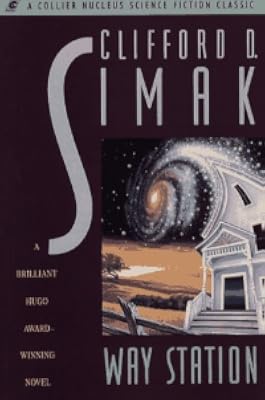
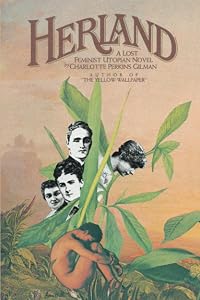
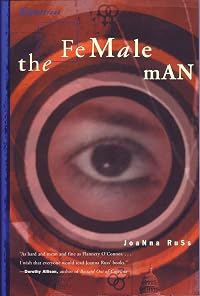
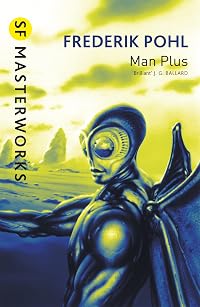
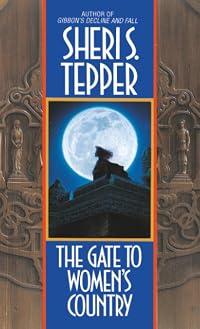
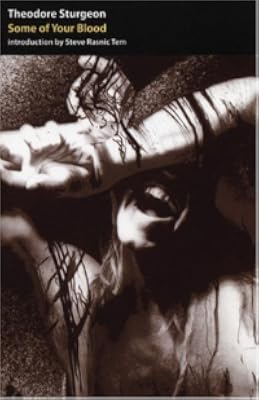
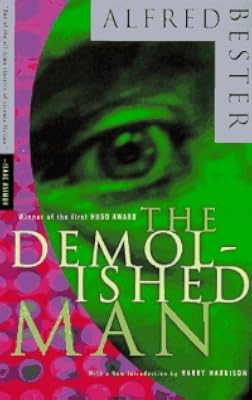
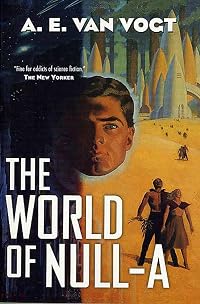
MinaKelly Another good example of the issue of gender in science fiction
Member Reviews
This was a reread, although I couldn’t tell you when I last read the book. The late seventies or early eighties, at a guess. I’d remembered the novel’s basic set-up, but nothing else. Venus Plus X is set in the distant future, in a utopian community of hermaphroditic humans (not really an acceptable term these days, but these have the organs of both sexes and can procreate).
A man from the mid-twentieth-century is pulled forward in time to the community of Ledom. Yes, it’s “model” backwards, but Sturgeon admits in a postscript he reversed the name of a can of his favourite tobacco. The time-traveller, Charlie Johns, is asked to give his opinion on Ledom and its society. Various guides show him around and explain things. show more Everything in Ledom is a consequence of the “A-field”, a sort of force-field, and the “cerebrostyle”, which can write knowledge directly onto people’s brains. There is also a chapter on biology - the Ledoms have both sex organs, and two uteruses, and always give birth to twins.
Alternating with this guidebook-style narrative is some sort of sitcom featuring two families who live next door to each other. These sections are almost entirely dialogue.
There are long sections on gender, which I suspect only gammons and terfs will disagree with, and religion, which manages to erase almost all of them except Christianity and misrepresents those it does mention. Sturgeon’s thesis is that both of these - the elimination of gender through the creation of hermaphroditic humans, and a charitic religion - were necessary to create the utopian Ledom. Except, while Sturgeon rightly points out gender roles are social constructs, he still defines them using biological sex; and, as others have pointed out, the gender politics Sturgeon presents were not universal even back in 1960 - and his model society only exists more because of its two magical inventions than anything else.
Charlie learns Ledom exists inside an A-field bubble on an Earth devastated by nuclear war. He also discovers - against the wishes of the Ledom senior members - that the Ledoms give birth to normal humans, which are then (surgically?) altered to be Ledoms. For some reason, this sends Charlie completely off the rails and he tells them he, and all humans, would kill them if they could. When Charlie tries to escape to the past, he discovers the truth about the time-travel machine. Meanwhile, nuclear bombs explode outside Ledom’s A-field - is this implying humans still live? Or that Ledom is actually in the present? It’s unclear.
Sturgeon writes that he wanted to write a novel about sex. The novel credited with introducing the topic of sex into science fiction is Philip José Farmer’s The Lovers (or rather, the novella from which it was expanded) in 1952. The earliest sf novel I can find centred around a hermaphroditic character is Katherine Burdekin’s Proud Man, published in 1934, but in that novel the hermaphrodite travels back in time from the future to 1930. Burdekin’s novel, according to Wikipedia, criticises gender roles. Venus Plus X doesn’t do that - it posits a near-utopia, which despite its arguments only survives because it hides a horrible secret, which, to be fair, is a common science fiction trope, sort of like soylent green. I wasn’t convinced.
The title, incidentally, comes from the phrase “men are from Mars, women are from Venus”, and Charlie speculates that the hermaphroditic Ledoms are women with a bit extra, “x”. Ugh. show less
A man from the mid-twentieth-century is pulled forward in time to the community of Ledom. Yes, it’s “model” backwards, but Sturgeon admits in a postscript he reversed the name of a can of his favourite tobacco. The time-traveller, Charlie Johns, is asked to give his opinion on Ledom and its society. Various guides show him around and explain things. show more Everything in Ledom is a consequence of the “A-field”, a sort of force-field, and the “cerebrostyle”, which can write knowledge directly onto people’s brains. There is also a chapter on biology - the Ledoms have both sex organs, and two uteruses, and always give birth to twins.
Alternating with this guidebook-style narrative is some sort of sitcom featuring two families who live next door to each other. These sections are almost entirely dialogue.
There are long sections on gender, which I suspect only gammons and terfs will disagree with, and religion, which manages to erase almost all of them except Christianity and misrepresents those it does mention. Sturgeon’s thesis is that both of these - the elimination of gender through the creation of hermaphroditic humans, and a charitic religion - were necessary to create the utopian Ledom. Except, while Sturgeon rightly points out gender roles are social constructs, he still defines them using biological sex; and, as others have pointed out, the gender politics Sturgeon presents were not universal even back in 1960 - and his model society only exists more because of its two magical inventions than anything else.
Charlie learns Ledom exists inside an A-field bubble on an Earth devastated by nuclear war. He also discovers - against the wishes of the Ledom senior members - that the Ledoms give birth to normal humans, which are then (surgically?) altered to be Ledoms. For some reason, this sends Charlie completely off the rails and he tells them he, and all humans, would kill them if they could. When Charlie tries to escape to the past, he discovers the truth about the time-travel machine. Meanwhile, nuclear bombs explode outside Ledom’s A-field - is this implying humans still live? Or that Ledom is actually in the present? It’s unclear.
Sturgeon writes that he wanted to write a novel about sex. The novel credited with introducing the topic of sex into science fiction is Philip José Farmer’s The Lovers (or rather, the novella from which it was expanded) in 1952. The earliest sf novel I can find centred around a hermaphroditic character is Katherine Burdekin’s Proud Man, published in 1934, but in that novel the hermaphrodite travels back in time from the future to 1930. Burdekin’s novel, according to Wikipedia, criticises gender roles. Venus Plus X doesn’t do that - it posits a near-utopia, which despite its arguments only survives because it hides a horrible secret, which, to be fair, is a common science fiction trope, sort of like soylent green. I wasn’t convinced.
The title, incidentally, comes from the phrase “men are from Mars, women are from Venus”, and Charlie speculates that the hermaphroditic Ledoms are women with a bit extra, “x”. Ugh. show less
In his introduction to The Book of the Law, Aleister Crowley wrote: "Observe for yourselves the decay of the sense of sin, the growth of innocence and irresponsibility, the strange modifications of the reproductive instinct with a tendency to become bisexual or epicene, the childlike confidence in progress combined with nightmare fear of catastrophe, against which we are yet half unwilling to take precautions."
These are precisely the observations that undergird Sturgeon’s prescient 1960 novel Venus Plus X, about human gender, religion, and social control. The protagonist Charlie Johns is transported into a strange time in which the not-quite-any-longer-homo sapiens seem to have realized the Law of Thelema on the level of an entire show more society. One of its advocates explains its religion thus:
"We worship the future, not the past. We worship what is to come, not what has been. We aspire to the consequences of our own acts. We keep before us the image of what is malleable and growing--of that which we have the power to improve. We worship that power within ourselves, and the sense of responsibility which lives with it. A child is all of these things."
In common with Sturgeon’s work generally, this book has an awareness of the tragic aspects of human interaction, and an assertion of the redemptive power of love. Parallel to the exotic utopian scenario, he presents vignettes from the life of an American middle class family, highlighting the relevance of the issues addressed by Charlie Johns’ adventures in the strange country of Ledom. The deft prose style makes the reading an easy pleasure throughout, despite the extensive descriptions and lean plot. One substantial “sermon” is compensated by an equally substantial plot twist.
While this book is not about homosexuality (although some thickheaded reviewers have understood it thus), it is certainly a timely read when the issue of gay marriage is an object of political contention. And it should be abidingly provocative to those of us who have affirmed our entrance into the Aeon of the Crowned and Conquering Child. show less
These are precisely the observations that undergird Sturgeon’s prescient 1960 novel Venus Plus X, about human gender, religion, and social control. The protagonist Charlie Johns is transported into a strange time in which the not-quite-any-longer-homo sapiens seem to have realized the Law of Thelema on the level of an entire show more society. One of its advocates explains its religion thus:
"We worship the future, not the past. We worship what is to come, not what has been. We aspire to the consequences of our own acts. We keep before us the image of what is malleable and growing--of that which we have the power to improve. We worship that power within ourselves, and the sense of responsibility which lives with it. A child is all of these things."
In common with Sturgeon’s work generally, this book has an awareness of the tragic aspects of human interaction, and an assertion of the redemptive power of love. Parallel to the exotic utopian scenario, he presents vignettes from the life of an American middle class family, highlighting the relevance of the issues addressed by Charlie Johns’ adventures in the strange country of Ledom. The deft prose style makes the reading an easy pleasure throughout, despite the extensive descriptions and lean plot. One substantial “sermon” is compensated by an equally substantial plot twist.
While this book is not about homosexuality (although some thickheaded reviewers have understood it thus), it is certainly a timely read when the issue of gay marriage is an object of political contention. And it should be abidingly provocative to those of us who have affirmed our entrance into the Aeon of the Crowned and Conquering Child. show less
Sturgeon's 1960 novel is one of the earliest SF novels about the ways in which our society has been screwed up by our restrictive notions about gender roles. He makes the argument through contrast to his created world of Ledom (the same word is the name for the place, the people, and the language).
Charlie Johns seems to be a typical young man of 1960, but as the book opens, he's going through a bit of an existential crisis. He finds himself in a mysterious gray room, with no idea how he got there and struggling to cling to even the most basic information about himself.
When he finally emerges from that room, he finds himself in Ledom, where the locals explain that he has been brought forward to their time because the Ledom would like to show more hear a critique of their culture and society from someone of his era. They ask that he stay long enough to learn about their community, then he will be returned to his previous state.
The Ledom are basically human beings, but with one significant difference; they are neither male nor female, but both, with two sets of genitalia (modified significantly from those of 1960 humanity).
Sturgeon alternates the story of Charlie among the Ledom with short interludes about life in the world Charlie left behind, focused in various ways on the relationships between men and women, and how those gender roles are imposed. Some of those interludes seem well ahead of their time in their insights. This, for instance, feels a lot later than 1960 (Davy is 5; Karen is 3):
"Herb Raile goes in to say goodnight to the kids. He kneels on the floor by Karen's bed. Davy watches. Herb cradles Karen in his arms, kisses the side of her neck and bites the lobe of her ear. Davy watches, big-eyed. Herb covers Karen's head with the blanket, quickly ducks out of sight so she can't see him when she pulls the blanket down. He kisses her again, smooths the blanket over her, whispers "Your daddy loves you," says goodnight and turns to Davy, who watches, solemn.
"Herb reaches out his right hand. Davy takes it. Herb shakes it. "Good night, old man," he says. He releases the hand. "Good night, Dad," says Davy, not looking at Herb. Herb turns the light and leaves. Davy gets out of bed, wads up his pillow, crosses the room and whangs the pillow down as hard as he can on Karen's face.
""I can't," says Herb quite a while later, after the tears are dried and the recriminations done with, "understand whatever made him do that.""
Colorful and exciting prose are not one of Sturgeon's strengths, at least not in this book, though the Charlie sections of the book are a bit more lively than the sociological dryness of the suburban interludes. And late in the novel, Sturgeon interrupts the whole thing with a ten-page lecture -- presented as a "letter" from the Ledom to Charlie, delivered to him via their mechanical education machine -- about how massively fucked up his culture (that is, our culture) was because of the ways in which it allowed religion to interfere with its thinking about sex.
It's a striking lecture, and once again shows Sturgeon ahead of his time, but it's a long, dense block of text that brings the momentum of the book to a halt. And once you've waded through it, you realize that Sturgeon had no real idea how to end his story, as the last few pages are filled with a series of unprepared twists and tricks in which we realize that Charlie and the Ledom have been lying to one another (and to us) all along, and that the novel in a very different world than we'd been led to believe.
As a jumping-off point for some fascinating sociological observations, Venus Plus X is an astonishing document, an exploration of ideas that wouldn't come anywhere near the mainstream for at least another decade. As a novel, it's less successful, cramming all of those big ideas into a poorly executed plot. show less
Charlie Johns seems to be a typical young man of 1960, but as the book opens, he's going through a bit of an existential crisis. He finds himself in a mysterious gray room, with no idea how he got there and struggling to cling to even the most basic information about himself.
When he finally emerges from that room, he finds himself in Ledom, where the locals explain that he has been brought forward to their time because the Ledom would like to show more hear a critique of their culture and society from someone of his era. They ask that he stay long enough to learn about their community, then he will be returned to his previous state.
The Ledom are basically human beings, but with one significant difference; they are neither male nor female, but both, with two sets of genitalia (modified significantly from those of 1960 humanity).
Sturgeon alternates the story of Charlie among the Ledom with short interludes about life in the world Charlie left behind, focused in various ways on the relationships between men and women, and how those gender roles are imposed. Some of those interludes seem well ahead of their time in their insights. This, for instance, feels a lot later than 1960 (Davy is 5; Karen is 3):
"Herb Raile goes in to say goodnight to the kids. He kneels on the floor by Karen's bed. Davy watches. Herb cradles Karen in his arms, kisses the side of her neck and bites the lobe of her ear. Davy watches, big-eyed. Herb covers Karen's head with the blanket, quickly ducks out of sight so she can't see him when she pulls the blanket down. He kisses her again, smooths the blanket over her, whispers "Your daddy loves you," says goodnight and turns to Davy, who watches, solemn.
"Herb reaches out his right hand. Davy takes it. Herb shakes it. "Good night, old man," he says. He releases the hand. "Good night, Dad," says Davy, not looking at Herb. Herb turns the light and leaves. Davy gets out of bed, wads up his pillow, crosses the room and whangs the pillow down as hard as he can on Karen's face.
""I can't," says Herb quite a while later, after the tears are dried and the recriminations done with, "understand whatever made him do that.""
Colorful and exciting prose are not one of Sturgeon's strengths, at least not in this book, though the Charlie sections of the book are a bit more lively than the sociological dryness of the suburban interludes. And late in the novel, Sturgeon interrupts the whole thing with a ten-page lecture -- presented as a "letter" from the Ledom to Charlie, delivered to him via their mechanical education machine -- about how massively fucked up his culture (that is, our culture) was because of the ways in which it allowed religion to interfere with its thinking about sex.
It's a striking lecture, and once again shows Sturgeon ahead of his time, but it's a long, dense block of text that brings the momentum of the book to a halt. And once you've waded through it, you realize that Sturgeon had no real idea how to end his story, as the last few pages are filled with a series of unprepared twists and tricks in which we realize that Charlie and the Ledom have been lying to one another (and to us) all along, and that the novel in a very different world than we'd been led to believe.
As a jumping-off point for some fascinating sociological observations, Venus Plus X is an astonishing document, an exploration of ideas that wouldn't come anywhere near the mainstream for at least another decade. As a novel, it's less successful, cramming all of those big ideas into a poorly executed plot. show less
Wow! What a great, great book. Theodore Sturgeon, that most empathic of all science fiction authors, has long been one of my favorites. In this book he turns a harsh mirror on man, and finds his subject wanting, but not, in the end, utterly without hope of redemption.
Charlie Johns is a man who finds himself awoken amongst a truly alien race on a truly alien world at some unknown time in the future. He is given and accepts their offer: a chance to return to his past, but only after understanding and passing judgement on their race. His subsequent studies reveal marvels, but also hints of hidden secrets not so wonderful. Interspersed with Charlie's story are short, telling vignettes from the lives of a contemporaneous family on Earth.
This show more is a clearly a cold war book written in the shadow of impending nuclear holocaust, but it also tackles quite directly issues around sex, prejudice, gender and religion. The first half of the book did a beautiful job of capturing that bewildering wonderful sense of the truly alien in a way that reminded me of another of my favorite authors, Stanislaw Lem.
It’s a short book, but quite dense and not at all an easy read. It's also in some ways not a particularly enjoyable read (for all the joy expressed quite convincingly in some parts of it). But it’s a book that might just change the way you look at the world, and you can’t really ask for more than that. I found the short author's afterward particularly compelling. show less
Charlie Johns is a man who finds himself awoken amongst a truly alien race on a truly alien world at some unknown time in the future. He is given and accepts their offer: a chance to return to his past, but only after understanding and passing judgement on their race. His subsequent studies reveal marvels, but also hints of hidden secrets not so wonderful. Interspersed with Charlie's story are short, telling vignettes from the lives of a contemporaneous family on Earth.
This show more is a clearly a cold war book written in the shadow of impending nuclear holocaust, but it also tackles quite directly issues around sex, prejudice, gender and religion. The first half of the book did a beautiful job of capturing that bewildering wonderful sense of the truly alien in a way that reminded me of another of my favorite authors, Stanislaw Lem.
It’s a short book, but quite dense and not at all an easy read. It's also in some ways not a particularly enjoyable read (for all the joy expressed quite convincingly in some parts of it). But it’s a book that might just change the way you look at the world, and you can’t really ask for more than that. I found the short author's afterward particularly compelling. show less
Interesting companion piece to (and pre-dating) Left Hand of Darkness, raising questions about gender, sex, religion, and the uneasy intersection of these in human culture. What are some other possibilities? Yes, it is dated (published the year I was born: 1960), the suburban couples (and their interesting speech patterns) are a little much; yes, it is a little klunky, with the plot developing rather slowly in exploration mode, and then abruptly in conclusion; yes, it is a little preachy, with some lengthy monologues on the problem with the way things are...and yet, I have to admire Sturgeon taking this on and his confidence in what science fiction could handle. Doesn't have the odd grace of some of his other books (The Dreaming Jewels, show more Godbody), but I'm glad I finally got around to reading this one. show less
This is strike 2 for Sturgeon, for me. Only made it about 20 pages in before I felt like I was reading random words put together into sentences. Just kept on finishing paragraphs thinking, "What?" I was interested in what was happening with the aliens, but it was just too much of a task slogging through what seemed like extra just thrown in as filler.
Here is a book that I absolutely loved when I first read it (in 1965, when I was a junior in high school). Upon rereading, it shows some ambiguities. On the one hand, it has a really great depiction of a utopia where the ideas are startlingly innovative and thought provoking. This is interspersed with some not very good dystopic depictions of 1950s American social ambiguities that remind me a little bit of Kurt Vonnegut's "Welcome to the Monkey House." Still, I give it:
Members
- Recently Added By
Lists

Best Science Fiction Novels
816 works; 430 members

Best Feminist Science Fiction
188 works; 35 members

David Pringle's Science Fiction: The 100 Best Novels
101 works; 9 members

Books Read in 2017
4,249 works; 130 members

AbeBooks: 50 essential science fiction books
50 works; 6 members
Talk Discussions
Current Discussions
Venus Plus X in Good Show Sir! — bad science fiction and fantasy covers (May 30)
Author Information

323+ Works 15,950 Members
Theodore Sturgeon was born Edward Hamilton Waldo in New York City on February 26, 1918. He sold his first short story, Heavy Insurance, while serving in the United States Merchant Marine from 1935 to 1938. He won numerous awards including the 1954 International Fantasy Award for More than Human, the 1970 Nebula and Hugo Awards for Slow Sculpture, show more and the 1985 World Fantasy Award for Lifetime Achievement. He was inducted into the Science Fiction and Fantasy Hall of Fame in 2000. He died of pneumonia in Eugene, Oregon on May 8, 1985. (Bowker Author Biography) Theodore Sturgeon was the author of numerous novels and over 200 stories. He died in 1985. (Publisher Provided) show less
Some Editions
Awards and Honors
Awards
Series
Belongs to Publisher Series
Work Relationships
Common Knowledge
- Canonical title
- Venus Plus X
- Original title
- Venus Plus X
- Original publication date
- 1960
- People/Characters
- Charlie Johns
- Dedication
- Utterly aside from the subject matter
To Gertrude and her Isaac - First words
- "Charlie Johns," urgently cried Charlie Johns: "Charlie Johns, Charlie Johns!" for that was the absolute necessity--to know who Charlie Johns was, not to let go of that for a second, for anything, ever.
- Quotations*
- Il mio scopo nello scrivere Venere più X era: A) scrivere un libro decente, B) scrivere un libro decente sul sesso. È impossibile tentare di fare una cosa simile senza toccare la religione, e questo è impossibile da... (show all) fare senza pestarti in qualche modo i piedi. Se fa male, mi spiace per il dolore. I miei piedi sono ben piantati nella Dichiarazione dei diritti, e se hai un libro che mi attacca prometto che lo leggerò con tutta l'attenzione possibile e che non lo brucerò.
POSCRITTO
... mi piacerebbe avere il tuo aiuto per ammonticchiare tutti questi libri sparsi sulla mia scrivania, in parte perché alcuni sono pesanti, in parte perché potrebbe interessarti sapere da dove è stato dragato, per così di... (show all)re, una parte del materiale di Venere più X. Non c'è bisogno di dire che non pretendo di aver trasferito in toto il contenuto di ognuno di questi libri nel mio scritto. Ma si tratta in tutti i casi di libri provocatori, e li elenco per la dolce causa della provocazione; e, dove è dovuto e accettabile, per estendere agli autori il mio ringraziamento.
La Sacra Bibbia; The Human Body and How It Works (Il corpo umano e il suo funzionamento) di Elbert Tokay; The Transients (I transitori) di H.W. Whyte, Jr.; The Varieties of Religious Experience (I vari tipi di esperienza religiosa) di William James; Cunningham's Manual of Practical Anatomy (Manuale di anatomia pratica); Patterns of Culture (Modelli di cultura) di Ruth Benedict; The Disappearance (La prodigiosa scomparsa) di Philip Wylie; Psychoanalyis and Religion (Psicanalisi e religione) di Erich Fromm; vari articoli recenti di Margaret Mead; Sex in History (Il sesso nella storia) di G. Rattray Taylor; Are Clothes Modern? (I vestiti sono moderni?) di Bernard Rudofsky. (Questi ultimi due sono tra i più stupefacenti, istruttivi e provocatori libri che si possano trovare.)
POSCRITTO - Last words
- (Click to show. Warning: May contain spoilers.)They began to wait.
- Blurbers
- Sagan, Carl; Vonnegut, Kurt Jr.
- Original language*
- Inglese
*Some information comes from Common Knowledge in other languages. Click "Edit" for more information.
Classifications
Statistics
- Members
- 961
- Popularity
- 27,528
- Reviews
- 20
- Rating
- (3.42)
- Languages
- 9 — Dutch, English, French, German, Italian, Japanese, Portuguese, Spanish, Turkish
- Media
- Paper, Audiobook, Ebook
- ISBNs
- 21
- UPCs
- 1
- ASINs
- 29