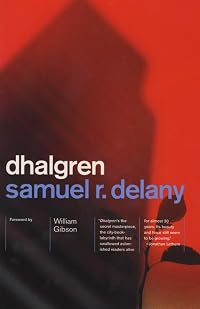
Dhalgren
by Samuel R. Delany
On This Page
Description
In Bellona, reality has come unglued, and a mad civilization takes root A young half-Native American known as the Kid has hitchhiked from Mexico to the midwestern city Bellona-only something is wrong there . . . In Bellona, the shattered city, a nameless cataclysm has left reality unhinged. Into this desperate metropolis steps the Kid, his fist wrapped in razor-sharp knives, to write, to love, to wound. So begins Dhalgren, Samuel R. Delany's masterwork, which in 1975 opened a new door for show more what science fiction could mean. A labyrinth of a novel, it raises questions about race, sexuality, identity, and art, but gives no easy answers, in a city that reshapes itself with each step you take . . . This ebook features an illustrated biography of Samuel R. Delany including rare images from his early career. show lessTags
Recommendations


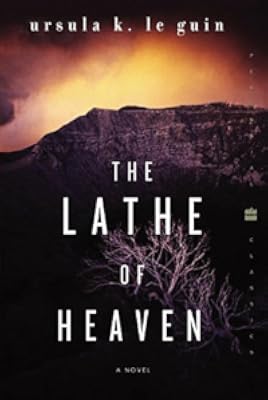
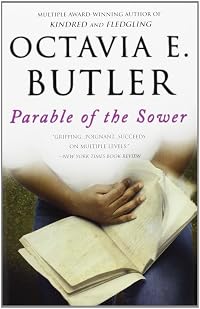
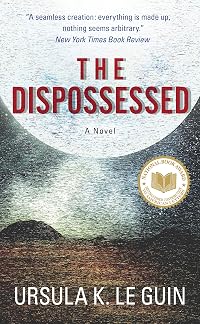

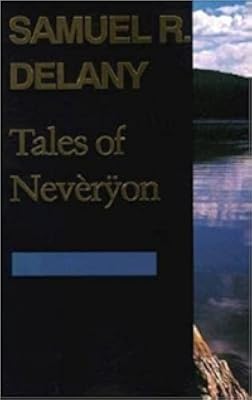
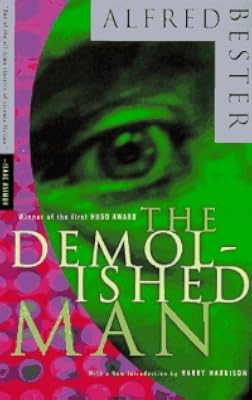
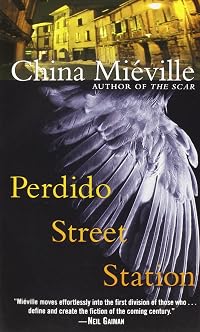
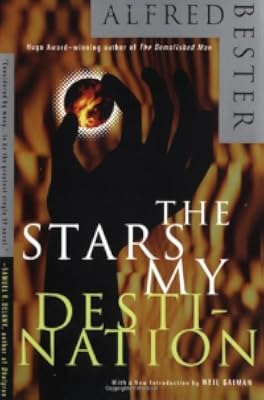
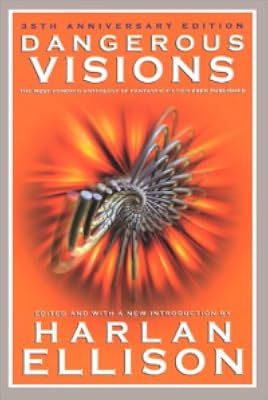













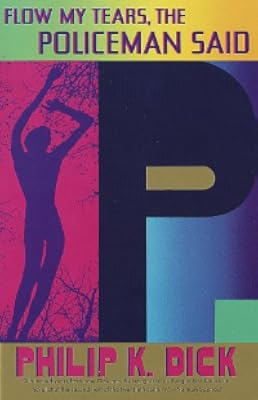

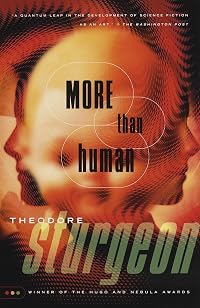

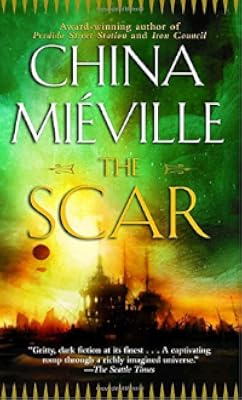

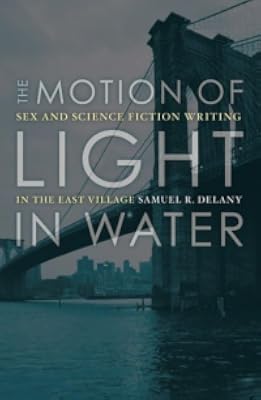
Member Recommendations

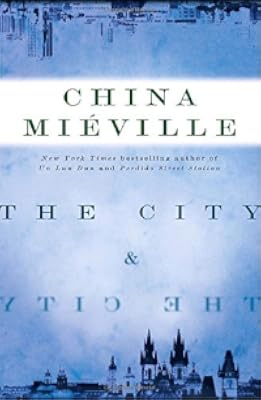
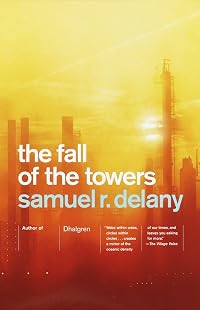
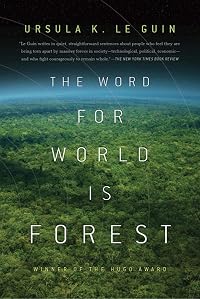
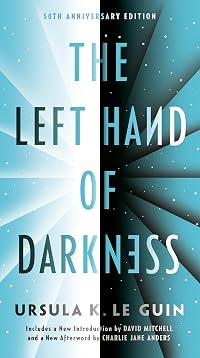
fugitive Surreal, bizarre, pretentious, weighty, confusing. Those are good things. I think.
20
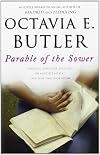
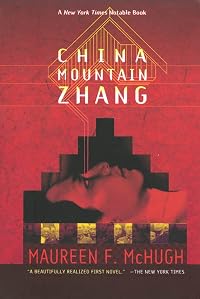
thesmellofbooks A very different dystopia written by a very different African-American science fiction writer. Yet the intensity and humanity of Parable of the Sower are present as well in this much older book.
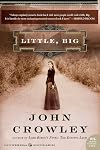

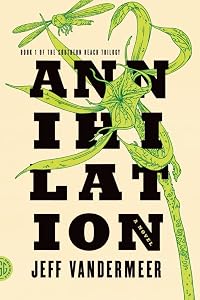
aaronius Similarly fragile boundaries between metaphor, reality, author and reader.

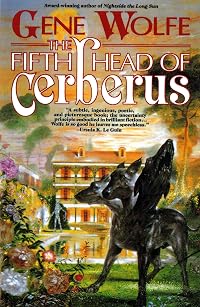
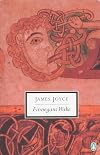
TheSpecialistsCat Another uncompromising and difficult but rewarding novel nominally in the SF&F genre. Also Joycian, though in a different sense than Dhalgren.
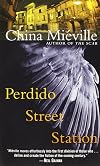
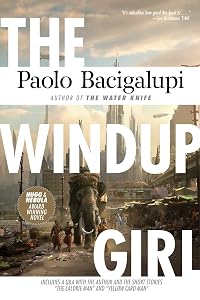
aaronius Another dystopian dream-city to get lost in with weird sex and fantastic writing.
Member Reviews
Dhalgren, the classic novel from Samuel R. Delany that’s been called “the Ulysses of science fiction” (in reference to James Joyce’s masterwork), is definitely not what you’d call “brain candy.” It is, in fact, a wild bit of fantastical, post-apocalyptic (or perhaps apocalyptic, in the sense of “unveiling”) metafiction that happens to be classified as science fiction.
The caliber of the writing was top-notch, but it took some thought to follow. Dhalgren opens with a bit of poetry, then narrative that finds a man awakening in a strange place with no memory of who he is or what he’s to do. He immediately meets a woman and has sex with her; then she leads him away before turning into a tree.
My degrees are in English, so show more when I see a woman turning into a tree, I tend to think, “mythology!” Yep, that’s a dryad. And, in fact, this novel seems to be a new, post-atomic retelling of Joyce’s novel, using the same framework of Greek mythology as an organizing principle. It also functions as a sort of ouroboros, coming around to its own beginning in the end. Most readers will either love it or hate it, but it’s definitely apocalyptic in the most traditional literary sense.
Review on Lit/Rant: www.litrant.tumblr.com show less
The caliber of the writing was top-notch, but it took some thought to follow. Dhalgren opens with a bit of poetry, then narrative that finds a man awakening in a strange place with no memory of who he is or what he’s to do. He immediately meets a woman and has sex with her; then she leads him away before turning into a tree.
My degrees are in English, so show more when I see a woman turning into a tree, I tend to think, “mythology!” Yep, that’s a dryad. And, in fact, this novel seems to be a new, post-atomic retelling of Joyce’s novel, using the same framework of Greek mythology as an organizing principle. It also functions as a sort of ouroboros, coming around to its own beginning in the end. Most readers will either love it or hate it, but it’s definitely apocalyptic in the most traditional literary sense.
Review on Lit/Rant: www.litrant.tumblr.com show less
Wow. Either there is a fictional Midwestern city, Bellona, where some sort of environmental disaster has occurred and now space-time there is in flux, or there was a disaster in said city and the narrator has escaped from a psychiatric hospital and we experience things through his perspective. The narrator in question can’t remember his name, but chances upon moniker “the Kid.” Also seemingly falling to place-time is Kid’s emergence within the half-abandoned city as its de facto poet laureate and chief gang leader. The relationship between the upper classes and rebellious gangs is amorphous due to the necessities of survival. The city becomes a laboratory for social experiments about sexuality, gender, race, class, violence, and show more mental health. The novel is metafictional and the relationship between reader/author, signifier/signified, intention/perception is all on the table. The line between the author and characters are blurred. We are never sure if Bellona constantly geographically shifting or Kid’s mind is shifting. We are never sure if things are happening by chance or whether Kid is willing them to happen. The novel is hyper-subjective, but I’m not sure if the narrator is Kid or the city of Bellona itself. Dhalgren is a fantastical carousel of possible meanings that Delany places devilishly on the blurry edge between figure and ground.The length of this book intimidates some readers, but Delany brings it all home in the end with a satisfaction you'd rarely get from get from other ergodic texts. Not that all that much is resolved, but meaning impregnates the text retroactively. The final sections of the book justify the picaresque structure of first three fourths. Dhalgren has been wrongly classified by many into the science fiction genre. Dhalgren is surreal, but its images to do not emerge from the unconscious. Its images are the nightmare traces of the structures of power revealed. In this way, Dhalgren is not an unconscious work, but a hyperconscious one. dhalgrendhalgrendhalgrendhalgrendhalgrendhalgrendhal show less
I've read this book three times since I first discovered Delany at the tender age of 17. Images from the book are now built into my brain and it stands as a sort of monolithic representation of...I'm not sure what, but other books I read are held up next to this one for comparison.
The book itself is a kind of dream, a long, complex, not understood dream, a thing of images and scents, faces and noises, open to interpretation but never quite pinned down. It's a difficult book in some ways, violent, sexually perverse, edgy even now (although many other authors have come to stand on that edge over the years). As to what it is about...
A man who doesn't know himself wanders into a city cut out of the world, a city suffering from some show more unspecified disaster yet still trying to struggle on. This man meets various people, takes up an identity they assign him, and tries to make a life there. The people he meets are all trying to continue their lives in some way -- this is no Utopian story of people bravely banding together to overcome adversity. No, this is a story of people living along the continuum of denial and acceptance. They use sex, poetry, and aggression to deal (or not deal) with what ever has happened. Some dance. Some hide. Some just survive as best they can.
This is a "what if" story in the classic sense of science fiction. The "what ifs" are piled one upon another, building a weird edifice with an internal logic not easily understood but possible to simply accept.
The book is work. The book is fascinating and repellent, very dated in its 1960s hippy outlook and yet still reachable.
It's worth reading more than once. show less
The book itself is a kind of dream, a long, complex, not understood dream, a thing of images and scents, faces and noises, open to interpretation but never quite pinned down. It's a difficult book in some ways, violent, sexually perverse, edgy even now (although many other authors have come to stand on that edge over the years). As to what it is about...
A man who doesn't know himself wanders into a city cut out of the world, a city suffering from some show more unspecified disaster yet still trying to struggle on. This man meets various people, takes up an identity they assign him, and tries to make a life there. The people he meets are all trying to continue their lives in some way -- this is no Utopian story of people bravely banding together to overcome adversity. No, this is a story of people living along the continuum of denial and acceptance. They use sex, poetry, and aggression to deal (or not deal) with what ever has happened. Some dance. Some hide. Some just survive as best they can.
This is a "what if" story in the classic sense of science fiction. The "what ifs" are piled one upon another, building a weird edifice with an internal logic not easily understood but possible to simply accept.
The book is work. The book is fascinating and repellent, very dated in its 1960s hippy outlook and yet still reachable.
It's worth reading more than once. show less
I read this many, many years ago when it first came out and it really caught something of the time, like a whiff of the spirit that moved some of us then. I came back to it not knowing how it would fare in this age or indeed how I would fare.
I was enthralled from the get go. To me it had lost nothing of the magic that it brings, not bright, shiny, dragon magic but dirty, filthy, deranged magic. Reading it again it brought back so much of that age, the aimless drifting, the random groups of people and their stupid rules or ideas and sheer unknowingness that made it all seem like a great adventure, which indeed it was, but to the pedestrians and tourists it looked like a filthy, debauched happening, which indeed it was too. The drugs and show more happenings. How two groups can see the same thing so differently, one lot in the current swimming naked and the other group on the banks pointing out how sensible they are for not swimming but ogling the girls tits all the same.
The impostors, like Frank, who appeared more regularly as time went on and never felt the spirit running through them never felt time running through them never felt connected and who only saw easy sex and gullible hippies but never for a moment realised how transparent they were and who also never noticed that one by one we slipped away until it was only them left in their shop bought outfits mouthing the words but missing it all.
I also liked how he caught the cultishness of the time too, how some people were pushed up to near mythic status when they were “just a bum like one of us” as the song says. Jack Kerouac, Ken Kesey, Emmett Grogan, Timothy Leary, Tariq Ali, Abi Hoffman and others. But when, if you really looked around, you could see acts of bravery and vision by unknowns all around you.
I loved the ever changing vista of the city and the shifting landmarks how that reflected the social structure which really was shifting at the time, the uncertainty and fear that this engendered in the rest. That family in the apartment and their futile struggle to maintain appearances, they represented the rest that were not part of the force for change.
I could go on but obviously you can clearly see where I am in all this. I am just so impressed at how much Samuel Delaney manages to capture of that age in this one book and wrap it up in a mythical setting so we can see it so clearly. show less
I was enthralled from the get go. To me it had lost nothing of the magic that it brings, not bright, shiny, dragon magic but dirty, filthy, deranged magic. Reading it again it brought back so much of that age, the aimless drifting, the random groups of people and their stupid rules or ideas and sheer unknowingness that made it all seem like a great adventure, which indeed it was, but to the pedestrians and tourists it looked like a filthy, debauched happening, which indeed it was too. The drugs and show more happenings. How two groups can see the same thing so differently, one lot in the current swimming naked and the other group on the banks pointing out how sensible they are for not swimming but ogling the girls tits all the same.
The impostors, like Frank, who appeared more regularly as time went on and never felt the spirit running through them never felt time running through them never felt connected and who only saw easy sex and gullible hippies but never for a moment realised how transparent they were and who also never noticed that one by one we slipped away until it was only them left in their shop bought outfits mouthing the words but missing it all.
I also liked how he caught the cultishness of the time too, how some people were pushed up to near mythic status when they were “just a bum like one of us” as the song says. Jack Kerouac, Ken Kesey, Emmett Grogan, Timothy Leary, Tariq Ali, Abi Hoffman and others. But when, if you really looked around, you could see acts of bravery and vision by unknowns all around you.
I loved the ever changing vista of the city and the shifting landmarks how that reflected the social structure which really was shifting at the time, the uncertainty and fear that this engendered in the rest. That family in the apartment and their futile struggle to maintain appearances, they represented the rest that were not part of the force for change.
I could go on but obviously you can clearly see where I am in all this. I am just so impressed at how much Samuel Delaney manages to capture of that age in this one book and wrap it up in a mythical setting so we can see it so clearly. show less
Dhalgren is one of those books where I was left wondering if it was a “literary marvel and a groundbreaking work of American magical realism.” or a literary version of the emperor’s new clothes. Based on hundreds of glowing reviews and its placement high on most must-read sci-fi lists, there are many who believe this is a classic. One reader in my discussion group said “It's enough to me that odd and interesting events happen, characters have interesting conversations/insights, and there are occasional hot sex scenes.”
I’m not so sure.
Weighing in at over 800 pages, much of what happens takes place in Bellona, a city devastated by some unknown calamity and follows the wanderings, adventures, discussions and passionate show more encounters of a homeless young man who cannot remember his name and assumes the moniker Kidd, or Kid depending where you are in the book. While Bellona and the people Kidd encounters are interesting, the book is essentially plotless with Delaney teasing readers frequently with inexplicable events and possibly profound insights that flutter just outside of the reader’s understanding.
Written in the mid-1970s , Dhalgren shares the aimlessness and lack of purpose that permeated that decade between the sexual revolution and the AIDS epidemic, when physical passion replaced the passion engendered by a sense of purpose. The conversations about such still-debated topics as race, gender and sexuality may have been groundbreaking and original when written but now seem to be shallow and selfish. Maybe the most profound thing Delaney says is his statement on page 685 that “balling a couple of dozen people in one night is merely a prerequisite for understanding anything worth knowing.”
William Gibson was known to say that Dhalgren is a riddle never meant to be solved. Maybe it is, like Russia, a riddle, wrapped in a mystery, inside an enigma. Or maybe, like several of the denizens of Bellona, the Emperor has no clothes. Who’s to say? show less
I’m not so sure.
Weighing in at over 800 pages, much of what happens takes place in Bellona, a city devastated by some unknown calamity and follows the wanderings, adventures, discussions and passionate show more encounters of a homeless young man who cannot remember his name and assumes the moniker Kidd, or Kid depending where you are in the book. While Bellona and the people Kidd encounters are interesting, the book is essentially plotless with Delaney teasing readers frequently with inexplicable events and possibly profound insights that flutter just outside of the reader’s understanding.
Written in the mid-1970s , Dhalgren shares the aimlessness and lack of purpose that permeated that decade between the sexual revolution and the AIDS epidemic, when physical passion replaced the passion engendered by a sense of purpose. The conversations about such still-debated topics as race, gender and sexuality may have been groundbreaking and original when written but now seem to be shallow and selfish. Maybe the most profound thing Delaney says is his statement on page 685 that “balling a couple of dozen people in one night is merely a prerequisite for understanding anything worth knowing.”
William Gibson was known to say that Dhalgren is a riddle never meant to be solved. Maybe it is, like Russia, a riddle, wrapped in a mystery, inside an enigma. Or maybe, like several of the denizens of Bellona, the Emperor has no clothes. Who’s to say? show less
I’ve read this before, and each time it is a different experience. As a young man, the sex scenes, and there are a lot of them, were highlights. My hair was longer then and I had reluctantly served my time in the army so I recognized some of the characters. I read a lot of sci-fi and knew this was bound to become a classic. Kid, the hero, was a persona that I could imagine inhabiting while trying to adjust to my own life in the 70s.
Now, I am much older, and the slippage of time in the city along with the constant low cloud cover, smoke, and fog seems symbolic of my own fading short term memory that makes events seem disjointed, difficult to put in the proper order, and separated by darkness. Still, I remembered all the scenes in the show more book quite well even if last night’s dinner takes a moment to recall. The mental distress of Kid, which makes the city and the time he spends in it seem like nothing more than madness or a nightmarish dream, is of a much different style than that written about by Philip K. Dick.
Now, I have also become a writer of science fiction. Kid’s notebook, and the whole theme of the book as it relates to creativity is much more interesting than the sex. But the style is what fascinates me now. The book is long, very long. Hemingway would consider Delaney a literary Lucifer wandering aimlessly around Bellona. Each description of the minutiae of existence, the pink streak of polish on the brass plate at Calkin’s mansion, the threads on the square spindle of the loose doorknob, picking the thin strip of paper out of the wire spiral at the top of the notebook with his pen cap, is so perfect that its reality pierces the mystical clouds over Bellona and sews the unreality of the city together with the everyday life of the reader.
This book is not for everyone. I find it surprising that in this modern woke world of political correctness the culture warriors have gone after Dr. Seuss and Ian Fleming and not Delaney. They would have much to be horrified at. But if they try to alter Delaney’s world, the scorpions will come after them.
But, this book is for those of you brave enough to cross the bridge and enter the city. Spend some time there, the memories you bring back will haunt you. show less
Now, I am much older, and the slippage of time in the city along with the constant low cloud cover, smoke, and fog seems symbolic of my own fading short term memory that makes events seem disjointed, difficult to put in the proper order, and separated by darkness. Still, I remembered all the scenes in the show more book quite well even if last night’s dinner takes a moment to recall. The mental distress of Kid, which makes the city and the time he spends in it seem like nothing more than madness or a nightmarish dream, is of a much different style than that written about by Philip K. Dick.
Now, I have also become a writer of science fiction. Kid’s notebook, and the whole theme of the book as it relates to creativity is much more interesting than the sex. But the style is what fascinates me now. The book is long, very long. Hemingway would consider Delaney a literary Lucifer wandering aimlessly around Bellona. Each description of the minutiae of existence, the pink streak of polish on the brass plate at Calkin’s mansion, the threads on the square spindle of the loose doorknob, picking the thin strip of paper out of the wire spiral at the top of the notebook with his pen cap, is so perfect that its reality pierces the mystical clouds over Bellona and sews the unreality of the city together with the everyday life of the reader.
This book is not for everyone. I find it surprising that in this modern woke world of political correctness the culture warriors have gone after Dr. Seuss and Ian Fleming and not Delaney. They would have much to be horrified at. But if they try to alter Delaney’s world, the scorpions will come after them.
But, this book is for those of you brave enough to cross the bridge and enter the city. Spend some time there, the memories you bring back will haunt you. show less
What a disappointment. Like biting into an enticing piece of pastry and discovering it's stuffed with spam. The quasi-mythic frame story and the hallucinatory setting are great - inventively described and compelling, good metaphors for the actual state of collective cognitive dislocation and urban anomie in the '70s US. But then the dimensionless, unconvincing (strangely fleshless in spite of all the focus on flesh) characters roll in, and their pedestrian dialogue just goes on and on (and on..) punctuated with occasional pseudo-intellectual debates on art or whatever... And the most interesting activity in which any of these rote personae participate is without the slightest hint of irony the sex they have, which, like their show more mind-numbing talk, starts to wear thin pretty quick. This may be the point, but so what? (I mean, even back in the day, so what? Delany's craft would have to be much stronger to make a convincing case for that, for me, anyhow.)
What this really is is a fair-to-middling social-realist novel focused on the author's particular obsessions (some of which, to his credit, needed to voiced, and if it took oodles of crotch-rubbing to get Americans to pay attention en masse, so be it, I guess), and grinding what seem like quite personal axes about "downtown" literary celebrity and its discontents. His prosaic idees fixes are stuffed into a much more evocative packing case than they (mostly) merit.
As a work of its time that managed to include some disruptive ideas and techniques and attain (and hold) a mass audience, it deserves some credit. But spare me the superlatives. Not with Thomas Pynchon or James Baldwin in the house. show less
What this really is is a fair-to-middling social-realist novel focused on the author's particular obsessions (some of which, to his credit, needed to voiced, and if it took oodles of crotch-rubbing to get Americans to pay attention en masse, so be it, I guess), and grinding what seem like quite personal axes about "downtown" literary celebrity and its discontents. His prosaic idees fixes are stuffed into a much more evocative packing case than they (mostly) merit.
As a work of its time that managed to include some disruptive ideas and techniques and attain (and hold) a mass audience, it deserves some credit. But spare me the superlatives. Not with Thomas Pynchon or James Baldwin in the house. show less
Members
- Recently Added By
Lists

Best Dystopias
280 works; 271 members

Best Science Fiction Novels
816 works; 430 members

Best Post-Apocalyptic Stories
143 works; 88 members
Survey of Classic Science Fiction
171 works; 48 members

Classics you know you should have read but probably haven't
421 works; 407 members

Slipstream or Interstitial Fiction
160 works; 19 members
A Syllabus and Book List for Novice Students of Science Fiction Literature
25 works; 10 members

Amazon's 100 Science Fiction & Fantasy Books to Read in a Lifetime
87 works; 23 members

Larry McCaffery's 20th Century Greatest Hits: 100 English-Language Books
103 works; 12 members

Top Five Books of 2013
1,562 works; 721 members

Recommend the 20 best books you've read in the last five years
2,168 works; 606 members

Must-Read Books by Black Authors
114 works; 90 members

Diversity in Fantasy and Science Fiction
219 works; 31 members

Speculative Fiction: Slipstream Literature
166 works; 16 members

SF Masterworks
193 works; 8 members

S.F. Masterworks (Complete)
229 works; 15 members

Black Authors
381 works; 28 members

Recommended Speculative Fiction by Women and People of Color
298 works; 45 members

What Makes This Book So Great
102 works; 16 members

New wave science fiction
23 works; 2 members

The 5 Parsec Shelf
50 works; 7 members
Unbound Worlds 100 Best SF Books
100 works; 8 members

Top Five Books of 2018
802 works; 265 members

Speculative Fiction to Read
706 works; 32 members

Experimental Literature
141 works; 18 members

Want to Read — open list
55 works; 2 members

SantaThing 2014 Gifts
299 works; 17 members

It Just Wasn't Worth the Effort
21 works; 7 members

el
1,139 works; 1 member
Books I Read Before The Invention Of The Internet.
144 works; 1 member

Books With Our Favorite First Lines
168 works; 104 members

Unread books
1,063 works; 84 members
American Lit for Eng 11 Research Project
368 works; 6 members

1970s
657 works; 23 members
Unreliable Narrators
170 works; 43 members

1960s
281 works; 16 members

Literature by People of Color
81 works; 9 members

Books
85 works; 1 member
Best Fantasy Novels
821 works; 361 members

Swinging Seventies
255 works; 18 members

Best African and African diaspora books
111 works; 4 members
Books Read in 2018
4,360 works; 110 members

50 Tough Books for Extreme Readers
71 works; 39 members

Books You Couldn't Finish
202 works; 32 members

Dishonourable Mentions of 2013
189 works; 62 members

Urban Fiction
74 works; 7 members

Most difficult novels
68 works; 27 members

Blue Pyramid 1,276 Best Books of All Time
1,248 works; 32 members
Favorite Science Fiction
452 works; 216 members

Best Cyberpunk
41 works; 7 members
Author Information

196+ Works 28,836 Members
Samuel R. Delany Jr. was born in Harlem, New York on April 1, 1942. He is a science fiction and short story writer. His first novel, The Jewels of Aptor, was published in 1962. He has written more than 20 novels and collections of short stories, memoirs, and critical essays. He has received numerous awards including the Nebula Award for best novel show more for Babel-17 in 1966 and The Einstein Intersection in 1967, the Nebula Award for best short story for Aye, and Gomorrah and Time Considered as a Helix of Semi-Precious Stones, the Hugo Award for best short story for Time Considered as a Helix of Semi-Precious Stones in 1970 and for his non-fiction book, The Motion of Light in Water, and the Bill Whitehead Award for Lifetime Achievement in Gay Literature in 1993. He is as a professor in the department of English at the University at Buffalo, Buffalo, New York. (Bowker Author Biography) Samuel R. Delany is a professor of English & Creative Writing at Temple University in Philadelphia. (Publisher Provided) show less
Some Editions
Awards and Honors
Series
Belongs to Publisher Series
Work Relationships
Common Knowledge
- Canonical title*
- Dahlgren
- Original title
- Dhalgren
- Original publication date
- 1975-01
- People/Characters
- Kid aka The Kid, The Kidd; Dragon Lady; Tak Loufer; Denny; Ernest Newboy; George Harrison (show all 62); June Richards; Tarzan / Edward Richards; Nightmare; Madame Edna Brown; Thirteen; Dollar; Ernestine Throckmorton; Lanya Colson; Lady of Spain; Copperhead; Roger Calkins; Reverend Amy Taylor; Raven; Adam; Arthur Richards; Baby; Barry Lansang; Bill; Bobby Richards; Brother Randolf; Budgie Goldstein; Bunny; California; Captain Michael Kamp; Devastation; Dr. Wellman; D-t; Everett Forest; Filament; Frank; Jack; Jack the Ripper; Joaquim Faust; John; Jommy; Lynn; Mak; Marceline; Mary Richards; Mildred Fabian; Paul Fenster; Pepper; Red 'Fireball'; Risa; Ronnie; Rose; Sam; Sammy; Siam; Smokey; Spitt; Stevie; Teddy; Thruppence; Tom; Woodard
- Important places
- Bellona, USA; USA
- Epigraph
- "You have confused the true and the real."
GEORGE STANLEY/In conversation - Dedication
- This book about many things
must be for many people.
Some of them are
Joseph Cox, Bill Brodecky, David Hartwell,
Liz Landry, Joseph Manfredini, Patrick Muir,
John Herbert McDowell, Jean Sullivan, Jan... (show all)is Schmidt,
Charles Naylor, Ann O'Neil, Baird Searles,
Martin Last, Bob & Joan Thurston, Richard Vriali,
Susan Schweers, Judy Ratner, Oliver Shank
also
Thomas M. Disch, Judith Merril, Michael Perkins, Joanna Russ,Judith Johnson, & Marilyn Hacker - First words
- to wound the autumnal city.
- Last words
- (Click to show. Warning: May contain spoilers.)Waiting here, away from the terrifying weaponry, out of halls of vapor and light, beyond holland and into the hills, I have come to
- Blurbers
- Lethem, Jonathan ; Eco, Umberto; Sturgeon, Theodore ; Jonas, Gerald ; Fleming, Robert ; Pohl, Frederic
- Original language
- English
- Canonical DDC/MDS
- 813.54
- Canonical LCC
- PS3554.E437
*Some information comes from Common Knowledge in other languages. Click "Edit" for more information.
Classifications
Statistics
- Members
- 4,190
- Popularity
- 3,633
- Reviews
- 80
- Rating
- (3.78)
- Languages
- English, German, Italian
- Media
- Paper, Audiobook, Ebook
- ISBNs
- 30
- ASINs
- 15