
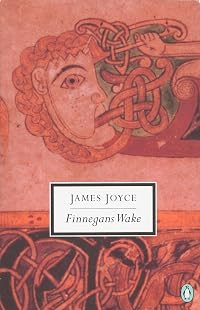
Finnegans Wake
by James Joyce 
On This Page
Description
This early work by James Joyce was originally published in 1939 and we are now republishing it with a brand new introduction. 'Finnegans Wake' is a an experimental novel of comic fiction. James Joyce was born in Dublin, Ireland in 1882. He excelled as a student at the Jesuit schools Clongowes and Belvedere, and then at University College Dublin, where he studied English, French, and Italian. Joyce produced several prominent works, including: 'Ulysses', 'A Portrait of the Young Artist', show more 'Dubliners', and 'Finnegans Wake. He is widely regarded as one of the most influential writers of the early twentieth century and his legacy can be seen throughout modern literature. show lessTags
Recommendations

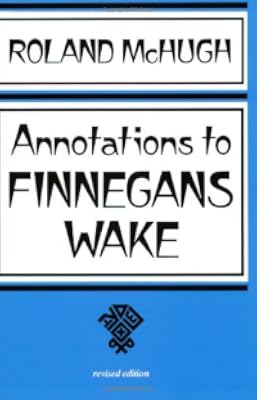
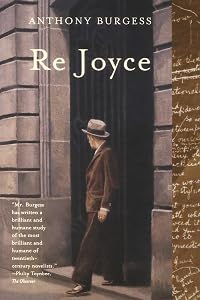
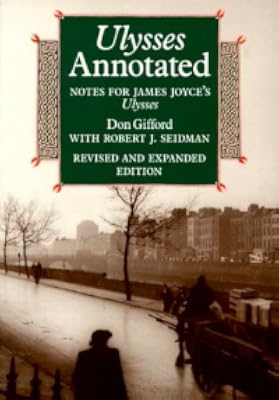
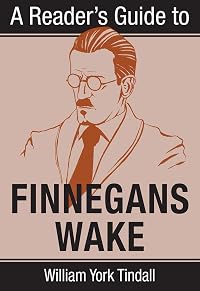
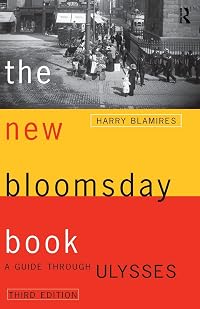








Member Recommendations
Member Reviews
Why Finnegans Wake's Jokes Aren't Funny
This is an unusual review. It is an excerpt from a novel I'm working on. One character, Joachim, is telling another, Samuel, about Joyce's book. The opening lines describe my own engagement with the book, which has gone on now for nearly thirty years.
"So then I read Joyce,” Joachim told me, "not Ulysses, for heaven’s sake, but Finnegans Wake, I read that book all day most days for months, and then some days most months for years. I covered each page in notes, I read his letters, I bought books and books about the book, I read introductions, summaries, annotations, concordances, and indices, I read the pages he translated into French and Italian, I read his first scribbled ideas, really you show more can’t read them, but I read them, they are just pages of words, like ‘floods reveal,’ ‘why bridge things,’ ‘winding roads,’ ‘swollen stream,’ ‘spudfed pigs,’ ‘angel in the house,’ ‘thought himself sick,’ ‘doubtful points,’ ‘a dark spirit came in,’ ‘what answer did you get,’ ‘dear little girl in Boston, you fill a big hole in my heart,’ ‘amber route,’ ‘lying spirit in heaven / spirit lying in heaven,’ ‘pyjamas redden the bed,’ ‘deafness from a damp pillow,’ ‘not even churches are sacred,’ ‘glegg,’ ‘mental nerve,’ ‘gossipaceous,’ ‘inkpot upset foretold,’ ‘gloompourers,’ ‘wail of wind,’ ‘drip of noise,’ ‘better betray with pleasure,’ ‘scowl,’ ‘maniac,’ ‘semi demented,’ ‘deadened walls,’ ‘inspissated obscurities,’ ‘longueurs,’ ‘border on insane,’ ‘dark clouds and mud,’ ‘mouthless streams,’ ‘vertical rivers,’ ‘melodious cave,’ ‘where he ended his life.’ I read his drafts and typescripts, I read the Buffalo notebooks, those are notes he made when he was nearly blind, they look like they were written by a bear with a crayon. I read his proofs and galleys, I looked up every single one of his thousands of made-up words, ‘ournhisn,’ ‘dororrhea,’ ‘hogpew,’ ‘sossad,’ ‘henayearn,’ ‘pappap poppopcuddle,’ ‘commonknounest,’ ‘speleostoical,’ ‘inflorflorence,’ ‘megageg,’ ‘soswhitchoverswetch,’ ‘conflingent,’ ‘antiproresurrectionism,’ ‘dumpsydiddle,’ ‘ragingoo,’ ‘bombossities,’ I studied every single one of those invented words, they’re are supposed to be jokes, or not exactly jokes, but more like little chuckles, or delights, or just amusements, although many of them are puzzles, and in general they are meant to be entertainments, they are supposed to be brief moments of levity, or no, not levity, that’s an old-fashioned word, they are wee delights or mischievous pleasantries or drolleries or bonbons or whatever, you can tell he thought his invented words are infused with infectious glee. I did not laugh even once. That book has everything I am afraid of. It is written for no one, Samuel, because no one can ever sit back, after months and years reading and studying and annotating, after years and months struggling through the swarms of squeaking scholars, no one can ever sit back, close the back cover with a satisfying snap, and say, Okay, I get that. Finnegans Wake is everything I fear, it is an enormous mistake the size of an entire country, the size of a third of Joyce’s life. The book is only six hundred pages, that is half of Burton or a sixth of Proust, but it took Joyce seventeen years to write. It would be as if I had stopped writing when I got to page six hundred, and then gone back to the beginning and put the pages into a typewriter and typed over them, and did that over and again for seventeen years, until I had six hundred pages of thick black text with only a few legible words surviving among the language detritus and throngs of palimpsestic puns. The first drafts the Finnegans Wake are easy enough to read. They are as clear as you would expect from any ill-mannered modernist writer. But Joyce kept going back, pestering his sentences, scratching and pecking at them, inserting Danish words, Irish words, Serbo-Croatian words, medieval Latin words, pulling apart perfectly good lines and inserting the names of Babylonian gods, Siberian rivers, or Byzantine patriarchs, returning again and again, like a hyena at a carcass, it pulls off a strip of gristle and lopes off, but in a minute it’s back, slobbering for one more scrap. He asphyxiated his English with x’s and q’s from Basque, Albanian, and Chinese, he tied his own writing in knots, he twisted it hard by the wrists, and they were his own wrists he was twisting, I mean he wrote the book to begin with, and then he teased and tortured it, he crushed words into each other, he muddled, muddied, and meddled until his story was gasping for breath, until there was no air or light left in it and it was nearly extinct. The lines are beautiful, I admit that, but so is an old loaf of bread with a flower of bright pink mould, it’s not edible, it’s just not edible. ‘For we, we have taken our sheet upon her stones where we have hanged our hearts in her trees; and we list, as she bibs us, by the waters of babalong,’ I love that, I admit it, but it is primped. He patted poked and fiddled with his book, he rubbed and fondled it, he spat and polished it until it was coated in language bacteria. There is a character in the book, Shem, he’s a writer. He writes all the time, and he never finishes, just like Joyce. When Shem writes it’s like Joyce writing his book. There’s a page where Shem is sitting in his squalid apartment and he runs out of paper and ink. He shits into his hands, puts the shit in a bowl, pisses into the bowl, mixes up a black concoction, bakes it, dries it, and uses it as ink. He writes all over his own body, turning himself black, writing and writing until he records all of human history, just like the book Finnegans Wake. It is a soiled and blackened book, supposedly comic but actually not funny at all.”
“No, not especially funny.”
“So,” Joachim continued, “I spent several years reading, and I learned that the world’s longest and most complicated books are also the most nearly hopeless books. That is what I discovered. They are the most despairing, the most nearly insane, they are the closest to insanity. Joyce knew his book was written in shit, it was spoiled and getting worse and yet he kept going for seventeen years, plugging up the last beams of light, making it deliciously fetid. He knew what it means to labor by yourself, over the same manuscript, as your eyes get worse and your daughter’s insanity deepens and your reviews stay bad and your life spills out. He describes the reek of Shem’s apartment, stains on the floor and walls, bowl of shit ink, heaps of dirty underwear, discolored curtains, dried ejaculations, dregs of wine, gleet, that’s an unbelievable word to find in a book like Finnegans Wake, but there it is. Supposedly Shem is working on a letter, but really of course he is writing the book Finnegans Wake. Joyce says Shem explains things with a meticulousness that borders on the insane, just like Joyce, he never grasps the beauty of restraint, neither does Joyce, the balance of his mind was disturbed, well obviously, he hides in his book like a field mouse in a nest of colored ribbons, a sweet idea, he has immovable doubts about the sense of the whole, how could he not, or the sense of the strange words that run, wander, march, halt, walk, or stumble along the barriers of the lines, those too, he must have doubted each and every one and also all of them at once. Shem calls his writing a flood, a jungle, a relic, a ruin, a scrape, a crust, a heap of steaming refuse, a thicket, an avalanche. He looks at his book as a stranger and wonders who wrote it. That is not just a sentence to me, Samuel, I understand what it means. No one can have an experiences like that and be happy. If anyone laughs at something in Finnegans Wake they are forgetting why its author needed so desperately to laugh, how he needed hundreds and endless thousands of those little laughs, how each laugh was like a drowning man gulping another lungful of seawater. The book is everything I am afraid of, it is the diary of a man who becomes compost.”
“Thanks, I’ll skip it.” show less
This is an unusual review. It is an excerpt from a novel I'm working on. One character, Joachim, is telling another, Samuel, about Joyce's book. The opening lines describe my own engagement with the book, which has gone on now for nearly thirty years.
"So then I read Joyce,” Joachim told me, "not Ulysses, for heaven’s sake, but Finnegans Wake, I read that book all day most days for months, and then some days most months for years. I covered each page in notes, I read his letters, I bought books and books about the book, I read introductions, summaries, annotations, concordances, and indices, I read the pages he translated into French and Italian, I read his first scribbled ideas, really you show more can’t read them, but I read them, they are just pages of words, like ‘floods reveal,’ ‘why bridge things,’ ‘winding roads,’ ‘swollen stream,’ ‘spudfed pigs,’ ‘angel in the house,’ ‘thought himself sick,’ ‘doubtful points,’ ‘a dark spirit came in,’ ‘what answer did you get,’ ‘dear little girl in Boston, you fill a big hole in my heart,’ ‘amber route,’ ‘lying spirit in heaven / spirit lying in heaven,’ ‘pyjamas redden the bed,’ ‘deafness from a damp pillow,’ ‘not even churches are sacred,’ ‘glegg,’ ‘mental nerve,’ ‘gossipaceous,’ ‘inkpot upset foretold,’ ‘gloompourers,’ ‘wail of wind,’ ‘drip of noise,’ ‘better betray with pleasure,’ ‘scowl,’ ‘maniac,’ ‘semi demented,’ ‘deadened walls,’ ‘inspissated obscurities,’ ‘longueurs,’ ‘border on insane,’ ‘dark clouds and mud,’ ‘mouthless streams,’ ‘vertical rivers,’ ‘melodious cave,’ ‘where he ended his life.’ I read his drafts and typescripts, I read the Buffalo notebooks, those are notes he made when he was nearly blind, they look like they were written by a bear with a crayon. I read his proofs and galleys, I looked up every single one of his thousands of made-up words, ‘ournhisn,’ ‘dororrhea,’ ‘hogpew,’ ‘sossad,’ ‘henayearn,’ ‘pappap poppopcuddle,’ ‘commonknounest,’ ‘speleostoical,’ ‘inflorflorence,’ ‘megageg,’ ‘soswhitchoverswetch,’ ‘conflingent,’ ‘antiproresurrectionism,’ ‘dumpsydiddle,’ ‘ragingoo,’ ‘bombossities,’ I studied every single one of those invented words, they’re are supposed to be jokes, or not exactly jokes, but more like little chuckles, or delights, or just amusements, although many of them are puzzles, and in general they are meant to be entertainments, they are supposed to be brief moments of levity, or no, not levity, that’s an old-fashioned word, they are wee delights or mischievous pleasantries or drolleries or bonbons or whatever, you can tell he thought his invented words are infused with infectious glee. I did not laugh even once. That book has everything I am afraid of. It is written for no one, Samuel, because no one can ever sit back, after months and years reading and studying and annotating, after years and months struggling through the swarms of squeaking scholars, no one can ever sit back, close the back cover with a satisfying snap, and say, Okay, I get that. Finnegans Wake is everything I fear, it is an enormous mistake the size of an entire country, the size of a third of Joyce’s life. The book is only six hundred pages, that is half of Burton or a sixth of Proust, but it took Joyce seventeen years to write. It would be as if I had stopped writing when I got to page six hundred, and then gone back to the beginning and put the pages into a typewriter and typed over them, and did that over and again for seventeen years, until I had six hundred pages of thick black text with only a few legible words surviving among the language detritus and throngs of palimpsestic puns. The first drafts the Finnegans Wake are easy enough to read. They are as clear as you would expect from any ill-mannered modernist writer. But Joyce kept going back, pestering his sentences, scratching and pecking at them, inserting Danish words, Irish words, Serbo-Croatian words, medieval Latin words, pulling apart perfectly good lines and inserting the names of Babylonian gods, Siberian rivers, or Byzantine patriarchs, returning again and again, like a hyena at a carcass, it pulls off a strip of gristle and lopes off, but in a minute it’s back, slobbering for one more scrap. He asphyxiated his English with x’s and q’s from Basque, Albanian, and Chinese, he tied his own writing in knots, he twisted it hard by the wrists, and they were his own wrists he was twisting, I mean he wrote the book to begin with, and then he teased and tortured it, he crushed words into each other, he muddled, muddied, and meddled until his story was gasping for breath, until there was no air or light left in it and it was nearly extinct. The lines are beautiful, I admit that, but so is an old loaf of bread with a flower of bright pink mould, it’s not edible, it’s just not edible. ‘For we, we have taken our sheet upon her stones where we have hanged our hearts in her trees; and we list, as she bibs us, by the waters of babalong,’ I love that, I admit it, but it is primped. He patted poked and fiddled with his book, he rubbed and fondled it, he spat and polished it until it was coated in language bacteria. There is a character in the book, Shem, he’s a writer. He writes all the time, and he never finishes, just like Joyce. When Shem writes it’s like Joyce writing his book. There’s a page where Shem is sitting in his squalid apartment and he runs out of paper and ink. He shits into his hands, puts the shit in a bowl, pisses into the bowl, mixes up a black concoction, bakes it, dries it, and uses it as ink. He writes all over his own body, turning himself black, writing and writing until he records all of human history, just like the book Finnegans Wake. It is a soiled and blackened book, supposedly comic but actually not funny at all.”
“No, not especially funny.”
“So,” Joachim continued, “I spent several years reading, and I learned that the world’s longest and most complicated books are also the most nearly hopeless books. That is what I discovered. They are the most despairing, the most nearly insane, they are the closest to insanity. Joyce knew his book was written in shit, it was spoiled and getting worse and yet he kept going for seventeen years, plugging up the last beams of light, making it deliciously fetid. He knew what it means to labor by yourself, over the same manuscript, as your eyes get worse and your daughter’s insanity deepens and your reviews stay bad and your life spills out. He describes the reek of Shem’s apartment, stains on the floor and walls, bowl of shit ink, heaps of dirty underwear, discolored curtains, dried ejaculations, dregs of wine, gleet, that’s an unbelievable word to find in a book like Finnegans Wake, but there it is. Supposedly Shem is working on a letter, but really of course he is writing the book Finnegans Wake. Joyce says Shem explains things with a meticulousness that borders on the insane, just like Joyce, he never grasps the beauty of restraint, neither does Joyce, the balance of his mind was disturbed, well obviously, he hides in his book like a field mouse in a nest of colored ribbons, a sweet idea, he has immovable doubts about the sense of the whole, how could he not, or the sense of the strange words that run, wander, march, halt, walk, or stumble along the barriers of the lines, those too, he must have doubted each and every one and also all of them at once. Shem calls his writing a flood, a jungle, a relic, a ruin, a scrape, a crust, a heap of steaming refuse, a thicket, an avalanche. He looks at his book as a stranger and wonders who wrote it. That is not just a sentence to me, Samuel, I understand what it means. No one can have an experiences like that and be happy. If anyone laughs at something in Finnegans Wake they are forgetting why its author needed so desperately to laugh, how he needed hundreds and endless thousands of those little laughs, how each laugh was like a drowning man gulping another lungful of seawater. The book is everything I am afraid of, it is the diary of a man who becomes compost.”
“Thanks, I’ll skip it.” show less
I'd love to say it's unreadable, but that would only mean that I couldn't read it. I'd like to say it's worthless, but that would only mean that I find no worth in it. There are many who have found it very worthwhile, who have painstakingly read and devoured its many secrets, following each clue, reading each scholarly commentary on each line, and experienced the joy of unraveling a tiny piece of the great puzzle Joyce left behind.
I am not one of those people, and have come to realize that I never will be.
Most authors enter into a contract of sorts with their readers, unspoken yet nearly always there. "I will meet you halfway," says the author. "I will spend effort to communicate to you, and you will spend effort to understand that show more which I have communicated." Because after all, it is the arrogance of authorship to assume that anyone will ever want to expend that effort simply to understand what you have to impart. (And yes, I'm fully aware that this applies equally well to this review!) When the message is of high value, or the language that communicates it of surpassing beauty, the author can require more of the reader, because the reader will want to expend more effort.
And therein lies my dislike of Finnegan's Wake. Of Joyce in general, actually, but most sharply of Finnegan's Wake. So far from expending effort to communicate, Joyce has expended hideous force to cloak his meaning, to bury it under layers of twisted, tortured prose. If I thought that what lay within were important, or that the journey itself was an attractive one, perhaps I would supply the effort to dig it up. But I don't. To me, it stands for everything that is wrong with literary fiction--or rather, it is an unwelcome stain on literary fiction that ought to be removed.
But that's just me. Your mileage may vary. show less
I am not one of those people, and have come to realize that I never will be.
Most authors enter into a contract of sorts with their readers, unspoken yet nearly always there. "I will meet you halfway," says the author. "I will spend effort to communicate to you, and you will spend effort to understand that show more which I have communicated." Because after all, it is the arrogance of authorship to assume that anyone will ever want to expend that effort simply to understand what you have to impart. (And yes, I'm fully aware that this applies equally well to this review!) When the message is of high value, or the language that communicates it of surpassing beauty, the author can require more of the reader, because the reader will want to expend more effort.
And therein lies my dislike of Finnegan's Wake. Of Joyce in general, actually, but most sharply of Finnegan's Wake. So far from expending effort to communicate, Joyce has expended hideous force to cloak his meaning, to bury it under layers of twisted, tortured prose. If I thought that what lay within were important, or that the journey itself was an attractive one, perhaps I would supply the effort to dig it up. But I don't. To me, it stands for everything that is wrong with literary fiction--or rather, it is an unwelcome stain on literary fiction that ought to be removed.
But that's just me. Your mileage may vary. show less
"We'll meet again, we'll part once more. The spot I'll seek if the hour you'll find. My chart shines high where the blue milk's upset."
In “Finnegans Wake” by James Joyce
Joyce could really write. “Portrait of the Artist as a Young Man” is exquisite, and “Ulysses” is a masterpiece. I see Joyce as a product of his 'modernist' era, certainly, but a sincere one. He was reaching for something, a kind of synthesis of prose and poetry that came close to the true language of the mind. It's remarkable how much of Finnegans Wake is comprehensible, in spite of the fact that Joyce's words don't actually exist; we know what he means, or we can guess at it, which would be impossible if it was just gibberish. The question is whether it's show more worth the trouble. So much of what goes on in our minds is just noise, and really, who wants to read a transcription of mental static, no matter how impressive the act of having transcribed it? I've never finished Finnegans Wake, and I'm not sure whether that's my issue or Joyce's. To paraphrase Rossini talking about Wagner, Joyce's writing has some wonderful moments but some terrible quarter-hours! I got the idea that I was missing things, and hallucinating things of my own accord; I found it not very fruitful. Can't remember it that well, either, much like some of my own teenage years, then...On a sentence level is makes little sense - or if it does, thought it's so angular. On a wider level, structurally, it's like “The Divine Comedy” - Joyce created his own mythological cosmos - and typically for him he based it on a normal family. Or it reminds me of Ovid and his “Metamorphosis” or Blake's prophetic poems... it's that kind of work.
I agree that bits of it are sublime, but in my experience it takes real determination to get to them. It was the act of a very large ego to write something that assumed people would take the time to wallow in someone else's unconscious over an extended period. I think that life is short, the world full of difficult books and you need to be selective. I think I'd rather re-read “Middlemarch” or “Odysseus”; they're more comprehensible and I feel better reading them than I do with the Wake.
Ulysses certainly changed the English Language but "Finnegans Wake" didn't. A waste of time, a beautiful waste of time; it’s a case of Causabon's Key To All Mythologies with Guinness and Opera. show less
In “Finnegans Wake” by James Joyce
Joyce could really write. “Portrait of the Artist as a Young Man” is exquisite, and “Ulysses” is a masterpiece. I see Joyce as a product of his 'modernist' era, certainly, but a sincere one. He was reaching for something, a kind of synthesis of prose and poetry that came close to the true language of the mind. It's remarkable how much of Finnegans Wake is comprehensible, in spite of the fact that Joyce's words don't actually exist; we know what he means, or we can guess at it, which would be impossible if it was just gibberish. The question is whether it's show more worth the trouble. So much of what goes on in our minds is just noise, and really, who wants to read a transcription of mental static, no matter how impressive the act of having transcribed it? I've never finished Finnegans Wake, and I'm not sure whether that's my issue or Joyce's. To paraphrase Rossini talking about Wagner, Joyce's writing has some wonderful moments but some terrible quarter-hours! I got the idea that I was missing things, and hallucinating things of my own accord; I found it not very fruitful. Can't remember it that well, either, much like some of my own teenage years, then...On a sentence level is makes little sense - or if it does, thought it's so angular. On a wider level, structurally, it's like “The Divine Comedy” - Joyce created his own mythological cosmos - and typically for him he based it on a normal family. Or it reminds me of Ovid and his “Metamorphosis” or Blake's prophetic poems... it's that kind of work.
I agree that bits of it are sublime, but in my experience it takes real determination to get to them. It was the act of a very large ego to write something that assumed people would take the time to wallow in someone else's unconscious over an extended period. I think that life is short, the world full of difficult books and you need to be selective. I think I'd rather re-read “Middlemarch” or “Odysseus”; they're more comprehensible and I feel better reading them than I do with the Wake.
Ulysses certainly changed the English Language but "Finnegans Wake" didn't. A waste of time, a beautiful waste of time; it’s a case of Causabon's Key To All Mythologies with Guinness and Opera. show less
Forgive me, Father Joyce, for I have sinned. In April '08, I gave Finnegan's Wake a rating of half a star. I mocked Finnegan's Wake mercilessly, and did so publicly too, parodying it right here in LibraryThing, like it were Sarah Palin, and it was justly and judiciously and promptly blue flagged as "not a review".
I summarily dismissed Finnegan's Wake before I'd -- shame upon shame -- even finished it!; before I'd properly researched its construction. One can't after all, properly appreciate how well Finnegan's mansion stands until one gets their hands dirty and gets hammerin' and demo'ing out some drywall and negatively biased presuppositions upstairs can they? Because once inside the Finnegan facade, one can then (and only then) show more inspect its foundations, supports, framework, wiring, and so forth -- its fundamental skeletal linguistic innards (how is it built along the subjective continuum ranging from random eccentricity to code?) -- and once such a thorough inspection has been completed, then the critic (maybe, maybe not) has earned the right to condemn (or not condemn) the Finnegan premises.
Sounds complicated, because it is! Finnegan's Wake takes time and sweat, and makes the extreme difficulty of reading its universally revered predecessor, Ulysses seem like Dick & Jane in comparison. Serious. Opinions vary, but what good was my opinion when I'd not so much as removed a tack from Finnegan's thick accented colloquial walls? My opinion meant nil, that's what.
I opined so then because I was erroneously convinced that demo'ing FW, deconstructing it page by page if not phrase by phrase, would reveal nothing intelligible underneath; it would be an unrewarding chore, a bore at best, menial labor, idioms, madness, semantics, certainly nothing fun like Extreme Makeover Home Edition. But now that I've been humbled before The Master, and gotten some good help through reading and re-reading Richard Ellmann's excellent biography (among others), I know better, and am thus recanting my formerly disreputable, incendiary anti-Finnegan's Wake review. Mea culpa, James, mea culpa!
For now I realize the dead wrongedness in outright rejecting what I believed at the time was this ridiculous notion that there existed depth and breadth and infinitude beneath Finnegan's seemingly meaningless garbled surface. Forgive, Father Joyce, what were the uninititated, snap-judgment-eyes of an impatient, petulant, apostate amateur too arrogant to take the time to cipher your idiosyncratic style, wit, and prose.
I want you to know also, Father Joyce, how deeply heartfelt sorry I am for slamming you personally (and your protege, Brother Beckett, too) in that previously terrible, reprehensible review of FW I regrettably wrote on a whim, disrespectfully, inappropriately, desiring only by its quick composition cheap laughs! If anyone had gone temporarily mad at the time, Father Joyce, it was certainly me, and not you nor Brother Beckett. Please know that I've taken the appropriate steps of full confession and sackcloth-and-ashes repentance (and I hope other unrepentant Waker-Haters out there will soon follow suit), in order to right this inexcusably blasphemous and heinous wrong.
Goodbye for now, Father Joyce. Warmest regards to you and your Fellow Deceased Iconic Brethren. Say hi to Brother Flann for me, and Homer, all the Greats. And take good care of Brother Updike will ya? He might be disoriented a bit having just arrived, and need a generous Irish soul like yours to show him 'round.
Take care, you're very magnanimous. I'll be reading you again soon. show less
I summarily dismissed Finnegan's Wake before I'd -- shame upon shame -- even finished it!; before I'd properly researched its construction. One can't after all, properly appreciate how well Finnegan's mansion stands until one gets their hands dirty and gets hammerin' and demo'ing out some drywall and negatively biased presuppositions upstairs can they? Because once inside the Finnegan facade, one can then (and only then) show more inspect its foundations, supports, framework, wiring, and so forth -- its fundamental skeletal linguistic innards (how is it built along the subjective continuum ranging from random eccentricity to code?) -- and once such a thorough inspection has been completed, then the critic (maybe, maybe not) has earned the right to condemn (or not condemn) the Finnegan premises.
Sounds complicated, because it is! Finnegan's Wake takes time and sweat, and makes the extreme difficulty of reading its universally revered predecessor, Ulysses seem like Dick & Jane in comparison. Serious. Opinions vary, but what good was my opinion when I'd not so much as removed a tack from Finnegan's thick accented colloquial walls? My opinion meant nil, that's what.
I opined so then because I was erroneously convinced that demo'ing FW, deconstructing it page by page if not phrase by phrase, would reveal nothing intelligible underneath; it would be an unrewarding chore, a bore at best, menial labor, idioms, madness, semantics, certainly nothing fun like Extreme Makeover Home Edition. But now that I've been humbled before The Master, and gotten some good help through reading and re-reading Richard Ellmann's excellent biography (among others), I know better, and am thus recanting my formerly disreputable, incendiary anti-Finnegan's Wake review. Mea culpa, James, mea culpa!
For now I realize the dead wrongedness in outright rejecting what I believed at the time was this ridiculous notion that there existed depth and breadth and infinitude beneath Finnegan's seemingly meaningless garbled surface. Forgive, Father Joyce, what were the uninititated, snap-judgment-eyes of an impatient, petulant, apostate amateur too arrogant to take the time to cipher your idiosyncratic style, wit, and prose.
I want you to know also, Father Joyce, how deeply heartfelt sorry I am for slamming you personally (and your protege, Brother Beckett, too) in that previously terrible, reprehensible review of FW I regrettably wrote on a whim, disrespectfully, inappropriately, desiring only by its quick composition cheap laughs! If anyone had gone temporarily mad at the time, Father Joyce, it was certainly me, and not you nor Brother Beckett. Please know that I've taken the appropriate steps of full confession and sackcloth-and-ashes repentance (and I hope other unrepentant Waker-Haters out there will soon follow suit), in order to right this inexcusably blasphemous and heinous wrong.
Goodbye for now, Father Joyce. Warmest regards to you and your Fellow Deceased Iconic Brethren. Say hi to Brother Flann for me, and Homer, all the Greats. And take good care of Brother Updike will ya? He might be disoriented a bit having just arrived, and need a generous Irish soul like yours to show him 'round.
Take care, you're very magnanimous. I'll be reading you again soon. show less
Abandon hope, all ye who enter, when the scholarly introduction to a book starts out with this, "There is no agreement as to what Finnegans Wake is about, whether or not it is 'about' anything, or even whether it is, in an ordinary sense of the work, 'readable.'" Well, I can answer that literary connundrum without having broken page 2 on this 'classic." It is not about anything and it is not readable in any sense of the word. [Finnegans Wake] is nothing but self-indulgent, literary snobbery and trickery. The introduction spends 25 pages patting Joyce on the back for writing a book where there is no ending, no beginning, and no consistent language. In fact there are as many as 70 languages, known to man. And then Joyce apparently felt it show more necessary to create words and phrases from some unknowable Joycean language. Scholars, like the one who wrote the introduction, think that it was 'cool' for Joyce to bury dozens of literary references and riddles in every paragraph for the reader to ponder and dechiper - but it is just so much 'holier than thou' pulp. I mean, if you get it, then you must be part of the cool kids club that has read all of those same things; and if you don't get it, then you must be literarily stunted.
Let's allow Joyce to speak for himself, "riverrun, past Eve and Adam's, from swerve of shore to bend of bay, brings us by a commodius vicus of recirculation back to Howth Castle and Enviorns." You know what they say about that first line grabbing you - well, this one succeeds in the negative.
Bottom Line: Don't waste your valuable reading time, just because some dusty, old scholar says this is a classic. Rubbish is just rubbish sometimes, no matter how much it is dressed up.
No bones.
I might have to use some other doggie reference to rate this one show less
Let's allow Joyce to speak for himself, "riverrun, past Eve and Adam's, from swerve of shore to bend of bay, brings us by a commodius vicus of recirculation back to Howth Castle and Enviorns." You know what they say about that first line grabbing you - well, this one succeeds in the negative.
Bottom Line: Don't waste your valuable reading time, just because some dusty, old scholar says this is a classic. Rubbish is just rubbish sometimes, no matter how much it is dressed up.
No bones.
I might have to use some other doggie reference to rate this one show less
'We annew. Our shades of minglings mengle them and help help horizons. A flasch and, rasch, it shall come to pasch, as hearth by hearth leaps live.'
Finnegans Wake has been book of continuous inspiration over the two years that I spent reading it. I remember that when I started it, quite fresh after Ulysses , that I was both appalled and attracted by it. Appalled by the unashamed intellectualism, attracted by the churning depth of the writing. In one sentence Joyce can lift you along three millenniums, connected by certain myths or tales and throw you back in the corner of a pub, drunk and in your own vomit. In Joyce is connected the very high and low of human nature.
The 'Story'
Finnegans Wake is a tale of HCE, or Here Comes show more Everybody , who is a husband to ALP, or Anna Livia Plurabella . During the rambling of the story, there are references made to a certain sin HCE is supposed to have undergone in a park, with another woman. ALP writes a letter to HCE, which is written down by one of their sons Shem the Penman, and delivered by Shaun the Postman. They both fight for who will replace their dad in the end. The books is famously written so that the last line continues in the first line, suggesting a circular movement. The story is about a fall of sin, both in every day life and myths. It is about life itself, in all its protean, weird movements which we humans have to try and keep up with.
The style
The story is told in a very loose manner, which moves beyond stream of consciousness in the sense that one never gets as close to the characters as one does in Ulysses. Rather, the reader keeps a large distance throughout the story of the plot, always losing the thread one is following and ending up around other weird corners in Joyce's universe.
What is so genius about it?
The Wake is a book of genius in my opinion, because it is a book that celebrates life while respecting its mysteries. It is a book which is intended to be misread; there does not exist one right reading, it is about what the reader makes of it. In this sense, it is like life itself: always hiding its treasure right around the corner. The reader is allowed to suppose an ultimate intention, or truth, just as we try to do in real life, but just as in real life, what we get reflected back are always our own efforts and hopes. The Wake is a book which is open and closed at the same time, hiding and revealing. It reveals more than most books do, because when it does get close to a character, it absorbs it. We can read fragments of thoughts more personal than regular literature displays. However, it is also more closed, emphasizing questions of epistemology and truth. Meaning is always just out of reach: reading Finnegans Wake is a continuous reaching and stretching of the arms, never being able to finally grasp it. It is a humiliating experience, which threatens and stretches our modes of understanding.
The ultimate glory is that it is a book of empowerment . It is something that must be overcome and undergone at the same time. Spinoza readers might recognize that this how he looks at life: it something that overpowers and that can give us infinite power if we find a way to act in the right way. Joyce's book is a book of life in the Nietzschean and Spinozist way. It asks of us ultimate activity, while being passive. It asks of us to try and at the same time accept our own limits. Because there exists so heavy a burden before the reader, it has the power to open the reader's reality itself. It is a text, stretching far beyond the limits of its cover. It grabs and wrestles and opens and breathes into our lives. With Finnegans Wake Joyce wrote a book so rich, so dense, so wonderful and funny that he proves to have overcome himself. show less
Finnegans Wake has been book of continuous inspiration over the two years that I spent reading it. I remember that when I started it, quite fresh after Ulysses , that I was both appalled and attracted by it. Appalled by the unashamed intellectualism, attracted by the churning depth of the writing. In one sentence Joyce can lift you along three millenniums, connected by certain myths or tales and throw you back in the corner of a pub, drunk and in your own vomit. In Joyce is connected the very high and low of human nature.
The 'Story'
Finnegans Wake is a tale of HCE, or Here Comes show more Everybody , who is a husband to ALP, or Anna Livia Plurabella . During the rambling of the story, there are references made to a certain sin HCE is supposed to have undergone in a park, with another woman. ALP writes a letter to HCE, which is written down by one of their sons Shem the Penman, and delivered by Shaun the Postman. They both fight for who will replace their dad in the end. The books is famously written so that the last line continues in the first line, suggesting a circular movement. The story is about a fall of sin, both in every day life and myths. It is about life itself, in all its protean, weird movements which we humans have to try and keep up with.
The style
The story is told in a very loose manner, which moves beyond stream of consciousness in the sense that one never gets as close to the characters as one does in Ulysses. Rather, the reader keeps a large distance throughout the story of the plot, always losing the thread one is following and ending up around other weird corners in Joyce's universe.
What is so genius about it?
The Wake is a book of genius in my opinion, because it is a book that celebrates life while respecting its mysteries. It is a book which is intended to be misread; there does not exist one right reading, it is about what the reader makes of it. In this sense, it is like life itself: always hiding its treasure right around the corner. The reader is allowed to suppose an ultimate intention, or truth, just as we try to do in real life, but just as in real life, what we get reflected back are always our own efforts and hopes. The Wake is a book which is open and closed at the same time, hiding and revealing. It reveals more than most books do, because when it does get close to a character, it absorbs it. We can read fragments of thoughts more personal than regular literature displays. However, it is also more closed, emphasizing questions of epistemology and truth. Meaning is always just out of reach: reading Finnegans Wake is a continuous reaching and stretching of the arms, never being able to finally grasp it. It is a humiliating experience, which threatens and stretches our modes of understanding.
The ultimate glory is that it is a book of empowerment . It is something that must be overcome and undergone at the same time. Spinoza readers might recognize that this how he looks at life: it something that overpowers and that can give us infinite power if we find a way to act in the right way. Joyce's book is a book of life in the Nietzschean and Spinozist way. It asks of us ultimate activity, while being passive. It asks of us to try and at the same time accept our own limits. Because there exists so heavy a burden before the reader, it has the power to open the reader's reality itself. It is a text, stretching far beyond the limits of its cover. It grabs and wrestles and opens and breathes into our lives. With Finnegans Wake Joyce wrote a book so rich, so dense, so wonderful and funny that he proves to have overcome himself. show less
This book is almost impossible to rate by one standard, one "metric" as they like to say in business, these days. Why? Because it is an utter failure as a novel, but a complete success as the world's longest nonsense prose poem.
Yes, it is quite funny. In places. The sense behind the apparent nonsense is for scholars, mostly. I've no interest in deciphering a novel, and so I regard it as a failure. But there are passage of amazing hilarity. And the whole effect, if read in one long sitting, is akin to taking drugs.
In fact, who needs hallucinogenics as long as there's a copy of this book around?
One of my stranger endeavors was to hold a weekly reading of this book. Between a half dozen and a dozen of my friends sat around in a circle in show more my living room, and would read aloud. Pass the wine, pass the chips. Jesse Walker read one section in the voice of W.C. Fields.
So, take my advice: Whenever the party gets dull, pass out "Finnegans Wake." show less
Yes, it is quite funny. In places. The sense behind the apparent nonsense is for scholars, mostly. I've no interest in deciphering a novel, and so I regard it as a failure. But there are passage of amazing hilarity. And the whole effect, if read in one long sitting, is akin to taking drugs.
In fact, who needs hallucinogenics as long as there's a copy of this book around?
One of my stranger endeavors was to hold a weekly reading of this book. Between a half dozen and a dozen of my friends sat around in a circle in show more my living room, and would read aloud. Pass the wine, pass the chips. Jesse Walker read one section in the voice of W.C. Fields.
So, take my advice: Whenever the party gets dull, pass out "Finnegans Wake." show less
Members
- Recently Added By
Published Reviews
Finnegans Wake presenta l’ostacolo ulteriore e pressoché insormontabile della lingua in cui fu scritto, lingua che pur partendo dall’inglese, sia pure con accento irlandese, è poi un impasto di neologismi inventati da Joyce attingendo sia alla sua insaziabilità di autodidatta, sia al suo talento di poliglotta. n un crogiolo di etnie dal quale aveva appreso una moltitudine di idiomi. . show more Anche nella sua operazione matta e disperatissima Joyce vuole che il lettore capisca; ma a costo di risalire all’origine di tutte le sue invenzioni, parola per parola. Il primo a corredare di chiose puntuali anche se non esaurienti quello che veniva scrivendo, fu proprio lui. show less
added by private library — edited by lilithcat
. . . one doubts that “Finnegans Wake” will be grasped—at least in our time—except by a few conscientious philologists and a small lunatic fringe of autohypnotic Joyceans who seem able to hurl themselves into a trance of intuitive comprehension.
I have enough sense to know that the man who wrote “Ulysses” is a great artist. I cannot believe, though some do, that he would spend show more seventeen years in the elaboration of a gigantic hoax. And, anyway, “Finnegans Wake” is so extraordinary that it’s worth talking about even if, like myself, you understand precious little of it.
In between [the first and last sentences] lie 628 pages of a book that is not novel, poem, music, drama, symphony, declamation, parody, burlesque, fantasy, epic, or vaudeville sketch, but apparently something of all of them. It has no specific subject; indeed, as far as I can make out, it is not about anything at all.
It seems to me that what is evoked in the reader by any particular word or phrase in “Finnegans Wake” will be in large part a matter of accident, almost of whim. One man’s association is another man’s bewilderment.
Why should the parts of speech be fixed in their functions? They aren’t really, except in the grammar books. Joyce mixes them up, uses verbs as nouns, uses adjectives as verbs, sends an electric current of healthy disintegration through a great language that in Shakespeare’s day was much bolder and more alive than it is in our own. This, I submit, is all to the good, whether or not “Finnegans Wake” is a work of art, a work of artifice, or a work of psychosis. And don’t ask me which of the three I think it is. You pays your money and you takes your Joyce. show less
I have enough sense to know that the man who wrote “Ulysses” is a great artist. I cannot believe, though some do, that he would spend show more seventeen years in the elaboration of a gigantic hoax. And, anyway, “Finnegans Wake” is so extraordinary that it’s worth talking about even if, like myself, you understand precious little of it.
In between [the first and last sentences] lie 628 pages of a book that is not novel, poem, music, drama, symphony, declamation, parody, burlesque, fantasy, epic, or vaudeville sketch, but apparently something of all of them. It has no specific subject; indeed, as far as I can make out, it is not about anything at all.
It seems to me that what is evoked in the reader by any particular word or phrase in “Finnegans Wake” will be in large part a matter of accident, almost of whim. One man’s association is another man’s bewilderment.
Why should the parts of speech be fixed in their functions? They aren’t really, except in the grammar books. Joyce mixes them up, uses verbs as nouns, uses adjectives as verbs, sends an electric current of healthy disintegration through a great language that in Shakespeare’s day was much bolder and more alive than it is in our own. This, I submit, is all to the good, whether or not “Finnegans Wake” is a work of art, a work of artifice, or a work of psychosis. And don’t ask me which of the three I think it is. You pays your money and you takes your Joyce. show less
added by lilithcat
Lists

1001 Books You Must Read Before You Die
1,448 works; 1,133 members

Classics you know you should have read but probably haven't
421 works; 408 members

The Guardian's 1000 Novels Everyone Must Read
1,005 works; 550 members

Radcliffe's 100 Best Novel of the 20th Century
100 works; 32 members
20th Century Literature
1,161 works; 55 members

Metafiction
84 works; 21 members

Weird and Weirder Fiction
270 works; 35 members

Stream of Consciousness
87 works; 8 members

Philip Ward's Lifetime Reading Plan
592 works; 22 members
Larry McCaffery's 20th Century Greatest Hits: 100 English-Language Books
103 works; 12 members

50 Tough Books for Extreme Readers
71 works; 40 members

You Couldn't Pay Me to Read That (Take 2)
203 works; 86 members

Favourite Books
1,817 works; 316 members
Most difficult novels
68 works; 27 members

It Just Wasn't Worth the Effort
21 works; 8 members

Unread books
1,063 works; 87 members

Experimental Literature
141 works; 18 members

Western World's Greatest Books - Project Gutenberg
295 works; 15 members

Best of Irish Literature
37 works; 7 members
Banned or Challenged Books
400 works; 41 members

Blue Pyramid 1,276 Best Books of All Time
1,248 works; 32 members
Harold Bloom - The Western Canon: D. The Chaotic Age
833 works; 24 members

Speculative Fiction: Slipstream Literature
166 works; 16 members

Best First Lines
133 works; 8 members

Anthony Burgess 99 Post War Novels
99 works; 7 members
Fake Top 100 Fiction
81 works; 4 members

The Greatest Books
99 works; 5 members
1,001 BYMRBYD Concensus
723 works; 27 members

I Can't Finish This Book
189 works; 22 members

Amanda's Guaranteed Books
110 works; 5 members

1930s
262 works; 5 members
The Modern Library's 100 Best Novels: The Board's List
85 works; 6 members

Modernism
140 works; 8 members

SHOULD Read Books!
354 works; 9 members

University literature
145 works; 5 members

Books Read in 2008
335 works; 8 members
Modern Library's 100 Best Novels
100 works; 2 members
.
396 works; 1 member

Classics
31 works; 1 member

el
1,139 works; 1 member
Books That Changed Me
157 works; 47 members
.
194 works; 2 members
The Complete Rory Gilmore Reading List
506 works; 5 members

DigitalDreamDoor top 300
300 works; 4 members

Greatest Books, allegedly
484 works; 9 members

Recommended Reading : 600 Classics Reviewed, Editors of Salem Press, 2015
634 works; 6 members

Juggernauts (fiction)
21 works; 3 members

Books You Read For University
184 works; 3 members

Recommended Literary Books
111 works; 1 member

Books and authors mentioned by Le Clézio in his Nobel Prize speech
87 works; 3 members

Literary Works Read in College
316 works; 15 members
Hulk's Essential Reading List
38 works; 1 member
Books We Resisted Reading
177 works; 110 members

Best of World Literature
432 works; 51 members
Talk Discussions
Past Discussions
Book club takes 28 years to finish Finnegan's Wake in Book talk (November 2024)
Finnegans Wake in Folio Society Devotees (May 2024)
Author Information

498+ Works 92,872 Members
James Joyce was born on February 2, 1882, in Dublin, Ireland, into a large Catholic family. Joyce was a very good pupil, studying poetics, languages, and philosophy at Clongowes Wood College, Belvedere College, and the Royal University in Dublin. Joyce taught school in Dalkey, Ireland, before marrying in 1904. Joyce lived in Zurich and Triest, show more teaching languages at Berlitz schools, and then settled in Paris in 1920 where he figured prominently in the Parisian literary scene, as witnessed by Ernest Hemingway's A Moveable Feast. Joyce's collection of fine short stories, Dubliners, was published in 1914, to critical acclaim. Joyce's major works include A Portrait of the Artist as a Young Man, Ulysses, Finnegans Wake, and Stephen Hero. Ulysses, published in 1922, is considered one of the greatest English novels of the 20th century. The book simply chronicles one day in the fictional life of Leopold Bloom, but it introduces stream of consciousness as a literary method and broaches many subjects controversial to its day. As avant-garde as Ulysses was, Finnegans Wake is even more challenging to the reader as an important modernist work. Joyce died just two years after its publication, in 1941. (Bowker Author Biography) show less
James Joyce has a Legacy Library. Legacy libraries are the personal libraries of famous readers, entered by LibraryThing members from the Legacy Libraries group.
Some Editions
Awards and Honors
Awards
Notable Lists
Daniel S. Burt's Novel 100 (026 – 26)
Series
Belongs to Publisher Series
Work Relationships
Is contained in
Is abridged in
Has as a reference guide/companion
Common Knowledge
- Canonical title
- Finnegans Wake
- Original title
- Finnegans Wake
- Original publication date
- 1939
- People/Characters
- Humphrey Chimpden Earwicker; Anna Livia Plurabelle; Shem; Shaun; Issy; Kate (show all 23); McGrath; Fox Goodman; Mícheál Ó Cléirigh; Peregrine O'Clery; Fergus O'Mulconry; Peregrine O'Duignan; Mamalujo; Matt Gregory; Matthew; Marcus Lyons; Mark; Luke Tarpey; Luke; Johnny Mac Dougall; John; Joe Sackerson; Finn MacCool
- Important places
- Chapelizod, Dublin, Ireland; Dublin, Ireland; Ulster, Ireland; Leinster, Ireland; Connaught, Ireland; Munster, Ireland
- Important events
- Crimean War
- Related movies
- The Wake (2000 | IMDb); Passages from James Joyce's Finnegans Wake (1966 | IMDb)
- First words
- riverrun, past Eve and Adam's, from swerve of shore to bend of bay, brings us by a commodius vicus of recirculation back to Howth Castle and Environs.
- Quotations
- .. riverrun
Cry not yet! There's many a smile to Nondum, with sytty maids per man, sir, and the park's so dark by kindlelight. But look what you have in your handself!
Then, pious Eneas, conformant to the fulminant firman which enjoins on the tremylose terrian that, when the call comes, he shall produce nichthemerically from his unheavenly body a no uncertain quantity of obscene matter not ... (show all)protected by copriright in the United States of Ourania or bedeed and bedood and bedang and bedung to him, with his double dye, brought to blood heat, gallic acid on iron ore, through the bowels of his misery, flashly, nastily, appropriately, this Esuan Menschavik and the first till last alshemist wrote over every square inch of the only foolscap available, his own body, till by its corrosive sublimation one continuous present tense integumented slowly unfolded in all marryvoising moodmoulded cyclewheeling history ...
Prettimaid tints may try their taunts: apple, bacchante, custard, dove, eskimo, feldgrau, hematite, isingglass, jet, kipper, lucile, mimosa, nut, oysterette, prune, quasimodo, royal, sago, tango, umber, vanilla, wisteria, xra... (show all)y, yesplease, zaza, philomel, theerose. What are they all by? Shee.
But tellusit allasif wellasits end.
Turn your coat, strong character, and tarry among us down the vale, yougander, only once more ! And may the mosse of prosperousness gather you rolling home ! May foggy dews be-diamondise your hooprings ! May the fireplug of f... (show all)iliality reinsure your bunghole ! May the barleywind behind glow luck to your bathershins !
We may come, touch and go, from atoms and ifs but we're presurely destined to be odd's without end.
'Tis life that lies if woman's eyes have been our old undoing. - Last words
- (Click to show. Warning: May contain spoilers.)A way a lone a last a loved a long the
- Blurbers
- Harold Bloom; Samuel Beckett
Classifications
Statistics
- Members
- 6,012
- Popularity
- 2,119
- Reviews
- 64
- Rating
- (3.86)
- Languages
- 13 — Chinese, Czech, Dutch, English, French, German, Italian, Multiple languages, Polish, Portuguese, Spanish, Swedish, Turkish
- Media
- Paper, Audiobook, Ebook
- ISBNs
- 75
- ASINs
- 65