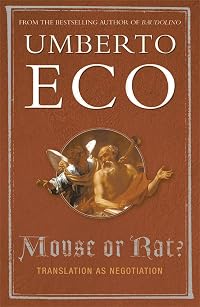
Mouse or Rat? Translation as Negotiation
by Umberto Eco
On This Page
Description
From the world-famous author of THE NAME OF THE ROSE, an illuminating and humorous study on the pleasures and pitfalls of translation. 'Translation is always a shift, not between two languages but between two cultures. A translator must take into account rules that are not strictly linguistic but, broadly speaking, cultural.' Umberto Eco is of the world's most brilliant and entertaining writers on literature and language. In this accessible and dazzling study, he turns his eye on the subject show more of translations and the problems the differences between cultures can cause. The book is full of little gems about mistranslations and misunderstandings.For example when you put 'Studies in the logic of Charles Sanders Peirce' through an internet translation machine, it becomes 'Studies in the logic of the Charles of sandpaper grinding machines Peirce'. In Italian 'ratto' has no connotation of 'contemptible person' but denotes speed ('you dirty rat' could take on a whole new meaning!) What could be a weighty subject is never dull, fired by Eco's immense wit and erudition, providing an entertaining read that illuminates the process of negotiation that all translators must make. show lessTags
Recommendations



Member Reviews
This is a subject I just find endlessly fascinating.
Eco's theme in this book is that translation (particularly literary translation) is a "negotiation" between what you might call the 'letter' and the 'spirit' of the original. For example, the book's title refers to Eco's attempt to translate the scene in Hamlet where Hamlet stabs Polonius behind a curtain, saying "How now? A rat? Dead, for a ducat, dead!".
Eco says he translated 'rat' as 'topo', which in Italian actually means mouse, because they don't really have a word that means 'rat' in the same sense. Of course, this misses the wordplay of 'rat' as someone who is a betrayer.
The book is mainly a series of similar examples, many taken from translations of Eco's own works. His show more writing is especially difficult in this respect, since it is full of allusions, both subtle and obvious, to all kinds of other literature and popular culture.
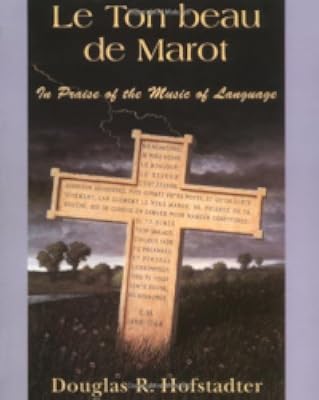
Mouse or Rat doesn't exactly break new ground in this field (Douglas Hofstadter's Le ton Beau de Marot covers similar ideas and also tells an affecting love story at the same time; I recommend it highly), but I could read examples like this pretty much endlessly.
The only problem I had is that you really need a working knowledge of all the languages used to get the full effect, but even my meager knowledge of German/French/Spanish/Italian was enough to get the idea. show less
Eco's theme in this book is that translation (particularly literary translation) is a "negotiation" between what you might call the 'letter' and the 'spirit' of the original. For example, the book's title refers to Eco's attempt to translate the scene in Hamlet where Hamlet stabs Polonius behind a curtain, saying "How now? A rat? Dead, for a ducat, dead!".
Eco says he translated 'rat' as 'topo', which in Italian actually means mouse, because they don't really have a word that means 'rat' in the same sense. Of course, this misses the wordplay of 'rat' as someone who is a betrayer.
The book is mainly a series of similar examples, many taken from translations of Eco's own works. His show more writing is especially difficult in this respect, since it is full of allusions, both subtle and obvious, to all kinds of other literature and popular culture.
Mouse or Rat doesn't exactly break new ground in this field (Douglas Hofstadter's Le ton Beau de Marot covers similar ideas and also tells an affecting love story at the same time; I recommend it highly), but I could read examples like this pretty much endlessly.
The only problem I had is that you really need a working knowledge of all the languages used to get the full effect, but even my meager knowledge of German/French/Spanish/Italian was enough to get the idea. show less
Eco first described a categorisation of translation types that he did not agree with but that had been gaining some acceptance in academia. The lectures he gave at Oxford in 2002, and which constitute the core content of this book, were written with the intention of addressing, "...the exaggeratedly indulgent idea of translation that charmed some of my students and colleagues."
The categorisation was:
Interpretation - which would include paraphrasing
Translation from one language to another
Intersemiotic Translation/Transmutation - e.g. adapting a book to a film, or creating a piece of music to represent a painting
Eco's lectures demonstrate how Interpretation and Intersemiotic Translation cannot be regarded as true translation. With his show more natural wit and aplomb, Eco produces examples that expose the weaknesses of the arguments for these two activities to be described as translation.
While this description of the book's topic sounds fairly dull, I must say the execution is far from dull.
I was a little concerned that my lack of linguistic skill would be a problem for my reading this book. While the book includes some examples involving English, Spanish, Italian, German and French, these examples did not dominate the text and Eco gave explanations of the points he was making that minimised the amount of meaning I was missing.
The book focuses mostly on the situations that cause difficulties for translators and these are described in often humorous ways. He also discusses the acceptable and unacceptable approaches adopted by translators for addressing such situations.
Eco has a chapter on translating poetry. He described poetry as the touchstone for translation as it contains every difficulty and dilemma a translator will face. Not only does it have the problem of determining what the words mean and what effect the poet was trying to create, but it also brings in issues of rhythm, rhyme, and meter.
It was in the chapter on poetry that Eco referenced Dorothy L Sayers. She would have been pleased at his mention. Rather than being remembered for her Lord Peter Wimsey novels, Sayers wanted to be remembered for what she regarded as her greatest achievement: her translation of Dante's Inferno. It is this work that Eco references. She would have been pleased that his mentioned her translation was to express surprise that it had not been included in a famous critical work on the various translations of the Inferno.
As a polyglot, a philosopher, a bibliophile, an expert on semiotics, an author who has had his works translated into many languages, and as a translator of works himself, Umberto Eco was ideally suited to write a book on the difficulties of translation. show less
The categorisation was:
Interpretation - which would include paraphrasing
Translation from one language to another
Intersemiotic Translation/Transmutation - e.g. adapting a book to a film, or creating a piece of music to represent a painting
Eco's lectures demonstrate how Interpretation and Intersemiotic Translation cannot be regarded as true translation. With his show more natural wit and aplomb, Eco produces examples that expose the weaknesses of the arguments for these two activities to be described as translation.
While this description of the book's topic sounds fairly dull, I must say the execution is far from dull.
I was a little concerned that my lack of linguistic skill would be a problem for my reading this book. While the book includes some examples involving English, Spanish, Italian, German and French, these examples did not dominate the text and Eco gave explanations of the points he was making that minimised the amount of meaning I was missing.
The book focuses mostly on the situations that cause difficulties for translators and these are described in often humorous ways. He also discusses the acceptable and unacceptable approaches adopted by translators for addressing such situations.
Eco has a chapter on translating poetry. He described poetry as the touchstone for translation as it contains every difficulty and dilemma a translator will face. Not only does it have the problem of determining what the words mean and what effect the poet was trying to create, but it also brings in issues of rhythm, rhyme, and meter.
It was in the chapter on poetry that Eco referenced Dorothy L Sayers. She would have been pleased at his mention. Rather than being remembered for her Lord Peter Wimsey novels, Sayers wanted to be remembered for what she regarded as her greatest achievement: her translation of Dante's Inferno. It is this work that Eco references. She would have been pleased that his mentioned her translation was to express surprise that it had not been included in a famous critical work on the various translations of the Inferno.
As a polyglot, a philosopher, a bibliophile, an expert on semiotics, an author who has had his works translated into many languages, and as a translator of works himself, Umberto Eco was ideally suited to write a book on the difficulties of translation. show less
Whilst I can't claim to have had massive expectations from this book, the author's reputation, experience, and the subject matter piqued my interest at first glance. This book is a collection of essays roughly sewn together reflecting the author's personal experiences in the field of translation, either via conversations and experiences with translators and translations of his own works, or through translating by his own hand.
As a collection of personal reflections collected together in essay form, there are plenty of interesting and oft amusing anecdotes which Eco ties together to support his thesis of translation as a form of negotiation between cultures. Relying to a large extent on examples taken from the various translations of his show more own works, he illustrates how the idea of translation must be seen through the capacity of the medium. That is to say that a language provides only a limited resource, and one rooted in its culture, which makes the art of translation a constant battle, a question of compromise, of content and connotation, of rhyme and register, of familiarity and foreignness. Eco's own works provide plenty of toothy work for the translator, which he here amply dissects and compares, and these are at times supplemented by no lesser fry than the likes of James Joyce's Finnegans Wake, for example.
Eco's thesis notwithstanding, there are problems with the book which for me detracted from my enjoyment. Firstly, as some other reviewers have pointed out, there are some pretty steep language requirements in order to really be able to fully understand many of Eco's examples. Italian is, naturally, the most often quoted language, along with French and Spanish as a Romanic trio of languages, and German crops up on occasion. In the case of the latter, there were a number of obvious mistakes in the book, which no doubt rest to a large extent on it not being one of Eco's stronger suits. Indeed, although nominally a work exploring translation as a whole, the author's own (albeit impressive) lingual skills narrows it down to an investigation of translation between Romance languages and English, with really very little mention of non-Indo-European languages or cultures, where far more interesting problems doubtless arise.
Another important detractor is that as the book is a compilation of essays based on a lecture series, rather than one contiguous treatise, there were numerous occasions where Eco repeated himself relatively excessively. One example which springs to mind is his quotation of W. V. Quine that a sentence such as "neutrinos lack mass" is for some languages of the world untranslatable, a quotation which crops up three or four times in different essays.
One final criticism, although this is certainly more a matter of taste, is that with all that brain power, Eco tends to write with a lot of hubris. Another commenter quoted an excellent line which I think sums it up nicely: "Sometimes I ask myself if by chance I write novels purely in order to put in hermetic references that are comprehensible only to me. I feel like a painter who, in a landscape, puts among the leaves of the trees - almost invisible - the initials of his beloved. And it does not matter if not even she is able to identify them." For all the fascination that the subject of translation has to offer, discussing the translation of symbols invisible to everyone but the author is certainly the most abstract and esoteric topic he could have chosen to concentrate on.
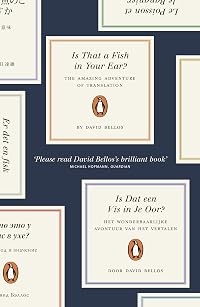
Ultimately this book offers a very interesting read, but only for the right, qualified reader. I should say a command of at least one Romance language is a must, as well as a reasonable familiarity with the field of translation. For the uninitiated, a more basic but also more thorough and elaborate investigation of the world of translation can be found in the recent Is That a Fish in Your Ear?: Translation and the Meaning of Everything. show less
As a collection of personal reflections collected together in essay form, there are plenty of interesting and oft amusing anecdotes which Eco ties together to support his thesis of translation as a form of negotiation between cultures. Relying to a large extent on examples taken from the various translations of his show more own works, he illustrates how the idea of translation must be seen through the capacity of the medium. That is to say that a language provides only a limited resource, and one rooted in its culture, which makes the art of translation a constant battle, a question of compromise, of content and connotation, of rhyme and register, of familiarity and foreignness. Eco's own works provide plenty of toothy work for the translator, which he here amply dissects and compares, and these are at times supplemented by no lesser fry than the likes of James Joyce's Finnegans Wake, for example.
Eco's thesis notwithstanding, there are problems with the book which for me detracted from my enjoyment. Firstly, as some other reviewers have pointed out, there are some pretty steep language requirements in order to really be able to fully understand many of Eco's examples. Italian is, naturally, the most often quoted language, along with French and Spanish as a Romanic trio of languages, and German crops up on occasion. In the case of the latter, there were a number of obvious mistakes in the book, which no doubt rest to a large extent on it not being one of Eco's stronger suits. Indeed, although nominally a work exploring translation as a whole, the author's own (albeit impressive) lingual skills narrows it down to an investigation of translation between Romance languages and English, with really very little mention of non-Indo-European languages or cultures, where far more interesting problems doubtless arise.
Another important detractor is that as the book is a compilation of essays based on a lecture series, rather than one contiguous treatise, there were numerous occasions where Eco repeated himself relatively excessively. One example which springs to mind is his quotation of W. V. Quine that a sentence such as "neutrinos lack mass" is for some languages of the world untranslatable, a quotation which crops up three or four times in different essays.
One final criticism, although this is certainly more a matter of taste, is that with all that brain power, Eco tends to write with a lot of hubris. Another commenter quoted an excellent line which I think sums it up nicely: "Sometimes I ask myself if by chance I write novels purely in order to put in hermetic references that are comprehensible only to me. I feel like a painter who, in a landscape, puts among the leaves of the trees - almost invisible - the initials of his beloved. And it does not matter if not even she is able to identify them." For all the fascination that the subject of translation has to offer, discussing the translation of symbols invisible to everyone but the author is certainly the most abstract and esoteric topic he could have chosen to concentrate on.
Ultimately this book offers a very interesting read, but only for the right, qualified reader. I should say a command of at least one Romance language is a must, as well as a reasonable familiarity with the field of translation. For the uninitiated, a more basic but also more thorough and elaborate investigation of the world of translation can be found in the recent Is That a Fish in Your Ear?: Translation and the Meaning of Everything. show less
A series of lectures reworked as chapters on the problems of translation. Eco's theme of "negotiation" is a very useful one, allowing him to take a less dogmatic path than usually staked out by those who haven't actually tried to translate anything, while still actually saying something about the subject - quite a lot, in fact.
Similar in many ways to Hofstadter's ideas (Le Ton Beau de Marot, the first thing to read for those interested in translation) but much more concise and addressed from, perhaps, another angle.
Similar in many ways to Hofstadter's ideas (Le Ton Beau de Marot, the first thing to read for those interested in translation) but much more concise and addressed from, perhaps, another angle.
Made me think more about translation - the art and its difficulties - than I had ever before.
Highly recommended for those with an interest in translation or language.
Members
- Recently Added By
Author Information

504+ Works 115,275 Members
Umberto Eco was born in Alessandria, Italy on January 5, 1932. He received a doctorate of philosophy from the University of Turin in 1954. His first book, Il Problema Estetico in San Tommaso, was an extension of his doctoral thesis on St. Thomas Aquinas and was published in 1956. His first novel, The Name of the Rose, was published in 1980 and won show more the Premio Strega and the Premio Anghiar awards in 1981. In 1986, it was adapted into a movie starring Sean Connery. His other works include Foucault's Pendulum, The Island of the Day Before, Baudolino, The Prague Cemetery, and Numero Zero. He also wrote children's books and more than 20 nonfiction books including Serendipities: Language and Lunacy. He taught philosophy and then semiotics at the University of Bologna. He also wrote weekly columns on popular culture and politics for L'Espresso. He died from cancer on February 19, 2016 at the age of 84. (Bowker Author Biography) show less
Common Knowledge
- Canonical title
- Mouse or Rat? Translation as Negotiation
- Original publication date
- 2003-11-13
- People/Characters
- Gerard de Nerval; Roman Jakobson; Douglas Hofstadter
Classifications
- Genres
- Nonfiction, Literature Studies and Criticism, General Nonfiction, Philosophy
- DDC/MDS
- 190 — Philosophy & psychology Modern western philosophy Modern western and other noneastern philosophy
- LCC
- P306 .E276 — Language and Literature Philology. Linguistics Language. Linguistic theory. Comparative grammar Translating and interpreting
- BISAC
Statistics
- Members
- 407
- Popularity
- 76,236
- Reviews
- 8
- Rating
- (3.84)
- Languages
- Czech, English
- Media
- Paper, Ebook
- ISBNs
- 4
- ASINs
- 2