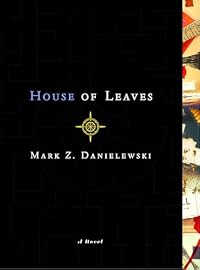
House of Leaves
by Mark Z. Danielewski
On This Page
Description
A young family that moves into a small home on Ash Tree Lane where they discover something is terribly wrong: their house is bigger on the inside than it is on the outside. Of course, neither Pulitzer Prize-winning photojournalist Will Navidson nor his companion Karen Green was prepared to face the consequences of that impossibility--until the day their two little children wandered off and their voices eerily began to return another story: one of creature darkness, of an ever-growing abyss show more behind a closet door, and of that unholy growl which soon enough would tear through their walls and consume all their dreams. House of Leaves influenced, and was influenced by, the music of POE, Mark Z. Danielewski's sister. Her album Haunted includes many songs inspired by House of Leaves. show lessTags
Recommendations

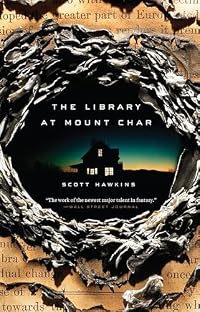
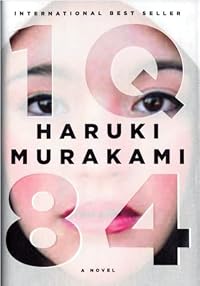
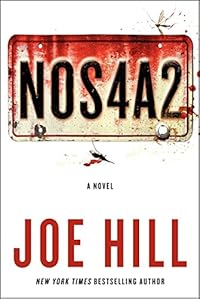
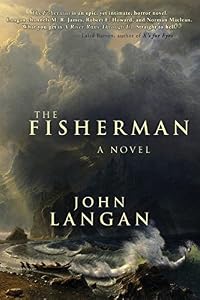
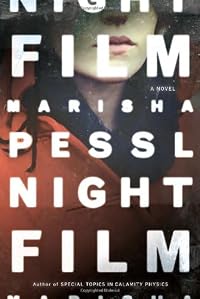
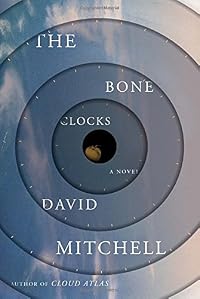
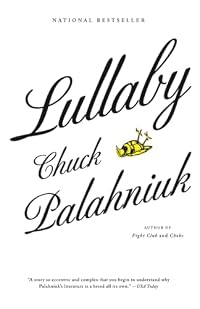
Member Recommendations
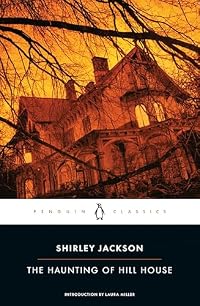
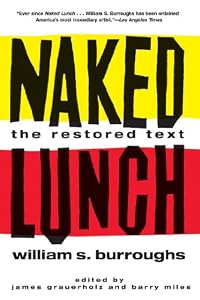
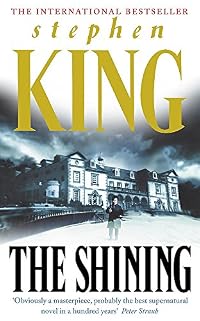
macart3 Those who read the "House of Leaves" will recognize how the house also consumes people in "The Haunting of Hill House" and the feeling that there is something unearthly inhabiting the house.
212

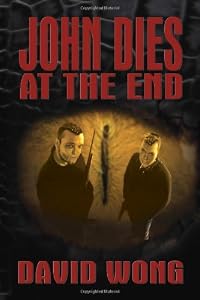
hubies Piranesi is not scary, but in both books there is this mystifying, unpeopled world of impossible (and perhaps infinite) house-like space. Also: cryptic diary entries, unstable mind, short film as a plot device.
70

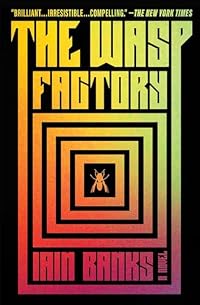
AndySandwich Gravity's Rainbow = paranoia
House of Leaves = claustrophobia
40
Fenoxielo At Swim-Two-Birds is the grand-daddy of all meta-fiction and House of Leaves owes a great deal to it.
30
sparemethecensor Great experimental works where you get something different from the book depending on the order in which you read its pieces.
20

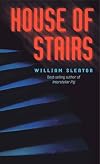
aethercowboy Both works deal with a strange and deadly labyrinth that's bigger on the inside.
acenturyofsleep The mysterious basement and the unending staircase draw parallelisms.
21
aaronius Another experimental narrative that takes you different places than ordinary fiction.
13

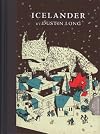
bluepiano Another book with a protagonist who is deeply unsettled by the seemingly infinite building he is living in.

by sduff222

Ignatius777 A Short story concerning an exploration of a deserted Space Station whose size increases the further the explorers travel.

Member Reviews
House of Leaves is quite easily the most stunning book I’ve had the pleasure to read so far. The prose is full of design acrobatics that left me speechless at times. The interwoven stories were sublimely presented. And the ending sent me spiraling down endless stairs of despair because it was over. It’s a book written by a voracious reader for voracious readers.
I felt the central character in the stories was the house itself. Up, down, left, right, sideways, upside down—the house doesn’t respect the laws of physics, instead choosing to bend and twist and make something of its own creation. It’s an empty canvas—a place that represents nothingness yet says so much about the human condition. It’s not a classical monster but show more is something far more insidious than that.
The other (obvious) protagonists include Navidson, Zampano, and Jonny, all of whom are fleshed out quite a bit. Navidson’s story contains the right kind of horror—ominous, bitter, and sharp. Zampano’s “pseudo-academic hogwash” can be difficult to read at times, but ultimately redeems itself through terrifyingly fictional insight into a fictional movie. Jonny’s represents a slow descent into loneliness and madness without any redemption in sight.
No, you won’t need a Master’s degree in Art, Architecture, Film Criticism, Literature, or any other subjects to read and appreciate this book. No, you won’t need to tear your hair out over close readings. No, you won’t lose your mind over this beautiful book.
Yes, you will have a good time. Yes, you will ask questions, the answers of which only you will know. Yes, you will marvel at the beauty of the layout and typography. Yes, you will wonder why you hadn’t read it earlier.
But most importantly, you will experience something truly special. And that’s all that counts in this godforsaken world. show less
I felt the central character in the stories was the house itself. Up, down, left, right, sideways, upside down—the house doesn’t respect the laws of physics, instead choosing to bend and twist and make something of its own creation. It’s an empty canvas—a place that represents nothingness yet says so much about the human condition. It’s not a classical monster but show more is something far more insidious than that.
The other (obvious) protagonists include Navidson, Zampano, and Jonny, all of whom are fleshed out quite a bit. Navidson’s story contains the right kind of horror—ominous, bitter, and sharp. Zampano’s “pseudo-academic hogwash” can be difficult to read at times, but ultimately redeems itself through terrifyingly fictional insight into a fictional movie. Jonny’s represents a slow descent into loneliness and madness without any redemption in sight.
No, you won’t need a Master’s degree in Art, Architecture, Film Criticism, Literature, or any other subjects to read and appreciate this book. No, you won’t need to tear your hair out over close readings. No, you won’t lose your mind over this beautiful book.
Yes, you will have a good time. Yes, you will ask questions, the answers of which only you will know. Yes, you will marvel at the beauty of the layout and typography. Yes, you will wonder why you hadn’t read it earlier.
But most importantly, you will experience something truly special. And that’s all that counts in this godforsaken world. show less
Do the words meta, post-modern, or experimental make you cringe when used to describe books? Then turn back now. I feel the need to say that up front because many people seem to go into this book expecting a horror novel and wind up wasting their money. Just take a look at the genres that goodreads lists this as. Horror, fiction, fantasy, and mystery. With inapt labels like that, it's easy to see how people could get the wrong idea.
This is not a horror novel, nor is it a mystery novel or a fantasy novel. This book is, among many other things, a personal story about the author's parents presented as experimental literary fiction that's thinly veiled as a horror novel. Confused? Good, stay that way for now, and don't think too hard about show more what I just said. I'm not that into horror novels, and I generally like post-modern and experimental stuff, and I knew what I was getting into when I bought this. Know what you're getting into, that's all I'm trying to say.
Here's the basic concept as clear and concise as I can tell it. There are essentially three narrators that will be addressing you, the reader.
1) Zampano, an old blind man
2) Johnny Truant, a thirty-something druggie
3) The "editors"
Johnny's friend, Lude, knows Zampano because he lives in the same apartment building. The old man, ominously, tells Lude he's going to die soon, and does. After the body is gone, Lude and Johnny sneak into the apartment to take a look around at Zampano's things. They find a crazy manuscript, which Johnny takes home with him.
The manuscript is a non-fiction book/dissertation about a documentary called "The Navidson Record." The Navidson Record is about a famous photojournalist named Will Navidson and his family moving into a new house that is bigger on the inside. When I say non-fiction, I mean it. It reads like a textbook. On every page there are footnotes about other articles and other books that reference this documentary that, by all accounts, doesn't exist (I'll get to this in a second).
It starts out simple at first. After the family returns home from vacation they notice a hallway on the second floor connecting two bedrooms that wasn't there before. They track down a blueprint of the building and see that there is a space between the walls, although it's not supposed to be a finished hallway with doors. Okay, no big deal, maybe they didn't notice the doors before, it's a new house after all and they had just moved in before going on vacation. Then comes the realization that measuring the house through that hallway results in an extra inch that shouldn't exist, and that can't be explained. Then a new door appears, on the first floor this time, that should lead to an empty back yard but instead leads to a long, dark hallway that extends into an endless labyrinth of cavernous, thousand-foot rooms that leads to god knows where and contains god knows what, and the exploration of this door is the main focus of the documentary.
So Johnny finds this manuscript, reads it, edits it, adds his own footnotes relating to research he's done on Zampano's life and the manuscript contents (translations of foreign phrases, for instance), but also personal tangents about his own life and stream of consciousness ramblings. In the prologue where he explains how he found the manuscript, he also says that The Navidson Record doesn't actually exist. Johnny's editors also appear in footnotes and in the first say they have never met Johnny Truant in person, only communicating via letters and rare phone calls. Weird, right?
What follows is 528 pages of an interwoven, multi-layered story. On the one hand, you have Zampano's non-fiction book about this fictitious documentary, which simmers as a slow-paced "found-footage" horror novel that can be unsettling, thought-provoking, but is likely to disappoint hardcore horror fans looking for adrenaline-pumping scares.
Then you have Johnny's story, told through long footnotes, which is more vague and slow to reveal itself, but the basic idea is that although he knows the manuscript is fiction, the act of reading it causes him to lose his marbles. Whether the manuscript or Johnny's brain chemistry is to blame is up to the reader. Whether Johnny is even telling the truth is up to the reader. And, to be honest, Johnny's parts can sometimes be hard to read because he's just pitiable and depressing and the stream of consciousness prose can wear down your focus. It gets Joyce-esque at times, though only for short stretches, because Danielewski is a nice man who wants you to have a good time, unlike Joyce, who hates you and hates fun. Then the "story" part ends, and you have 130 pages of appendices (which you should read) which include things like:
Zampano's writings which are not a part of The Navidson Record
The obituary of Johnny's dad
Childhood letters from Johnny's crazy, institutionalized, long dead mother
Poems
So what does it all mean?
Well, it means a clever and perhaps over-educated man named Mark Danielewski decided to write a novel that experiments with the format of the novel, that pushes the boundaries of what a novel can be and what it can do. While much of it could quite fairly be called a gimmick, and it won't be redefining how all novels are written going forward, it's a gimmick that works, that is unique, that is stimulating, that is discussion-worthy, that makes the world more interesting by existing, and isn't that what good art is supposed to do? It is an unmitigated success at being singular, and because it is singular it will inspire intense love and intense hatred from different people.
It means that while there are answers, you will have to work for them. I mean this both figuratively and literally. On the literal side, there is a letter in the appendices that is written in a simple code, which you will have to translate into a coherent message with pen and paper. And that's a code that is plainly said to be a code. There are other codes that are truly hidden.
Many sections have weird, cluttered layouts that make the act of reading them hard, and make tracking down the right footnote a scavenger hunt. You'll be presented with footnotes that make no sense until you realize the text is broken up over several pages and presented backwards. There are a lot of elements to the story, little throwaway lines and facts that you need to remember, or write down. How did Johnny's dad die. How did Navidson's dad die. Stuff like that. While it's not absolutely necessary, I'd recommend having a notebook handy starting on page one. I have an amazing memory, took notes here and there, and still wish I'd taken more. Like I said, this book is work. It's fun work though, depending on your tastes and personality. I'm an INTP and I loved it. Your mileage may vary.
On the figurative side, the book still won't hold your hand and spell out what it all means in flashing neon. That's up to you to figure out by gathering all the evidence together and deconstructing the book on several different levels by asking yourself what's true and what isn't, what matters and what doesn't, what's literal and what's figurative, what's the metanarrative, what's the subtext. Ultimately it's up to you to decide when you're satisfied with your answer.
While this is nowhere near as open to interpretation as most books you'd label as post-modern or modernist, it is still open to interpretation compared to a typical novel, which isn't open to interpretation at all. There are no easy answers, no definitive answers, but there are satisfying answers that I firmly believe are more or less what the author intended, if you're willing to put in the effort to discover them and have a flexible mind that delights in abstract concepts. Alternatively there are, of course, existing breakdowns of it on the internet that you can turn to for some help, although none I've read have gone far enough into speculation. They present facts and evidence, point out what's true or not, but none of them have drawn the kind of final conclusion that I've drawn. That's how it should be. You should decide for yourself. If none of this sounds like fun to you, I recommend giving this one a pass. show less
This is not a horror novel, nor is it a mystery novel or a fantasy novel. This book is, among many other things, a personal story about the author's parents presented as experimental literary fiction that's thinly veiled as a horror novel. Confused? Good, stay that way for now, and don't think too hard about show more what I just said. I'm not that into horror novels, and I generally like post-modern and experimental stuff, and I knew what I was getting into when I bought this. Know what you're getting into, that's all I'm trying to say.
Here's the basic concept as clear and concise as I can tell it. There are essentially three narrators that will be addressing you, the reader.
1) Zampano, an old blind man
2) Johnny Truant, a thirty-something druggie
3) The "editors"
Johnny's friend, Lude, knows Zampano because he lives in the same apartment building. The old man, ominously, tells Lude he's going to die soon, and does. After the body is gone, Lude and Johnny sneak into the apartment to take a look around at Zampano's things. They find a crazy manuscript, which Johnny takes home with him.
The manuscript is a non-fiction book/dissertation about a documentary called "The Navidson Record." The Navidson Record is about a famous photojournalist named Will Navidson and his family moving into a new house that is bigger on the inside. When I say non-fiction, I mean it. It reads like a textbook. On every page there are footnotes about other articles and other books that reference this documentary that, by all accounts, doesn't exist (I'll get to this in a second).
It starts out simple at first. After the family returns home from vacation they notice a hallway on the second floor connecting two bedrooms that wasn't there before. They track down a blueprint of the building and see that there is a space between the walls, although it's not supposed to be a finished hallway with doors. Okay, no big deal, maybe they didn't notice the doors before, it's a new house after all and they had just moved in before going on vacation. Then comes the realization that measuring the house through that hallway results in an extra inch that shouldn't exist, and that can't be explained. Then a new door appears, on the first floor this time, that should lead to an empty back yard but instead leads to a long, dark hallway that extends into an endless labyrinth of cavernous, thousand-foot rooms that leads to god knows where and contains god knows what, and the exploration of this door is the main focus of the documentary.
So Johnny finds this manuscript, reads it, edits it, adds his own footnotes relating to research he's done on Zampano's life and the manuscript contents (translations of foreign phrases, for instance), but also personal tangents about his own life and stream of consciousness ramblings. In the prologue where he explains how he found the manuscript, he also says that The Navidson Record doesn't actually exist. Johnny's editors also appear in footnotes and in the first say they have never met Johnny Truant in person, only communicating via letters and rare phone calls. Weird, right?
What follows is 528 pages of an interwoven, multi-layered story. On the one hand, you have Zampano's non-fiction book about this fictitious documentary, which simmers as a slow-paced "found-footage" horror novel that can be unsettling, thought-provoking, but is likely to disappoint hardcore horror fans looking for adrenaline-pumping scares.
Then you have Johnny's story, told through long footnotes, which is more vague and slow to reveal itself, but the basic idea is that although he knows the manuscript is fiction, the act of reading it causes him to lose his marbles. Whether the manuscript or Johnny's brain chemistry is to blame is up to the reader. Whether Johnny is even telling the truth is up to the reader. And, to be honest, Johnny's parts can sometimes be hard to read because he's just pitiable and depressing and the stream of consciousness prose can wear down your focus. It gets Joyce-esque at times, though only for short stretches, because Danielewski is a nice man who wants you to have a good time, unlike Joyce, who hates you and hates fun. Then the "story" part ends, and you have 130 pages of appendices (which you should read) which include things like:
Zampano's writings which are not a part of The Navidson Record
The obituary of Johnny's dad
Childhood letters from Johnny's crazy, institutionalized, long dead mother
Poems
So what does it all mean?
Well, it means a clever and perhaps over-educated man named Mark Danielewski decided to write a novel that experiments with the format of the novel, that pushes the boundaries of what a novel can be and what it can do. While much of it could quite fairly be called a gimmick, and it won't be redefining how all novels are written going forward, it's a gimmick that works, that is unique, that is stimulating, that is discussion-worthy, that makes the world more interesting by existing, and isn't that what good art is supposed to do? It is an unmitigated success at being singular, and because it is singular it will inspire intense love and intense hatred from different people.
It means that while there are answers, you will have to work for them. I mean this both figuratively and literally. On the literal side, there is a letter in the appendices that is written in a simple code, which you will have to translate into a coherent message with pen and paper. And that's a code that is plainly said to be a code. There are other codes that are truly hidden.
Many sections have weird, cluttered layouts that make the act of reading them hard, and make tracking down the right footnote a scavenger hunt. You'll be presented with footnotes that make no sense until you realize the text is broken up over several pages and presented backwards. There are a lot of elements to the story, little throwaway lines and facts that you need to remember, or write down. How did Johnny's dad die. How did Navidson's dad die. Stuff like that. While it's not absolutely necessary, I'd recommend having a notebook handy starting on page one. I have an amazing memory, took notes here and there, and still wish I'd taken more. Like I said, this book is work. It's fun work though, depending on your tastes and personality. I'm an INTP and I loved it. Your mileage may vary.
On the figurative side, the book still won't hold your hand and spell out what it all means in flashing neon. That's up to you to figure out by gathering all the evidence together and deconstructing the book on several different levels by asking yourself what's true and what isn't, what matters and what doesn't, what's literal and what's figurative, what's the metanarrative, what's the subtext. Ultimately it's up to you to decide when you're satisfied with your answer.
While this is nowhere near as open to interpretation as most books you'd label as post-modern or modernist, it is still open to interpretation compared to a typical novel, which isn't open to interpretation at all. There are no easy answers, no definitive answers, but there are satisfying answers that I firmly believe are more or less what the author intended, if you're willing to put in the effort to discover them and have a flexible mind that delights in abstract concepts. Alternatively there are, of course, existing breakdowns of it on the internet that you can turn to for some help, although none I've read have gone far enough into speculation. They present facts and evidence, point out what's true or not, but none of them have drawn the kind of final conclusion that I've drawn. That's how it should be. You should decide for yourself. If none of this sounds like fun to you, I recommend giving this one a pass. show less
This is one of those books that make you work, but in a fun, claustrophobic kind of way. It's a story within a story within a story, a punk rock palimpsest. There's a lot to take out of this, but on the surface level, it's a horror story told by a guy who's not all that well-put together, relayed through another guy who is equally imbalanced. It is also a story about a haunted house and a dysfunctional family.
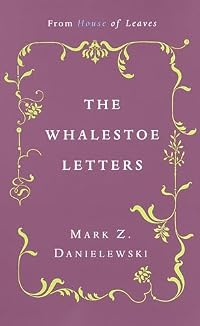
A kind of cult following has come out of this book, something a simple google search can confirm. There is a lot of re-readability in this book (I've read it twice) in part because of the hidden codes and messages within it and the weird overlapping storylines. The author's sister Poe created a CD that is meant as a kind of show more response and accompaniment to the book, and a separate offshoot, [b:The Whalestoe Letters|40153|The Whalestoe Letters|Mark Z. Danielewski|http://photo.goodreads.com/books/1320486089s/40153.jpg|2813846], also includes some letters not mentioned in the appendices (yes there is more than one appendix). The reader should know, also, that the bibliographic notations (yes there are footnotes) and the index (yes there's that too) are not wholly accurate, nor are any of the 'real' names used in the book.
Gamers and horror movie fans will appreciate this book for varying reasons, as will fans of postmodern metafiction in general. A colleague/friend of mine, Dan, is writing about this book for his dissertation - it is a dense enough book for several of them. At the same time, it can be read lightly and enjoyed. I would get a hold of the full-color edition if you can find it (yes, there are different colors).
Aside from all the horror and terror, it is ultimately a book that demands we notice it as a book; Dan mentioned that the cover flap (at least for the US version) doesn't fold over the pages of the book. Like the house itself, the book's insides are bigger than the outside. ;) It is at times annoying clever to see all the bells and whistles hidden (and some not so hidden) here, but Danielewski makes up for that by telling several good and often compelling stories, and some (I believe deliberately) farcical and equally entertaining ones as well. show less
A kind of cult following has come out of this book, something a simple google search can confirm. There is a lot of re-readability in this book (I've read it twice) in part because of the hidden codes and messages within it and the weird overlapping storylines. The author's sister Poe created a CD that is meant as a kind of show more response and accompaniment to the book, and a separate offshoot, [b:The Whalestoe Letters|40153|The Whalestoe Letters|Mark Z. Danielewski|http://photo.goodreads.com/books/1320486089s/40153.jpg|2813846], also includes some letters not mentioned in the appendices (yes there is more than one appendix). The reader should know, also, that the bibliographic notations (yes there are footnotes) and the index (yes there's that too) are not wholly accurate, nor are any of the 'real' names used in the book.
Gamers and horror movie fans will appreciate this book for varying reasons, as will fans of postmodern metafiction in general. A colleague/friend of mine, Dan, is writing about this book for his dissertation - it is a dense enough book for several of them. At the same time, it can be read lightly and enjoyed. I would get a hold of the full-color edition if you can find it (yes, there are different colors).
Aside from all the horror and terror, it is ultimately a book that demands we notice it as a book; Dan mentioned that the cover flap (at least for the US version) doesn't fold over the pages of the book. Like the house itself, the book's insides are bigger than the outside. ;) It is at times annoying clever to see all the bells and whistles hidden (and some not so hidden) here, but Danielewski makes up for that by telling several good and often compelling stories, and some (I believe deliberately) farcical and equally entertaining ones as well. show less
I’m not sure how to review this book, if it can even be called a book. More like a puzzle? Or a labyrinth? Anyway, I loved it for sure but it is with mixed feelings. This book is fascinating, pretentious, a page turner, sometimes boring, terrifying, heart warming, and unlike anything else I’ve read. Pretty sure I could read this 50 times and never catch everything in it. If you want a book that will have you, with a pen and paper, trying to decipher Morse code or trying to work out a hidden message, holding the book upside down and using a mirror to read backwards passages- finally thinking you understand what’s happening only to be second guessing everything by the end, then this is a novel for you.
Ενα ευφυεστατο και μοναδικο εργο τεχνης. Ο Danielewski παιζει με το μυαλο του αναγνωστη. Παιζει με τις βεβαιοτητες και τις σταθερες του.(Αν υποθεσουμε οτι υπαρχουν). Τρεφει την καθε αμφιβολια και θετει σε κινηση την καθε δυνατοτητα, ανοιγοντας ταυτοχρονα ποικιλες προοπτικες. H πολυεπιπεδη αφηγηση, η αυτοαναφορικοτητα, οι διαφορετικες ιστοριες που συνδεονται με διαφορους τροπους μεταξυ τους, το παιχνιδι με την show more μορφη, το σχημα και την κατευθυνση των γραμματοσειρων, ολα αυτα συνεπαιρνουν τον αναγνωστη ο οποιος καθε λιγο σταματαει και αναρωτιεται τι ειναι αυτο που διαβαζει, ενω υποψιαζεται συνεχως οτι συμμετεχει κι αυτος ο ιδιος σ αυτην την ιστορια. Μια ιστορια τρομου και φανταστικου δοσμενη σε μορφη ταινιας ντοκυμαντερ, τεκμηριωμενη με αμετρητα γραπτα, οπτικα και ηχητικα ντοκουμεντα, την οποια καποιος την βιντεοσκοπησε, αλλος που την παρακολουθησε εγραψε βιβλιο κι αλλος που το διαβασε εγραψε το βιβλιο που διαβαζει ο αναγνωστης, κι ολα αυτα γραμμενα με τροπο που δεν ειναι ξεκαθαρο πoιο ειναι το κυριως κειμενο και ποιες οι παραπομπες και οι υποσημειωσεις. Ολα ισχυουν και τιποτα δεν ισχυει, τιποτα δεν ειναι σταθερο και βεβαιο. Τα ιδια στοιχεια που κυριαρχουν μεσα στην ιστορια τρομου, τα ιδια συνυπαρχουν ως συστατικα στοιχεια της αναγνωσης, καθιστωντας τον αναγνωστη ταυτοχρονα και πρωταγωνιστη της ιστοριας την οποια διαβαζει, ενω ο συγγραφεας τολμαει ακομα να παρουσιασει και το αντιστροφο, δηλαδη και τον ιδιο τον πρωταγωνιστη ως αναγνωστη της ιστοριας.
Διαβαστε αυτο το εγκεφαλικο παιχνιδι που εφτιαξε ο Danielewski. Ειναι μοναδικη εμπειρια.
Το επιμετρο επισης του Θεμελη Γλυνατση ειναι απολαυστικοτατο και παρα πολυ κατατοπιστικο. show less
Διαβαστε αυτο το εγκεφαλικο παιχνιδι που εφτιαξε ο Danielewski. Ειναι μοναδικη εμπειρια.
Το επιμετρο επισης του Θεμελη Γλυνατση ειναι απολαυστικοτατο και παρα πολυ κατατοπιστικο. show less
This was not a quick read but it had that rare sense of discovery when you come across something original and different. The unusual and experimental structure was well executed, though I agree with other Readers who've critiqued this novel and say they found the parts about the Navidson Record were far more successful than the Johnny Truant story. The contrast in writing styles is clearly a deliberate choice by the author but whereas the Navidson Record is brilliantly documented, Johnny Truant can be really irritating and the end of his strand is very confusing. Perhaps if one followed the nuances of JT's story closely, it would make sense, but yeah, I just didn't care enough about him to do that. The random connection between Johnny show more and the House may be deliberate, but it's still annoying. In some ways it's a bit like a book form of Angelheart. Certainly Johnny Truant has stuff in common with Johnny Angel, but is his soul really at stake? Nonetheless... show less
It began when an old man named Zampano died and left behind in his decrepit apartment, the fragmented House of Leaves, an academic analysis of the nonexistent film The Navidson Record. Johnny Truant comes across this messy book when he breaks into Zampano's apartment with his friend Lude, and from there on out, his entire life changes. The book goes on to describe thoroughly describe the plot of the film and does it's best to describe the sheer absurdity of it all. The Navidson Record is simply a photographer who wants to document his new life with his family in a house they just moved to in Virginia. But something isn't right about the house; it's alive. And the more dangerous it becomes, the more obsessed Will Navidson becomes with show more learning about it. This obsession carries over into the real world, driving Johnny into insanity and causes his already crappy life to completely s h a t t e r.
This book is wild. There were definitely parts that dragged on about topics that were completely irrelevant, with a ridiculous amount of the footnotes lasting several pages long, but that just goes to show the insanity that this book has to offer. I'm not gonna lie, I didn't really pay attention to Johnny's story much because there was already too much to focus on in the actual Navidson Record itself. And by far the creepiest part of this book is the fact that after you read through it once, you feel as if you have to read it again, and again to fully understand it. This book makes you as obsessed as Johnny was, and as obsessed Navidson was with the house. show less
This book is wild. There were definitely parts that dragged on about topics that were completely irrelevant, with a ridiculous amount of the footnotes lasting several pages long, but that just goes to show the insanity that this book has to offer. I'm not gonna lie, I didn't really pay attention to Johnny's story much because there was already too much to focus on in the actual Navidson Record itself. And by far the creepiest part of this book is the fact that after you read through it once, you feel as if you have to read it again, and again to fully understand it. This book makes you as obsessed as Johnny was, and as obsessed Navidson was with the house. show less
Members
- Recently Added By
Published Reviews
ThingScore 100
House of leaves by Mark Z. Danielewski runs to 710 pages: 13 pages of introduction, 535 of text, followed by three appendices and a 42-page, triple-column index.
added by KayCliff
... let me say right off that his book is funny, moving, sexy, beautifully told, an elaborate engagement with the shape and meaning of narrative. For all its modernist maneuvers, postmodernist airs and post-postmodernist critical parodies, ''House of Leaves'' is, when you get down to it, an adventure story: a man starts traveling inside a house that keeps getting larger from within, even as show more its outside dimensions remain the same. He is entering deep space through the closet door. show less
added by jlelliott
Lists

1001 Books You Must Read Before You Die
1,448 works; 1,132 members

The Guardian's 1000 Novels Everyone Must Read
1,005 works; 546 members
BBC Big Read
191 works; 45 members

Best books about books
209 works; 104 members

Metafiction
84 works; 21 members

Magic Realism
371 works; 52 members

Favorite Long Books
330 works; 41 members

Best Horror Books
281 works; 85 members

Weird and Weirder Fiction
266 works; 32 members
Best Satire
188 works; 29 members

50 Tough Books for Extreme Readers
71 works; 39 members

Stream of Consciousness
87 works; 8 members

Unreliable Narrators
170 works; 43 members

TED 2013 Summer Reading List
190 works; 13 members
Books That Changed Me
156 works; 47 members

Significant works of postmodern fiction
86 works; 23 members

Scary Stories for the Season
160 works; 94 members

Slipstream or Interstitial Fiction
160 works; 19 members

NPR Reader Poll: 100 Best Horror Novels and Stories
100 works; 20 members

Experimental Literature
141 works; 18 members
Most difficult novels
68 works; 27 members

2000s (the decade, not the century)
184 works; 11 members

Dark Books for Winter Reading
71 works; 11 members

Favourite Fantasy Books of the 21st Century
51 works; 6 members

Speculative Fiction: Slipstream Literature
166 works; 16 members
Survey of Gothic and Horror Literature
18 works; 4 members

Top Five Books of 2014
1,064 works; 397 members

Best Contemporary Literary Fiction (Around the Last 30 Years)
388 works; 124 members
Books tagged favorites
390 works; 30 members

Jones and Newman's Horror: Another 100 Best Books
100 works; 7 members

LibraryThingers' 1001 Books You Must Read Before You Die
442 works; 30 members

Contemporary Fiction
109 works; 7 members

Story Within a Story
65 works; 16 members

Most Disturbing Books
124 works; 27 members

Best Antiheroes and Antiheroines
119 works; 7 members

Read This Twice's Best Horror Books
94 works; 2 members
Paste's 50 Best Horror Novels of All time
50 works; 6 members
Best Horror Mega-List
342 works; 6 members

Mind Expanding Books by hackerkid
581 works; 8 members
Elegant Prose
80 works; 4 members

One Book, Many Authors
441 works; 40 members

75 Books Challenge 2015 Halloween Read long list
45 works; 4 members
A Novel Cure
742 works; 23 members

Blue Pyramid 1,276 Best Books of All Time
1,248 works; 32 members

To Read - Horror
137 works; 14 members

recalling favorites...
105 works; 2 members

Five star books
1,755 works; 108 members

Best Psychological Suspense
33 works; 6 members

Favorite Books from the 2000s
35 works; 3 members
Overdue Podcast
803 works; 9 members

Favourite Discoveries Through LT
12 works; 2 members

Books Read in 2007
323 works; 8 members
Books for Fans of Stranger Things
84 works; 7 members
SantaThing 2014 Gifts
299 works; 17 members

Books as Objects & Metatextual Works
31 works; 2 members
Books That Go Bump in the Night
42 works; 6 members
Reedsydiscovery 100 Best Horror Books of All Time
100 works; 5 members

Romans
49 works; 1 member

Fiction: Supernatural Horror
97 works; 1 member
American Lit for Eng 11 Research Project
368 works; 6 members
Spooky United States: The Scariest Books Set in Each State
50 works; 3 members

BF: 23 Underrated Horror Books You Have To Read ASAP
4 works; 2 members

Reading Glasses Podcast
410 works; 3 members

top 100
39 works; 1 member
Books We Love to Reread
688 works; 296 members
Impossible Spaces in Fiction
2 works; 1 member

Top Five Books of 2024
795 works; 264 members

Cult Classics
30 works; 1 member
Books We Want To Read Again For The First Time
384 works; 160 members
Books I Read Before The Invention Of The Internet.
144 works; 1 member
Books We Couldn't Put Down
443 works; 197 members

Books Read in 2024
4,623 works; 126 members

Books We Discovered On LibraryThing
530 works; 130 members
naturallogg's 2025 in Books
50 works; 1 member

TBR Insta
81 works; 1 member
00
23 works; 1 member

Books We Resisted Reading
175 works; 104 members
Kate & Cheyanne's Horror Extravaganza
144 works; 6 members

Nightmares Not Included
175 works; 3 members

Horror (Owned TBR)
60 works; 1 member

I Could Live There
185 works; 12 members

GR: 16 Books That Will Give You Nightmares
6 works; 1 member
First Novels
373 works; 17 members
Speculative Fiction to Read
706 works; 31 members

KayStJ's to-read list
1,616 works; 11 members

Gimmicks
53 works; 11 members

I Can't Finish This Book
189 works; 22 members

Biggest Disappointments
606 works; 168 members
Location as a character unto itself
4 works; 1 member
Mind-Benders: Fiction that Hurts Your Head
34 works; 8 members
Stories Featuring Passages, Gateways and Doors
39 works; 11 members

Which house?
423 works; 16 members
A Grand Waste Of Time
20 works; 1 member
The Atlantic's The Great American Novel
136 works; 12 members
Ergodic Literature
11 works; 1 member

Unread books
1,063 works; 82 members
Talk Discussions
Past Discussions
House of leaves Mark Z. Danielewski in Thing(amabrarian)s That Go Bump in the Night (January 2009)
House of Leaves in Someone explain it to me... (March 2008)
Author Information

16 Works 24,883 Members
Mark Z. Danielewski is the author of House of Leaves, The Whalestoe Letters, Only Revolutions, The Fifty Year Sword, and The Familiar. (Bowker Author Biography)
Some Editions
Awards and Honors
Work Relationships
Is abridged in
Common Knowledge
- Canonical title*
- Das Haus
- Original title
- House of leaves
- Original publication date
- 2000
- People/Characters
- Johnny Truant; Will Navidson; Zampanò; Lude; Tom Navidson; Billy Reston (show all 42); Karen Green; Thumper; Chad Navidson; Daisy Navidson; Stephen King; Stanley Kubrick; Douglas Hofstadter; Ken Burns; Harold Bloom; Camille Paglia; Hunter S. Thompson; Anne Rice; Jacques Derrida; Pelafina H. Lièvre; Beatrice; Gabrielle; Anne-Marie; Dominique; Eliane; Isabelle; Claudine; Mr. Monster; Holloway Roberts; Kirby "Wax" Hook; Jed Leeder; Audrie McCullogh; Kyrie; Gdansk Man; Raymond; Tatiana; Ashley; Hailey; Jennifer Kale; Denise Neiman; Barbara; Clara English
- Important places
- Los Angeles, California, USA; Virginia, USA; Seattle, Washington, USA; The Five and a Half Minute Hallway; The Anteroom; The Great Hall (show all 17); The Three Attic Whalestoe Institution; France; French Indochina; The Labyrinth; India; Yggdrasil; Jamestown, Virginia, USA (as Jamestown Colony); Ash Tree Lane; New York, New York, USA; New York, USA; USA
- Important events
- Battle of Dien Bien Phu; World War II (1939 | 1945)
- Dedication
- This is not for you.
- First words
- I still get nightmares. In fact I get them so often I should be used to them by now. I'm not. No one ever really gets used to nightmares.
- Quotations*
- On oubliait facilement l'IA quantique au cœur de notre vaisseau. Elle restait discrètement fondue dans le décor, nous nourrissant, nous transportant, imprégnant notre existence comme un dieu discret, mais tout comme Dieu,... (show all) elle ne prenait jamais nos appels.
Les animaux vivant en meute mettent toujours en pièces les plus faibles d'entre eux. Tous les enfants le savent d'instinct.
Il est beaucoup plus facile de vivre en se sachant vandale que meurtrier. - Last words
- (Click to show. Warning: May contain spoilers.)Letting the parade pass from sight, he focuses on the empty road beyond, a pale curve vanishing into the woods where nothing moves and a street lamp flickers on and off until at last it flickers out and darkness sweeps in like a hand.
- Publisher's editor*
- Hannes Riffel
- Blurbers
- Lethem, Jonathan ; Maguire, Gregory
- Original language
- English
- Canonical DDC/MDS
- 813.54
- Canonical LCC
- PS3554.A5596
*Some information comes from Common Knowledge in other languages. Click "Edit" for more information.
Classifications
Statistics
- Members
- 19,160
- Popularity
- 313
- Reviews
- 433
- Rating
- (4.08)
- Languages
- 12 — Catalan, Dutch, English, French, German, Greek, Italian, Polish, Portuguese, Russian, Spanish, Turkish
- Media
- Paper, Ebook
- ISBNs
- 38
- UPCs
- 1
- ASINs
- 17