
The House on the Strand
by Daphne Du Maurier
On This Page
Description
Richard Young needs a change of scene. Though the Cornish town remains familiar, Richard finds himself flung back to the 14th century.Tags
Recommendations

















Member Recommendations
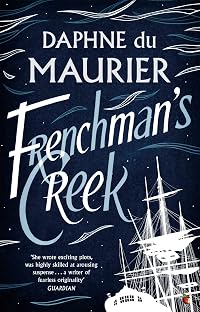
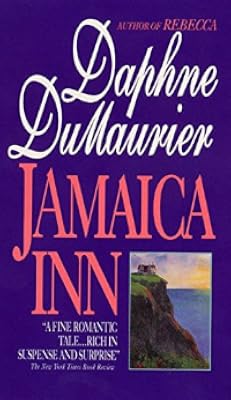
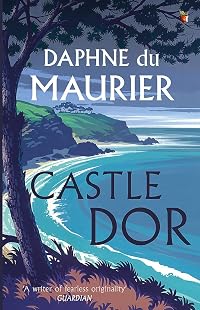
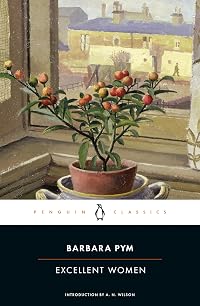
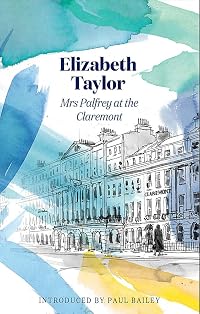
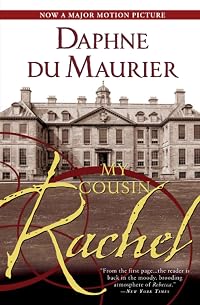
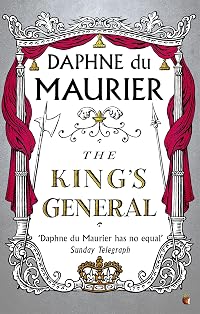
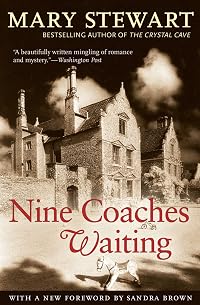
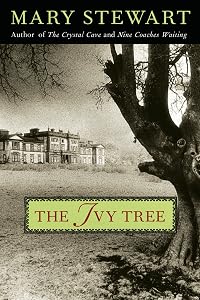
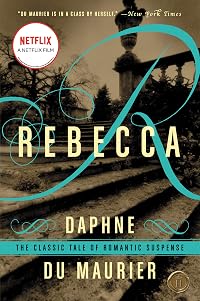
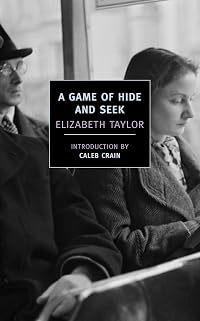
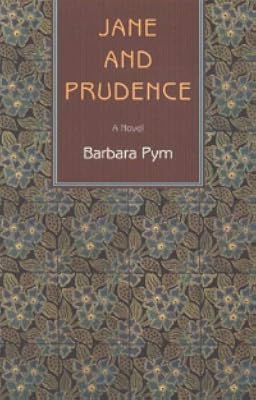
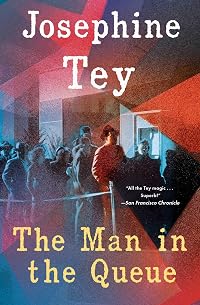
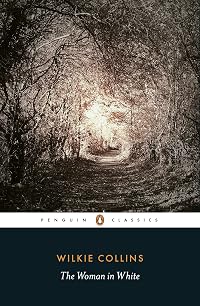
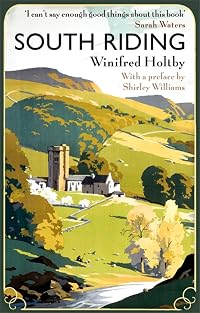
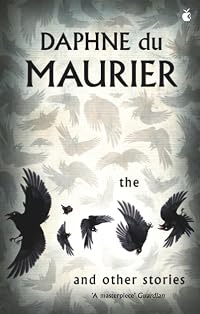
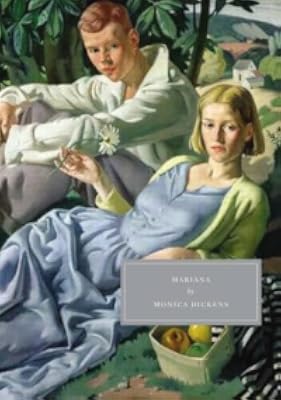
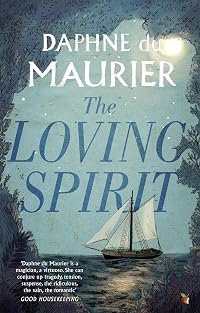
BonnieJune54 The main characters are similar and they are both going through dual lives.
20
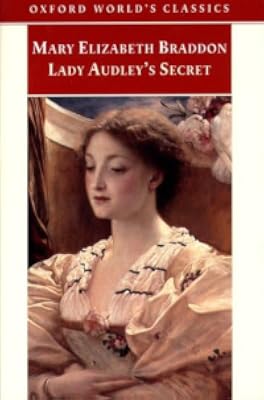
gward101 Another tale of a normal world knocked askew


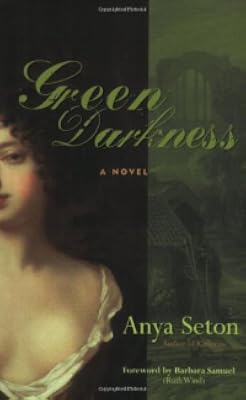
cbl_tn The time travel element is similar, with both past and present inhabiting the same landscape.
Member Reviews
Set in the atmospheric landscape of Cornwall, "The House on the Strand" concerns a young man's experiments with hallucinogenic drugs and resulting "time travel" back to mysterious characters and events in the 14th century. Set in the 1960's, our protagonist, Dick Young, becomes increasingly drawn (perhaps "addicted" might be more accurate) to the past, which he finds far more interesting than his current life with his wife Vita and young stepsons. Daphne du Maurier, a skilled hand at suspense, has crafted a compelling story with keen psychological insights. The characters are well-developed, particularly Dick and Vita, whose banter and interactions realistically reflect martial tension and conflict. I will confess that I generally found show more the chapters concerning the 14th century events quite baffling in their complexity, and the numerous similar-sounding characters and place names equally exasperating. Consequently, I merely skimmed those sections; but Dick's subsequent recaps in the present day adequately summarize all the reader needs to know. The open-ended surprise twist perfectly caps the tale. show less
Warning: This review contains spoilers
****
Professor Magnus Lane has developed an unusual drug that he wants his friend Richard Young to test. The drug seems to transport the user back in time to the 14th century. The user's location is the same, but all around him are the sights and sounds of six hundred years previous. However, as tempting as these sights and sounds are, any attempt to touch or interact with the 14th-century world will send him directly back to the present. The book follows Richard as he becomes steadily more immersed in the world of the past, which seems so much more vivid and interesting than his present.
I really enjoyed this story. The Cornish setting was a definite plus, with the bays, cliffs and rolling hills, and show more the romantic-sounding place names. (There were even a few mentions of Cornish pasties, which never go amiss with me.) I liked the twist on time travel and the clashes between the past and the present, although the summary on the back was slightly misleading; when it said "Richard eventually finds emotional refuge with a beautiful woman of the past trapped in a loveless marriage, but when he attempts to intervene on her behalf the results are brutally terrifying for the present," it made it sound like Richard would end up not being born or averting WW2 or something. The outcome is not nearly so momentous. Even so, though, the ending is a good one, nice and suspenseful while still resolving the story.
Recommended if you like Cornwall, history or have ever dreamed of travelling back in time. show less
****
Professor Magnus Lane has developed an unusual drug that he wants his friend Richard Young to test. The drug seems to transport the user back in time to the 14th century. The user's location is the same, but all around him are the sights and sounds of six hundred years previous. However, as tempting as these sights and sounds are, any attempt to touch or interact with the 14th-century world will send him directly back to the present. The book follows Richard as he becomes steadily more immersed in the world of the past, which seems so much more vivid and interesting than his present.
I really enjoyed this story. The Cornish setting was a definite plus, with the bays, cliffs and rolling hills, and show more the romantic-sounding place names. (There were even a few mentions of Cornish pasties, which never go amiss with me.) I liked the twist on time travel and the clashes between the past and the present, although the summary on the back was slightly misleading; when it said "Richard eventually finds emotional refuge with a beautiful woman of the past trapped in a loveless marriage, but when he attempts to intervene on her behalf the results are brutally terrifying for the present," it made it sound like Richard would end up not being born or averting WW2 or something. The outcome is not nearly so momentous. Even so, though, the ending is a good one, nice and suspenseful while still resolving the story.
Recommended if you like Cornwall, history or have ever dreamed of travelling back in time. show less
"We are all bound, one to the other, through time and eternity". While vacationing at the Cornwall home of old chum Magnus, Richard Young is convinced to act as guinea pig for his friend's latest experiment - a drug that enables the mind to travel into the past - although the body stays in the present. Richard's "trips" take him to the 14C where he is soon so wrapped up in the past that it becomes as addictive to him as a drug - or is it the drug itself that is addictive? Are the lives of those in the past so much more important that his wife and step-sons become a hindrance to his journeys? Did these people really exist or do they only exist in Richard's mind? Although Richard's mind is in the 14C while on the drug, his body is not and show more as he walks in the footsteps of those in the past it leads him into some very close calls when his mind returns to the present. He could be standing anywhere - the middle of a road, on private property or in the path of an oncoming.......
Nope, I'm not telling and to say much more gives the whole thing away - half the fun is the guessing and unexpected twists in the story. Although the segments in the 14C were well written they were a bit confusing to me at times, but don't spend too much time trying to sort those relationships out. IMO they were mostly background and the main focus were the parts in the present day. Du Maurier is superb and understated as always, and this one will definitely leave you guessing all the way to the very last page and beyond. show less
Nope, I'm not telling and to say much more gives the whole thing away - half the fun is the guessing and unexpected twists in the story. Although the segments in the 14C were well written they were a bit confusing to me at times, but don't spend too much time trying to sort those relationships out. IMO they were mostly background and the main focus were the parts in the present day. Du Maurier is superb and understated as always, and this one will definitely leave you guessing all the way to the very last page and beyond. show less
Daphne du Maurier writes very deep books that masquerade as mystery/romances. No two are alike, and in this novel she steps into the world of time travel (or maybe she doesn’t). After all, have you ever read a du Maurier that didn’t pose more questions than it answered?
We are taken into the world of Richard Young, a man who has reached a crossroads in life and is contemplating what his next step is going to be. His best friend, Magnus, a bit of a mad scientist, has loaned Richard his home in Cornwall for vacation. Magnus is experimenting with a drug he has developed, and he is not above using Richard as his guinea pig to test its effects. Just as we have stepped into Richard’s world by opening this book, when Richard takes the show more drug he steps into another world as well, the world of 14th Century Cornwall and the previous owner of Magnus’ house, a squire named Roger.
To tell of Richard’s or Roger’s adventures would be to ruin the plot surprises, and this book if full of them. But some of the questions posed here are subtle but profound. Are we attached to the past through our genetic material? Do we have stored in our brains every memory of our ancestors, if we knew how to access them? What is the cost of addiction? Of escape into any reality that is not our own? What price does it cost us when we ignore our present lives to live in the past, the future, or just dreams? I find this quite relevant in view of how many people escape into virtual reality these days, but it could be as easy asked of those who bury themselves in books, I suppose.
I had read this book many years ago, but found it was mostly new to me after so many years. It was as good as I remembered and no doubt more meaningful to me this go around. Nice to end the year with an old friend. show less
We are taken into the world of Richard Young, a man who has reached a crossroads in life and is contemplating what his next step is going to be. His best friend, Magnus, a bit of a mad scientist, has loaned Richard his home in Cornwall for vacation. Magnus is experimenting with a drug he has developed, and he is not above using Richard as his guinea pig to test its effects. Just as we have stepped into Richard’s world by opening this book, when Richard takes the show more drug he steps into another world as well, the world of 14th Century Cornwall and the previous owner of Magnus’ house, a squire named Roger.
To tell of Richard’s or Roger’s adventures would be to ruin the plot surprises, and this book if full of them. But some of the questions posed here are subtle but profound. Are we attached to the past through our genetic material? Do we have stored in our brains every memory of our ancestors, if we knew how to access them? What is the cost of addiction? Of escape into any reality that is not our own? What price does it cost us when we ignore our present lives to live in the past, the future, or just dreams? I find this quite relevant in view of how many people escape into virtual reality these days, but it could be as easy asked of those who bury themselves in books, I suppose.
I had read this book many years ago, but found it was mostly new to me after so many years. It was as good as I remembered and no doubt more meaningful to me this go around. Nice to end the year with an old friend. show less
Six-word review: Time traveler becomes addicted to past.
Extended review:
From the perspective of decades, du Maurier's 1969 novel about a secret drug that transports the user to a hypnotically attractive other world seems to be a cautionary comment on the tune-in-turn-on-drop-out culture of the 1960s.
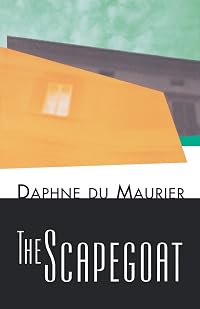
I don't know enough about du Maurier and her social environment to know if she'd have been moved to deliver a warning about the seductive dangers of inhabiting an alternate life through the use of mind-altering substances. What is more likely, perhaps, is that the author was exploring once again the experience of a relatively innocent protagonist plunging into a life of someone else's creation and struggling to find his or her way in it. show more This is a theme I recall from both Rebecca and The Scapegoat, the only other two novels I've read by this author.
Unfortunately for me, I found the world of the novelist's creation even more disorienting than did her character, Richard Young. The fourteenth-century setting created by du Maurier and intermittently visited by the disembodied presence of her twentieth-century protagonist is fraught with unnecessary navigational difficulties. I'm always a little wary of a novel that includes a multigenerational family tree in its frontmatter. In the present case, I stuck a Post-it on the chart and referred to it many times, sometimes repeatedly in the course of reading a single page, and I still couldn't keep the characters straight. Not only are there two unusual three-syllable surnames beginning with C (Champernoune, Carminowe) and two important secondary characters beginning with O (Otto, Oliver), there are three Joannas and three Henrys. I'm afraid the amount of blurring caused by this much visual confusion detracted considerably from my enjoyment of the story.
It seems, indeed, that the author was a little confused herself at times. One clear entry in the genealogy, for instance, shows a family with a son named William and his two siblings. In the text we are told that the family consists of two boys and a girl; moreover, the younger two are referred to as William's brother and sister. And yet the chart shows the three as William, Elizabeth, and Katherine.
I also had some trouble tracking the geography and topology. In the immediate and historic vicinities we have Tywardreath, Treverran, Trenadlyn, Trevenna, Trelawn, Trefengy, Tregest, and Treesmill. So many of the comings and goings sounded just alike that I pretty much gave up trying to hold the locations and relationships in my head.
Further complicating the chronologic movements of Richard Young was the fact that different sensations accompanied his leaps in time--sometimes a smooth transition, sometimes a jarring and even sickening jolt--and I thought we were supposed to perceive or at least look for a pattern in these effects. If they had any significance, however, it was never explained, so I was paying attention to an element that was given emphasis without meaning.
And finally, the aspect that was probably the most unsettling to me was not spatial or temporal but emotional. Richard Young struck me as a pretty cold-blooded character. Despite his protestations of affection, he seemed to feel no particular warmth for his wife and not much for his two stepsons. He clearly disliked his wife's best friends. And he didn't even seem to have much of a reaction to the loss of an important relationship; his main concerns seemed to be pragmatic. Consequently I found it hard to believe that his supposed romantic attachment to one of the fourteenth-century women was anything more than a one-sided physical attraction to a woman whose chief allure was unattainability.
In sum, what promised to be a suspenseful yarn featuring a trippy Jekyll-and-Hyde magic potion and depicting the sinister side of addictive hallucinogens was instead a sort of narrative muddle that led me on to a disappointingly unresolved ending. I usually enjoy time-travel tales, no matter how implausible, but this one was simply unsatisfying. show less
Extended review:
From the perspective of decades, du Maurier's 1969 novel about a secret drug that transports the user to a hypnotically attractive other world seems to be a cautionary comment on the tune-in-turn-on-drop-out culture of the 1960s.
I don't know enough about du Maurier and her social environment to know if she'd have been moved to deliver a warning about the seductive dangers of inhabiting an alternate life through the use of mind-altering substances. What is more likely, perhaps, is that the author was exploring once again the experience of a relatively innocent protagonist plunging into a life of someone else's creation and struggling to find his or her way in it. show more This is a theme I recall from both Rebecca and The Scapegoat, the only other two novels I've read by this author.
Unfortunately for me, I found the world of the novelist's creation even more disorienting than did her character, Richard Young. The fourteenth-century setting created by du Maurier and intermittently visited by the disembodied presence of her twentieth-century protagonist is fraught with unnecessary navigational difficulties. I'm always a little wary of a novel that includes a multigenerational family tree in its frontmatter. In the present case, I stuck a Post-it on the chart and referred to it many times, sometimes repeatedly in the course of reading a single page, and I still couldn't keep the characters straight. Not only are there two unusual three-syllable surnames beginning with C (Champernoune, Carminowe) and two important secondary characters beginning with O (Otto, Oliver), there are three Joannas and three Henrys. I'm afraid the amount of blurring caused by this much visual confusion detracted considerably from my enjoyment of the story.
It seems, indeed, that the author was a little confused herself at times. One clear entry in the genealogy, for instance, shows a family with a son named William and his two siblings. In the text we are told that the family consists of two boys and a girl; moreover, the younger two are referred to as William's brother and sister. And yet the chart shows the three as William, Elizabeth, and Katherine.
I also had some trouble tracking the geography and topology. In the immediate and historic vicinities we have Tywardreath, Treverran, Trenadlyn, Trevenna, Trelawn, Trefengy, Tregest, and Treesmill. So many of the comings and goings sounded just alike that I pretty much gave up trying to hold the locations and relationships in my head.
Further complicating the chronologic movements of Richard Young was the fact that different sensations accompanied his leaps in time--sometimes a smooth transition, sometimes a jarring and even sickening jolt--and I thought we were supposed to perceive or at least look for a pattern in these effects. If they had any significance, however, it was never explained, so I was paying attention to an element that was given emphasis without meaning.
And finally, the aspect that was probably the most unsettling to me was not spatial or temporal but emotional. Richard Young struck me as a pretty cold-blooded character. Despite his protestations of affection, he seemed to feel no particular warmth for his wife and not much for his two stepsons. He clearly disliked his wife's best friends. And he didn't even seem to have much of a reaction to the loss of an important relationship; his main concerns seemed to be pragmatic. Consequently I found it hard to believe that his supposed romantic attachment to one of the fourteenth-century women was anything more than a one-sided physical attraction to a woman whose chief allure was unattainability.
In sum, what promised to be a suspenseful yarn featuring a trippy Jekyll-and-Hyde magic potion and depicting the sinister side of addictive hallucinogens was instead a sort of narrative muddle that led me on to a disappointingly unresolved ending. I usually enjoy time-travel tales, no matter how implausible, but this one was simply unsatisfying. show less
The House on the Strand is a historical-time travel mystery by Daphne du Maurier. Dick, a disillusioned book publisher with a shaky marriage goes to his friend's house in Cornwall for summer holiday. The friend is a research scientist who persuades Dick to take an experimental drug, with the effect of transporting him back to the 14th century, where, as an onlooker, he becomes passionately involved in the lives of the people he observes. The mystery is not so much whodunnit, but what's going on here? Although there is murder and plotting going on as well. An unusual book, The House on the Strand did not end the way I expected it to, and the ambiguous ending still has me puzzling.
As a side note, I think this would make a terrific movie.
As a side note, I think this would make a terrific movie.
This late Du Maurier novel is a weird time travelling/hallucinogenic fantasy mixed with a local guide and history to Cornwall and the story of a 1970s modern marriage. Strangely enough it doesn’t really work. Dick, the protagonist, is transported into an apparently compelling drama from the Middle Ages through the consumption of a strange potion. But the characters are so underdrawn and underwhelming and the world making so implausible, that it is impossible to understand that he would throw away everything for the sake of this new, old world. And if that fails, the whole book becomes an implausible mess. Disappointing from a compelling writer.
Members
- Recently Added By
Lists

Best Time Travel Novels
165 works; 125 members

1960s, Best books published therein
254 works; 22 members

Favourite Virago Modern Classics
183 works; 38 members

Female Author
1,234 works; 67 members

20th Century Literature
1,161 works; 55 members

Books Set in Great Britain
191 works; 13 members

Speculative Fiction: Slipstream Literature
166 works; 16 members

Houses and Buildings as Characters in Fiction
182 works; 28 members

Books Read in 2014
2,343 works; 89 members

Lesser known books of well known authors
39 works; 17 members

MysteryCAT 2014
19 works; 1 member
Publisher's Weekly Bestsellers - Part II - 1940 - 1979
355 works; 5 members

Books Read in 2006
421 works; 8 members

BingoDOG - Scientists in Fiction
111 works; 17 members

Which house?
423 works; 16 members

Time Travel Stories
64 works; 6 members

I Could Live There
185 works; 12 members

Read in 2006
140 works; 1 member
Author Information

204+ Works 57,524 Members
Daphne Du Maurier was born in London on May 13, 1907 and educated in Paris. In 1932, she married Lieutenant-General Sir Frederick Browning. She began writing short stories of mystery and suspense for magazines in 1928, a collection of which appeared as The Apple Tree in 1952. Her first novel, The Loving Spirit, was published in 1931. Her tightly show more woven, highly suspenseful plots and her strong characters make her stories perfect for adaptation to film or television. Among her many novels that were made into successful films are Jamaica Inn (1936), Rebecca (1938), Frenchman's Creek (1941), Hungry Hill (1943), My Cousin Rachel (1952), and The Scapegoat (1957). Her short story, The Birds (1953), was brought to the screen by director Alfred Hitchcock in a treatment that has become a classic horror-suspense film. She died on April 19, 1989 at the age of 81. (Bowker Author Biography) show less
Some Editions
Awards and Honors
Distinctions
Series
Belongs to Publisher Series
Work Relationships
Common Knowledge
- Canonical title
- The House on the Strand
- Original title
- The House on the Strand
- Original publication date
- 1969
- People/Characters
- Richard Young; Vita Young; Roger Kylmerth; Magnus Lane; Sir William Ferrers; Sir Oliver Carminowe (show all 10); Lady Isolda Ferrers; Sir John Carminowe; Sir Otto Bodrugan; Sir Henry Champernoune
- Important places
- Tywardreath, Cornwall, England, UK; Cornwall, England, UK; England, UK
- Dedication
- for my predecessors at Kilmarth
- First words
- Introduction
The simple and instant response to The House on the Strand is that it is a novel revisiting the themes expected of Daphne du Maurier, all about Cornwall, set in a mysterious mansion, and featuring roman... (show all)tic episodes in the region's history.
The first thing I noticed was the clarity of the air, and then the sharp green colour of the land. - Quotations
- Never before, neither in my own world nor on the previous occasions when I strayed into the other, had I felt such a sense of unity. I was one of them, and they did not know it. I belonged amongst them, and they did not know ... (show all)it. This, I think, was the essence of what it meant to be me. To be bound, yet free; to be alone, yet in their company; to be born in my own time yet living, unknown, in theirs. (102)
"We're far too wrapped up in ourselves to encourage ghosts. Poor things, they'd wither away from tedium, unable to draw attention to themselves."
Could time be all-dimensional—yesterday, today, tomorrow running concurrently in ceaseless repetition?
When I lie I like to base the lie on a foundation of fact, for it appeases not only the conscience but a sense of justice.
. . . I thought how this thing of how well or how badly one had slept was really the great test of marital relationship; if one partner came off poorly during the night hours the other was immediately to blame, and the follow... (show all)ing day would come apart in consequence.
There are few strains more intolerable in life than waiting for the arrival of unwelcome guests.
Everything living is part of the whole. We are all bound, one to the other, through time and eternity, and, our senses once opened, as mine had been opened by the drug, to a new understanding of his world and mine, fusion wou... (show all)ld take place, there would be no separation, there would be no death. . . . This would be the ultimate meaning of the experiment, surely, that by moving about in time death was destroyed. - Last words
- (Click to show. Warning: May contain spoilers.)I couldn't hold it properly; my fingers and the palm of my hand went numb, and it slipped out of my grasp and crashed to the floor.
(Click to show. Warning: May contain spoilers.)Short stories, memoirs and biographies followed, but the phantom she kept in a box never again took hold of her imagination. (Introduction) - Blurbers
- Beauman, Sally
- Original language
- English UK
- Canonical DDC/MDS
- 823.912
- Canonical LCC
- PR6007.U47
Classifications
Statistics
- Members
- 2,685
- Popularity
- 6,910
- Reviews
- 66
- Rating
- (3.81)
- Languages
- 16 — Chinese, Czech, Danish, Dutch, English, Estonian, Finnish, French, German, Italian, Norwegian (Bokmål), Norwegian, Portuguese, Russian, Spanish, Swedish
- Media
- Paper, Audiobook, Ebook
- ISBNs
- 68
- ASINs
- 64