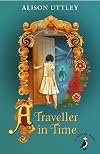
A Traveller in Time
by Alison Uttley
On This Page
Description
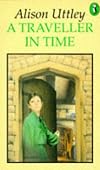
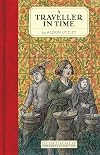
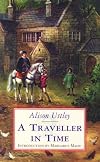
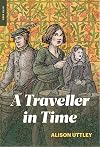
When, in the late 1930s, Penelope is sent to stay with relatives in a remote ancient farmhouse in Derbyshire, she finds herself mysteriously transported to Elizabethan times where her sixteenth-century family is scheming to free the imprisoned Mary, Queen of Scots, but, even with her twentieth-century knowledge, Penelope remains helpless in the face of danger.Tags
Recommendations

















Member Recommendations

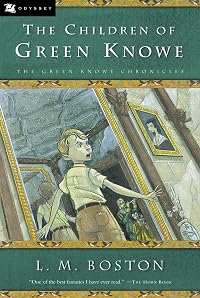
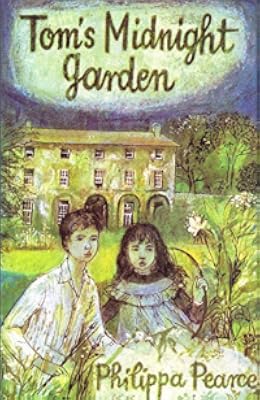
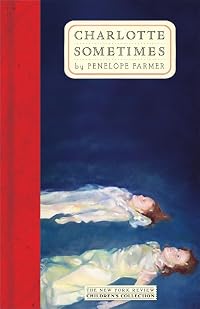
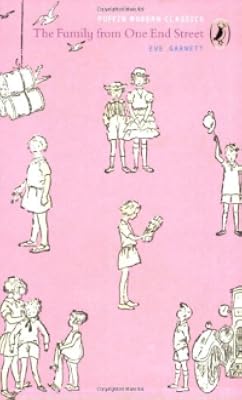
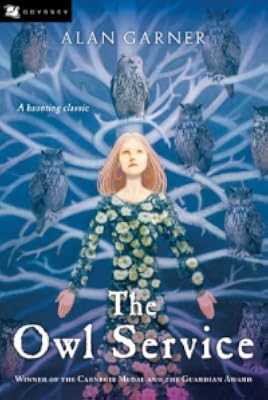
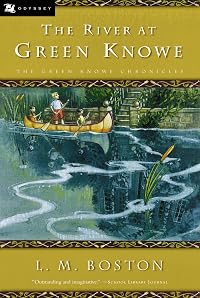
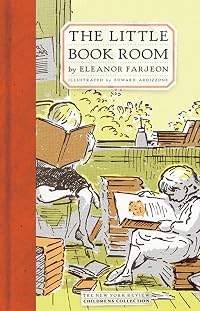
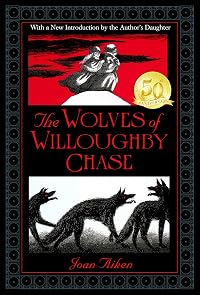
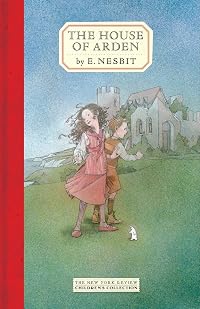
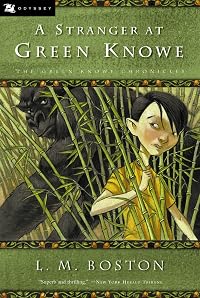
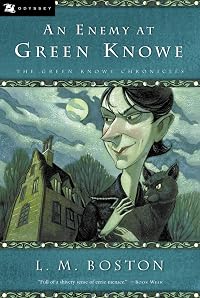
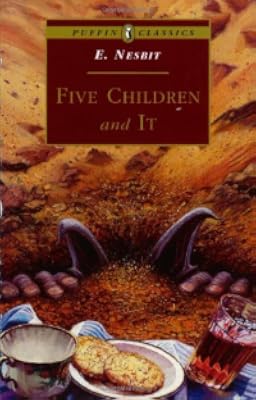
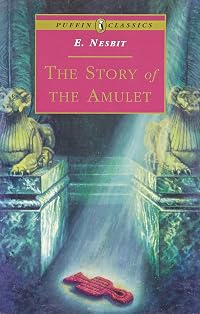
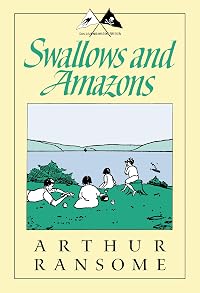
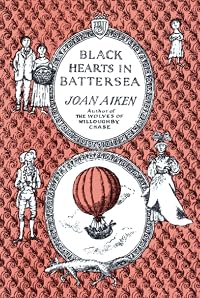
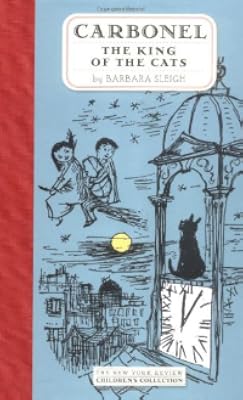
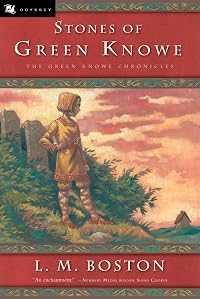
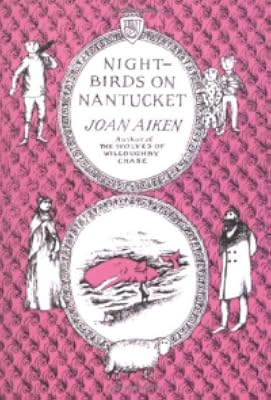
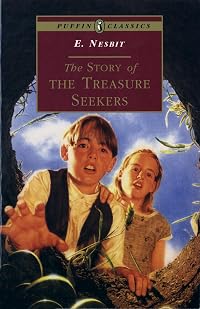
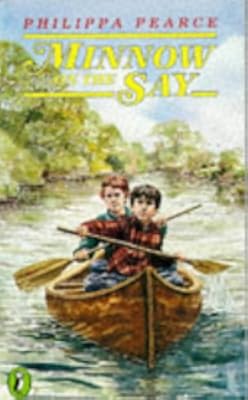
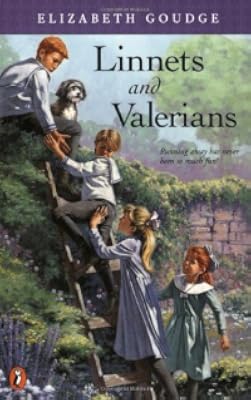
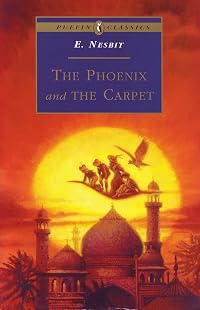
cbl_tn The time travel element is similar, with both past and present inhabiting the same landscape.
Member Reviews
Alison Uttley is best known for her Little Grey Rabbit books – beginning with The Squirrel, The Hare and The Little Grey Rabbit (1929) – publication of which continued for nearly fifty years, with charming illustrations by Margaret Tempest (latterly Katherine Wigglesworth). They were part of a story-telling tradition that stretched from Beatrix Potter’s Peter Rabbit to Jane Pilgrim’s Blackberry Farm series, a tradition featuring anthropomorphic creatures and describing a rural life that has now largely disappeared.
A Traveller in Time is rather different. Not only was it aimed for older readers but its content stems from vivid dreams the young Alice Jane Taylor had when living in Derbyshire. Born in Castle Top Farm near Matlock, show more Alice (Alison was her pen name) recounts how in her sleep “I went through secret hidden doorways in the house wall and found myself in another century. Four times I stepped through the door…” Despite a degree in Physics from Manchester University she continued, according to her biographer Denis Judd, to believe “in fairies and in time travel”. All this suggests that this young adult novel is going to be difficult to categorise — part fantasy, part historical fiction, part autobiographical, even part romance.
Both Castle Top Farm and its neighbour Dethick Manor were in existence in the 16th century. Just as Uttley’s The Country Child (1931) featured Castle Top Farm under the name of Windystone Hall, so Dethick Manor appears in the guise of Thackers. It is to Thackers that the sickly Penelope Taberner Cameron comes to recuperate one winter, and where she starts to slip away sideways into the reign of Elizabeth I, in the early 1580s. Here she meets a distant ancestor, Dame Cicely, and the owner of the house, Anthony Babington, his wife and his younger brother Francis. Despite significant gaps in Penelope’s visits these past denizens soon take her mysterious coming and going for granted, with only the dogs and one individual instinctively sensing that she’s physically out of place.
The feeling of reverie, told almost as a series of vignettes where nothing much happens, makes this a very somnolent story. This allows plenty of time for Uttley to lovingly evoke a past way of life – in the kitchen, on the farm, in private rooms — and compare it with what it must have been like for her as a child on a farm at the tail end of the Victorian period (she was born in 1884). But the friendships she makes with Tudor gentry and servants alike are leading to dark events, overshadowing the joys she has from this dual life.
Between 1569 and 1570 Mary Queen of Scots had been under house arrest in Wingfield Manor, a few miles from Dethick and Castle Top. Though Uttley is a little vague about dating events, the young heir Anthony Babington (born in 1561, he was at this time a page in the service of the Queen’s gaoler the Earl of Shrewsbury) is described as having been smitten with her. The Queen was brought back here in 1584 and in 1585, which is the period in which the latter part of A Traveller in Time is set (and exactly three hundred years before Alice’s birth). Penelope – living at the turn of the century – knows that Anthony Babington was executed in 1586 and the Queen of Scots in 1587, or about three hundred and twenty years before; having that foreknowledge which comes from being from the future makes all the joy from her sojourns in Tudor times very bittersweet.
Uttley almost convinces us that this or that could have happened in her story, despite any reader’s reservations that Elizabethans would have so easily accepted such a strange visitor in their midst. The author has such an intimate and affectionate feel for the minutiae of everyday living — feeding animals, using household objects, singing songs, experiencing the changing seasons — that it forms a cantus firmus to the more wayward counterpoint of secret plots and the fierce antagonism of one individual, both of which threaten to leave her stranded in the past.
Above all we come to love the characters we meet. From the present, Great-Aunt Tissie and her brother Barnabas, to some extent Penelope’s pragmatic sister Alison, the author’s namesake; from the past, Dame Cicely, Tabitha the servant maid, Jude the humpback and of course the Babington family, especially Francis with whom the young Penelope forms an almost but not quite platonic friendship. As the time nears for Penelope to leave — as leave she must — it feels a little like the moment when the children in Hilda Lewis’ The Ship That Flew or C S Lewis’ Narnia series start to grow into adults and the magic begins to fade. Except that the intensity of Penelope’s time travelling remains strong, as she tells us in the opening sentences: “To this day every detail of my strange experience is clear as light…”
This was such a strange but magical story that it now leaves me curious about The Country Child. It confirms the simple epitaph that appears on Alison Uttley’s gravestone, writer, spinner of tales, and recalls, of course, that the original Penelope of the Odyssey was also a weaver…
http://wp.me/p2oNj1-Tj show less
A Traveller in Time is rather different. Not only was it aimed for older readers but its content stems from vivid dreams the young Alice Jane Taylor had when living in Derbyshire. Born in Castle Top Farm near Matlock, show more Alice (Alison was her pen name) recounts how in her sleep “I went through secret hidden doorways in the house wall and found myself in another century. Four times I stepped through the door…” Despite a degree in Physics from Manchester University she continued, according to her biographer Denis Judd, to believe “in fairies and in time travel”. All this suggests that this young adult novel is going to be difficult to categorise — part fantasy, part historical fiction, part autobiographical, even part romance.
Both Castle Top Farm and its neighbour Dethick Manor were in existence in the 16th century. Just as Uttley’s The Country Child (1931) featured Castle Top Farm under the name of Windystone Hall, so Dethick Manor appears in the guise of Thackers. It is to Thackers that the sickly Penelope Taberner Cameron comes to recuperate one winter, and where she starts to slip away sideways into the reign of Elizabeth I, in the early 1580s. Here she meets a distant ancestor, Dame Cicely, and the owner of the house, Anthony Babington, his wife and his younger brother Francis. Despite significant gaps in Penelope’s visits these past denizens soon take her mysterious coming and going for granted, with only the dogs and one individual instinctively sensing that she’s physically out of place.
The feeling of reverie, told almost as a series of vignettes where nothing much happens, makes this a very somnolent story. This allows plenty of time for Uttley to lovingly evoke a past way of life – in the kitchen, on the farm, in private rooms — and compare it with what it must have been like for her as a child on a farm at the tail end of the Victorian period (she was born in 1884). But the friendships she makes with Tudor gentry and servants alike are leading to dark events, overshadowing the joys she has from this dual life.
Between 1569 and 1570 Mary Queen of Scots had been under house arrest in Wingfield Manor, a few miles from Dethick and Castle Top. Though Uttley is a little vague about dating events, the young heir Anthony Babington (born in 1561, he was at this time a page in the service of the Queen’s gaoler the Earl of Shrewsbury) is described as having been smitten with her. The Queen was brought back here in 1584 and in 1585, which is the period in which the latter part of A Traveller in Time is set (and exactly three hundred years before Alice’s birth). Penelope – living at the turn of the century – knows that Anthony Babington was executed in 1586 and the Queen of Scots in 1587, or about three hundred and twenty years before; having that foreknowledge which comes from being from the future makes all the joy from her sojourns in Tudor times very bittersweet.
Uttley almost convinces us that this or that could have happened in her story, despite any reader’s reservations that Elizabethans would have so easily accepted such a strange visitor in their midst. The author has such an intimate and affectionate feel for the minutiae of everyday living — feeding animals, using household objects, singing songs, experiencing the changing seasons — that it forms a cantus firmus to the more wayward counterpoint of secret plots and the fierce antagonism of one individual, both of which threaten to leave her stranded in the past.
Above all we come to love the characters we meet. From the present, Great-Aunt Tissie and her brother Barnabas, to some extent Penelope’s pragmatic sister Alison, the author’s namesake; from the past, Dame Cicely, Tabitha the servant maid, Jude the humpback and of course the Babington family, especially Francis with whom the young Penelope forms an almost but not quite platonic friendship. As the time nears for Penelope to leave — as leave she must — it feels a little like the moment when the children in Hilda Lewis’ The Ship That Flew or C S Lewis’ Narnia series start to grow into adults and the magic begins to fade. Except that the intensity of Penelope’s time travelling remains strong, as she tells us in the opening sentences: “To this day every detail of my strange experience is clear as light…”
This was such a strange but magical story that it now leaves me curious about The Country Child. It confirms the simple epitaph that appears on Alison Uttley’s gravestone, writer, spinner of tales, and recalls, of course, that the original Penelope of the Odyssey was also a weaver…
http://wp.me/p2oNj1-Tj show less
Penelope Taberner Cameron is a solitary and a sickly child, a reader and a dreamer. Her mother, indeed, is of the opinion that the girl has grown all too attached to the products of her imagination and decides to send her away from London for a restorative dose of fresh country air. But staying at Thackers, in remote Derbyshire, Penelope is soon caught up in a new mystery, as she finds herself transported at unforeseeable intervals back and forth from modern to Elizabethan times. There she becomes part of a remarkable family that is, Penelope realizes, in terrible danger as they plot to free Mary, Queen of Scots, from the prison in which Queen Elizabeth has confined her.
Penelope knows the tragic end that awaits the Scottish queen, but show more she can neither change the course of events nor persuade her new family of the hopelessness of their cause, which love, loyalty, and justice all compel them to embrace. Caught between present and past, Penelope is ever more torn by questions of freedom and fate. To travel in time, she discovers, is to be very much alone. And yet the slow recurrent rhythms of the natural world, beautifully captured by Alison Uttley, also speak of a greater ongoing life that transcends the passage of the years. show less
Penelope knows the tragic end that awaits the Scottish queen, but show more she can neither change the course of events nor persuade her new family of the hopelessness of their cause, which love, loyalty, and justice all compel them to embrace. Caught between present and past, Penelope is ever more torn by questions of freedom and fate. To travel in time, she discovers, is to be very much alone. And yet the slow recurrent rhythms of the natural world, beautifully captured by Alison Uttley, also speak of a greater ongoing life that transcends the passage of the years. show less
My third consecutive classic children's book, which I am reading as a lighter contrast to the current grim reality. This is also a timeslip/imaginative work like Penelope Lively's A Stitch in Time, but this time moving between the present day (which on internal evidence must be 1907, though the book was published in 1939) and Elizabethan England of 1582. In both time periods the setting is the fictional estate of Thackers in Derbyshire, a farm in the 20th century and in the 16th century one of the estates of Anthony Babington, a Catholic plotter who sought the release from captivity of Mary, Queen of Scots and her placement on the English throne. Penelope Taberner, staying there with her great aunt and great uncle, soon discovers she show more can pass from one time period to the other, but cannot control when it happens. The writing is very good, with a great feel for the colour, warmth and detail of life at Thackers in both time periods. This is a moody and atmospheric novel, with the transfers between time periods feeling dream-like/flow of consciousness, such that I sometimes forgot which time period I was in (which I think was the point). The actual plot to rescue Mary from her captivity at nearby (historical) Wingfield manor and hide her at Thackers is only a small part of the narrative. I am fairly sure I read this novel as a child in the late 70s/early 80s (though in my memory it was shorter than its 400 pages here) and also think I watched a 1978 TV adaptation, though I remember no details. show less
Worried about her youngest daughter’s health, Mrs. Cameron arranges for all three of her children – Alison, Ian, and Penelope – to stay with her elderly aunt and uncle on the Derbyshire farm where she herself was raised. All of the children, and especially Penelope, soon take to the rhythms of country life. However, it isn’t as restful for Penelope as the adults hoped. Penelope finds she has the ability to slip between past and present. She spends more and more time in 16th century Thackers, the country home of Anthony Babington, whom Penelope knows is destined to be executed for his role in plotting the escape of Mary, Queen of Scots. Penelope feels herself caught between the two worlds, as tragedy draws ever closer for her show more 16th century friends and Penelope is powerless to change the outcome.
This book combines many elements that I love, including old houses with secret passages and time travel into the past. The time travel element reminds me very much of Daphne du Maurier’s The House on the Strand, with past and present coexisting in the same physical space for the time traveler. The descriptions of the house, its furnishings, the farm buildings, and the landscape are vivid enough that I could easily picture them in my mind. The continuity between past and present, with furniture and tools in use over many generations of the farm’s inhabitants, will resonate with family historians who either cherish physical objects passed down in their own family or who mourn their lack. show less
This book combines many elements that I love, including old houses with secret passages and time travel into the past. The time travel element reminds me very much of Daphne du Maurier’s The House on the Strand, with past and present coexisting in the same physical space for the time traveler. The descriptions of the house, its furnishings, the farm buildings, and the landscape are vivid enough that I could easily picture them in my mind. The continuity between past and present, with furniture and tools in use over many generations of the farm’s inhabitants, will resonate with family historians who either cherish physical objects passed down in their own family or who mourn their lack. show less
I have read Alison Uttley’s A Traveller in Time something like a dozen times, beginning in the 1970s, and I often find myself drawn to re-read it around the Christmas holidays even though only the very end of the book is set at that time. Penelope is a teenage girl living in Chelsea, London, sometime in the 1920s or 1930s (the book was published in 1939); as she is a sickly child, her parents send her and her siblings to stay with relatives on a large farm in Darbyshire. Thackers, the manor house where they stay, was once the property of Anthony Babington, and Penelope’s kin had served the Babingtons since time immemorial. An imaginative child, it is little wonder that soon Penelope finds herself travelling in time, back to the show more Thackers of the 1580s, where Master Babington is working hard to finalize plans to rescue Mary, Queen of Scots, from her long imprisonment; she has been moved to a manor near to his own, and it is his best chance to find a way…. What I love about this book isn’t so much the glimpse of history, although that is nicely drawn, but rather it’s that very little actually happens. Penelope comes to know the Elizabethan family as well as her own 20th Century family, and she learns the rhythms and ways of life in the country in both eras, and while there is a bit of drama, it’s mostly about people cooking and cleaning and wandering about, talking with each other. Peaceful and lovely. show less
How sad, to turn the page and see that it is the last one. I easily fell under the charm of this book, which seems written with a pen dipped in all the smells and fragrance of the English countryside, from cowcakes to meadowsweet. I would have loved to have read it as a child but I had never heard of it till it was given the Folio Society treatment. The protagonist, a young girl, Penelope, is sent from Chelsea to convalesce at her aunt's ancient farm, which used to be part of the domain of the Babingtons, supporters of Mary Queen of Scots. Sensitive to the environment, described as fey, Penelope finds herself drawn back into the 16th century and becomes involved in the plotting to help Mary escape - the time travelling happens as if in show more a dream; when she returns to her own day not a second has passed. The melting between then and now happens so seamlessly it is almost plausible. A bewitching tale. show less
This is one of the best books I have ever read. The ending is both wistful and sad and inevitable. Penelope repeatedly slips back in time at her family's ancient country farm, Thackers, to the 1580s and then back to her present, 1906-08. Penelope's ancestors were servants to the Babingtons, who are fundamentally nice people (with a few exceptions). She becomes part of their family, in the 16th century, accepted as a sort of cousin who nobody can quite place and who tends to vanish without notice. The eldest Babington son, Anthony, is deeply involved in a plot to spirit Mary, Queen of Scots out of England to France. Mary is being held prisoner in the farm next to Thackers and Anthony is excavating a tunnel. Penelope knows from the outset show more that he doesn't succeed, that he eventually dies, but Penelope finds she can't make big changes to history. (This also has the effect of ridding the book of time travel paradoxes.) She can change how people feel about events but not the events themselves. This becomes the true subject of the book: how people feel about history as they are living it, and later looking backward. The reader and Penelope and the Babingtons know how it will end. They hope otherwise, but they know. Anthony knows he is doomed but he tries to save Queen Mary anyway, because he loves her. Penelope knows she can't save them but she keeps returning because she loves the Babingtons. And the house, Thackers, is always there.
Side note: If you love old houses, this ia a book you should read. show less
Side note: If you love old houses, this ia a book you should read. show less
Members
- Recently Added By
Lists

Favorite Childhood Books
1,651 works; 519 members
1001 Children's Books You Must Read Before You Grow Up
774 works; 101 members

Elevenses
316 works; 88 members

Books Set in Great Britain
191 works; 13 members

Best Time Travel Novels
165 works; 125 members

Comfort Reads
221 works; 41 members

Female Protagonist
1,056 works; 57 members

Top Five Books of 2022
736 works; 272 members

Fantasy novels with a female protagonist
76 works; 15 members

Historical Fantasy
93 works; 14 members

Children's Literature 1900 - 1950 in order
413 works; 8 members

al.vick-wishlist-YA
127 works; 3 members

1930s
262 works; 5 members

Time travel -- children's/young adult fiction
231 works; 11 members
Books With Time Words in the Title
160 works; 4 members

Huxley's Reading Log 2018
37 works; 1 member

KayStJ's to-read list
1,616 works; 11 members

Used books to buy next
565 works; 1 member

Modern Books for Young Adults
87 works; 11 members

Time travel, historical fiction -- children's/young adult fiction
94 works; 8 members

Books recommended in the history category on FiveBooks.com
329 works; 4 members
Author Information

153+ Works 4,310 Members
Some Editions
Awards and Honors
Series
Belongs to Publisher Series
Common Knowledge
- Canonical title
- A Traveller in Time
- Original title
- A Traveller in Time
- Alternate titles
- A Traveler in Time
- Original publication date
- 1939
- People/Characters
- Penelope Taberner Cameron; Uncle Barnabas; Aunt Tissie; Anthony Babington; Mary, Queen of Scots; Mistress Babington
- Important places
- Thackers Farm
- Important events
- Babington Plot
- Dedication
- In love and gratitude to ELIZABETH MEAGHER
- First words
- I, Penelope Taberner Cameron, tell this story of happenings when I was a young girl.
- Last words
- (Click to show. Warning: May contain spoilers.)I knew I had seen them for the last time on this earth, but some day I shall return to be with that brave company of shadows.
- Original language
- English
Classifications
- Genres
- Fiction and Literature, Children's Books, Kids, Fantasy
- DDC/MDS
- 823.912 — Literature & rhetoric English & Old English literatures English fiction 1900- 1901-1999 1901-1945
- LCC
- PZ7 .U72 .T — Language and Literature Fiction and juvenile belles lettres Fiction and juvenile belles lettres Juvenile belles lettres
- BISAC
Statistics
- Members
- 691
- Popularity
- 41,542
- Reviews
- 25
- Rating
- (4.17)
- Languages
- English, German, Japanese, Swedish
- Media
- Paper, Audiobook, Ebook
- ISBNs
- 18
- ASINs
- 16