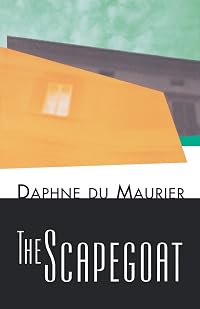
The Scapegoat
by Daphne Du Maurier
On This Page
Description
By chance, John and Jean — one English, the other French — meet in a provincial railway station. Their resemblance to each other is uncanny, and they spend the next few hours talking and drinking - until at last John falls into a drunken stupor. It's to be his last carefree moment, for when he wakes, Jean has stolen his identity and disappeared. So the Englishman steps into the Frenchman's shoes, and faces a variety of perplexing roles - as owner of a chateau, director of a failing show more business, head of a fractious family, and master of nothing. Gripping and complex, The Scapegoat is a masterful exploration of doubling and identity, and of the dark side of the self. "A dazzlingly clever and immensely entertaining novel."- New York Times show lessTags
Recommendations






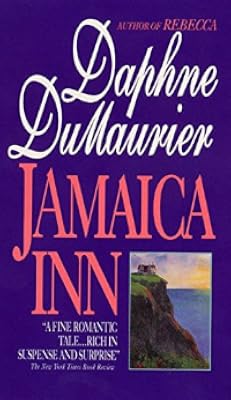
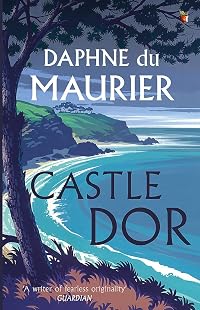

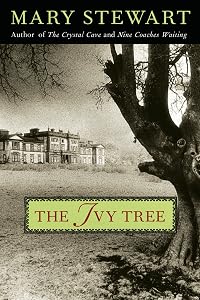

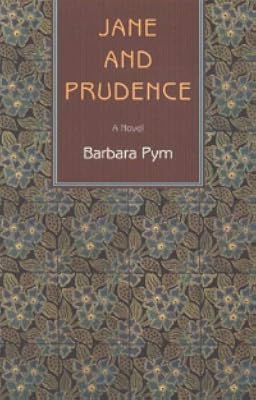




















Member Recommendations

BonnieJune54 The main characters are similar and they are both going through dual lives.
20

Don't Look Now / Not After Midnight / A Border-Line Case / The Way of the Cross / The Breakthrough by Daphne Du Maurier
jigarpatel More psychological thrillers, expertly adapted to the short story format (my review).
Member Reviews
If, rather than suspending your disbelief and just going along with the conceit, you instead choose to cry, "Bunk! How can these people not see that John is not Jean?!?", then you are likely to be disappointed in this book. However, if you choose to let that one little (okay, big) thing slide, you will find a marvelously written first-person narrative that thrusts a man, much against his will, into a difficult, nay!, an impossible situation that, nonetheless, he manages to fit himself into. As he does, he finds depths within himself that have never before been plumbed. Strength he didn't know that he possessed. And empathy that helps heal these new-found friends and family that he quickly grows to love. Everyone he comes in contact with show more feels that there is something different about him but they still accept him as the brother, father, son, lover, and boss that they have always known. He, in turn, finds a new life that he had often imagined living - but had resigned himself to never experiencing.
The ending was a true test of my patience as I was hoping for some other conclusion - any other conclusion! But, upon reflection, I soon came to believe that du Maurier wrote the 'right' ending after all. Poignant and profound, The Scapegoat is a splendidly realized piece of literature. show less
The ending was a true test of my patience as I was hoping for some other conclusion - any other conclusion! But, upon reflection, I soon came to believe that du Maurier wrote the 'right' ending after all. Poignant and profound, The Scapegoat is a splendidly realized piece of literature. show less
Daphne du Maurier's suspenseful tale of doppelganger identity-switching set in post-World War Two France held my attention from beginning to end. The main character/narrator is John (whose last name is never revealed), who assumes the life of a look-alike French aristocratic businessman after being drugged in a hotel room in Le Mans by the Count, Jean de Gué. Jean has taken John's identity, clothes, and auto and disappeared, leaving John to assume control of the Frenchman's family, estate, and business.
The members of Jean's family and associates are viewed through John's eyes, and although he only spends a week amongst them, all are changed by his presence. (John is a professor of French history in England and speaks French fluently, show more and, improbably, no one realizes he is not Jean, so an ability to suspend belief about this lack of perception is necessary).
One passage at the beginning of the book (page 66 of my edition)illustrates that this is not simply a story about switched identities, but a story about how one's identity and actions affect those around us, "One had no right to play about with people's lives. One should not interfere with their emotions. A word, a look, a smile, a frown, did something to another human being, waking response or aversion, and a web is woven which had no beginning and no end, spreading outward and inward too, merging, entangling, so that the struggle of one depended on the struggle of the other."
John's internal life before the switch was falling apart -- he felt he was a failure, a non-entity -- and he was contemplating entering a retreat in a monastery near Le Mans in order to come to terms with his depression and thoughts of suicide. He understands after his week as Jean de Gué that his actions can change other's lives. Sadly, although he improves the relationships Jean had with others, he realizes, though he has discovered what it is to love, and achieve a measure of success, his circumstances haven't changed, and he is still only John and not Jean de Gué.
The end of the story can be seen as disappointing, or possibly as the conclusion of a study of the nature of identity and self-discovery. show less
The members of Jean's family and associates are viewed through John's eyes, and although he only spends a week amongst them, all are changed by his presence. (John is a professor of French history in England and speaks French fluently, show more and, improbably, no one realizes he is not Jean, so an ability to suspend belief about this lack of perception is necessary).
One passage at the beginning of the book (page 66 of my edition)illustrates that this is not simply a story about switched identities, but a story about how one's identity and actions affect those around us, "One had no right to play about with people's lives. One should not interfere with their emotions. A word, a look, a smile, a frown, did something to another human being, waking response or aversion, and a web is woven which had no beginning and no end, spreading outward and inward too, merging, entangling, so that the struggle of one depended on the struggle of the other."
John's internal life before the switch was falling apart -- he felt he was a failure, a non-entity -- and he was contemplating entering a retreat in a monastery near Le Mans in order to come to terms with his depression and thoughts of suicide. He understands after his week as Jean de Gué that his actions can change other's lives. Sadly, although he improves the relationships Jean had with others, he realizes, though he has discovered what it is to love, and achieve a measure of success, his circumstances haven't changed, and he is still only John and not Jean de Gué.
The end of the story can be seen as disappointing, or possibly as the conclusion of a study of the nature of identity and self-discovery. show less
Doppelganger. Isn’t that a great word? Many stories have been written about doppelgangers and what happens to them when they switch places, but none so well as this one. du Maurier is known most for her novel Rebecca, but she could easily be known for The Scapegoat instead, it’s that good. In a way it might be better than Rebecca. The opening is shorter and the plot gets underway much quicker which means I get a lot more ‘quality time’ with the characters and the scenario.
It’s that quality time that really hooked me. At first I found John, Jean and Jean’s family to be remote and difficult to connect with; everyone seemed deliberately odd and cartoonish . Then, through John’s careful management of his bizarre situation, I show more began to connect with them and see how they’d been used and abused by Jean. Eventually you start to root for John and how he tries to set right all the damage his wayward double has created. All the while knowing it can’t last. You hope though and that’s what sets this novel and du Maurier’s talent apart from others.
The way the unknowns are revealed is masterful; you feel as lost and at sea as John must feel, stepping into the role of pater familias. A few of them were relatively easy to guess, particularly the gulf of silence between Jean and Blanche. After a few mentions of Mr. Duval it was pretty clear what happened and Jean’s rationalization of it made it all the more heinous. In the end, Jean went from a mere selfish cad to a violent psycho and I wonder if his family will survive his return. I have to keep in mind what Bela said to John at his leave-taking, that now John has acted so well and nobly that from now on Jean’s family would look for John’s character inside Jean’s, not the other way around. Going forward Jean will have to try to live up to John’s precedent and the family will have to stand up to him if he doesn’t.
A word of warning for the hyper-literal – yes, it’s a stretch. There’s probably no way two complete strangers can exchange lives even for a few hours never mind a few days. Yes, people would be suspicious and many, many things would give each person away. That’s not really the point of this novel. It’s the vehicle only. The point is to see what good can happen to John (and maybe even to Jean in the end) and how he can save himself.
During the set up, we come to understand that John is nearly crushed under the weight of ennui and dissatisfaction with his life. He considers himself to be a failure. He wishes he could set free that part of his personality that he’s never allowed flight. The one who takes chances and wants real people in his life, not just historical figures and the occasional student to tutor. In his hopelessness, John is planning to visit a monastery in a last ditch effort to find a solution. Little does he know his cure doesn’t lie in that direction. Instead he is driven headlong into someone else’s life where he can have the freedom to shake off the crippling insecurity and act like the man he wants to be. In the process he changes Jean’s family’s lives, too and that’s what brings a sense of hope to an ending that could have been bleak.
I’m not sure this book is still in print. I bought a used copy online and still paid something like $15 with shipping for a trade paperback. Find a copy for yourself if you can. It’s worth it and I know I’ll be re-reading this one. show less
It’s that quality time that really hooked me. At first I found John, Jean and Jean’s family to be remote and difficult to connect with; everyone seemed deliberately odd and cartoonish . Then, through John’s careful management of his bizarre situation, I show more began to connect with them and see how they’d been used and abused by Jean. Eventually you start to root for John and how he tries to set right all the damage his wayward double has created. All the while knowing it can’t last. You hope though and that’s what sets this novel and du Maurier’s talent apart from others.
The way the unknowns are revealed is masterful; you feel as lost and at sea as John must feel, stepping into the role of pater familias. A few of them were relatively easy to guess, particularly the gulf of silence between Jean and Blanche. After a few mentions of Mr. Duval it was pretty clear what happened and Jean’s rationalization of it made it all the more heinous. In the end, Jean went from a mere selfish cad to a violent psycho and I wonder if his family will survive his return. I have to keep in mind what Bela said to John at his leave-taking, that now John has acted so well and nobly that from now on Jean’s family would look for John’s character inside Jean’s, not the other way around. Going forward Jean will have to try to live up to John’s precedent and the family will have to stand up to him if he doesn’t.
A word of warning for the hyper-literal – yes, it’s a stretch. There’s probably no way two complete strangers can exchange lives even for a few hours never mind a few days. Yes, people would be suspicious and many, many things would give each person away. That’s not really the point of this novel. It’s the vehicle only. The point is to see what good can happen to John (and maybe even to Jean in the end) and how he can save himself.
During the set up, we come to understand that John is nearly crushed under the weight of ennui and dissatisfaction with his life. He considers himself to be a failure. He wishes he could set free that part of his personality that he’s never allowed flight. The one who takes chances and wants real people in his life, not just historical figures and the occasional student to tutor. In his hopelessness, John is planning to visit a monastery in a last ditch effort to find a solution. Little does he know his cure doesn’t lie in that direction. Instead he is driven headlong into someone else’s life where he can have the freedom to shake off the crippling insecurity and act like the man he wants to be. In the process he changes Jean’s family’s lives, too and that’s what brings a sense of hope to an ending that could have been bleak.
I’m not sure this book is still in print. I bought a used copy online and still paid something like $15 with shipping for a trade paperback. Find a copy for yourself if you can. It’s worth it and I know I’ll be re-reading this one. show less
John (last name never given) is a British professor specializing in French history on holiday in France and at odds with what to do with his life, as he has no family and feels he is a failure. Then by chance he meets Jean de Gue, who looks exactly like him. The two have dinner and drinks, and then de Gue drugs John, takes all his things, and essentially switches lives with him.
The premise is a bit far-fetched, but du Maurier makes it work because essentially this is a psychological novel. de Gue disappears from the scene as the narrator takes over his life, returning to the chateau where his doppelganger is a minor count and lives with his neglected wife, spoiled daughter, morphine-addicted and dominating mother, a brother and sister show more who seem to hate de Gue, and a sister-in-law he's been having an affair with. This novel is not so much about improbable doubles as about who we really are and whether it is possible to take off and put on lives, to change ourselves into who we think we should be. As usual, du Maurier's writing is so good that the story becomes very gripping, and even though there isn't a lot of action, I kept wanting to know what would happen to John and the people he so quickly becomes entangled with. The house itself is also a character in the novel and, like the countess, dominates this family, as does their family history, their home village, and the specter of the recent war and occupation. The ending is somewhat unsatisfying, as itdoes seem to loop back to the beginning and leave things unresolved, especially as we have no idea how the changes John has brought into the de Gue family play out. I personally was hoping for a more romantic ending, but alas. Still, I don't think that detracts much from the overall enjoyment of this story.
Theme notes: Clearly, doubles/twins/doppelgangers are a primary theme, and this is an interest of mine. Du Maurier plays with this a lot, emphasizing shadows and reflections, teasing the reader with what is real and what is merely a character's perspective. Every character in the novel, not just the narrator, has a doubled self, depending on who perceives them. Other dominant themes include the weight of the past and escaping it, new starts and resurrections, wiping the slate clean. Could be worth a reread someday. show less
The premise is a bit far-fetched, but du Maurier makes it work because essentially this is a psychological novel. de Gue disappears from the scene as the narrator takes over his life, returning to the chateau where his doppelganger is a minor count and lives with his neglected wife, spoiled daughter, morphine-addicted and dominating mother, a brother and sister show more who seem to hate de Gue, and a sister-in-law he's been having an affair with. This novel is not so much about improbable doubles as about who we really are and whether it is possible to take off and put on lives, to change ourselves into who we think we should be. As usual, du Maurier's writing is so good that the story becomes very gripping, and even though there isn't a lot of action, I kept wanting to know what would happen to John and the people he so quickly becomes entangled with. The house itself is also a character in the novel and, like the countess, dominates this family, as does their family history, their home village, and the specter of the recent war and occupation. The ending is somewhat unsatisfying, as it
Theme notes: Clearly, doubles/twins/doppelgangers are a primary theme, and this is an interest of mine. Du Maurier plays with this a lot, emphasizing shadows and reflections, teasing the reader with what is real and what is merely a character's perspective. Every character in the novel, not just the narrator, has a doubled self, depending on who perceives them. Other dominant themes include the weight of the past and escaping it, new starts and resurrections, wiping the slate clean. Could be worth a reread someday. show less
While traveling in France, John, an English university lecturer, comes face to face with his double. After an evening of drinking and exchanging stories, the English man awakes to find that the French man has gone and taken all of his belongings, leaving him with the French man's clothing and luggage. After a couple of feeble attempts to explain that he is not, in fact, Jean de Gué, he gives in and assumes his double's life. He speaks fluent French, so language isn't a problem. De Gué's family doesn't question his identity, attributing his strange behavior to the effects of a hangover. As John learns more about the “relatives” who share his house, he discovers that the real Jean has hurt each of them in some way, and a crisis show more looms.
I've read other books about doppelgangers, but this one is different. A religious motif predominates, from the devout Catholicism of some of the family members to the title of the book. I usually think of page-turners as being plot driven, but this one is very much character-driven. Just who is Jean de Gué, and what has he done that has led to this crisis? Is John better equipped to avert the crisis as an outsider with no emotional baggage? Is de Gué ever coming back, and if he does, is John prepared to leave?
Set near Le Mans, the novel has a strong sense of place. The setting is integral to the plot. Although it wasn't historical fiction at the time of its writing, it will appeal to readers of historical fiction set in post-WWII Europe. show less
I've read other books about doppelgangers, but this one is different. A religious motif predominates, from the devout Catholicism of some of the family members to the title of the book. I usually think of page-turners as being plot driven, but this one is very much character-driven. Just who is Jean de Gué, and what has he done that has led to this crisis? Is John better equipped to avert the crisis as an outsider with no emotional baggage? Is de Gué ever coming back, and if he does, is John prepared to leave?
Set near Le Mans, the novel has a strong sense of place. The setting is integral to the plot. Although it wasn't historical fiction at the time of its writing, it will appeal to readers of historical fiction set in post-WWII Europe. show less
After finding the much hyped [b:Rebecca|17899948|Rebecca|Daphne du Maurier|https://i.gr-assets.com/images/S/compressed.photo.goodreads.com/books/1386605169l/17899948._SX50_.jpg|46663] disappointing, I decided to give Ms. du Maurier another try. The premise of The Scapegoat sounded promising: Two men who look the same, but have very different lives, switch places. I didn't know much about it going in and I'm glad that I didn't. Uncovering the plot, cloaked within Ms. du Maurier gorgeously descriptive gothic writing, was an absolute delight. So I'll give you just enough to whet your appetite, but no more.
John is British, a university lecturer on French history who speaks the language fluently, but has never been able to truly connect with show more the people. In fact, his failure to connect extends to all people. His parents are dead, he has no sibling, no family, and no close friends. Now in his mid to late 30s, he lives alone, working during the school terms and traveling through France on his breaks. He feels adrift, like a failure at life. In this midst of his existential crisis, he meets his doppelganger, a French nobleman with a very different life.
"I have learnt one thing in life, which is that the only motive force in human nature is greed. Insects, animals, men, women, children, we live by greed alone. It is not very pretty, but what of it? The thing to do is to minister to the greed, and to give people what they want. The trouble is, they are never satisfied." He sighed, and poured himself another glass of wine. "You complain that your life is empty," he said. "To me it sounds like paradise. An apartment to yourself, no family ties, no business worries, the whole of London a playground, if you wish--though personally I did not find London gay when I was in exile there for a time in the war, but at any rate the city is vast and free. It does not hang about your neck like a rope."
...
"Very well then," I said, "now it's your turn for the confessional. What's your trouble?"
I thought for a moment that he might be going to tell me. Something wavered in his eyes, a flicker of uncertainty, then it was gone again and in its stead the tolerant smile, the lazy shrug.
"Oh, me!" he said. "My one trouble is that I have too many possessions. Human ones."
When English John wakes the next morning in a hotel room, he finds himself in French Jean's clothing, with his luggage and papers, being woken by Jean's loyal chauffer, Gaston. Although he makes a few attempts to tell the truth, the path of least resistance is to pretend he's Jean, even though he knows almost nothing of Jean's life. He must carefully try to piece everything together, bungling along the way, finally part of a family and community, albeit a complicated one in which Jean has often played a dark role.
I don't give 5 star ratings lightly, as to me, it means the book was basically perfect and there's nothing about it I would change. Highly recommended, if you like gothic settings (decaying French chateau), dysfunctional noble families, and plenty of drama.
"These things are never difficult for us," she said, "but for you people at the chateau life is full of complications. Sometimes I wonder how you live at all. Nothing is natural."
A word on endings:
The only thing I didn't love is the ending, mostly because I wanted the good guy (John) to win, even though I see why Ms. du Maurier cast him back into the world, even more untethered than before, but with a new outlook.
Apparently, I'm not the only one who felt that way. It appears that both film adaptations -- 1959's fairly close adaptation and 2012's looser version set completely in the UK -- end with the Jean character dead and the John character continuing his new life, in the newer version even having saved his wife's life. show less
John is British, a university lecturer on French history who speaks the language fluently, but has never been able to truly connect with show more the people. In fact, his failure to connect extends to all people. His parents are dead, he has no sibling, no family, and no close friends. Now in his mid to late 30s, he lives alone, working during the school terms and traveling through France on his breaks. He feels adrift, like a failure at life. In this midst of his existential crisis, he meets his doppelganger, a French nobleman with a very different life.
"I have learnt one thing in life, which is that the only motive force in human nature is greed. Insects, animals, men, women, children, we live by greed alone. It is not very pretty, but what of it? The thing to do is to minister to the greed, and to give people what they want. The trouble is, they are never satisfied." He sighed, and poured himself another glass of wine. "You complain that your life is empty," he said. "To me it sounds like paradise. An apartment to yourself, no family ties, no business worries, the whole of London a playground, if you wish--though personally I did not find London gay when I was in exile there for a time in the war, but at any rate the city is vast and free. It does not hang about your neck like a rope."
...
"Very well then," I said, "now it's your turn for the confessional. What's your trouble?"
I thought for a moment that he might be going to tell me. Something wavered in his eyes, a flicker of uncertainty, then it was gone again and in its stead the tolerant smile, the lazy shrug.
"Oh, me!" he said. "My one trouble is that I have too many possessions. Human ones."
When English John wakes the next morning in a hotel room, he finds himself in French Jean's clothing, with his luggage and papers, being woken by Jean's loyal chauffer, Gaston. Although he makes a few attempts to tell the truth, the path of least resistance is to pretend he's Jean, even though he knows almost nothing of Jean's life. He must carefully try to piece everything together, bungling along the way, finally part of a family and community, albeit a complicated one in which Jean has often played a dark role.
I don't give 5 star ratings lightly, as to me, it means the book was basically perfect and there's nothing about it I would change. Highly recommended, if you like gothic settings (decaying French chateau), dysfunctional noble families, and plenty of drama.
"These things are never difficult for us," she said, "but for you people at the chateau life is full of complications. Sometimes I wonder how you live at all. Nothing is natural."
A word on endings:
The only thing I didn't love is the ending, mostly because I wanted the good guy (John) to win, even though I see why Ms. du Maurier cast him back into the world, even more untethered than before, but with a new outlook.
Apparently, I'm not the only one who felt that way. It appears that both film adaptations -- 1959's fairly close adaptation and 2012's looser version set completely in the UK -- end with the Jean character dead and the John character continuing his new life, in the newer version even having saved his wife's life.
This is one of du Maurier's less well known novels, but it is very well written and atmospheric. Published and set in the 1950s, the titular character is John, a lonely Englishman staying in France who is an expert in Medieval French history, but who is affected with a vast ennui about his life and future. In a hotel bar in Le Mans he bumps into Jean comte de Gué, who is his exact physical double. They drink and dine, compare experiences of dissatisfaction with their own lives, and English John cannot tear himself away. The next morning he wakes up in a hotel room to find the comte has taken all his clothes and possessions and left him his own, forcing a swap of their lives on him. He encounters the comte's family and, while the story show more is very well told, and actions have their internal logic, he is accepted by the household far too readily for me, which I simply cannot believe would happen as it does here, notwithstanding that there are tensions and a lack of intimacy with his wife. He forms a bond with the count's daughter who accepts him utterly, but is otherwise very wise for her age. In fact, initially only the dog smells that something is wrong - though towards the end Jean's lover Béla also surmises his identity. John is kinder than his French counterpart and tries to put to right some wrongs. Jean returns in the end, and the novel ends somewhat unsatisfactorily with Jean resuming his role as count and John driving off to "find himself" in a nearby monastery, as he had been about to do at the outset. The descriptions of the French countryside and the way of life are very evocative of a timeless quality. show less
Members
- Recently Added By
Lists

Classics you know you should have read but probably haven't
421 works; 409 members

Favourite Virago Modern Classics
183 works; 38 members

Noirvember: The Best Noir
113 works; 56 members

1950s
340 works; 22 members

Houses and Buildings as Characters in Fiction
182 works; 29 members

Books Read in 2023
5,638 works; 147 members
Publisher's Weekly Bestsellers - Part II - 1940 - 1979
355 works; 5 members

Discontinued
19 works; 4 members

Books Read in 2017
4,249 works; 130 members

Animals in the Title
498 works; 11 members

KayStJ's to-read list
1,616 works; 11 members

Books We Couldn't Put Down
443 works; 197 members

Just Kids by Patti Smith
43 works; 1 member

Books Read in 2024
4,727 works; 128 members

Read the book and saw the movie
1,170 works; 192 members

Books Read in 2021
5,361 works; 113 members

Domestic Suspense Reading List
10 works; 1 member

Books Tagged Doppelganger
15 works; 1 member

le donne raccontano
116 works; 1 member

Global Reads: Books Set in Western Europe
186 works; 10 members

Top Five Books of 2024
795 works; 264 members
Author Information

206+ Works 57,605 Members
Daphne Du Maurier was born in London on May 13, 1907 and educated in Paris. In 1932, she married Lieutenant-General Sir Frederick Browning. She began writing short stories of mystery and suspense for magazines in 1928, a collection of which appeared as The Apple Tree in 1952. Her first novel, The Loving Spirit, was published in 1931. Her tightly show more woven, highly suspenseful plots and her strong characters make her stories perfect for adaptation to film or television. Among her many novels that were made into successful films are Jamaica Inn (1936), Rebecca (1938), Frenchman's Creek (1941), Hungry Hill (1943), My Cousin Rachel (1952), and The Scapegoat (1957). Her short story, The Birds (1953), was brought to the screen by director Alfred Hitchcock in a treatment that has become a classic horror-suspense film. She died on April 19, 1989 at the age of 81. (Bowker Author Biography) show less
Some Editions
Awards and Honors
Series
Belongs to Publisher Series
Heyne-Buch (864/865/866)
Virago Modern Classics (502)
Work Relationships
Is contained in
Has the adaptation
Is abridged in
Common Knowledge
- Canonical title
- The Scapegoat
- Original title
- The Scapegoat
- Original publication date
- 1957
- People/Characters
- Jean de Gue; John; Gaston; Paul de Gue; François de Gue; Blanche de Gue (show all 9); Marie-Noel de Gue; Renee de Gue; Bela
- Important places
- France; Saint-Gilles, Occitanie, France
- Related movies
- The Scapegoat (1959 | IMDb); The Scapegoat (2012 | IMDb)
- First words
- The Scapegoat, Daphe du Maurier's eleventh novel, first appeared in 1957. Almost twenty years earlier, Rebecca had rocketed to bestsellerdom and made the du Maurier name synonymous with romance. It is this expec... (show all)tation of intrigue and high passion which makes the later novel so startling. The Scapegoat is more Graham Greene than romance. It has a terse economy of style, great literary sophistication and an alienated post-war male conscience at its core. It also has gripping narrative pace. What is perhaps surprising is that all these are put at the service of a complex of themes already present in Rebecca. What is more surprising is that this fine book has so far failed to find the wide acclaim of its predecessor. -Foreword. Lisa Appignanesi, 2003 (Little Brown, 2013 edition)
I left the car by the side of the cathedral, and then walked down the steps into the Place des Jacobins. It was still raining hard. It had not once let up since Tours, and all I had seen of the countryside I loved was the gle... (show all)aming surface of the route nationale, rhythmically cut by the monotonous swing of the windscreen wiper. -Chapter 1 - Last words
- (Click to show. Warning: May contain spoilers.)I drove to the network of roads at the top of the town, turned left, and took the road to Bellême and Mortagne.
- Original language
- English UK
- Canonical DDC/MDS
- 823.912
- Canonical LCC
- PR6007.U47 S37
Classifications
Statistics
- Members
- 1,752
- Popularity
- 12,597
- Reviews
- 53
- Rating
- (3.96)
- Languages
- 15 — Czech, Dutch, English, Estonian, Finnish, French, German, Italian, Norwegian (Bokmål), Norwegian, Polish, Portuguese, Russian, Spanish, Swedish
- Media
- Paper, Audiobook, Ebook
- ISBNs
- 56
- ASINs
- 65